
Ech0
Ech0 is a self-hosted personal microblog that gives you a public timeline of short posts, links, and media on your own domain, with no ads, algorithms, or subscription in the way. Write in a Markdown editor with live preview, organize posts with tags, and let links and GitHub projects unfurl into rich cards while Bilibili and YouTube videos play inline. Attach images, audio, and video to any post, browse them in an inline gallery with built-in players, and manage uploads in a visual file manager. Visitors can like, share, and comment, you moderate from the panel with captcha protection, and RSS lets readers follow without an account. Sign in with passkeys, OAuth2, or OIDC, issue scoped access tokens, and run extra accounts under Owner, Admin, and regular roles. Media can sit on local disk or any S3-compatible bucket, and snapshots, scheduled backups, and portable capsules move the whole timeline to another instance or compile it into a static site. Ech0 Copilot recaps recent posts in one click and lets you chat with your own archive, while an MCP server, webhooks, and a documented API connect AI assistants and automations. Follow live logs in a web console, administer from a terminal UI or CLI, and install it as a PWA with dark mode and multiple languages. Running on a dedicated VPS on RepoCloud with guaranteed CPU, RAM, and SSD, full root SSH access, and a browser serial console. AGPL-3.0 licensed.
AxonHub
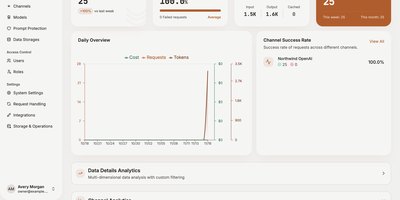
AxonHub is an open-source AI gateway that lets any OpenAI, Anthropic, or Gemini SDK reach more than 100 models through a single address. Point Claude Code, Codex, OpenCode, or your own scripts at one base URL, and the gateway translates each request for whichever provider sits behind the model name, so changing vendors means editing a string instead of rewriting code. Channels hold provider keys, model lists, weights, and health history, and load balancing with automatic failover sends traffic to the healthiest route. Chat, image generation, embeddings, and reranking all travel through the same endpoint. Every call lands in request logs with token counts, first-token latency, and cost, and traces group related calls into threads with a timeline of spans. A built-in playground tests one channel or the full gateway, prompt protection rules filter sensitive text before it leaves your network, and API keys can be limited by project, owner, or IP range. Roles and per-user usage tables keep teams apart. Running on a dedicated VPS on RepoCloud with guaranteed CPU, RAM, and SSD, full root SSH access, and a browser serial console. Apache-2.0 licensed.
Hezo
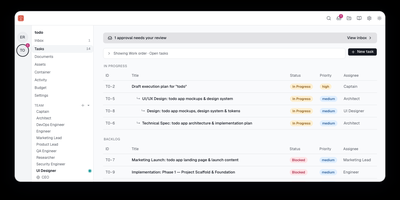
A whole company of AI agents, from a CEO to engineers, designers, and analysts, works inside Hezo under budgets, approvals, and sandboxes you control. Starting a project means picking a ready-made marketplace team (App Team, Social Media Marketing, or Investment Portfolio), using a template, or asking the CEO to assemble one, and the org chart can be reshaped while work continues. Agents pull tasks from a board with nested sub-tasks, wake on heartbeats, pause at approval gates, and push verified commits to your GitHub repositories. Each agent can run on its own model, whether Claude, GPT, Gemini, Grok, Kimi, DeepSeek, GLM, OpenRouter, Ollama, or LM Studio, using API keys or an Anthropic or OpenAI subscription signed in from the UI. Token budgets pause runs at their limits, cost per run stays visible, and a container-hours ledger enforces a monthly allowance. Every project works in its own container, and stored secrets reach agents only as placeholders that an egress proxy swaps for real values on hosts you allowed. A Coach agent turns lessons from finished tasks into durable rules, while documents, skills, and full-text search hold shared knowledge. Message the CEO from Telegram, Slack, or Discord, or drive Hezo from any MCP client through its built-in MCP server. The web app speaks 12 languages. Running on a dedicated VPS on RepoCloud with guaranteed CPU, RAM, and SSD, full root SSH access, and a browser serial console. GPL-3.0-or-later licensed.
AgentVerse OS
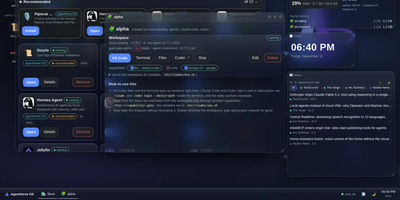
AgentVerse OS turns a single Ubuntu server into a personal cloud with a real desktop in the browser, built for a developer and their AI agents. You work in a windowed desktop with a taskbar, start menu, and widgets for system monitoring, clock, news, weather, and projects, and the same desktop opens from a laptop, tablet, or phone while everything stays on the server. Each project gets an isolated Incus container with Docker inside, its own network and gate, plus VS Code, a terminal, files, and git in the browser. The Agents app runs Claude Code, Codex, Gemini CLI, pi, and Antigravity inside the workspace, with permission prompts you approve from any device, scheduled routines, model menus, conversation search and export, and a ledger of what each session spent. When you close your laptop the agents keep working, and you pick the conversation up later exactly where it stopped. A built-in store merges the Runtipi, Coolify, and Umbrel catalogs into about 945 installable apps with guided setup, credentials shown in the app card, snapshots, and rollback. Projects request capabilities such as storage.s3, llm, or notify instead of hardcoding addresses, scheduled ZFS snapshots feed a restic backup repository, and access arrives only through your Tailscale network with real certificates. Running on a dedicated VPS on RepoCloud with guaranteed CPU, RAM, and SSD, full root SSH access, and a browser serial console. Apache-2.0 licensed.
KaletaCMS
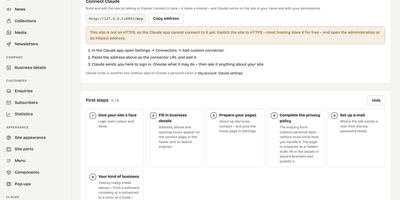
Kaleta is a business-website CMS where the page you edit is the page your visitors get, not a preview of it. The visual builder works on the live canvas: add sections, drag elements, edit text in place, and style every element separately for desktop, tablet, phone, and hover before you publish. Forty-six elements and forty ready-made sections cover pricing tables, timelines, before-and-after sliders, galleries, accordions, carousels, maps, and mega menus. Consistency comes from a design-token system: change one colour, font, spacing, or radius token and the whole site follows, with a WCAG contrast check on every colour pair and export in the W3C token format. Blocks you reuse become components edited once and updated everywhere, and each page carries its own search title, sharing image, and visibility, with the last twenty publications kept as versions. Moving in is a first-class feature: importers take WordPress exports including WooCommerce products and Polylang or WPML translations, plus Ghost, Blogger, Joomla, Drupal, and Webflow, creating a redirect from every old address so rankings survive. An optional AI assistant connected through MCP builds pages and handles chores only as drafts you approve. Forms, booking, enquiries, media folders with focal-point cropping, multilingual publishing, and GDPR duties such as automatic personal-data deletion are built in rather than bolted on. Running on a dedicated VPS on RepoCloud with guaranteed CPU, RAM, and SSD, full root SSH access, and a browser serial console. GPL-2.0 licensed.
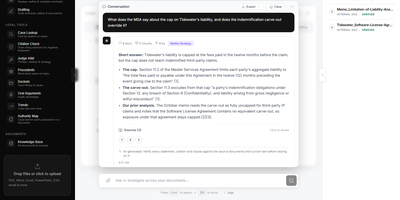
CaseCite
CaseCite puts a law firm's own files under questioning, returning cited answers, contract reviews, and drafted agreements without surrendering a single document to an outside legal platform. Ask a question across the indexed corpus and receive answers tied to the exact source passage, then narrow the search to selected files or a folder when only those should count. For bigger questions, deep research lays out a plan of sub-questions you can edit first, verifies every quote against its source, and keeps a step log of what was searched. Contracts can be analyzed, questioned one at a time, or compared clause by clause across two to four agreements against a baseline, with redlines exported as native Word tracked changes. Tabular review extracts the fields you define from hundreds of contracts at once, shows the supporting passage and estimated cost beside each value, and exports to Excel or CSV. Drafting starts from up to four precedent documents, and long agreements get a section plan for your approval before each section is written and reconciled. Each client engagement lives in its own matter workspace with controlled access and an activity feed, while case lookup, citation checking, judge analytics, dockets, oral arguments, and authority maps cover the caselaw side. Running on a dedicated VPS on RepoCloud with guaranteed CPU, RAM, and SSD, full root SSH access, and a browser serial console. Apache 2.0 licensed.
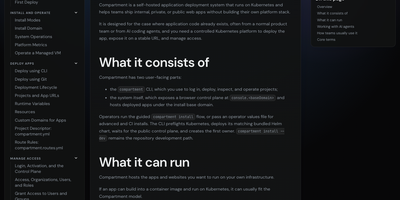
Compartment
Compartment gives the small internal tools, private apps, and AI-built utilities your team keeps creating a proper place to live: your own Kubernetes, with one-command deploys, stable URLs, and sign-in handled for you. Install it into a cluster you already run, or let the guided installer provision a managed single-node Kubernetes host after showing you exactly what it will change. Each app is described by one small compartment.yml file naming its services, and from there deployment is a single command from your checkout, or a branch-driven flow when you connect the Git repository and let pushes roll out on their own. If an app can build into a container image with Docker or Railpack, it fits the model, and every deploy lands behind the edge ingress with its own URL and HTTPS from the first release. The browser Console becomes your operations surface for projects, deployment history, logs, and runtime variables, while SSO, role-based access, and audit logs replace the informal permission paths that grow around shared tools. Workloads stay isolated and can sit close to the private services, data stores, and internal APIs they need, without turning steady traffic into managed-platform spend. Running on a dedicated VPS on RepoCloud with guaranteed CPU, RAM, and SSD, full root SSH access, and a browser serial console. Apache-2.0 licensed.
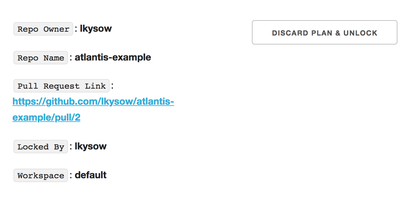
Atlantis
Every Terraform change becomes a pull request with Atlantis, which runs the plan on your server, posts the output for review, and applies only the exact change reviewers approved. Open a pull request that touches Terraform code and Atlantis automatically runs terraform plan, posting the full output as a comment and a commit status your reviewers can inspect line by line. When the change looks right, a teammate comments atlantis apply and Atlantis executes the exact plan that was reviewed, then reports the result back on the same pull request. Each directory and workspace is locked while a pull request is open, preventing two changes from applying out of order, and locks can be inspected or discarded from the web interface. Apply requirements let you demand an approved review or a mergeable branch before anything runs, and optional policy checks evaluate plans against your rules before they can proceed. Repositories describe their projects, workspaces, and custom workflows in an atlantis.yaml file, including pinned Terraform versions, execution order groups, and parallel planning or applying across projects. Because Atlantis runs inside your infrastructure, cloud credentials never leave your network, and every plan, approval, and apply is preserved on the pull request as an audit trail. Running on a dedicated VPS on RepoCloud with guaranteed CPU, RAM, and SSD, full root SSH access, and a browser serial console. Apache-2.0 licensed.
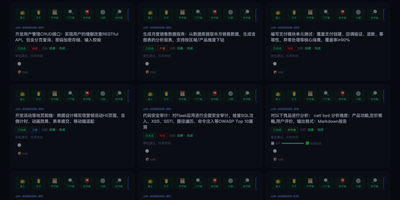
Edict
Edict is a multi-agent orchestrator that runs every AI request through a court-style chain: a crown prince agent triages it, a planning department drafts the work, a review department can veto the plan, and specialist ministries execute what survives. Casual chat gets a direct reply, while real commands become kanban tickets whose titles are scrubbed of file paths and metadata. A vetoed plan returns for rework; an approved one is dispatched in parallel to ministries for finance, documentation, engineering, compliance, infrastructure, and HR. Commands arrive through Feishu, Telegram, or Signal channels configured in OpenClaw. The dashboard shows cards by state with heartbeat badges and stop, cancel, and resume controls, plus a department monitor and a memorial archive that turns finished work into five-phase timelines you can copy as Markdown. Nine edict templates add parameter forms and cost estimates, an officials panel ranks agents by merit score while tracking token spend, and per-agent model switching restarts the gateway in about five seconds. Agent thinking, tool calls, and results stream live. A permission matrix limits who may message whom, illegal state jumps are rejected, and every transition lands in an audit log. Worked examples cover competitive analysis, code review, and weekly reports. Dashboard login protects the console, and a systemd unit keeps it running across reboots. Running on a dedicated VPS on RepoCloud with guaranteed CPU, RAM, and SSD, full root SSH access, and a browser serial console. MIT licensed.
Kiwix Serve
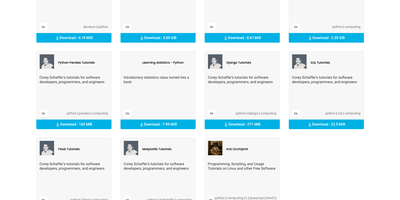
Websites such as Wikipedia, Project Gutenberg, and Stack Overflow pack into single ZIM files, and Kiwix Serve publishes a folder of them as a searchable library that opens in any browser, with no connection to the originals. Point it at individual files, a directory, or a library file, and visitors get a welcome page where they filter books by language, category, or words in the title and description. Each book opens in a built-in viewer without downloading the archive, with toolbar buttons for the library, a random article, and in-book search. Title suggestions appear as you type, and full-text search returns highlighted snippets from indexed books, across several at once when they share a language. OPDS catalogs let reader apps browse and fetch the collection, and the library reloads automatically when its file changes. Admins can swap in a custom welcome page, publish under a URL prefix, hide the library button or search box, block links that leave the archive, and cap connections per visitor. Interface translations cover dozens of languages. Universities, community networks, and home labs get a reference shelf that stays available when the original sites are slow, blocked, or gone, with developer documentation and Q&A always within reach. Running on a dedicated VPS on RepoCloud with guaranteed CPU, RAM, and SSD, full root SSH access, and a browser serial console. GPL-3.0 licensed.
OpenRun
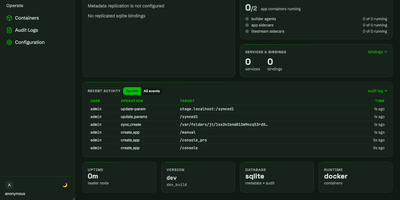
OpenRun replaces the patchwork of CI/CD pipelines, reverse proxies, and identity providers that teams typically assemble when deploying internal tools, offering declarative GitOps-based deployment of web applications to Docker, Podman, or Kubernetes from a single self-hosted Go binary. Point it at a Git repository and it builds containers from AppSpec templates, routes requests by domain or URL path, provisions TLS certificates automatically, and scales idle applications to zero when unused. Blue-green staged deployments promote new versions through development, staging, and production environments with atomic rollback across multiple apps simultaneously. Every deployed application inherits SSO authentication through OAuth, OpenID Connect, or SAML providers alongside role-based access control, all configured once at the platform level rather than per app. Service bindings provision isolated PostgreSQL, MySQL, SQLite, or Redis credentials for each application, while Litestream integration replicates SQLite databases to S3 for automatic disaster recovery. The management console provides a web interface for monitoring containers, reviewing audit logs, configuring syncs, and managing server operations. AppSpec templates handle Streamlit, Gradio, FastAPI, Flask, and FastHTML projects out of the box, deploying existing Python applications without requiring custom Dockerfiles. Running on a dedicated VPS on RepoCloud with guaranteed CPU, RAM, and SSD, full root SSH access, and a browser serial console. Apache-2.0 licensed.
Agent Fleet
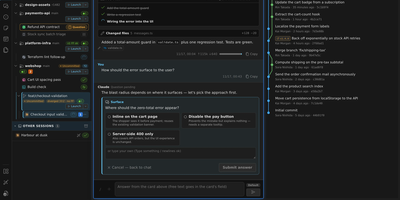
Closing the laptop no longer stops your coding agents: Agent Fleet runs Claude Code, Codex, GitHub Copilot, Cursor, and five more agent kinds on your own server, each member in a persistent, isolated workspace. One session list shows which agents are working and which are waiting on a question, a plan, or a permission prompt. Answer from a card in the browser, on a phone, or in the session's Slack or Discord thread. Each session can start in its own git worktree, and the console adds a commit graph, diffs, staging, split panes, and a live terminal. A session can hand a review to another agent kind, and a fleet graph draws who started whom. Scheduled runs wake a stopped workspace, and a turn cut short by a usage limit resumes when the limit lifts. Token use is broken down by feature, agent, and model, with calls that report no tokens counted as unmeasured. Sign-in works through Google, Microsoft Entra ID, GitHub, or any OIDC provider such as Okta or Keycloak, with tenants, roles, an audit log, and encrypted secrets. The interface switches between English and Japanese, and HTTPS certificates come from Let's Encrypt. Running on a dedicated VPS on RepoCloud with guaranteed CPU, RAM, and SSD, full root SSH access, and a browser serial console. Apache-2.0 licensed.
Velociraptor
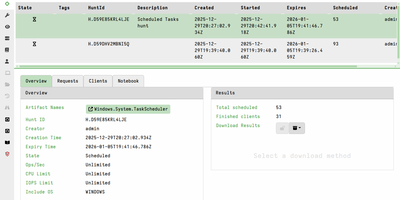
Hunting for a suspicious file, process, or registry key across every endpoint becomes a single hunt in Velociraptor, an endpoint visibility and digital forensics platform. A web console sends tasks to clients on Windows, Linux, and macOS machines, which hold a persistent connection and run each task as soon as it is issued. A hunt runs a VQL artifact, one of more than 400 built in, across selected endpoints, picks up machines that reconnect later, and tracks which hosts have answered. Each hunt and collection opens into a notebook where markdown and live VQL cells group, filter, and timeline the results. A virtual file system browses a client's directories and fetches files through file, NTFS, and registry accessors, with hex and text viewers. Offline collectors bundle chosen artifacts into one binary that writes an optionally encrypted container for later import, suiting machines that never reach the server. Client event queries stream telemetry such as DNS lookups to the server, and server event queries can alert Slack, email, Elastic, or Splunk. Quarantine confines a host's network traffic to the Velociraptor server, and the Shell page runs commands on it. Sign-in works through Google, Azure, GitHub, OIDC, or SAML, with reader, analyst, investigator, and administrator roles. Responders reach for it during threat hunts, compromised host triage with KapeFiles targets, and dead disk image analysis. Running on a dedicated VPS on RepoCloud with guaranteed CPU, RAM, and SSD, full root SSH access, and a browser serial console. AGPL-3.0 licensed.
Speakr
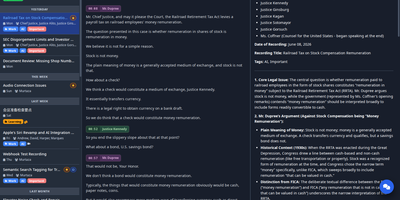
Speakr transforms audio recordings into organized, searchable, AI-enhanced notes with speaker recognition that identifies who said what across your entire recording library. The Python/Flask backend with Vue.js 3 and Tailwind CSS frontend deploys via Docker on port 8899, offering multiple transcription engines through auto-detected connectors: WhisperX for local processing with speaker diarization and voice embeddings, OpenAI Whisper and GPT-4o-transcribe, Mistral Voxtral for cloud diarization, AssemblyAI for multi-hour files, and any custom ASR webservice. Speaker voice profiles use embedding comparison to recognize individuals across different recordings automatically, while custom vocabulary biases the transcriber toward domain-specific jargon. The AI layer goes well beyond transcription: customizable summaries with per-recording, per-tag, and per-folder prompt templates; event extraction surfacing action items and calendar events; per-recording chat with streaming responses; and Inquire Mode for semantic search and natural-language queries across your entire library simultaneously. Smart tags execute custom AI prompts on transcripts for automatic categorization. The REST API with Swagger documentation supports signed webhooks integrating with n8n, Zapier, and Make. Auto-export pushes to Obsidian and Logseq, auto-processing watches directories, and the installable PWA provides mobile-first, offline-capable access with share-target support. 3,600+ stars since May 2025. Running on a dedicated VPS on RepoCloud with guaranteed CPU, RAM, and SSD, full root SSH access, and a browser serial console. AGPL-3.0 licensed.
GameAP
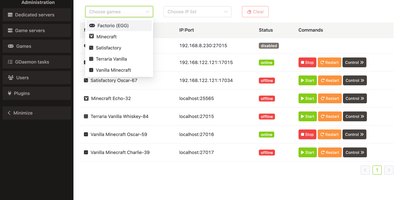
Start, stop, and restart Minecraft, Counter-Strike, Rust, FiveM, and other game servers from one browser panel instead of juggling SSH sessions. A live console streams server output and accepts RCON commands, so admins can kick players, change maps, and watch logs as they happen. The file manager edits configs, uploads and downloads files, searches inside a folder, shows checksums, and creates or extracts archives on the server itself. Scheduled tasks handle automatic restarts, updates, and backups at daily, hourly, or custom intervals. Roles and per-server permissions let a community hand out console, file, and player-management rights without sharing shell access, and single sign-on tickets let a billing system log customers straight in. Typed settings with validation and dropdown choices keep game parameters safe to edit, CPU and RAM limits cap each server, and Pterodactyl or Pelican eggs can be imported to reuse existing game definitions. One panel manages servers across many dedicated machines, plugins extend it, a documented REST API automates provisioning, and the interface speaks English, Russian, Spanish, and German. Running on a dedicated VPS on RepoCloud with guaranteed CPU, RAM, and SSD, full root SSH access, and a browser serial console. MIT licensed.
Artalk
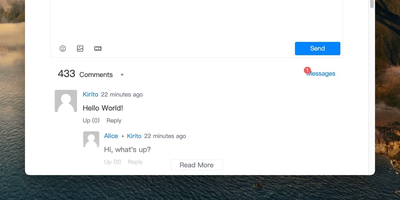
Artalk embeds a full commenting system into any webpage with three lines of JavaScript, packing multi-site management, social login, spam filtering, and Markdown rendering into a client that weighs roughly 40KB. One server instance manages comments for unlimited websites with complete data isolation between sites, eliminating the need for separate deployments per project. The framework-agnostic Vanilla JS client renders a complete comment interface with Markdown support, LaTeX mathematical formula rendering, image uploads, emoji packs compatible with OwO format, and automatic dark mode detection. An integrated admin dashboard accessible through the comment box provides comment moderation queues, IP banning, comment pinning, page-level statistics, and content management without direct database access. Social login authenticates commenters through GitHub, Google, Twitter, Discord, and additional OAuth providers, while captcha protection spans four backends: image captcha, Cloudflare Turnstile, Google reCAPTCHA, and hCaptcha. Spam filtering layers include Akismet integration, keyword block lists, and cloud moderation services that catch unwanted content before publication. Email notifications support SMTP, Aliyun DM, and Sendmail transports with customizable templates, and multi-channel push notifications extend to Telegram, Bark, and other messaging platforms. The OpenAPI-documented HTTP API enables programmatic comment management. Database flexibility covers SQLite, MySQL, PostgreSQL, and SQL Server. A plugin marketplace offers community extensions for custom behavior. Continuously maintained for over 8 years. Running on a dedicated VPS on RepoCloud with guaranteed CPU, RAM, and SSD, full root SSH access, and a browser serial console. MIT licensed.
pgweb
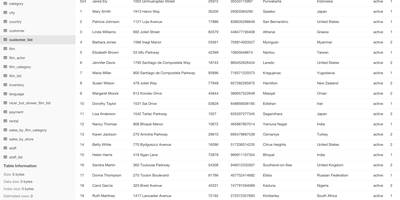
Inspect a PostgreSQL database right now, without installing pgAdmin or exposing Postgres to the internet - pgweb answers that recurring need. It's a Go application from Dan Sosedoff, a decade in development, shipped as a single statically-linked binary with zero dependencies - the Docker image is essentially just the executable - that puts a clean browser UI in front of any PostgreSQL 9.1+ server. Connect via URL string or host/port credentials, and browse tables, views, and sequences from the sidebar; selecting a table shows its rows immediately alongside tabs for structure, indexes, and constraints. The Query tab executes arbitrary SQL with query history, and the Explain Query button renders the query plan - estimated cost, row counts, execution strategy - which makes pgweb a quick performance-triage tool, not just a browser. Results and entire tables export to CSV, JSON, or XML in a click. Connectivity is more flexible than its size suggests: native SSH tunneling (password or key) reaches databases behind firewalls, server bookmarks make switching instances instant, and an optional multi-session mode handles several databases concurrently. For a RepoCloud stack full of Postgres-backed apps, one pgweb instance is the universal inspection hatch. MIT-licensed, actively maintained.
Versus Incident
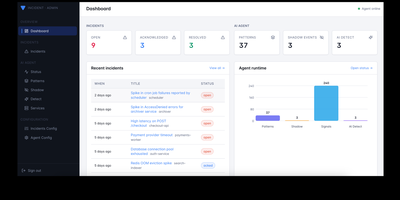
Versus Incident is a self-hosted AI SRE agent and incident manager that learns what normal looks like in your logs, metrics, traces, and Kubernetes clusters, then opens a triaged incident the moment something genuinely new appears. Detection earns trust gradually. Training mode only observes and catalogs patterns; shadow mode records what it would have alerted so you can judge its instincts; detect mode creates real incidents with an AI-written summary, a severity, and suggested next steps attached. Existing alerting does not have to move: Alertmanager, Grafana, Sentry, CloudWatch, Fluent Bit, and custom scripts post to the same webhook endpoint, and every incident, however it arrived, is rendered with your Go templates. Delivery fans out to Slack, Microsoft Teams, Telegram, Viber, email, and Lark. Silence has a deadline, because unacknowledged incidents escalate to on-call through PagerDuty, AWS Incident Manager, Opsgenie, incident.io, or ServiceNow. The Kubernetes dashboard gathers cluster health and capacity, workloads, resource relationships, recent changes, Helm releases, and GitOps status, and a DevOps chat agent in the web UI answers questions against the connected systems while responders work. The admin dashboard reviews learned patterns, shadow events, and raised incidents, so the agent's judgment stays inspectable. Running on a dedicated VPS on RepoCloud with guaranteed CPU, RAM, and SSD, full root SSH access, and a browser serial console. MIT licensed.