Stars
Forks
Watchers
Developer links
OpenRun
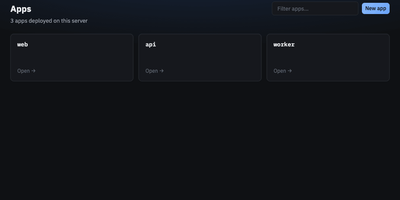
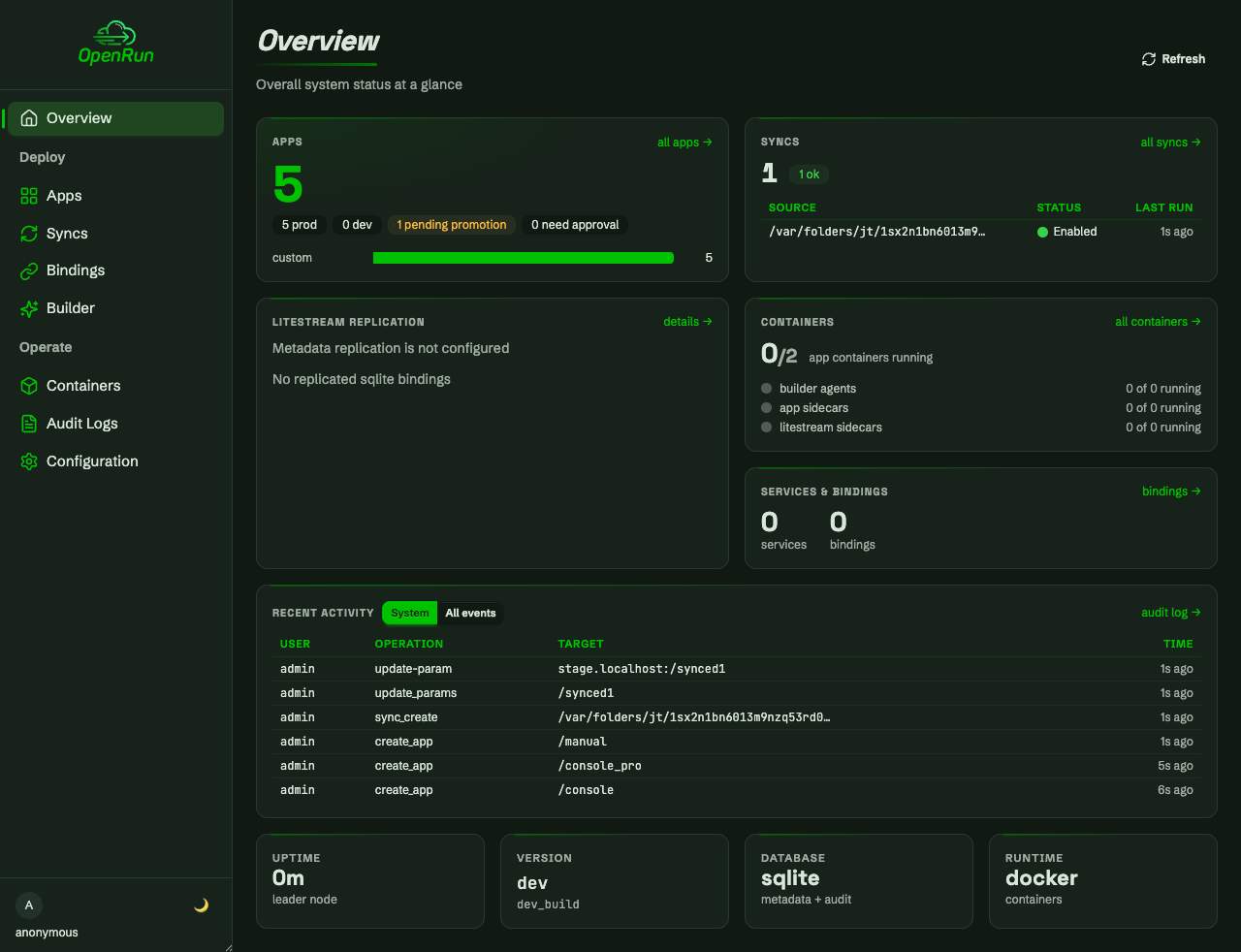
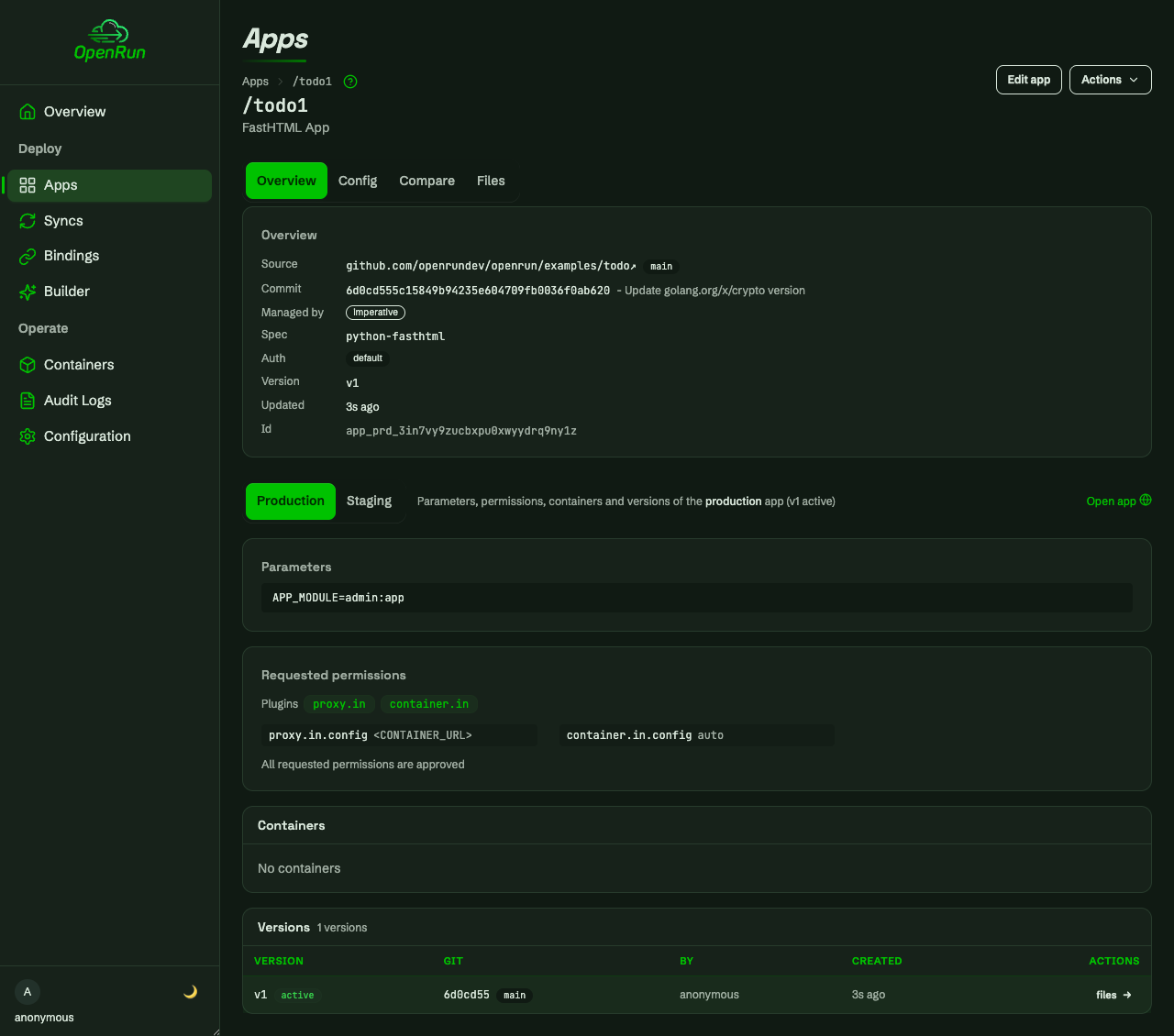
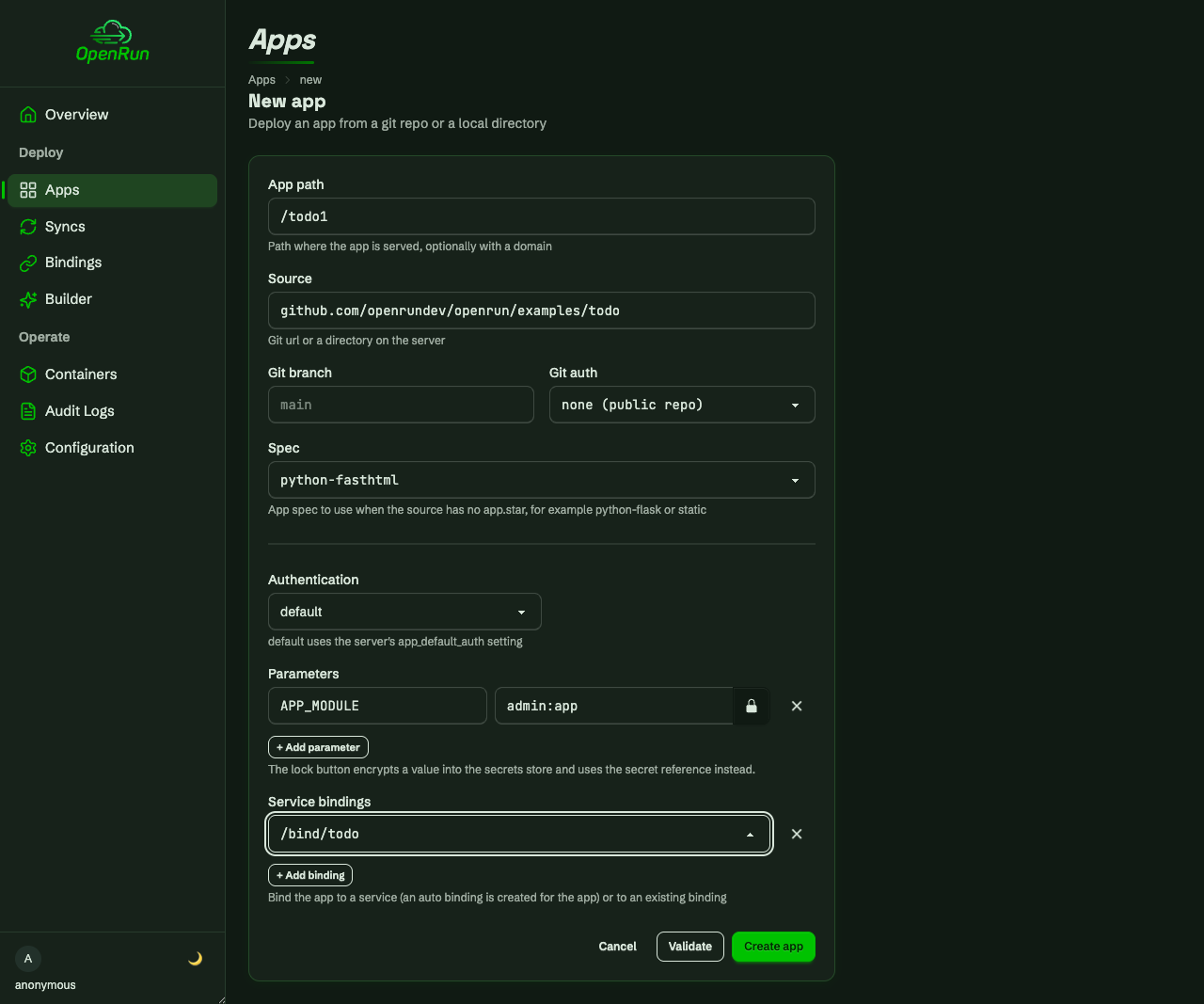
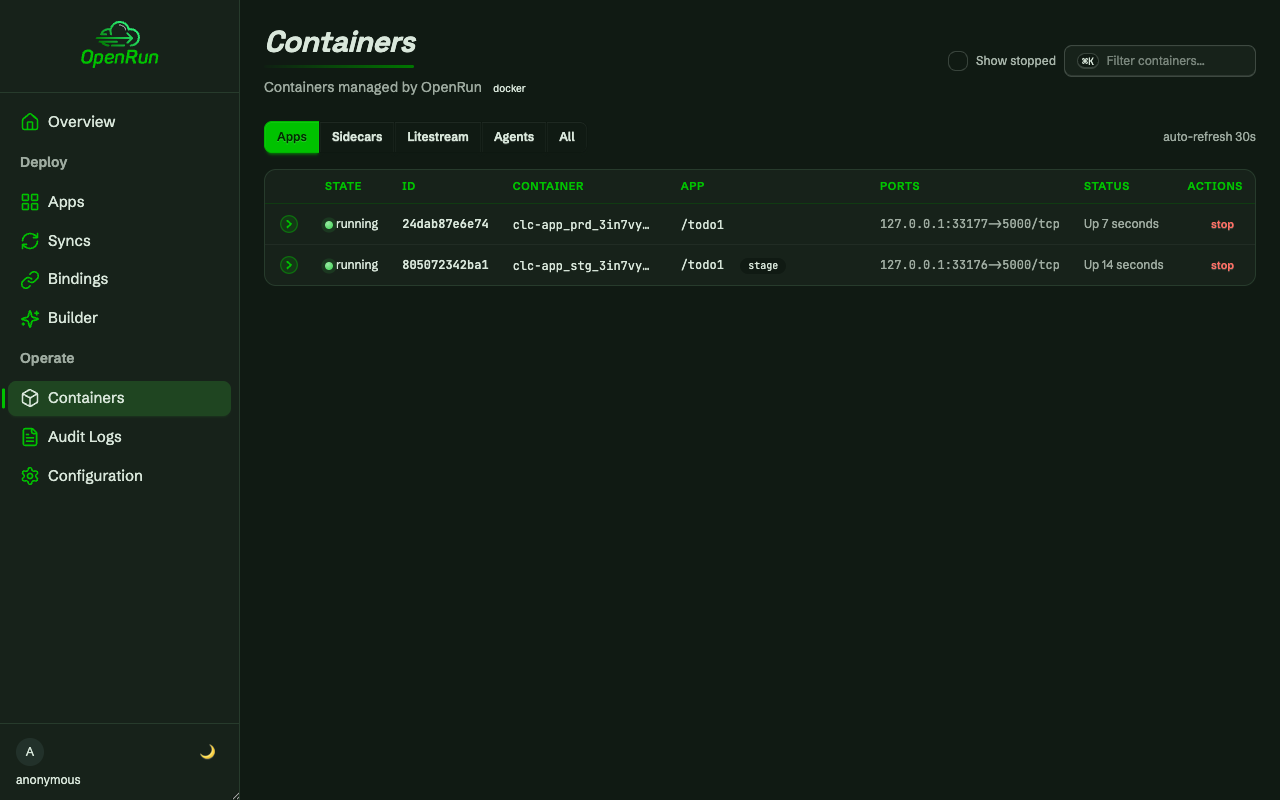
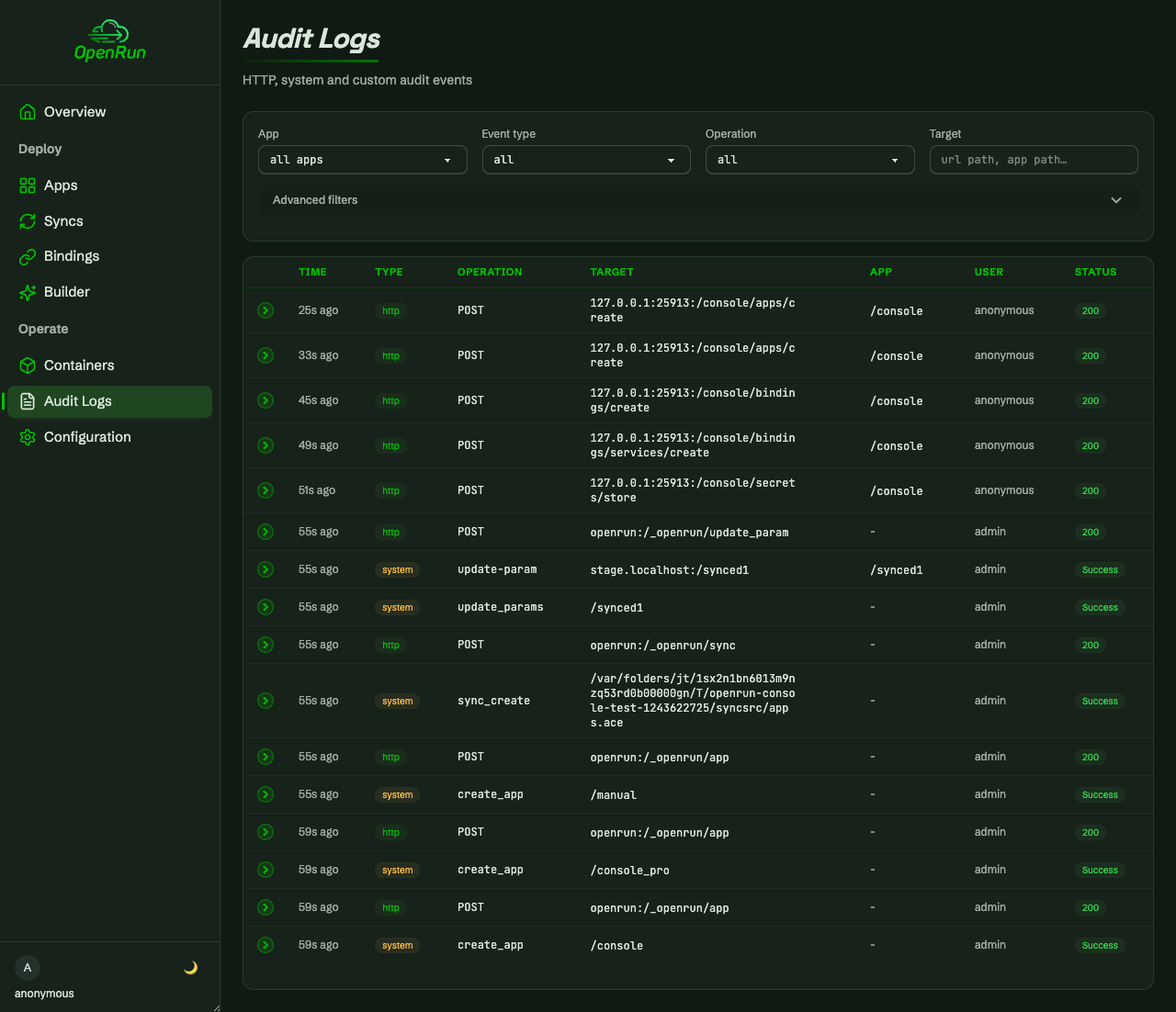
OpenRun replaces the patchwork of CI/CD pipelines, reverse proxies, and identity providers that teams typically assemble when deploying internal tools, offering declarative GitOps-based deployment of web applications to Docker, Podman, or Kubernetes from a single self-hosted Go binary. Point it at a Git repository and it builds containers from AppSpec templates, routes requests by domain or URL path, provisions TLS certificates automatically, and scales idle applications to zero when unused. Blue-green staged deployments promote new versions through development, staging, and production environments with atomic rollback across multiple apps simultaneously. Every deployed application inherits SSO authentication through OAuth, OpenID Connect, or SAML providers alongside role-based access control, all configured once at the platform level rather than per app. Service bindings provision isolated PostgreSQL, MySQL, SQLite, or Redis credentials for each application, while Litestream integration replicates SQLite databases to S3 for automatic disaster recovery. The management console provides a web interface for monitoring containers, reviewing audit logs, configuring syncs, and managing server operations. AppSpec templates handle Streamlit, Gradio, FastAPI, Flask, and FastHTML projects out of the box, deploying existing Python applications without requiring custom Dockerfiles. Running on a dedicated VPS on RepoCloud with guaranteed CPU, RAM, and SSD, full root SSH access, and a browser serial console. Apache-2.0 licensed.
Benefits
- GitOps Declarative Deployments
- Apps are defined entirely in Git configuration files, enabling version-controlled infrastructure changes, reproducible environments, and rollback through standard Git operations like revert.
- Enterprise SSO for Every App
- OAuth, OIDC, and SAML authentication applies automatically to all deployed applications without per-app code changes, centralizing identity management across your entire internal tool portfolio.
- Scale Idle Apps to Zero
- Unused applications automatically release their container resources and restart on the next incoming request, letting a single VPS host dozens of internal tools without wasting memory.
- Single Binary Installation
- One Go binary plus Docker or Podman is all the infrastructure required; the same configuration works unchanged when migrating from a single VPS to a Kubernetes cluster later.
Features
- Staged Blue-Green Deployment
- Promotes code and configuration changes through development, staging, and production environments with atomic rollback, ensuring safe updates across all applications.
- Service Bindings
- Provisions isolated PostgreSQL, MySQL, SQLite, and Redis credentials per application with automatic lifecycle management and Litestream S3 replication for SQLite disaster recovery.
- Management Console
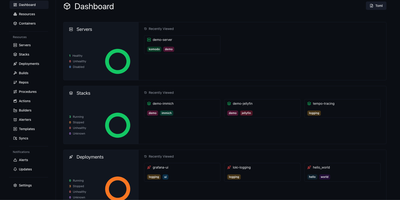
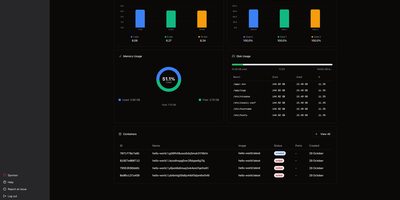
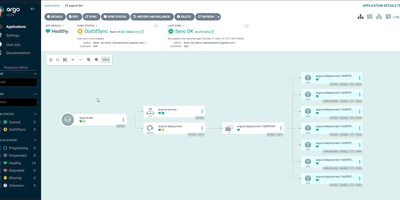
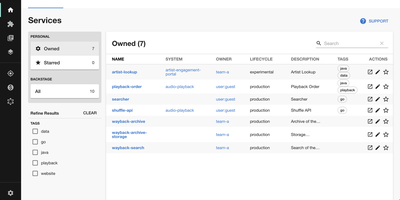
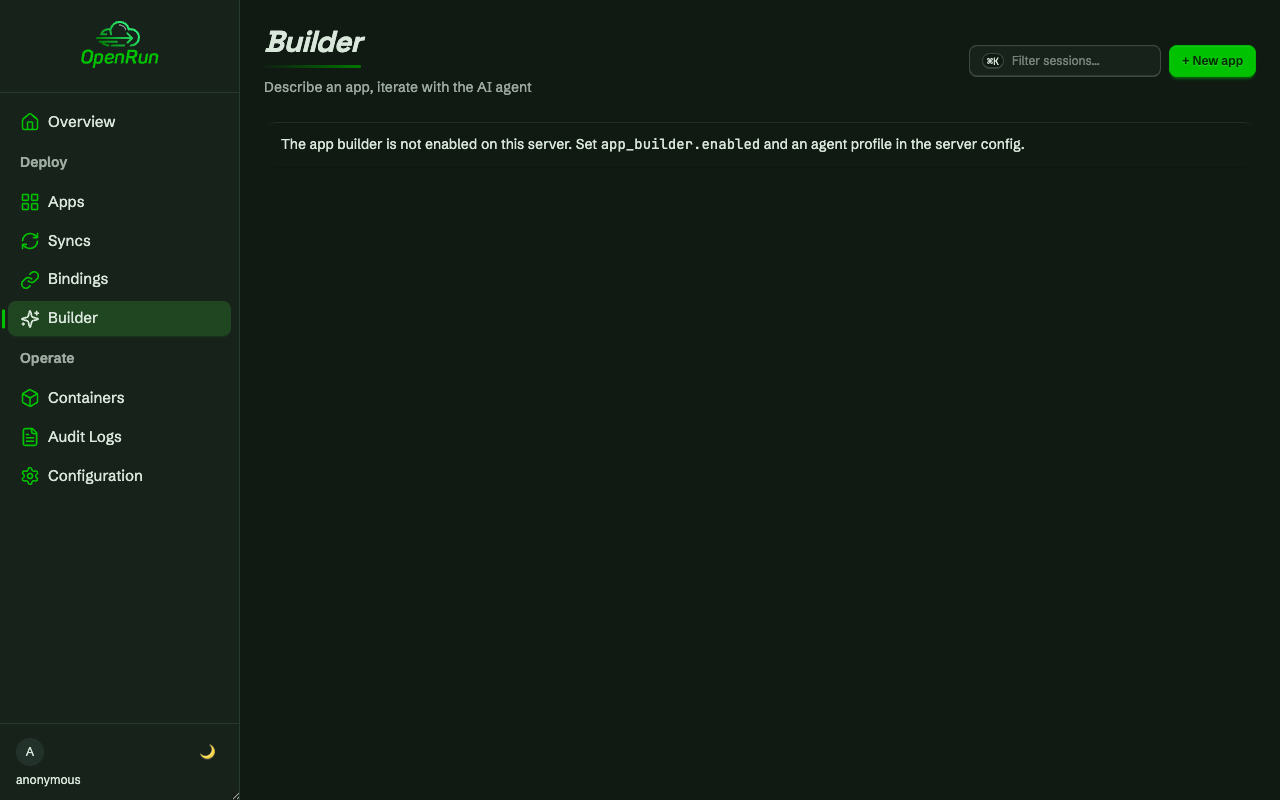
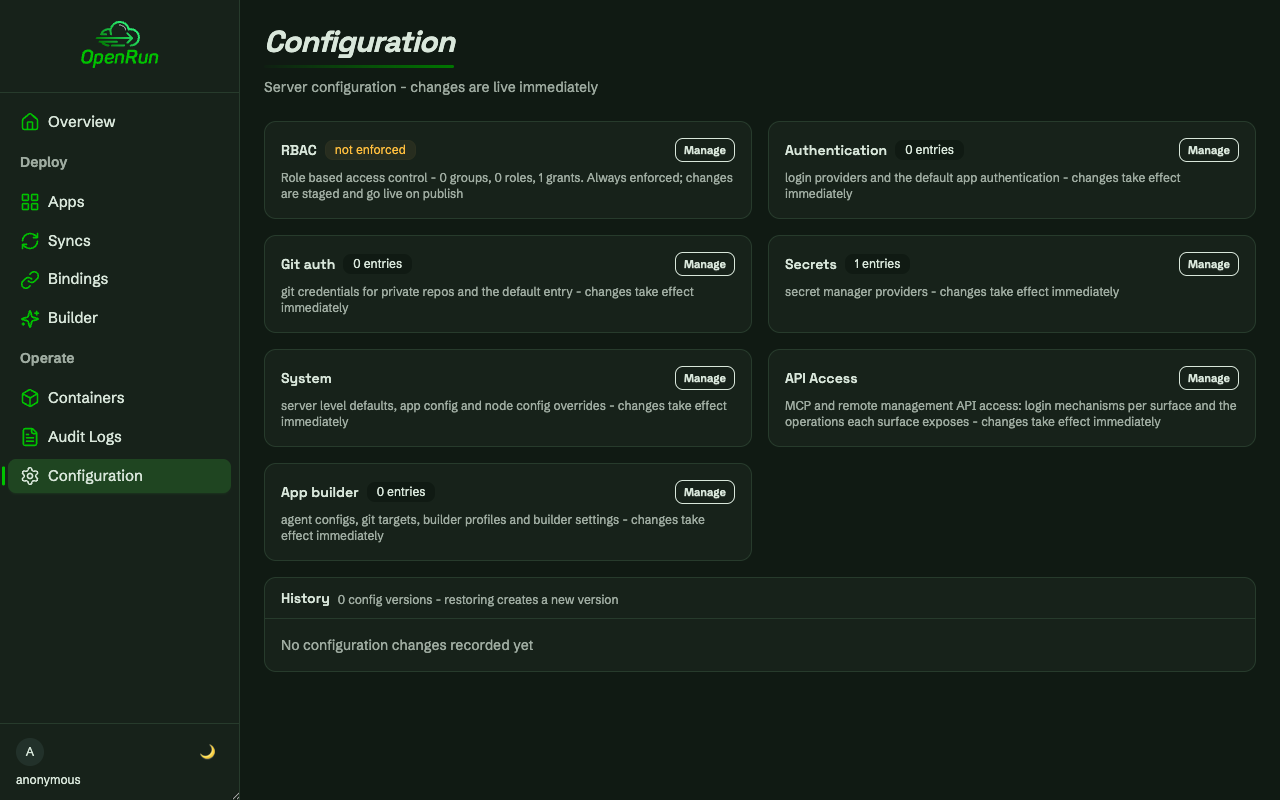
- Web-based dashboard for monitoring containers, reviewing audit logs, managing application syncs, viewing server configuration, and using the built-in AI app builder.
- AppSpec Templates
- Pre-configured deployment templates for Streamlit, Gradio, FastAPI, Flask, and FastHTML that deploy Python applications directly from Git without Dockerfiles.
- RBAC and Audit Logs
- Role-based access control governs both admin operations and per-app user access, with comprehensive audit logging tracking every deployment and configuration change.