Hocuspocus
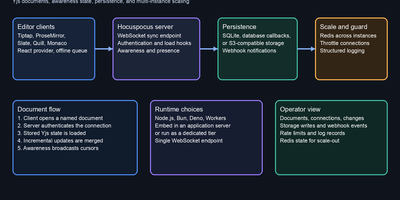
Hocuspocus is the WebSocket backend that turns a regular editor into a multiplayer one: two people open the same document, type at the same time, and watch each other's words appear in place, with every keystroke merged cleanly and no save conflicts to untangle later. The server speaks the Yjs synchronization protocol, so clients built with Tiptap, ProseMirror, Slate, Quill, or Monaco editors connect over a persistent connection and exchange small updates that the conflict-free data type orders correctly regardless of arrival sequence, and awareness messages carry cursor positions and presence so collaborators see who is in the document. Teams that outgrow one process add the Redis extension to balance connections across multiple server instances, reaching very large numbers of simultaneous editors on the same documents. Persistence extensions store documents in SQLite for small deployments or in a database or S3-compatible storage through your own fetch and store callbacks, the webhook extension notifies your application when documents change, throttling guards against abusive connections, and hooks for authentication and document loading let you enforce per-document permissions before anyone joins. Developers embed the server into an existing Node.js, Bun, Deno, or Cloudflare Workers runtime, or run it as the collaboration tier beside their main application, and offline-first clients queue changes locally and synchronize when the connection returns. Running on a dedicated VPS on RepoCloud with guaranteed CPU, RAM, and SSD, full root SSH access, and a browser serial console. MIT licensed.
Folio
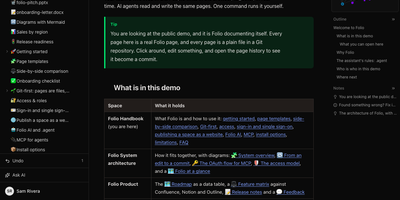
Folio is a self-hosted team wiki that stores every page as a plain Markdown file in a Git repository you own, while your team writes together in the browser in real time. People work in Reading, Live edit, or Source mode, keep editing offline until the connection returns, and watch changes land in the page history as commits they can restore. Data tables with nine column types, filters, and views sit beside the documents, and forms write submissions straight into those tables without requiring an account. Whiteboards, Mermaid diagrams, and a visual diagram editor cover the pictures, while uploads like PDF, Word, Excel, and PowerPoint files open as previewable pages inside the tree. Confluence spaces import with their trees, images, and whiteboards converted, so a migration keeps its structure instead of flattening into a pile of attachments. AI agents read and write the same pages through an MCP server with 41 tools, authenticated by personal tokens or OAuth 2.1, and the built-in assistant answers questions read-only or makes supervised edits. Administrators control access down to a single page, sign people in with SAML, SCIM, or OpenID Connect, hand out expiring share links, and publish a space as a public read-only website. Running on a dedicated VPS on RepoCloud with guaranteed CPU, RAM, and SSD, full root SSH access, and a browser serial console. MIT licensed.
Apache Doris
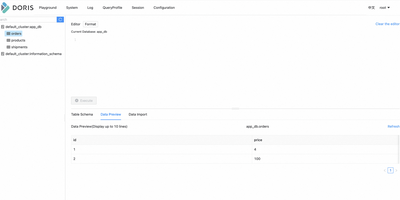
Dashboards should not wait minutes for yesterday's data, so Apache Doris answers analytical SQL over fresh data with a massively parallel, fully vectorized engine that processes column batches instead of row after row. Frontends receive queries over the MySQL protocol, plan them with a cost-based optimizer, and coordinate execution, while Backends store columnar tablets and run scans, joins, and aggregations in parallel pipelines across cores. Data lands continuously through stream and batch loads, broker imports from object storage, and change capture from operational databases, and it is queryable immediately for reporting that reflects the last minutes rather than the last nightly job. Tables outside Doris join the same SQL through catalogs for Hive, Iceberg, Paimon, Hudi, and JDBC sources, with local caching and materialized views accelerating the lakehouse queries your team runs every day. Search workloads live here too: an inverted index and a SEARCH function provide full-text retrieval, vector indexes support similarity search, and AI functions call language models from SQL for extraction and summarization, so hybrid queries mix keywords, semantics, and structured filters in one statement. Workload groups, resource controls, and compute-storage separation in cloud mode keep interactive dashboards fast while heavy ETL spills safely to disk. Running on a dedicated VPS on RepoCloud with guaranteed CPU, RAM, and SSD, full root SSH access, and a browser serial console. Apache-2.0 licensed.
Oxynote
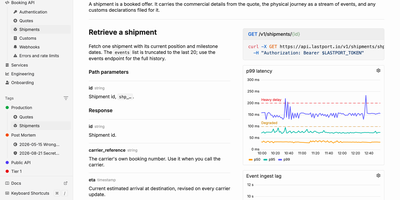
When an alert fires at 3 a.m., the live chart, the runbook, and the fix are already on one page of Oxynote, a self-hosted technical wiki. The chart is a Live Metrics block that runs its own Prometheus or SQL query and draws a time series, bar chart, or gauge. Several such blocks side by side make a dashboard inside the page. Around it, the editor works like Notion, with checklists, callouts, titled code blocks, Mermaid diagrams, Figma embeds, images, and files. Internal APIs get Stripe-style reference pages with the endpoint, a curl example, and a sample response beside the explanation. Mark a page reviewable and every edit lands in a draft. A block-aware diff shows renamed endpoints, fields, and reworded sentences in one red and green view until a reviewer approves. Freshness hooks watch GitHub files, container images, web pages, or dates, and remind maintainers when something a page depends on changes. Teammates edit together live and see who holds which block. Comments attach to a word, a diagram line, or a whole chart, with replies and an inbox for mentions. The Rubber Duck assistant edits pages and runs block queries with Anthropic, OpenAI, Google, OpenRouter, or a local Ollama model, and MCP lets Claude Code and Codex read and write the docs. Running on a dedicated VPS on RepoCloud with guaranteed CPU, RAM, and SSD, full root SSH access, and a browser serial console. Apache-2.0 licensed.
Redpanda
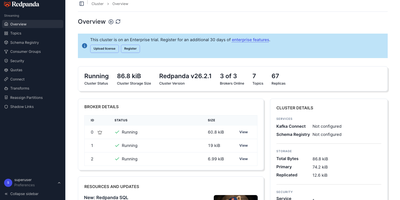
With 12,400 GitHub stars and adoption across enterprises processing billions of events daily, Redpanda delivers a complete Kafka wire protocol implementation in C++ that existing Kafka producers, consumers, Kafka Connect connectors, and Kafka Streams applications connect to without code changes — eliminating JVM garbage collection pauses and ZooKeeper coordination overhead through a single binary architecture built on the Seastar framework's thread-per-core model. The integrated schema registry supports Avro, Protobuf, and JSON Schema validation directly within the broker without separate infrastructure. Tiered storage automatically offloads cold data to object storage while maintaining seamless consumer access across the full retention window. Redpanda Console provides a web-based management interface for topic inspection, consumer group monitoring, schema management, and ACL configuration. Redpanda Connect extends the platform with 200+ pre-built connectors for data pipelines between databases, cloud services, and streaming systems. Exactly-once semantics with idempotent producers and transactional guarantees ensure data integrity for financial, healthcare, and compliance workloads. The Adaptable Data Plane in version 26.1 enables per-topic performance profiles balancing throughput, latency, and durability within a single cluster. Deploy via Docker or Kubernetes with official Helm charts — a three-node cluster starts with a single rpk command. Running on a dedicated VPS on RepoCloud with guaranteed CPU, RAM, and SSD, full root SSH access, and a browser serial console. BSL 1.1 licensed (converts to Apache 2.0 after four years).
Flowcat
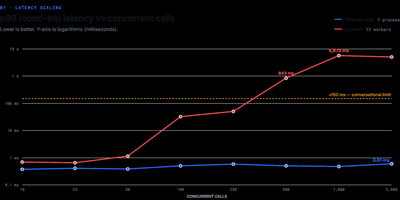
Real-time voice agents get a native Rust runtime in Flowcat: it carries a phone or WebRTC call through a composable media pipeline on your own infrastructure, so latency-sensitive audio never queues behind a managed platform. Audio flows from transport into voice activity detection and turn-taking, then through speech-to-text, an LLM, and text-to-speech, or a single speech-to-speech model, and back out to the caller, with in-process SIP and RTP for telephony. Pair it with local Whisper transcription, Kokoro, Piper, or XTTS for speech, and Ollama for reasoning, and a call's audio and transcript never leave your network; cloud providers plug in by name when you prefer them. Describe one agent in a YAML or JSON node-and-edge graph and the single flowcat-server binary serves it over HTTP, opening a browser page with microphone and live transcript, or bridging a Plivo number into the same agent. The runtime stays flat as call volume grows: benchmarked against a multiprocess Python baseline, one process holds p99 round-trip overhead at or below 0.61 milliseconds from 10 to 2,000 concurrent calls, at roughly 19.6 KB of RAM per idle session. Deploy it inside your VPC or an air-gapped environment where call recordings are sensitive. Running on a dedicated VPS on RepoCloud with guaranteed CPU, RAM, and SSD, full root SSH access, and a browser serial console. Apache-2.0 licensed.
Apache Solr
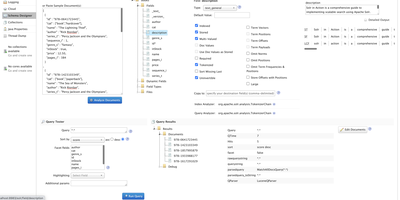
Product catalogs, help centers, and document archives all fail the same way: visitors type a few words, get the wrong results, and leave. Apache Solr is the search platform behind fast, relevant answers, returning ranked matches with faceted filters, highlighted snippets, spell suggestions, and geospatial distance in a single query. Index documents through HTTP updates or data import handlers, shape fields in the schema, and watch changes appear through near-real-time indexing without rebuilding the corpus. SolrCloud turns one index into a distributed collection: shards split large corpora across nodes, replicas copy each shard for failover and query load, and ZooKeeper coordinates configuration so every node serves the same schema. Dense vector fields store embeddings beside your text, and the KNN parser retrieves nearest neighbors through HNSW graphs, so semantic search runs in the same engine as keyword search instead of a second system. A combined query handler merges keyword and vector rankings with reciprocal rank fusion, and an enrichment processor can call language models at index time to tag or summarize documents as they arrive. Streaming expressions add analytics over results, from rollups and percentiles to joins across collections, while JWT authentication and authorization rules protect the admin console and APIs. Running on a dedicated VPS on RepoCloud with guaranteed CPU, RAM, and SSD, full root SSH access, and a browser serial console. Apache-2.0 licensed.
LibrePaper
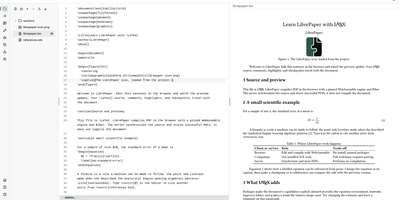
Emailed copies of the same document, each with a different filename and a different set of edits, are where collaborative writing goes to die. LibrePaper keeps one living document in the browser instead: start a project in HTML, Markdown, Typst, LaTeX, or Quarto, or upload an existing one, and the editor renders the compiled result beside the source as you type. Readers highlight the exact passage they mean and comment on it, suggested edits land as tracked changes, and threads resolve on the text in real time. Finished work publishes to its own separate host, so scripts and interactive figures inside a document can never reach a reader's sign-in session. Nobody manages another password: sign-in runs through GitHub, Google, Microsoft Entra ID, ORCID, or any OpenID Connect provider, per-provider lists decide who may publish and who may only comment, and anonymous comments can be switched on for outside reviewers. Every project exports as a complete, independent copy from the command line, which also administers the deployment and can serve a document's tools to an AI agent over MCP. Operators get graphs, account management, and moderation, with per-account storage quotas, upload limits, and retention rules keeping a public instance under control. Four Docker containers behind Caddy with automatic HTTPS, one configuration file, and nightly backups of database and files complete the deployment. Running on a dedicated VPS on RepoCloud with guaranteed CPU, RAM, and SSD, full root SSH access, and a browser serial console. MIT licensed.
Apache IoTDB
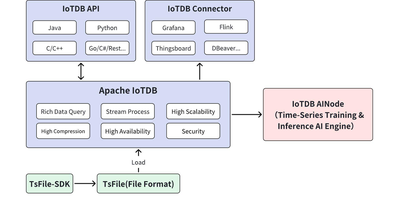
Sensors on factory floors, wind turbines, and connected vehicles produce readings every second, and Apache IoTDB is the time-series database built to store those readings and answer questions over them. Devices write through client sessions that tolerate out-of-order, delayed, and multi-frequency arrivals, so a gateway that reconnects after an outage can backfill history without corrupting the timeline. Series live in a device hierarchy you can browse like a directory tree, or in tables queried with standard SQL, common table expressions, set operations, and more than one hundred built-in aggregation and time-series functions. The TsFile columnar format shares one time column across aligned series and applies encodings designed for sensor data, which keeps high-frequency archives compact while Spark and Hadoop jobs read the same files directly for larger analysis. Pipe synchronization streams records or transfers whole TsFiles between edge sites and central clusters with path and device filtering, so plants keep collecting locally while headquarters queries a continuous copy. AINode brings forecasting, anomaly detection, and missing-value imputation into the database itself: register a model with SQL, then ask for predictions in the same query language instead of shipping measurements to a separate machine learning service. A low-memory Edge edition runs collection on constrained gateways, and clusters scale by adding DataNodes under ConfigNode coordination with automatic load balancing. Running on a dedicated VPS on RepoCloud with guaranteed CPU, RAM, and SSD, full root SSH access, and a browser serial console. Apache-2.0 licensed.
Kuzzle
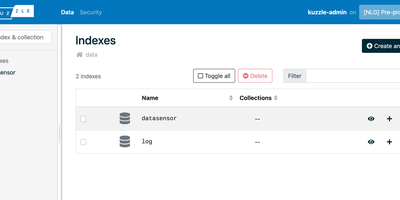
Kuzzle ships a production-ready backend from day one: data storage with Elasticsearch search, real-time pub/sub notifications, user authentication, role-based permissions, and a multi-protocol API serving HTTP, WebSocket, and MQTT simultaneously on port 7512. Rather than rebuilding these standard features from scratch for each project, you get a ready-made backend that accepts connections from web applications, mobile clients, and IoT devices through one unified API surface. Elasticsearch provides persistent document storage with full-text search, geospatial queries, and aggregation pipelines, while Redis handles internal caching and memory storage operations. The Koncorde real-time engine powers pub/sub messaging and database notifications, enabling clients to subscribe to document changes with filter conditions that trigger instant updates when matching data is created, modified, or deleted. User management includes JWT-based authentication, role-based access control with granular permissions at the controller and action level, and pluggable authentication strategies via Passport.js. The extensible plugin framework allows developing custom business logic, additional authentication providers, storage connectors, and protocol handlers. Client SDKs for JavaScript, Dart, Kotlin, and C++ accelerate frontend development, while the Kourou CLI provides command-line API access and project scaffolding. The Vue.js Admin Console offers a web interface for managing indexes, collections, documents, users, profiles, and roles. Horizontal scaling through masterless cluster mode targets 99.99% uptime without single points of failure. Running on a dedicated VPS on RepoCloud with guaranteed CPU, RAM, and SSD, full root SSH access, and a browser serial console. Apache 2.0 licensed.
Drafft.ink
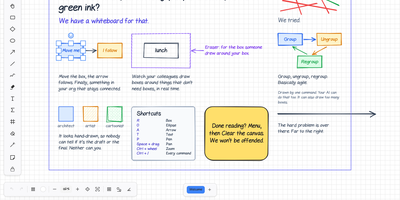
With Drafft.ink, a team can sketch diagrams on an infinite hand-drawn canvas and edit them together in real time, with every board kept on a server it controls. Fifteen tools cover shapes, arrows, pen, highlighter, text, math, frames, eraser, and laser pointer, plus sticky notes. Arrows stay attached when a box moves, smart guides snap shapes into line and to equal gaps, and sketchiness runs from architect to drunk. Text can use hand-drawn or clean fonts with a colour per letter, an equation editor sets LaTeX formulas, and pictures can be cropped and painted on. Rooms open from a shared link, show remote cursors and laser trails, let you follow a teammate's viewport, and merge edits made offline when someone reconnects. Boards save as JSON, round-trip Excalidraw files, import Mermaid diagrams, and export PNG or SVG; a PNG can embed the drawing so it doubles as the source file. A command palette on Ctrl+/ lists every action, tabs hold several boards, and view-only mode limits a board to selecting, panning, and the laser pointer. Every button is a named command that scripts, a command-line tool, and an agent server for AI assistants can call too. The collaboration server is one program with no config file; rooms live on disk, in a local database file, or in an S3 bucket. Running on a dedicated VPS on RepoCloud with guaranteed CPU, RAM, and SSD, full root SSH access, and a browser serial console. AGPL-3.0 licensed.
Medama
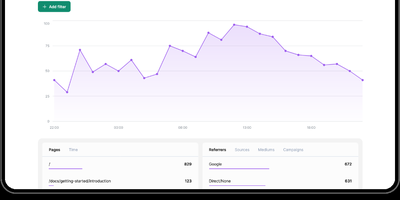
Track website traffic and conversion funnels with sub-second precision while guaranteeing visitors total anonymity with Medama, a privacy-first web analytics platform operating without cookies, IP storage, or consent banners. Site owners embed a sub-kilobyte tracking script into web headers to record page views, session duration, referrers, screen resolutions, browser user agents, and geographic countries anonymously. Built-in caching header mechanisms determine unique daily visitors without generating persistent hashes or storing cross-site identifiers that violate privacy regulations. The web dashboard visualizes hourly traffic trends with interactive area charts and provides multi-dimensional data tables breaking down top-performing pages, search engine referrers, operating systems, and campaign UTM parameters. Developers can instrument custom click events and page attributes using simple HTML data attributes to measure conversions, document downloads, button interactions, and user subscription states. Administrators manage multiple websites from a single interface, configure curated anti-spam blocklists using Firehol and Tor exit node feeds, and monitor server CPU, memory, and disk usage in real time. Full OpenAPI specification endpoints allow teams to export analytics data directly into internal business intelligence pipelines and custom executive dashboards. Running on a dedicated VPS on RepoCloud with guaranteed CPU, RAM, and SSD, full root SSH access, and a browser serial console. Apache-2.0 licensed.
PeerDB
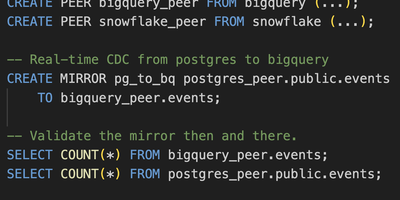
Replicate PostgreSQL to data warehouses 10x faster than conventional CDC tools, proven across 400+ companies including AutoNation and LC Waikiki collectively moving 200 TB monthly. The architecture pairs a Rust-based Nexus query layer implementing the PGWire protocol with Go-based Flow workers orchestrated by Temporal. Because Nexus speaks native Postgres wire protocol, any client tool (pgAdmin, psql, Grafana, Tableau, Flyway) can manage replication through standard SQL commands like CREATE MIRROR. Three streaming modes serve different needs: log-based CDC via logical replication slots, cursor-based streaming through timestamp or integer columns, and XMIN-based capture for tables lacking logical replication. Parallel initial load achieves consistent snapshots through transaction snapshotting and CTID range scans, reducing 100+ GB migrations from days to minutes. Native TOAST column handling processes large JSONB payloads and IoT data efficiently without row expansion penalties. Destinations include ClickHouse, Snowflake, BigQuery, Kafka, Azure Event Hubs, Google PubSub, S3, and PostgreSQL with in-flight SQL transformations. Schema change propagation, partitioned table support, and slot growth alerts ensure production reliability. Docker Compose bundles Temporal, catalog Postgres, Flow API, workers, and the Next.js monitoring UI. Deployable on RepoCloud with dedicated VPS resources under AGPL-3.0.
Skytable
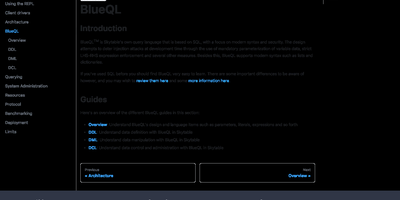
Some data refuses to sit still in rows and columns. Skytable is an open-source NoSQL database that stores information in spaces and models instead of rigid tables, letting a record carry strings, numbers, nested lists, and other complex types the way your application actually thinks about them. Developers query it with BlueQL, a language that feels familiar to anyone who writes SQL but adds modern collection syntax and mandatory parameterisation that blunts injection attacks before they start. Underneath, the engine keeps working data in memory, drives multithreaded asynchronous network I/O, batches writes, and persists through a custom append-only storage layer with delayed-durability transactions that trade a tunable sliver of risk for a lot of speed. Client drivers connect applications directly, an interactive shell handles administration and exploration, authentication protects the root account and additional users, and clustering work in progress aims at the high-availability deployments larger systems expect. Teams reach for it when a document store feels too shapeless, a relational database feels too stiff, and latency budgets leave no room for either. Running on a dedicated VPS on RepoCloud with guaranteed CPU, RAM, and SSD, full root SSH access, and a browser serial console. AGPL-3.0 licensed.
Fluvio
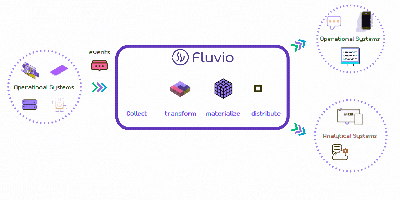
Fluvio is a distributed data streaming platform that moves records between your applications on partitioned topics and transforms them in flight with WebAssembly modules before they land anywhere. Producers publish to topics and consumers read at their own pace, with client libraries for Rust, Python, and JavaScript plus a full command line for producing and consuming interactively. SmartModules are reusable WebAssembly functions that filter, reshape, and enrich records inside the stream, so cleanup and routing logic runs once at the platform layer instead of inside every consumer. Stateful DataFlow builds continuous processing on top of the same streams, keeping state across records to aggregate, join, and react as data arrives. Inbound connectors collect from HTTP endpoints, webhooks, MQTT brokers, and Kafka clusters, and outbound connectors deliver to HTTP, SQL databases, and Kafka, with a development kit for building connectors to your own systems. A local cluster starts with one command for development, and the same platform deploys on Kubernetes for production streaming at the edge or in the cloud. Running on a dedicated VPS on RepoCloud with guaranteed CPU, RAM, and SSD, full root SSH access, and a browser serial console. Apache-2.0 licensed.
Parabol
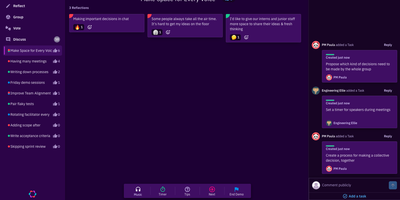
Retrospectives, sprint poker, check-ins, and standups all get a home in Parabol, a meeting workspace that walks agile teams through each ritual one stage at a time and keeps every outcome in one place. A retrospective flows from icebreaker to reflect, group, vote, and discuss, with anonymous reflection cards that stay hidden until everyone is done writing, then cluster into themes before dot voting decides what deserves airtime; Start/Stop/Continue, 4Ls, and Mad/Sad/Glad templates are ready to use or customize. Sprint Poker estimates stories on Fibonacci, T-shirt, or custom scales, pulling backlog items from Jira Cloud, GitHub, GitLab, or Linear and pushing the agreed estimate back. Check-ins work through agenda items and task updates, while standups gather written answers on a recurring schedule so distributed teams stay current across time zones. A facilitator timer sets deadlines for asynchronous contributions, with optional Slack or Mattermost notifications to the team. Action items land on a shared task board with active, stuck, done, and future columns, and Pages hold real-time collaborative notes next to the meetings that produced them. Every meeting closes with a summary of attendees, discussion, and next steps that can be emailed to the team. Running on a dedicated VPS on RepoCloud with guaranteed CPU, RAM, and SSD, full root SSH access, and a browser serial console. AGPL-3.0 licensed.
Apache Pinot
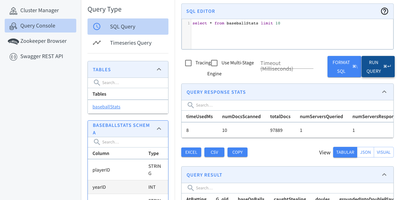
Teams that ship live dashboards, metrics APIs, or AI agents can query events from seconds ago in milliseconds with Apache Pinot, an open-source real-time analytics database. Streams from Kafka, Pulsar, or Kinesis and batch files from Hadoop, Spark, or S3 feed the same hybrid table, and upserts keep only the latest version of each record. Standard SQL runs in a built-in query console or through a REST API, and the multi-stage engine adds joins between large fact tables and dimension tables. Inverted, range, text, JSON, geospatial, Bloom filter, StarTree, and timestamp indexes keep filters and aggregations fast, while vector indexes support nearest-neighbor search over embeddings. Multitenancy isolates teams and customers, tiered storage separates hot and cold data, and optional minions merge and roll up segments in the background. The web Data Explorer lists tenants, tables, segments, and consuming partitions, lets you pause or resume real-time ingestion, and links to a Swagger page covering every controller endpoint. Typical uses include embedded customer analytics, leaderboards and usage meters, fraud and pricing signals, and fresh context for retrieval by AI agents. Running on a dedicated VPS on RepoCloud with guaranteed CPU, RAM, and SSD, full root SSH access, and a browser serial console. Apache-2.0 licensed.
Openfire
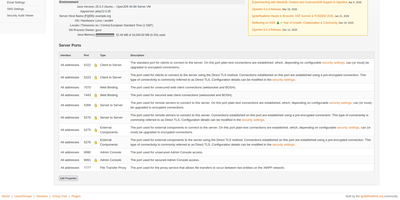
Openfire is a self-hosted XMPP server that gives your organization its own instant messaging network, with one-to-one chat, persistent group rooms, and federation to other XMPP servers, all administered from a web console. Team members connect with any XMPP client on desktop, mobile, or the web and get presence, rosters, offline message delivery, and file sharing inside conversations. Multi-user chat rooms stay available around the clock with configurable history, moderation roles, and access controls, so a support channel or project room keeps its context instead of dissolving into scattered direct messages. The plugin catalog installs from inside the admin console and adds capabilities like message archiving and compliance monitoring, a browser-based chat client, HTTP file upload, and push notifications for mobile clients. An LDAP directory or an existing database can supply users and groups, so accounts stay in sync with the directory your organization already maintains. Server-to-server federation connects your users with contacts on other XMPP domains over encrypted connections, and load balancing spreads busy deployments across multiple instances. TLS certificates, encrypted client ports, and IP-based access lists for the admin console keep the deployment under your control from the first setup wizard onward. Running on a dedicated VPS on RepoCloud with guaranteed CPU, RAM, and SSD, full root SSH access, and a browser serial console. Apache-2.0 licensed.