
Kaloscope
Kaloscope manages your media library the way a flowchart thinks: search, download, scrape, rename, shelve, and play, each step a node you can see and rearrange. Drag HTTP requests, Python scripts, conditions, and loops onto the canvas to build the exact pipeline your sources need, then import community templates from GitHub when someone has already solved your problem. Global search aggregates multiple indexers at once, and finished finds flow straight into aria2, qBittorrent, Transmission, or OpenList for cloud downloading, with keyword rules and schedules automating the recurring hunts. Libraries for movies, series, and other media watch folders in real time, scrape rich metadata with custom naming rules, and read or write NFO files alongside the media. Press play in the same interface: FLV, HLS, and MP4 stream with on-demand transcoding, hardware acceleration, danmaku comments, and resume points that follow you between sessions. An AI assistant can draft workflows from plain language, inspect logs, and manage downloads, and external AI clients connect over MCP with token permissions you control. Per-library permissions, themes, and an installable PWA round out a server the whole household can use. Running on a dedicated VPS on RepoCloud with guaranteed CPU, RAM, and SSD, full root SSH access, and a browser serial console. GPL-3.0 licensed.
Bragibooks
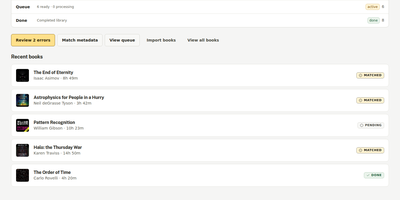
A folder of loose audiobook chapters goes in; a single, perfectly tagged m4b library comes out. Bragibooks is the operations board for that transformation: you select a batch of audiobook folders from your server, and it searches AudiobookDB to match each one with the right title, author, narrator, and release, with a custom search on hand when the first match is wrong. Confirmed books enter a processing queue where m4b-merge merges split mp3, m4a, and m4b parts, converts formats, strips stale metadata, and writes clean, consistently tagged files while you watch the live job output in your browser. Saved output profiles let you route different batches to different directories or path formats, and the books library keeps every finished title with its metadata, files, and processing history a click away. The whole thing runs as one container with the interface built in, a SQLite database on a mounted config volume, and access restricted to your local network by default, with an optional API key for external tools. Audiobook collectors use it to tame download folders before importing into their player of choice, and hoarders of split-chapter rips finally get uniform Chapter 01 style files. Running on a dedicated VPS on RepoCloud with guaranteed CPU, RAM, and SSD, full root SSH access, and a browser serial console. GPL-3.0 licensed.
Chaptarr
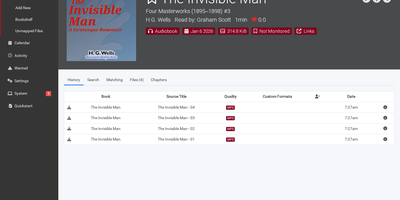
One library for the books you read and the books you listen to: Chaptarr manages audiobooks and eBooks side by side, so the same title can live on your server as a chaptered M4B and an EPUB without two separate apps fighting over it. It knows the difference between editions and narrators, which means a dramatized production, an unabridged reading, and the print text can coexist as first-class versions of one work. Multi-part releases and multi-file recordings are handled as single books, and MP3 audiobooks can be converted into one chaptered M4B with chapters preserved or inserted where they are missing. Separate root folders keep audiobooks and eBooks apart, or place eBooks alongside their audio twins; either way, matching uses file tags, folder names, and release metadata to attach files to the right book automatically. Series are organized for you, metadata profiles control which languages belong in your library, and flexible renaming tokens produce filenames that read the same way a human would shelve them. Custom quality profiles per library drive automatic upgrades when a better release appears, and the standard download clients and indexer integrations from the *arr family plug straight in. Running on a dedicated VPS on RepoCloud with guaranteed CPU, RAM, and SSD, full root SSH access, and a browser serial console. GPL-3.0 licensed.
Peach
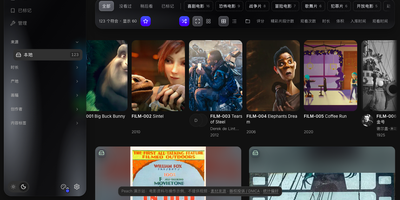
Peach is a self-hosted video library manager that scrapes rich metadata for your own collection and serves it through a polished web player you can open on any device. Point it at local drives, SMB shares, mounted cloud storage, or a PikPak library and it scans everything into one browsable catalog without moving or modifying your files. The scraper recognizes video codes, reads existing NFO files, and fills in titles, performers, studios, and cover art from multiple sources while always preserving corrections you make by hand. Playback happens right in the browser with subtitle support, variable speed, rotation, resume points, and timeline previews you can scrub through before committing to a scene. A follow system tracks performers and creators so new releases surface automatically, and the discovery views plus a want list help you decide what to add next. When something is missing, search by video code or drop in a magnet link and completed downloads are filed into the library on their own. Tagging, duplicate detection, and multi-version grouping keep large collections tidy, while the task center lets you pause, resume, or cancel scans and downloads and watch their resource use as they run. Running on a dedicated VPS on RepoCloud with guaranteed CPU, RAM, and SSD, full root SSH access, and a browser serial console. AGPL-3.0-or-later licensed.
LibreTime
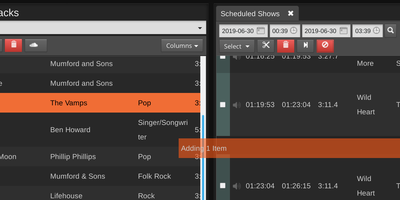
LibreTime is a complete radio broadcast automation platform that schedules shows, manages your audio library, and streams to listeners around the clock, so a small station team can run a professional-sounding station without someone babysitting the studio at 3 a.m. Drop music, sweepers, interviews, and full programs into the library, and each file is analyzed, tagged from its metadata, and made searchable for everyone building shows. Programmers lay out the week on a calendar, repeat flagship shows daily or weekly, and fill the gaps with smart blocks that pick tracks by criteria like genre, length, or last played. When a live DJ connects, the station switches from the scheduled playlist to the live input and back again without dead air, and a pre-recorded show takes over automatically when nobody is in the studio. Podcasts slot into the same schedule: subscribe to a feed once and new episodes download and land in their slot without manual uploads. The same playout feeds a mixing desk or transmitter for AM and FM, or goes straight to Icecast and SHOUTcast servers for internet listeners. Station managers keep separate accounts for DJs and programmers, let each host prepare only their own shows, and review what actually played and when. Running on a dedicated VPS on RepoCloud with guaranteed CPU, RAM, and SSD, full root SSH access, and a browser serial console. AGPL-3.0 licensed.
LinkSift
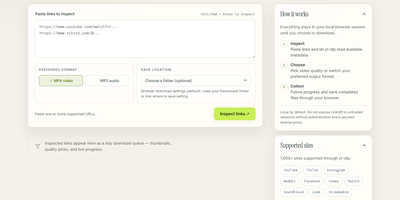
LinkSift is a self-hosted media downloader that turns pasted links into finished MP4 or MP3 files through a calm browser queue you run on your own server. Paste one URL or a whole batch and it first inspects the metadata, showing titles and available qualities before a single byte of media moves. You pick MP4 or MP3, choose the video height the source actually offers, and can even request both outputs from the same link, in which case the audio is extracted from the downloaded video instead of fetched twice. Every job reports its phase, percentage, downloaded bytes, speed, and ETA live, including real encoding progress while the audio is being packaged. Reloading or reopening the tab restores the queue exactly where it was, because a running server job is never re-submitted or cancelled by a closed browser. Finished files save through the normal browser download flow, or into a folder you pick in Chromium-based browsers. A configurable concurrency limit keeps a long batch from saturating your connection, and light, dark, and system themes keep long queues easy on the eyes. There is deliberately no account system or telemetry, so the queue stays a private tool on your network. Running on a dedicated VPS on RepoCloud with guaranteed CPU, RAM, and SSD, full root SSH access, and a browser serial console. MIT licensed.
Yubal
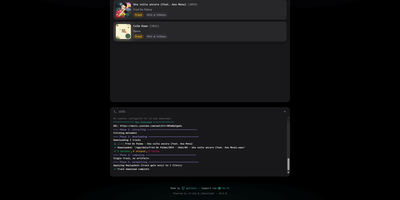
Paste any YouTube Music album, playlist, or track link into Yubal and get back a clean, fully tagged music library instead of a pile of video files. Tracks land in Artist and Year-Album folders with numbered filenames, cover art, and synced .lrc lyrics files, while playlists become M3U files that reference the album copies so a song appearing in ten playlists is stored exactly once. Subscribe to playlists and a cron-driven scheduler pulls new tracks into your library automatically on the schedule you set. The web interface shows real-time progress and a job queue that works on mobile, with automatic retries on failed downloads and graceful cancellation when you change your mind. Lyrics come from lrclib.net with a YouTube Music fallback, ReplayGain tags keep playback volume consistent across tracks and whole albums, and audio arrives as opus, mp3, or m4a, downloaded directly when possible and transcoded otherwise. Finished libraries drop straight into Navidrome, Jellyfin, or Gonic, and a browser extension for Firefox and Chrome queues downloads or subscriptions from the YouTube page you are already browsing. Optional cookie support unlocks private playlists, Liked Music, and age-restricted content, and a companion CLI downloads and inspects metadata from the terminal. Running on a dedicated VPS on RepoCloud with guaranteed CPU, RAM, and SSD, full root SSH access, and a browser serial console. MIT licensed.
Tonkatsu Box
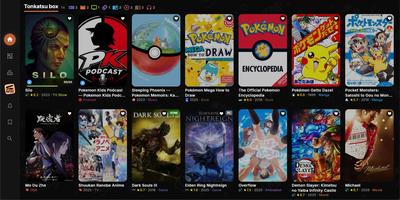
Tonkatsu Box is a collection manager for games, movies, TV shows, anime, visual novels, manga, books, music, and podcasts that tracks progress, ratings, and shelves for all of them in one place. One search field queries fifteen catalogues, from IGDB, TMDB, and TVmaze to AniList, MangaDex, OpenLibrary, ComicVine, and Podcast Index, and a result can land in several collections at once. Collections organize by platform, genre, or anything else, with grid, list, table, and board views, drag and drop ordering, global tags, and bulk actions across a selection. Progress speaks each medium's grammar: episodes for series, pages for books, chapters for manga, listened track checklists for albums, plus statuses, ratings, dates, and replays. The episode tracker unfolds seasons with posters, stills, air dates, and synopses, and marks one episode, a whole season, or the next unwatched one in a tap. Statistics turn the library into numbers with per type breakdowns, a month by month ribbon, platforms, formats, tags, best against worst, and a shareable summary card. Visual boards arrange posters, notes, and connections on a free canvas, and tier lists and mood grids rank and lay out items for export as PNG. Importers read Steam, Trakt, Simkl, MyAnimeList, AniList, Hardcover, and RetroAchievements libraries, plus JSON and CSV, and collections travel as offline .xcollx packages. Running on a dedicated VPS on RepoCloud with guaranteed CPU, RAM, and SSD, full root SSH access, and a browser serial console. MIT licensed.
Myriad
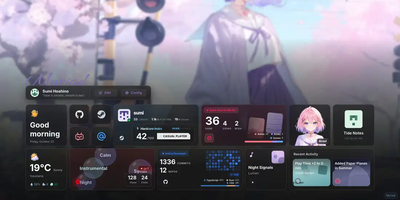
Myriad gathers your games, music, anime, and social posts from eleven platforms into one self-hosted homepage that has a resident character of its own. Connect GitHub, Steam, Bilibili, NetEase Cloud Music, and seven more platforms, and every account lands in one database that the report cards and library read. Report cards, a music player, weather, friend links, and recent activity fill a homepage you arrange on a grid or a free sticker canvas. The library shelves the collections as games, anime, films, books, and music, and clicking a report card plays a three-act portrait: your persona there, your taste, and your highlights. Her layered 2.5D portrait blinks, mouths each reply, and shifts expression in the browser, and a long press opens her panel anywhere on the site. In Chat she stays in character; in Help she plans, asks you to confirm, then acts inside the permissions you granted. The studio turns notes into a static Hugo blog, and the built-in reader follows your RSS, Notion, and RSSHub subscriptions. Tapps run sandboxed as pages or homepage widgets, and the Playground previews one from a single typed sentence before you install or export it. Follow other sites over ActivityPub, pair QQ, Telegram, or Discord bots that answer mentions in group chats, and keep registration and module visibility under your own switches. Running on a dedicated VPS on RepoCloud with guaranteed CPU, RAM, and SSD, full root SSH access, and a browser serial console. AGPL-3.0 licensed.
Mix Studio
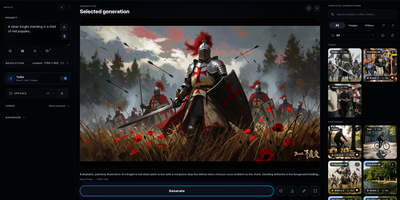
Mix Studio gives ComfyUI a calm, touch-friendly workspace where image and video generation happens through focused controls instead of a fresh node graph for every job. The Create view runs curated families including Krea 2, Flux 2 Klein, and Qwen Image with exact resolution, seed, batching, LoRA, and prompt enhancement controls. Region mode places aspect-correct boxes on the canvas, each carrying an independent prompt, LoRA stack, and reference image, then resolves them into one coherent generation. Edit mode combines whole-image editing, identity editing, and multi-reference Remix flows with masks, inpainting, outpainting, and source preservation. Video workspaces cover text-to-video, first and last frame control, reference-to-video, character animation, face lipsync, and motion transfer driven by a trimmed performance clip. An experimental photo-to-3D path turns a picture into an orbit video and a Gaussian splat you can view interactively and export. Upscaling pairs synchronized pan and zoom with a movable before-and-after divider for detail inspection. The Library keeps generations and uploads searchable with folders, groups, metadata, reusable settings, recoverable trash, and ZIP export, and separate profiles can carry PIN access. Live queue progress, cancellation, guided setup with dependency checks, and automatic backups keep daily operation orderly. Running on a dedicated VPS on RepoCloud with guaranteed CPU, RAM, and SSD, full root SSH access, and a browser serial console. GPL-3.0 licensed.
Monbooru
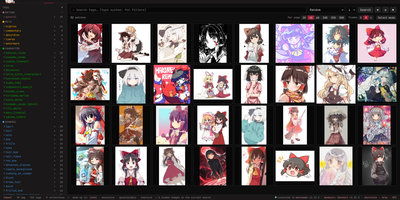
Monbooru is a private, tag-based gallery for your own image, video, and manga collection, searchable the way booru sites are, but hosted entirely on your server. Drop files into watched folders and they appear within seconds, with browser uploads, SHA-256 deduplication, and an inbox where new arrivals wait until you have reviewed and tagged them. Local auto-tagging runs ONNX models such as WD14, JoyTag, Camie, and PixAI on CPU or GPU, so a collection gets searchable labels without sending a single image to a cloud service. Tag management covers merges, aliases, implications, and custom categories, while rating tags with an SFW ceiling keep sensitive material hidden until you choose otherwise. Search combines wildcards, OR terms, and exclusions with filters for folder, date, size, dimensions, and AI generation settings, and saved searches keep favorite queries one click away. Batch actions retag, move, delete, or auto-tag whole selections at once, and the built-in manga reader opens CBZ and ZIP archives as single items. Image pages record sources, artist commentary, and your own notes, and near-duplicate detection lines up lookalikes side by side for cleanup. Multiple galleries can live in one instance, each with its own folders and database, and an optional password plus scoped REST API tokens control who and what can connect. Running on a dedicated VPS on RepoCloud with guaranteed CPU, RAM, and SSD, full root SSH access, and a browser serial console. AGPL-3.0 licensed.
Reloops
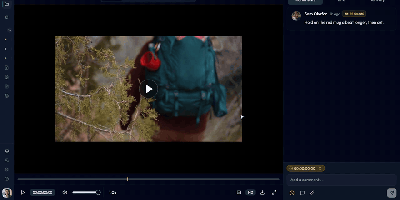
Reloops is a self-hosted creative asset workspace where teams keep every video, design, PDF, audio file, and live website in one library and collect feedback on the files themselves instead of in scattered email threads. Reviewers click anywhere on an image to pin a note to that exact spot, and on video the comments attach to the precise frame, so "fix this bit" always points at the bit in question. Every upload becomes a new version on the same asset, older cuts stay available for side-by-side comparison, and approvals are recorded on the file so nobody ships the wrong export by accident. Clients never need an account: send them a share link or a branded collection and they can watch, comment, and sign off as guests. The library searches the way people remember work, because each asset carries generated descriptions, tags, and metadata filters, so "the approved homepage with the blue button" actually finds something. Day to day, assignments and review queues keep feedback moving, while scoped API keys let agents such as Claude, OpenClaw, Zapier, and n8n upload new versions, post comments, update statuses, and manage share links inside the same workspace. Running on a dedicated VPS on RepoCloud with guaranteed CPU, RAM, and SSD, full root SSH access, and a browser serial console. AGPL-3.0 licensed.
Minimax Music UI
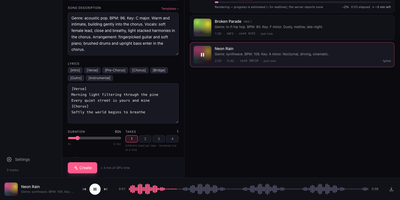
Minimax Music UI turns a self-hosted MiniMax-Music3 model into a private song factory, giving you a Suno-style studio where you describe a track, add lyrics, and watch finished songs appear in your own library. The Create panel works in Simple or Custom mode: write a style description covering genre, BPM, key, vocals, and arrangement, then shape words in a lyrics editor with one-tap [Verse], [Chorus], [Bridge], and [Instrumental] section chips. One submit can queue up to four takes at 5 to 360 seconds each, and the render queue shows queued, rendering, and done states with elapsed time, cancel, and retry, surviving a server restart without losing your place. When you run the bundled inference server, you can even press play on a track that is still rendering and hear the waveform grow in real time. A magic wand rewrites rough ideas into structured music captions, and a second wand drafts original lyrics sized to your chosen duration, both through any OpenAI-compatible model you point it at. Finished renders land in a searchable library with cover art, seeds, and render times, ready to download as WAV, reuse as a template, or open in a detail panel with the prompt and lyrics. A sticky waveform player with seek and keyboard shortcuts keeps music going while you work, and an optional access token locks the whole studio down. Running on a dedicated VPS on RepoCloud with guaranteed CPU, RAM, and SSD, full root SSH access, and a browser serial console. MIT licensed.

Garlic Hub
Garlic Hub runs your digital signage network from one self-hosted console, managing the players, the media library, and the playlists behind every screen without per-device fees. Build presentations as SMIL playlists: full-screen master playlists for a single message, reusable internal playlists for shared blocks like opening hours, and multizone layouts that split one display into independent areas. The visual zone editor arranges those areas by percentage or pixels, even overlapping, while the template editor produces image content without leaving the browser. Media arrives from local uploads, external links, screencasts, cameras, or stock platforms, organized in hierarchical folders with bulk actions. Date and time conditions, recurrence, and triggers from touch, key presses, or network messages decide what plays when, and nested playlists can take over by priority. Players fetch updates by polling or receive an immediate push when reachable, and the fleet view shows status at a glance with remote publish, refresh, and screenshot actions. Roles per module, OAuth2 tokens, a REST API, and webhooks let larger operations automate publishing and guard who changes what, in six interface languages. Running on a dedicated VPS on RepoCloud with guaranteed CPU, RAM, and SSD, full root SSH access, and a browser serial console. AGPL-3.0 licensed.
Narratarr
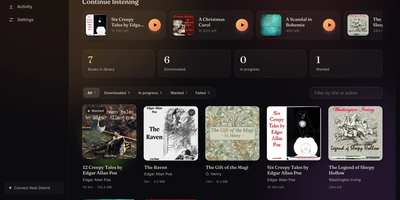
Narratarr finds free audiobooks, fetches them through your download stack, and plays them back in the browser, so a book goes from curiosity to chapter one in a single click. Discovery starts with more than 30,000 legal titles from LibriVox and Old-Time Radio, browsable by genre, popularity, language, and format. Search forgives your spelling: type a mangled author name and the right books still surface, ranked by how well they match. Every title shows its runtime, format, size, and description before you commit, and one click queues the download, files it under Author and Title with cover art attached, and tracks progress live on the Activity page. Playback needs no second app. The built-in player handles chapters, including markers buried inside m4b files, plays from three-quarter speed to triple speed, and offers a sleep timer that can stop at the chapter boundary. Your place is kept per listener, so a household can share one library without losing anyone's bookmark. Follow authors and series on the Wanted list and new releases arrive on their own; notifications land in ntfy, Gotify, Discord, or any webhook when downloads start and finish. Ebooks ride along too, readable as EPUBs in the same interface. Running on a dedicated VPS on RepoCloud with guaranteed CPU, RAM, and SSD, full root SSH access, and a browser serial console. MIT licensed.
Clu Comics
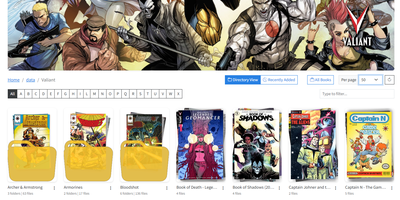
Comic Library Utilities (CLU) is a self-hosted comic library manager that converts, repairs, tags, downloads, and reads your entire comic collection from one web interface. Convert whole folders or libraries from CBR to CBZ in bulk, turn PDFs into CBZ with JPEG or WebP output, and rename thousands of files to one consistent pattern without touching a terminal. Open any CBZ in the browser editor to reorder pages, add or delete images, crop covers, split merged multi issue archives, and adjust contrast and brightness issue by issue. Write ComicInfo.xml from Metron, ComicVine, Grand Comics Database, AniList, MangaDex, MangaUpdates, or Bedetheque, then bulk apply tags across a directory with review before saving and a history log that can revert any change. Browse your library by publisher, series, or folder, read page by page in the built in reader that remembers your place, and follow weekly release calendars with a pull list and Wanted tracker for issues you do not own yet. Download new issues from Direct Download sources, Usenet through Newznab indexers with SABnzbd or NZBGet, and DC++, while folder monitoring unpacks, converts, renames, and files new arrivals automatically. Add Reader, Clerk, and Store Owner accounts with per folder permissions, publish OPDS feeds for reader apps, and sync reading history with Komga. Running on a dedicated VPS on RepoCloud with guaranteed CPU, RAM, and SSD, full root SSH access, and a browser serial console. GPL-3.0 licensed.

Pixtale
Scroll, do not file: Pixtale turns a folder of photos into a flowing masonry river you can browse for hours, pulling images from local disk, S3, and even Telegram into one gallery. Uploads get automatic thumbnails and high-resolution previews tuned for slow connections, so grandparents on hotel Wi-Fi see pictures fast instead of watching loading spinners. Every photo keeps its EXIF story, camera, lens, exposure, and capture time, and the timeline arranges the library chronologically without you renaming a single file. The Pixtale Sync companion ships photos from phones and PCs to the gallery automatically, ending the cable-and-import ritual after every trip. Favorites, albums, and a trash bin keep curation tidy, while multiple user accounts let each family member sign in to the same library with their own credentials. An admin overview watches photo counts, storage consumption, CPU, and memory, and storage settings let you add or repoint backends as the collection outgrows its first disk. Because the whole gallery runs from one Docker container with a small SQLite database, backups are a folder copy and the library stays portable between machines. Your photos live on your hardware, under your accounts, with no per-seat pricing as the archive grows. Running on a dedicated VPS on RepoCloud with guaranteed CPU, RAM, and SSD, full root SSH access, and a browser serial console. AGPL-3.0 licensed.
Omnibus
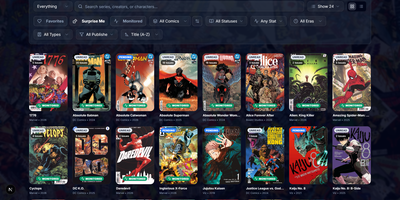
Omnibus runs your whole comic habit from one shelf: discover a series, request the missing issues, and read them in the browser when they land. Discovery starts with ComicVine or Metron metadata (high-resolution covers, synopses, and creator credits) and a release calendar that flags what you own and what is still missing across your monitored series. Requests are one click for a single issue or a whole run; Omnibus searches your indexers, hands the release to qBittorrent or SABnzbd, then imports, renames, and shelves the file with metadata embedded into the archive itself. Loose files that match nothing meet the Smart Matcher, which proposes the right series and applies every confident match in one pass. The built-in reader opens CBZ, natively read CBR and EPUB files in left-to-right, right-to-left manga, or continuous webtoon modes, with double-page spreads, brightness and contrast controls, page preloading, and preferences remembered per series; an offline button caches a full issue for the road. Reading lists assemble themselves from a pasted event ID or arrive by import from CBL files, League of Comic Geeks CSVs, AniList, or MyAnimeList, always showing how far through them you are. Everyone gets their own account, reading progress, follows, and an Updates feed, while OPDS, KOReader sync, and a Komga-compatible endpoint feed Panels, Mihon, and Paperback on the side. Running on a dedicated VPS on RepoCloud with guaranteed CPU, RAM, and SSD, full root SSH access, and a browser serial console. GPL-3.0 licensed.