PeerTube
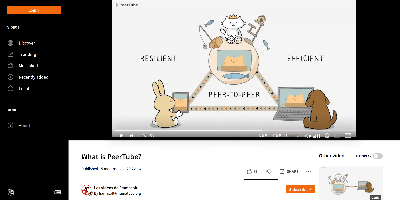
The fediverse's answer to YouTube comes from French non-profit Framasoft: PeerTube is a TypeScript/Angular video platform where hundreds of independently operated instances federate over ActivityPub into one network. Videos you publish are discoverable across the whole video fediverse, and viewers can follow your channels from Mastodon or any ActivityPub platform - or plain RSS - without needing an account on your instance. The namesake innovation attacks video hosting's core cost problem: alongside HLS delivery, an optional WebRTC-based P2P layer lets concurrent viewers' browsers share video segments with each other, so a video going viral distributes its own bandwidth demand instead of crushing your server; instance redundancy extends this by letting friendly instances cache each other's videos. Livestreaming is first-class - stream via OBS or any RTMP software, host permanent streams, enable replays, and interact through live chat. Creators get channels, playlists, analytics, built-in video editing (trim, watermark), and an embeddable player for any website. There are no ads, no data mining, and no recommendation algorithm engineered for watch-time - the project's explicit design stance. Admins control federation policy, P2P settings, and theming; a plugin system extends the rest. AGPL-licensed, 300+ contributors, in active development since 2015.
Tautulli
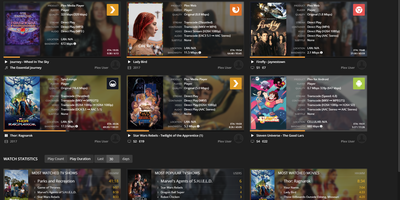
Plex's own dashboard shows current streams and forgets everything else - which is why every Plex server admin eventually installs Tautulli, the analytics layer. This Python web application (descended from PlexWatch and Headphones) logs complete watch history - what was watched, who watched it, when, where, from which device and IP, and whether it played directly or transcoded - and turns it into clean Highcharts graphs of daily plays, concurrent streams, bandwidth, and platform breakdowns. The home page surfaces top statistics over configurable windows: most-watched content, most active users, stream type ratios. For running a server shared with family and friends, this is operational truth: spot the user forcing 4K transcodes on a phone, see which libraries earn their disk space, and track sync activity across users. The notification engine triggers on server events - playback starts, transcode decision changes, recently added media, server down - through dozens of agents (Discord, Telegram, Slack, email, webhooks) with fully customizable text and conditions, plus arbitrary script execution. Scheduled newsletters email your users a styled digest of recently added content. A comprehensive API exposes every statistic for dashboards like Homarr, and an official mobile app monitors activity on the go. Themed to match Plex/Web. GPL-licensed.
AzuraCast
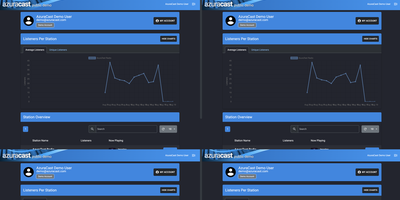
AzuraCast is a solution for running internet radio stations, packaging the entire broadcast stack into a single Docker installation that gets you on air in minutes. Built on PHP with a Vue.js frontend, it uses Liquidsoap as the AutoDJ engine to compile media from playlists, live DJ inputs, and scheduled programming into composited output streams, then broadcasts via Icecast-KH, SHOUTcast 2 DNAS, or Rocket Streaming Audio Server to thousands of concurrent listeners. The media library supports drag-and-drop uploads with automatic metadata extraction, while playlist management handles sequential, random, weighted, and time-scheduled rotations. Live DJ accounts let remote broadcasters connect via BUTT, Mixxx, or any Icecast-compatible software, with automatic crossfade transitions between AutoDJ and live input. The built-in Web DJ tool enables broadcasting directly from the browser without additional software. Each station includes public-facing player pages with now-playing metadata, album art, song history, and embeddable widgets for external websites. The listener request system lets audiences queue songs through the public interface. Multi-station administration hosts unlimited stations on a single server with individual user accounts and granular role-based permissions. Comprehensive analytics track listener counts, geographic distribution, unique listeners, and listening duration with exportable reports. HLS streaming delivers adaptive bitrate broadcasts for mobile compatibility. LADSPA audio plugins enable professional equalization and processing in the stream pipeline. Running on a dedicated VPS on RepoCloud with guaranteed CPU, RAM, and SSD, full root SSH access, and a browser serial console. AGPL-3.0 licensed.
Fireshare
The moment after ShadowPlay saves a great clip is what Fireshare was built for: your friends see it now, not after a YouTube upload, processing queue, and platform terms review. Drop videos into a watched folder and this Flask/React application generates a unique shareable URL for each one, complete with Open Graph metadata - so pasting the link into Discord, Twitter, or Slack produces a proper embed with title, description, and video thumbnail instead of a raw URL. Viewers need no account and no app. Visibility is per-file: public (browseable on your feed), private (unlisted, reachable only by direct link), or password protected. For game clips specifically, Fireshare organizes automatically - clips sort by game with cover art pulled from SteamGridDB, no manual tagging - while tags and full-library search cover everything else. Optional transcoding (CPU or GPU) creates lower-quality renditions so viewers on weak connections get automatic quality adaptation, and video cropping trims clips in place. The extras round out a genuinely finished tool: view counters, timestamped share links, a shuffle button, restrictable uploads, Discord notifications for new videos, an RSS feed of the public feed, mobile support, and LDAP for multi-user setups. No storage limits, no watermarks, no platform deciding what stays up. GPL-licensed.
Misskey
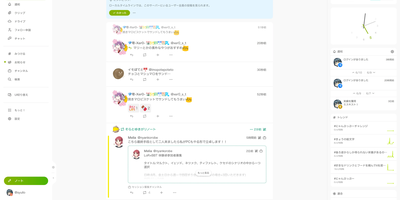
With 11,000+ GitHub stars and over 1,291 releases since 2016, Misskey is the most feature-rich open-source microblogging platform in the Fediverse — federation-first social networking with capabilities that go far beyond simple status updates. The TypeScript and Vue 3 frontend delivers a highly customizable interface with drag-and-drop widget layouts, switchable themes, per-user custom CSS, and AiScript-powered plugins that transform every instance into a unique social experience. ActivityPub federation enables seamless interaction with Mastodon, Pixelfed, PeerTube, and any ActivityPub-compatible platform across the decentralized network. Emoji reactions let users respond with custom instance emojis instead of simple likes, while Misskey Flavored Markdown adds animated text effects, sparkle decorations, and rich formatting to posts. The built-in Drive provides personal cloud file management with folder organization for images, videos, and audio — eliminating the need for external storage services. Antennas create custom filtered timelines based on keywords, users, or criteria for monitoring specific topics. Channels offer topic-specific feeds separate from the main timeline. Pages enable users to build personal websites directly within their instance. Clips save and organize posts into curated collections. The Node.js backend scales with PostgreSQL for persistence, Redis for caching, and optional S3-compatible storage for media. Docker Compose deployment provisions the complete stack including the database and cache in under 15 minutes. Running on a dedicated VPS on RepoCloud with guaranteed CPU, RAM, and SSD, full root SSH access, and a browser serial console. AGPL-3.0 licensed.
Piwigo
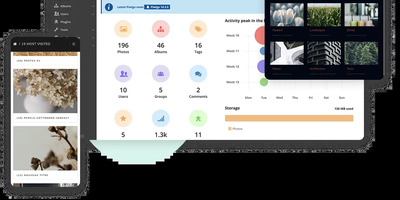
With over 3,800 GitHub stars and continuous development since 2002 spanning 24 years of active maintenance through version 16.4.0 released in May 2026, Piwigo has proven itself as one of the most battle-tested self-hosted photo gallery platforms available, trusted by professional photographers managing 150,000+ high-resolution images alongside small teams sharing event photos. The PHP backend with MySQL or MariaDB storage serves a responsive web interface that organizes photos into hierarchical albums with nested sub-albums, tag-based categorization, and smart albums generated dynamically from search criteria. Batch management tools handle bulk uploads, metadata editing, tag assignment, and album moves across thousands of images simultaneously. User permission controls define access at the album level with configurable public, private, and group-restricted visibility, while guest access allows public galleries without authentication. Image processing via ImageMagick or PHP GD generates multiple thumbnail sizes, watermarks, and responsive derivatives automatically. The plugin ecosystem with over 200 community-built extensions adds functionality from EXIF metadata display and GPS mapping to social sharing, download controls, and Lightroom synchronization for desktop workflow integration. The REST Web API with personal API key authentication enables programmatic album creation, photo uploads, and metadata queries from external applications. Mobile apps for iOS and Android provide on-the-go upload and browsing capability. Docker deployment via the official container or traditional LAMP installation on any hosting provider. Running on a dedicated VPS on RepoCloud with guaranteed CPU, RAM, and SSD, full root SSH access, and a browser serial console. GPL-2.0 licensed.
Castopod
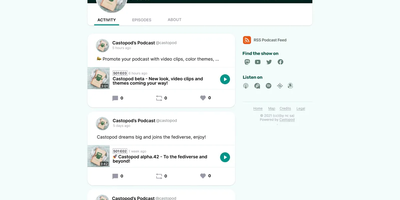
Every podcast you publish through Castopod automatically becomes a Fediverse social account that Mastodon, Pleroma, and Pixelfed users can follow, boost, and comment on from their own timelines. This ActivityPub integration transforms podcast distribution from a one-way broadcast into a two-way conversation where listeners interact with episodes through the social platforms they already use. Beyond federation, the platform manages the complete lifecycle: upload an episode, and auto-generated RSS feeds distribute it to Apple Podcasts, Spotify, Deezer, Podcast Addict, and every compatible directory. IABv2-compliant analytics measure downloads, geographic distribution, and listening apps while maintaining GDPR, CCPA, and LGPD compliance through anonymized data collection. Podcasting 2.0 namespace support unlocks chapters with images, SRT/VTT transcripts, location tags, and person credits that modern podcast apps surface to listeners. Video episodes publish alongside audio, and auto-generated clips feed social media sharing workflows. Monetization tools span Value4Value micropayments, premium subscriptions, funding links, and cookieless advertising. Multi-user roles operate per-podcast: contributors, editors, and admins each work within defined permission boundaries. The PHP application runs behind nginx with MariaDB and Redis on a RepoCloud VPS with dedicated CPU, RAM, and SSD. AGPL-3.0 licensed.
Mstream
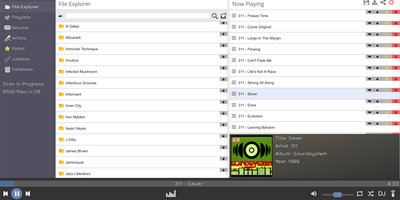
"The easiest music streaming server available" is mStream's own billing, and the claim holds up: a lightweight Node.js app that turns a folder of audio files into a private streaming service in minutes, no external database required. Its filesystem-based design is the clever part - the API mirrors your folder structure, so you can browse and play music immediately, before any library scan finishes, and your organization on disk is your organization in the app. It streams flac, mp3, wav, ogg, opus, aac, and m4a, which matters to the audiophile crowd: FLAC plays uncompressed, bit-perfect, with gapless playback for live albums and continuous mixes. The web player runs anywhere a browser does and packs personality - a Milkdrop-style visualizer (Butterchurn), playlist sharing via links, and drag-and-drop uploads straight through the file explorer. Native iOS and Android apps add the feature streaming subscriptions can't match: sync your collection to your phone for true offline playback of music you own. Multi-user support assigns separate directories and permissions per account. Resource usage is famously light - mStream is tested on multi-terabyte libraries and runs happily on a Raspberry Pi, so a small RepoCloud instance serves a lifetime's collection. GPL-licensed, with zero listening-habit telemetry.
Black Candy
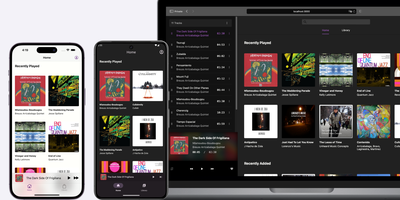
With 4,300+ GitHub stars and native mobile apps on three platforms, Black Candy transforms any VPS into a private Spotify-style streaming service for your personal music collection. The Ruby on Rails 7 backend with Hotwire Turbo and Stimulus delivers a responsive single-page-feeling web player supporting album browsing, artist views, playlists, favorites, and queue management without full page reloads. Point it at a media directory containing MP3, FLAC, OGG, AAC, or WAV files and Black Candy indexes metadata, fetches album artwork from Discogs API, and begins streaming immediately with on-the-fly transcoding that adapts bitrate to client bandwidth. Multi-user support gives each account independent playlists, favorites, and listening history while sharing the same music library — ideal for families or shared households. Native iOS, Android, and F-Droid apps maintained as separate repositories provide offline caching, background playback, and server discovery for mobile listening. The admin panel manages user accounts, configures media paths, and sets Discogs API tokens for automatic cover art retrieval. Deployment requires one Docker command — `docker run -p 80:80 ghcr.io/blackcandy-org/blackcandy:latest` — with persistent storage volumes for the SQLite database and media directory. For larger deployments, switch to PostgreSQL via environment variables with dedicated database URLs for ActionCable, SolidQueue, and SolidCache. Running on a dedicated VPS on RepoCloud with guaranteed CPU, RAM, and SSD, full root SSH access, and a browser serial console. MIT licensed.
Substreamer
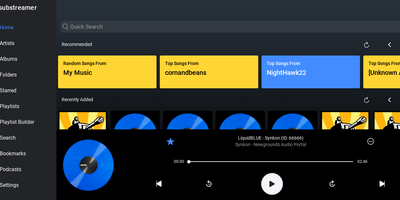
A free, polished web client for Subsonic-compatible music servers: Substreamer is the browser-based frontend you point at your existing streaming backend to play your own library from anywhere. It speaks the Subsonic API (v1.13 and higher), which makes it compatible with the whole ecosystem that has grown around that protocol: the original Subsonic server, its forks Airsonic and Madsonic, and modern implementations like Navidrome and Ampache. That decoupling is the point - your music files, transcoding, and library indexing live on whichever server you prefer, while Substreamer provides the listening experience: browse by artist, album, and genre, build and manage playlists, search your collection, and stream on demand. This RepoCloud deployment runs the containerized web edition, so the same interface is available from any browser without installing a native app, and it pairs with the Substreamer mobile apps that made the client popular. For anyone assembling a self-hosted Spotify replacement - typically Navidrome for the backend plus a good client - Substreamer fills the client half with a clean, familiar player UI. Because it is a stateless client, the container is lightweight and low-maintenance: connect it to your server's URL and credentials, and your entire collection is streaming in minutes, with no subscription and no catalog that can disappear.