Nimbus
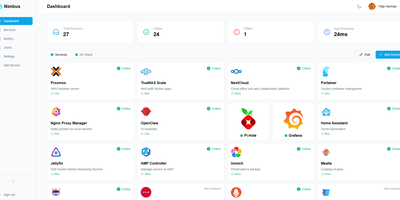
Nimbus is a self-hosted homelab dashboard that turns your scattered pile of services into a polished, organized command center with real-time health monitoring for every endpoint you care about. The dashboard displays live status cards for each registered service, tracking response times down to the millisecond and graphing uptime history so you can spot degradation before it becomes an outage. Health checks run on configurable intervals with smart self-signed certificate handling, meaning your internal services with self-issued TLS do not trigger false alarms. Multi-user support comes standard: local accounts authenticate via JWT, while OAuth2 integration with Google, GitHub, and Discord lets team members sign in with existing credentials. Role-based access control and a built-in admin panel give you granular authority over who sees what. Each user personalizes their view with custom backgrounds, light or dark mode, accent color themes, and drag-and-drop service tile arrangement. Services group into named categories and cards resize to fit your preferred layout, with both grid and list view modes available. Prometheus metrics export feeds your existing Grafana stack, and webhook notifications alert you instantly when a service goes offline. Custom service icons upload directly or auto-fetch from the Dashboard Icons collection. Zero-config Docker deployment gets you running in under 30 seconds with a single docker-compose command. Running on a dedicated VPS on RepoCloud with guaranteed CPU, RAM, and SSD, full root SSH access, and a browser serial console. AGPL-3.0 licensed.
Plone
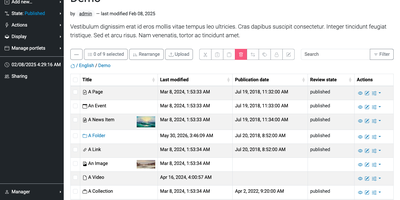
Editors who need to publish a page, route it through review, and roll back a mistake can do all of it in Plone, an open-source CMS, without writing any code. Pages are assembled in place from blocks such as grids, teasers, listings, maps, tables, and video, with a sidebar for page and block settings. A folder-style Contents view handles cut, copy, paste, rename, and workflow state changes in bulk. An editor can revert a page to an earlier revision from its version history. Administrators create new content types through the web in the Content Types control panel and attach behaviors such as versioning. Permissions are assigned per role, group, and workflow state. Content rules publish, move, or notify automatically when an item changes state. One installation can serve an intranet, a public website, and an extranet, with a form builder and a faceted search block built in. Sign-in integrates with LDAP, Active Directory, OpenID, Shibboleth, CAS, and Kerberos. The interface is translated into over 30 languages, and multilingual content is supported. The REST API makes Plone a headless CMS for custom frontends, and the server-rendered Classic UI stays available for sites that prefer it. Official Docker images are available, and clustering or PostgreSQL storage helps a busy site grow beyond one server. Running on a dedicated VPS on RepoCloud with guaranteed CPU, RAM, and SSD, full root SSH access, and a browser serial console. GPL-2.0 licensed.
Watchtower
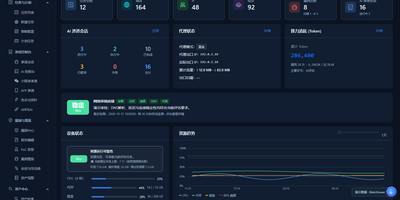
Watchtower puts AI-driven security assessments into one web console, where sessions probe your attack surface while every request, finding, and piece of evidence is captured as it happens. The AI session console follows the attack surface, session progress, tool calls, and findings as an assessment runs, so you can watch an engagement unfold instead of reading a log afterwards. A built-in proxy workflow records HTTP and HTTPS traffic history with highlighted patterns, and any captured request can be sent to the Repeater for editing, replay, and response comparison. Mobile work is covered too: connect phones over USB or wireless, capture app traffic separately from accessibility control, and import WeChat mini-program packages to configure an assessment session. A public vulnerability intelligence library can be searched by component, severity, and source and kept synchronized locally, giving assessments current context without sending your targets anywhere. Findings are managed by source, severity, and status, each linked back to its supporting evidence, and the report editor assembles them with a live preview, impact notes, and remediation guidance. The dashboard tracks assets, tasks, AI sessions, token usage, and runtime resources, and task admission is budgeted against physical memory so heavy scans do not starve the host. Running on a dedicated VPS on RepoCloud with guaranteed CPU, RAM, and SSD, full root SSH access, and a browser serial console. GPL-3.0 licensed.
Wildbox
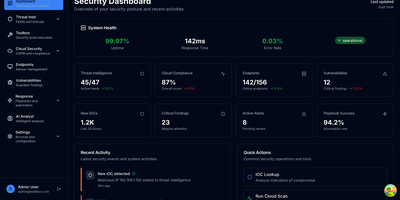
Enterprise security stacks assume an enterprise budget; Wildbox assumes a server you already own. It runs your whole security operation as a set of cooperating services behind a single HTTPS gateway: threat intelligence collectors pull indicators from seven public feeds on a schedule, starting with abuse.ch's Feodo Tracker, and every indicator is searchable in one place. Fifty-two security tools sit behind one API, covering DNS, TLS, email security, headers, and port analysis. The cloud posture service runs 22 configuration checks against your live AWS accounts and keeps each scan's report, while the vulnerability service inventories your assets, prioritizes findings by risk, and tracks them through remediation with SLA checks and alert rules. When something needs doing, YAML playbooks execute response workflows as background jobs, and the agents service writes Claude-generated threat-enrichment reports for suspicious indicators when you give it an API key. An osquery-based sensor streams endpoint telemetry from your hosts into the platform, kept separate per team. Users, teams, roles, and scoped API keys live in the identity service, and the backends accept nothing that did not arrive through the gateway, so your security data never leaves hardware you control. Optional Compose profiles add n8n automation and Prometheus monitoring. Running on a dedicated VPS on RepoCloud with guaranteed CPU, RAM, and SSD, full root SSH access, and a browser serial console. MIT licensed.
Alerta
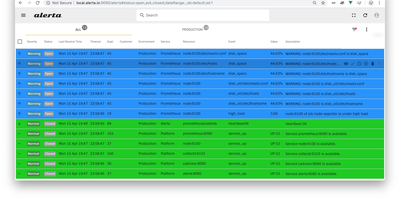
Five monitoring systems should not mean five places to look when something breaks at 3 a.m. Alerta is an open-source alert management server that consolidates alerts from many sources into a single stream, de-duplicates repeats, correlates severity changes, and shows only the current state of each problem in a web console built for fast scanning. Prometheus, Zabbix, Nagios, InfluxDB Kapacitor, cloud watch alarms, and your own scripts all post into the same HTTP API, which accepts a flexible alert format carrying environment, resource, event, severity, and custom attributes, so no tool has to contort itself into someone else's schema first. Repeats of a known fault raise a duplicate count instead of generating another page, and a severity change updates the existing alert rather than birthing a twin. Operators acknowledge problems, assign them, silence expected fire during blackout periods set for maintenance windows, and partition visibility by customer for teams that monitor other people's infrastructure. A command-line client, query language, webhooks, and plugin hooks carry alerts onward into tickets, chat, and paging workflows, and everything persists in MongoDB or PostgreSQL with API keys and OAuth protecting access. Running on a dedicated VPS on RepoCloud with guaranteed CPU, RAM, and SSD, full root SSH access, and a browser serial console. Apache-2.0 licensed.
Codex LB Enhanced
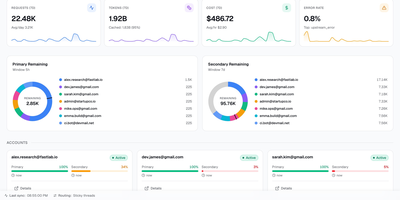
Codex LB Enhanced is a session-aware gateway that pools your ChatGPT accounts so a long Codex session survives quota limits, dropped connections, and paused accounts without losing the conversation. It serves Codex desktop, CLI, and IDE clients through the native Responses protocol and WebSocket transport, and answers any OpenAI-compatible client through the familiar /v1 endpoints. When an account runs out of quota, gets suspended, times out, or drops mid-stream, the gateway classifies the failure, removes that account from the current request, and selects the next one through your load-balancing policy. Verified request history, including interrupted tool-call context, is replayed across the account switch when it is safe, so the client sees a slower answer instead of a dead stream. Every API key carries its own policy: time windows from five hours to monthly, limits by credits, tokens, or cost, and model-specific rules. Usage appears in native Codex quota headers and in a /v1/usage view backed by the same data, so editors and automation agree on what is left. Diagnostics correlate each request with its upstream account, transport, failover stage, and retry count, and a web dashboard manages accounts, keys, usage windows, request logs, and recovery reports. Running on a dedicated VPS on RepoCloud with guaranteed CPU, RAM, and SSD, full root SSH access, and a browser serial console. MIT licensed.
OCI Core
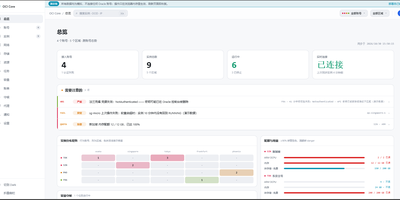
Anyone juggling several Oracle Cloud accounts knows the tab-switching ritual; OCI Core ends it by pulling every tenancy's instances into one self-hosted panel. The cross-account list shows state, shape, volumes, and public IPs for each machine, and you can start, stop, resize, rename, or terminate instances without opening Oracle's console. A creation wizard offers every shape in an availability domain, not just the free presets, while long operations such as IP swaps, resizes, and terminations run as background jobs with visible progress. Capacity hunting watches Oracle's read-only capacity reports and retries creation until a scarce shape appears, notifying you when it lands. Networking tools edit VCNs, subnets, and security rules visually, swap public IPs, enable IPv6, and manage extra network cards. Storage views resize boot and block volumes, and a rescue mode moves a broken system disk to a healthy machine for repair. Billing breaks spend down by service and region, tracks the monthly free egress allowance, and shows real usage for free-tier accounts. Accounts are checked for connectivity, quotas, and credential health, with emails, IPs, and OCIDs masked by default and revealed only on demand. Alerts reach Telegram, WeCom, DingTalk, email, or webhooks, and access is guarded by argon2id passwords, TOTP two-factor sign-in, session controls, and an audit log. Running on a dedicated VPS on RepoCloud with guaranteed CPU, RAM, and SSD, full root SSH access, and a browser serial console. MIT licensed.
Nyro
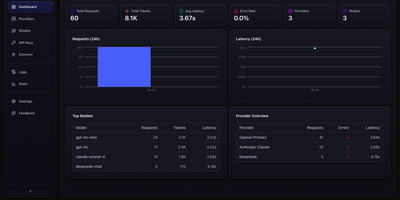
Point Claude Code, Codex CLI, Gemini CLI, or any OpenAI, Anthropic, or Gemini SDK at one address and Nyro routes every request to whichever model provider you choose. The gateway translates protocols on the fly, including streaming, reasoning blocks, and tool calls, so a tool built for one API can run on a model from another. Define virtual model names, bind each to one or more providers, and pick weighted load balancing or priority failover; unhealthy targets are skipped and recover automatically. Issue API keys with limits on requests and tokens per minute and per day, and bind each key only to the models it may call. Exact and semantic caching return repeated answers instantly. A request log records provider, model, token counts, latency, and streaming speed, and usage charts break traffic down by model and provider. The Connect page generates ready-to-paste samples in Python, TypeScript, and cURL, plus one-click configuration for popular coding CLIs. Choose an embedded database for a single host or an external PostgreSQL or MySQL server for production, and run the gateway, the admin UI, or both as separate processes. Running on a dedicated VPS on RepoCloud with guaranteed CPU, RAM, and SSD, full root SSH access, and a browser serial console. Apache-2.0 licensed.
Shortlink
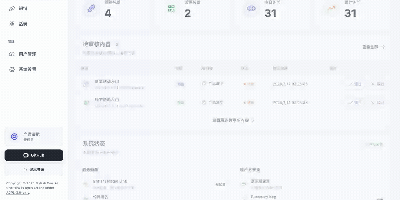
Shortlink is a self-hosted platform for short links and live QR codes that keeps every printed, shared, or forwarded entry point under your control long after it leaves your hands. A code printed on ten thousand flyers cannot be recalled when the campaign page moves, so the destination behind it changes while the printed image stays exactly the same. Create short links with custom codes, a choice of 301, 302, 307, or 308 redirects, expiry dates, visit caps, and a fallback target for when the main destination is down. Build live QR codes backed by a pool of destinations that rotates by order, weight, random pick, or least-shown strategy, with transactional saves so a half-finished edit never goes live. Style each code in classic, rounded, or dot patterns with your own colors and a center logo, preview it in real time, and download print-ready SVG, PNG, or WEBP files. New links and codes land in an approval queue that an admin reviews before anything goes public, and every change is written to an audit log. Teammates sign in with an emailed magic link or GitHub, manage only the resources they own, and watch thirty days of visit trends, unique IPs, and device and browser breakdowns roll in. Running on a dedicated VPS on RepoCloud with guaranteed CPU, RAM, and SSD, full root SSH access, and a browser serial console. AGPL-3.0 licensed.
Retinue
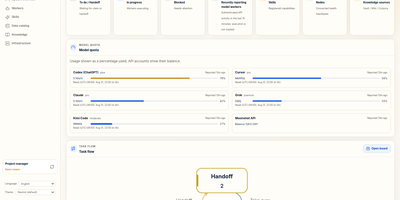
Retinue shows who is doing what across a fleet of AI agents, on a shared board where every task is a card with exactly one holder, a written acceptance check, and a receipt chain that cannot be rewritten. Operators publish cards, agents claim them through MCP or a token-scoped HTTP API, report progress, and hand off, and an agent that is not the holder gets a refusal when it tries to write. The Home dashboard counts what is waiting, running, and blocked, charts task flow and dispatch, and shows quota gauges for Claude, Codex, Cursor, Grok, and Kimi subscriptions. A collaboration workspace draws delegation graphs, device and model timelines, module contributions, and message conversations for any selected task. Operations pages report token usage by worker, and a data health page flags stale reports and duplicate identities. Read-only importers pull session data from Claude Code and Codex, and optional Lark, Feishu, and Telegram bridges turn chat messages into intents. The interface switches between English and Simplified Chinese. Running on a dedicated VPS on RepoCloud with guaranteed CPU, RAM, and SSD, full root SSH access, and a browser serial console. AGPL-3.0 licensed.
Nginx-Love
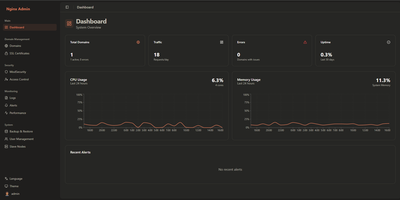
Hand-editing nginx configuration files to run a firewall is nobody's idea of a good afternoon, and Nginx-Love turns that chore into a dashboard. You manage domains, load balancing upstreams, and HTTPS backends through forms instead of config syntax, and the platform writes and reloads the underlying configuration for you. A ModSecurity firewall with the OWASP Core Rule Set inspects traffic to your sites, and you tune its rules from the interface rather than a text editor. Certificates arrive two ways: automated through Let's Encrypt, or uploaded manually when you bring your own. A Bot Manager fingerprints visitors with JA4 signals so you can welcome good crawlers, challenge suspicious automation, and block hostile bots by policy. Access lists filter by IP address, geography, and user agent, and multi-user roles let administrators, moderators, and viewers each see the controls appropriate to their job. Monitoring watches performance and attack patterns, sending alerts by email or Telegram when something needs attention. Configuration exports back up your setup, restores bring it back, and multi-node sync keeps a cluster of servers enforcing the same policy. Running on a dedicated VPS on RepoCloud with guaranteed CPU, RAM, and SSD, full root SSH access, and a browser serial console. Apache-2.0 licensed.
Reconner
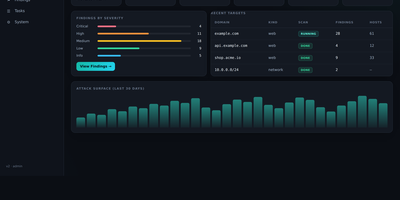
Hunting for the hole is only half the job, because a scanner alert nobody believes wastes more time than the bug itself. Add a domain, CIDR, or bug-bounty scope and Reconner builds the map first: passive and active subdomain enumeration, live HTTP probing and fingerprinting, JavaScript analysis that digs endpoints, secrets, and API keys out of bundles, plus parameter and hidden-param discovery. Then it attacks what it mapped with a context-aware engine covering reflected, stored, and DOM XSS, SQL, NoSQL, SSRF, IDOR, LFI, SSTI, XXE, injection, and open redirects, and every candidate has to survive differential, out-of-band, or control-based proof, re-verified before it is ever reported. Blind issues are not dropped either: OAST callbacks catch out-of-band SSRF, RCE, SQLi, and SSTI that never respond inline. Networks get the same treatment, with port scanning, service detection, network-CVE checks, and IP-camera auditing. Findings land in a live dashboard streamed over WebSocket, with an attack-path view, coverage ledger, monitoring diffs, and HTML, Markdown, and PDF reports, while Telegram can alert you and even start, stop, or resume scans remotely. Run it only against assets you own or are authorized to test; behind a VPN and TLS it becomes your private proving ground. Running on a dedicated VPS on RepoCloud with guaranteed CPU, RAM, and SSD, full root SSH access, and a browser serial console. MIT licensed.
Steward
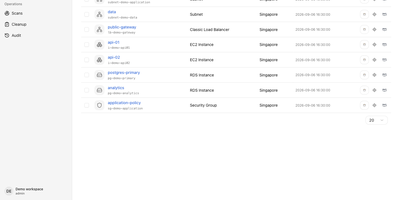
Every cloud account grows the same way: a test instance nobody shut down, a storage bucket from a migration two years ago, a database whose owner left the company. Steward walks all four of your clouds, AWS, Alibaba Cloud, Google Cloud and Microsoft Azure, and writes down what is actually running in one inventory you can search instead of four consoles you half remember. The point is not the list, it is what the list connects to: open any resource and see its relationships, which services depend on it, what shares its network, what breaks if it disappears. Cleanup stops being a leap of faith, because every candidate deletion is reviewed against that dependency map first, showing the impact before execution and following the result of each action afterwards. Scheduled scans keep the picture honest without you remembering to look, reporting exactly which resources each scan added, removed or modified, and pinging Slack, Feishu, DingTalk or WeCom when a scan fails. Connect accounts, including through OIDC, run the first sweep, and the orphaned, idle and forgotten start standing out from the infrastructure you actually need. It runs as a single executable with the web console and database built in, under systemd on your server, behind your HTTPS proxy with token sign-in. Running on a dedicated VPS on RepoCloud with guaranteed CPU, RAM, and SSD, full root SSH access, and a browser serial console. Apache-2.0 licensed.
Crumbs
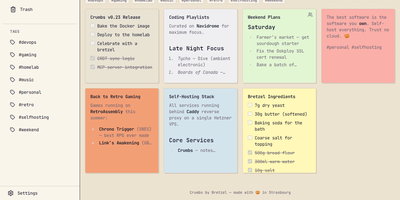
Capture a thought before it evaporates: Crumbs is a self-hosted, privacy-first alternative to Google Keep for notes you would rather keep on your own server. You write rich notes with Markdown, checklists, and image attachments, then give each one a personality from twelve color themes. Hashtags organize everything without folders, pinning keeps the important notes on top, and archive and trash clear the rest out of sight. Full-text search reaches across titles, content, and tags, so last month's idea is one query away. Every note keeps a version history you can browse and restore, which turns accidental deletions and bad edits into non-events. Notes can be shared with other users on your instance, with optional email notifications over SMTP for share alerts and account events. The installable PWA works offline through IndexedDB with last-write-wins CRDT sync, so a note captured on a plane reconciles when you land. Accounts are protected with Argon2 password hashing, and Google, GitHub, or any OIDC provider can handle sign-in instead. A built-in MCP server even lets AI assistants manage your notes on your behalf. Running on a dedicated VPS on RepoCloud with guaranteed CPU, RAM, and SSD, full root SSH access, and a browser serial console. MIT licensed.
Nzbget
Written in optimized C++ where competitors use Python or Java, NZBGet saturates fast connections while idling on CPU and RAM - which is why the performance-obsessed Usenet downloader has long been the client of choice for NAS boxes, Raspberry Pis, and routers as much as full servers. The engineering shows in the recovery pipeline. Instead of shelling out to par2cmdline, NZBGet integrates the par2 source directly and exploits its knowledge of exactly which articles failed - quick par-verification checks only what needs checking, and its own multicore repair implementation runs 2-3x faster than the external tool on the same hardware. Fast par-rename deobfuscates scrambled filenames in seconds without a full verification pass, and rar-rename recovers names for multivolume archives even when no par2 files exist. DirectWrite assembles articles straight into sparse destination files, skipping temporary-file churn entirely, with an article cache and queue-pausing options to eliminate disk contention. Automation is complete: a remote web interface, full JSON-RPC API, RSS feeds with duplicate detection, scheduling and prioritization, and an extension manager for Python and Bash scripts triggered by download events. Sonarr, Radarr, and every major indexer integrate natively.
db-ui
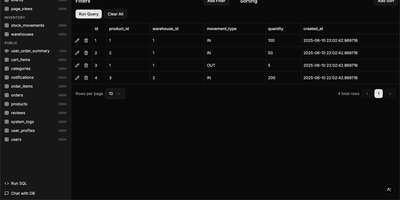
Traditional database management tools like pgAdmin and phpMyAdmin were built for DBAs, not for the rest of the team that just needs to look up a record or run a quick query. db-ui strips away the complexity and gives you a clean, modern interface that anyone can use. Browse tables in a paginated grid view with inline editing, filtering, and sorting built right into the column headers. The sidebar lists every table and view across all schemas with fuzzy search (Cmd+K to focus) that filters results as you type. Click any table to see its data, or switch to the schema introspection view to visualize columns, types, constraints, and relationships without writing a single query. The SQL editor provides syntax highlighting, result visualization in tabular format, and one-click CSV export for downstream analysis. For questions about your data model, the integrated AI chat assistant has full access to your database schema and can help you understand table relationships, write complex queries, suggest indexes, and provide optimization recommendations with streaming responses. Connect to PostgreSQL, MySQL, or Microsoft SQL Server through environment variables and deploy the whole application as a single Docker container. On RepoCloud, deploy db-ui on a dedicated VPS with root SSH access and direct connectivity to your database servers under the MIT license.
Forgejo
Governed by the non-profit Codeberg e.V. with over 150 contributors and quarterly major releases reaching v16.0 in July 2026, Forgejo delivers a complete code collaboration platform in a single Go binary that runs comfortably on 512 MB of RAM — providing full Git hosting with SSH and HTTPS, pull requests with inline code review, issue tracking with labels and milestones, kanban project boards, wikis, and an integrated package registry supporting Docker, npm, PyPI, Maven, NuGet, and Cargo. Forgejo Actions provides GitHub Actions-compatible CI/CD with reusable workflows, OpenID Connect for secure third-party access, ephemeral runners for autoscaling, and dynamic matrix support for complex build pipelines. The platform implements ActivityPub-based forge federation allowing issues, pull requests, and stars to work across independent instances — enabling a decentralized development ecosystem similar to how Mastodon federates social networks. Organizations and team permissions provide fine-grained access control, while LDAP, OAuth2, and OpenID authentication integrate with existing identity infrastructure. Code search indexes repositories for fast discovery, LFS handles large files efficiently, and mirror synchronization imports repositories from GitHub, GitLab, and other forges. Deploy via a single static binary, Docker container, or official Helm charts with SQLite for small instances or PostgreSQL and MySQL for production workloads. Running on a dedicated VPS on RepoCloud with guaranteed CPU, RAM, and SSD, full root SSH access, and a browser serial console. GPLv3+ licensed.