Categories
Self-Hosted Content Management CMS Headless CMS Workflow Multilingual Intranet Web PublishingStars
Forks
Watchers
Developer links
Plone
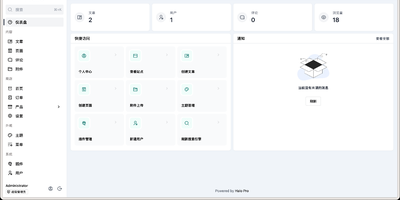
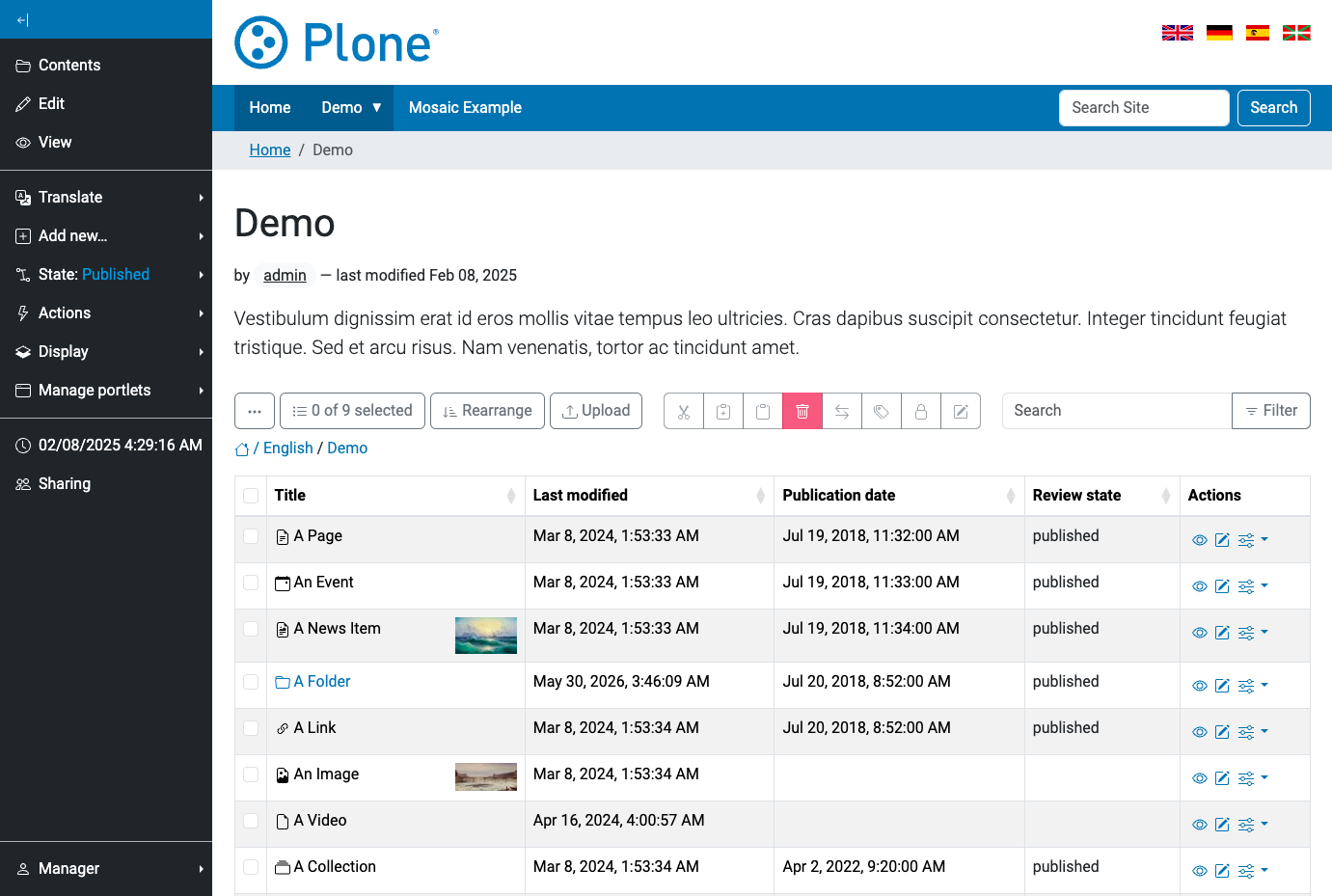
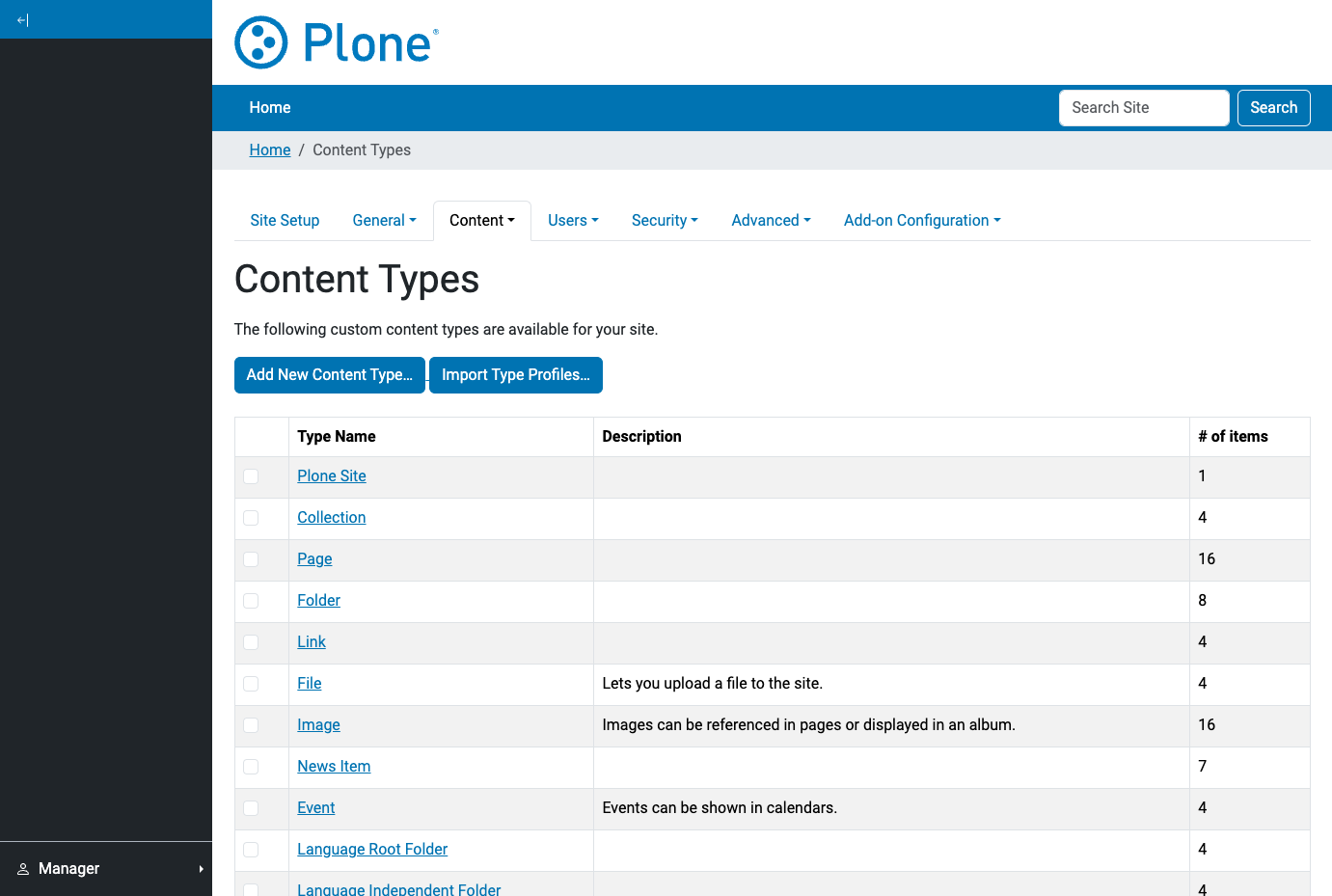
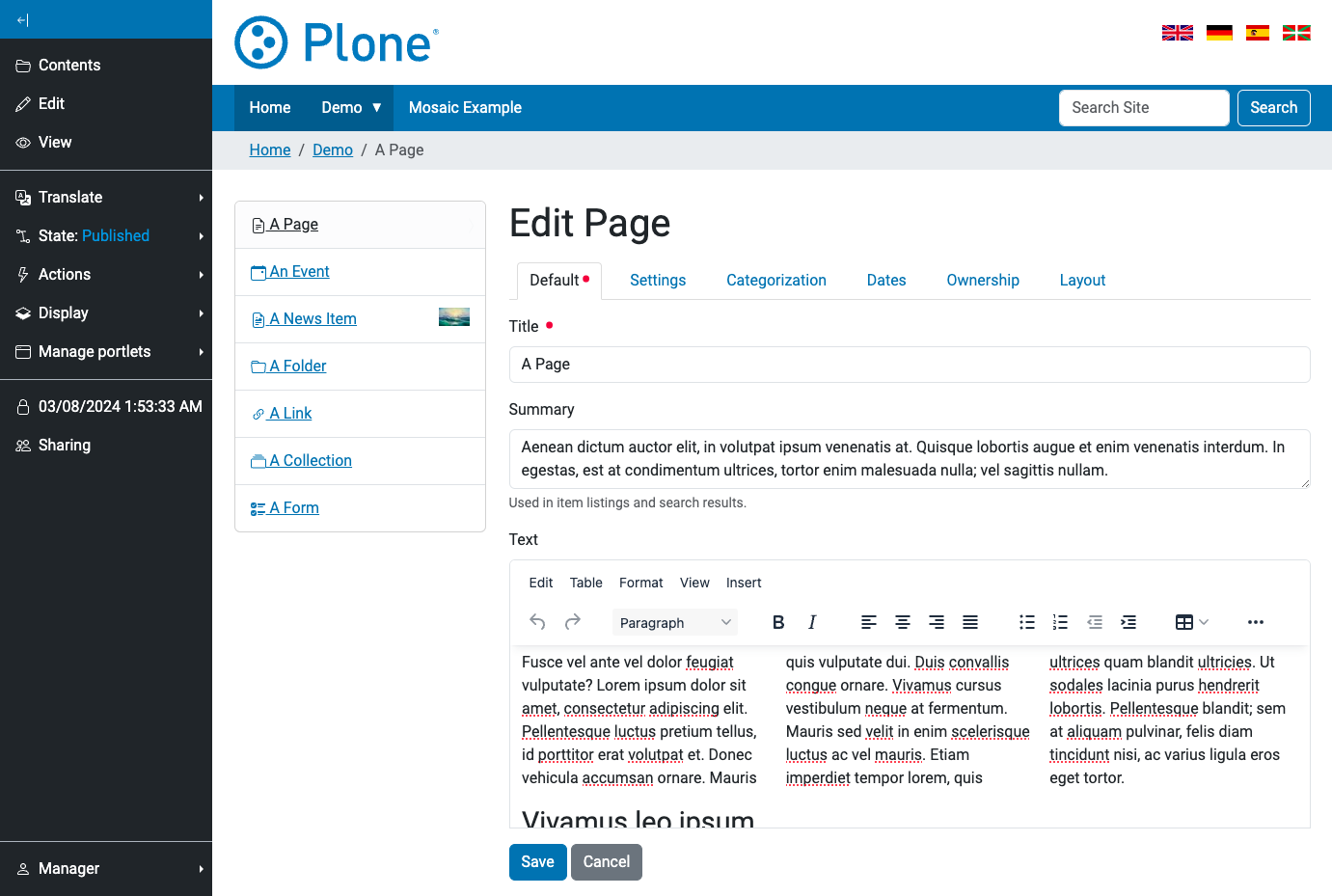
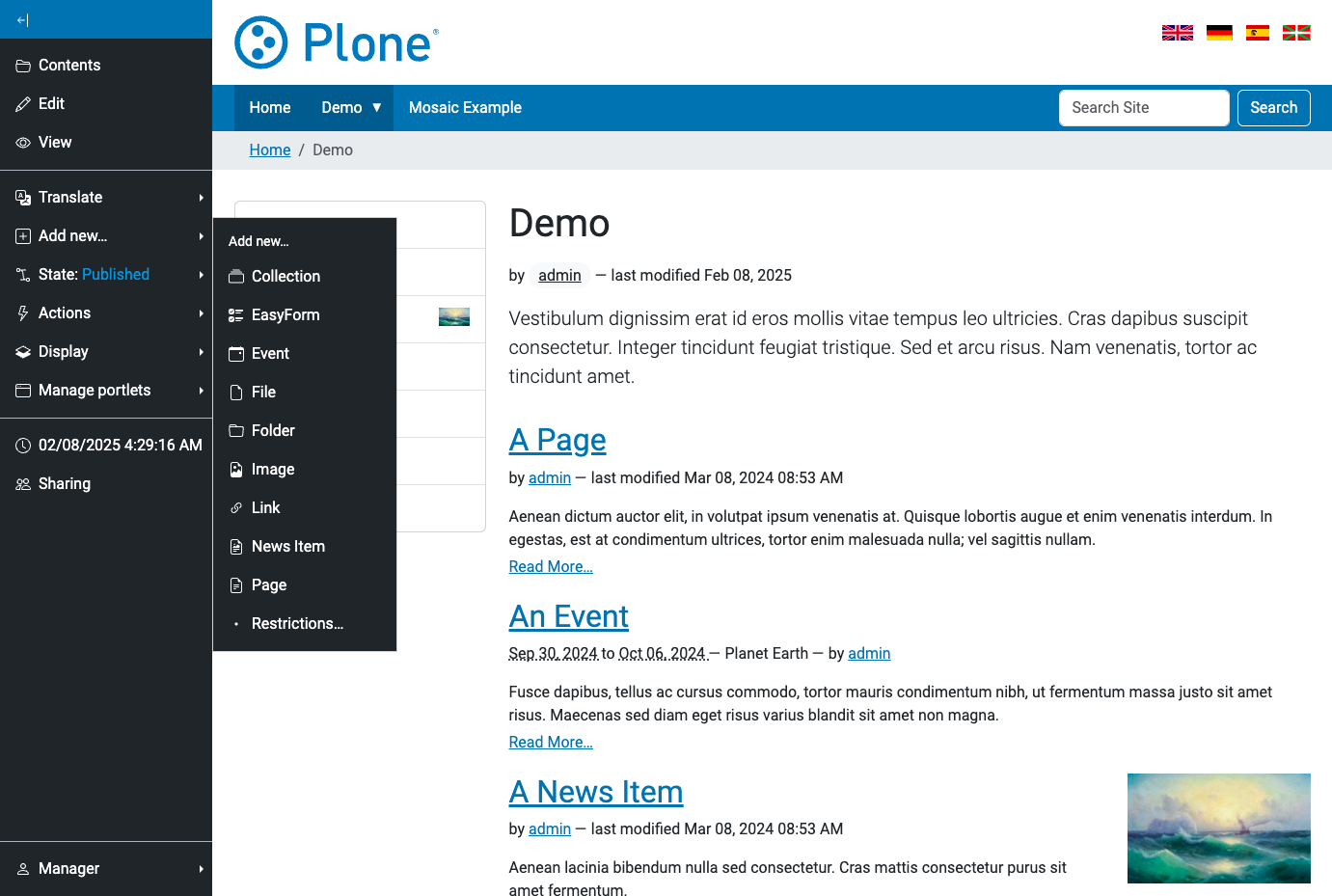
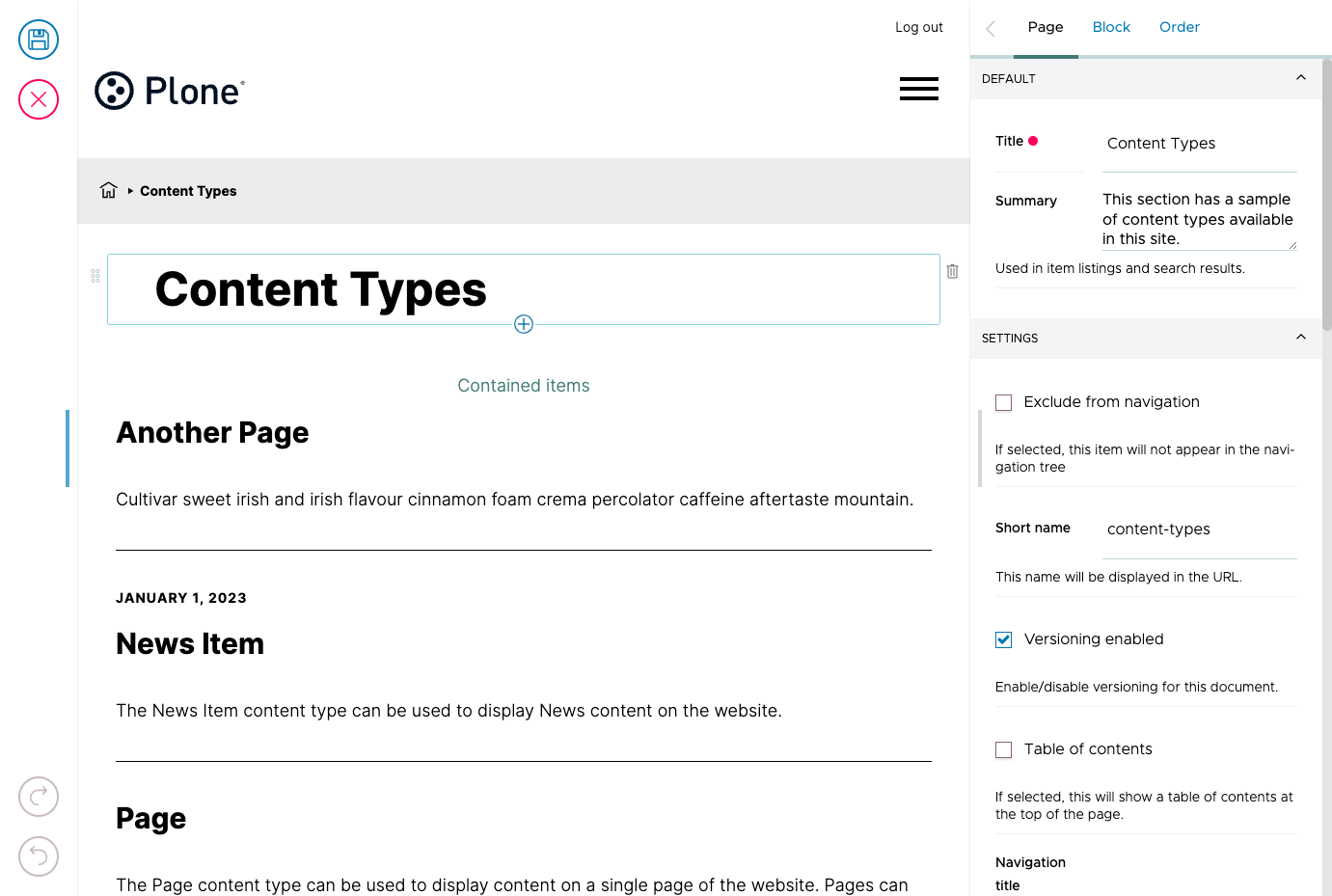
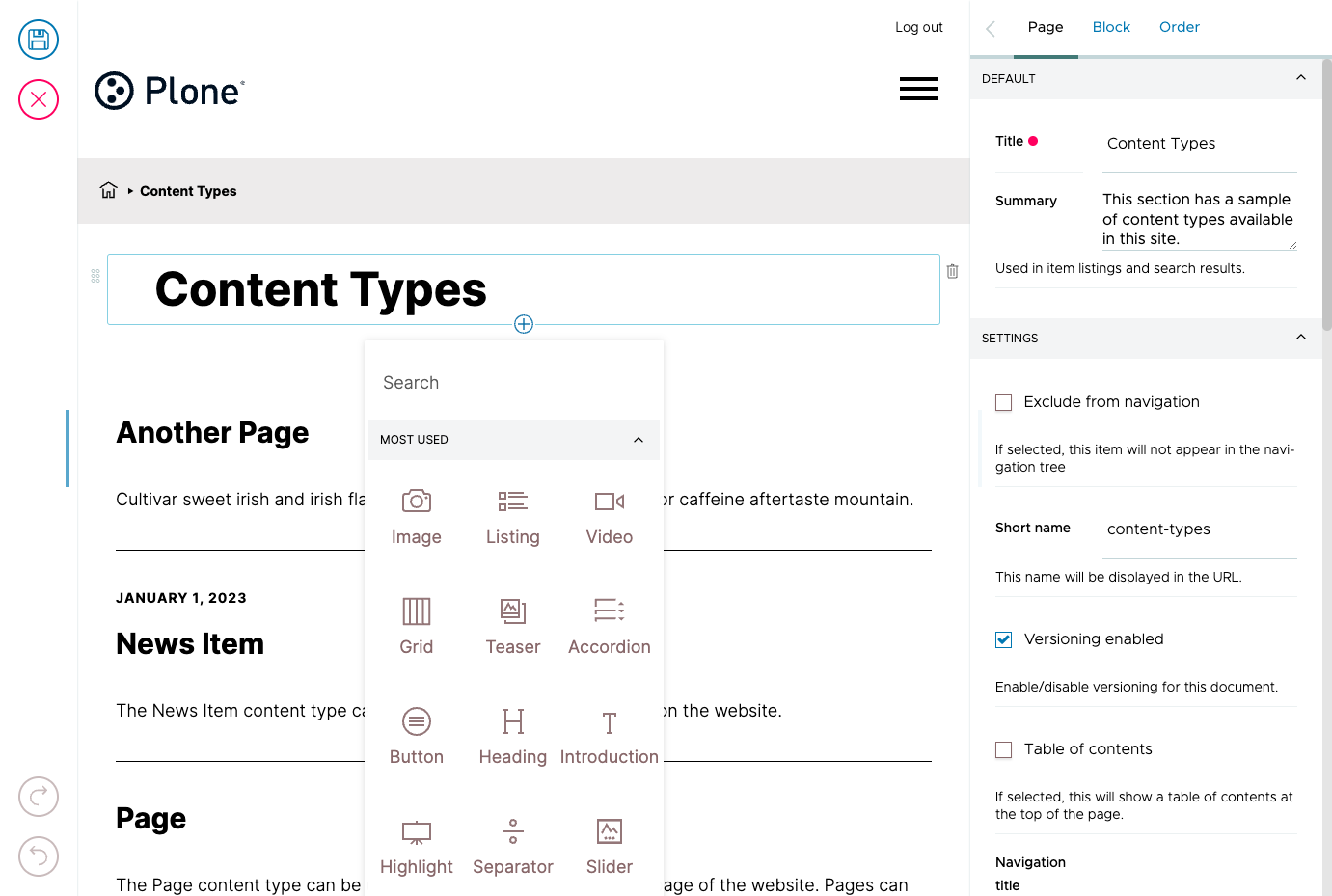
Editors who need to publish a page, route it through review, and roll back a mistake can do all of it in Plone, an open-source CMS, without writing any code. Pages are assembled in place from blocks such as grids, teasers, listings, maps, tables, and video, with a sidebar for page and block settings. A folder-style Contents view handles cut, copy, paste, rename, and workflow state changes in bulk. An editor can revert a page to an earlier revision from its version history. Administrators create new content types through the web in the Content Types control panel and attach behaviors such as versioning. Permissions are assigned per role, group, and workflow state. Content rules publish, move, or notify automatically when an item changes state. One installation can serve an intranet, a public website, and an extranet, with a form builder and a faceted search block built in. Sign-in integrates with LDAP, Active Directory, OpenID, Shibboleth, CAS, and Kerberos. The interface is translated into over 30 languages, and multilingual content is supported. The REST API makes Plone a headless CMS for custom frontends, and the server-rendered Classic UI stays available for sites that prefer it. Official Docker images are available, and clustering or PostgreSQL storage helps a busy site grow beyond one server. Running on a dedicated VPS on RepoCloud with guaranteed CPU, RAM, and SSD, full root SSH access, and a browser serial console. GPL-2.0 licensed.
Benefits
- Editors Publish Without Developers
- Editors build and update pages from ready-made blocks in an in-place editor with a settings sidebar, so routine publishing, reordering, and corrections no longer wait for a developer release.
- Review Steps With Version History
- Review states such as Private and Published control who can see and change each item, and version history lets an editor revert a page to an earlier revision after a mistake.
- New Content Types Without Programming
- The Content Types control panel creates custom types through the web and attaches behaviors such as versioning and navigation settings, so a press release or event section needs no Python code.
- One Backend For Any Frontend
- The REST API exposes content, search, users, and control panels as JSON, so the same Plone backend can serve Volto, the Classic UI, or a custom frontend built with any technology.
Features
- Block Based Page Editor
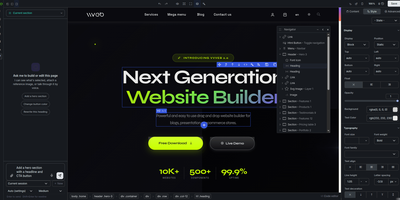
- Volto edits pages in place from a library of blocks, including grids, teasers, listings, maps, tables, and video, with a sidebar for page and block settings.
- Workflow And Permissions
- Review states map roles to permissions per item, with group sharing and content rules that publish, move content, or send notifications automatically when an item changes state.
- Content Types Control Panel
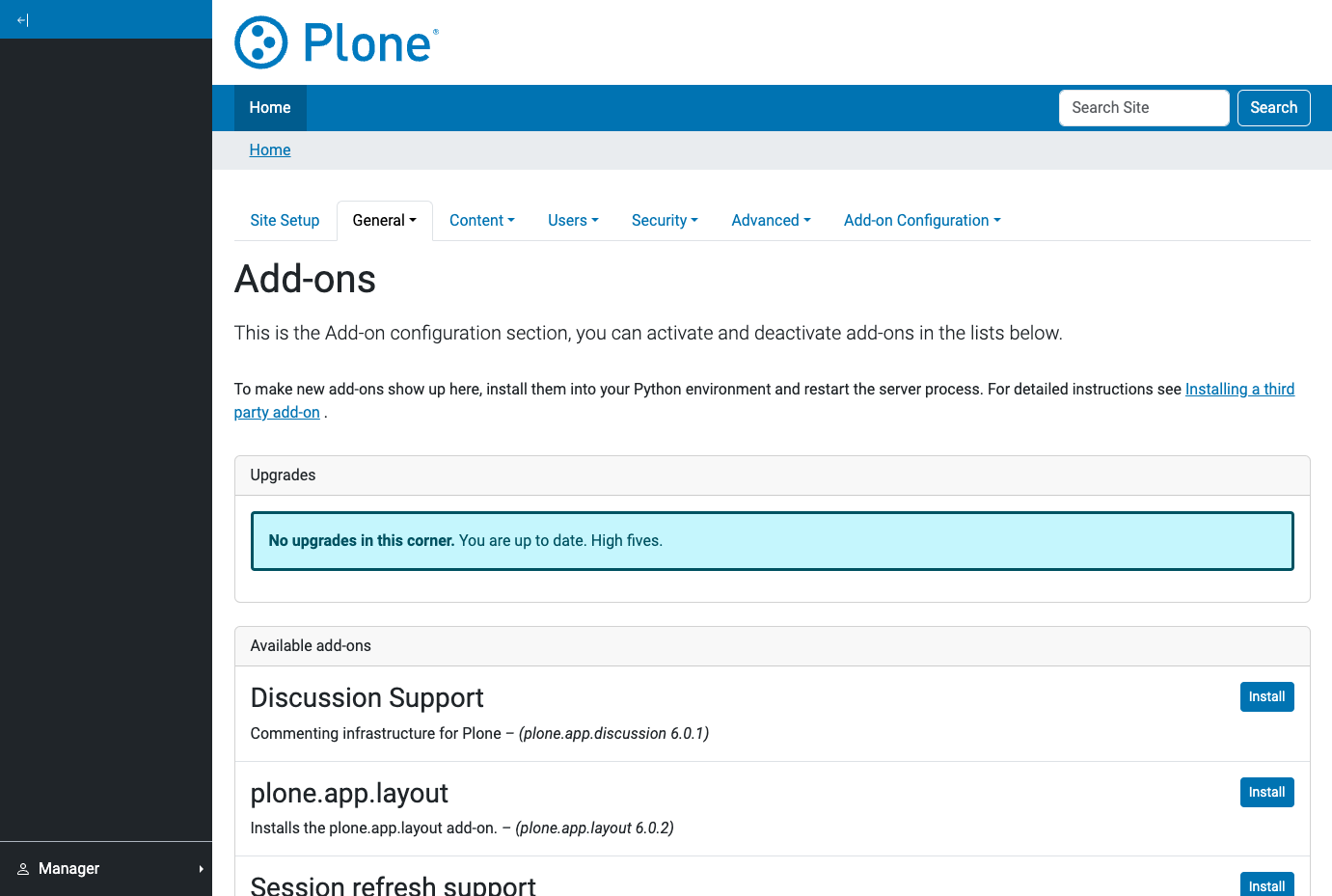
- Site Setup creates custom content types through the web and attaches behaviors such as versioning, table of contents, and exclusion from navigation, without writing code.
- REST API And Headless Mode
- plone.restapi serves content, search, users, and control panels as JSON, so a custom frontend can read and write content while Plone enforces permissions.
- Enterprise Authentication
- Integrates with LDAP, Active Directory, OpenID, Shibboleth, CAS, and Kerberos authentication, alongside local users, groups, and role assignments managed in Site Setup.
- Official Docker Images
- plone/plone-backend serves on port 8080 and plone/plone-frontend on port 3000, with environment variables for site creation, add-ons, ZEO, PostgreSQL storage, and CORS.