Houndarr
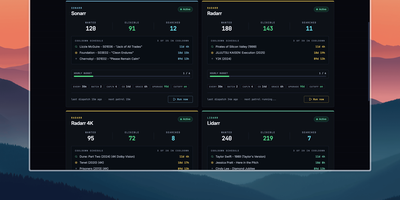
Radarr, Sonarr, and their sibling apps watch RSS feeds for new releases but never go back for what your library is still missing, and Houndarr fills that gap by asking them to search in small, polite batches. It reads the wanted lists of every connected Radarr, Sonarr, Lidarr, Readarr, and Whisparr instance and sends a few search commands per cycle, so a big backlog drains over days instead of arriving as one Search All Missing burst. Each instance has its own batch size, sleep interval, hourly cap, per-item cooldown, and post-release grace period, plus an optional download-queue limit, allowed search windows such as 09:00-23:00, and tag filters that include or exclude items. Three independent passes run per instance: missing items, cutoff-unmet items below your quality profile, and upgrades for files that already meet cutoff, with the last two off until you enable them. Sonarr, Lidarr, and Readarr can search by season, artist, or author, and search order is random or oldest-first. The dashboard shows library health, recent hunts, hourly budgets, and a cooldown schedule per instance, with Run Now buttons for on-demand cycles. The Logs page records every search and skip with its reason in a filterable audit trail that copies as TSV. A key-gated widget endpoint feeds Homepage dashboards, and built-in login or reverse-proxy authentication protects the interface. Running on a dedicated VPS on RepoCloud with guaranteed CPU, RAM, and SSD, full root SSH access, and a browser serial console. AGPL-3.0 licensed.
AtomicServer
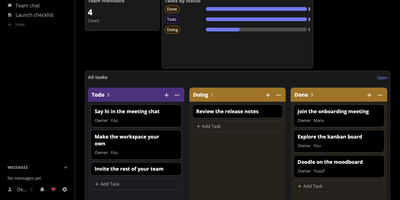
Documents, tables, files, chat, and video meetings share one workspace in atomic.place, and AtomicServer is the part you host yourself so a team can edit together while the data stays on a machine it controls. Documents are collaborative rich text with comments, icons, and cover images, tables enforce a strict schema with keyboard navigation and copy and paste, and any table can switch to a kanban, calendar, dashboard, or timer view. Templates start an issue tracker, a CRM, a project task list, or a time tracker. Live cursors, typing indicators, and presence avatars show who is working where, group channels carry attachments, replies, and search, and an infinite canvas can be drawn on together. Every write is a signed commit, so a full history is kept. Read and write rights follow the resource hierarchy, and invite links bring people in. Websites are designed in the browser, published in one click, and rolled back to any earlier version. Custom classes and properties come from the Ontology Editor, small apps are plain JavaScript screens over the same data, and AI features work with any model through OpenRouter or a local Ollama and support MCP. Typeahead search suggests results as you type. A REST API answers in JSON-AD, Turtle, or JSON-LD for automation, and export and import commands write and read JSON-AD backups. Running on a dedicated VPS on RepoCloud with guaranteed CPU, RAM, and SSD, full root SSH access, and a browser serial console. MIT licensed.
Xprem
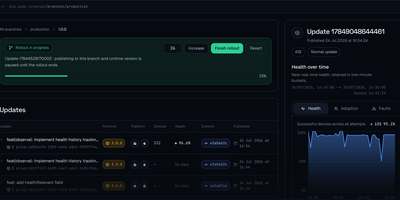
xprem is a self-hosted update server for Expo applications that speaks the official Expo Updates protocol, so any app built with expo-updates can fetch its bundles from your infrastructure instead of a hosted service. Publishing works from the eoas CLI, from CI, or from the dashboard, and devices receive the corrected bundle on their next check with no app store review in between. Channels such as production and staging map to branches, which means each build flavor receives exactly the code meant for it. A rollout can serve an update to a slice of the fleet first and widen as confidence grows, and a bad release rolls back instantly instead of stranding users. One channel can even serve two branches at once, splitting devices deterministically for A/B tests. Every manifest is signed with a private key you own, and the matching certificate embedded in the app makes expo-updates refuse anything that fails verification, so a compromised bucket cannot push code into your product. The bundles themselves live in your S3, Google Cloud Storage, Azure Blob, Cloudflare R2, MinIO, or local storage and download through your CDN, while a single server hosts as many applications as you ship. Running on a dedicated VPS on RepoCloud with guaranteed CPU, RAM, and SSD, full root SSH access, and a browser serial console. MIT licensed.
Koha
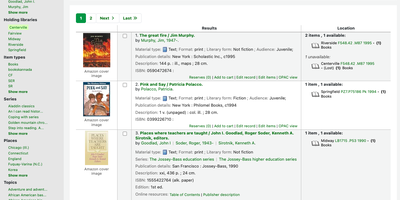
Circulation desk, cataloging workbench, acquisitions office, serials room, and public catalog all share one roof in Koha, an open-source library system that scales across school libraries, branch networks, and consortia. Staff search the catalog with facets for availability, authors, holding libraries, and item types, then open a record to see its cover, subjects, classification numbers, and every copy with its call number, status, and barcode. Catalogers edit MARC 21 or UNIMARC records field by field, copy records in via Z39.50 and SRU searches, and link authorities automatically. At the desk, staff check out, check in, and renew items, work with holds, bookings, and claims, and see overdue warnings and outstanding charges beside each patron. Circulation and fine rules vary by library, patron category, and item type. Acquisitions handles vendors, baskets, budgets, and funds. Serials track subscriptions and issue receiving. A guided report wizard, SQL reports, and statistics wizards summarize circulation and collections. Patrons search the public catalog, place holds, save lists, tag and rate titles, and suggest purchases. Staff tools design notices and slips, print patron cards, set holiday calendars, and import or batch-edit patrons. SIP2 serves self-checkout kiosks, OAI-PMH sets share records, and a REST API exposes patrons, holds, checkouts, and biblios. Lending continues during outages with offline circulation. Running on a dedicated VPS on RepoCloud with guaranteed CPU, RAM, and SSD, full root SSH access, and a browser serial console. GPL-3.0 licensed.

DSpace
With DSpace, a library or research office can give every thesis, journal article, and dataset its own permanent web address, a searchable metadata record, and files visitors download from the archive. Content sits in a tree of communities and collections, and each collection decides who may deposit and how many review steps follow; reviewers accept a submission or reject it with a note that sends it back to the author. Embargoes hold files back until a set date, access policies limit other files to chosen groups, and sign-in works through LDAP, Shibboleth, SAML, OpenID Connect, or ORCID. Search covers metadata and the extracted full text of uploaded files, facets narrow the results, and browse pages sort by title, issue date, author, or subject. Editors can correct a published item through the submission form. Administrators inspect an audit trail and rewrite homepage news from an admin form. Entity types for people, organizations, projects, journals, and datasets link each publication to the work behind it, and DOIs can be registered through Crossref. Optional settings let authors keep an email address private on their researcher profile and download their own restricted files. Usage reports count visits, downloads, and top countries per item. REST, OAI-PMH, SWORD, and Google Scholar metadata connect the archive to harvesters, deposit tools, and search engines. Running on a dedicated VPS on RepoCloud with guaranteed CPU, RAM, and SSD, full root SSH access, and a browser serial console. BSD-3-Clause licensed.
UptimeKit
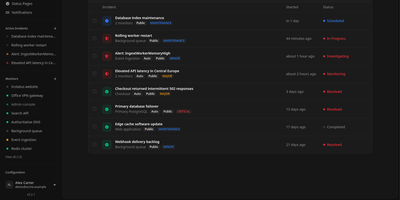
UptimeKit watches your services from several regions at once and publishes the verdict on a status page your customers can actually read. A central dashboard assigns checks to worker probes that run them on schedule, covering HTTP and HTTPS, TCP, ICMP ping, DNS, keyword matches, and JSON responses. Monitors are sorted into nested groups and tags, and HTTPS targets get automatic certificate expiry tracking. When something breaks, an incident takes shape with severity, status transitions, comments, and a resolution flow, either from the dashboard or from a Prometheus AlertManager alert. Status pages come in multiple flavors: public, password protected, or tied to a custom domain, with themes, uptime history bars, and email subscribers who hear about every update. Notifications reach Discord, Google Chat, Telegram, ntfy, Apprise, and plain webhooks. Organizations with roles keep several teams in one installation, and OIDC single sign-on connects the login to an existing identity provider. Response time charts break latency into percentiles per region over any period you pick. A planned maintenance window announces itself on the status page before it begins. Running on a dedicated VPS on RepoCloud with guaranteed CPU, RAM, and SSD, full root SSH access, and a browser serial console. MIT licensed.
Drydock
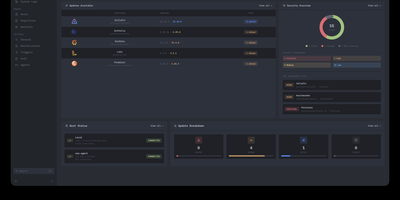
Deploying container updates without blind surprises is what Drydock delivers through a monitor-first inspection plane that evaluates image registries, scans CVE vulnerabilities, and automates rollbacks across distributed Docker infrastructure. Systems engineers track container fleets across twenty-three public and private registries including Docker Hub, GitHub Container Registry, Harbor, and Quay using cursor-based pagination and semver classification. The integrated Update Bouncer runs Trivy and Grype static scanners against incoming candidate layers, blocking deployments that fail configurable CVE severity policies while verifying cryptographic signatures through cosign. Operators configure declarative update schedules with stabilization countdown gates that hold back brand-new releases until defined burn-in periods elapse. When updates execute, Drydock creates pre-upgrade container snapshots and evaluates post-launch container health checks, instantly restoring previous image digests and network configs if failures occur. Distributed Portwing edge agents stream live container output and system logs over encrypted WebSockets, allowing central consoles to coordinate remote daemon updates without opening inbound host firewall ports. Automated event triggers dispatch granular notifications and update payloads across seventeen communication channels including Slack, Discord, Telegram, and Home Assistant MQTT brokers. Running on a dedicated VPS on RepoCloud with guaranteed CPU, RAM, and SSD, full root SSH access, and a browser serial console. AGPL-3.0 licensed.
TYPO3
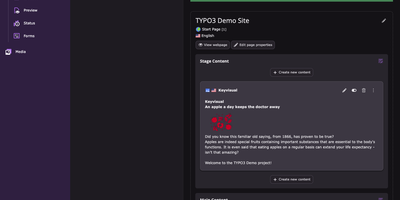
TYPO3 lets an organization run any number of multilingual websites from one installation, with editors working in a page tree and administrators deciding who may touch what. Editing happens in a context panel that slides in beside the page layout, and a guided wizard creates new pages step by step. Translations can be copied or connected to their source with change tracking, and sites can mix languages, including right-to-left scripts. Workspaces keep edits away from the live site until they are previewed and approved, while access lists, page permissions, and mounts control which parts of the tree each backend user may change. Marketing teams get a QR code module and a short URL module with hit counters and expiry dates, and redirects are created automatically whenever a page slug changes. The Form Framework builds forms with multiple file uploads in one field, CKEditor 5 text editing, and email notifications customized in the backend. A dashboard shows widgets such as recent documents and backend logins, and a Bookmark Manager groups shortcuts into large page trees. The Camino starter theme gives integrators a ready-made frontend with several color schemes, and developers shape sites further with Fluid templates and TypoScript, plus extensions from extensions.typo3.org. Running on a dedicated VPS on RepoCloud with guaranteed CPU, RAM, and SSD, full root SSH access, and a browser serial console. GPL-2.0 licensed.
Password Pusher
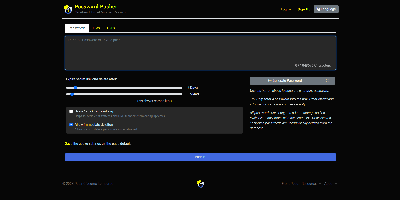
Credentials sitting forever in email threads and chat scrollback - Password Pusher solves that everyday security failure. Instead of pasting a password into Slack, you push it - a password, note, file, URL, or QR code - and share a unique one-time link that expires after a set number of views, a time limit, or both. Content is encrypted at rest with AES-GCM under a configurable master key, optionally guarded by a passphrase, and permanently deleted from the database the moment it expires; a retrieval-step option keeps URL-scanning bots from consuming views. Full audit logs record when each link was created and viewed (and by whom, with logins), and TOTP two-factor authentication can be required instance-wide. The delivery page is deliberately unbranded - no logos or confusing links for recipients - and the interface ships in 31 languages with light and dark themes. Automation runs through a JSON API (v2), an official CLI for pushing and expiring secrets from the terminal, a Chrome extension, and a catalog of third-party integrations. Apache-2.0 licensed Ruby on Rails, deployable via Docker, Kubernetes, or Helm, with SQLite or PostgreSQL storage - the sysadmin staple for sending credentials that clean up after themselves.
AgentDock
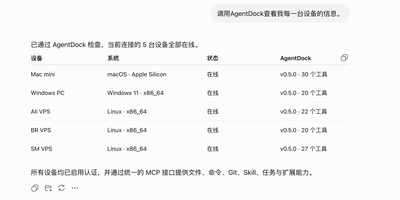
AgentDock turns the computers and servers you already run into machines an AI assistant can operate for you through one secure MCP endpoint. Connect ChatGPT, Claude, Codex, or any other MCP client and the agent works in the real environment: reading and writing files, searching code, running shell commands, and driving Git where the project actually lives. Long jobs survive interruptions because task state and checkpoints persist on the node, ready to resume where they stopped. Browser work is covered as well, with web pages driven through a native Chrome DevTools connection that reuses your logged-in sessions, captures screenshots, and can even operate macOS desktop applications. Capabilities grow through installable Skills and dynamic MCP servers, so a node picks up new tools without a rebuild. Run a single node on a laptop, or spread nodes across VPS hosts and containers and pair them with the optional NexusDock console for one fleet view, shared Recall memory, reusable workflow templates, and a single MCP address for every machine. Access stays locked down with Bearer tokens or OAuth sign-in, loopback-only defaults, and optional Cloudflare Tunnel or HTTPS exposure when a remote client needs a way in. Running on a dedicated VPS on RepoCloud with guaranteed CPU, RAM, and SSD, full root SSH access, and a browser serial console. Apache-2.0 licensed.
Tugtainer
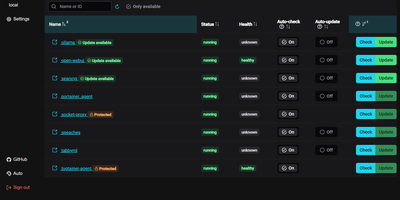
Tugtainer delivers a visual command center for Docker environments that automates container image updates, monitors registry releases, and manages application lifecycles across multiple servers without command-line intervention. System administrators can inspect running containers across all connected hosts, trigger immediate image pulls, and configure automated cron schedules for recurring health and registry checks. Flexible update policies allow teams to flag production databases as notification-only while automatically updating stateless web applications whenever new image tags publish. When updating linked services, the platform analyzes Docker Compose project definitions and custom dependency labels to stop and restart containers in strict dependency order, preventing broken network links and orphaned volume mounts. Administrators can authenticate private container registries, browse image layers and tags, and view real-time container log streams directly within the browser console. Automated pruning jobs continuously reclaim server disk space by deleting obsolete, untagged images and dangling build layers after successful deployments. Multi-channel alerting integrates with over fifty notification providers, delivering real-time update summaries and error warnings directly to Discord, Telegram, Slack, and email webhooks. Running on a dedicated VPS on RepoCloud with guaranteed CPU, RAM, and SSD, full root SSH access, and a browser serial console. MIT licensed.
Labby
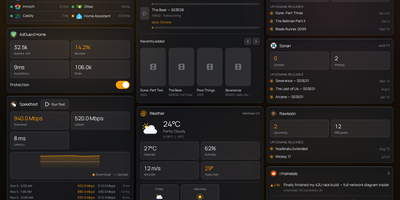
Labby gathers a whole homelab onto one live dashboard you host yourself, covering services, containers, downloads, and media servers. Widgets watch your service monitor, Docker containers, qBittorrent or Transmission queues, SABnzbd, AdGuard Home, Jellyfin, Emby, Plex, Beszel, Radarr, Sonarr, plus weather, calendar, speedtest, bookmarks, Reddit, and Hacker News, and the server pushes every change to your browser over server-sent events so nothing waits on a refresh timer. The dashboard is not a read-only poster: start and stop containers, pause and resume torrents, and toggle AdGuard protection straight from its widgets. Everything configures from the in-app Manage Services page, where service URLs, API keys, poll intervals, and multiple instances of the same integration (two Radarr servers, say) live in a small SQLite database instead of scattered environment files. Named color schemes restyle the board and save with the config, and icon sources span dashboard-icons, selfh.st, Lucide, or your own URLs. Login is off by default for trusted home networks, with a clear warning to keep it behind a LAN, VPN, or forward-auth proxy, and optional OIDC sign-in through Authentik, Authelia, Keycloak, or Pocket ID when you want a real front door. One container, one volume, and your lab finally explains itself at a glance. Running on a dedicated VPS on RepoCloud with guaranteed CPU, RAM, and SSD, full root SSH access, and a browser serial console. MIT licensed.
SignaturePDF
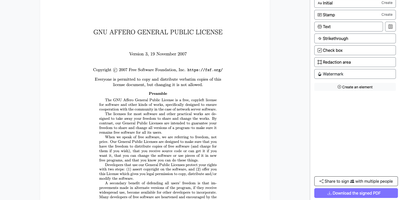
Signature PDF turns the print, sign, scan, email routine into a browser tab: upload a contract, place your signature on the page, and send the finished document back without paper ever entering the loop. Sign alone in seconds, or share a link and let partners, clients, and colleagues add their signatures to the same document in turn. Draw your signature with the mouse or trackpad, type it in a handwriting style, or stamp a scanned image of your handwriting onto any page. Drop the signature exactly where it belongs, resize it, and apply it across selected pages before downloading the signed file. Organize mode lays every page out as thumbnails you can reorder, rotate, delete, extract, and merge with pages from other PDFs. The metadata editor rewrites title, author, and custom fields, and compression shrinks bulky scans to a size email can carry. For shared signing, PDFs rest on the server only for the retention window you choose, and optional storage encryption keeps their contents unreadable to anyone missing the key. Where cryptographic proof is required, certificate-backed digital signing proves who signed and exposes any later edit to the file. A built-in demo document lets anyone test the full flow first, and the translated interface serves signers in many languages. Running on a dedicated VPS on RepoCloud with guaranteed CPU, RAM, and SSD, full root SSH access, and a browser serial console. AGPL-3.0 licensed.
Meteroid
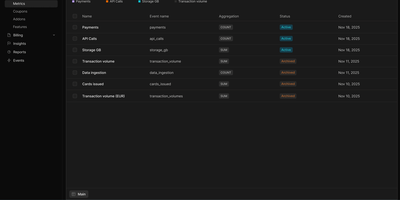
Meteroid delivers the billing infrastructure that SaaS companies need when Stripe Billing gets too rigid and building in-house gets too expensive. The Rust backend ingests usage events via REST API or Kafka with deduplication by event ID and customer ID, storing time-series data in ClickHouse for sub-second aggregation queries across billions of events. Billable metrics transform raw events — API calls, compute time, tokens, storage, transactions — into accurate charges using configurable aggregation functions, dimensions, and filters without pre-aggregation. The plan builder supports any pricing structure: flat rate, per-unit, tiered graduated, tiered volume, package, and hybrid combinations with multiple price components per plan. Versioned plans enable pricing changes without affecting existing subscribers through grandfathering, while experiments let you A/B test pricing with controlled rollouts. Subscription management handles the full lifecycle — creation, upgrades, downgrades, mid-cycle proration, scheduled changes, and cancellation with configurable grace periods. The TypeScript frontend provides a complete web dashboard for managing customers, plans, subscriptions, invoices, and revenue analytics with MRR tracking, churn analysis, and cohort insights. Automated invoice generation handles complex scenarios including usage-based line items, credits, discounts, and tax calculations with PDF rendering. Stripe Connect integration enables payment collection directly through the platform. Running on a dedicated VPS on RepoCloud with guaranteed CPU, RAM, and SSD, full root SSH access, and a browser serial console. AGPL-3.0 licensed.
DumbAssets
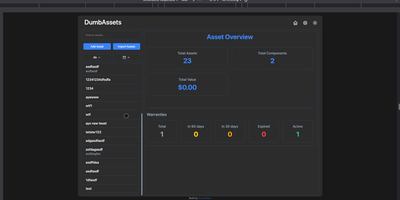
DumbAssets delivers a deliberately simple physical asset tracker that does exactly one thing well — keeping tabs on everything you own, from server racks down to individual HDDs, with hierarchical component nesting that mirrors real-world organization. The Node.js backend stores all data in JSON files within a single /data directory, making backups trivial with one folder copy while the PWA-enabled frontend provides responsive access from any device with light and dark theme persistence. Assets track model numbers, serial numbers, purchase dates, warranty expiration dates, and custom descriptions while sub-components nest infinitely — attach a Dell R730 to your server rack, then attach individual drives, CPUs, and NICs to that server with separate warranty and maintenance schedules for each. The Apprise notification engine fires configurable alerts for warranty expirations and maintenance events with direct links back to the specific asset in the web interface. Photo uploads attach visual records to any asset, receipt storage keeps purchase documentation alongside the item it covers, and a flexible tagging system enables cross-cutting organization beyond the hierarchy. PIN authentication with brute-force protection secures the interface, while search covers names, models, serials, and descriptions with sorting by warranty status, tags, components, or alphabetical order. Deploy with a single Docker command mapping port 3000 and one data volume. Running on a dedicated VPS on RepoCloud with guaranteed CPU, RAM, and SSD, full root SSH access, and a browser serial console. GPL v3 licensed.
Hitobito
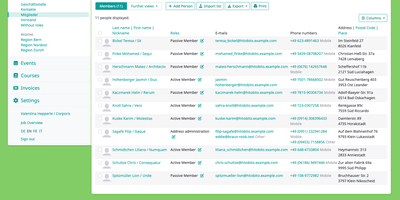
For clubs, associations, and federations, Hitobito replaces the member spreadsheets, sign-up forms, and mailing tools with one web application that mirrors how the organization is actually built. Chapters, regions, committees, and boards sit in a single group tree, and each person holds one or more roles that decide what they can see and change. People tables filter, import, and export to CSV, Excel, vCard, and PDF. Each record carries households, tags, notes, qualifications, and history, and a duplicates view helps clean up double entries. Events and courses accept online registrations, send overflow to a waiting list, and award qualifications that expire or renew by rule. Messages reach mailing lists as bulk e-mail, PDF letters, or SMS, and bounces are collected. The invoicing module issues single invoices and invoice runs, follows each through draft, issued, partially paid, paid, and reminded states, and can import bank payments over EBICS. Administrators edit texts, labels, tags, and course categories without writing code. Other systems sign in through an OAuth 2.0 and OpenID Connect provider and read data through a JSON:API with personal tokens or service accounts. The interface switches between German, English, French, and Italian. Running on a dedicated VPS on RepoCloud with guaranteed CPU, RAM, and SSD, full root SSH access, and a browser serial console. AGPL-3.0 licensed.
Kubewall
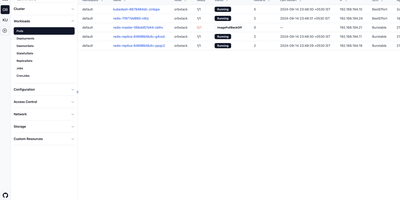
One binary is all that stands between you and every Kubernetes cluster you own: Kubewall opens a realtime web dashboard over all of them, with no agents to install and nothing phoning home. Switch between clusters from the sidebar and browse workloads, networking, storage, configuration, and access control in tables that update live as pods start, fail, and reschedule. Open any resource to inspect its overview, edit its manifest in the built-in YAML editor with validation, watch its events, or stream logs aggregated across pods and containers with search and tail controls. A command palette jumps straight to any resource type, while faceted filters and global search cut through thousands of objects by name, namespace, label, or image. Scale deployments, restart pods, trigger rollout restarts, and apply manifests with a click, or forward a cluster service to your local machine without memorising kubectl incantations. An integrated AI assistant, connected to OpenAI, Claude, Gemini, DeepSeek, OpenRouter, Ollama, or a local model, helps troubleshoot failures and review configurations right beside the resource it concerns. Running on a dedicated VPS on RepoCloud with guaranteed CPU, RAM, and SSD, full root SSH access, and a browser serial console. Apache-2.0 licensed.

Pixelfed
With nearly 7,000 GitHub stars and instances spanning hundreds of federated servers, Pixelfed has become the leading open-source alternative to Instagram — delivering ad-free, algorithm-free photo sharing across the Fediverse. Built on Laravel with a Vue.js frontend, Pixelfed provides a polished, mobile-responsive interface where users upload photos and videos, apply built-in filters, create multi-image posts with alt text, share ephemeral stories, organize content into curated collections, and exchange direct messages — all without tracking, algorithmic manipulation, or targeted advertising. Federation through the ActivityPub protocol means Mastodon, Pleroma, and other Fediverse users can follow Pixelfed accounts, view photo posts in their timelines, and interact through likes, boosts, and replies, while Pixelfed users can discover content through both local and federated timelines. Instance administrators control registration policies, content moderation rules, federation blocklists and allowlists, storage backends including local or S3-compatible options, and server-wide settings. The Mastodon-compatible API enables third-party mobile app support alongside the built-in Progressive Web App experience. Advanced features include blurhash image placeholders for smooth loading, federated groups for community building through FEP-400e and FEP-1b12 extensions, HTTP Signatures with Authorized Fetch for secure federation, and comprehensive data export for full portability. Deployment requires PHP 8.1+, MySQL or PostgreSQL, Redis, and a reverse proxy, with Docker Compose configurations available for streamlined setup. Running on a dedicated VPS on RepoCloud with guaranteed CPU, RAM, and SSD, full root SSH access, and a browser serial console. AGPL-3.0 licensed.