GEOFlow
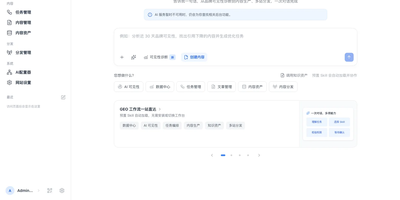
Built for brands that want AI search engines to quote them, GEOFlow is an open-source admin system that turns approved knowledge into reviewed articles and publishes them across every site you run. Load documents or import trusted web pages into knowledge bases that are chunked into evidence units, with optional semantic planning and vector retrieval. Combine them with title libraries (AI can draft up to 100,000 titles), keywords, images, authors, and prompts, then set a task's generation limits, cadence, and publishing scope. Chat and embedding models connect through OpenAI-compatible endpoints or native Gemini, with automatic fallback to the next model when a call fails. Each draft passes an AI quality gate that checks evidence, citations, advertising rules, and publishing context, records scores with source locations and revision advice, and holds risky articles for a human reviewer. Approved articles appear on the built-in site with SEO metadata, Open Graph, Schema, sitemaps, and llms.txt, or travel to hosted subdomain sites, GEOFlow Agent packages, WordPress through its REST API, or any HTTP endpoint. A manual publishing workbench and Chrome assistant cover platforms that need a person, while analytics track traffic, AI crawlers, and brand visibility in generative engines. An API, command-line tool, and agent skill support automation. Running on a dedicated VPS on RepoCloud with guaranteed CPU, RAM, and SSD, full root SSH access, and a browser serial console. AGPL-3.0 licensed.
OpenHands
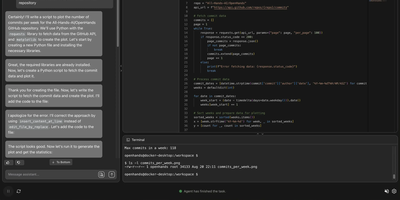
With 83,000+ GitHub stars and $18.8M in Series A funding, OpenHands delivers the leading open-source platform for AI coding agents that scored 68.4% on SWE-bench Verified with Claude Opus 4.6, outperforming Devin 2.0's publicly reported 45.8%. The Agent Canvas web UI organizes work into persistent conversations where agents edit files, run shell commands, browse the web, and execute multi-step development tasks inside isolated Docker sandbox containers. The observe-plan-act loop drives agent behavior: the Python controller manages LLM abstraction via LiteLLM routing to 100+ providers including OpenAI, Anthropic, Google, DeepSeek, Qwen, Llama, and local Ollama models. Built-in skills for code review, Docker management, PRD generation, repo-rules enforcement, release notes, and test running attach to conversations automatically via auto-discovery or trigger-based activation. The Automations system schedules recurring agent tasks with configurable templates for CI workflows, dependency updates, and documentation generation. MCP server integration enables agents to access external tools and data sources. The REST API powers an OpenAI-compatible endpoint for connecting agents to chat UIs, IDEs, and voice platforms. GitHub, GitLab, Slack, and Jira integrations enable pull request reviews, issue resolution, and team notifications. The SDK provides Python and REST APIs for embedding agents in custom tools with local or cloud execution, custom agent behaviors, and Kubernetes deployment. On RepoCloud, deploy OpenHands on a dedicated VPS with Docker socket access, persistent project storage, root SSH access, and complete control over your AI development infrastructure, all under the MIT license.
Signet
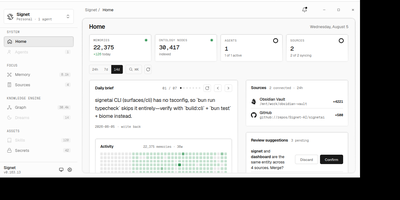
Give every AI agent you use the same memory, and a coding session stops starting from zero each time the tool changes. Signet runs as a daemon that captures transcripts, imported documents and connected sources, then builds a structured map of the people, projects, facts and relationships inside that history through a background process called dreaming. Each connection links back to its source passage, so an agent can trace a recalled fact to the exact transcript or file that produced it. Hooks, plugins and MCP integrations feed relevant memory into Claude Code, Codex, OpenCode, Gemini CLI, Kimi Code, Pi and more before the next prompt begins, and the same memory follows the work when the harness changes. Agents can also leave messages for each other through Signet, delivered at the start of the recipient's next session. The browser dashboard presents a daily brief, recent memories, a searchable memory graph, source connections and system status, plus a chat that answers questions over the memory with citations to the underlying records. Imports cover Word, PowerPoint, Excel, PDF, EPUB, CSV and web pages, with Notion databases and Discord channels syncing into the same graph. Per-agent read isolation, encrypted secrets and credential redaction keep sensitive material bounded. Running on a dedicated VPS on RepoCloud with guaranteed CPU, RAM, and SSD, full root SSH access, and a browser serial console. Apache-2.0 licensed.
Bernstein
When an agent breaks production at 3 a.m., "the model did it" is no incident report: Bernstein decides in advance what your AI agents may touch, then keeps receipts proving what they did. You write policy as code: which roles may do what, what needs human approval, and what must be recorded before a task counts as done. A deterministic scheduler with no model in the coordination loop turns each goal into parallel tasks, so replaying yesterday's plan reproduces yesterday's task graph exactly. Every coding task runs in its own git worktree behind merge gates; nothing lands on your main branch until tests, lint, and type checks pass. It drives the CLI agents you already use (Claude Code, Codex, Gemini CLI, Aider, Goose, dozens more), mixing cheap local models with heavy cloud ones in one run. Approvals can demand a hardware key touch, and role fences hold whatever an agent tries inside its task. The journal, lineage record, and optional tamper-evident audit chain capture every step, sealed into an Ed25519-signed receipt verifiable offline from the file alone. Non-code work gets the same treatment: an artifact contract names the deliverable (report, dataset, audit evidence pack), and the task completes on a signed receipt instead of a commit. You supervise from the browser dashboard or terminal UI, watching tasks, agents, approvals, and costs live. Running on a dedicated VPS on RepoCloud with guaranteed CPU, RAM, and SSD, full root SSH access, and a browser serial console. Apache-2.0 licensed.

CubeSandbox
CubeSandbox gives every AI agent its own hardware-isolated MicroVM with a dedicated Linux kernel — not a shared-kernel container but a true KVM virtual machine — booting in under 60ms with less than 5MB of memory overhead per instance, enabling thousands of concurrent sandboxes on a single server via kernel sharing and Copy-on-Write memory. The Rust-built CubeProxy exposes an E2B SDK-compatible REST API on Axum, so existing E2B Cloud applications switch by changing one environment variable with zero client code changes. CubeMaster orchestrates cluster-level scheduling in Go while Cubelet manages node-local sandbox lifecycles including create, run, pause, resume, snapshot, and destroy operations. CubeVS, the eBPF-powered network layer, enforces per-sandbox isolation with LPM trie-based egress policies entirely in kernel space — no userspace context switches — while CubeEgress provides an L7 security proxy with per-domain, per-path, and per-method allowlists plus automatic credential injection that keeps secrets invisible to sandbox code. Hundred-millisecond-granularity snapshots enable checkpoint, rollback, and parallel fork from any saved state. The volume framework supports E2B-compatible pluggable storage with independent lifecycle and cross-sandbox sharing. Production deployment uses Terraform on Tencent Cloud or Helm charts on Kubernetes, K3s, or TKE, with full ARM64 support alongside x86_64 and AutoPause/AutoResume for cost optimization. Running on a dedicated VPS on RepoCloud with guaranteed CPU, RAM, and SSD, full root SSH access, and a browser serial console. Apache 2.0 licensed.
RustPBX
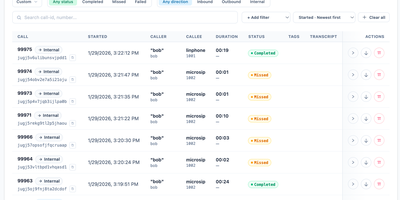
RustPBX is a software-defined PBX whose routing, media control, and events are programmable from any language, so your code decides where calls go and AI voice agents can join them. Every incoming INVITE posts to your webhook, which answers in JSON to forward, reject, abort, or flag the call as spam, while a real-time WebSocket interface lets software originate, answer, bridge, transfer, play audio, and record. AI agents join calls as native participants that listen, speak, barge, and transfer, and supervisors listen, whisper, and barge into live calls through the same interface. A built-in web console manages extensions, trunks, routing, and call records with per-call traces, adds reports, diagnostics, and a WebRTC phone, while SipFlow captures SIP and RTP together, CDR webhooks report finished calls, and SenseVoice transcribes recordings offline. Calls travel over UDP, TCP, WebSocket, and TLS with SRTP, NAT traversal, RTP relay, transcoding, and automatic ACME certificates; queues and ACD distribute callers; role-based access control, Prometheus metrics, and OpenTelemetry cover day-two operations. Running on a dedicated VPS on RepoCloud with guaranteed CPU, RAM, and SSD, full root SSH access, and a browser serial console. MIT licensed.
Myriad
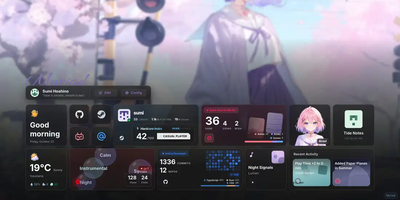
Myriad gathers your games, music, anime, and social posts from eleven platforms into one self-hosted homepage that has a resident character of its own. Connect GitHub, Steam, Bilibili, NetEase Cloud Music, and seven more platforms, and every account lands in one database that the report cards and library read. Report cards, a music player, weather, friend links, and recent activity fill a homepage you arrange on a grid or a free sticker canvas. The library shelves the collections as games, anime, films, books, and music, and clicking a report card plays a three-act portrait: your persona there, your taste, and your highlights. Her layered 2.5D portrait blinks, mouths each reply, and shifts expression in the browser, and a long press opens her panel anywhere on the site. In Chat she stays in character; in Help she plans, asks you to confirm, then acts inside the permissions you granted. The studio turns notes into a static Hugo blog, and the built-in reader follows your RSS, Notion, and RSSHub subscriptions. Tapps run sandboxed as pages or homepage widgets, and the Playground previews one from a single typed sentence before you install or export it. Follow other sites over ActivityPub, pair QQ, Telegram, or Discord bots that answer mentions in group chats, and keep registration and module visibility under your own switches. Running on a dedicated VPS on RepoCloud with guaranteed CPU, RAM, and SSD, full root SSH access, and a browser serial console. AGPL-3.0 licensed.
ByteChef
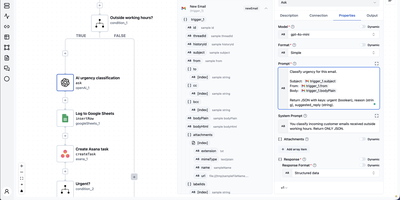
Drag an AI agent onto a canvas beside a Gmail trigger, a condition, and a Google Sheets step, and ByteChef runs the whole thing as one durable workflow that resumes where it stopped. Runs that fail or wait for a human pick up from the step they reached. The visual editor maps values between steps with data pills, and its 250+ connectors double as agent tools and MCP tools. An agent combines a model from twelve LLM providers, including OpenAI, Anthropic, Mistral, and Ollama, with chat memory, knowledge-base retrieval, and tools. It streams structured answers. Flow controls cover conditions, branches, loops, parallel and fork-join paths, subflows, error handling, and approval steps that pause for a person. Workflows start from webhooks, polling, schedules, forms, or app events, and code steps run JavaScript, Python, or Ruby. Workflows can be exposed through an MCP server for Claude Desktop, Cursor, or Windsurf, and ByteChef consumes external MCP servers too. Data Tables add typed relational tables with a spreadsheet-like grid and CSV import and export. The Agent Playbook opens a chat with the agent as you build it. Every run is listed with per-step input, output, and errors. Running on a dedicated VPS on RepoCloud with guaranteed CPU, RAM, and SSD, full root SSH access, and a browser serial console. Apache 2.0 + EE licensed.
BISHENG
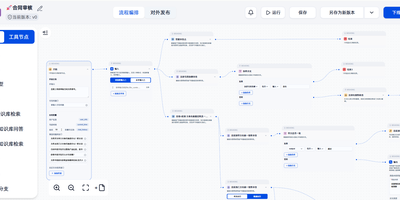
Document review, fixed-layout report generation, and multi-step research that ends in a PPT, Excel, or Word file all run inside BISHENG, a self-hosted workspace for enterprise AI applications. Review and report flows are drawn on a visual canvas where a circle becomes a loop, side-by-side nodes run in parallel, and a multi-item selection runs as a batch. A running flow can stop for a person to give input, confirm, or make changes, and chat and automation share one flow type. Research goes to Task Mode: give it a goal plus any files, knowledge bases, tools, and skills, and it writes a checklist, hands research to parallel sub-agents, and returns a report with clickable citation markers. Teams sharing documents use Knowledge Spaces, with folders, tags, keyword search, AI Q&A that shows its sources, and permissions down to a single file for people, departments, or user groups. For a daily news briefing, Channels turn WeChat official accounts and websites into topic feeds and save articles as knowledge in one click. Admins connect OpenAI-compatible APIs, Azure OpenAI, Anthropic, Qwen, DeepSeek, and local Ollama models, then govern access with approvals, audit logs, SSO, and LDAP. Private document parsing reads printed text, handwriting, tables, layouts, and seals, and a service-account Open API lets other systems call applications and knowledge bases. Running on a dedicated VPS on RepoCloud with guaranteed CPU, RAM, and SSD, full root SSH access, and a browser serial console. Apache 2.0 licensed.
SkillHub
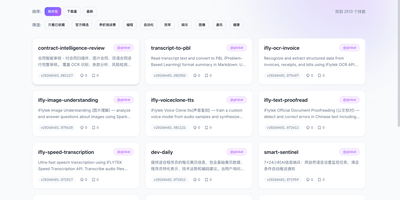
SkillHub gives teams a private, npm-style registry for AI agent skills, so a useful skill package is published once, reviewed, versioned, and installed into a compatible agent from the command line. Upload a package from the web console, the CLI, or the REST API, pick PUBLIC, NAMESPACE_ONLY, or PRIVATE visibility, and track releases with semantic versions plus tags such as beta and stable. Team namespaces keep their own members with Owner, Admin, and Member roles and publishing policies, while full-text search filters by namespace, downloads, ratings, and recency and hides whatever a user may not see. Every submission enters a review queue: namespace admins approve or reject team skills, platform admins decide promotions to the global scope, and each governance action lands in the audit log. A built-in Skill Scanner inspects published packages and shows its report on the skill page, with optional behavioral, LLM, VirusTotal, and Cisco AI Defense engines. Members can star and rate skills, follow download counts, receive notifications, and report problem packages. Skill suites bundle several skills into one versioned collection with an entry skill, scoped API tokens serve the CLI and scripts, and the interface speaks English, Simplified Chinese, Russian, and Korean. Packages live on local disk or S3-compatible storage such as MinIO. Running on a dedicated VPS on RepoCloud with guaranteed CPU, RAM, and SSD, full root SSH access, and a browser serial console. Apache-2.0 licensed.
AgentBox
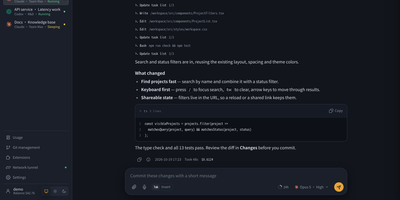
AgentBox is a self-hosted browser workspace that runs Claude Code and Codex CLI on a server you control, so a task goes from chat to reviewed code without leaving one place. Open a workspace from an empty project, an uploaded archive, or a Git clone, then talk to the agent in streaming web chat or drop into its original interactive terminal when you want the CLI itself. Files persist between sessions along with your home configuration and chat history, so a project picked up on a laptop continues on a phone exactly where it stopped. Review per-file diffs line by line before committing, pushing, or opening a pull request, and download the result when no Git connection is configured. Shared files, layered home templates, Claude skills, and MCP configuration carry your setup into every new workspace, with per-workspace overrides when a project differs. A trusted team shares central account pools with per-user scopes, while every model request is recorded with tokens, cache hit rate, cost, and latency, exportable to CSV and optionally capped by credits. An optional tunnel reaches allowlisted repositories and databases on private networks, and six interface styles with light and dark modes keep long sessions comfortable. Running on a dedicated VPS on RepoCloud with guaranteed CPU, RAM, and SSD, full root SSH access, and a browser serial console. Apache-2.0 licensed.
Chatty
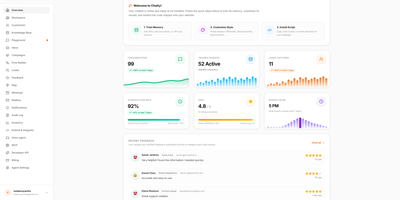
When a customer asks a question on your website, WhatsApp, Telegram, Messenger, Instagram, TikTok, SMS, or email, the Chatty AI agent answers from your own content and hands the chat to a person on request. Its knowledge base ingests PDF, DOCX, CSV, and text files plus crawled sites and sitemaps, and a WooCommerce connection looks up order status, live stock, and cart links. The agent captures leads into a CRM with CSV export and books meetings with Google Meet, Microsoft Teams, or Zoom links. A shared inbox streams conversations live, shows SLA breach warnings, and lets a human take over a thread with one click. A drag-and-drop flow builder adds rule-based paths with time-of-day conditions, webhooks, and an AI copilot that drafts the graph. Proactive campaigns fire on exit intent, time on page, or scroll depth, and a five-pillar scorecard grades conversion, deflection, accuracy, reliability, and satisfaction. An optional voice agent holds real-time spoken conversations with instant interruption and live transcripts, an 81-tool MCP server lets Claude, Cursor, or Codex run the dashboard, and each bot can use your own Gemini, OpenAI, Anthropic, Groq, or OpenRouter key. Running on a dedicated VPS on RepoCloud with guaranteed CPU, RAM, and SSD, full root SSH access, and a browser serial console. MIT licensed.
OpenManga
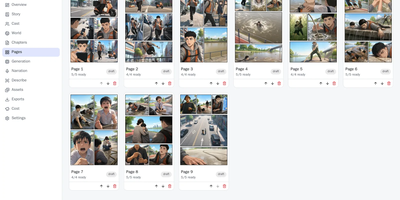
A written story becomes a manga chapter, manhwa episode, vertical webtoon, or narrated YouTube recap in OpenManga, with the same characters and places recognisable from the first panel to the last. It starts when AI splits a pasted story into cast, locations, chapters, scenes, and panel specs. You approve the reference portraits, turnarounds, outfits, and location sheets once, and every later panel is drawn against them. In the page editor you move panels, bubbles, captions, and sound effects, paint masks for targeted edits, compare art versions, and run a vision check on each panel. A production run prices the remaining work before it starts, respects a per-project budget cap, and can use half-price provider batches. The same run carries the project through artwork, narration, thumbnail, video, and YouTube text. Kokoro voices the narration locally, or you can cut it from your own recording. Exports cover print PDFs with KDP trim sizes, layered PSDs, CBZ, EPUB, webtoon strips, MP4, and Shorts. Supply your own keys for OpenAI, Gemini, Anthropic, DeepSeek, Meta Muse, OpenRouter, or ElevenLabs, or use paste mode with no key at all. Invite editors, comment on panels, share reader links, or let ChatGPT or Claude drive projects over MCP. Sign-up is closed until the admin opens it, and local narration wants about 8 GB of RAM. Running on a dedicated VPS on RepoCloud with guaranteed CPU, RAM, and SSD, full root SSH access, and a browser serial console. Apache-2.0 licensed.
NovelVids
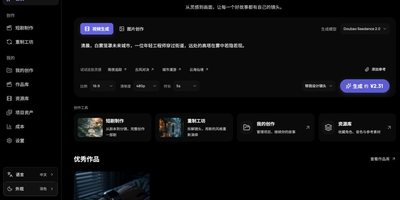
Short dramas and illustrated stories come together in NovelVids, a workbench that carries a project from manuscript import to assembled episode. Import a TXT, Markdown, DOCX, or PDF manuscript, review the chapter boundaries and story analysis, then develop the story chapter by chapter. Characters, locations, and props live in an asset library with reference images, aliases, variants, and voice bindings that stay linked to every shot. The storyboard editor holds shot descriptions, complete prompts, reference media, and generation parameters, and each generated result lands beside its inputs for inspection. An infinite canvas connects assets, videos, and enhanced results, and you can switch between storyboard and workflow views of the same project. Ask the creation assistant to revise selected objects, inspect the recorded diffs, and undo supported edits before anything regenerates. Start image or video clips from the home page by choosing a model, attaching reference images, video, or audio, and reviewing the estimate first. Remake studio analyzes reference videos you are authorized to use and converts their shots into an editable project. Track generation tasks and versions, assemble finished episodes, and optionally enhance resolution at the end. Running on a dedicated VPS on RepoCloud with guaranteed CPU, RAM, and SSD, full root SSH access, and a browser serial console. MIT licensed.
GEO-AEO Tracker
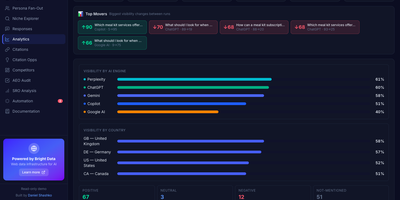
GEO-AEO Tracker shows whether AI search engines mention your brand at all, and how well, by checking ChatGPT, Perplexity, Gemini, Microsoft Copilot, and Google AI Mode with the prompts your buyers actually ask. Set up a project with your brand name, aliases, website, industry, and keywords, then run single prompts or batch every prompt across all five engines in parallel. Each run scores visibility from 0 to 100 using mentions, position, frequency, citations, and sentiment, and the analytics view charts that score over time with historical deltas and CSV export. Browse the raw AI responses with your brand and competitors highlighted, group citations by domain to see which sources engines trust, and find citation opportunities where competitors get cited and you do not, complete with outreach briefs. Generate side by side competitor battlecards, audit your site for AI readiness across llms.txt, crawler access, schema markup, and heading structure, and run the deeper SRO pipeline for a scored list of content gaps. Fan prompts out by persona, explore high intent niche queries, compare visibility by country, receive drift alerts when scores move, and schedule automatic runs across multiple workspaces. Running on a dedicated VPS on RepoCloud with guaranteed CPU, RAM, and SSD, full root SSH access, and a browser serial console. MIT licensed.
CompozyOS
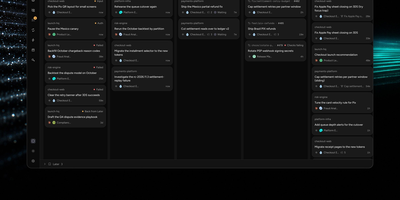
CompozyOS keeps your Claude Code, Codex, and Cursor agent sessions alive after the terminal closes and sorts them on one board by who owns the next step. Sessions land in Needs you, Working, Waiting, In review, or Done. Parallel agents each get their own worktree. The branch, the pull request, and its checks sit on the session. Fork a session, rewind it to a checkpoint, steer it mid-turn, or hand it to another agent CLI. Approvals hold a tool call until a person allows it. Always-on agents check in on a schedule, and a quiet check costs no model call. They watch sources such as new GitHub issues and propose actions. Approve each proposal, or let the agent act alone up to a daily limit. Loops pair a goal with a verifier and an iteration cap. Every Loop ends in one of seven named outcomes. Schedules, runtime triggers, and signed webhooks start agents on their own, and every run is recorded. Fifteen built-in integrations cover ten agent CLIs and five providers, on your own keys. A Marketplace adds extensions, plugins, and MCP servers in one step. The daemon starts reachable only from the machine itself, and remote access stays off until you turn it on. Running on a dedicated VPS on RepoCloud with guaranteed CPU, RAM, and SSD, full root SSH access, and a browser serial console. MIT licensed.
AgentSDR
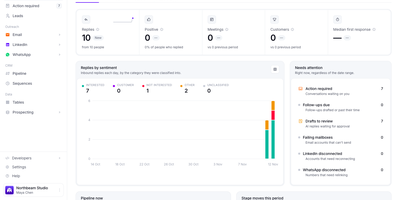
Outbound sales eats hours on list building, sequencing, and reply triage, and AgentSDR puts all three in one self-hosted workspace where AI drafts every reply for your approval. Leads holds every person and company as one record per contact, imported from CSV or Excel, so a reply on any channel lands in the same place. Tables enriches lists row by row with fifteen data providers, AI columns, and HTTP calls. Email sequences send from your own mailboxes with merge fields, sending windows, and daily limits. LinkedIn adds invitations with notes and follow-ups after acceptance, and WhatsApp covers chats and recorded calls. The Action required queue shows each reply with its AI classification, like Meeting Requested or Case Study, next to a drafted answer you edit and approve in one click. Nothing sends on its own. The Pipeline board groups open leads into needs action, waiting on them, and follow-ups exhausted, and Analytics charts replies, positive replies, meetings, and customers by channel. Do Not Contact rules, teams, and organization roles come built in. Founders, small sales teams, and agencies running outbound for clients get a lead-to-meeting engine. Running on a dedicated VPS on RepoCloud with guaranteed CPU, RAM, and SSD, full root SSH access, and a browser serial console. MIT licensed.
Open SEO
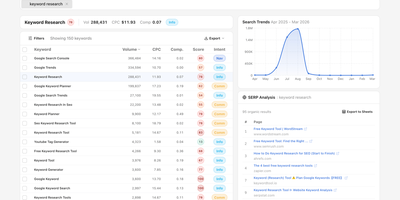
OpenSEO provides an alternative to the $100+/month SEO suite monopoly by connecting directly to DataForSEO APIs on a pay-as-you-go basis — you bring your own API key and pay only for the queries you actually make. The platform delivers focused workflows for keyword research with volume, difficulty, CPC, intent, and live SERP inspection; rank tracking with historical position monitoring; backlink analysis with referring domain quality scoring; technical site audits that crawl pages and surface issues; competitor insights comparing SERP positions across keyword sets; and AI visibility monitoring that tracks brand mentions, citations, and prompts across AI models. The integrated MCP server exposes all tools to AI coding agents including Claude Code, OpenClaw, Hermes, and Cursor, while Agent Skills provide reusable SKILL.md workflows that guide agents through complex SEO research tasks. Google Search Console integration reads first-party performance data including clicks, impressions, CTR, and position metrics with URL-level index status inspection. The Prompt Explorer compares how different AI models respond to SEO-relevant queries. Self-host via Docker for personal use or deploy to Cloudflare for team access with automatic database backups. The hosted version at openseo.so adds a 28% markup on DataForSEO requests. Running on a dedicated VPS on RepoCloud with guaranteed CPU, RAM, and SSD, full root SSH access, and a browser serial console. MIT licensed.