Stars
Forks
Watchers
Developer links
RustPBX
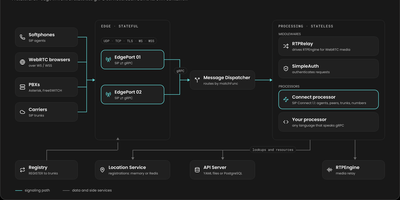
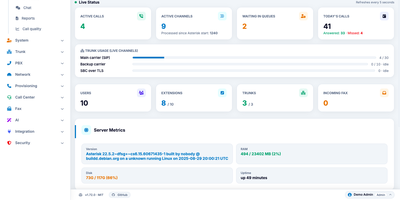
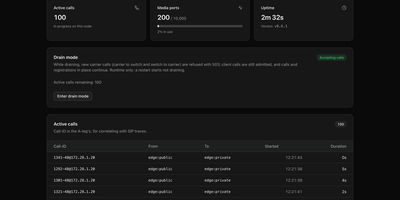
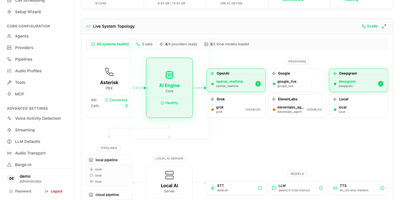
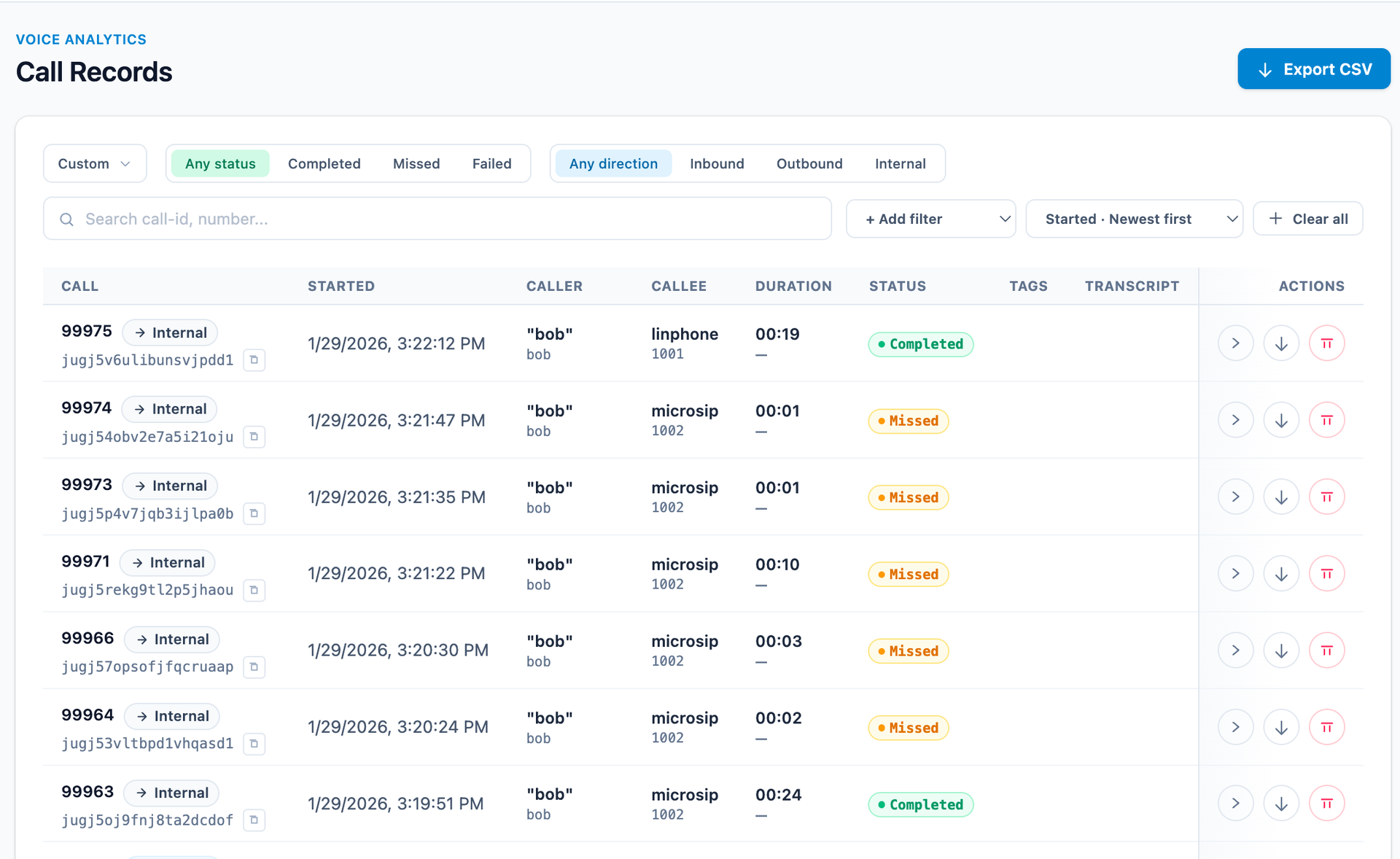
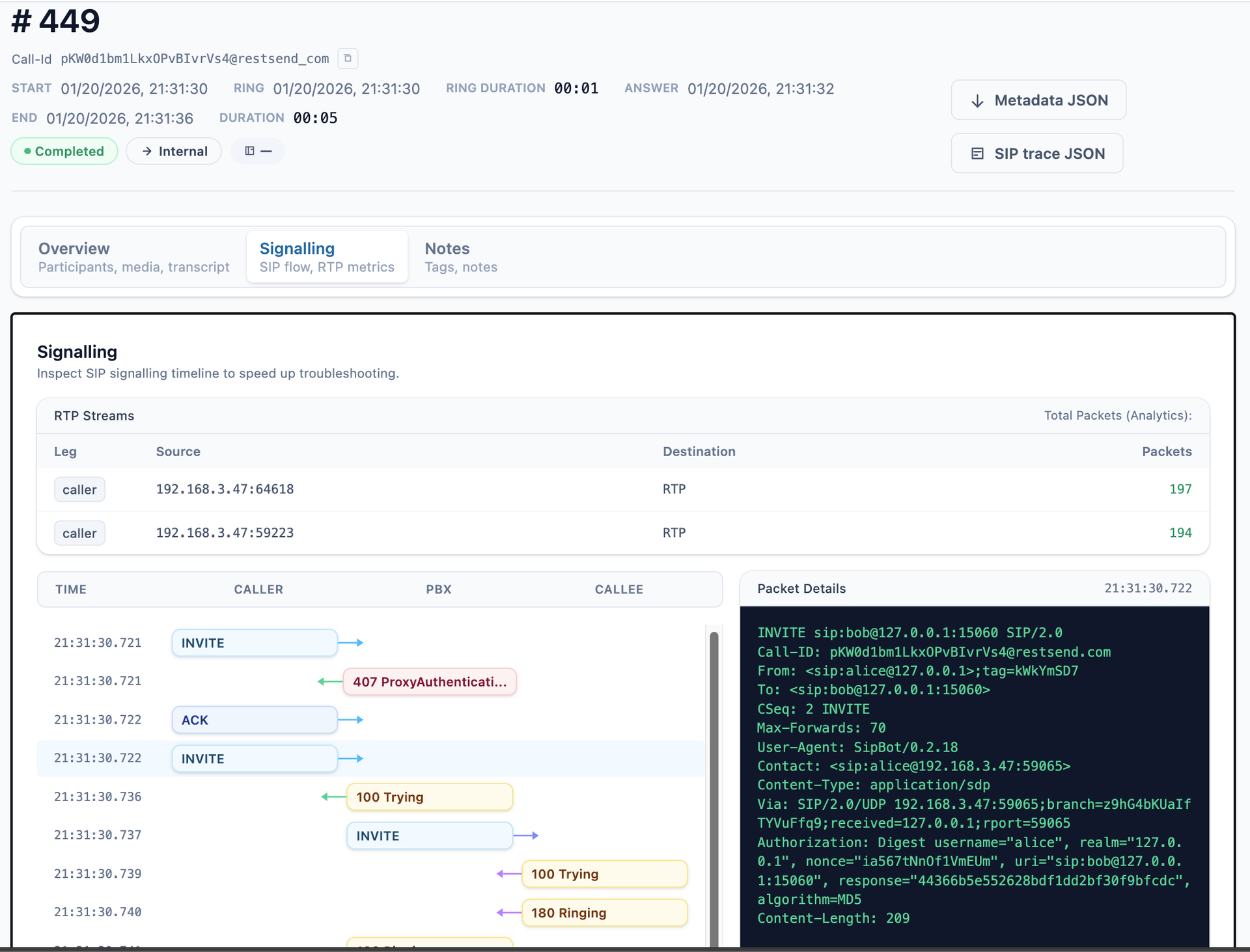
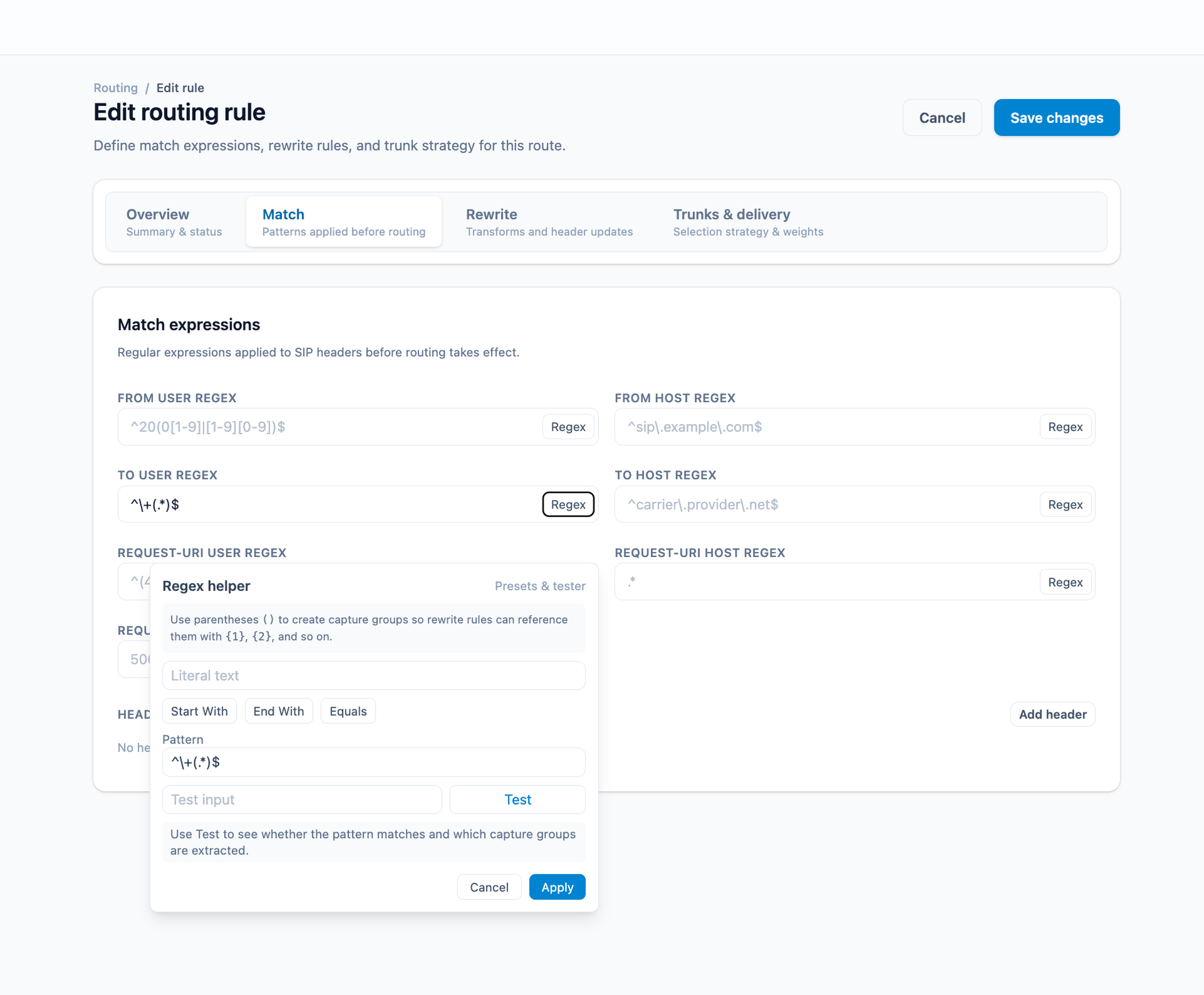
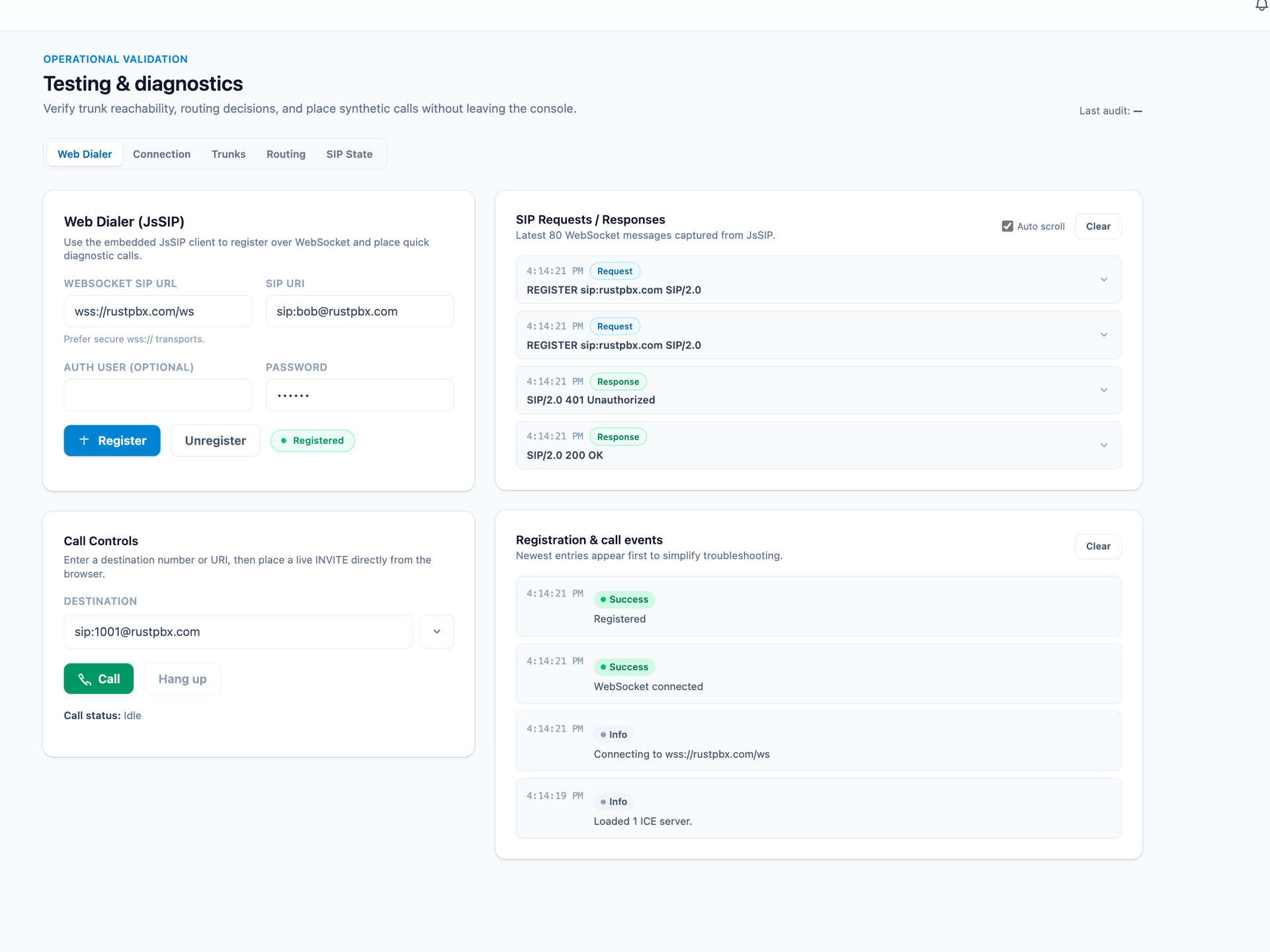
RustPBX is a software-defined PBX whose routing, media control, and events are programmable from any language, so your code decides where calls go and AI voice agents can join them. Every incoming INVITE posts to your webhook, which answers in JSON to forward, reject, abort, or flag the call as spam, while a real-time WebSocket interface lets software originate, answer, bridge, transfer, play audio, and record. AI agents join calls as native participants that listen, speak, barge, and transfer, and supervisors listen, whisper, and barge into live calls through the same interface. A built-in web console manages extensions, trunks, routing, and call records with per-call traces, adds reports, diagnostics, and a WebRTC phone, while SipFlow captures SIP and RTP together, CDR webhooks report finished calls, and SenseVoice transcribes recordings offline. Calls travel over UDP, TCP, WebSocket, and TLS with SRTP, NAT traversal, RTP relay, transcoding, and automatic ACME certificates; queues and ACD distribute callers; role-based access control, Prometheus metrics, and OpenTelemetry cover day-two operations. Running on a dedicated VPS on RepoCloud with guaranteed CPU, RAM, and SSD, full root SSH access, and a browser serial console. MIT licensed.
Benefits
- Routing Logic in Any Language
- Every incoming INVITE is posted to your webhook, so forwarding, rejection, and spam decisions live in your own code, with no C modules to write and no recompiling.
- Thousands of Concurrent Calls
- The project's benchmark relays 5,000 concurrent calls on about 3.8 CPU cores with no packet loss and linear scaling, so capacity grows predictably as you add CPU cores.
- AI Agents Join Calls Natively
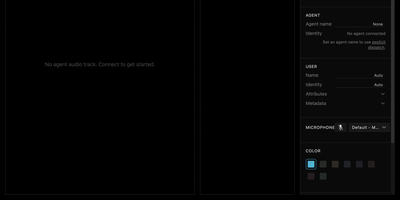
- Agents connect over WebSocket to listen, speak with barge-in, and transfer calls, while human supervisors can still listen, whisper, or barge in, so automated conversations stay supervised.
- Your Phone System, Your Server
- Run the community edition from a Docker image with SQLite by default and automatic ACME certificates, keeping call records, recordings, and credentials on infrastructure you own.
Features
- HTTP Router Webhooks
- Each SIP INVITE triggers a webhook POST carrying call_id, from, and to; your JSON reply forwards, rejects, aborts, or flags spam, and can switch recording on.
- RWI WebSocket Control
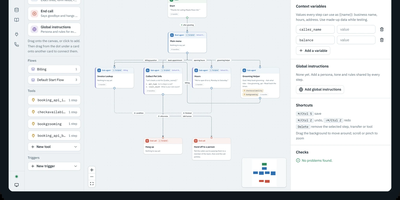
- JSON over WebSocket for originate, answer, hangup, bridge, transfer, play, and record.start commands, plus supervisor listen, whisper, and barge and conference controls.
- Full SIP Stack
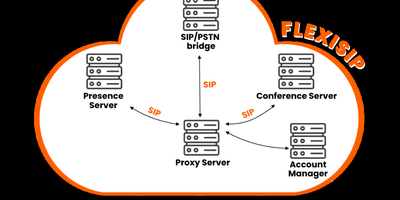
- Registration, authentication, and routing over UDP, TCP, WebSocket, and TLS, with RTP relay and transcoding, NAT traversal, SRTP encryption, and automatic ACME certificates.
- Web Console with WebRTC Phone
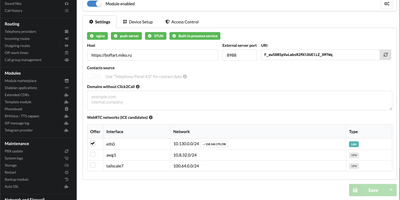
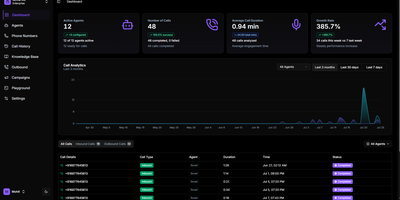
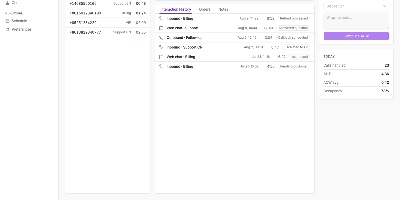
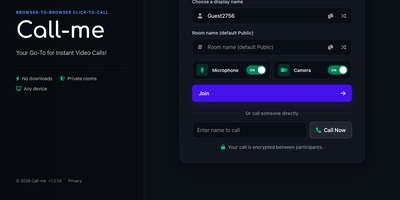
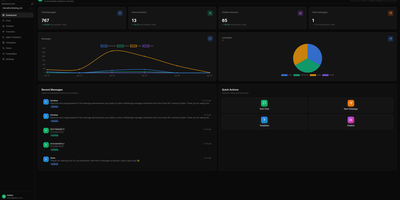
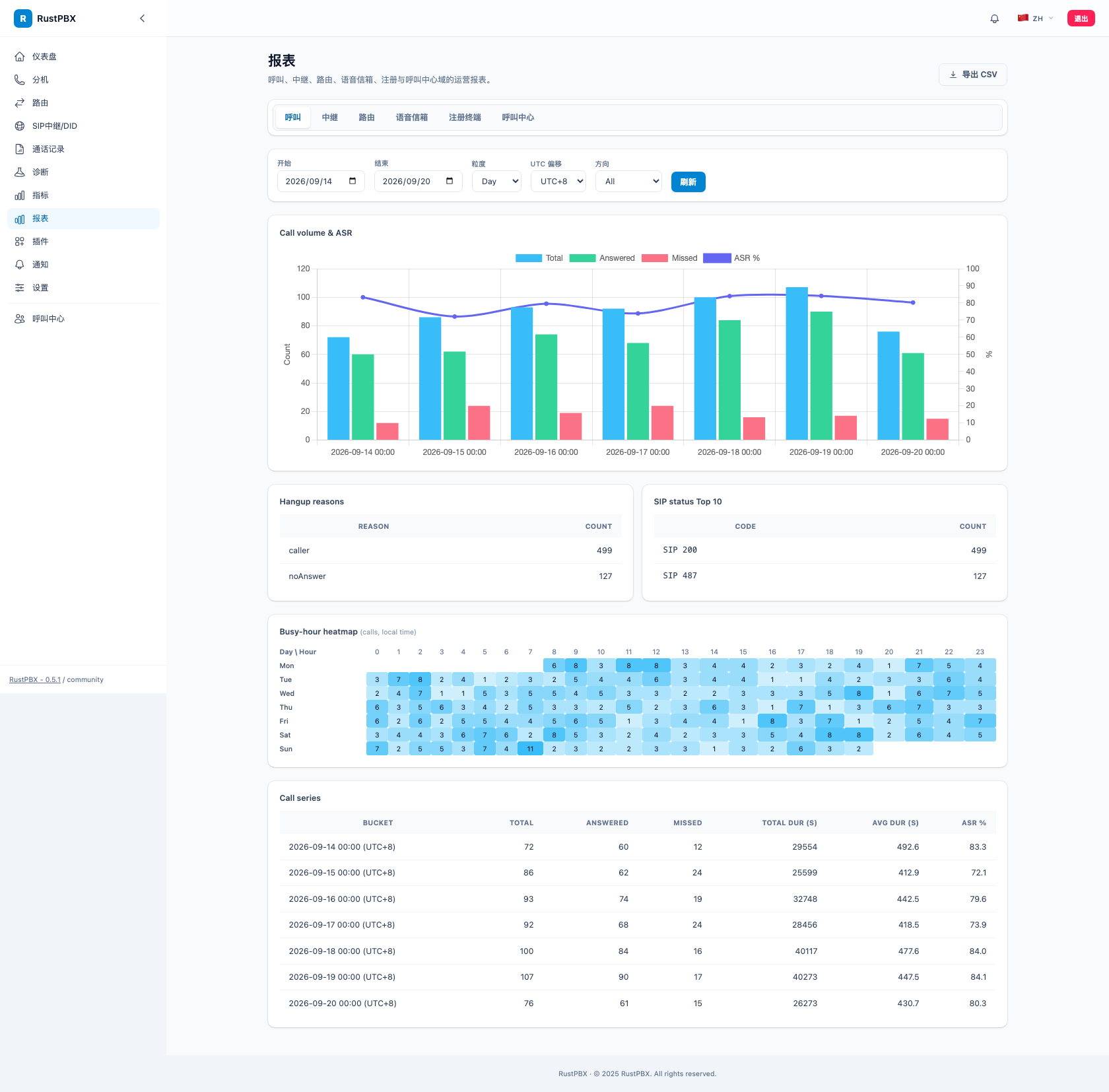
- Manage extensions, trunks, routes, and call records with per-call traces, reload routing and ACL changes from Settings, and place test calls from the built-in browser phone.
- SipFlow Recording and Transcripts
- SipFlow captures SIP and RTP together, CDR webhooks push records and audio to external servers, and SenseVoice offline transcription plus SSE live transcripts turn call audio into text.
- Metrics and Access Control
- Prometheus and OpenTelemetry integrations export metrics and traces for dashboards and alerts, while role-based access control governs who can use the web console.