Carbone
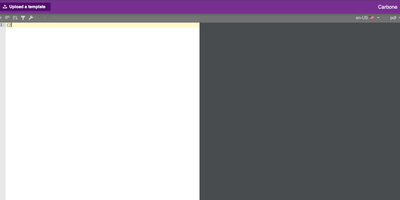
Document-generation code is the worst kind of code in your backlog - Carbone kills it. Its insight is separating design from data - templates are ordinary office documents (DOCX, ODT, XLSX, PPTX, HTML, even custom XML) built in LibreOffice, Microsoft Office, or Google Docs, with mustache-like markers such as {d.companyName} typed directly into the text. Send a template plus JSON from your existing APIs to the HTTP API, and Carbone returns the finished document - exported as-is or converted to PDF, XLSX, CSV, HTML, PNG, EPUB, and more via its integrated LibreOffice converter (Chromium and OnlyOffice engines are also supported for HTML-fidelity and office-format conversions). The template language goes well beyond substitution: loops over arrays render dynamic table rows, filters and aggregations run inside the document, and built-in formatters handle dates, numbers, currencies, timezones, and locales, with custom JavaScript formatters when needed. One template serves multiple languages through translation markers with auto-maintained translation files. The XML-agnostic engine means anything your document editor can design - pagination, headers, footers, nested tables, charts - survives generation intact, and Carbone guarantees no breaking changes in template syntax. Node.js-based, fast via multi-threaded LibreOffice conversion. The invoices, contracts, and reports your product owes its users become template edits, not sprints.
Alf.io
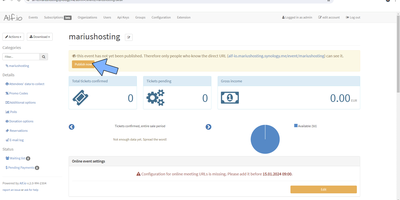
Alf.io handles the complete conference and event lifecycle from ticket distribution through check-in to financial reporting, built for organizers who refuse to surrender attendee data to third-party ticketing platforms like Eventbrite or Tito. Built on Java 17 with Spring Boot and PostgreSQL with row-level security policies, the project has earned over 1,500 GitHub stars from privacy-conscious event organizers across Europe and beyond. Payment processing supports Stripe for credit cards, Mollie for iDEAL, Bancontact, KBC/CBC, and Przelewy24, plus Revolut, PayPal, bank transfers, on-site collection, and configurable custom offline payment methods with localized instructions. Multi-tier ticket categories enable early bird, VIP, standard, and free registrations with promotional codes, group discounts, and waiting lists that automatically notify next-in-queue when cancellations occur. Customizable registration forms collect attendee data beyond standard fields, while EU VAT management validates tax IDs through the VIES web service and supports Italian e-invoicing with automatic PDF invoice generation attached to confirmation emails. The Alf.io Scan mobile app for iOS and Android performs QR code check-in at venue entrances, and the Alf.io-PI project provides Raspberry Pi-powered offline-capable check-in stations that form encrypted clusters for high-throughput badge printing at large events. Apple Wallet integration delivers digital passes via PassKit. The extensions system integrates with CRMs, accounting platforms, Slack, Telegram, and Mailjet. Multi-language support covers nine languages. Deploy via Docker with PostgreSQL. Running on a dedicated VPS on RepoCloud with guaranteed CPU, RAM, and SSD, full root SSH access, and a browser serial console. GPLv3 licensed.
Whiteboard
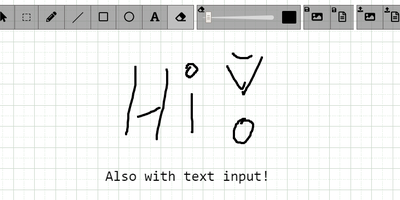
The drawing surface inside WebRTC conference tools like Meetzi and the LAMS online-learning platform is Whiteboard (by cracker0dks) - a lightweight Node.js collaborative sketchboard built to be embedded and customized, which also slots into Nextcloud via the External Sites app. Everyone opening the same whiteboardid URL parameter draws on the same board, with remote user cursors visible live, per-user undo/redo, and an indicator showing the smallest participating screen so nobody draws outside a colleague's view. Content handling goes beyond pen strokes: drag-and-drop or paste images and PDFs from any PC or browser, then resize, rotate, and draw over them on canvas or background; add text and sticky notes; hold Shift for angle-snapped lines and perfect squares. Every function has a keybinding - deliberately friendly to pen displays like Wacom and XP-Pen whose hardware buttons map to shortcuts. Boards save to image or JSON (with reload), export directly to Nextcloud via WebDAV, and persist across restarts with the file-database option. A REST API with bundled interactive docs allows full programmatic control, an optional access token locks down uploads, and YAML configuration tunes behavior and performance. MIT-licensed and reverse-proxy friendly.
Ralph
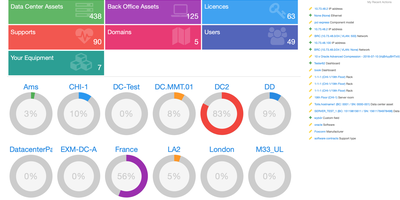
Ralph tracks thousands of assets across data centers and back offices through a unified CMDB, DCIM, and asset management platform, providing the same capabilities as ServiceNow, Device42, and Sunbird dcTrack without per-asset licensing fees. Used by Allegro in production and backed by over 2,500 GitHub stars, it is built on Python 3 with Django and Django REST Framework. Interactive data center floor plans support drag-and-drop rack placement, front and rear rack views showing U-level asset positioning, power consumption tracking per PDU, and ethernet and fiber connection mapping. The back office module manages laptops, desktops, printers, mobile phones, and accessories with user assignment tracking, warehouse inventory, stock-taking audits, and automated loan workflows. IP address management handles network environments with DHCP and DNS integration alongside network topology visualization. Software license tracking monitors per-user and per-core allocations with usage calculations, compliance reporting, and expiration alerts, while vendor support contracts track SLA agreements and warranty renewal dates. The transitions system automates asset lifecycle processes through configurable workflows that trigger HTTP webhooks, custom Python scripts, email notifications, and Puppet and Ansible configuration management integration. Custom fields extend the data model with text, numbers, dates, choices, and URLs per asset type, accessible via the REST API. Multi-tenant architecture organizes assets by regions, data centers, service environments, and business units. Deploy via Docker with the allegro/ralph image alongside MySQL and Redis. Running on a dedicated VPS on RepoCloud with guaranteed CPU, RAM, and SSD, full root SSH access, and a browser serial console. Apache 2.0 licensed.
Yacht
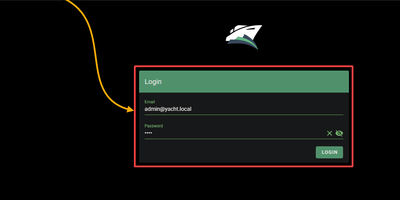
Docker deployment reimagined as an app store: browse a visual catalog of applications, click to deploy with sensible defaults, and customize ports, volumes, and environment variables only when you need to. Point Yacht at any Portainer-compatible template JSON URL and it parses every application into a browsable, searchable interface with pre-configured settings ready for one-click launch. The template framework is fully decentralized — anyone can host template files on GitHub, a personal server, or any URL, creating a community-driven ecosystem of deployment packages without central gatekeeping. Template variables prefixed with ! automatically substitute server-level settings, so !config resolves to your configured path across every deployment without repetitive manual editing. The Python backend handles container lifecycle — start, stop, restart, kill, removal — while streaming real-time logs, providing browser-based shell access, and monitoring resource statistics through the Vuetify dashboard. Docker Compose stacks sit alongside individual containers in the same management interface. Advanced editing lets you modify port mappings, volumes, environment variables, and restart policies on running containers without redeployment. The develop branch introduces agent-managed remote host support for expanding management to additional Docker hosts. Authentication can be disabled for environments behind external proxies like Authelia or Traefik forward auth. Running on a dedicated VPS on RepoCloud with guaranteed CPU, RAM, and SSD, full root SSH access, and a browser serial console. CC-BY-4.0 licensed.
Keila
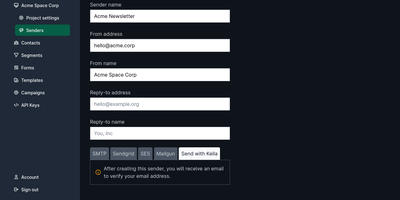
Among open-source Mailchimp alternatives, Keila has the most modern UI - built in Germany on Elixir and Phoenix (the PETAL stack), with GDPR-conscious defaults including an optional no-tracking mode, and 100% open source with no proprietary premium tier. Campaign authoring is flexible three ways: a visual block editor with multi-column layouts, Markdown with or without WYSIWYG for hybrid HTML-plus-plain- text sends, and raw MJML for hand-coded designs. The personalization system is unusually clean - every contact carries custom data as a single JSON object (populated from sign-up form fields or pushed from your CMS/CRM), and Shopify's Liquid template language renders it into fully dynamic emails. Targeting uses a visual segment editor backed by a powerful segment language for complex logic over tags, language preferences, and any custom field. Sign-up forms with custom fields grow your lists; open and click tracking measures campaigns; scheduled sending handles timing. Delivery pipes through your own SMTP or first-class integrations with AWS SES (including automated bounce handling), SendGrid, Mailgun, and Postmark. A full REST API manages contacts, campaigns, and segments, with Erlang/OTP reliability underneath. Comfortable at 100K+ subscribers. AGPL-licensed, EU-hosted project, actively developed.
Vigil
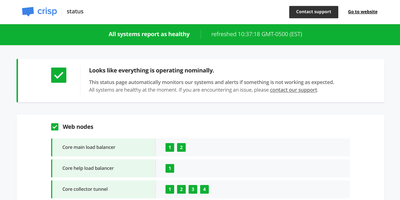
Vigil monitors your entire distributed infrastructure and generates a public status page from a single Rust binary small enough to run on a Raspberry Pi, consuming minimal CPU and memory while providing crash-free reliability. Four distinct monitoring modes cover every topology: poll probes check HTTP, TCP, SSH, and ICMP endpoints for reachability with configurable intervals and thresholds; push probes receive health reports from Vigil Reporter libraries embedded in your application code across Node.js, Python, Golang, Rust, TypeScript, Dart, and C#; local probes delegate monitoring to Vigil Local slave daemons running behind firewalls on separate LANs; and script probes execute custom shell commands for specialized health checks. Each monitored service transitions through healthy, sick, and dead states based on consecutive probe failures, with configurable thresholds controlling state transition sensitivity. When services change state, Vigil dispatches notifications through twelve alert channels including Slack, Email, Twilio SMS, Telegram, Pushover, Gotify, XMPP, Matrix, Zulip, Cisco Webex, and generic webhooks. The generated status page displays service groups organized by category with real-time replica status, system load metrics from reporter probes, and a maintenance announcement system for communicating planned downtime through the Manager HTTP API. Configuration uses a single TOML file defining all probes, services, and notification channels with no database dependency. Docker deployment pulls the official image with volume-mounted configuration. Running on a dedicated VPS on RepoCloud with guaranteed CPU, RAM, and SSD, full root SSH access, and a browser serial console. MPL-2.0 licensed.
Nzbget
Written in optimized C++ where competitors use Python or Java, NZBGet saturates fast connections while idling on CPU and RAM - which is why the performance-obsessed Usenet downloader has long been the client of choice for NAS boxes, Raspberry Pis, and routers as much as full servers. The engineering shows in the recovery pipeline. Instead of shelling out to par2cmdline, NZBGet integrates the par2 source directly and exploits its knowledge of exactly which articles failed - quick par-verification checks only what needs checking, and its own multicore repair implementation runs 2-3x faster than the external tool on the same hardware. Fast par-rename deobfuscates scrambled filenames in seconds without a full verification pass, and rar-rename recovers names for multivolume archives even when no par2 files exist. DirectWrite assembles articles straight into sparse destination files, skipping temporary-file churn entirely, with an article cache and queue-pausing options to eliminate disk contention. Automation is complete: a remote web interface, full JSON-RPC API, RSS feeds with duplicate detection, scheduling and prioritization, and an extension manager for Python and Bash scripts triggered by download events. Sonarr, Radarr, and every major indexer integrate natively.
ClassicPress
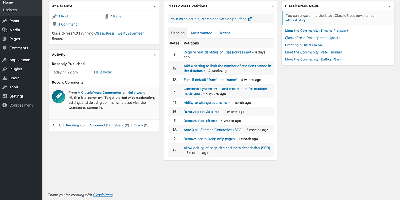
WordPress without Gutenberg: ClassicPress, the community-led fork, keeps the TinyMCE classic editor as the default and strips the block editor and Full Site Editing out of core entirely. The result is roughly half WordPress's size - obsolete libraries like jQueryUI, Thickbox, and Flash support are gone, replaced by native HTML5 elements and modern alternatives like SortableJS - which translates to a measurably faster admin and a leaner attack surface. Forked from WordPress 6.2, it remains compatible with the vast plugin and theme ecosystem targeting that lineage (anything not requiring blocks generally works, helped by a blocks-compatibility mode), and the PHP-first WordPress API developers have used for over a decade works unchanged - no React required to extend your CMS. The fork adds its own improvements: built-in media categories and tags with bulk editing, revision management that lets you prune database bloat, native HTML5 dialogs for accessible touch-friendly menus, and recent releases bring APCu object-cache support, vanilla-JS core widgets, and performant translations. Governance is democratic and community-driven rather than corporate. For content sites, business sites, and blogs where the classic editing workflow is the feature, ClassicPress is stability as a philosophy.
Chatpad
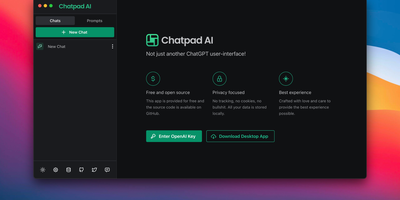
Why should your chat history live on someone else's servers? Chatpad AI - a React/TypeScript front end for the OpenAI API, built on the Mantine component library - is designed around that question. Enter your own OpenAI API key and start chatting with GPT models; every conversation, prompt, and setting is stored locally in your browser via DexieJS over IndexedDB, with no tracking, no cookies, and no backend database at all. That architecture is the point - the Docker image is just Nginx serving static files, making it one of the lightest AI deployments in the catalog, and pay-per-token API pricing typically undercuts a ChatGPT Plus subscription for moderate use. The interface earns its "premium quality" tagline with the details: a persona selector that switches communication styles per conversation, a saved-prompts library for messages you reuse constantly, organized chat history, and full data export/import so conversations move between browsers or into backups as files you control. A JSON config file customizes defaults - models, API endpoints, UI options - without rebuilding the image. AGPL-licensed, with desktop builds available upstream. For teams that want ChatGPT's utility with a self-hosted, zero-telemetry footprint, Chatpad is the minimal, sane answer.
Taiga
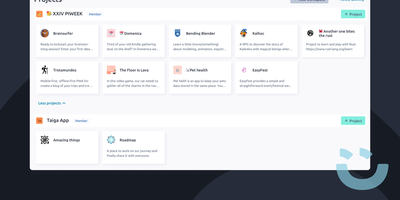
Winner of the 2015 Most Valued Agile Tool award and cited as a top project management platform by Opensource.com with over 2,100 GitHub stars on the Docker deployment repository alone, Taiga has served an estimated 20 million users worldwide with over 2 million Docker pulls since its creation in 2014 by Kaleidos. The platform delivers a complete agile project management experience through Scrum boards with backlog prioritization, sprint planning, story point estimation configurable per role, burndown charts at both project and sprint levels, and velocity tracking with a project doom-line indicator. Kanban boards offer customizable workflow columns with swimlanes, WIP limits, zoom controls, and the ability to switch between Scrum and Kanban at any point without losing data. The issue tracker supports custom types, priorities, and severities with the ability to promote issues directly to user stories. Team collaboration features include threaded comments, file attachments, email notifications, mentions, a built-in wiki for project documentation, and a team performance dashboard with the Iocane health metric for tracking team sustainability. The platform integrates with GitHub, GitLab, and Bitbucket for version control linking, provides importers for migrating from Trello and Jira, and exposes a REST API for custom integrations. Available in over 20 languages with custom fields, tags, roles, and permissions. Running on a dedicated VPS on RepoCloud with guaranteed CPU, RAM, and SSD, full root SSH access, and a browser serial console. MPL-2.0 licensed.
Piwigo
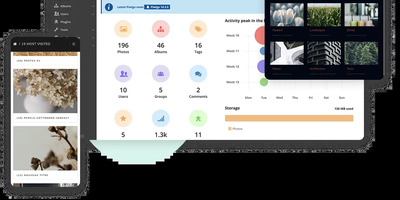
With over 3,800 GitHub stars and continuous development since 2002 spanning 24 years of active maintenance through version 16.4.0 released in May 2026, Piwigo has proven itself as one of the most battle-tested self-hosted photo gallery platforms available, trusted by professional photographers managing 150,000+ high-resolution images alongside small teams sharing event photos. The PHP backend with MySQL or MariaDB storage serves a responsive web interface that organizes photos into hierarchical albums with nested sub-albums, tag-based categorization, and smart albums generated dynamically from search criteria. Batch management tools handle bulk uploads, metadata editing, tag assignment, and album moves across thousands of images simultaneously. User permission controls define access at the album level with configurable public, private, and group-restricted visibility, while guest access allows public galleries without authentication. Image processing via ImageMagick or PHP GD generates multiple thumbnail sizes, watermarks, and responsive derivatives automatically. The plugin ecosystem with over 200 community-built extensions adds functionality from EXIF metadata display and GPS mapping to social sharing, download controls, and Lightroom synchronization for desktop workflow integration. The REST Web API with personal API key authentication enables programmatic album creation, photo uploads, and metadata queries from external applications. Mobile apps for iOS and Android provide on-the-go upload and browsing capability. Docker deployment via the official container or traditional LAMP installation on any hosting provider. Running on a dedicated VPS on RepoCloud with guaranteed CPU, RAM, and SSD, full root SSH access, and a browser serial console. GPL-2.0 licensed.
Grafana OnCall
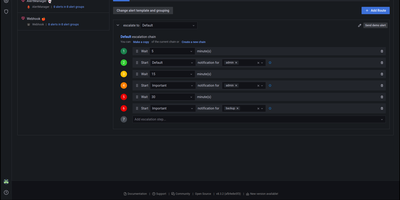
With 3,900 GitHub stars, 140 contributors, and 380 releases since its 2022 launch, Grafana OnCall delivers developer-friendly incident response that routes alerts from any monitoring system to the right engineer at the right time through the right channel. The platform accepts alerts via unique API URLs from Alertmanager, Grafana Alerting, Zabbix, Datadog, Pagerduty-compatible sources, Jira, inbound email, and generic HTTP webhooks, then applies routing templates to direct each alert to the appropriate escalation chain. Escalation chains define notification sequences — notify the primary on-call via Slack, wait 5 minutes, escalate to SMS and phone, wait 10 minutes, page the secondary on-call and notify the engineering manager — continuing until acknowledgment or resolution. On-call schedules support multi-layer rotations with overrides, shift swaps, and timezone-aware handoffs rendered directly inside Grafana dashboards. ChatOps integration publishes alert groups to Slack channels and Telegram groups with interactive buttons for acknowledge, resolve, and silence actions. Template engines based on Jinja2 control alert grouping, appearance rendering, and behavioral automation. The REST API enables programmatic management of integrations, schedules, and escalation policies. Deploy via Docker Compose with PostgreSQL, Redis, and Celery workers alongside your existing Grafana instance. Running on a dedicated VPS on RepoCloud with guaranteed CPU, RAM, and SSD, full root SSH access, and a browser serial console. GNU AGPL v3 licensed.
ChatChat
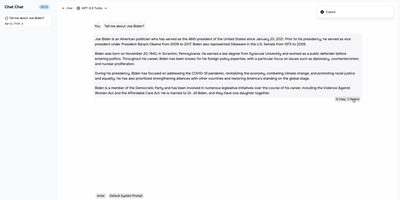
One clean interface in front of Anthropic, OpenAI, Google Gemini, Cohere, and more: Chat Chat is a Next.js front door to the major AI providers, ending the juggling of separate subscriptions, tabs, and UIs per model. Bring your own API keys, pick a provider and model per conversation, and switch between them as the task demands: Claude for long-form reasoning, GPT for code, Gemini for multimodal work - the interface stays identical. Beyond configured presets, custom providers plug in with their own API endpoints and keys, which covers OpenAI-compatible gateways and local inference servers. The design splits into two dedicated modes: a chat interface for conversational work with customizable system prompts, and a search interface that pairs AI processing with query handling for research-style questions. The stack is modern and hackable - Next.js 14, Tailwind CSS, shadcn/ui on Radix primitives, Jotai for state - with full internationalization including English, Chinese, and Japanese. Self-hosting means your conversation history and API keys live on your instance rather than a third-party wrapper service, and pay-per-token API pricing typically beats stacking multiple monthly chat subscriptions. AGPL-licensed and deliberately simple to deploy: one container, environment variables for keys, done.
Ackee
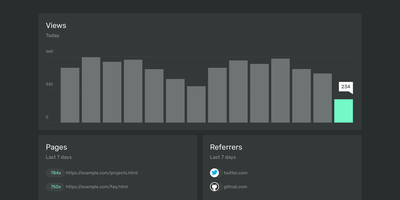
Page views, referrers, browsers, and screen sizes - Ackee delivers the analytics developers actually check, from a deliberately minimal Node.js and MongoDB stack that skips both Matomo's weight and Google Analytics' cloud dependency. Its defining constraint is anonymization: no cookies, no unique user tracking, and a multi-step anonymization process that keeps visitors unidentifiable while the aggregate numbers stay useful. In its default anonymous mode Ackee collects no personally identifiable information at all, which means GDPR and CCPA compliance out of the box and no cookie consent banner on your sites. A detailed mode adds screen size, language, and per-visit referrers - still without cookies or fingerprinting. Integration mirrors the Google Analytics pattern: create a domain in settings, drop the generated ackee-tracker snippet into your pages, and data appears in a clean single-page dashboard. One instance tracks multiple domains, and custom events capture button clicks, signups, and conversions. The distinctive engineering choice is the fully documented GraphQL API: everything the dashboard shows comes from that API, so you can query active visitors, average duration, and view statistics programmatically, feed data in from apps and services beyond websites, or build an entirely custom interface on top. If you want bare-minimum analytics with a real API and zero privacy anxiety, this is the tool.
Matterbridge
With over 7,500 GitHub stars and 140 contributors, Matterbridge is the Go-powered chat bridge that connects over 20 messaging platforms through a single TOML configuration file, letting teams communicate across platform boundaries without forcing anyone to switch applications. The gateway architecture routes messages bidirectionally between any combination of Discord, Slack, Telegram, Matrix, IRC, Mattermost, Microsoft Teams, XMPP, Rocket.Chat, Nextcloud Talk, Keybase, Mumble, Twitch, WhatsApp, VK, Gitter, Zulip, ssh-chat, and Harmony, with transparent username and avatar spoofing so bridged messages appear native on each platform. Message edits and deletes propagate across bridges, file attachments and inline images transfer between protocols, threading and reply context is preserved where platforms support it, and private group bridging enables confidential cross-platform conversations. Multiple independent gateways can run simultaneously, each bridging different channel sets with different protocol combinations. The REST API enables third-party integrations and custom bridges without modifying the Matterbridge codebase, while the tengo scripting engine allows inline message transformation and filtering. Game chat support bridges Minecraft and Counter-Strike server chat into messaging platforms. Deployment runs as a single static Go binary with zero dependencies, or as the official Docker image with the configuration file mounted as a volume. Running on a dedicated VPS on RepoCloud with guaranteed CPU, RAM, and SSD, full root SSH access, and a browser serial console. Apache-2.0 licensed.
Shaarli
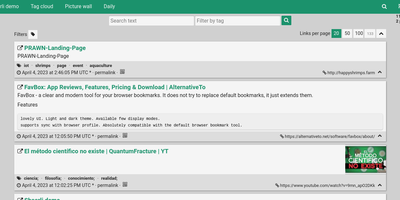
Personal, minimalist, database-free bookmarking - Shaarli is a philosophy as much as an app. Everything lives in a single compressed datastore file inside data/: no MySQL, no PostgreSQL, backup by copying one directory. That write-once/read-many file is usually served straight from OS disk caches, which is why a decade-old Shaarli instance with tens of thousands of links still responds instantly. Designed deliberately single-user, it saves URL, title, unlimited-length description, and tags (with autocomplete, renaming, and merging), marks entries public or private, and automatically strips utm_source and fb tracking parameters from saved URLs. That description field is why the community uses Shaarli as far more than bookmarks: a microblog, read-it-later queue, code-snippet base, pastebin, and shared clipboard between machines. Sharing is one click via bookmarklet or Android apps; consumption is per-tag RSS/Atom feeds plus a daily digest feed; search is full-text with tag filtering. A REST API opens it to any client, a plugin and theme system extends the PHP core (Markdown rendering, thumbnails), and import/export uses browser-standard Netscape HTML - your data enters and leaves freely. LDAP login is supported, no telemetry is sent anywhere, and the UI degrades gracefully without JavaScript. The anti-cloud Delicious.
Papermerge
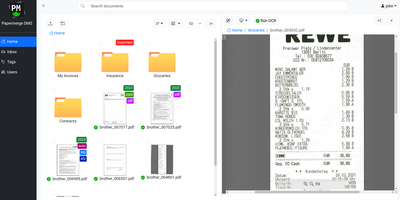
Receipts, contracts, and letters that arrive as pixels rather than text: Papermerge is a document management system built specifically for scanned documents. Upload a PDF, TIFF, JPEG, or PNG and OCR runs automatically, with a real-time status indicator beside the document title; under the hood it drives OCRmyPDF and Tesseract, supporting 130+ languages and producing a new document version with a selectable, searchable text layer you can download. Full-text search runs across everything, with multiple search-engine backends (Xapian by default). The interface deliberately mimics a modern desktop file browser: dual-panel commander, drag and drop, hierarchical folders, and colored tags on documents and folders. Page management fixes what scanners get wrong - delete blank pages, rotate, reorder, merge, extract, and move strayed pages between documents, powered by PikePDF. Document types act as categories, each with its own custom metadata fields, so invoices carry vendor and amount while contracts carry parties and dates. Versioning preserves every state of a document. Multi-user support includes groups, group ownership, permission management, and document/folder sharing between users and groups, and an OpenAPI-compliant REST API automates ingestion from scanners or scripts. Apache-licensed, ideal for long-term digital archives.