Categories
Self-Hosted Quality Management Manufacturing Execution System Production Planning Shop Floor Management OEE Monitoring Lot Traceability Industry 4.0Stars
Forks
Watchers
Developer links
OpenMES
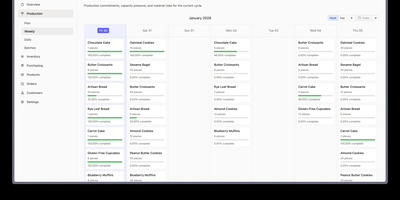
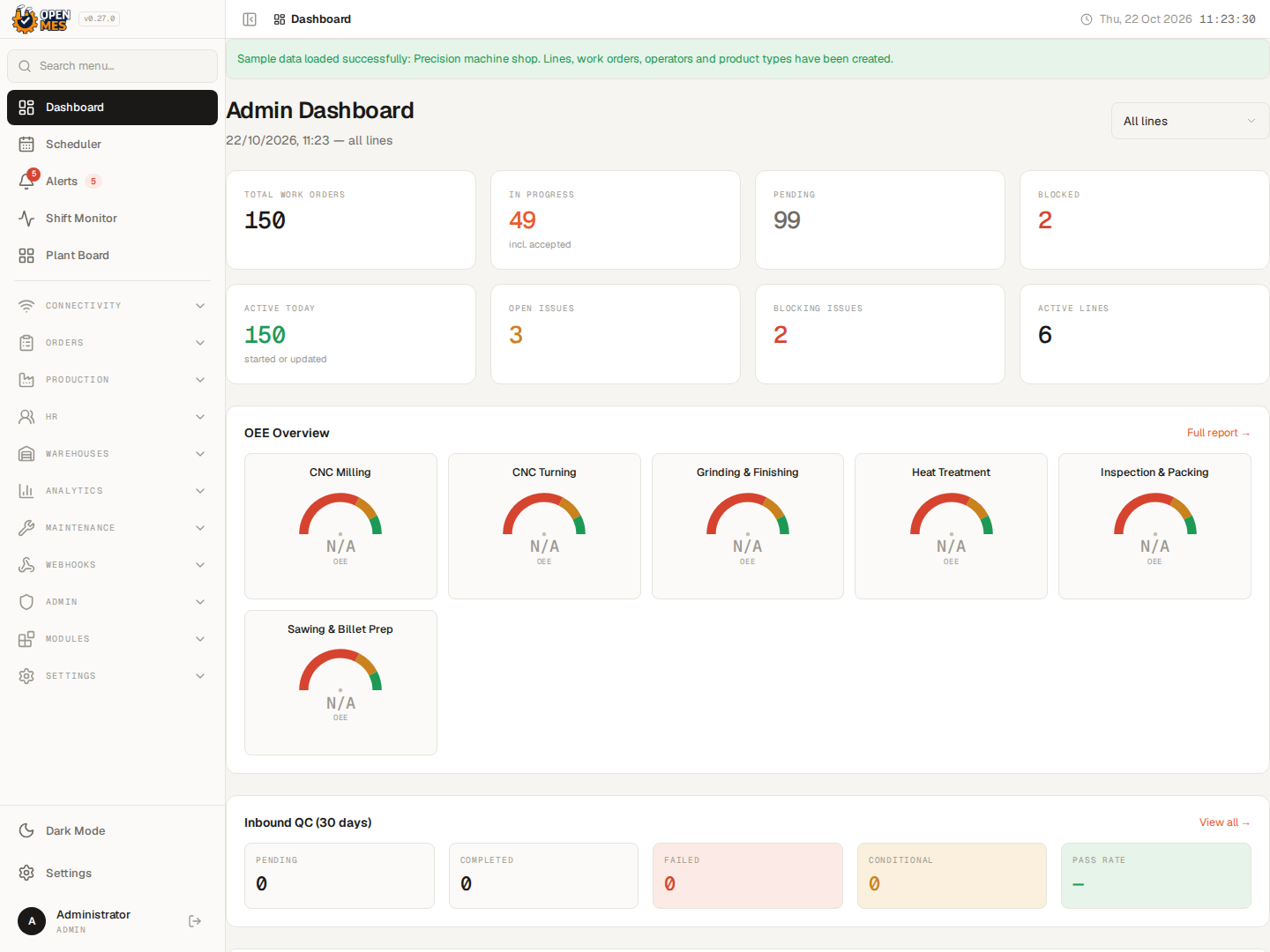
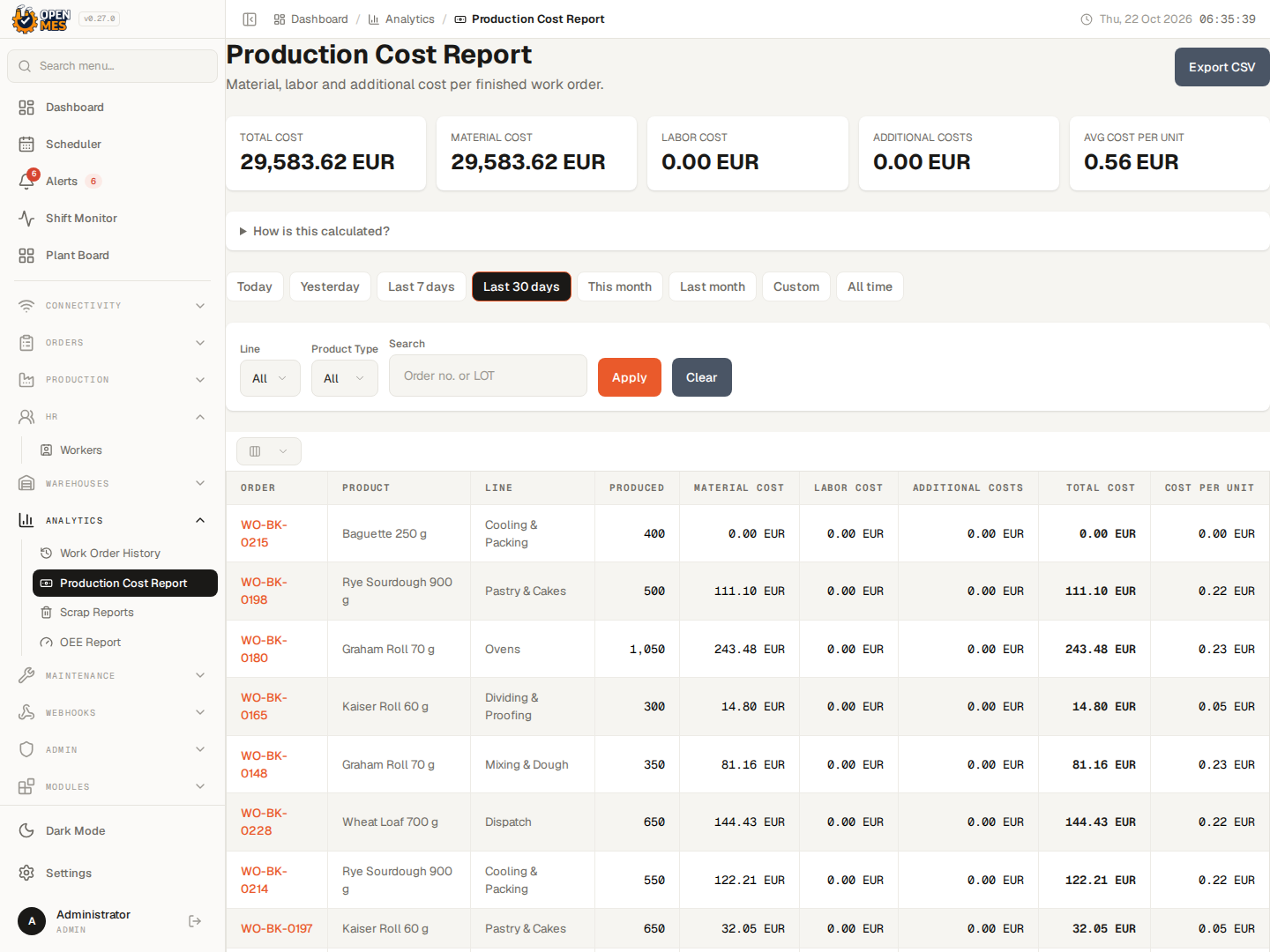
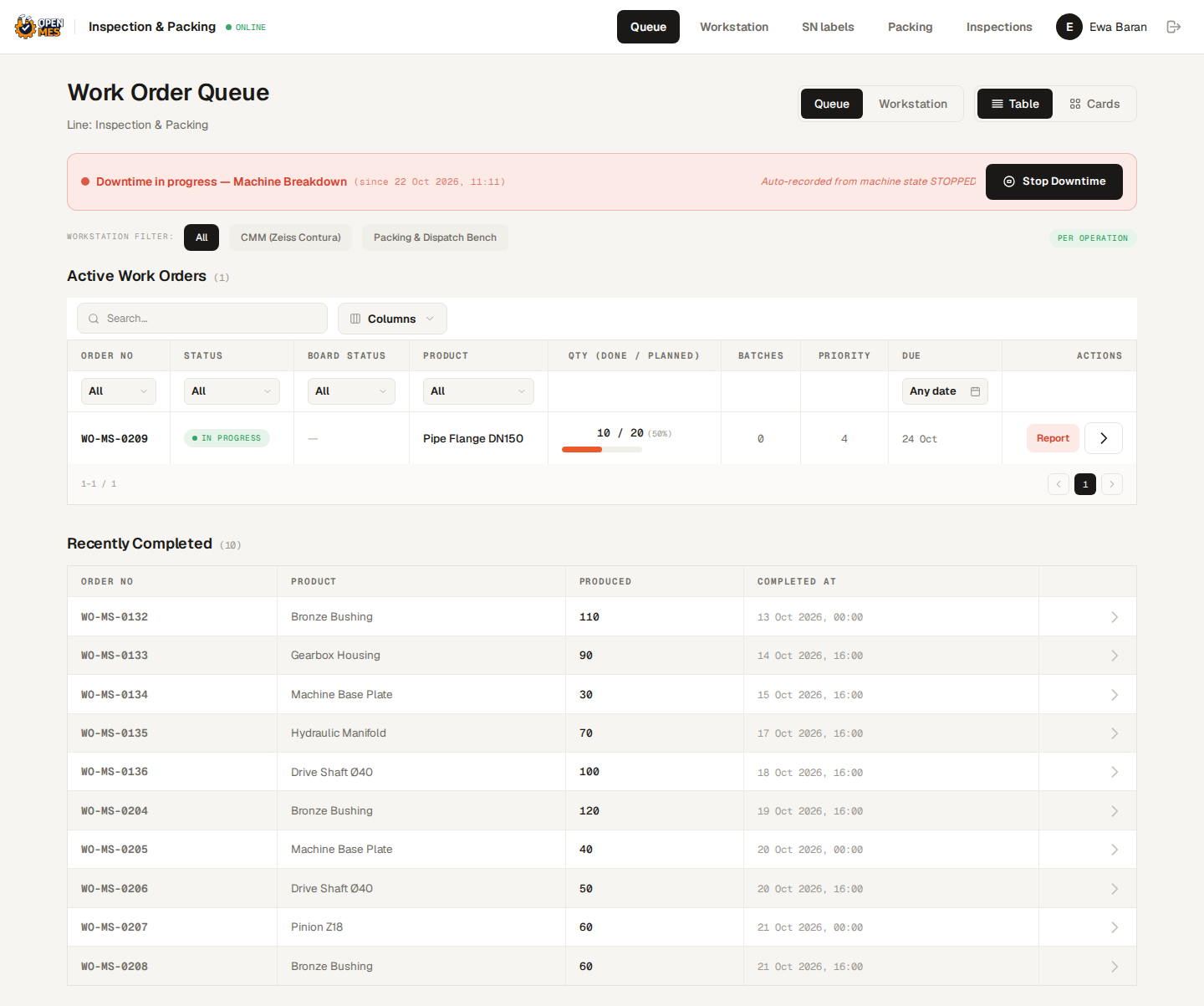
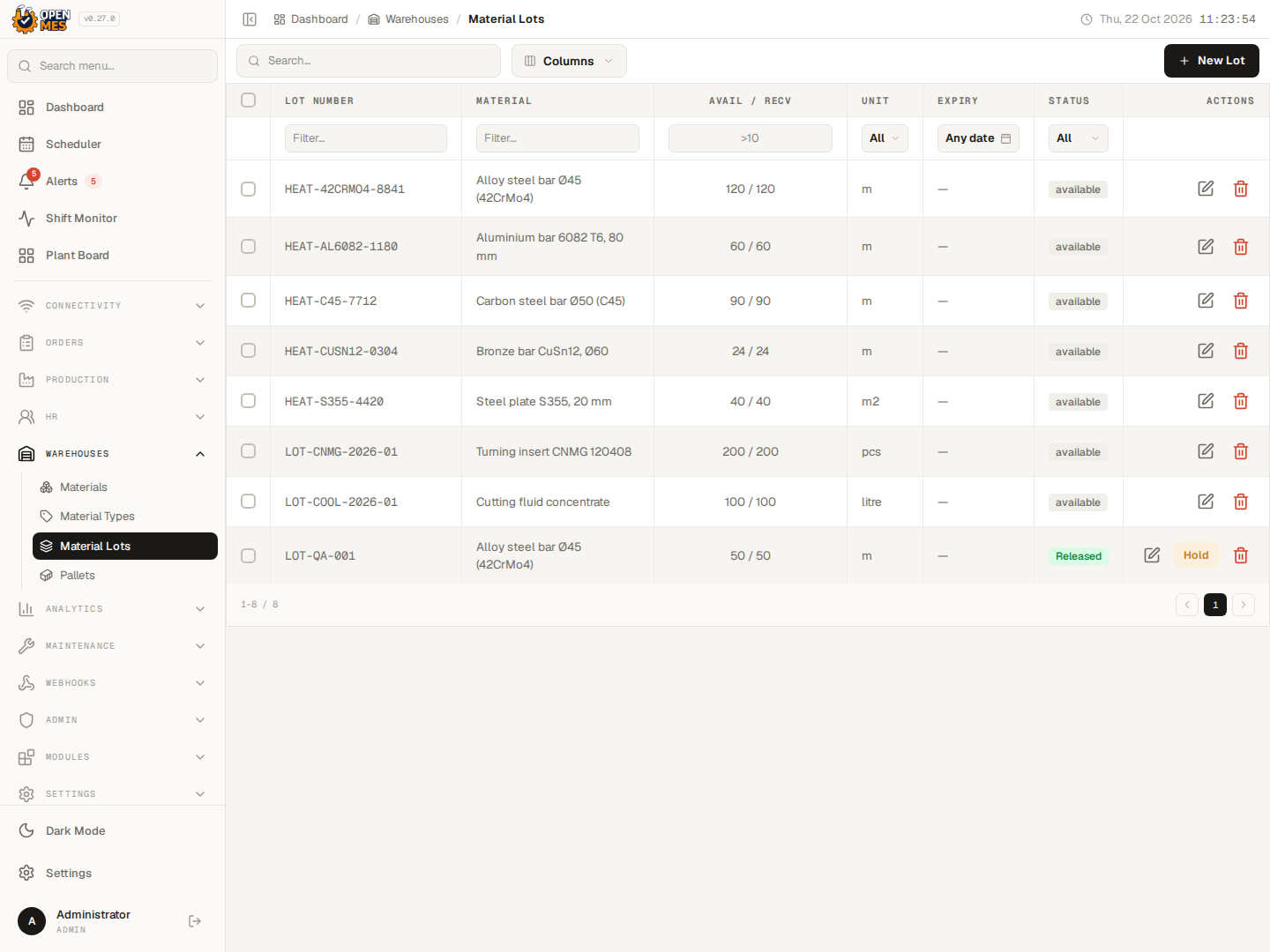
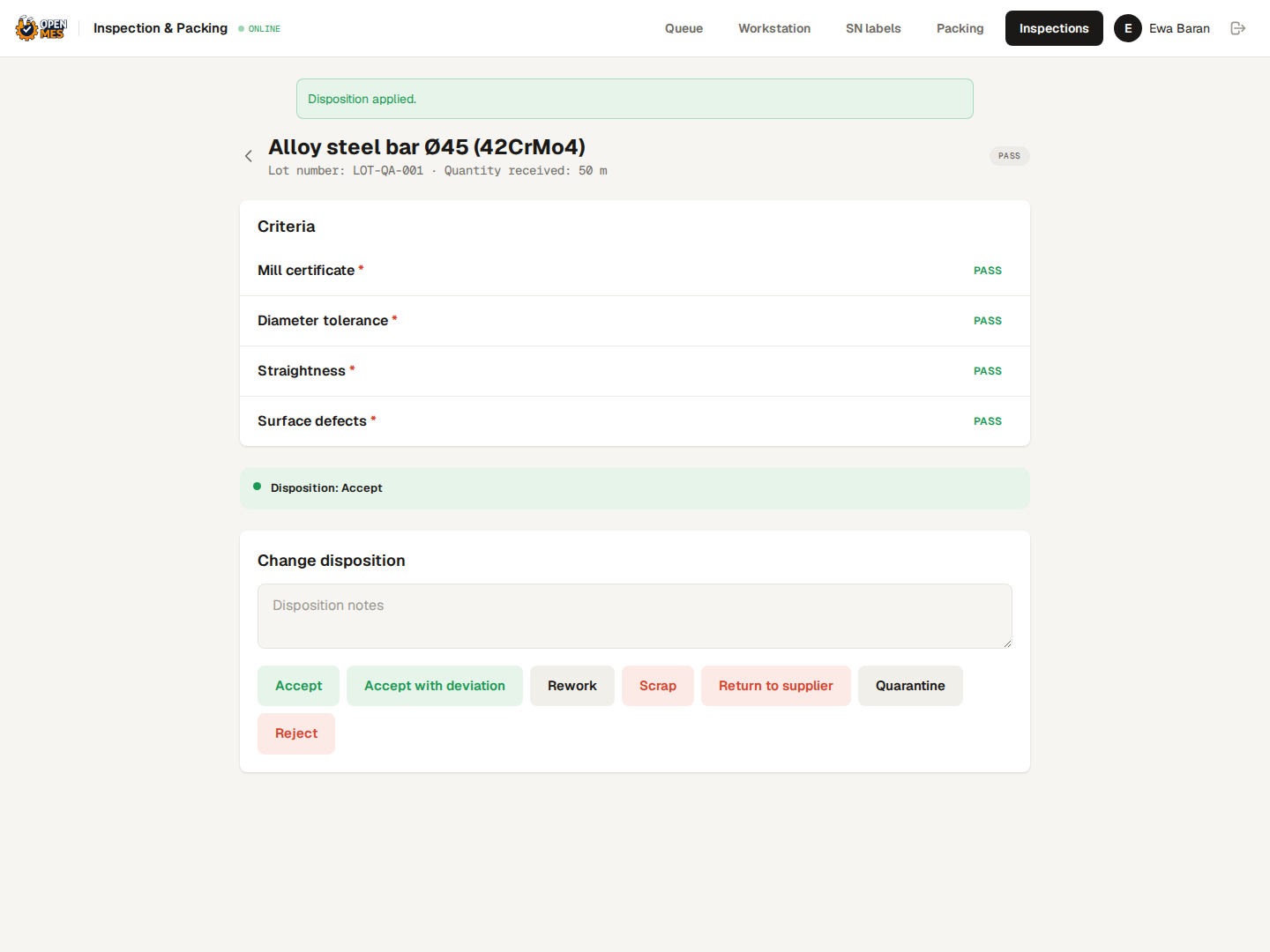
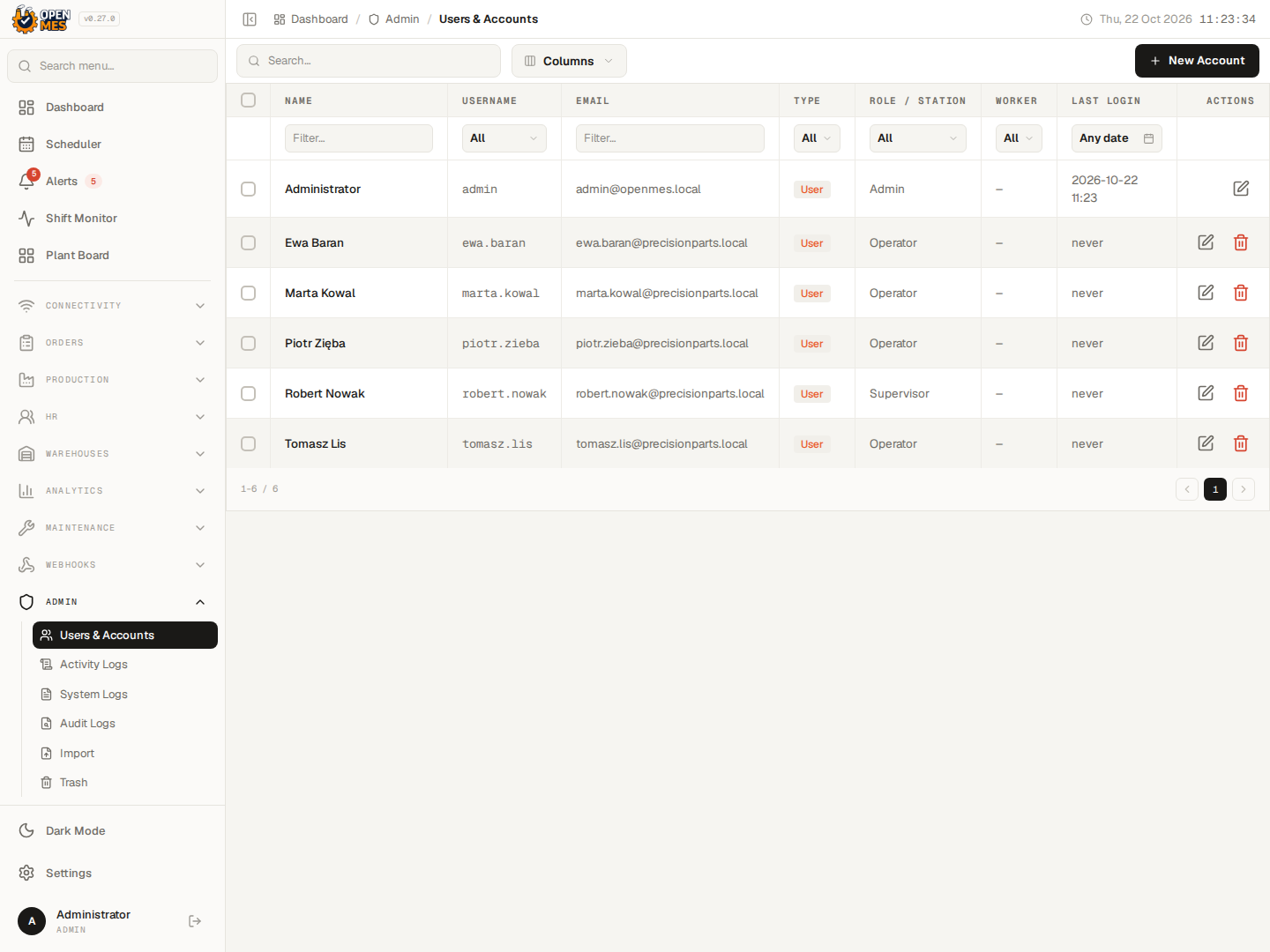
Admins, supervisors, and operators each get their own screens in OpenMES, a free self-hosted manufacturing execution system for small factories. Drag work orders across weekly, daily, hourly, and monthly planner views, and any order that stock cannot cover gets flagged. Automatic scheduling drafts a feasible plan from shift calendars, maintenance, and material shortages, and nothing changes until a supervisor applies it, with undo. Work orders carry partial batches, reusable process templates, and priority scores built from customer tier, planned quantity, and hours until due, and CSV or Excel imports bulk-load orders, materials, and recipes. Operators work from touch-optimized tablet queues, where one tap starts, completes, or reports an issue, even offline, and a critical issue halts production automatically. When a machine stops, MQTT, Modbus TCP, or OPC UA signals record the downtime automatically, and the same signals drive good and reject counters and OEE. At goods-in, an inbound inspection records pass or fail criteria and a disposition such as accept, rework, scrap, or quarantine. Material lots track received and available quantities with hold and release status, and the production cost report splits each finished order into material, labor, and additional costs, with CSV export. Supervisors follow the shift on a live monitor. Webhooks, a REST API, and hook-based modules connect OpenMES to ERP systems and custom code. Running on a dedicated VPS on RepoCloud with guaranteed CPU, RAM, and SSD, full root SSH access, and a browser serial console. AGPL-3.0 licensed.
Benefits
- Plan around real shop constraints
- Automatic scheduling drafts a feasible plan from shift calendars, scheduled maintenance, material shortages, operator availability, and changeover rules, and nothing changes until a supervisor or admin applies it, with undo.
- Run the floor from tablets
- Touch-optimized queue and workstation screens let operators start, complete, and report issues in one tap, and the installable progressive web app queues actions offline until the network returns.
- Capture machine data automatically
- MQTT and Modbus TCP daemons plus an OPC UA gateway sidecar map machine tags to running, idle, stopped, and fault states, with automatic downtime records, good and reject counters, and OEE.
- Trace lots and costs per order
- Inbound inspections with pass or fail criteria and dispositions, material lot lists, and a production cost report with CSV export show where material went and what each work order cost.
Features
- Laravel 12 Application
- A Laravel 12 monolith with Inertia and React pages, Livewire 4 components, and Tailwind CSS 4, served by Laravel Octane on RoadRunner.
- PostgreSQL 17 Storage
- PostgreSQL 17 holds work orders, lots, and machine events, and enforces immutable audit logs at the database level so recorded actions cannot be altered.
- Reverb Live Sync
- Laravel Reverb streams row changes over one multiplexed WebSocket, proxied by Caddy, so React and mobile clients receive live collection updates after an initial snapshot.
- Machine Signal Pipeline
- php-mqtt/client and aldas/modbus-tcp-client daemons feed one tag-mapping pipeline, and a Node.js node-opcua gateway sidecar bridges OPC UA servers into the same ingest API.
- Docker Compose Deployment
- Docker Compose runs the app, PostgreSQL 17, Reverb, and Caddy on ports 80 and 443, while install.sh generates credentials and picks a free port automatically.
- Hook-Based Module System
- Modules in backend/modules react to events such as WorkOrderCompleted and add sidebar links through MenuRegistry, while a REST API and webhooks connect external ERP systems.