Circuit Breaker
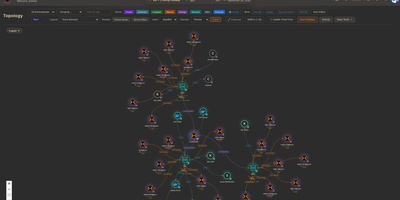
Mapping every physical server, virtual machine, container, and network link across a sprawling homelab into a live interactive canvas, Circuit Breaker gives infrastructure operators real-time topology visualization, IP address management, and rack elevation modeling on a single screen. Operators can switch between hierarchical, concentric, cortex ring, radial, and force-directed graph layouts where animated edges reflect link speeds and color-coded status rings display live hardware health. Automated discovery scans local subnets using nmap, SNMP, and ARP while querying Proxmox VE clusters, TrueNAS storage pools, and UniFi controllers, staging newly detected nodes in a review queue before adding them to the map. For multi-site labs or isolated VLANs, lightweight remote agents connect outbound over Noise-encrypted links after fingerprint approval to report host telemetry and run scoped network scans without opening inbound firewall ports. Rack diagrams let administrators drag servers into U slots with cabling overlays using a built-in catalog covering Dell, HPE, Supermicro, Ubiquiti, MikroTik, Synology, and APC gear alongside live iDRAC, iLO, and UPS metrics. Role-based access control, OIDC single sign-on, TOTP multi-factor authentication, encrypted full-state snapshots, and a SHA-256 hash-chained audit log keep multi-user operations accountable. Running on a dedicated VPS on RepoCloud with guaranteed CPU, RAM, and SSD, full root SSH access, and a browser serial console. MIT licensed.
dayGLANCE
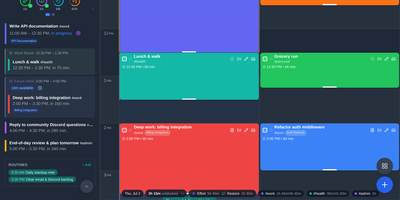
Instead of locking your daily schedule inside proprietary cloud calendars, dayGLANCE offers a privacy-first visual time-blocking planner that syncs directly with your own WebDAV server, Nextcloud instance, or Obsidian vault. Drag tasks from a prioritized Smart Inbox onto an interactive 24-hour timeline, resize blocks as priorities shift, and carve out recurring energy-tagged Frames for deep work or administrative batches. The live Glance panel highlights your current commitment, remaining free time, and daily routines, then transitions into GLANCEahead each evening to preview tomorrow's start time, deadlines, and total committed hours. Switch between multi-day, single-day, weekly, and monthly layouts, or launch the fullscreen Day Dial to view your schedule, solar daylight arc, and watch-style progress complications on a secondary wall display. Long-term work stays organized inside a Goals and Projects hierarchy with duration-weighted progress bars, visual roadmaps, and dedicated hyperGLANCE focus workspaces that pair a Pomodoro timer with project notes and subtasks. Bidirectional Obsidian synchronization reads and writes markdown daily notes and wikilinked tasks directly, while optional bring-your-own-key AI assistants and encrypted backups keep your productivity workflow completely under your control. Running on a dedicated VPS on RepoCloud with guaranteed CPU, RAM, and SSD, full root SSH access, and a browser serial console. MIT licensed.

Razzia
By turning any browser into an interactive trivia controller and live scoreboard, Razzia gives event hosts, educators, and communities a self-hosted multiplayer quiz platform that replaces Kahoot. Players join in seconds with a six-digit room PIN or scannable QR code on their smartphones, while the host drives the shared screen from a password-protected manager console. Build quizzes directly inside the browser-based editor or import portable JSON files with single-choice, multiple-choice, numeric estimation, and ungraded survey questions. Attach images, audio clips, or video files up to 100 MB to any prompt, group questions into themed round categories, and display explanatory notes when correct answers are revealed. Scoring adapts to your rules: reward fast responses with time-weighted points, apply strict, balanced, or lenient multi-select grading, deduct penalties for wrong guesses, or switch to survey mode to gather live audience polls without a leaderboard. Hosts can lock rooms mid-game, enable automatic nickname generation, hide question prompts on player screens, and configure auto-advance timers between rounds. Drop a custom theme file and logos into the branding folder to white-label colors, fonts, and backgrounds, or connect physical ESP32 hardware buzzers over the documented WebSocket protocol. Running on a dedicated VPS on RepoCloud with guaranteed CPU, RAM, and SSD, full root SSH access, and a browser serial console. MIT licensed.
MinusPod
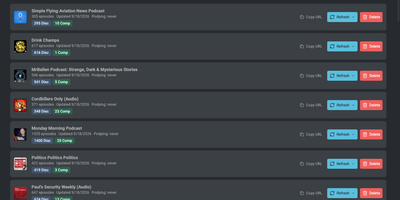
Eliminating repetitive sponsor reads and dynamic mid-roll commercials before an episode even reaches your headphones, MinusPod operates as a self-hosted podcast ad-removal server and RSS feed manager. You subscribe to shows inside the web dashboard using PodcastIndex search or OPML import, and the server generates clean replacement RSS feeds compatible with Pocket Casts, Overcast, Apple Podcasts, and Audiobookshelf. When a new episode drops via scheduled polling or instant Podping notifications, the pipeline transcribes the audio locally with faster-whisper or Parakeet, or routes it through a remote transcription API. Your choice of LLM provider, including Ollama, Anthropic Claude, OpenRouter, or any OpenAI-compatible endpoint, scans overlapping transcript windows to pinpoint sponsor reads, cross-promotions, and intros. Programmatic audio analysis reinforces AI detection by measuring EBU R128 loudness jumps, Chromaprint acoustic fingerprints, show jingles, and dynamically inserted ad transitions before FFmpeg splices the audio or marks segments as skippable Podcasting 2.0 chapters. A browser-based Ad Editor lets you audition pre-cut and post-cut audio, nudge start and end timestamps, and confirm detections that train global, network, and show-specific sponsor patterns. Running on a dedicated VPS on RepoCloud with guaranteed CPU, RAM, and SSD, full root SSH access, and a browser serial console. MIT licensed.
Ideon
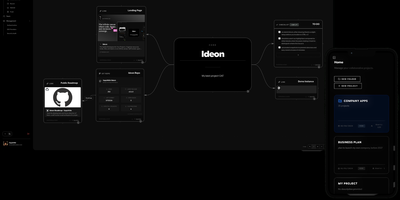
Scattered browser tabs, buried wiki folders, and disconnected issue trackers fragment engineering context across too many tools, which is why Ideon unifies your repositories, notes, and tasks on a shared infinite canvas. Rather than forcing projects into rigid folder hierarchies, you arrange interactive blocks spatially on a two-dimensional map where related documents, checklists, calendar schedules, and code references sit right beside one another. Teams can embed live repository cards and open issue streams directly from GitHub, GitLab, Gitea, and Forgejo onto the workspace, keeping code status visible alongside architecture documentation. Rich content blocks render Markdown notes with threaded comments, Mermaid flowcharts, uploaded files, images, and bookmarked links on the same board. Real-time multiplayer collaboration lets teammates edit blocks simultaneously, follow live cursors across the canvas, and map system designs together without edit conflicts. Built-in Time Travel snapshots capture historical states of the workspace so you can scrub backward to review how a project evolved or trace past design decisions. You can even synchronize an entire project canvas directly to a Git repository, storing notes and spatial block layouts as versioned files. Running on a dedicated VPS on RepoCloud with guaranteed CPU, RAM, and SSD, full root SSH access, and a browser serial console. AGPL-3.0 licensed.
Movary
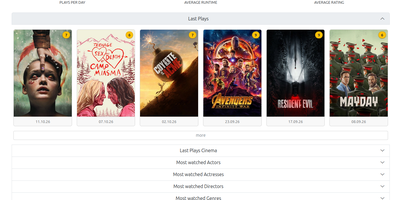
Catalog, rate, and analyze every film you watch with Movary, a self-hosted movie tracking hub and personal cinema diary that replaces Letterboxd and Trakt. Each time a movie finishes playing on Plex, Jellyfin, Emby, or Kodi, automated webhook scrobblers record the viewing session and star rating directly into your timeline without manual logging. You can also bring over years of existing watch history by importing exports from Letterboxd, Trakt, or Netflix, and automatically cross-post newly logged reviews and ratings to Mastodon or feed Watchlist additions straight into Radarr. Customizing your personal dashboard lets you rearrange analytical widgets that break down your viewing habits by most-watched actors, directors, genres, original languages, release decades, and custom watch locations like local cinemas or home theaters. Movie metadata, posters, and ratings pulled from TMDB and IMDb are cached locally on your server, while built-in background job schedules keep artwork and cast details refreshed automatically. Multi-user account controls, TOTP two-factor authentication, granular profile visibility settings, and personal Bearer API tokens make it easy to run a private household log or a shared film club server. Running on a dedicated VPS on RepoCloud with guaranteed CPU, RAM, and SSD, full root SSH access, and a browser serial console. MIT licensed.
Calagopus
When hosting multiplayer game servers for communities or friends requires container isolation and low-overhead administration, Calagopus steps in as a modern game server management panel. Server operators use it to deploy and control Minecraft, Rust, ARK, Valheim, FiveM, and any other Linux containerized workload while reusing existing Pterodactyl and Pelican eggs without modification. From the live WebSocket console, administrators monitor real-time CPU, memory, and network graphs, autocomplete saved command snippets, inspect per-layer Docker image pull progress bars, and pop the terminal out into a secondary window. Managing configuration files and modpacks happens directly in the browser through a split-pane tabbed editor featuring real-time collaborative editing, side-by-side revision diffs with one-click rollback, a visual disk usage treemap, in-place archive browsing, and VS Code workspace mounting. Database workflows are equally streamlined: you can provision MySQL, PostgreSQL, MongoDB, or Redis instances, browse and edit rows or SQLite files in a built-in data explorer, and run read-only or writable SQL queries without external database clients. Automated schedules support conditional if-else branching, regex variable extraction from console output, crash-detection triggers, and eight backup storage drivers including S3, Restic, Kopia, ZFS, Btrfs, and Proxmox Backup Server. Running on a dedicated VPS on RepoCloud with guaranteed CPU, RAM, and SSD, full root SSH access, and a browser serial console. MIT licensed.
Streamystats
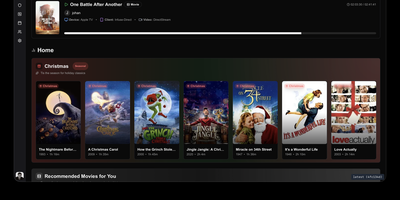
To uncover deep viewing insights and AI-powered content recommendations across your self-hosted Jellyfin media server, Streamystats delivers a comprehensive analytics and watch-history platform. Once connected to one or more Jellyfin instances using native MediaBrowser authentication, the dashboard tracks live playback sessions, per-user watch durations, device and client breakdowns, and library-wide growth metrics without requiring third-party reporting plugins. You can import existing historical logs from Jellystat or the Playback Reporting plugin so years of viewing habits carry over immediately, then explore interactive watch-time graphs, genre radar charts, actor and director leaderboards, and a yearly Wrapped summary. When you enable vector embeddings through OpenAI, OpenRouter, Google Gemini, Voyage AI, or a local Ollama model, the recommendation engine calculates cosine similarity against your watch history and explains exactly which watched movies or series inspired each suggestion. An integrated AI chat assistant equipped with thirteen specialized function-calling tools lets you search your catalog semantically, ask natural-language questions about your viewing statistics, and generate shared movie recommendations for multiple household members at once. Administrators can also mark titles as watched or unwatched with automatic watch-time inference, manage watchlists over an external API, and connect Janitorr for automated media cleanup. Running on a dedicated VPS on RepoCloud with guaranteed CPU, RAM, and SSD, full root SSH access, and a browser serial console. MIT licensed.
MyTube
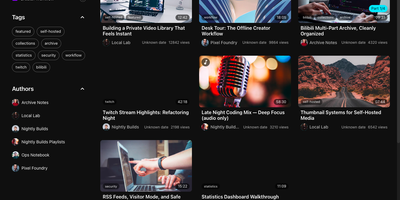
For video enthusiasts and media archivers who want complete ownership over their online video subscriptions, MyTube provides a self-hosted video downloader, library organizer, and streaming portal. Paste a single link or queue a batch of URLs from YouTube, Bilibili, Twitch, MissAV, and over one thousand yt-dlp compatible sites to archive videos directly to your disk. Subscribe to your favorite creators so new uploads download automatically in the background alongside their default language subtitles. Local video uploads automatically generate thumbnails and pull movie or television posters, cast details, release years, and ratings from TMDB. Curate custom collections, filter your catalog by tags or authors, and generate private RSS feed links for external podcast and feed readers. Built-in playback tools include keyboard shortcuts, cinema mode, Canvas-based in-car playback, and optional real-time audio translation with live subtitles via Google Gemini. You can sync finished recordings to Alist or OpenList cloud storage, trigger custom shell scripts on task completion, and receive instant Telegram bot alerts when downloads finish or fail. Share your library safely using read-only visitor accounts while protecting admin controls with WebAuthn passkeys or a 3x3 gesture lock. Running on a dedicated VPS on RepoCloud with guaranteed CPU, RAM, and SSD, full root SSH access, and a browser serial console. MIT licensed.
Gitea Mirror
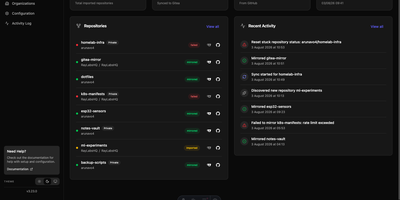
Gitea Mirror is an automated Git repository synchronization platform that mirrors your personal, starred, and organizational GitHub repositories directly to a self-hosted Gitea or Forgejo server. Through the web dashboard, you can connect standard GitHub accounts or GitHub Enterprise environments, discover newly created repositories automatically, and schedule recurring background sync intervals so your self-hosted forge always holds an up-to-date backup. Beyond raw Git commits and branches, the application transfers full repository metadata including issues, pull requests, labels, milestones, releases with attached assets, and project wikis. Teams managing large binary assets such as machine learning weights, media files, or game textures can enable Git LFS mirroring to replicate large objects alongside source code. Organization administrators can map entire GitHub organizations to custom destination namespaces, apply configurable fork handling strategies, preserve source visibility settings, and mark specific repositories to ignore. Built-in force-push protection detects destructive upstream history rewrites and offers backup-on-demand or block-and-approve workflows, while automatic cleanup rules prune deleted upstream repositories and expired activity logs. Access to the management console is secured with local accounts, reverse-proxy header authentication, or external SAML 2.0 and OpenID Connect identity providers. Running on a dedicated VPS on RepoCloud with guaranteed CPU, RAM, and SSD, full root SSH access, and a browser serial console. AGPL-3.0 licensed.
Vanilla Cookbook
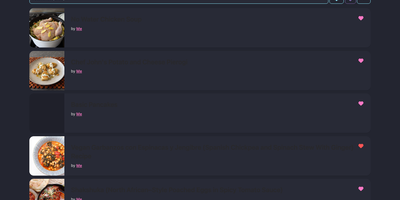
Every family recipe, bookmarked food blog post, and meal-prep formula stays organized inside Vanilla Cookbook, a self-hosted culinary library that converts volumetric measurements into precise gram weights and scales servings on the fly. Paste a URL or click the browser bookmarklet to scrape recipes from hundreds of cooking websites. Plain-text ingredient strings split automatically into structured quantities, units, preparation notes, and optional or to-serve badges. Home bakers switch effortlessly between US cups, imperial ounces, and metric grams across thousands of ingredient density profiles. Inline oven temperatures, fractions, and numeric ranges adjust automatically as serving counts change. Nutritional text parses into a structured per-serving breakdown, while integrated shopping lists, cooking logs, and equipment lists keep weekly grocery planning synchronized across desktop browsers and Progressive Web App mobile devices. Connecting an optional OpenAI, Anthropic, Google Gemini, Ollama, or LiteLLM endpoint unlocks AI fallback scraping for pages lacking Schema.org markup, automatic recipe translation, verbose direction summarization, photo-to-recipe extraction, and vector-based semantic search. Multi-user accounts, OAuth authentication, public recipe sharing links, and bulk import or export tools give households full control over their cookbook data. Running on a dedicated VPS on RepoCloud with guaranteed CPU, RAM, and SSD, full root SSH access, and a browser serial console. GPL-3.0 licensed.
Metadata Remote
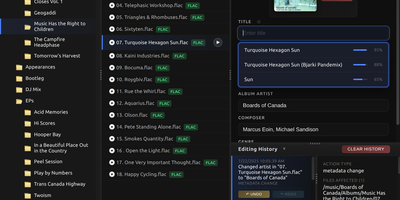
Metadata Remote is a browser-based audio tag editor designed specifically for headless music servers, enabling collectors to fix ID3 tags, embed high-resolution cover art, and match releases against MusicBrainz without moving files off their NAS. Navidrome, Jellyfin, and Plex administrators can browse mounted directories directly from any browser, inspect standard and extended metadata fields, and apply single-file or bulk folder-wide updates in one click. Clicking an empty or incomplete field activates the smart inference engine, which analyzes filenames, directory hierarchy, and sibling tracks alongside live MusicBrainz queries to present candidate values ranked by confidence percentage, including specialized matching rules for classical works, multi-artist compilations, and live bootlegs. Built-in audio streaming lets you audition MP3, FLAC, OGG, OPUS, M4A, M4B, WMA, WAV, and WavPack files inside the interface to verify mysterious tracks before renaming files or folders inline. A dedicated long-form text editor automatically opens for lyrics and liner notes exceeding 100 characters, while the album art manager previews image dimensions, bulk-embeds covers across entire albums, and repairs corrupted artwork headers automatically. Every single-track edit, custom field creation, and batch folder operation is tracked in a 1,000-step undo and redo history with full keyboard-only navigation. Running on a dedicated VPS on RepoCloud with guaranteed CPU, RAM, and SSD, full root SSH access, and a browser serial console. AGPL-3.0 licensed.
ReadMeABook
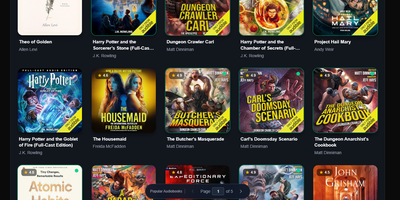
Instead of manually hunting through indexers and stitching chapter files together, ReadMeABook automates the entire audiobook request, download, and M4B library organization pipeline for Audiobookshelf and Plex. Users search an Audible-backed catalog by title, author, narrator, or series, inspect full book summaries with runtime and publisher metadata, and submit one-click requests from a clean browser portal. Once approved, the engine queries Prowlarr across torrent and Usenet indexers, dispatches releases to qBittorrent or SABnzbd, and monitors download progress until completion. Multi-file MP3 downloads merge automatically into a single chapterized M4B audiobook via FFmpeg, complete with embedded cover art, narrator tags, and series ordering metadata before triggering a media server library scan. Not sure what to listen to next? BookDate pairs OpenAI, Anthropic Claude, or local LLM endpoints with a swipeable card deck that learns your reading tastes and queues new titles with a single swipe right. Optional e-book sidecar fetching grabs companion EPUB or PDF files alongside audio releases, while multi-user approval queues, OIDC single sign-on, Goodreads shelf syncing, and Discord, Pushover, Apprise, or ntfy notifications keep household libraries running smoothly. Running on a dedicated VPS on RepoCloud with guaranteed CPU, RAM, and SSD, full root SSH access, and a browser serial console. AGPL-3.0 licensed.
NextExplorer
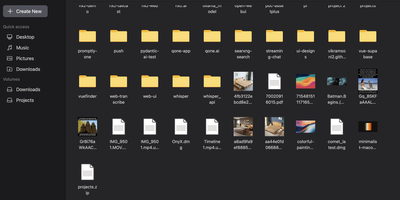
To give Docker administrators and home lab operators a fast, modern workspace for server-side storage, NextExplorer delivers a browser-based file manager with instant ripgrep search, inline editing, and multi-volume navigation. Any directory mounted under your container volume root appears immediately in the sidebar with capacity usage indicators, favorite pins, and switchable grid, list, and column browsing layouts. You can preview images, stream videos and audio with FFmpeg-generated thumbnails, read PDFs, edit source code and configuration files in the syntax-highlighted editor, or collaborate on office documents through an integrated ONLYOFFICE Document Server. Deep content search powered by ripgrep scans filenames and file contents across terabytes of storage in seconds, while bundled 7-Zip support inspects and extracts password-protected ZIP, 7z, RAR, TAR, and ISO archives with built-in zip-bomb protection. Teams can share folders via read-only or read-write links, isolate personal user directories, enforce path-level read-only or hidden access rules, and authenticate through local accounts or OpenID Connect identity providers such as Authentik and Authelia. Running on a dedicated VPS on RepoCloud with guaranteed CPU, RAM, and SSD, full root SSH access, and a browser serial console. GPL-3.0 licensed.
Subwave
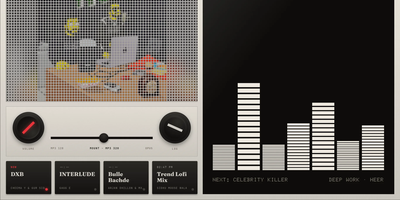
When shuffle algorithms start feeling sterile, Subwave transforms your self-hosted Navidrome or Subsonic music library into a live 24/7 personal internet radio station hosted by AI DJ personas. Every listener tunes into a single shared Icecast broadcast simultaneously. Curated tracks play alongside spoken station idents, local weather reports, news briefings, time checks, and track introductions. Want to hear something specific? Listeners submit plain-language song or mood requests directly from the web player, native mobile and desktop apps, or an MCP client, and the on-air DJ weaves those selections into the rotation. Operators staff up to 24 distinct DJ personas with guest co-hosts, programme a 24x7 weekly show grid with multi-hour episode arcs, and customize between-track skills from the browser admin console. Acoustic analysis measures BPM, musical key, loudness, vocal ranges, and track endings so crossfades and voice ducking sound like a studio broadcast across MP3, Opus, AAC, and lossless FLAC streams. An interactive Library Observatory maps every analyzed track by genre and energy. Runtime-swappable LLM providers (Ollama, OpenAI, Anthropic, and OpenRouter) and six local or cloud TTS engines keep voices flexible. Running on a dedicated VPS on RepoCloud with guaranteed CPU, RAM, and SSD, full root SSH access, and a browser serial console. MIT licensed.
Dynacat
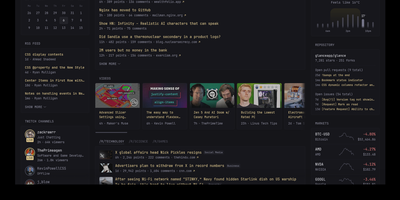
Monitoring dozens of self-hosted containers, RSS feeds, and web services from a single customizable startpage becomes effortless with Dynacat, a dynamic dashboard engine driven by declarative YAML configuration and live data widgets. You can arrange multi-tab layouts in the browser-based visual editor by dragging widgets across columns and picking color themes, and Dynacat automatically writes every adjustment back to your configuration file. Built-in widgets aggregate RSS and Atom feeds, Reddit communities, Hacker News, Lobste.rs, YouTube channel uploads, Twitch streams, weather forecasts, stock and crypto market tickers, and software releases across GitHub, GitLab, Codeberg, and Docker Hub. Homelab operators can inspect and control Docker containers, track server CPU, memory, and disk mountpoints, monitor AdGuard Home or Pi-hole DNS statistics, view Sonarr and Radarr release calendars, and manage torrents across qBittorrent, Deluge, and Transmission from one screen. For custom services, the visual widget builder connects to any JSON endpoint and binds UI blocks to response fields without manual template coding, while the Dynawidgets catalog imports community widgets with a single slug. Every widget refreshes independently on its own schedule and exposes cached data through a local JSON API, with OpenID Connect group rules securing private admin pages. Running on a dedicated VPS on RepoCloud with guaranteed CPU, RAM, and SSD, full root SSH access, and a browser serial console. AGPL-3.0 licensed.
Mail-Archiver
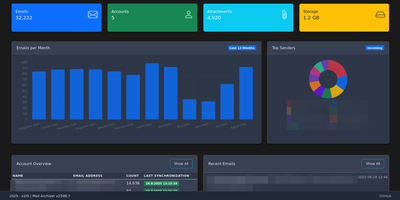
Across personal mailboxes and business domains alike, Mail-Archiver captures, indexes, and preserves every incoming and outgoing email from multiple IMAP and Microsoft 365 accounts in a tamper-resistant archive. Connect standard IMAP servers, Microsoft 365 business tenants via Microsoft Graph, or personal Outlook and Hotmail accounts using OAuth2 device code flow without creating custom cloud app registrations. Scheduled background synchronization mirrors complete folder hierarchies automatically, while bulk tenant onboarding lets administrators import every active mailbox from a Microsoft 365 organization through a single configuration screen. When an important contract, invoice, or correspondence thread goes missing, the advanced search interface filters archived messages by sender, recipient, subject, date range, folder, and body text with instant HTML preview and direct attachment downloads. Users can import legacy MBox files or zipped EML archives, export selected messages or entire accounts, and run direct mailbox-to-mailbox migrations that copy folder trees between providers. Granular retention rules optionally purge aged messages from upstream mail servers to free quota while keeping local archive copies locked against manual deletion for compliance auditing. Multi-user access controls, OpenID Connect single sign-on, detailed activity audit logs, a scoped read-only REST API, and a Model Context Protocol endpoint allow both teams and AI assistants to query historical mail safely. Running on a dedicated VPS on RepoCloud with guaranteed CPU, RAM, and SSD, full root SSH access, and a browser serial console. GPL-3.0 licensed.

Chibisafe
Turn any server into a high-speed media vault and file-sharing hub with Chibisafe, a self-hosted upload platform built for chunked large-file transfers, organized albums, and instant desktop screenshot workflows. Users drag and drop photos, videos, archives, or documents into the browser uploader, where multi-gigabyte files are automatically split into chunks to prevent network drops from ruining an active transfer. Uploaded media renders inside a responsive masonry or list gallery with in-browser video and audio previews, custom file tags, search filtering, and one-click shareable links. Organizers group related uploads into folders and public albums, mark sensitive collections with content warnings before loading, and publish syntax-highlighted text snippets or code gists alongside shortened URLs. Desktop and mobile power users connect ShareX, iOS Shortcuts, macOS quick actions, fswatch folder monitors, or the companion browser extension using personal API keys that route captures straight into designated albums. Instance administrators toggle between public, open-registration, and invite-only modes, enforce per-user storage quotas, offload storage to AWS S3, Backblaze B2, MinIO, or Wasabi via signed URLs, and customize rate limits or allowed extensions directly from the web settings panel. Running on a dedicated VPS on RepoCloud with guaranteed CPU, RAM, and SSD, full root SSH access, and a browser serial console. MIT licensed.