
Matomo
Several EU data protection authorities have ruled Google Analytics deployments unlawful; Matomo (formerly Piwik) is the most complete open-source replacement - a full analytics platform with 30+ report types across visitors, actions, referrers, goals, and ecommerce. The self-hosted PHP/MySQL edition is free and keeps every byte of visitor data on your infrastructure, which matters more each year: several EU data protection authorities have ruled Google Analytics deployments unlawful, while Matomo configured for cookieless tracking is approved by France's CNIL for use without a consent banner. All reporting runs on 100% unsampled data - no extrapolation at high traffic volumes. The GDPR Manager handles data subject requests and deletion, with IP anonymization, retention controls, and Do Not Track support built in. A dedicated importer pulls your historical Google Analytics data so years of trends survive the migration. Core analytics cover campaigns, custom variables and dimensions, entry/exit pages, downloads, site search, and full ecommerce tracking with a comprehensive HTTP API for reporting and ingestion. Premium plugins extend the platform into Hotjar-class behavioral tooling - click and scroll heatmaps, session recordings, conversion funnels, form analytics, A/B testing - plus a tag manager and SAML SSO. For teams that need GA-equivalent depth with actual data ownership, Matomo is the realistic drop-in replacement.
Homarr
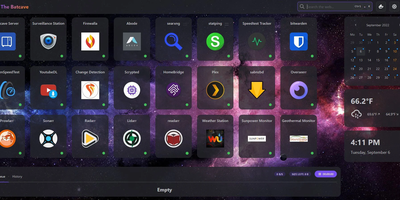
A single pane of glass for every service you run, arranged by drag-and-drop with no YAML or JSON files: Homarr is the modern dashboard for self-hosted infrastructure. Its grid system arranges apps, widgets, and bookmarks on desktop or touch, backed by an icon picker with over 11,000 icons. What separates Homarr from static launchers is 50+ live integrations: Plex, Jellyfin, and Emby media stats, the *arr suite (Sonarr, Radarr) with a unified release calendar, download clients, Pi-hole and AdGuard Home controls, Proxmox, Home Assistant, OPNsense, and Unifi monitoring. Widgets update in real time over WebSockets (tRPC and Redis under the hood), and a built-in search queries thousands of data points across connected services. Custom widgets extend the reach to any HTTP API without code: define endpoint, auth, and refresh interval in the management UI, then render responses as stat grids, tables, progress bars, status indicators, action buttons, or full custom JSX layouts - with an AI-prompt helper for generating templates. Multi-user support is first-class: credentials, OIDC, or LDAP sign-on, groups with granular permissions, and secrets encrypted with AES-256-CBC. A robust background-job system scales it from a Raspberry Pi homelab to deployments serving hundreds of users.

Corteza
Salesforce's platform model, 100% open-source (Apache 2.0): Corteza is a Go/Vue.js low-code platform developed under a foundation, so there is no open-core bait to grow out of. The heart is Corteza Compose: namespaces contain applications, modules define record structures the way Salesforce objects do, and a drag-and-drop page builder assembles record pages, list pages, dashboards, and charts from configurable blocks. Automation comes from a visual, BPMN-style workflow engine plus JavaScript automation scripts, so cross-application business logic - approval chains, field updates, notifications - is configured rather than programmed. Granular role-based permissions reach down to individual modules, fields, and records, mirroring real organizational hierarchies. Corteza CRM ships as the flagship application built entirely on Compose: leads, accounts, opportunities, campaigns, and cases with a 360-degree customer view, covering most Salesforce standard objects - and because it is just a Compose app, adding or reshaping modules is configuration, not a fork. Everything is reachable over REST APIs, deliberately familiar tooling eases Salesforce admin migration, and a CLI can even generate synthetic records for load-testing what you build.
n8n
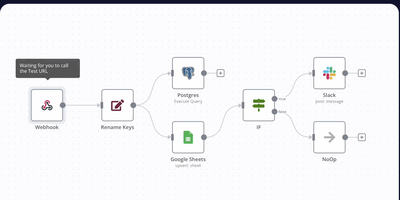
Webhooks, cron schedules, and app events trigger chains of nodes that fetch, transform, and route data: n8n is a workflow automation platform built around a visual, node-based editor. It ships with 400+ built-in integrations covering databases like Postgres, SaaS tools like Slack and HubSpot, and every major AI provider. When a pre-built node does not exist, the HTTP Request node calls any REST API, and the Code node runs JavaScript or Python inline, so you are never blocked by a missing connector. Workflows execute as directed graphs with branching, loops, error handling, and sub-workflows, and every run is logged for inspection and replay during debugging. It also includes LangChain-based nodes for building AI agents with tool calling and memory. Self-hosting on RepoCloud gives you unlimited workflow executions with no per-task pricing, and all data stays on your instance. Runs on Node.js with SQLite by default; add Postgres and Redis queue mode when you need to scale workers horizontally.
Budibase
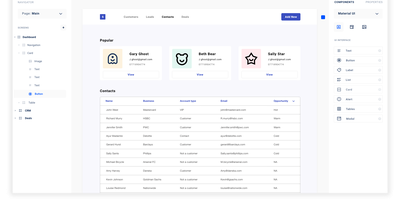
Step right up to the magical world of Budibase, the open-source wizardry that turns the grueling task of building internal tools into a walk in the digital park. Imagine crafting mighty tools and formidable forms in less time than it takes to brew a cup of coffee, all without typing a single line of code! With Budibase, you can charm data from an ancient external database, summon information from a Rest API, conjure up figures from a CSV, or create something entirely new with Budibase's own mystical database. Design your digital dominion with a flick of the drag-and-drop, and automate your kingdom's workflows as if by magic. Join the ranks of the 75,000 teams who've harnessed the power of Budibase to accelerate their business quests. Need to safeguard data like a digital fortress, automate tasks like a sorcerer, or streamline operations like a high-speed chariot? Budibase is your trusty steed in the race to operational victory. And with RepoCloud hosting, you'll save a treasure chest of gold compared to those other cloud-dwelling giants!
Kutt
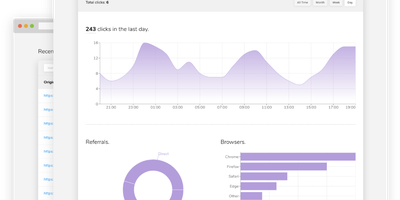
Built for self-hosting from the ground up, Kutt is a modern, MIT-licensed URL shortener: zero-configuration setup, no build step, and SQLite, PostgreSQL, or MySQL with optional Redis caching. Links carry real management features - custom slugs from a configurable alphabet (confusable characters like 0/O and l/1 omitted by default), password protection, descriptions, expiration times, and the ability to edit a destination URL without changing the short link already in circulation. Custom domains make branded short links first-class: add as many as you like and serve each under your own name instead of a third-party's. Private, per-link statistics track clicks, browsers, operating systems, and countries without logging visitor IPs or sensitive data. An admin page manages users and links instance-wide, and two environment flags (DISALLOW_REGISTRATION, DISALLOW_ANONYMOUS_LINKS) lock the instance down for private use; OpenID Connect login integrates with an existing identity provider. Automation runs through a documented REST API - create, list, delete, and pull stats - plus Chrome and Firefox extensions and ShareX compatibility for shortening from anywhere. Built with Node.js and React, deployed in one Docker container, it replaces Bitly with something you own: your domain, your analytics, and links that never die with a vendor.
EspoCRM
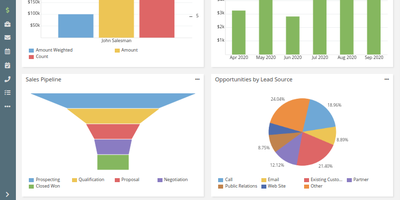
Teams tired of paying Salesforce or HubSpot per seat run EspoCRM: an AGPL-licensed PHP application with a fast single-page frontend over a REST API, covering sales, support, and marketing in one uncluttered interface. The sales core is complete - leads, contacts, accounts, opportunities with customizable pipeline stages, kanban views, calendars, meetings, and calls. Email is deeply integrated rather than bolted on: IMAP sync links messages to CRM records automatically, and mass email campaigns run with reusable templates, tracking, and Web-to-Lead forms feeding the funnel. Support teams get case management and a customer portal where clients track their own tickets and access a knowledge base. The real differentiator is the Entity Manager: create custom entities, fields, relationships, and layouts from the admin UI without code, with dynamic logic showing or hiding fields conditionally - EspoCRM is as much a business-application platform as a CRM. Formula scripting handles calculated fields and record automation in the free core; the optional Advanced Pack adds visual BPM process design and workflow rules. Role-based permissions with team and territory scoping, full-text search, reports, and a straightforward REST API for n8n or custom integrations round it out. Runs on PHP 8.3+ with MySQL, MariaDB, or PostgreSQL - unlimited users, zero per-seat fees.
Tolgee
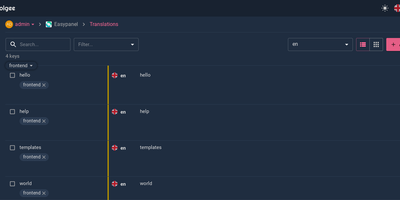
Hold Alt/Option, click any string in your running app, and edit the translation in place: Tolgee is an open-source localization platform built the way developers wish translation worked - changes save straight to the platform with no hunting through JSON or PO files. In-context editing works even in production via the Tolgee Tools browser extension, which injects credentials without touching source code, so a client or colleague with zero coding skills can translate the product inside the product. The SDKs (React, Angular, Vue, Svelte, plus iOS and Android) extract context from each UI element and capture one-click screenshots, giving both human translators and machines the surrounding meaning that raw string files lose. Autonomous translation uses that context: new keys are instantly filled from translation memory or machine translation (DeepL, Google Translate, AWS Translate), with optional human review afterward - shipping no longer waits on a translation agency. A CLI handles import/export, a REST API covers automation, a Figma plugin bridges design, and an MCP server lets AI coding assistants search keys, create translations, and trigger machine translation without leaving the editor. Self-hosting this Crowdin/Phrase/Lokalise alternative keeps every string, screenshot, and API key on your infrastructure.
Papercups
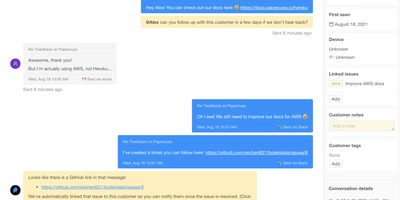
Companies with privacy and security concerns about piping customer conversations through Intercom or Zendesk run Papercups - open-source live customer chat. The stack is a deliberate strength: an Elixir/Phoenix API over PostgreSQL, with real-time messaging powered by Phoenix Channels and Presence - the same BEAM foundation trusted by Discord and PagerDuty for fault-tolerant, low-latency messaging. Customers see a customizable chat widget that embeds in any site as an HTML snippet, a React component, or even inside React Native apps, with configurable colors, greetings, and away messages. Your team sees a dashboard for managing conversations - close, assign, and prioritize - with Markdown and emoji in replies. The killer workflow is the reply-channel integration: connect Slack or Mattermost and every customer conversation becomes a synced thread your team answers without leaving the tool they already live in, with two-way message syncing handled by webhooks. Email and SMS channels extend intake beyond the widget, an analytics dashboard tracks communication patterns, and the Storytime feature adds real-time screen sharing to watch users navigate while you help them. A documented API supports fully custom chat UIs in Svelte, Flutter, or Vue. MIT-licensed and GDPR-conscious - customer data stays in your PostgreSQL.
Restreamer
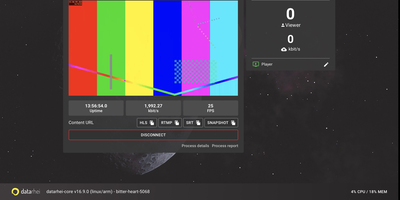
Point OBS or a hardware encoder at Restreamer's built-in RTMP or SRT ingest and it serves your website while rebroadcasting to YouTube Live, Twitch, Facebook, Vimeo, TikTok, LinkedIn, PeerTube, and anything else that accepts RTMP, SRT, or HLS - a complete self-hosted live-streaming server from datarhei. That multistreaming normally costs a monthly Restream.io subscription; here it's one FFmpeg process per destination on your own hardware. The web UI is genuinely approachable, with a wizard that walks beginners through camera setup, while professionals get the full surface: multiple audio/video inputs (USB, RTSP network cameras, virtual devices), codec and processing settings, separate audio muxing, and hardware acceleration via Nvidia CUDA, Intel VAAPI, or Raspberry Pi. Serving your own audience is first-class - a built-in Video.js player embeds in your site, a ready-made publication website streams without any embedding work, HLS chunk sizes are tunable, and automatic Let's Encrypt handles HTTPS. Viewer and bandwidth monitoring with limits keeps traffic costs predictable, and it's GDPR-friendly: no third-party provider, no audience data stored. A fully Swagger-documented REST API drives automation. SRT support keeps latency under a second.
Miniflux
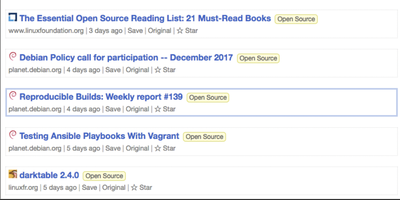
One statically-compiled Go binary over PostgreSQL, no ORM, no framework, static assets embedded in the executable: Miniflux is the minimalist, opinionated feed reader. The opinions are the feature: page layout, fonts, and colors are tuned for reading, and everything else is treated as noise. It consumes Atom, RSS, and JSON Feed formats with OPML import/export, organizes articles with categories and bookmarks, fetches original full-text content for summary-only feeds, and provides Postgres-powered full-text search. Privacy work happens automatically: pixel trackers are stripped, tracking parameters removed from URLs, a media proxy blocks third-party tracking, referrers are never forwarded, and there is zero telemetry. Navigation is keyboard-first - j/k through items, o to open, f to star - with touch gestures on mobile. Podcast, video, and music enclosures are supported, and YouTube videos play inline. Over 25 integrations save articles onward to Wallabag, Readwise Reader, Pinboard, Linkding, Instapaper, Notion, Telegram, Matrix, Ntfy, and more, plus webhooks and a REST API with Go and Python clients; the Google Reader API endpoint supports existing mobile reader apps. Authentication spans local passwords, passkeys (WebAuthn), Google OAuth2, OpenID Connect, and reverse-proxy headers. It is Apache 2.0 licensed, translated into 20 languages, and updates feeds on an internal scheduler.
Grav
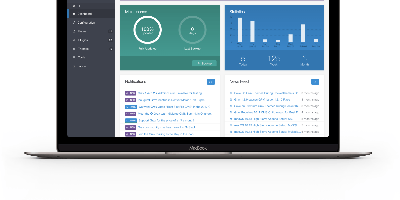
No database anywhere in the stack: Grav, the leading flat-file CMS, builds every page from a folder of Markdown and YAML on PHP, Symfony components, Twig templating, and Doctrine caching. That architecture is the whole argument: content is Git-versionable, rsync-able, and lock-in-free; pages render in well under 100ms without database round-trips; and backup means copying a directory. Content authors write Markdown (or plain HTML), configure with readable YAML, and define custom page structures via blueprint files that generate editing forms automatically. The optional Admin panel adds a polished editing layer: dashboard with site activity, page management with a syntax-highlighted editor and live preview, drag-and-drop media uploads, one-click plugin/theme updates, and normal/expert modes for form-based or raw YAML editing. The ecosystem runs deep - hundreds of open-source plugins and themes installed through the GPM package manager, with an event-hook architecture that gives plugins full control over the request lifecycle, and downloadable skeletons providing entire pre-built sites. Grav 2.0 modernizes the stack (PHP 8.3+, Symfony 7, Twig 3) and adds a first-party REST API, an MCP server for AI agents, and a SvelteKit single-page admin with real-time collaborative editing. Ideal for docs, blogs, and marketing sites. MIT-licensed.
Homer
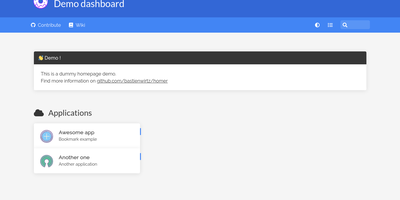
"Dead simple static HOMepage for your servER" - Homer's name is the spec. It is a fully static HTML/JS dashboard driven by one YAML file (assets/config.yml): list your services in groups with names, icons, tags, and URLs, and Homer renders a clean, fast landing page for everything you self-host. Because there is no backend, no database, and nothing to maintain, the container is tiny and effectively zero-maintenance - the entire operational surface is a text file you can version-control alongside your infrastructure. Despite the minimalism, the feature set is genuinely useful: smart cards add live data to service tiles via a type key - Pi-hole block statistics, AdGuard Home status, Jellyfin activity, Gatus and Home Assistant states, and dozens more integrations, with configurable periodic refresh. Fuzzy search jumps to any service as you type, keyboard shortcuts drive navigation, and multi-page support with item grouping keeps large homelabs organized. Theming covers built-in light and dark modes plus full custom CSS, tags get color-coded styles, and the whole dashboard installs as a PWA on phones and tablets. Icons come from Font Awesome or your own images. If Dashy is the maximalist dashboard and Homarr the drag-and-drop one, Homer is the minimalist: one YAML file, instant loads, and nothing that can break at 2 a.m.
phpMyAdmin
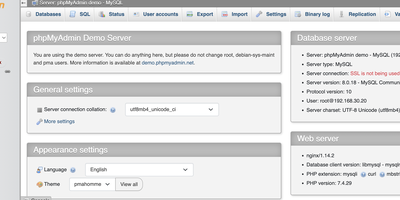
Since 1998, phpMyAdmin has been the standard web interface for MySQL and MariaDB - the tool millions of developers, DBAs, and hosting companies reach for when a database needs inspecting, fixing, or migrating. Written in PHP, it covers effectively the entire administration surface: create, browse, alter, and drop databases, tables, views, columns, and indexes; insert and edit rows through a tabular editor; manage user accounts and granular privileges; and maintain stored procedures, triggers, and events - all without touching a command line. The SQL editor executes arbitrary queries with syntax highlighting, autocompletion, history, and bookmarkable statements, including batch queries. Import/export is a migration workhorse: read SQL, CSV, XML, and OpenDocument spreadsheets in; write out to SQL dumps, CSV, JSON, XML, PDF, Word, LaTeX, and more - the fastest path for moving a WordPress database or handing a schema to a colleague. The Designer view renders your schema as an interactive ER diagram with drag-and-drop relationship editing, and data transformations display BLOBs as images or download links inline. Server maintenance views surface configuration suggestions. Multi-server support, dark mode, and translations into 72 languages round out a tool that earns its ubiquity. GPL-licensed.
Bookstack
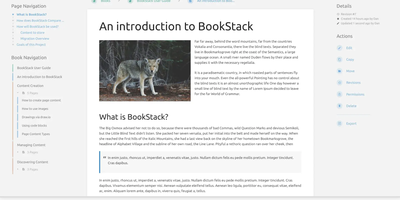
Most wikis die of flat page-and-tag sprawl; BookStack's defining decision is enforced structure - an MIT-licensed PHP/Laravel platform (over MySQL) where content lives in a hierarchy of shelves, books, chapters, and pages, the way a physical library works. A shelf maps to a department, a book to "Engineering Runbooks," a chapter to "Database Procedures," a page to the actual document. That opinionation removes the "where does this go?" friction and keeps knowledge bases tidy as they grow. Editing works both ways: a clean WYSIWYG editor for most users, a Markdown editor with live preview for those who prefer it - switchable per page. Full-text search spans all books or scopes to one, with direct links to individual paragraphs, and include tags let you embed one page's content inside another so shared blocks update everywhere at once. Every edit creates a diffable, revertible revision. Page templates standardize recurring formats, tags add cross-cutting categorization, and built-in diagrams.net integration draws architecture diagrams in place. Authentication covers email/password plus OIDC, SAML2, LDAP, and social login; a full role and permission system locks content down per shelf, book, or page. Pages and books export to PDF, HTML, plain text, and Markdown, a REST API automates content, and the whole thing runs happily on the cheapest VPS you can find.
Umami
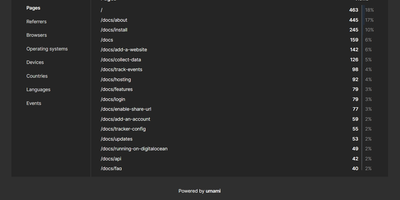
No cookies, no fingerprinting, no cross-site tracking, no personal data collection - Umami's privacy contract is the foundation of the open-source web analytics platform. IP addresses are hashed rather than stored, which makes it GDPR, CCPA, and PECR compliant by default - the consent banner can come off the site entirely. The tracking script is under 2 KB, roughly 20x smaller than Google Analytics, so measurement stops being a page-weight tax. The dashboard covers the core metrics - pageviews, visitors, bounce rate, visit duration, referrers, browsers, devices, and countries - with any date range and filtering by country or device. Beyond pageviews, custom events track clicks, form submissions, and signups via a data attribute or one JavaScript call, and advanced reports add funnels, user journeys, retention and cohort analysis, goals, and automatic UTM campaign tracking. Anonymous session views show individual visitor activity without identifying anyone. Teams share websites with role-based access, one instance manages unlimited sites, and a full REST API exposes every metric programmatically. MIT-licensed and self-hosted on PostgreSQL or MySQL via Docker, your analytics data never leaves your infrastructure.
OctoPrint
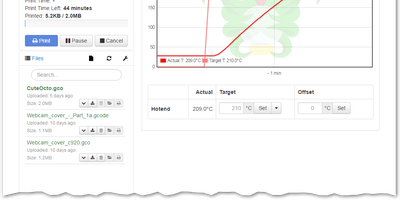
Over a million active instances make OctoPrint the standard web interface for consumer 3D printers - Gina Häußge's Python application, the center of the printing world since 2012. It talks to your printer over USB serial and turns every browser into a control panel: upload, organize, and start G-code prints; watch hotend and bed temperature graphs in real time; drive the print head manually; adjust feed rate, flow, and fan speed mid-print; and hit an emergency stop if things go wrong. The G-code visualizer renders the current layer in sync with the job, and a connected webcam adds a live feed plus automatic timelapse recording of every build. What keeps OctoPrint ahead is its plugin ecosystem - 300+ community plugins installable from the built-in manager. Highlights include Obico's AI spaghetti detection that pauses failed prints automatically, OctoEverywhere for tunnel-based remote access, Bed Level Visualizer's 3D mesh of your bed surface, PrintTimeGenius for accurate time estimates, Exclude Region to abandon one failed object mid-print while others continue, and Firmware Updater to flash Marlin or Klipper without SD-card shuffling. Event hooks fire notifications when prints finish or fail, and a full REST API supports slicer integration and custom automation. AGPL-licensed.
Trilium Notes
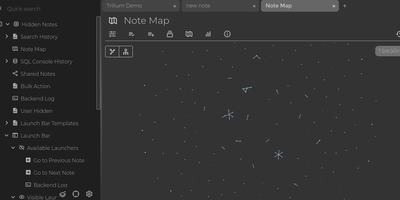
For people whose notes number in the tens of thousands, Trilium Notes is the hierarchical note-taking application built specifically for large personal knowledge bases - actively maintained as TriliumNext. Notes arrange into arbitrarily deep trees where every note is both content and container, and cloning lets a single note live in multiple places at once - bash notes belong under both Linux and Scripting, and Trilium refuses to make you choose. A WYSIWYG editor handles rich text, tables, math, and syntax-highlighted code blocks with Markdown-style shortcuts, while dedicated note types cover Excalidraw sketches, mind maps, geo maps with GPX tracks, relation maps that visualize connections between notes, and tables with typed columns. The attribute system is the power layer: labels attach queryable metadata (#year=1999, #author), relations create named links between notes, and both inherit down the tree - feeding full-text search, saved queries, and scripting. Scripting is Trilium's deepest differentiator: JavaScript code notes run on events like note changes or hourly schedules, build custom widgets, and add server-side logic, turning the knowledge base into a programmable platform. Protected notes encrypt sensitive content, note hoisting focuses on subtrees, and the self-hosted server syncs desktop clients across devices.