Multica
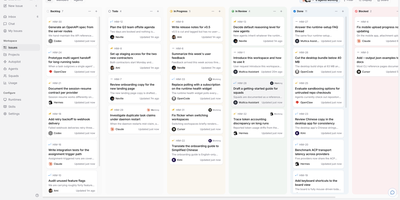
Reaching 45,000 GitHub stars within seven months of launch, Multica is the fastest-growing open-source platform for managing AI coding agents as first-class teammates — assign an issue to Claude Code, Codex, Cursor, Copilot, Kimi, or any of 21 supported agent CLIs and it picks up the work, comments progress in real time via WebSocket, raises blockers, and hands the result back for human review before anything merges. The Go backend (Chi router, sqlc-generated type-safe queries, gorilla/websocket) connects to PostgreSQL 17 with pgvector for semantic search across workspace history, while the Next.js 16 App Router frontend delivers workspace dashboards showing per-agent token spend, execution time, daily cost charts, and runtime status across unlimited connected machines. Agent Skills provide reusable methods, reference material, and supporting files that compound across runs — a persistent knowledge layer that makes each subsequent task faster and more accurate. Squads let a leader agent select the right specialist for subtasks, creating multi-agent workflows without manual orchestration. Review gates ensure no AI-generated code ships to main without explicit human approval. Self-host via Docker Compose or Kubernetes with full Git integration across GitHub, GitLab, Gitea, and Forgejo including self-hosted instances. The CLI and REST API make every surface scriptable, and Autopilot automations trigger agent runs from events. Running on a dedicated VPS on RepoCloud with guaranteed CPU, RAM, and SSD, full root SSH access, and a browser serial console. Apache 2.0 licensed with additional conditions.
Plane
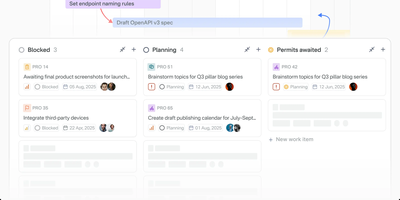
The most-starred open-source project management platform on GitHub with over 55,000 stars, Plane delivers what Jira, Linear, Monday, and ClickUp charge thousands per year for — issue tracking, sprint planning, documentation, and AI-powered workflows in one unified workspace that you own and control entirely. Work items feature a rich text editor with file uploads, sub-properties, custom states, priorities, labels, assignees, and cross-referencing, organized across five customizable layout views (list, board, table, spreadsheet, Gantt) with Command-K navigation for instant access to anything. Time-boxed Cycles provide sprint planning with automatic burn-down charts, velocity tracking, and scope change detection, while Modules break complex projects into manageable deliverables with progress aggregation. Built-in Pages combine AI-powered documentation with rich formatting, image embedding, and one-click conversion of notes into actionable work items. The AI layer reads across every project, cycle, document, and thread in the workspace — agents take real assignments, triage incoming requests, assign owners, track blockers, and ship status updates automatically. Native integrations connect GitHub, GitLab, Slack, Sentry, Figma, and 50+ tools with bidirectional issue sync and PR tracking, while import pipelines migrate entire workspaces from Jira, Linear, Asana, ClickUp, or Monday in minutes. The REST API with OAuth 2.0, HMAC-signed webhooks, typed SDKs in Node.js and Python, and a native MCP server enable custom automations. Running on a dedicated VPS on RepoCloud with guaranteed CPU, RAM, and SSD, full root SSH access, and a browser serial console. AGPL-3.0 licensed.
Netdata
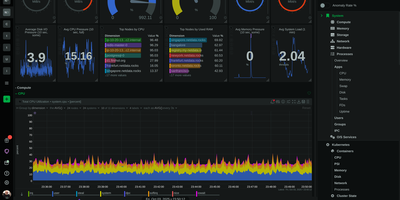
Trusted by millions of engineers and deployed on over 80,000 GitHub stars worth of community confidence, Netdata delivers true real-time monitoring at per-second granularity — 10-60x faster than Prometheus, Datadog, or any conventional monitoring stack that averages away the transient anomalies lasting 2-10 seconds where most production incidents originate. A single installation command deploys the agent with zero configuration, automatically discovering every running process, container, systemd service, network connection, disk, and application on the host within seconds. Unsupervised machine learning trains multiple models per metric directly at the edge, detecting anomalies without thresholds, baselines, or manual tuning. The distributed Parent-Child architecture scales horizontally from a single Raspberry Pi to fleets exceeding 100,000 nodes while maintaining sub-2-second visualization latency and storing metrics at approximately 0.5 bytes per sample through tiered compression. Native network monitoring provides live topology maps, NetFlow and sFlow analytics, SNMP device polling across 200+ profiles, and trap handling — capabilities that typically require a separate NPM product. Hundreds of pre-configured alerts cover systems and applications out of the box, with AI-powered root cause analysis surfacing correlated metrics through natural language via MCP-compatible AI assistants. The agent supports Linux, macOS, FreeBSD, Kubernetes, and Docker with eBPF-based kernel observability requiring no application instrumentation. Running on a dedicated VPS on RepoCloud with guaranteed CPU, RAM, and SSD, full root SSH access, and a browser serial console. GPL v3+ licensed.
Glance
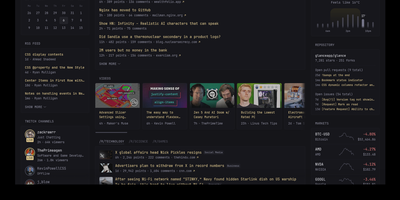
With over 35,000 GitHub stars in just two years, Glance has become the most popular self-hosted dashboard project on GitHub, outpacing established alternatives like Homarr and Homepage. Built as a single Go binary under 20MB with minimal JavaScript and zero external dependencies, Glance delivers a blazing-fast personal information dashboard that consolidates your entire digital morning routine into one beautiful page. Configure everything through clean YAML files that support modular includes and environment variable interpolation, with automatic hot-reload that applies changes without restarting the server. The widget ecosystem covers RSS and Atom feeds, Reddit and Hacker News frontpages, YouTube channel subscriptions, GitHub release timelines, weather forecasts from Open-Meteo, stock market quotes, Docker container status, Twitch live streams, calendar events via iCal, site monitor uptime checks, and custom HTML or iframe embeds. A community widgets repository extends functionality even further with user-contributed integrations. The theming system provides light, dark, and custom color schemes with multiple layout options including slim and wide column configurations. Authentication support added in 2025 secures access with username and password protection. Preconfigured page templates let you get started in seconds with curated layouts for development, homelab monitoring, news reading, and entertainment tracking. Deploy via Docker Compose or as a standalone binary on Linux, macOS, or Windows across AMD64 and ARM64 architectures. Running on a dedicated VPS on RepoCloud with guaranteed CPU, RAM, and SSD, full root SSH access, and a browser serial console. AGPL-3.0 licensed.
Semaphore
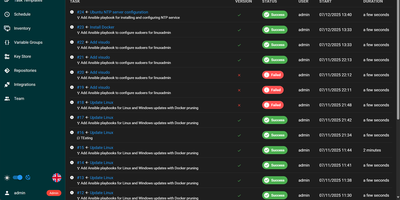
With nearly 14,000 GitHub stars and over 200 releases, Semaphore UI has established itself as the lightweight yet powerful alternative to enterprise automation platforms like Ansible AWX and Jenkins. Unlike AWX's heavyweight Kubernetes-dependent architecture, Semaphore ships as a single Go binary with zero external runtime dependencies — install it, run setup, and you have a production-ready automation server in minutes. The platform natively orchestrates Ansible playbooks, Terraform and OpenTofu infrastructure code, Terragrunt configurations, PowerShell scripts, Bash commands, and Python automation, all from a clean Vue.js web interface that displays task history, execution logs, and scheduling status at a glance. Semaphore supports concurrent task execution across multiple servers using distributed project runners, enabling horizontal scaling of automation workloads without complex clustering. The built-in inventory management system handles both static and dynamic inventory sources, while four-level RBAC (Owner, Manager, Task Runner, Guest) provides granular access control for team environments. Notifications flow to Slack, Microsoft Teams, Telegram, email, Rocket.Chat, and Gotify, keeping operators informed of failed tasks and deployment status. Integration with HashiCorp Vault secures sensitive credentials, and the comprehensive REST API with built-in Swagger documentation enables programmatic automation. Deploy via Docker Compose, Helm chart for Kubernetes, or native packages for Debian, Ubuntu, and RHEL-based distributions. Running on a dedicated VPS on RepoCloud with guaranteed CPU, RAM, and SSD, full root SSH access, and a browser serial console. MIT licensed.
Documenso
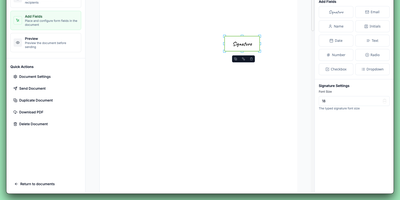
With over 14,000 GitHub stars and a mission to become the world's most trusted document-signing tool, Documenso delivers a beautifully designed electronic signature platform that organizations can self-host for complete data sovereignty. The signing workflow handles everything from simple one-party signatures to complex multi-recipient documents with configurable roles including signers, approvers, viewers, and CC recipients, each with distinct permissions and notification flows. Document templates enable reusable signing packages with pre-configured fields and recipient patterns, eliminating repetitive setup for contracts, NDAs, and onboarding documents that teams process regularly. The PAdES-standard implementation ensures digital signatures are legally compliant and cryptographically verifiable, with complete audit trails documenting every action from document creation through final signature. Direct link signing allows recipients to access documents without email, enabling embedded signing experiences within existing applications and websites. The REST API provides programmatic document creation, recipient management, and webhook notifications for integrating signature workflows into CRM systems, HR platforms, and custom business applications. Team management features organize users into groups with role-based permissions, custom branding per team, and centralized billing for organizations with multiple signing workflows. SSO integration supports standard authentication providers for enterprise identity management. The TypeScript codebase built on Next.js and Prisma with PostgreSQL makes customization and contribution accessible to modern web developers. Zapier integration connects Documenso to thousands of third-party applications for automated document routing. Deploy on a dedicated VPS on RepoCloud with guaranteed CPU, RAM, and SSD, full root SSH access, and a browser serial console. AGPL-3.0 licensed.
Coder
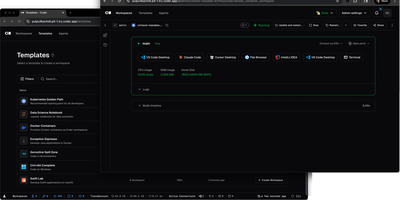
With over 14,000 GitHub stars and enterprise adoption by security-conscious organizations, Coder transforms how development teams provision, manage, and secure their coding environments. Every workspace is defined as a Terraform template, meaning infrastructure engineers can standardize development environments across EC2 instances, Kubernetes pods, Docker containers, or any combination, while developers get self-service provisioning that launches in seconds rather than days of manual setup. The WireGuard-based networking layer establishes encrypted tunnels between developer machines and remote workspaces, providing low-latency access without exposing ports or configuring VPN concentrators. Automatic idle detection shuts down unused workspaces after configurable periods, directly reducing cloud compute costs for organizations running hundreds of developer environments. The Coder Agents feature introduces native AI coding capabilities where the agent loop executes entirely within the control plane on self-hosted infrastructure, keeping LLM API credentials out of individual workspaces and eliminating credential exfiltration risks. Centralized model governance allows platform teams to approve specific AI providers and models, set per-user spend limits, and maintain complete audit logs of all prompts, tool calls, and agent activity. IDE integration supports VS Code through a dedicated extension, JetBrains IDEs via Gateway and Toolbox plugins, and browser-based code-server for web access. The template registry provides pre-built configurations for common development stacks. DevContainer support builds environments from standard devcontainer.json specifications. Deploy on a dedicated VPS on RepoCloud with guaranteed CPU, RAM, and SSD, full root SSH access, and a browser serial console. AGPL-3.0 licensed.
Tailscale
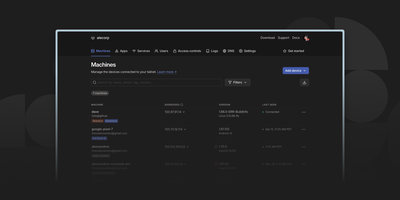
With over 34,000 GitHub stars and backing from a well-funded engineering team, Tailscale has fundamentally simplified how developers and system administrators think about secure networking. The client daemon establishes WireGuard tunnels directly between devices using sophisticated NAT traversal techniques, achieving direct peer-to-peer connections in the vast majority of network configurations without requiring port forwarding, firewall rules, or VPN concentrators. When direct connections prove impossible due to restrictive network environments, DERP relay servers provide encrypted fallback paths. MagicDNS assigns human-readable hostnames to every device on the network, eliminating the need to remember IP addresses across a tailnet. Subnet routing allows nodes to advertise access to entire local networks, enabling remote access to office resources, home labs, or cloud VPCs through a single gateway node. Exit node functionality routes all internet traffic through a designated device for privacy protection or geographic flexibility. Access control lists define granular policies for which devices and users can communicate with which services, enforced cryptographically at the network layer. The authentication layer integrates with identity providers including Google, Microsoft, GitHub, Apple, and OIDC-compliant systems for single sign-on access. Taildrop enables direct encrypted file transfers between devices without cloud intermediaries. The tailscale CLI provides complete network management from the terminal including status monitoring, route advertisement, and node configuration. Running Tailscale on a dedicated VPS on RepoCloud with guaranteed CPU, RAM, and SSD, full root SSH access, and a browser serial console provides a permanent, always-on node in your mesh network. BSD-3-Clause licensed with an active open-source community.

Homepage
With over 31,000 GitHub stars and 430 contributors, Homepage has become the definitive self-hosted dashboard for homelab enthusiasts and server administrators who want a single, elegant landing page for all their services. The dashboard renders as a fully static site at build time for instant page loads, while a Node.js backend securely proxies all API requests to prevent exposing service credentials to the browser. Docker integration automatically discovers running containers through label-based configuration, populating the dashboard with service status indicators, health checks, and real-time statistics without manual URL entry. Over 100 native service widgets display live data from popular applications including Plex, Jellyfin, Radarr, Sonarr, Home Assistant, Pi-hole, Portainer, Proxmox, Nextcloud, Gitea, and dozens more, each showing relevant metrics like active streams, download queues, or system health directly on the dashboard. Information widgets provide weather forecasts, system resource utilization, search bars, and date/time displays. The layout system supports multiple columns, tabs, and custom CSS for pixel-perfect arrangement of service groups and bookmarks. Built-in authentication options include OIDC integration and password protection. Quick search functionality enables instant access to bookmarks and services with keyboard shortcuts. Internationalization covers 40+ languages with community-maintained translations. Configuration lives entirely in YAML files for version-controlled, reproducible dashboard setups. Deploy on a dedicated VPS on RepoCloud with guaranteed CPU, RAM, and SSD, full root SSH access, and a browser serial console for complete control. GPL-3.0 licensed with an active community and bi-weekly releases.
Highlight
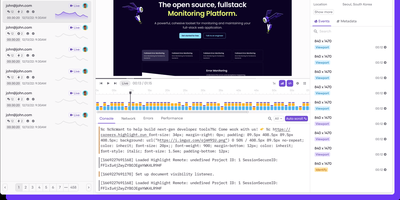
With over 9,000 GitHub stars and a focus on developer experience over legacy monitoring complexity, Highlight.io delivers a unified observability platform that correlates frontend user behavior with backend performance data in a single interface. The session replay engine captures high-fidelity DOM recordings showing exactly what users experienced, including console logs, network requests, page transitions, and user interactions, with configurable privacy redaction for sensitive content. Error monitoring automatically groups and deduplicates errors, surfaces affected user sessions, and provides full stack traces with source map support for minified production code. The logging pipeline ingests structured and unstructured logs from any backend service with automatic property extraction, full-text search, and configurable alerting thresholds. Distributed tracing tracks request flows across microservices with embedded links to associated sessions, errors, and logs for complete request lifecycle visibility. The metrics system collects custom application metrics alongside built-in web vitals and performance data for trend analysis and anomaly detection. Search across all telemetry types uses a unified query language with automatic attribute discovery and saved views for recurring investigations. Integrations connect with Slack, Discord, Linear, Jira, Vercel, and dozens of other developer tools for notification routing and workflow automation. SDKs cover React, Next.js, Vue, Angular, Python, Go, Ruby, Java, PHP, and Elixir with framework-specific instrumentation. Self-hosted deployment runs via Docker Compose with ClickHouse for analytics storage. Running on a dedicated VPS on RepoCloud with guaranteed CPU, RAM, and SSD, full root SSH access, and a browser serial console. Apache 2.0 licensed.
CrowdSec
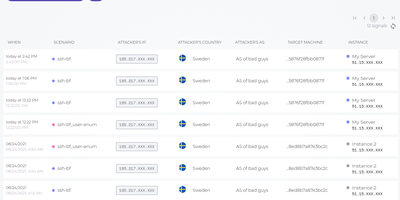
With over 14,000 GitHub stars and a growing global network of security deployments, CrowdSec turns every attack on any participating server into protection for the entire community. The security engine operates as a combined IDS/IPS and WAF, analyzing log sources from Nginx, Apache, SSH, WordPress, and over 50 other services to detect brute force attacks, port scans, web vulnerability exploitation, and credential stuffing in real time. When one server detects a new threat, the attacker's IP is shared through the community blocklist, proactively protecting thousands of other installations before the attacker can reach them. The built-in WAF powered by Coraza v3 inspects HTTP requests at the application layer, validates against OpenAPI schemas, and applies custom rules with flexible AND/OR condition mixing for precise threat detection. Bot detection serves challenge pages with client fingerprinting to distinguish legitimate traffic from automated scrapers and scanners. Remediation components block malicious IPs at multiple infrastructure layers including iptables, nftables, Nginx, HAProxy, Cloudflare, and AWS Security Groups through the detect-here-remedy-there architecture. The scenario-based detection system ships with default rules for common attack patterns and supports custom scenarios written in YAML with an expressive filter language. A centralized console provides real-time visualization of alerts, threat intelligence analysis, and management of multiple distributed security engines. GDPR compliant by design, all log analysis happens locally and raw logs never leave your infrastructure. Running on a dedicated VPS on RepoCloud with guaranteed CPU, RAM, and SSD, full root SSH access, and a browser serial console. MIT licensed.
Authentik
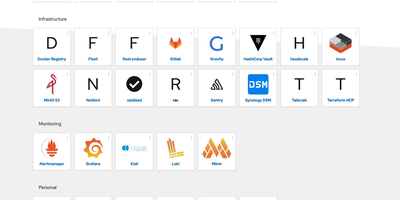
With over 24,000 GitHub stars and a rapidly growing community of self-hosters, authentik delivers enterprise-grade identity management that replaces commercial solutions like Okta and Auth0 with a fully self-hosted platform requiring no per-user licensing fees. The platform serves as a unified identity provider supporting SAML 2.0, OAuth 2.0 and OpenID Connect, LDAP for legacy application compatibility, SCIM 2.0 for automated user provisioning, and RADIUS for network device authentication. The visual flow designer enables administrators to create custom authentication workflows combining password verification, multi-factor authentication with TOTP, WebAuthn, and SMS codes, email verification, captcha challenges, and conditional logic based on user attributes or device context. The forward-auth and reverse proxy integration works seamlessly with Traefik, Nginx, Caddy, and Envoy to protect applications that lack built-in authentication. User enrollment flows support self-registration with configurable approval workflows, invitation links, and automatic group assignment. The LDAP outpost exposes user and group data to legacy applications requiring LDAP bind authentication, while the SCIM provider automates user lifecycle management with downstream applications. Multi-tenancy support through brands allows a single authentik instance to serve multiple organizations with independent domains, branding, and authentication policies. The admin interface provides comprehensive user management, group hierarchy, application catalog, event logging with GeoIP enrichment, and system health monitoring. Running on a dedicated VPS on RepoCloud with guaranteed CPU, RAM, and SSD, full root SSH access, and a browser serial console. Licensed under a source-available license with an open-source community edition.
Appwrite
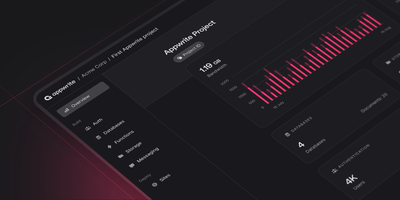
Backed by over 56,000 GitHub stars and a growing ecosystem of client and server SDKs covering Flutter, React Native, Swift, Kotlin, Python, Node.js, Deno, and more, Appwrite provides a complete backend platform that replaces Firebase and Supabase with a fully self-hostable architecture. The authentication module supports email and password, phone OTP, magic links, OAuth providers including Google, GitHub, Apple, and Facebook, anonymous sessions, and JWT token management with configurable session policies. The database service provides a document-oriented store with collections, indexes, query filters, pagination, and real-time subscriptions that push changes to connected clients instantly via WebSocket. The storage service handles file uploads with built-in image manipulation including cropping, resizing, format conversion, and compression, served through a CDN-ready URL structure. Serverless functions execute custom backend logic triggered by HTTP requests, scheduled cron jobs, or database events, with runtime support for Node.js, Python, PHP, Ruby, Dart, Swift, Kotlin, and Java. The messaging service enables push notifications, SMS, and email delivery through configurable providers including APNS, FCM, Twilio, Vonage, Mailgun, and Sendgrid. Team management with role-based permissions, webhook integrations, and health monitoring APIs complete the platform. The admin console provides a web-based dashboard for managing all services, monitoring usage metrics, and configuring project settings. Deployment runs via Docker Compose with MariaDB for metadata and configurable storage adapters. Running on a dedicated VPS on RepoCloud with guaranteed CPU, RAM, and SSD, full root SSH access, and a browser serial console. BSD 3-Clause licensed.
SigNoz
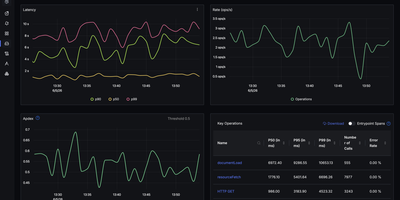
With over 31,000 GitHub stars and native OpenTelemetry support that eliminates vendor lock-in from day one, SigNoz delivers full-stack observability covering metrics, traces, and logs in a single pane of glass without the per-host pricing model of commercial APM platforms. The platform ingests telemetry data through the OpenTelemetry Collector, supporting auto-instrumentation for Java, Python, Node.js, Go, Ruby, PHP, and .NET applications with zero code changes required for basic tracing. ClickHouse serves as the columnar storage backend, providing fast aggregation queries over billions of spans and log lines with configurable retention policies and tiered storage. The distributed tracing view renders flame graphs and Gantt charts showing request flow across microservices with latency breakdowns, error rates, and p99 percentile calculations. Custom dashboards support PromQL and ClickHouse SQL queries with time-series charts, bar graphs, tables, and value widgets. The log management pipeline supports structured and unstructured logs with full-text search, log pipelines for parsing and enrichment, and correlation with traces via trace IDs. Alert rules can be configured on any metric or log query with notification channels including Slack, PagerDuty, OpsGenie, webhooks, and email. The exceptions monitoring module automatically groups and tracks application errors with stack traces, occurrence counts, and first-seen timestamps. Service maps visualize inter-service dependencies with real-time latency and error rate overlays. Running on a dedicated VPS on RepoCloud with guaranteed CPU, RAM, and SSD, full root SSH access, and a browser serial console. MIT licensed with an enterprise edition available.
Apache Superset
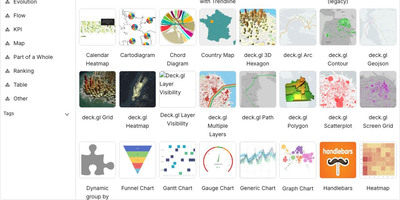
Powering data analytics at companies like Airbnb, Twitter, and Lyft where it originated, Apache Superset has become the leading open-source business intelligence platform with over 65,000 GitHub stars and an Apache Software Foundation top-level project designation. The platform ships with over forty visualization types out of the box including geographic maps, time-series charts, pivot tables, heatmaps, treemaps, and Sankey diagrams, all rendered with Apache ECharts for publication-quality output. Its SQL Lab provides a full-featured IDE experience with syntax highlighting, autocomplete, query history, and result caching for interactive data exploration. Superset connects natively to PostgreSQL, MySQL, ClickHouse, Trino, Presto, BigQuery, Snowflake, Apache Druid, Apache Hive, and dozens more databases through SQLAlchemy connectors, with support for custom database drivers via Python plugins. The semantic layer allows data teams to define calculated columns, metrics, and virtual datasets that business users can query without writing SQL. Role-based access control with row-level security enables fine-grained data governance, while the embedded analytics SDK lets you integrate dashboards directly into external applications via iframes with SSO pass-through. The caching layer supports Redis and Memcached for query result caching, and the asynchronous query execution engine powered by Celery handles long-running queries without blocking the UI. Alerts and reports can be scheduled via email or Slack with PNG or CSV attachments generated from any chart or dashboard. Running on a dedicated VPS on RepoCloud with guaranteed CPU, RAM, and SSD, full root SSH access, and a browser serial console. Apache 2.0 licensed.
Hoppscotch
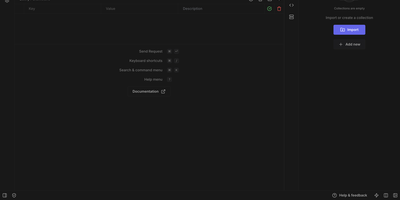
Backed by nearly 80,000 GitHub stars and recognized as one of the most popular developer tools in the open-source ecosystem, Hoppscotch delivers a complete API development platform that runs instantly in any browser with zero installation. The platform supports six protocols out of the box including REST with full HTTP method coverage, GraphQL with schema introspection and multi-column documentation, WebSocket for full-duplex communication, Socket.IO, MQTT for IoT messaging, and Server-Sent Events for real-time streaming. Request collections organize your API calls into logical groups with support for sub-folders, environment variables with scope inheritance, pre-request scripts and post-request test scripts written in JavaScript, and automatic code snippet generation in over twenty languages and frameworks. Teams can collaborate in real-time with shared workspaces, role-based access controls, and cloud synchronization across devices. Migration from Postman, Insomnia, or OpenAPI specifications happens with a single click import. The self-hosted edition deploys via Docker Compose with PostgreSQL for data persistence, supporting SSO authentication through SAML and OAuth providers, SMTP configuration with OAuth2, and admin dashboard for user management. The platform also ships as a native desktop application for macOS, Windows, and Linux with offline support, plus a CLI tool for running collections in CI/CD pipelines. A built-in proxy mode bypasses CORS restrictions during development, and an interceptor enables request debugging and response modification. Running on a dedicated VPS on RepoCloud with guaranteed CPU, RAM, and SSD, full root SSH access, and a browser serial console. MIT licensed.

Ubuntu VPS
A minimal Ubuntu 24.04 LTS virtual private server — no pre-installed applications, no opinionated configuration, just the operating system and root access. Start from a clean slate and install exactly what you need: web servers, databases, development toolchains, CI runners, monitoring stacks, VPN endpoints, game servers, or anything else that runs on Linux. The server ships with apt package management, systemd service supervision, and standard networking configured out of the box, giving you access to over 36,000 packages in the Universe repository alone. Connect via SSH with the key you select during deployment; a dedicated IPv4 address is included with every server at no extra charge. A browser-based serial console in the RepoCloud dashboard provides emergency access without an SSH client. Snapshots let you capture the server state before risky changes and roll back with one click. Resize CPU and RAM on demand without reinstalling. Canonical's standard security maintenance covers this LTS release through May 2029 — five years of patches for the Main repository. Ubuntu Pro extends that to ten years with additional Universe coverage, kernel livepatching, and compliance tooling, available free for up to five machines.

Hermes Agent
OpenRouter's most-used application by token volume — over 17 trillion tokens processed — Hermes Agent is an open-source autonomous agent built by Nous Research that lives on your server and gets more capable every day. Define a goal in natural language and Hermes plans sub-tasks, executes them through tool integrations, observes results, handles errors, and refines until the job is done or it genuinely needs your input. Persistent memory with full-text search and LLM summarization lets it recall context across sessions, and an agent-created skills system self-improves after complex tasks. A messaging gateway connects Telegram, Discord, Slack, WhatsApp, Signal, and 16 more platforms with cross-channel conversation continuity. A built-in cron scheduler runs daily reports, nightly backups, and weekly audits unattended. Subagent spawning parallelizes workstreams, and six terminal backends — local, Docker, SSH, Singularity, Modal, and Daytona — fit any infrastructure. Works with any LLM provider: Nous Portal, OpenRouter for 400+ models from 70+ providers, OpenAI, Anthropic, or your own endpoint. The API key you supply powers all LLM calls; billing goes through your own account. Running on a dedicated VPS with guaranteed CPU, RAM, and SSD, full root SSH access, and a browser serial console. MIT licensed.