Veritas Kanban
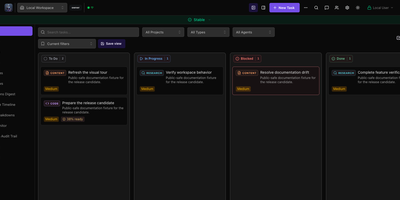
A drag-and-drop task board that works fine on its own and can also hand cards to AI coding agents, Veritas Kanban shows what each agent is doing, what it changed, and what is waiting for your approval. Start with no agents at all. Cards move through To Do, In Progress, Blocked, and Done, and each one carries subtasks, dependencies, time tracking, comments, and an activity log. When you are ready, connect Codex, Claude Code, Copilot CLI, Hermes, or OpenClaw, give every agent an Intern, Specialist, or Lead permission level, and follow each agent's status and model on a live dashboard. Let a task run in its own Git worktree, read the diff, leave inline comments, approve or request changes, and open a GitHub pull request from the task panel. Squad Chat gives agents one shared channel that posts spawned, completed, and failed events. Workflows chain steps with parallel branches, loops, and human approval gates. Policy rules allow, deny, or hold agent actions for review. Assistants reach the board through an MCP server, a command-line client, or a REST API. Running on a dedicated VPS on RepoCloud with guaranteed CPU, RAM, and SSD, full root SSH access, and a browser serial console. MIT licensed.
sandboxd
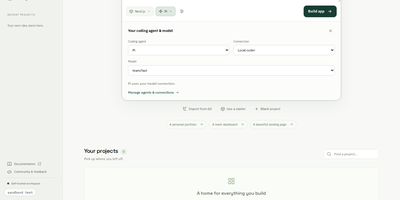
Describe an app in one sentence and sandboxd, a self-hosted AI app builder, has a coding agent build it in an isolated sandbox and hand back a live preview URL. Start from a blank prompt, a React, Next.js, Express, or FastAPI starter, or an imported public Git repo. Refine it in one persistent chat beside Preview, Code, Terminal, and Git tabs. Pick OpenCode, Pi, or Claude Code. Point OpenCode or Pi at local or remote OpenAI-compatible and Anthropic-compatible endpoints, LiteLLM gateways included. A proxy injects provider keys on the wire, so nothing secret lands in a sandbox. Did the agent get it wrong? Every task is checkpointed first, so one click reverts the turn. Snapshots, forks, and named versions keep known-good points to branch from. Edit files in the browser, review file-by-file diffs, commit, and push. Secrets are write-only and encrypted per app. Idle sandboxes sleep and wake on the next request. One modest server can host per-user previews, coding playgrounds, or an agent platform. The app library installs 80+ curated open-source apps, such as Ghost, n8n, Gitea, and Grafana, each in its own sandbox. Every console action is also a /v1 HTTP call with an OpenAPI spec. Upgrades back up the database, health-check the new version, and roll back on failure. Running on a dedicated VPS on RepoCloud with guaranteed CPU, RAM, and SSD, full root SSH access, and a browser serial console. MIT licensed.
Antirion
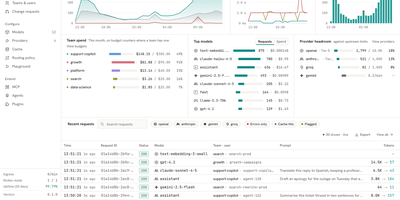
Your apps keep using the OpenAI SDK while Antirion, a self-hosted AI gateway, decides which provider answers, what each team may spend, and what gets logged. Clients speak the OpenAI, Anthropic, Gemini, or Bedrock APIs, and Antirion translates between them, so a Claude deployment can answer an OpenAI-style call, streams included. Add providers such as Amazon Bedrock, Vertex AI, Mistral, Groq, DeepSeek, or a vLLM server, then publish them as named Models. Routing rules send traffic by team or project with fallback chains, weighted splits, least-cost or least-latency targets, retries, hedging, and circuit breakers. Budgets and rate limits in dollars or tokens apply per organization, team, project, and key, with projections and alerts before money runs out. Guardrails check for personal data, secrets, keywords, and regex matches, then block, redact, flag, or divert. Exact and semantic caching answers repeated prompts without calling a provider. The request log records every attempt, route, token count, cost, and guardrail verdict, with Prometheus metrics and OTLP traces. An MCP gateway and A2A proxy put tools and agents behind the same keys. Sign in with OIDC, SAML, or GitHub, provision users with SCIM, and review every change in the audit log. Changes you choose can require a change request or a second person's approval, and the Playground sends requests from the console. Running on a dedicated VPS on RepoCloud with guaranteed CPU, RAM, and SSD, full root SSH access, and a browser serial console. Apache-2.0 licensed.
Distr
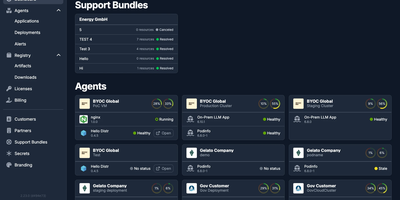
Shipping commercial software to customer-managed infrastructure demands a reliable distribution hub, and Distr provides that control plane for vendors who sell into VPCs, on-prem data centers, and air-gapped networks. Vendors define Docker Compose, Docker Swarm, or Helm applications with versions and configuration templates, then roll releases out to every customer deployment from a single vendor portal. Prebuilt deployment controllers installed in customer environments apply updates and report status, container logs, live host metrics, and alerts back, so support teams can diagnose problems without touching anyone's infrastructure. Customers get a white-labeled portal with your branding, install instructions, registry credentials, version management, and customer-initiated support bundles. A built-in OCI registry distributes Docker images, Helm charts, Zarf packages, and other artifacts with per-customer tag access, pull-through caching, and download analytics showing which customer pulls which version. Entitlements control which application versions each customer may deploy, and Ed25519-signed JWT license keys let your own software verify usage limits offline, which keeps licensing working in air-gapped sites. An OpenTofu controller provisions and reconciles BYOC cloud infrastructure, while a REST API and SDK automate onboarding, releases, and entitlements from CI pipelines. Role-based access control manages permissions across vendor and customer organizations, while the Kubernetes compatibility matrix and vulnerability scanning help validate releases before they ship. Running on a dedicated VPS on RepoCloud with guaranteed CPU, RAM, and SSD, full root SSH access, and a browser serial console. Apache-2.0 licensed.
Ollaya
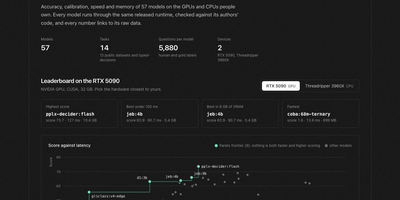
Ollaya serves decision models that answer typed questions about a message, ticket, or document with calibrated probabilities, through a self-hosted API shaped like the hosted service it can replace. Send a state, which can be an email, a support ticket, or any JSON, plus typed choice, score, and yes or no questions, and the model answers in one forward pass in milliseconds without generating text. Pull models by name the way Ollama users already know, with run, list, ps, show, copy, and remove commands managing the local store. Downloads verify every layer against its sha256 digest, resume when interrupted, and share blobs between models so storage stays lean. Existing TypeSafe code keeps working by changing one environment variable, because the /v1/systemone and /v1/decisions endpoints are wire-identical and the official SDK sends its key the same way. The native /api adds routing information and timings, model loading and unloading, and streamed pull progress for your own tooling. Put it to work triaging inboxes, routing requests to the right model or team, screening prompts for injection and jailbreak attempts, or replacing per-token LLM classification calls with a local answer. Agents reach the same engine through the bundled MCP server, and LiteLLM, LangChain, DSPy, LlamaIndex, n8n, and Dify connect through their existing integrations. Running on a dedicated VPS on RepoCloud with guaranteed CPU, RAM, and SSD, full root SSH access, and a browser serial console. Apache-2.0 licensed.
MoneyMatter
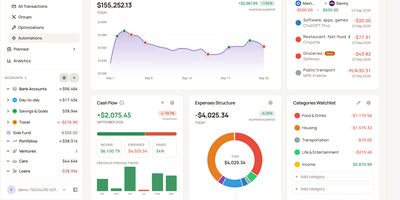
Your bank balance is only part of what you own, and MoneyMatter adds the rest: cash accounts, brokerage portfolios, cars, loans, and private deals roll into one net worth figure in your base currency. Add transactions by hand, import CSV, OFX, QFX, YNAB, Wallet, or Microsoft Money files, or let an AI model you provide parse a statement, while Monobank, SimpleFIN, Lunch Flow, and Walutomat connections sync accounts automatically. Each transaction can carry categories, tags, payees, notes, attachments, and splits, transfers and refunds link to their counterparts, and automation rules tidy new entries. Envelope-style budgets assign money to lines with Assigned, Activity, and Available columns and rollover rules, savings goals read progress from account balances, subscriptions and bills send reminders, and loans show payoff projections. Stocks, ETFs, and crypto are priced daily, vehicles depreciate along a curve, and a FIRE planner estimates years to Lean, Regular, Fat, Barista, and Coast FIRE. A customizable dashboard, cash flow, money flow, net worth history, trends comparison, and pivot table chart the results. Share accounts with a household member, export JSON, CSV, or XLSX, back up everything, or connect Claude, ChatGPT, or Claude Code through the built-in MCP server. Running on a dedicated VPS on RepoCloud with guaranteed CPU, RAM, and SSD, full root SSH access, and a browser serial console. AGPL-3.0 licensed.
AnythingMCP
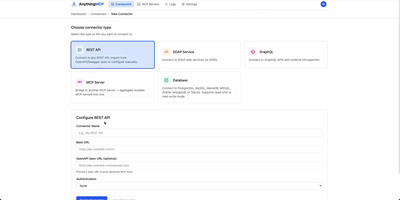
Connecting autonomous AI assistants to internal enterprise databases and legacy systems is streamlined by AnythingMCP, a visual Model Context Protocol gateway with automated knowledge graph generation and granular access controls. Engineers can import OpenAPI specifications, Postman collections, SOAP WSDL files, or raw database credentials to generate standardized Model Context Protocol tools in minutes without writing custom code. The built-in knowledge graph automatically maps entity relationships across disparate databases and software platforms, teaching agents how to correlate customer records in CRM tools with live order histories in enterprise resource planning software. System administrators can enforce fine-grained access policies by restricting tool execution permissions to specific roles and scoping database operations to read-only queries with strict row limits. An interactive web console provides real-time tool inspection, payload testing, request tracing, and comprehensive audit logs that capture every upstream invocation with full parameter visibility. Enterprise teams can integrate identity providers through OAuth2, SAML single sign-on, and SCIM automated user provisioning while protecting sensitive credentials using AES-256-GCM encryption at rest. Running on a dedicated VPS on RepoCloud with guaranteed CPU, RAM, and SSD, full root SSH access, and a browser serial console. GNU AGPLv3 licensed.
CliRelay
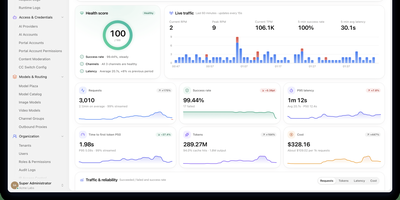
Anyone who pays for Claude Code, Codex, and Gemini CLI separately ends up juggling three endpoints, three sets of keys, and three kinds of rate-limit surprise, and CliRelay collapses all of that into one self-hosted gateway with a control panel. Clients speak the OpenAI Chat or Responses, Anthropic Messages, or Gemini protocol, and CliRelay translates each request for whichever upstream account is healthy. Channel groups limit where each key may send traffic, round-robin, fill-first, and session-sticky scheduling spread it, and cooldowns with automatic failover move requests off accounts that have run out of quota. Add upstreams from the /manage console through browser sign-in, device codes, or bulk credential import, covering Claude, Codex, Gemini, Antigravity, Vertex AI, AWS Bedrock, Grok, Qwen, Kimi, and any OpenAI-compatible service. Portal accounts own client keys with daily, period, and lifetime quotas, RPM and TPM limits, and per-model pricing. A monitor center scores health and charts live traffic, P50 to P99 latency, and time to first token, while every request lands in a searchable log with tokens, latency, and cost. Tenants, roles with resource.action permissions, content moderation profiles, an outbound proxy pool, and an audit trail make shared deployments workable, and the console speaks English, Simplified Chinese, and Russian. Running on a dedicated VPS on RepoCloud with guaranteed CPU, RAM, and SSD, full root SSH access, and a browser serial console. MIT licensed.
SkySend
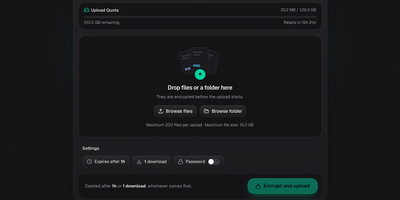
Only the person holding the link can open what you share with SkySend, a self-hosted file and note sharing service that encrypts everything in the browser before it leaves your device. Sending a contract? Drop in the file, several files, or a whole folder, and share the link. Need documents from a client? Send an upload link instead, and whatever comes back is encrypted for you alone. Handing over a password or an SSH key? Write it into a note that burns after reading. Notes can mix text, Markdown, generated passwords, and highlighted code in a single page. Every share can expire by time, stop after a set number of downloads or views, and carry an optional password as a second lock. The command-line client uploads, downloads, and reads notes with the same encryption, and its full-screen mode shows each link as a QR code. No accounts are needed: My Links keeps your shares in the browser, and optional OIDC sign-in limits who may create them. Encrypted uploads sit on local disk or any S3-compatible bucket, and the interface offers 13 languages and three themes. Running on a dedicated VPS on RepoCloud with guaranteed CPU, RAM, and SSD, full root SSH access, and a browser serial console. AGPL-3.0 licensed.
Liwan
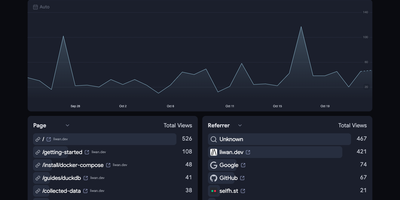
When you want honest traffic numbers without tracking cookies or stored IP addresses, Liwan puts a real-time analytics dashboard on your own server. The dashboard ranks pages, referrers, countries, browsers, platforms, and devices, charts visitors over time, and filters out bot traffic by default. Session metrics add bounce rate, average time on site, and entry and exit pages, while UTM fields attribute visits to campaigns. Collection is adjustable globally and per site: choose how visitors are grouped, whether to store country and city, country only, or no location, and how long events are kept. Drop rules discard internal, test, and local traffic before storage, and a pruning tool applies new settings to history after a dry-run preview. Tracking is one line of HTML, or your own server can send events with custom names and properties. Location can come from a MaxMind database or from Cloudflare, Vercel, and other proxy headers. One instance holds several projects and sites, with team accounts and single sign-on through Google Workspace, Microsoft Entra ID, or an OpenID Connect provider such as Keycloak or Dex. Running on a dedicated VPS on RepoCloud with guaranteed CPU, RAM, and SSD, full root SSH access, and a browser serial console. Apache-2.0 licensed.

Pomodoist
Pomodoist pairs a task manager with a Pomodoro timer, so the list of what to do and the clock that gets it done live in the same app. Type a task the way you would say it and the quick-add bar sets its priority and estimates its Pomodoros as you type, filing it into the Inbox, Today, or Upcoming views. Plan the week on a calendar, drag cards across a kanban board, spread work along a timeline, or sort it into a four-quadrant priority matrix when everything feels urgent. Start a focus session and the timer tracks intervals against the task at hand, with configurable work and break lengths, while a 3D desktop companion focuses, rests, and celebrates along with you. Share a project and the discussion stays beside the tasks, with comments on shared items and the team's focus time visible next to the work itself. Reports chart weekly focus time, completed tasks, and habit streaks, and voice notes can become task checklists when typing is not an option. An MCP endpoint lets your AI tools manage the same projects after an OAuth sign-in, and optional Google Calendar and Telegram integrations meet the planner where you already are. The self-hosted instance unlocks every feature locally, with your own accounts and one-command backups of the whole database. Running on a dedicated VPS on RepoCloud with guaranteed CPU, RAM, and SSD, full root SSH access, and a browser serial console. AGPL-3.0 licensed.
Houndarr
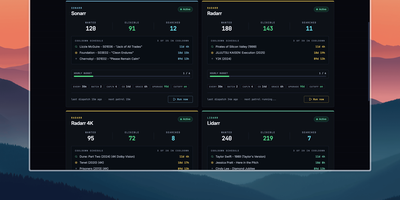
Radarr, Sonarr, and their sibling apps watch RSS feeds for new releases but never go back for what your library is still missing, and Houndarr fills that gap by asking them to search in small, polite batches. It reads the wanted lists of every connected Radarr, Sonarr, Lidarr, Readarr, and Whisparr instance and sends a few search commands per cycle, so a big backlog drains over days instead of arriving as one Search All Missing burst. Each instance has its own batch size, sleep interval, hourly cap, per-item cooldown, and post-release grace period, plus an optional download-queue limit, allowed search windows such as 09:00-23:00, and tag filters that include or exclude items. Three independent passes run per instance: missing items, cutoff-unmet items below your quality profile, and upgrades for files that already meet cutoff, with the last two off until you enable them. Sonarr, Lidarr, and Readarr can search by season, artist, or author, and search order is random or oldest-first. The dashboard shows library health, recent hunts, hourly budgets, and a cooldown schedule per instance, with Run Now buttons for on-demand cycles. The Logs page records every search and skip with its reason in a filterable audit trail that copies as TSV. A key-gated widget endpoint feeds Homepage dashboards, and built-in login or reverse-proxy authentication protects the interface. Running on a dedicated VPS on RepoCloud with guaranteed CPU, RAM, and SSD, full root SSH access, and a browser serial console. AGPL-3.0 licensed.

Ech0
Ech0 is a self-hosted personal microblog that gives you a public timeline of short posts, links, and media on your own domain, with no ads, algorithms, or subscription in the way. Write in a Markdown editor with live preview, organize posts with tags, and let links and GitHub projects unfurl into rich cards while Bilibili and YouTube videos play inline. Attach images, audio, and video to any post, browse them in an inline gallery with built-in players, and manage uploads in a visual file manager. Visitors can like, share, and comment, you moderate from the panel with captcha protection, and RSS lets readers follow without an account. Sign in with passkeys, OAuth2, or OIDC, issue scoped access tokens, and run extra accounts under Owner, Admin, and regular roles. Media can sit on local disk or any S3-compatible bucket, and snapshots, scheduled backups, and portable capsules move the whole timeline to another instance or compile it into a static site. Ech0 Copilot recaps recent posts in one click and lets you chat with your own archive, while an MCP server, webhooks, and a documented API connect AI assistants and automations. Follow live logs in a web console, administer from a terminal UI or CLI, and install it as a PWA with dark mode and multiple languages. Running on a dedicated VPS on RepoCloud with guaranteed CPU, RAM, and SSD, full root SSH access, and a browser serial console. AGPL-3.0 licensed.
Wally
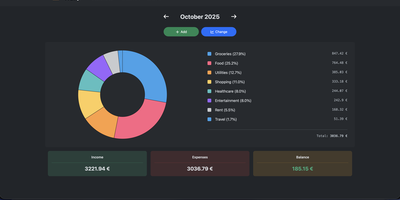
Started as an ExpenseOwl-inspired project, Wally grew into a lightweight, self-hosted expense tracker more capable in every direction its author touched. The backend is Python FastAPI over SQLite, which means every deployment ships a full REST API with interactive documentation at /api/docs - automating imports or wiring in external tools requires no reverse engineering, and when the optional login page is enabled you can mint scoped API keys from the Settings page for token-based integrations. The transactions view is built on AG Grid, bringing real search, column sorting, and per-column filtering to your ledger, with a footer totaling rows, income, and expenses for whatever slice you have filtered. Dashboards go beyond the usual monthly doughnut: a Change button swaps in year-scale line graphs so you can track a single category - restaurants, say - across time. Recurring transactions edit intelligently, letting you apply changes to all instances or only future ones. CSV import and export use a simple six-column format handled from Settings, the refined dark theme is genuinely easy on the eyes, and the interface is translated into more than ten languages. The whole thing runs from one small container with a single data volume.
Tracely
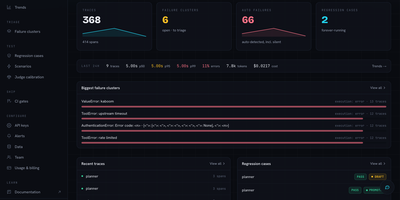
When an AI agent breaks in production, Tracely freezes that exact run into a replayable regression test and blocks the pull request that would ship the bug again. Span soup hides the failure. OTLP/HTTP traces group into conversation threads, and a waterfall marks the failing span in red with its input and output. Nobody knows if an answer was good. Evaluators sit as columns on the trace table, mixing model-free checks with LLM judges at conversation, run, or span level. Thirty-one broken runs, one issue. Clustering turns them into a single counted issue and can suggest the evaluator that would have caught it. A fix nobody can prove. One click promotes a failing trace into a hermetic case with recorded fixtures and a fail-to-pass contract, and scenarios send a red-team model after an adversarial goal. Model bills on every CI run. The suite replays offline with no API keys and no model spend, and tracely gate posts a commit status, comments on the pull request, and blocks regressions. No warning when it breaks again. Alert flows drawn on a canvas react to failed gates, broken conversations, unseen failure modes, or rising failure rates by messaging Slack, sending email, calling a webhook, or prompting an LLM. Coding agents can read traces and write evaluators through an MCP endpoint. Running on a dedicated VPS on RepoCloud with guaranteed CPU, RAM, and SSD, full root SSH access, and a browser serial console. MIT licensed.
Shelve
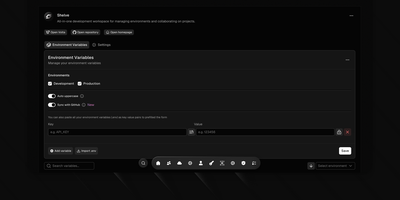
Eliminate scattered configuration files and leaked credentials across development teams with Shelve, an open-source secrets management platform that secures environment variables across development, staging, and production tiers. Engineering teams can organize sensitive database passwords and third-party API credentials within a centralized vault protected by AES-256 encryption and SHA-256 integrity verification. The platform synchronizes configurations directly to GitHub Actions and repository secret stores through an official GitHub App integration. Developers can inject encrypted variables directly into local processes using the dedicated CLI without saving plain-text secrets to disk. The built-in sharing vault creates self-destructing, password-protected links to exchange sensitive credentials securely with external contractors. Administrators can define custom workspace teams with granular role-based access controls, track change audit logs across configuration histories, and navigate management views using a keyboard-driven command palette. Automated schema validation engines detect missing parameters and enforce uniform uppercase naming standards across application tiers. Running on a dedicated VPS on RepoCloud with guaranteed CPU, RAM, and SSD, full root SSH access, and a browser serial console. Apache 2.0 licensed.
Substreamer
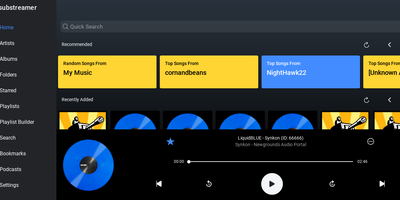
A free, polished web client for Subsonic-compatible music servers: Substreamer is the browser-based frontend you point at your existing streaming backend to play your own library from anywhere. It speaks the Subsonic API (v1.13 and higher), which makes it compatible with the whole ecosystem that has grown around that protocol: the original Subsonic server, its forks Airsonic and Madsonic, and modern implementations like Navidrome and Ampache. That decoupling is the point - your music files, transcoding, and library indexing live on whichever server you prefer, while Substreamer provides the listening experience: browse by artist, album, and genre, build and manage playlists, search your collection, and stream on demand. This RepoCloud deployment runs the containerized web edition, so the same interface is available from any browser without installing a native app, and it pairs with the Substreamer mobile apps that made the client popular. For anyone assembling a self-hosted Spotify replacement - typically Navidrome for the backend plus a good client - Substreamer fills the client half with a clean, familiar player UI. Because it is a stateless client, the container is lightweight and low-maintenance: connect it to your server's URL and credentials, and your entire collection is streaming in minutes, with no subscription and no catalog that can disappear.
BullFlow
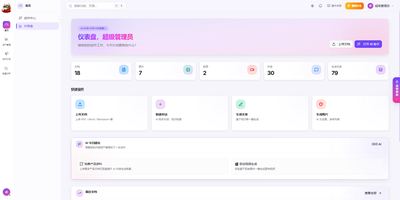
Generic AI writing sounds like nobody in particular; BullFlow writes from your own company knowledge instead. It first builds a private knowledge base from your documents, images, audio, and video plus structured records for your company, brand, products, customers, and cases. Ingestion runs entirely on local open models: OCR reads scans, semantic splitting and chunking prepare text, and hybrid vector plus full-text search retrieves passages with their sources and relevance scores shown under every answer. A creation agent then works in one conversation: it searches the knowledge base, drafts articles with images embedded in the text, generates image sets or short videos, and exports finished pieces as PDF or Word. Output adapts to where it is going, long-form articles for article platforms, multi-image posts with matching copy for image feeds. A separate distribution gateway sends one finished piece to many accounts across Chinese and international social platforms, checks account health on a schedule, and returns publish results and metrics by webhook. Around all of that sits a commercial shell: multiple tenants with isolated data, roles from super admin to finance, credit billing measured per token, image, and second, subscriptions, invoices, referral commissions, and a conversion funnel in the operations backend. Scheduled rules can generate and publish on a timetable with nobody watching, and notifications report each completion or failure. Running on a dedicated VPS on RepoCloud with guaranteed CPU, RAM, and SSD, full root SSH access, and a browser serial console. MIT licensed.