TG-Spam
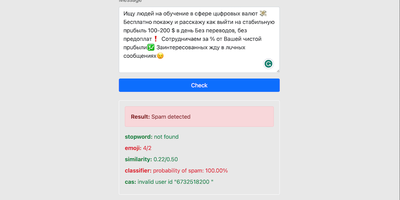
Spam bots flood busy Telegram groups with crypto scams and phishing links faster than human admins can delete them; TG-Spam watches every message and removes the junk before your members see it. Each message is scored by several checks at once: similarity to known spam samples, a stop-word dictionary, emoji and link counts, and a lookup against the Combot Anti-Spam database of known spammers. For borderline cases you can add OpenAI or Gemini as an extra judge, or write your own detection rules as Lua plugins that run inside the bot. The bot learns while you moderate: when admins approve a flagged message or ban a user it missed, the samples update, so the same trick fails next time. Members can report spam with a reply, repeat offenders accumulate warnings toward an automatic ban, and an admin chat gives your team one place to review borderline calls. Turn on the built-in server and the same engine answers spam checks over HTTP for your other tools, with a web UI to test messages, manage samples and dictionaries, and control the approved-user list. Running on a dedicated VPS on RepoCloud with guaranteed CPU, RAM, and SSD, full root SSH access, and a browser serial console. MIT licensed.
ZaneOps
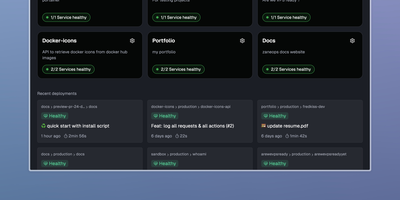
Shipping a Git repository to a live HTTPS URL takes one dashboard and one server with ZaneOps, an open-source alternative to Heroku, Railway, and Render. Linked GitHub or GitLab repositories build with a Dockerfile, Nixpacks, Railpack, or a static directory builder. Deploys start by hand, on git push, or from a CI webhook. Blue/green releases keep the previous version serving traffic while the new one starts. Each pull request or merge request can open its own preview environment, and the API can create one on demand. Configuration edits queue up as changes that you review before a new version deploys. A pasted docker-compose.yml or a ready-made template (Postgres, Redis, WordPress) deploys a whole stack with blue/green rollouts. Every domain gets a free SSL certificate that renews itself. Wildcard hosts, permanent or temporary redirects, and several services under one domain all work. Runtime logs, request logs, metrics, and health checks gather in the dashboard. Services get CPU and memory limits and volumes, and environment variables import or export as .env files. Viewer, Member, Admin, and Owner roles decide who can see and change what; the free tier allows one workspace and three users. A web terminal opens a shell inside any running deployment, and a second one reaches the server itself over SSH. Running on a dedicated VPS on RepoCloud with guaranteed CPU, RAM, and SSD, full root SSH access, and a browser serial console. MIT licensed.

Yuvomi
Replace a dozen household subscriptions with one app that keeps your family's tasks, calendars, meals, budget, and shopping in a single private place you control. Nineteen modules cover the daily rhythms of a household: assign chores with deadlines and priorities, plan the week's dinners and push the ingredients to a shared shopping list in one tap, track income and expenses by category with automatic subscription renewal warnings, and log health activities from vitals to medications. Two-way sync connects to Google Calendar via OAuth, iCloud and Nextcloud via CalDAV, and Outlook via Microsoft Graph, so every family member's phone shows the same schedule without switching apps. CardDAV keeps contacts in sync with external address books. The budget module handles accounts, loans, split expenses, and per-category planning with savings goals and month-over-month comparisons. Documents attach to tasks, receipts link to transactions, and a checked-off grocery item books itself back into the pantry inventory with its quantity. A Kanban board, recurring task schedules, and a rewards ledger that pays out points for completed chores keep kids and adults accountable. Wall mode turns a kitchen tablet into a glanceable family dashboard, and the Immich screensaver shows your own photos when the screen goes idle. API tokens and a built-in MCP endpoint let AI agents and third-party tools interact with every module programmatically. Deploy on a dedicated VPS on RepoCloud with guaranteed CPU, RAM, and SSD, full root SSH access, and a browser serial console. MIT licensed.
TeXlyre
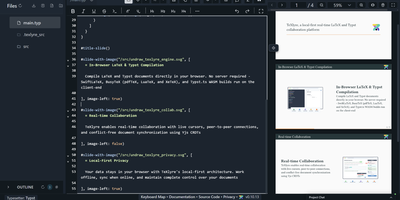
In TeXlyre, two coauthors edit the same LaTeX or Typst file at once, and the PDF compiles inside the browser tab instead of on someone else's server. Start from a template: arXiv preprint, IEEE paper, Tufte book, Beamer deck. pdfTeX, XeTeX, and LuaTeX compile with BibTeX and Biber. Errors turn into readable cards that jump to the failing line. Live cursors show who is typing where. A shared link brings coauthors in, no accounts needed. Chat sits beside the editor, and comments can be discussed and resolved. Tracked insertions and deletions land in a review panel to accept or reject. Draw.io and TikZ editors open inside the project for shared diagrams. MathLive edits a formula under the cursor with a virtual keyboard. A bibliography panel tidies BibTeX, matches DOIs, and imports from Zotero and OpenAlex. Large files travel straight from one collaborator's browser to another. Projects export as ZIP, sync to a local folder, or back up to GitHub, GitLab, Gitea, and Codeberg. Vim, Emacs, and Helix keybindings are one setting away. The app installs as a progressive web app and works offline. Language servers like LTeX LS Plus, Harper, and Tinymist plug in through recipes beside your own signaling and TeX Live package servers. Running on a dedicated VPS on RepoCloud with guaranteed CPU, RAM, and SSD, full root SSH access, and a browser serial console. AGPL-3.0 licensed.
Donetick
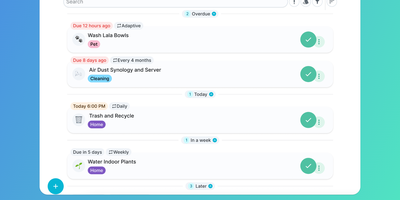
Recurring household chores and shared team checklists stay on schedule when Donetick coordinates assignments, reminders, and completion tracking from one self-hosted hub. Type a phrase like "change water filter every 6 months" and the natural-language parser extracts the due date and cadence automatically. Adaptive scheduling even adjusts future intervals from your actual completion history. Rotation rules distribute tasks fairly across family members or roommates via round-robin, random, or least-completed logic. Nested subtasks reset themselves each cycle. Finished chores earn points in the built-in gamification engine that members redeem in an admin-approved reward store. Stateful "Things" track numerical, boolean, or text metrics to trigger tasks automatically when values change. Tap physical NFC tags to check off chores on the spot, or mount a dedicated kiosk dashboard on a wall tablet for one-tap account switching. Real-time updates sync across devices alongside iCal calendar feeds, Home Assistant cards, OIDC single sign-on, and Pushover or Telegram notifications. Running on a dedicated VPS on RepoCloud with guaranteed CPU, RAM, and SSD, full root SSH access, and a browser serial console. AGPL-3.0 licensed.
Peekaping
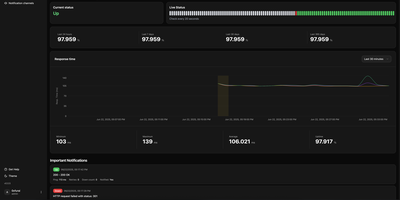
Keep users ahead of outages by consolidating infrastructure monitoring into Peekaping, a unified uptime monitoring and incident communication platform that alerts engineering teams to network and application failures before customers experience disruptions. Users can configure automated synthetic checks across HTTP endpoints, database engines, message queues, and container runtimes to verify response latency, payload integrity, and SSL certificate expiration. When performance thresholds degrade or connections drop, the platform broadcasts structured incident notices across twenty-two notification channels including Slack, Discord, Telegram, PagerDuty, and custom webhooks. Visual dashboards display live heartbeat timelines, historical latency percentiles, and rolling availability scores for each monitored endpoint. System administrators can assemble custom public status pages with custom domains, branded color schemes, and component grouping to inform external stakeholders during planned maintenance or unforeseen service degradations. Teams can schedule recurring maintenance windows to pause alert notifications during routine deployments and generate API tokens to automate monitor creation directly from CI/CD deployment pipelines. Running on a dedicated VPS on RepoCloud with guaranteed CPU, RAM, and SSD, full root SSH access, and a browser serial console. MIT licensed.
Chhoto URL
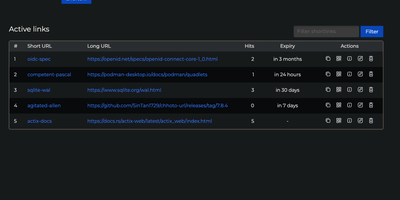
Most link shorteners bloat a simple redirect service with heavy databases and invasive tracking scripts, whereas Chhoto URL delivers a fast, self-hosted URL shortener with custom slugs, QR codes, and privacy-respecting click counts. Paste any destination URL to generate a memorable adjective-name pair, a compact random UID, or your own custom alias in one click. Every shortened link redirects visitors immediately without interstitial splash pages, countdown timers, or tracking cookies. You can attach searchable notes to any entry, update the target URL after creation, and configure automatic link expiration timers down to the minute. Built-in QR code generation lets you preview and share scannable codes directly from the dashboard table. Real-time search filters links across slugs, destination URLs, and notes, while anonymous hit counters track total visits without logging visitor IP addresses. Administrators can run a private instance protected by OIDC single sign-on or Argon2-hashed credentials, or enable public mode so guests can shorten links with enforced expiration limits. Automation scripts and CLI tools can create, inspect, and delete links programmatically using API keys over the JSON API. Running on a dedicated VPS on RepoCloud with guaranteed CPU, RAM, and SSD, full root SSH access, and a browser serial console. MIT licensed.

Rachoon
Named after the Bosnian word for invoice (račun) with a raccoon twist, Rachoon provides a clean self-hosted invoicing platform that handles the complete billing cycle from quotation to payment reconciliation without touching a third-party SaaS subscription. The Nuxt.js frontend serves a dashboard that surfaces revenue totals, pending balances, overdue items, and client statistics at a glance, while the AdonisJS backend manages all business logic against a PostgreSQL 16 database with TypeScript throughout the full stack. Invoice templates use Nunjucks with full HTML and CSS control—including conditional logic, loops, and custom formatting—so the rendered PDFs actually match your design intent. This is possible because Rachoon delegates PDF generation to Gotenberg, which renders invoices through headless Chrome rather than a restricted drawing API, producing output that faithfully preserves complex layouts, web fonts, and CSS grid. Client records stay organized and searchable, each linked to their invoice and quotation history with payment status tracking across pending, paid, and overdue states. Multi-currency billing with flexible tax configuration supports international operations, and all data remains on your own infrastructure. The monorepo is managed by Turborepo with a CI pipeline covering linting, PostgreSQL integration tests, build verification, and multi-platform Docker image creation for both amd64 and arm64 architectures. Running on a dedicated VPS on RepoCloud with guaranteed CPU, RAM, and SSD, full root SSH access, and a browser serial console. AGPL-3.0 licensed.
PenX
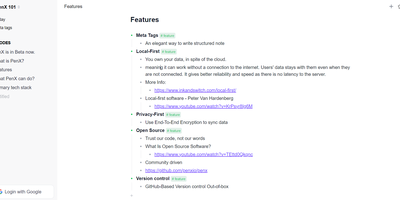
PenX delivers an open-source structured note-taking application that functions as a personal database disguised as an elegant editor — combining the outline workflow of Workflowy and Roam Research with the structured data capabilities of Tana through MetaTags that transform every note into a queryable database record. The local-first architecture stores all data on-device using PGLite, an in-process PostgreSQL-compatible engine, ensuring data ownership regardless of cloud connectivity. End-to-end encryption protects all synchronized data so that even the sync server cannot read your notes, tasks, ideas, or documents. GitHub-based version control provides out-of-the-box backup and history with full commit-level recovery. MetaTags are the core innovation — attaching structured tags to any note converts it into a database entry with typed fields, enabling table views, filters, and queries across your knowledge base without imposing rigid folder hierarchies. The daily notes workflow encourages free-form capture while MetaTags handle organization automatically, letting you record thoughts without deciding physical location upfront. AI-driven features assist with content generation, summarization, and intelligent search across your personal data hub. Real-time sync keeps web, desktop, and mobile in perfect alignment. Cross-platform availability includes web, desktop for Windows, macOS, and Linux, iOS, and Chrome extension. Deploy the web service via Next.js with pnpm using tRPC and Prisma. Running on a dedicated VPS on RepoCloud with guaranteed CPU, RAM, and SSD, full root SSH access, and a browser serial console. AGPL-3.0 licensed.
Traefik Manager
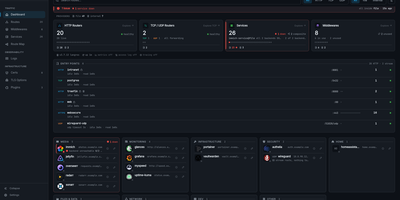
Where Traefik's built-in dashboard only shows what is running, Traefik Manager lets you change it: add routes, middlewares, and services from forms and wizards instead of editing YAML by hand. A first-run wizard connects to the Traefik API, creates a route for the manager itself, and sets the admin password. After that, the dashboard turns every route into a launchable app card with live health, and the Route Map draws each request from entry point through middlewares to backend. New routes use a slide-in form for HTTP, TCP, or UDP with several domains and backends, sticky sessions, and health checks. 30 middleware wizards handle authentication, rate limiting, headers, CORS, and redirects, and weighted, mirroring, or failover services can be built on their own. For day-to-day monitoring, the Certificates tab tracks expiry from acme.json, the Logs tab turns the access log into clickable analytics, the CrowdSec tab lists attacks and bans, and alerts reach Discord, Slack, ntfy, Telegram, and more. Changes to traefik.yml apply with a one-click restart, every edit is backed up locally and can be pushed to a git repository, and a lightweight agent brings remote Traefik servers into the same interface. Sign in with TOTP two-factor or OIDC single sign-on, in any of 14 languages. Running on a dedicated VPS on RepoCloud with guaranteed CPU, RAM, and SSD, full root SSH access, and a browser serial console. GPL-3.0 licensed.
Siftly
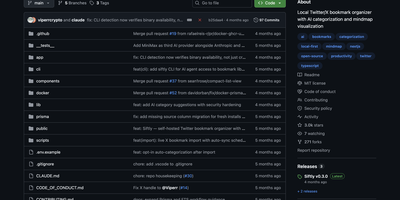
Siftly transforms your Twitter/X bookmarks from a chaotic pile of saved tweets into a searchable, AI-categorized knowledge base with an interactive visual mindmap. With over 2,700 GitHub stars since March 2026, the platform runs a four-stage enrichment pipeline on each bookmark: entity extraction mines hashtags, URLs, @mentions, and 100+ known tool domains without API calls; vision analysis generates 30-40 visual tags per image using the Anthropic SDK; semantic tagging produces 25-35 searchable descriptors; and categorization assigns one to three categories with confidence scores. Search combines SQLite FTS5 full-text indexing with Claude-based semantic reranking, narrowing candidates through keyword matching, category-intent detection, and deduplication before sending a bounded set for LLM relevance scoring, letting you find bookmarks by meaning rather than exact keywords. The interactive mindmap built on @xyflow/react renders your entire collection as a force-directed graph organized by category with expandable nodes, color-coded legends, and direct links to original tweets. Import bookmarks through a built-in bookmarklet or console script without browser extensions, then browse in grid or list view with filters for category, media type, and date range. Export as CSV, JSON, or category-grouped ZIP archives. Prisma 7 manages the local SQLite database with FTS5 built in, requiring zero external database setup. A bundled CLI provides JSON-output commands for stats, search, and category management. Running on a dedicated VPS on RepoCloud with guaranteed CPU, RAM, and SSD, full root SSH access, and a browser serial console. MIT licensed.

Enclosed
Private text, encrypted before it leaves the browser: Enclosed turns passwords, keys, and other secrets into a link that only its holder can open, with no third-party service in between. Can the server read the note? No. It stores only ciphertext and settings, because the decryption key rides in the part of the link after the # sign, which browsers never send. Want a second lock? Add a password, or generate a random one with a click, and share it by another route. Worried about links lingering in chat history? Pick one hour, one day, one week, or one month, and tick Delete after reading so the first view removes the note, with a warning shown to the recipient beforehand. Need more than text? Attach files by button or drag and drop, and recipients download them one by one or all at once. Sending to a phone? Every finished note offers a QR code, downloadable as SVG or PNG. Setting it up for a team? Restrict note creation to signed-in users, create notes from the command line, and let people read the interface in 17 languages with light, dark, or system themes. Running on a dedicated VPS on RepoCloud with guaranteed CPU, RAM, and SSD, full root SSH access, and a browser serial console. Apache-2.0 licensed.
WatchState
Instead of relying on third-party cloud trackers to keep watched history aligned across Plex, Jellyfin, and Emby, WatchState synchronizes playback state and watch progress directly between your own self-hosted media servers. Household administrators can map multiple family members across independent backend accounts using isolated user identities, configuring either one-way mirroring from a primary server or full many-to-many synchronization across every connected instance. A unified generic webhook endpoint captures play, pause, stop, and watched events from Plex, Tautulli, Jellyfin, and Emby for near-instant state propagation, while scheduled background import and export tasks reconcile any missed updates automatically. When libraries grow across multiple servers, the built-in Media Health diagnostic engine audits the database for external GUID conflicts, duplicate file references, metadata disagreements, weak matches, and missing local files, complete with exportable reports and per-record action hints. Users can also search backend metadata, inspect detailed item event logs, and export portable JSON backups of their entire watch history for safe server migrations. Running on a dedicated VPS on RepoCloud with guaranteed CPU, RAM, and SSD, full root SSH access, and a browser serial console. MIT licensed.
JobSpy API
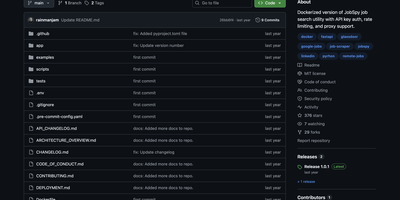
JobSpy API turns seven major job boards into a single REST endpoint, aggregating listings from LinkedIn, Indeed, Glassdoor, Google Jobs, ZipRecruiter, Bayt, and Naukri through one GET request. Built on FastAPI with the Python JobSpy scraping library, the API returns structured JSON or downloadable CSV containing job titles, companies, locations, salaries, descriptions, posting dates, and direct application URLs. Filters cover search terms, location, distance radius, job type (full-time, part-time, contract, internship), remote status, hours since posting, country, and salary range. Interactive Swagger UI and ReDoc interfaces provide try-it-now functionality for testing queries directly in the browser. Security includes x-api-key header authentication with configurable rotation, per-endpoint rate limiting with adjustable thresholds, and response caching with configurable TTL to reduce redundant scraping. Global proxy support routes outbound requests through HTTP/HTTPS proxies to avoid IP-based rate limiting from job boards. Environment variables control everything from default search parameters and logging levels to CORS origins and documentation paths. Health check and ping endpoints integrate with uptime monitoring services. Docker Compose exposes the API on a configurable port. MIT licensed.
GZCTF
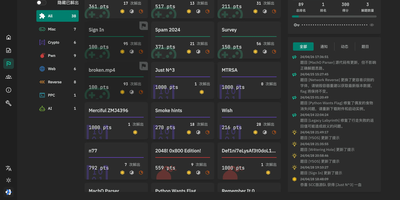
When cybersecurity instructors and competition organizers host Capture The Flag tournaments, GZCTF orchestrates isolated per-team challenge containers, dynamic anti-cheat flags, and live exponential scoreboards from a single web platform. Event administrators can configure four distinct challenge modes covering static attachments, team-specific dynamic attachments, shared static containers, and isolated dynamic containers where unique flags are injected into each team's environment at launch. A customizable exponential scoring engine adjusts point values automatically as more teams solve a problem while awarding first, second, and third blood bonuses to top contenders. Built-in flag-sharing detection monitors every submission in real time, flagging suspicious cross-team flag reuse alongside live event streams and container logs. Participants can group into divisions, track their ranking trajectory on interactive score timelines, and upload post-game writeups directly into the portal for organizer review and batch archiving. Built-in network proxying forwards challenge traffic over WebSocket tunnels with optional packet capture so referees can audit exploit payloads during active matches. Multi-language localization, customizable branding, invitation gates, and email domain restrictions adapt the portal to university courses, corporate security drills, or international tournaments. Running on a dedicated VPS on RepoCloud with guaranteed CPU, RAM, and SSD, full root SSH access, and a browser serial console. AGPL-3.0 licensed.
Warracker
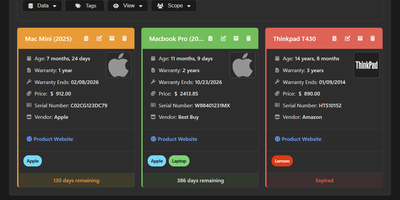
Stop losing money on out-of-pocket repairs for appliances and electronics that are still covered under manufacturer protection: Warracker gives households and organizations a centralized web platform to track product warranties, store purchase receipts, and manage active claims before coverage expires. You can log purchase dates, multi-part warranty durations in years, months, or days, lifetime coverage flags, vendor details, purchase prices, and multiple comma-separated serial numbers per item alongside product photos. When a coverage window approaches its end date, the platform dispatches automated reminders through email or more than 100 push notification services, including Discord, Slack, Telegram, Pushover, and ntfy. Receipts, invoices, and user manuals can be stored locally or routed directly into an existing Paperless-ngx archive with per-document storage selection and automatic tagging. A dedicated warranty claim tracker records claim submission dates, current statuses, and final resolutions across the entire repair lifecycle. Visual status dashboards chart active, expiring, and expired coverage alongside spending breakdowns across multiple currencies. Role-based multi-user accounts, OIDC single sign-on, persistent cross-device search filters, CSV bulk import and export, and localization across 20 languages make administration effortless. Running on a dedicated VPS on RepoCloud with guaranteed CPU, RAM, and SSD, full root SSH access, and a browser serial console. AGPL-3.0 licensed.
TRIP
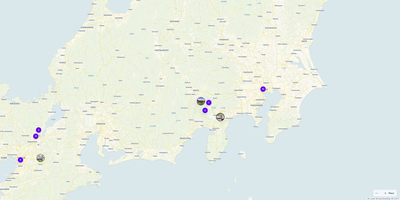
Plan multi-day expeditions, map custom waypoints, and coordinate shared group travel itineraries with TRIP, a private self-hosted journey management platform free from commercial tracking. Travelers can drop custom pins across global topographic or satellite maps, tagging locations with categories, visit durations, cost estimates, accessibility notes, and pet-friendly attributes. The visual trip builder organizes individual stops into ordered daily schedules, helping you calculate travel intervals and rearrange destination sequences using intuitive drag-and-drop tools. You can attach reference photos, booking confirmations, external links, and packing checklists directly to each itinerary milestone. Shared workspace controls enable travel companions to collaborate on upcoming road trips, leave comments on specific attractions, and coordinate shared responsibilities in real time. Dynamic filtering lets you isolate culinary destinations, outdoor hikes, or cultural landmarks by budget and travel style. Offline caching ensures your navigational routes and saved coordinates remain accessible in remote backcountry areas with spotty cellular coverage. Running on a dedicated VPS on RepoCloud with guaranteed CPU, RAM, and SSD, full root SSH access, and a browser serial console. MIT licensed.

IRONSIGHT
IRONSIGHT fuses over 50 publicly available intelligence sources into a single real-time dashboard that requires zero API keys and zero configuration. The Live Intel Feed aggregates 20+ RSS news sources with keyword relevance filtering from outlets including Reuters, Al Jazeera, and Kyiv Post. The Telegram OSINT module scrapes 27 channels every 60 seconds with automatic translation from Hebrew, Arabic, and Farsi. The interactive Leaflet Theater Map plots military aircraft positions via ADS-B transponder data, naval vessel locations in the Persian Gulf and Eastern Mediterranean, strike markers extracted from news and Telegram, missile trajectory arcs with range rings, and country-border overlays with a distance measurement tool. A header toggle switches the entire dashboard between Iran/Israel and Russia/Ukraine theaters, re-pointing every panel, map layer, and data feed to the selected conflict. The Israel Alert module streams live Pikud HaOref missile alerts with audio notifications, while the Conflict Monitor categorizes events into strikes, defense, diplomatic, and nuclear. Financial panels track defense contractor stocks, S&P 500, VIX, gold, Bitcoin, Ethereum, energy commodities via Yahoo Finance, and Polymarket prediction odds on conflict outcomes. NASA FIRMS satellite thermal detection flags fire and explosion signatures. The Next.js 16 App Router handles server-side data fetching for RSS and API endpoints while client-side React state management drives real-time polling updates. On RepoCloud, deploy IRONSIGHT on a dedicated VPS with persistent storage, root SSH access, and full control over your intelligence monitoring environment, all under the MIT license.