Varin
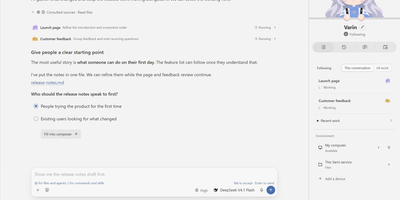
Talk to one assistant and a small team of agents quietly does the heavy lifting in the background. Ask for something in plain conversation and it answers, delegates tasks to other agents, and shows their progress in a side panel next to the thread. Answers are not just paragraphs: choices, checkboxes, tabbed drafts, tables, and live charts with adjustable sliders appear right inside the conversation. Open the Workbench to follow a task and message the agent doing it, or switch to the IDE for a Monaco editor, diffs, terminals, and Git beside the chat. Agents can read and edit files, run shell commands, search the web, work with PDF and Office documents, browse pages, and call MCP servers, skills, and extensions. Memory is inspectable and editable, work can be scheduled, and Codex or Claude Code can join as external agents. Connect any model provider or local service and watch usage and estimated cost per model. Running on a dedicated VPS on RepoCloud with guaranteed CPU, RAM, and SSD, full root SSH access, and a browser serial console. AGPL-3.0 licensed.
Signed.md
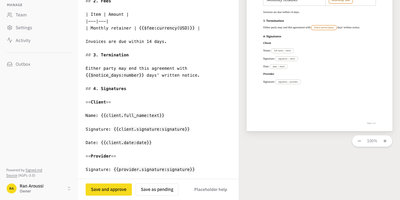
Built for people who ask an agent to do the paperwork, Signed.md has agents draft and send agreements while only humans approve templates and sign. Plain Markdown templates hold placeholders for text, numbers, currency, dates, choices, and signatures, and existing Word or PDF contracts can be imported. Sixteen MCP tools, REST endpoints with an OpenAPI spec, and webhooks give any agent a way to create, preview, and send documents. Guardrails sit in the server, not a prompt: templates an agent writes stay pending until an owner approves them, and changing one comma sends a draft back for another look. Template limits like a minimum fee or allowed notice periods are checked on every draft. Signers need no account or app; a link opens inline fields, a typed or drawn signature applied with one tap, and a progress panel. Signers can download an unsigned copy for their lawyer or decline with a reason. The last signature seals a PDF/A-2b file with a PAdES signature and RFC 3161 timestamps, plus a certificate page listing each signer's consent, times, IP address, and device. A ZIP evidence package, checkable offline by anyone, holds the signed Markdown, the PDF, a hash-chained log, and a signed manifest. Teams get four roles, folders, custom branding, and a record of what people and agents did. Running on a dedicated VPS on RepoCloud with guaranteed CPU, RAM, and SSD, full root SSH access, and a browser serial console. AGPL-3.0 licensed.
Paperlane
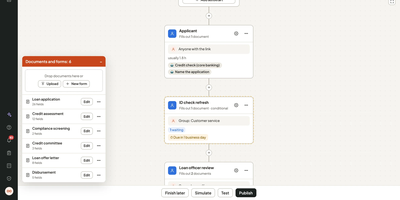
From public intake form to sealed, verifiable PDF, Paperlane carries every case along a route you draw on a canvas. Steps, branches with side-by-side lanes, jumps, and conditions snap together, and a checker flags broken links before you publish. Public start forms look customers up as they type; recipients open a secure link, sign by drawing or typing, and finish in English or Spanish without an account. Group steps wait in a shared queue where one teammate takes the task, deadlines count business days, and overdue work is reminded, reassigned, or escalated. Documents keep their status, revisions, comments, and audit trail, and the insights page names the slowest step and who holds the most open work. Bots number cases, fill Word templates, post to Slack or Teams, call your own APIs, and send signed webhooks. Sealed means sealed. Finished documents carry a fingerprint anyone can check on a public verify page. The AI planner turns a plain-words description into a draft workflow you review first, running on Ollama or LM Studio on your own hardware or on Claude in the cloud. An MCP server lets agents build workflows and complete steps with a person's permissions, and two-step sign-in, single sign-on, masked fields, and legal holds keep auditors calm. One install script sets up the app, HTTPS, a jobs worker, and nightly backups. Running on a dedicated VPS on RepoCloud with guaranteed CPU, RAM, and SSD, full root SSH access, and a browser serial console. AGPL-3.0 licensed.
DiceFrame
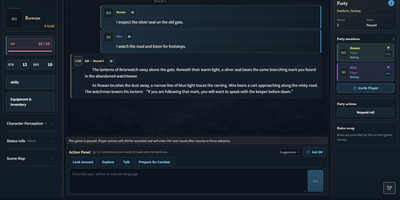
Game night keeps dying in the group chat because nobody can be in the same room, and the one willing game master is burned out by October. DiceFrame puts an AI game master on your own server instead: open the web UI, describe what your character does in plain language, and the engine adjudicates the action, rolls the dice check once, applies the result to your character sheet, and narrates what happens next. Run a solo campaign at midnight or invite friends through a link and play the same shared world from different cities, with waiting states, away players and live updates keeping the table in sync. Rules are layered rather than decorative; D&D 5e-inspired d20 play with advantage and disadvantage, CoC 7e-inspired d100 with bonus and penalty dice, custom d20 systems and freeform no-dice narrative all track hit points, gold, items, experience, death and revival properly. Build worlds, lorebooks and adventures in the content library, import scripts, PDFs and Foundry or Fantasy Grounds modules, or let AI assistance draft the world, rules and characters for you. Character cards are reusable across games, long campaigns are held together by session summaries and optional memory recall, and the story can be read aloud with text-to-speech through system voices or your own endpoints. Plugins and chat bots extend the table, all through your chosen OpenAI-compatible model endpoint. Running on a dedicated VPS on RepoCloud with guaranteed CPU, RAM, and SSD, full root SSH access, and a browser serial console. AGPL-3.0 licensed.
Euron AgentStudio
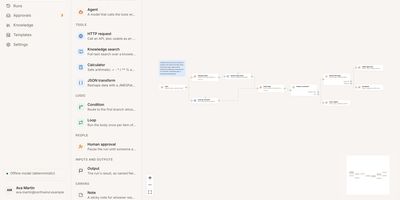
Euron AgentStudio lets you draw an AI agent workflow on a canvas, run it, and watch every step report its inputs, outputs, tokens, and cost live. Twelve node types cover prompts, tool-calling agents, HTTP requests, knowledge search, a calculator, JSON transforms, conditions, loops, human approvals, and sticky notes. Typed connections, inline validation, undo and redo, and autosave keep the editor honest. Branches run in parallel with timeouts, retries, and cancellation, and the run inspector shows the graph as it ran beside a timeline of loop iterations. A human approval step pauses a run for days without tying up a worker. Reviewers decide from an inbox, comment for the record, and let deadlines expire into the rejected branch. Start flows from the editor, a workspace API key that waits for the result, or a signed webhook. Every template runs on a built-in offline model with no API key, and any OpenAI-compatible endpoint or Ollama can take over step by step. Knowledge bases of Markdown and text feed the search steps. Any flow exports as JSON or as a standalone script you own, and published versions can be restored. Owners, editors, and viewers share a workspace with write-only secrets, expiring keys, an activity log, and a dashboard of runs, success rate, and spend. Running on a dedicated VPS on RepoCloud with guaranteed CPU, RAM, and SSD, full root SSH access, and a browser serial console. MIT licensed.
Outbound OS
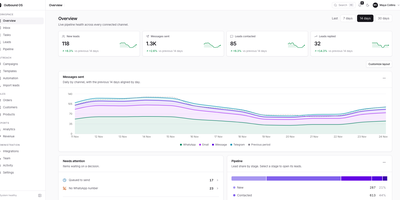
For sales desks that live in WhatsApp, Outbound OS is a CRM where the shared inbox, the follow-up sequences and the pipeline all hang off one lead record. Leads flow in from website forms (plain HTML, Webflow, WordPress, Framer), Facebook Lead Ads, Zapier, Make and n8n webhooks, and CSV or JSON imports, and a configured first contact goes out on an eligible channel. WhatsApp runs through Meta's official Cloud API: the composer checks the 24-hour reply window and offers an approved template once it has closed, while photos, PDFs and voice notes open in the inbox. Email works with any SMTP/IMAP mailbox or Brevo, and Telegram and iMessage (through a Mac running BlueBubbles) join the same thread list. Sequences follow each lead's working hours and stop on a reply, an opt-out or a closed deal, and campaigns target any slice by tag, status, country or score. A pipeline board, tasks, orders, invoices, shipments and revenue reports carry the sale past the first reply, with admin, manager, agent and viewer roles for the team. Dashboard widgets can be rearranged per account, and the phone workspace installs to the Home Screen from the browser. An MCP server lets ChatGPT, Codex, Claude and other remote clients search leads, read replies, preview audiences and prepare campaigns, with sends governed by the client's approval settings. Running on a dedicated VPS on RepoCloud with guaranteed CPU, RAM, and SSD, full root SSH access, and a browser serial console. AGPL-3.0 licensed.
Clodfarm
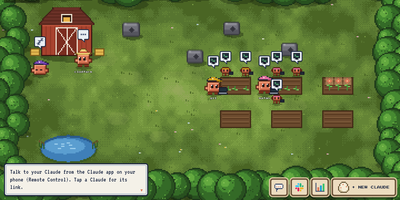
While you sleep, a crew of Claude Code agents in a single Docker container keeps building: you plant a mission, the farm splits it into sub-agents on their own branches, and only work that passes your tests ever lands in the repo. Open the farm in your browser and every agent is a pixel Claude walking its plot, tending a task at a terminal or napping when the budget says stop, with the quest log, mission board, and a hatchery for new agents a click away. Each account is paced against its real five hour and weekly usage, measured live, always leaving you twenty percent and never paying overage, and teammates' agents message each other and hand jobs to whichever account still has room. Talk to any agent from the Claude app on your phone, post quests, set schedules like weekday issue triage at nine, and watch live dashboards the agents maintain themselves. Whiteboards let you sketch while an agent draws back full Mermaid architectures for the whole farm to see, the farm's logged-in browser does website work as you, and Slack mentions, Blender scenes, and other models from GPT to a local Ollama all plug into the same queue. Running on a dedicated VPS on RepoCloud with guaranteed CPU, RAM, and SSD, full root SSH access, and a browser serial console. MIT licensed.
Cited
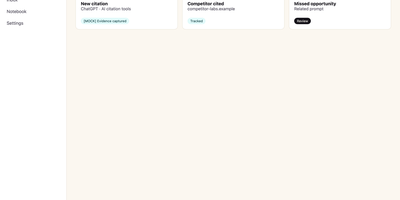
Buyers now ask an AI assistant before they ever visit your website, and Cited tells you whether your brand made it into the answer. Verify your domain with a DNS record, choose the buyer-like prompts worth watching, and Cited checks them on schedule across ChatGPT, Claude, Gemini, Perplexity, Google AI Mode, and Google AI Overviews. Every meaningful appearance becomes a durable evidence note in your citation inbox: open one to see the exact prompt, the response snapshot, where your domain appeared, and the first-seen history. It distinguishes a true source citation from a brand mention without a link, an explicit recommendation, and the uncomfortable one, a missed opportunity where a competitor got cited and you did not. Competitor tracking runs continuously, so you see rivals earning answers in your category while there is still time to respond. Notes can be annotated, organized through new, seen, saved, and resolved states, and exported for reporting. Email alerts flag meaningful new events and a weekly digest summarizes what changed, so checking becomes a habit instead of another dashboard to babysit. Workspace roles and local credentials keep a small marketing team organized on your own PostgreSQL database. Running on a dedicated VPS on RepoCloud with guaranteed CPU, RAM, and SSD, full root SSH access, and a browser serial console. AGPL-3.0 licensed.
Tagvico
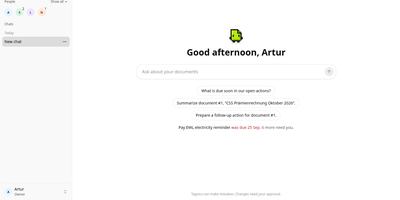
Paperless-ngx files the document; Tagvico, its companion, makes sure someone acts on it, turning letters, bills, and renewals into deadlines the whole household can see. A tax letter in the archive can become an Action Case. The case carries an owner, a due date, a priority, and up to 100 checklist steps. Needs you collects everything overdue, due this week, or due later in one list. Approvals and review items wait there too. Each family member has a profile page and a role that limits what they can approve. Ask the chat about your archive and it cites the documents behind every answer. Anything it wants to change, from a tag to a case, arrives as a proposal. An adult or the owner presses Approve, and the decision enters an audit trail. Run it on a ChatGPT Plus or Pro plan with no API key, or bring OpenAI, OpenRouter, Ollama, or any compatible endpoint. Relatives on Telegram or Discord can search, upload scans, and, if they are adults, approve from a phone. Each uses a personal Paperless token, so permissions stay with Paperless. Deadline reminders arrive once a day. New documents can also get suggested titles, tags, and dates in a review queue, with snapshots that restore the original metadata. Running on a dedicated VPS on RepoCloud with guaranteed CPU, RAM, and SSD, full root SSH access, and a browser serial console. MIT licensed.
Kera
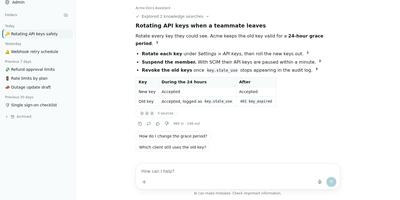
If a company wants an AI chat for everyone, Kera supplies the sign-in, groups, cited answers, tools, scheduled tasks, and guardrails that a bare chat window lacks. Local models run through Ollama, and any OpenAI-compatible endpoint plugs in too. People sign in with email, Google, or OIDC. Chats stream Markdown, maths, and diagrams. Assistants bundle a prompt, tools, knowledge, and skills, and a config file can hold the setup. Knowledge collections take PDFs, Word and slide files, spreadsheets, and scanned pages. Answers cite numbered passages found by meaning, words, and file name. A pipeline keeps a collection equal to a folder that lives elsewhere, and a flow view shows each run's steps, logs, and errors. Tool servers add Gmail, Sheets, and Docs through each person's own OAuth login. A code interpreter returns the files that scripts create. In Cowork the model drives a sandboxed Linux desktop while you watch live and can take over. A wizard schedules a task hourly, daily, or weekly after a read-only test run shows what it would do. Every model call passes one guard that redacts or blocks personal data, stops prompt-injection phrases, and applies a blocklist. Admins read plain-sentence audit entries, sync users from Google Workspace, and set the company's name, logos, and colours. Running on a dedicated VPS on RepoCloud with guaranteed CPU, RAM, and SSD, full root SSH access, and a browser serial console. Apache-2.0 licensed.
NexusDesk
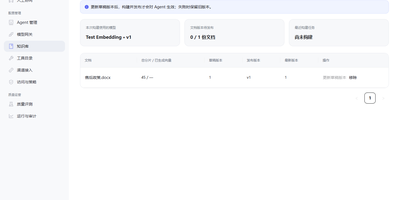
NexusDesk is a self-hosted agent platform whose first complete application turns customer support conversations into retrieved answers, tool calls, and confirmed tickets on your own infrastructure. An agent takes a request, retrieves context from your knowledge base, decides what to do, calls business tools, asks a human to confirm consequential actions, executes, records everything, and feeds evaluation, all as one visible loop rather than a black-box chat. The Harness around that loop is the engineering control layer: it governs permissions and execution boundaries, manages agent memory, routes human handoffs, and keeps an audit trail, so autonomy stays inside lines you drew. You configure, publish, and roll back agents, manage documents, chunks, indexes, and published knowledge versions, and connect Chat, Embedding, Rerank, OCR, and speech models through versioned profiles. Business APIs plug in as tools with their own credentials, parameters, and permissions, and support staff can take over a conversation, draft a ticket from it, and confirm follow-up work without leaving the flow. Channels and application APIs with server-sent events expose the same capabilities to your other systems, while execution records, model and tool call logs, and evaluation results show what the agent actually did. One PostgreSQL handles storage, job queues, and cross-process messaging, and one Compose file starts the stack. Running on a dedicated VPS on RepoCloud with guaranteed CPU, RAM, and SSD, full root SSH access, and a browser serial console. Apache-2.0 licensed.
IvaraBase
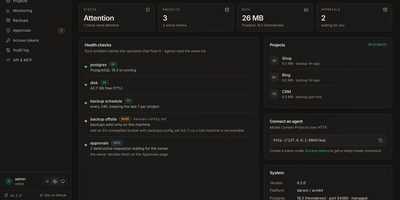
A Supabase-compatible backend that AI agents can run themselves, IvaraBase hosts many projects on one server and pauses for your approval before anything destructive happens. Claude Code, Codex, ChatGPT, Cursor, and Claude Desktop connect over MCP, where each of the 100-plus dashboard operations is also a tool. Tokens are scoped by level, project, and expiry, and by default a destructive call shows a preview, then waits as an approval request you can accept from a phone. The audit log names the agent behind each change. Projects come with a database, SQL and table editors, tracked migrations, generated types, and extensions such as pgvector and PostGIS. Auth covers email and password, magic links, phone codes, anonymous users, multi-factor, Google, GitHub, Apple, and any OpenID Connect provider. Storage adds buckets with row level security, signed URLs, and resumable uploads; realtime streams table changes, broadcast, and presence. Functions get secrets, cron schedules, and logs; webhooks fire on insert, update, or delete with retries and signatures. Existing supabase-js code keeps working after you swap in the project URL and key. Backups are encrypted, restore-tested automatically, and copied to any S3 bucket, and one command rebuilds everything on a new machine. An idle project uses almost no memory, so ten side projects fit on the server you already pay for. Running on a dedicated VPS on RepoCloud with guaranteed CPU, RAM, and SSD, full root SSH access, and a browser serial console. AGPL-3.0 licensed.
Kvitok
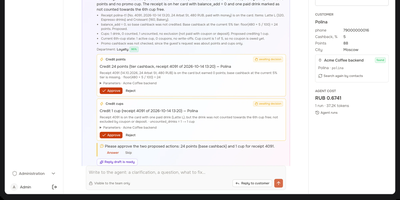
Kvitok is a helpdesk where an AI agent reads your backend, drafts the reply, and lines up the fix, so by the time an operator opens a ticket only the decision is left. Take a guest whose loyalty points never arrived: the agent finds her in your system, reads her receipts, and queues the missing credit for one click of approval. Requests arrive by mailbox or API channel, and your backend matches customers by phone, email, card number, or any identity it exposes. Rules you write run first and can set a department, priority, or tags, or skip the agent for senders such as partners. The agent calls tools your backend publishes, follows your playbooks, and picks a department with a confidence score, while your backend validates every action it proposes. Operators talk to the agent inside the ticket: say the receipt was really 540 and it revises only what that changes. Approved actions run exactly once, and the reply goes out by email or back through the channel the request came from. Each workspace picks its own model from any OpenAI-compatible endpoint, hosted or local, and every ticket shows what the agent spent. Test scenarios run against a real model, so policy or model changes get checked before reaching customers. Claude Code can tune rules and playbooks over MCP. Running on a dedicated VPS on RepoCloud with guaranteed CPU, RAM, and SSD, full root SSH access, and a browser serial console. AGPL-3.0 licensed.
Hotsauce
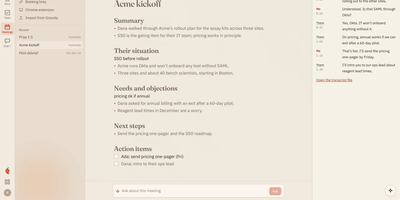
Hotsauce is an office suite for small teams that keeps every doc, meeting note, task, and saved link as a plain Markdown file in git. Meetings record in the browser, with the Chrome extension, or from the Mac app, and no bot ever joins the call. Jotted notes plus the live transcript turn into clean write-ups from customer-call, interview, or stand-up templates. The Ask assistant answers questions across every past meeting and doc, linking the sources it used. A Today page lines up the day's meetings, due and overdue tasks, and an agent brief on tiles you can rearrange. Tasks read quick-add text like "Send the deck fri p1 #Launch", and talking through your day splits it into tasks. Docs are edited together, every save is a git commit, and any doc downloads as Word or PDF or presents as slides. Links is a read-later list that keeps a clean copy and the page as you saw it, with highlights. Dictate types cleaned-up speech into any Mac app, and Clips records screen videos with a camera, transcript, and summary. A built-in MCP server lets Claude, ChatGPT, Cursor, or Codex search and edit the workspace with your permissions, and history shows which tool changed what. Booking links, forms, boards, and PDF signing round out the suite. Running on a dedicated VPS on RepoCloud with guaranteed CPU, RAM, and SSD, full root SSH access, and a browser serial console. AGPL-3.0 licensed.
9eye
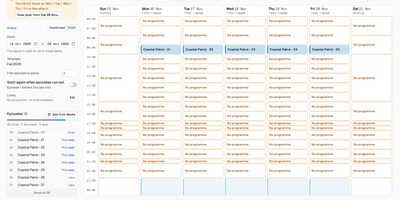
TV schedulers lay out the week, fill each day's playlist, and book ad spots with 9eye, and its AI agents take the routine work but ask first. Lengths and times are whole numbers of frames. Rates run between 23.976 and 59.94 fps, with drop-frame timecode. Layouts turn a channel's week into blocks on a drag-and-drop grid, with undo and redo. Series, programmes, trailers, and stings land in the layout's blocks as drafts or confirmed plans, and conflicts with other plans are named, never hidden. Auto-place respects allowed time windows and airing limits. One click fills a day's playlist with programme placements, booked spots, and rotation lists for the gaps. A day is approved for air and exported as a Playout XML file. Advertisers and agencies get deals and campaigns, and their spots are booked on a week board of the channel's real breaks. Auto-placing ads follows a never-back-to-back rule and reports every spot that does not fit. Claude, ChatGPT, Grok, or your own agents connect over MCP to 75+ tools named after the work, not the endpoints. A permission table sets each part and action to Allowed, Ask first, or Off, and every change has a preview and an undo. Agents get jobs and hand work to each other in rooms, but every change waits for a person to approve. Running on a dedicated VPS on RepoCloud with guaranteed CPU, RAM, and SSD, full root SSH access, and a browser serial console. AGPL-3.0 licensed.
ADHDev
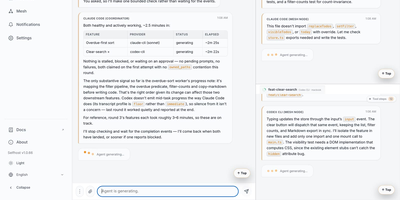
Your laptop, a desktop, and a build box each have a coding agent installed, and until now nothing has coordinated them. ADHDev is a self-hosted control plane that puts Claude Code, Codex, Kimi, Cursor CLI, Antigravity CLI, Grok CLI, and OpenCode behind one shared task queue and one web and mobile dashboard. Machines pair directly with an address and a one-time code on your own network, and a mesh binds to a single repository. Idle nodes claim tasks themselves. Dependencies order the queue, retries absorb failures, and missions group the work that belongs together. Every task gets an isolated git worktree the moment it starts. Agents build in parallel without touching each other's files, and the coordinator's prompt is rendered from live mesh state at launch, with events pushed in as they happen. Difficulty tags route easy work to cheap models and hard work to strong ones. The dashboard also reads how much of each subscription window remains, skips plans that are nearly empty, and shows the routing forecast before anything runs. Finished work enters the Refinery. Your repository's gates decide, the branch is rebased onto main, and the merge happens only when main has not moved, followed by automatic worktree cleanup. Running on a dedicated VPS on RepoCloud with guaranteed CPU, RAM, and SSD, full root SSH access, and a browser serial console. AGPL-3.0 licensed.
Reflex
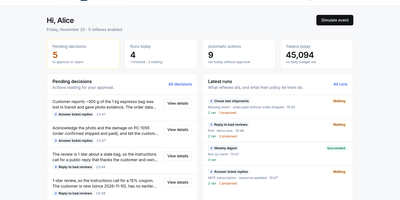
A payment fails, a reply lands on a ticket, an order sits unshipped: Reflex wakes an AI agent that handles the safe part and sends the rest to a person. A reflex bundles a trigger, Markdown instructions, MCP connections, and a policy for every tool. Triggers include signed webhooks from GitHub, Stripe, or any source, MCP resource subscriptions, polls, cron schedules, and X without Y, which fires when an order is paid but not shipped within minutes. Automatic tools run, approval tools wait, and forbidden tools do not exist for the agent. People decide in a Decisions inbox that shows the agent's reason and the exact call, and approving runs that call without asking the model again. Some actions can require two approvers. Reflex recalls up to three similar past decisions, so the agent stops repeating proposals people already rejected. Each reflex has a daily token budget and caps on tool calls and run time, and three failed runs in a row switch it off. Runs resume from stored steps after a crash. Pick Claude or an open model through Hugging Face for each reflex, and without a key the demo replays recorded answers. Reflex is an MCP server too, behind OAuth, so Claude Code can read runs and approve or reject decisions as you. Running on a dedicated VPS on RepoCloud with guaranteed CPU, RAM, and SSD, full root SSH access, and a browser serial console. MIT licensed.
Louez
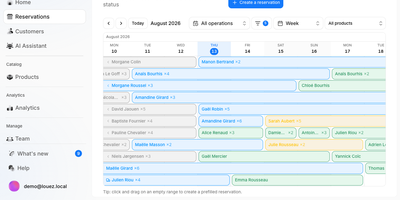
Bikes, cameras, party tents, power tools: if you hand it out by the day, Louez runs the booking desk for you. Each shop gets a branded online catalog where customers filter products, pick pickup and return times, and see real availability before they check out. Behind it sits a dashboard with a reservation calendar and planning timeline, a product catalog with stock and tiered pricing, and a customer database with full booking history. Pricing supports duration discounts, seasonal rates, and promo codes, and a simulator previews what a rental will cost. Every reservation can generate a PDF contract, send confirmation and reminder emails, and take deposits, with Stripe payments as an optional extra. Customers get a passwordless portal to follow their bookings, and staff get roles and permissions through team invitations. Equipment inspections, delivery options, multi-store overviews with revenue and occupancy charts, and API keys round out the toolkit, and the interface ships in thirteen languages. Use it for a bike hire shop, a tool library, an AV rental company, or a community gear pool. Running on a dedicated VPS on RepoCloud with guaranteed CPU, RAM, and SSD, full root SSH access, and a browser serial console. AGPL-3.0 licensed.