Categories
Self-Hosted Developer Tools AI Agents MCP Server Database PostgreSQL Backend as a Service Supabase AlternativeDeveloper links
IvaraBase
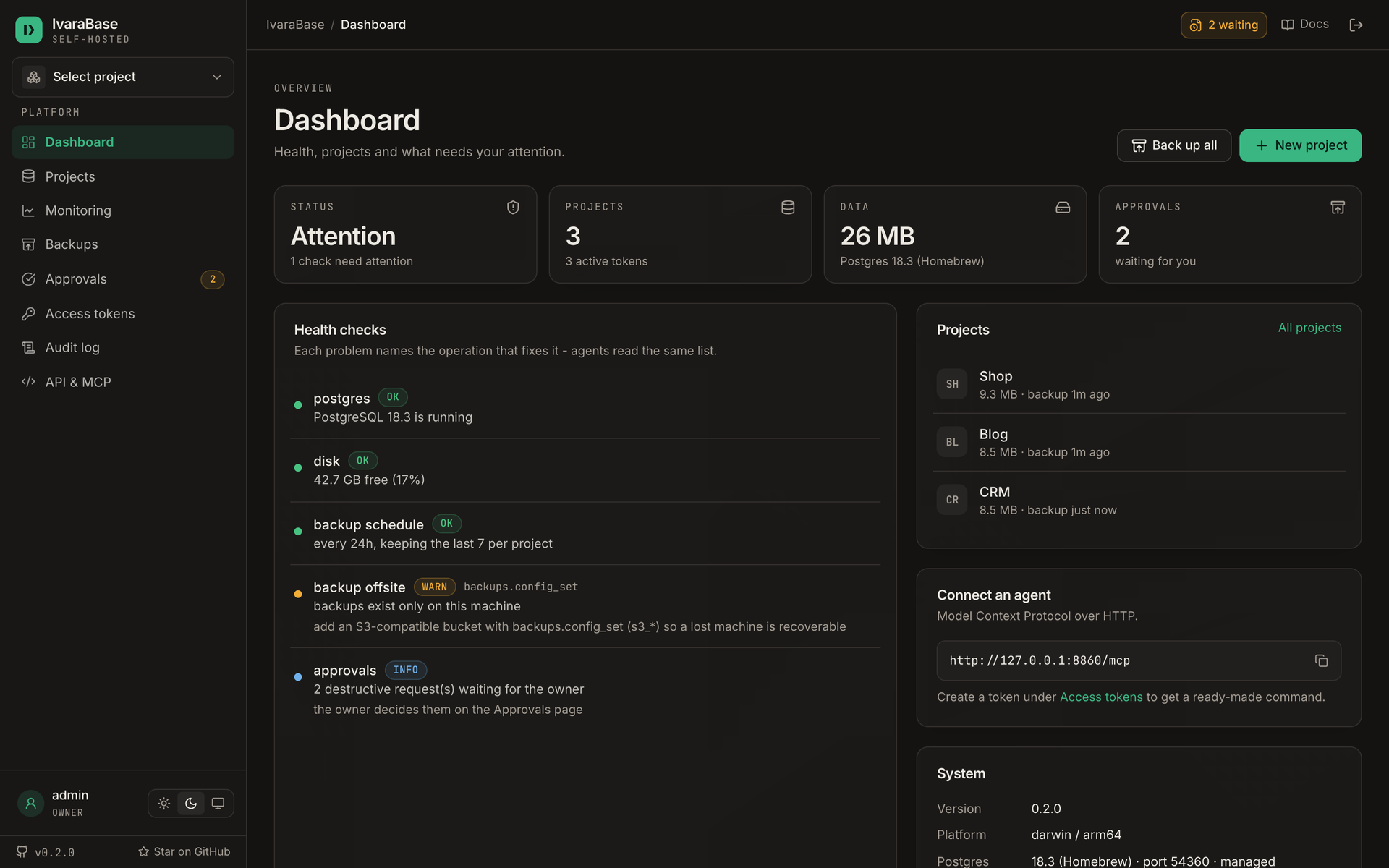
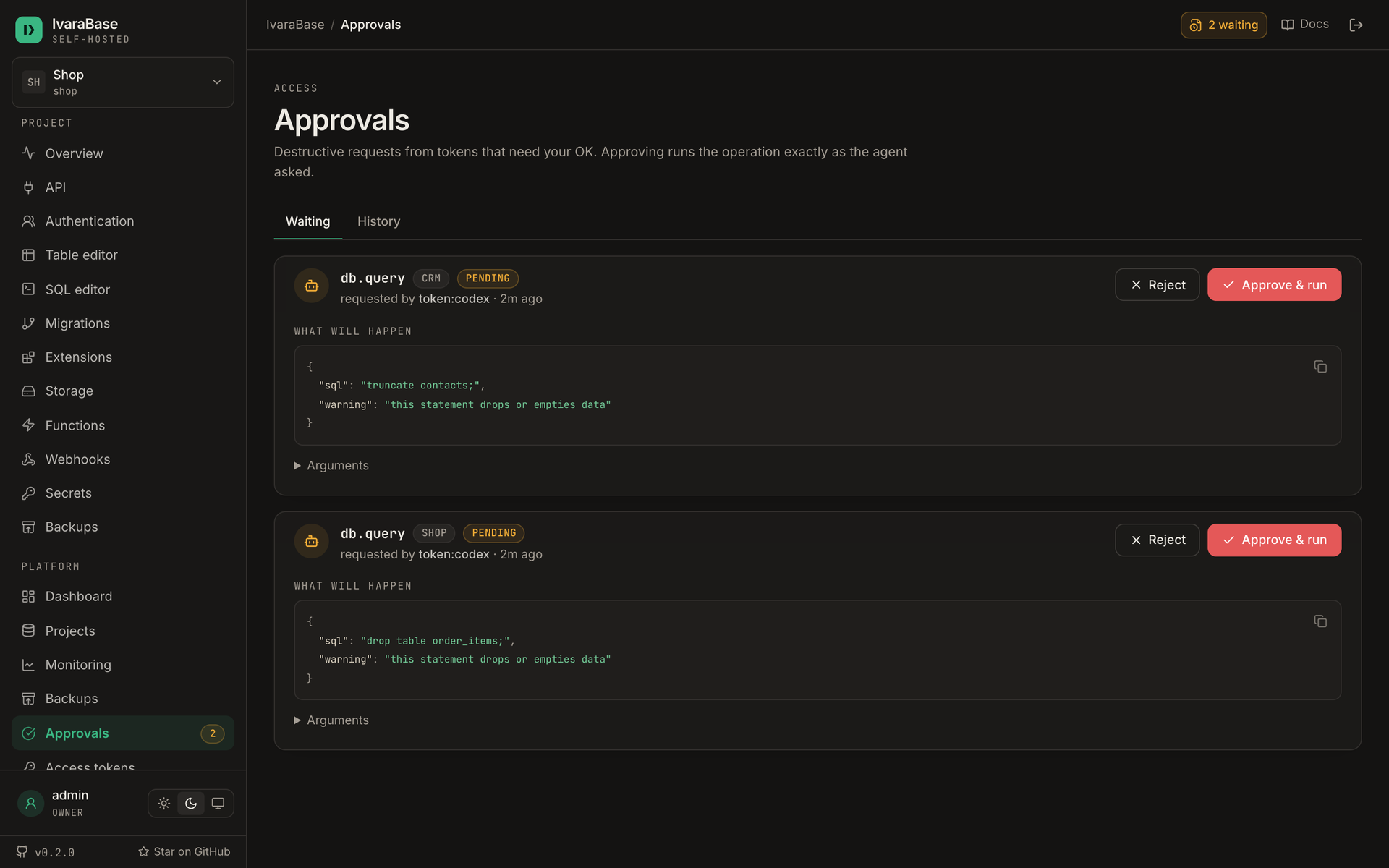
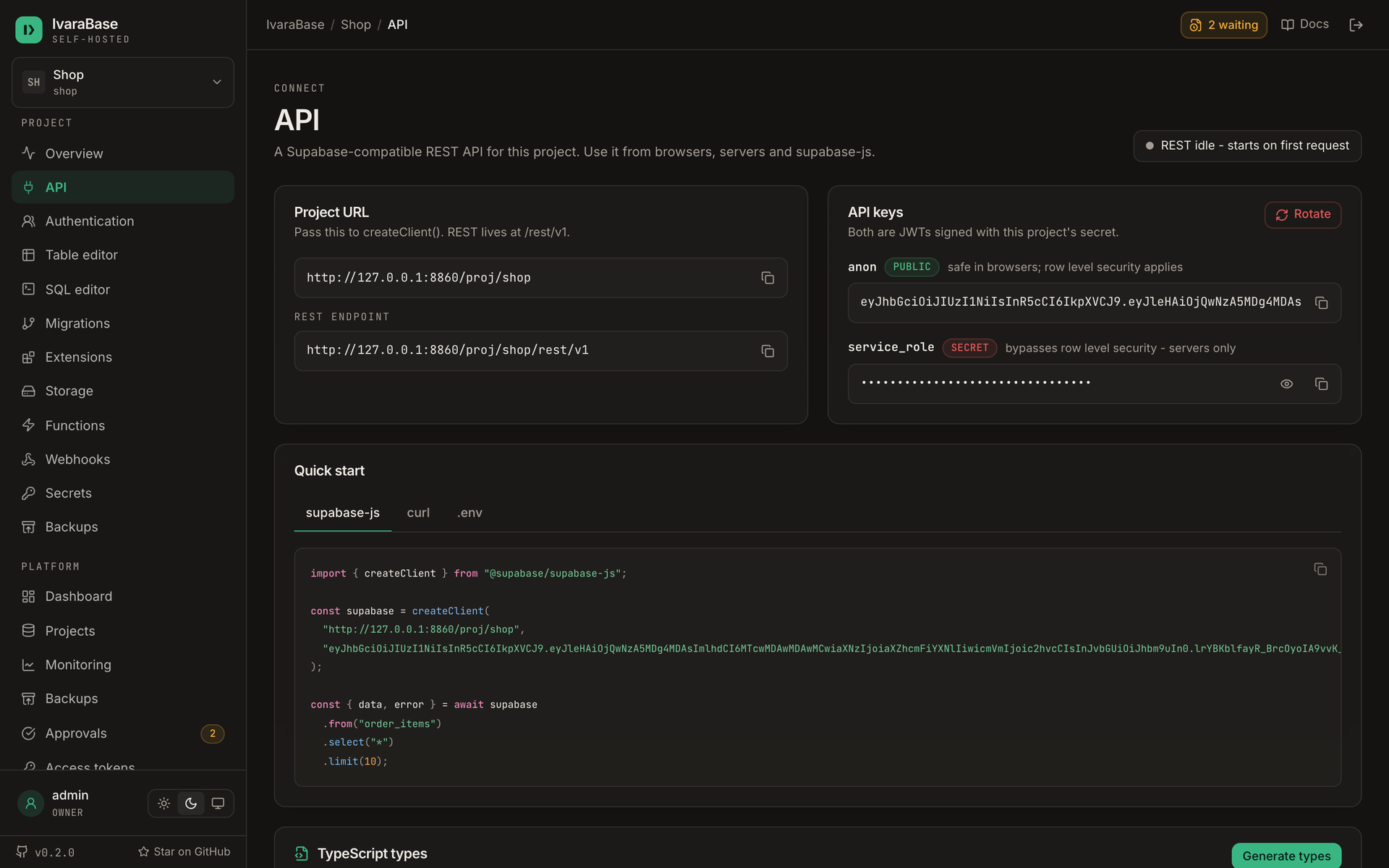
A Supabase-compatible backend that AI agents can run themselves, IvaraBase hosts many projects on one server and pauses for your approval before anything destructive happens. Claude Code, Codex, ChatGPT, Cursor, and Claude Desktop connect over MCP, where each of the 100-plus dashboard operations is also a tool. Tokens are scoped by level, project, and expiry, and by default a destructive call shows a preview, then waits as an approval request you can accept from a phone. The audit log names the agent behind each change. Projects come with a database, SQL and table editors, tracked migrations, generated types, and extensions such as pgvector and PostGIS. Auth covers email and password, magic links, phone codes, anonymous users, multi-factor, Google, GitHub, Apple, and any OpenID Connect provider. Storage adds buckets with row level security, signed URLs, and resumable uploads; realtime streams table changes, broadcast, and presence. Functions get secrets, cron schedules, and logs; webhooks fire on insert, update, or delete with retries and signatures. Existing supabase-js code keeps working after you swap in the project URL and key. Backups are encrypted, restore-tested automatically, and copied to any S3 bucket, and one command rebuilds everything on a new machine. An idle project uses almost no memory, so ten side projects fit on the server you already pay for. Running on a dedicated VPS on RepoCloud with guaranteed CPU, RAM, and SSD, full root SSH access, and a browser serial console. AGPL-3.0 licensed.
Benefits
- Agents can run the whole backend
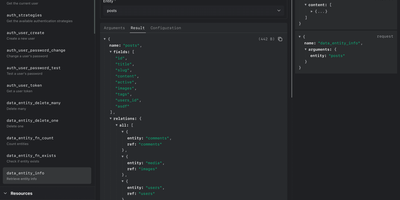
- More than 100 dashboard operations double as MCP tools, so Claude Code, Codex, ChatGPT, or Cursor can create projects, write migrations, set up auth, deploy functions, and restore backups.
- Risky actions wait for you
- Scoped tokens limit agents by level, project, and expiry. By default, destructive calls show a preview and wait as approval requests you accept from a phone, and the audit log names the agent.
- Many projects on one server
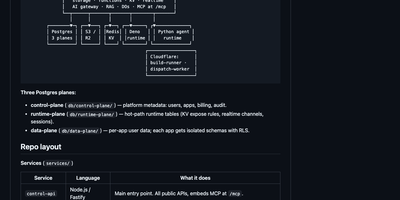
- A project is a database, a few roles, and some metadata inside one Postgres cluster, and idle projects use almost no memory, so side projects and client work share a single VPS.
- Keep your Supabase client code
- supabase-js and the Swift, Flutter, Kotlin, and Python Supabase clients work by changing only the URL and key, covering row level security queries, auth, storage, realtime channels, and function calls.
Features
- MCP Server and CLI
- One operation registry feeds the web UI, REST API, OpenAPI spec, CLI, and MCP server, reachable over streamable HTTP or a stdio bridge.
- Scoped Tokens and Approvals
- Read, write, or admin tokens limited to chosen projects and expiry dates; destructive calls become approval requests with a preview, decided on an Approvals page that works on phones.
- Postgres Database Tooling
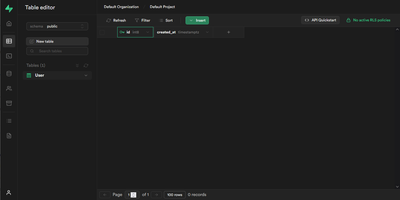
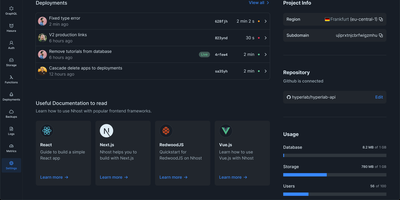
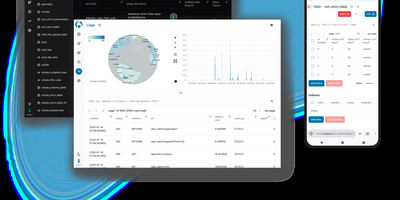
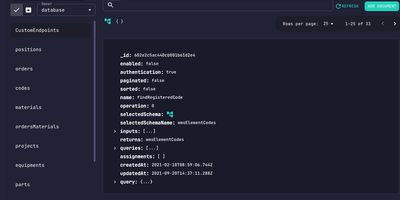
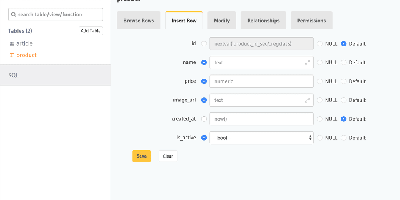
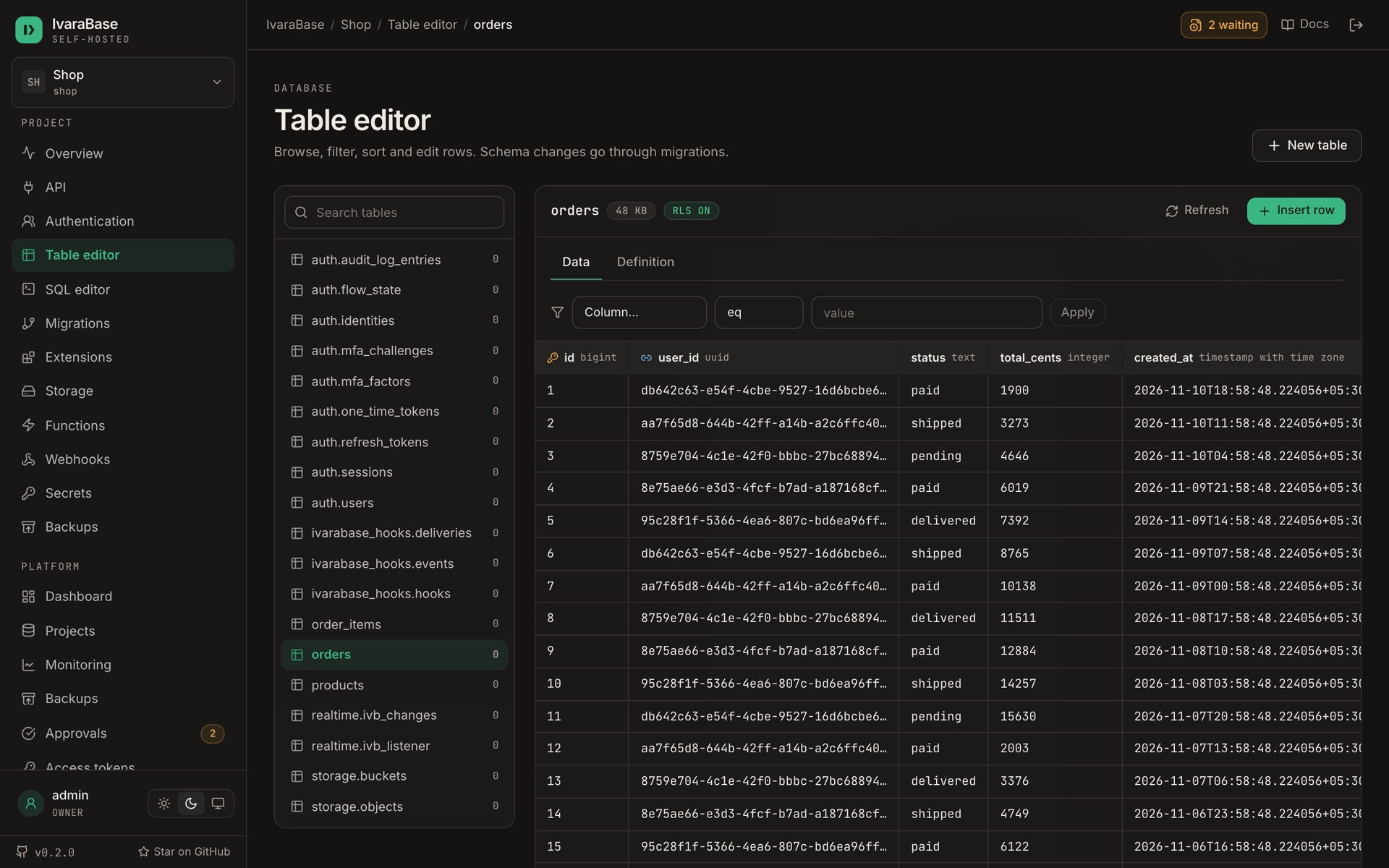
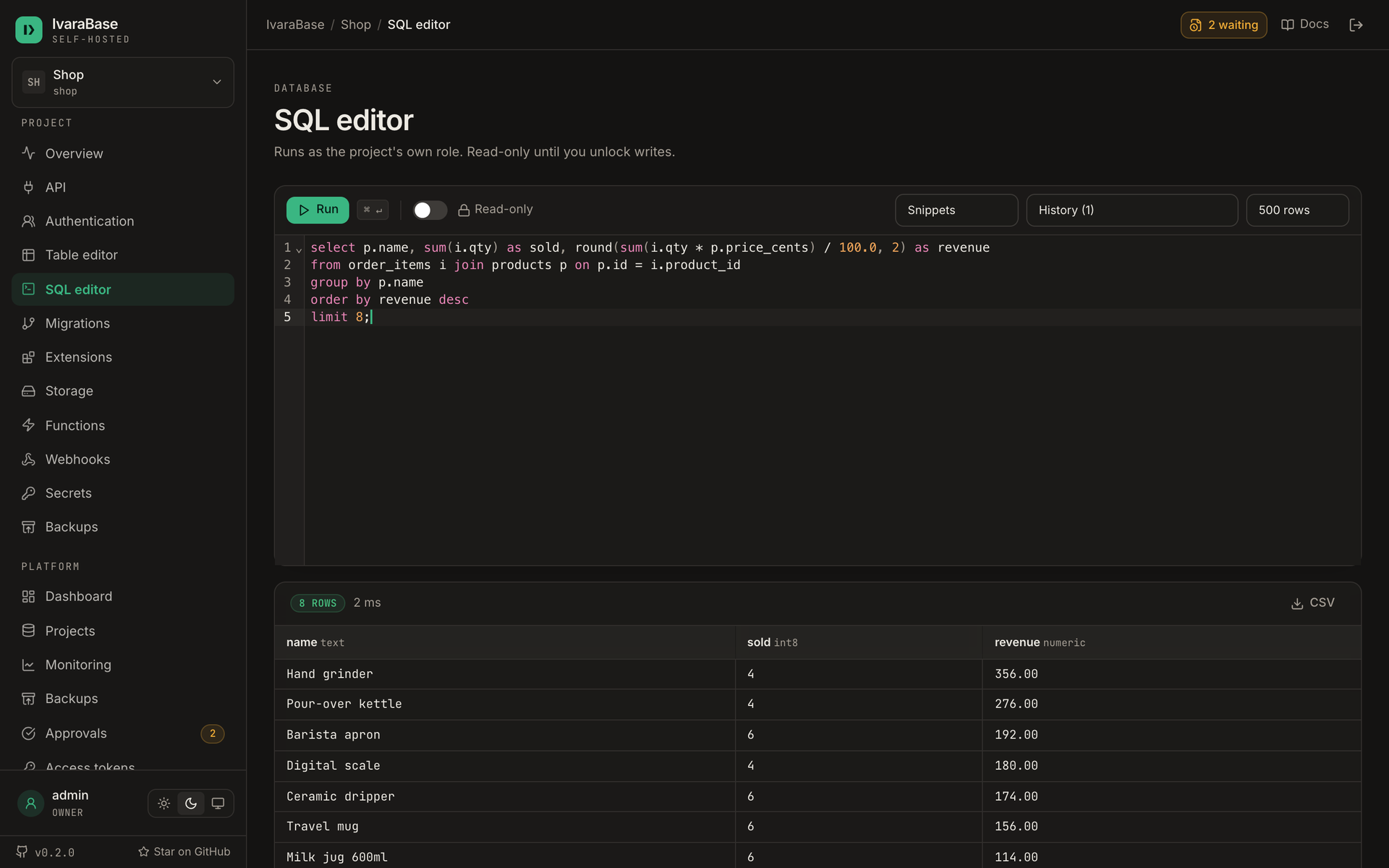
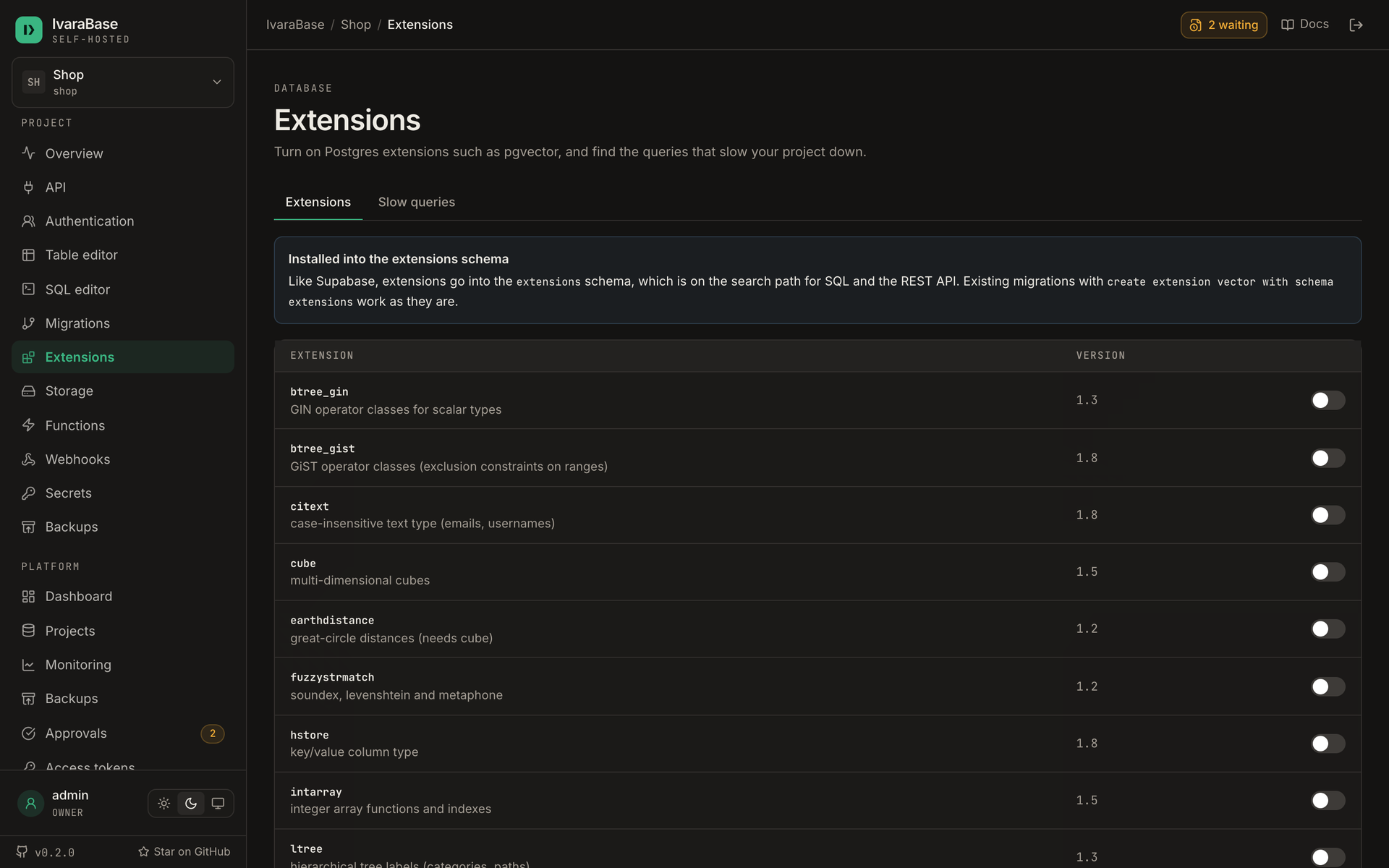
- A Postgres 18 database per project with an SQL editor, table editor, tracked migrations, generated TypeScript types, pgvector, PostGIS, pg_trgm, and a slow-queries view.
- Auth, Storage, and Realtime
- Sign-in by email, magic link, phone SMS, anonymous, TOTP MFA, Google, GitHub, Apple, or any OpenID Connect provider; storage buckets with TUS uploads; RLS-aware realtime.
- Functions and Webhooks
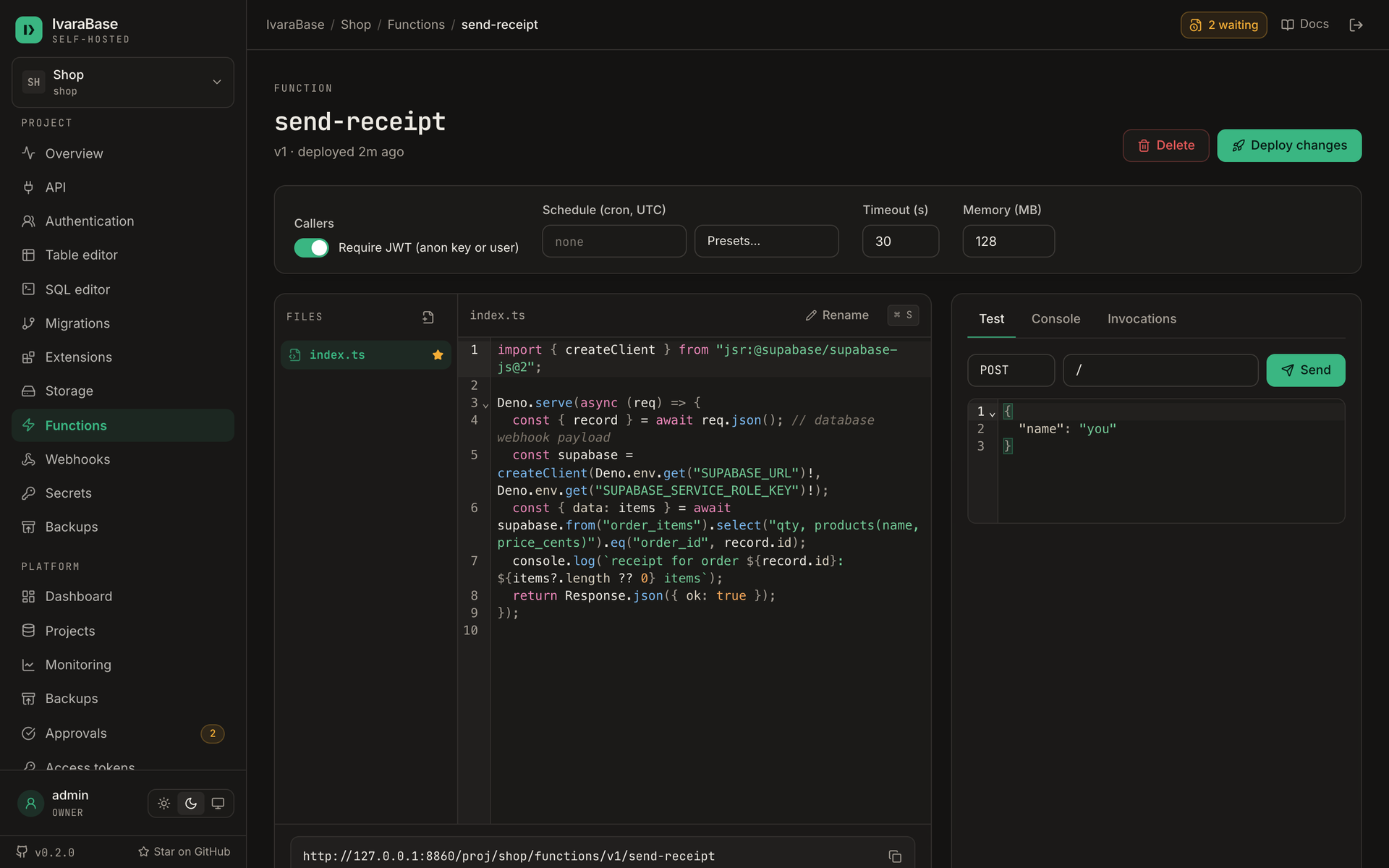
- TypeScript functions on Deno with secrets, cron schedules, and logs; database webhooks call a URL or a function on insert, update, or delete with retries and signatures.
- Encrypted Restore-Tested Backups
- Encrypted bundles on a schedule, automatic restore tests, off-site copies to any S3 bucket, and a one-command rebuild on a new machine, with a recovery key that decrypts them.