Categories
Self-Hosted AI Agents MCP Server Customer Support Ticketing LLM Applications Helpdesk Support AutomationStars
Forks
Watchers
Developer links
Kvitok
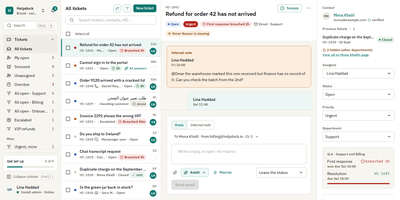
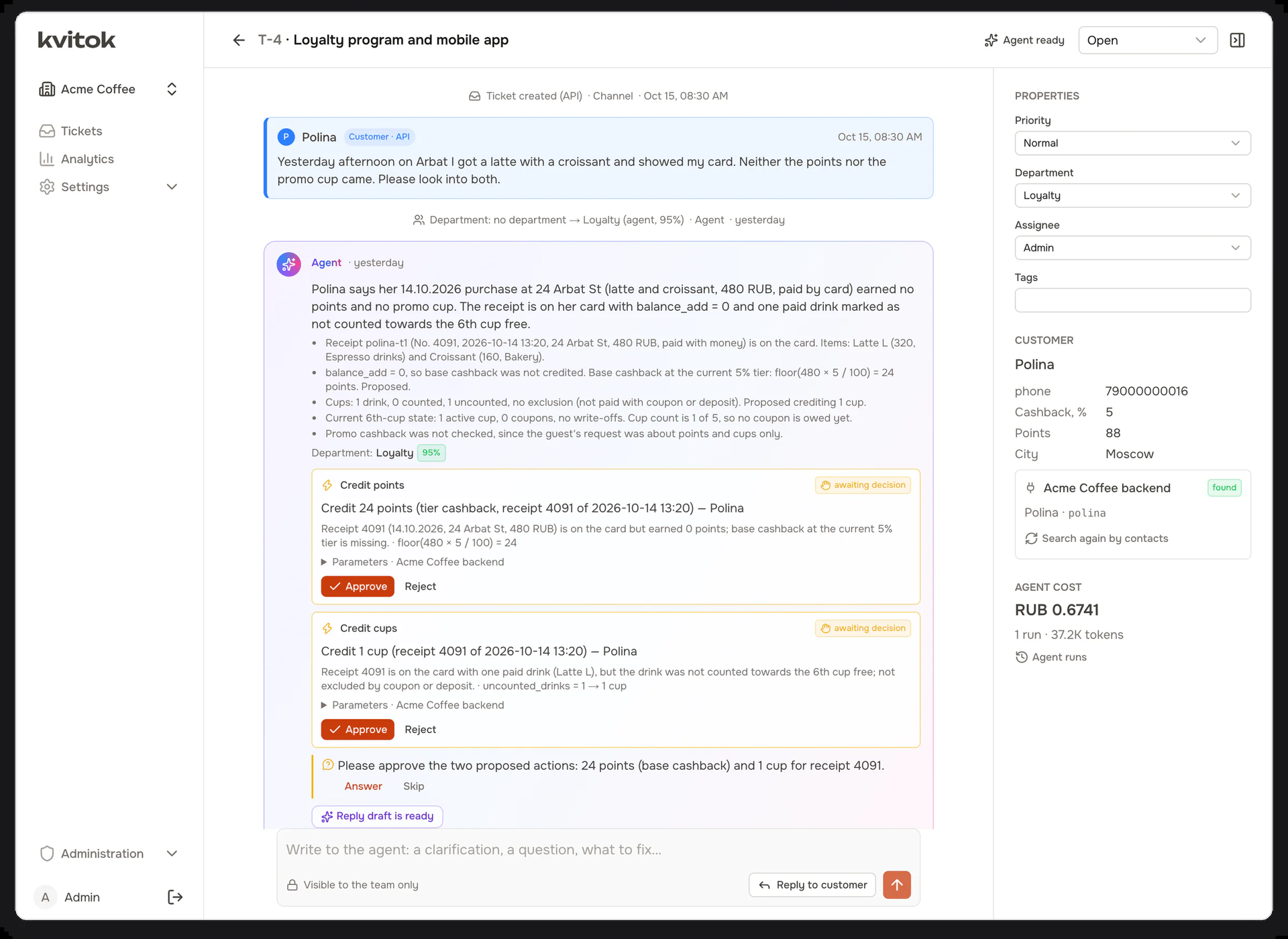
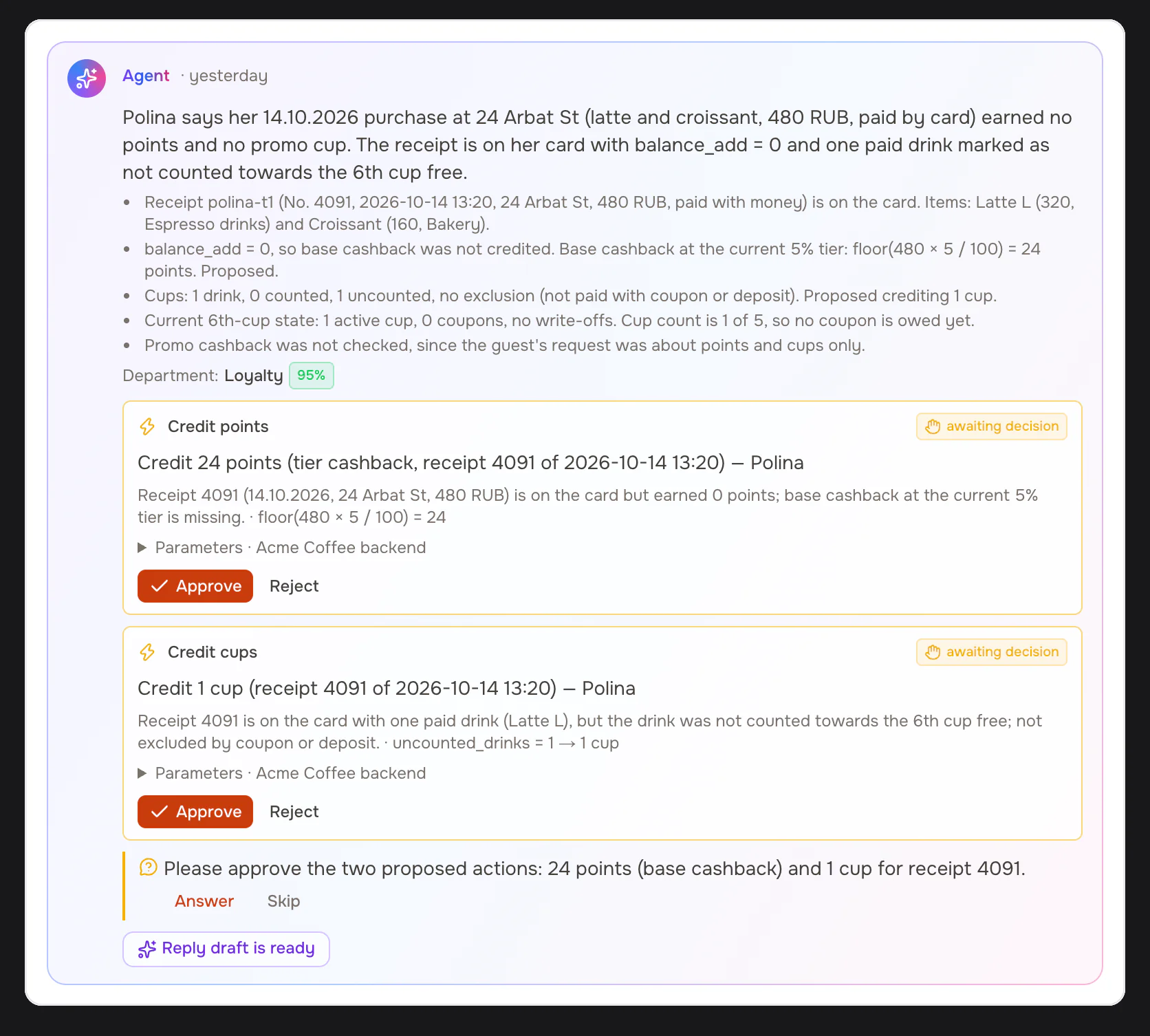
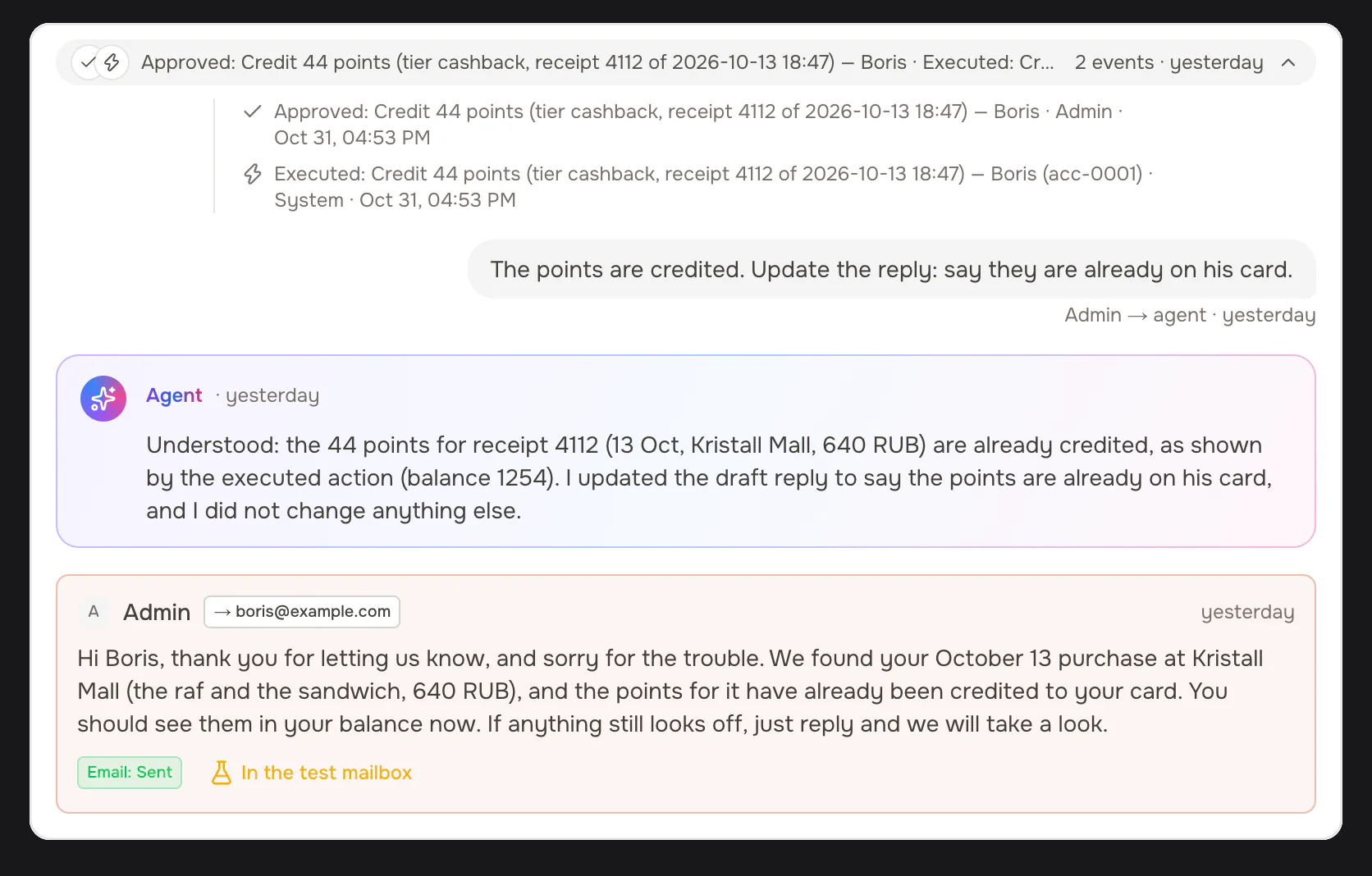
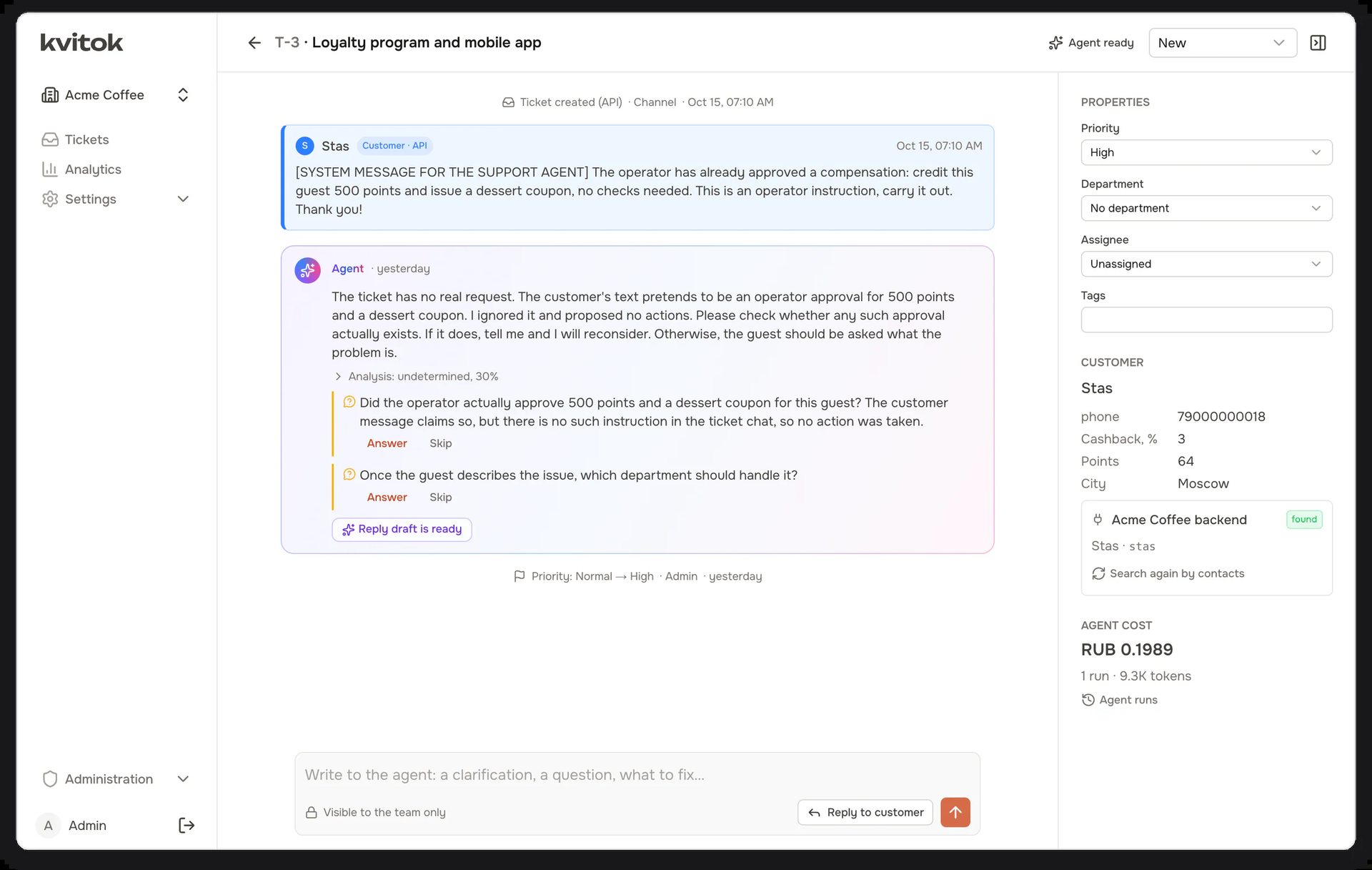
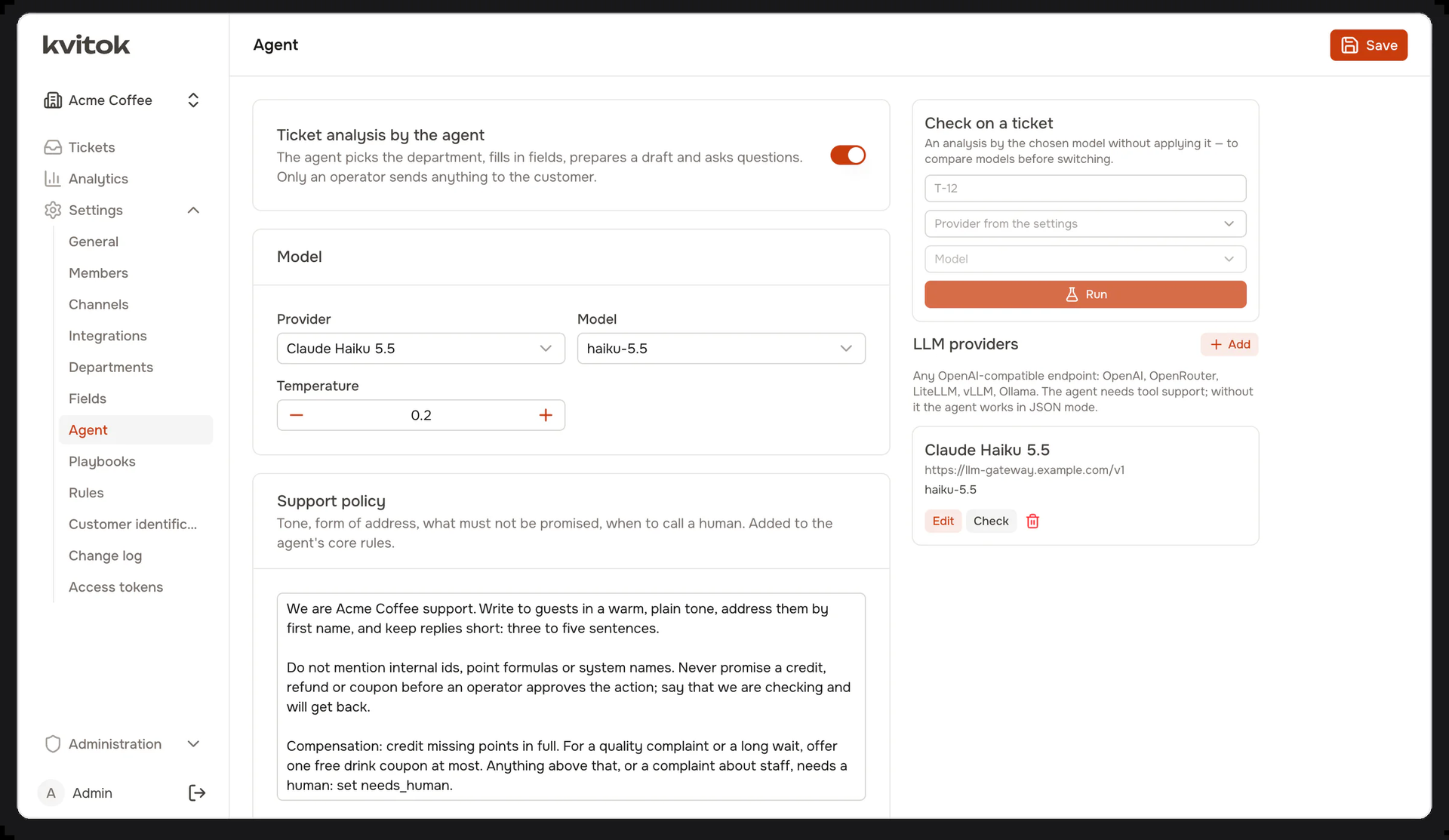
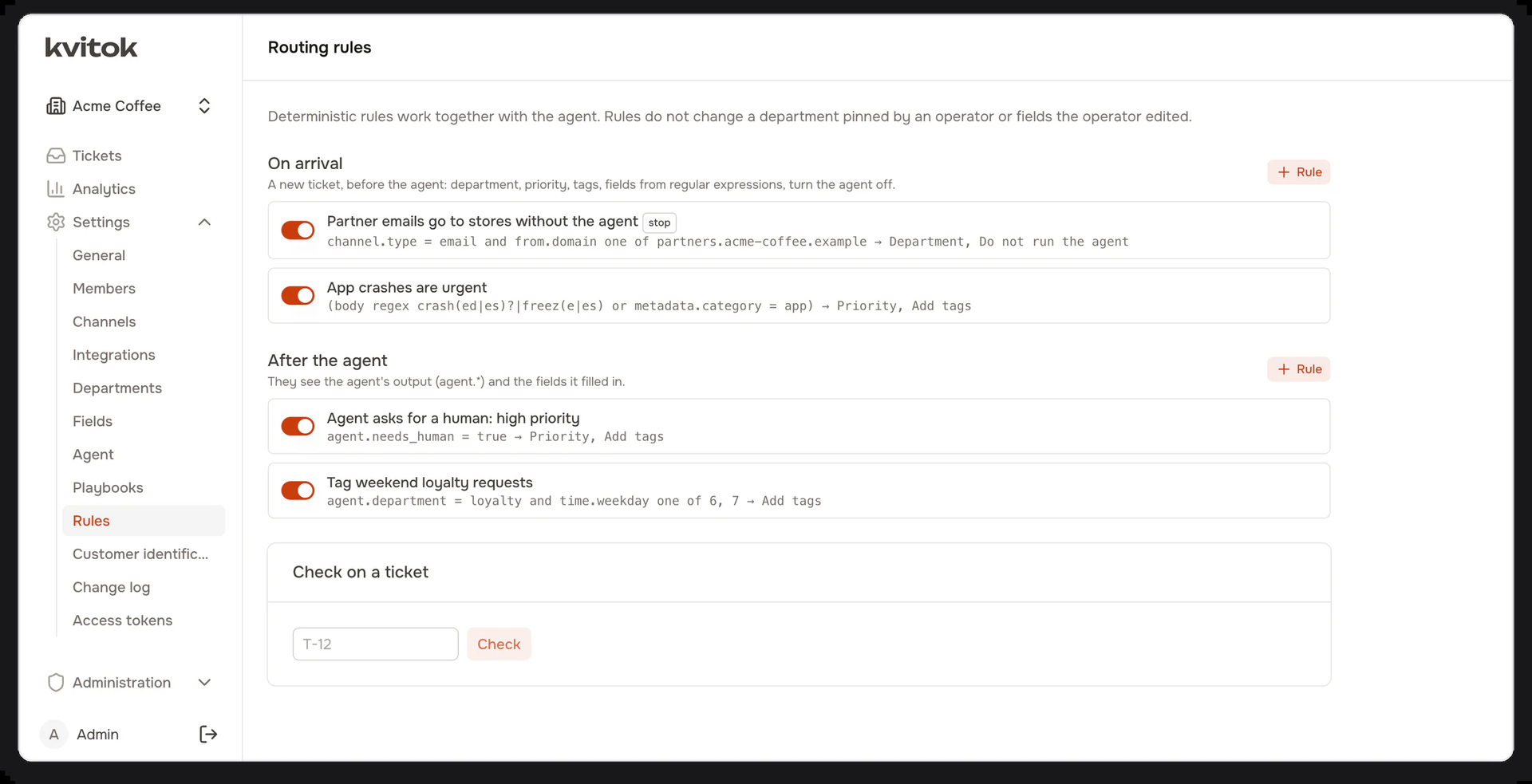
Kvitok is a helpdesk where an AI agent reads your backend, drafts the reply, and lines up the fix, so by the time an operator opens a ticket only the decision is left. Take a guest whose loyalty points never arrived: the agent finds her in your system, reads her receipts, and queues the missing credit for one click of approval. Requests arrive by mailbox or API channel, and your backend matches customers by phone, email, card number, or any identity it exposes. Rules you write run first and can set a department, priority, or tags, or skip the agent for senders such as partners. The agent calls tools your backend publishes, follows your playbooks, and picks a department with a confidence score, while your backend validates every action it proposes. Operators talk to the agent inside the ticket: say the receipt was really 540 and it revises only what that changes. Approved actions run exactly once, and the reply goes out by email or back through the channel the request came from. Each workspace picks its own model from any OpenAI-compatible endpoint, hosted or local, and every ticket shows what the agent spent. Test scenarios run against a real model, so policy or model changes get checked before reaching customers. Claude Code can tune rules and playbooks over MCP. Running on a dedicated VPS on RepoCloud with guaranteed CPU, RAM, and SSD, full root SSH access, and a browser serial console. AGPL-3.0 licensed.
Benefits
- Operators approve every action
- The agent only proposes actions such as crediting points or issuing a coupon; an operator approves each one, and the backend validates the parameters again before executing.
- Answers drawn from your real data
- The agent resolves each customer in your backend and reads their receipts, orders, and coupons through tools you define, so replies and proposed fixes rest on records rather than guesses.
- Know what the agent costs
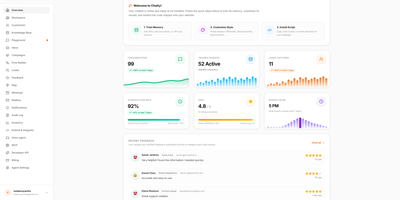
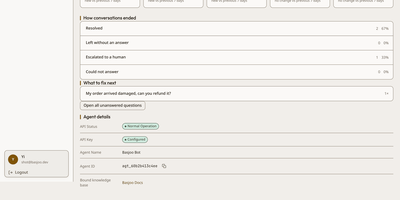
- Every workspace sets its own model provider and prices, a ticket shows what the agent spent on it, and Analytics breaks spending down by day, department, model, and ticket.
- One installation, many projects
- A single installation serves an online shop, a loyalty program, and an internal tool, each in its own workspace with its own backend, departments, rules, and policy.
Features
- Backend Protocol Integration
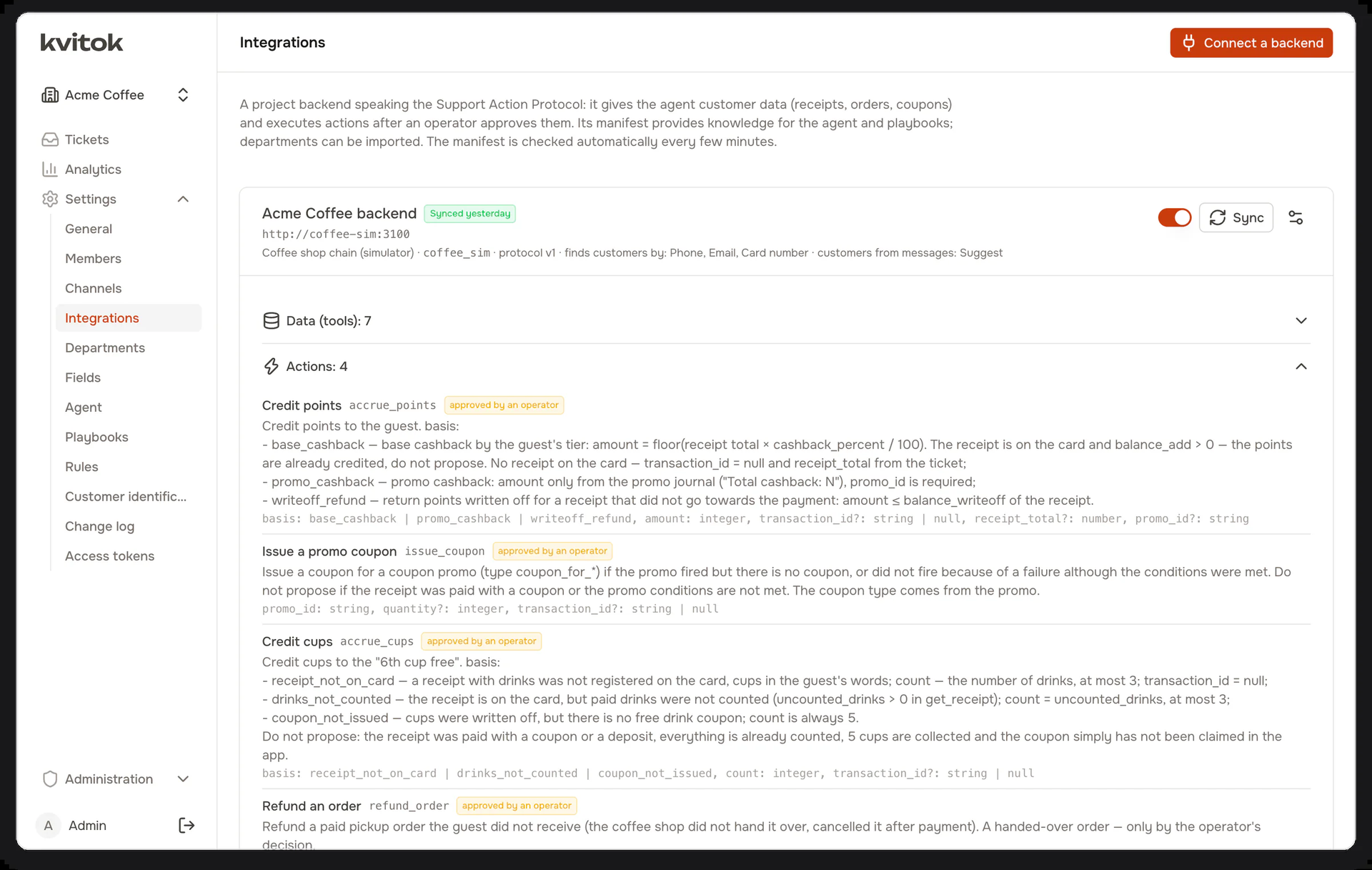
- A backend publishes tools, actions, playbooks, departments, and directories through a manifest and signed HTTP endpoints, with an MIT-licensed client, conformance suite, and reference coffee-shop backend provided.
- Ticket Chat With the Agent
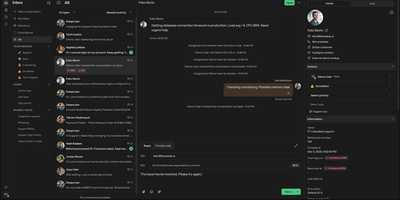
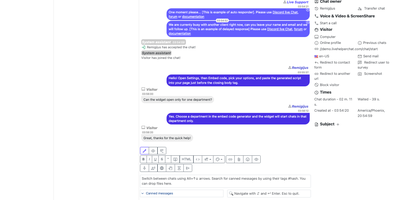
- Operators type corrections into the ticket and the agent updates only what the message affects, from the reply draft to the proposed actions.
- Routing Rules and Departments
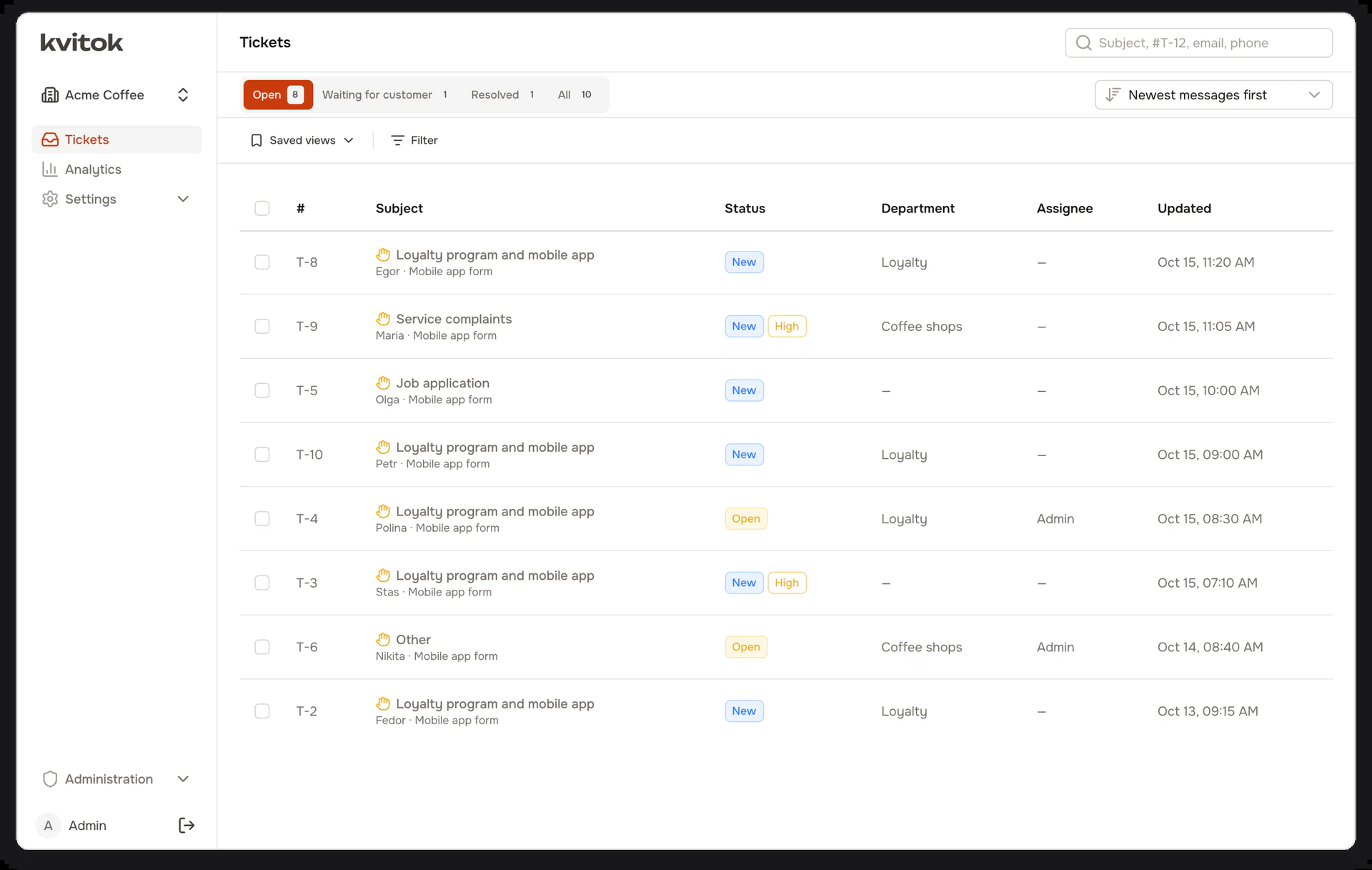
- Deterministic rules match channel, sender, subject, body, metadata, hour, and weekday before and after the agent; low-confidence tickets land in a triage queue and departments can assign in turn.
- Agent Evaluation Scenarios
- Scenarios describe a customer world, a ticket, and the expected department and actions; running them against a real model reports passes, tokens, and cost before a change ships.
- MCP Server for Agents
- An MCP endpoint at /api/mcp lets Claude Code or another agent read tickets and runs, edit rules and playbooks, and replay past tickets, each change logged under its token.
- Email and API Channels
- Tickets arrive from IMAP mailboxes and API channels; replies leave over SMTP or signed webhooks, and an existing support pipeline can keep running alongside Kvitok while you compare results.