BokeBox
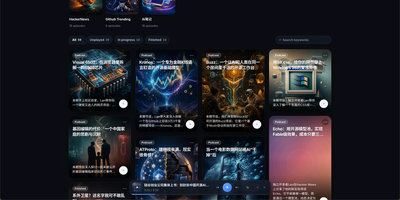
BokeBox turns the read-later pile into private podcast episodes you can finish on a commute. Upload a video or audio file, paste a link, or drop in a draft, and the pipeline runs transcription, a spoken-style rewrite, cover art, notes, flashcards, and voice synthesis, with progress shown on the home screen. A host persona sets name, role, tone, and speaking style, and each episode can override it with a preset voice or a voice described in words. The player shows scrolling lyrics, notes, flashcards, and an outline, remembers where you stopped, and offers speed control and a sleep timer. Albums queue episodes for continuous play, and the Star Map links episodes by shared tags. Schedules pull RSS feeds, URL lists, GitHub Trending, and Hacker News on a cadence and create episodes automatically. Plugins add new content sources, speech recognition engines, and voices. An MCP endpoint lets Cursor, Claude, or Codex create podcasts from a URL or text and check job status. Running on a dedicated VPS on RepoCloud with guaranteed CPU, RAM, and SSD, full root SSH access, and a browser serial console. LGPL-3.0 licensed.
Calnode
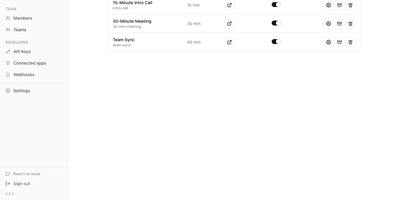
One binary replaces your booking link and your meeting room: Calnode is a complete scheduler you run yourself, small enough to audit and cheap enough to forget. Create event types with durations, custom questions, and locations, set DST-correct availability with date overrides, and share a booking page where guests pick a slot, reschedule, or cancel without an account. Two-way sync with Google Calendar, Microsoft 365, and CalDAV checks real free and busy time across every connected calendar, then mints Meet or Teams links automatically. Teams route bookings round-robin, collectively, or by priority, while paid event types collect through Stripe before the slot confirms. Choose Calnode Rooms and the meeting itself happens in the browser on your LiveKit server, with host controls, consent-aware recording into your own storage, and an AI notetaker that files a transcript and summary on the booking. Agents get first-class access through the REST API, HMAC-signed webhooks, and a native MCP server, and visitors can even book by describing a time in plain language. Everything runs from one static binary and one SQLite file with streaming Litestream backups. Running on a dedicated VPS on RepoCloud with guaranteed CPU, RAM, and SSD, full root SSH access, and a browser serial console. Apache-2.0 licensed.
OpenMail
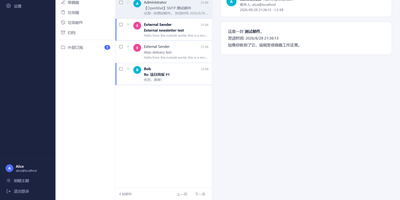
Your entire mail system can live in one self-hosted suite with OpenMail, from SMTP, IMAP, and POP3 delivery to three-pane webmail and the admin console that runs it. Standard clients such as Thunderbird, Apple Mail, and phone apps connect over SMTP ports 25, 587, and 465, IMAP ports 143 and 993, and POP3 ports 110 and 995, while people use the three-pane webmail with folder tree, conversation list, and reading pane at port 3000. You read, write, reply, forward, batch-organize, drag messages between folders, filter stars, search sender, subject, and body text, and follow conversations threaded automatically by their References headers. The rich-text composer autocompletes recipients, accepts dragged attachments and pasted screenshots, saves drafts every 12 seconds, sends on a schedule, and inserts reusable templates imported from HTML or generated with AI. Any OpenAI-compatible endpoint can draft replies, translate mail into twelve languages, and summarize messages, with provider keys encrypted on your server. Administrators get real-time mail statistics with 14-day send and receive trends, user quotas and bans, multi-domain aliases and catch-all addresses, outgoing queue visibility, and audit logs. Adding a domain generates DKIM keys and copy-ready SPF, DKIM, and DMARC DNS records with one-click checks, while rule-based spam scoring, TOTP two-factor authentication, and role-based permissions protect accounts in ten interface languages including right-to-left Arabic and Urdu. Running on a dedicated VPS on RepoCloud with guaranteed CPU, RAM, and SSD, full root SSH access, and a browser serial console. MIT licensed.
Agenvo
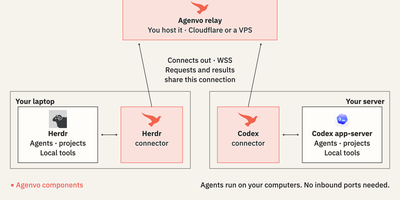
Your coding agents are scattered across a laptop, a server, and whatever machine you left running at home, and Agenvo is the self-hosted relay that lets one AI assistant reach all of them through a single MCP endpoint. Ask ChatGPT on your phone to check on Codex running on your server, or have an agent in Herdr on your laptop fix a failing test, from wherever you are. Connectors for Herdr, Codex app-server, Paseo, and Lody dial out to the relay over WSS, so the computers running agents need no inbound ports, no VPN, and no port forwarding. Your assistant sees the agents running in Herdr without restarting them, resumes Codex threads later, and starts new work where it fits: a Codex thread on the server, or Codex, Claude, or Devin in a Herdr pane. When an agent finishes a turn, waits for input, or exits, the relay pushes a change event back, so a watching assistant or ChatGPT dot reads the output and takes the next step. Closing the chat or losing the network does not stop the agents; connectors reconnect on their own, and your assistant picks up from each agent's current state. Deploy the relay on a single VPS with Docker or on Cloudflare, authorize MCP clients with OAuth over Streamable HTTP, and discover targets and method schemas with search before calling execute. Running on a dedicated VPS on RepoCloud with guaranteed CPU, RAM, and SSD, full root SSH access, and a browser serial console. Apache-2.0 licensed.
Clay Studio
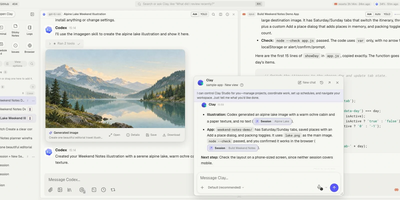
Clay Studio is a self-hosted workspace where your team and its coding agents share projects, live sessions, and project knowledge in one browser interface instead of scattering them across terminals. You organize several repositories in one sidebar and run sessions in parallel while teammates watch live activity, enter the same session, hand work off, and answer permission requests from wherever they are. Ten agent runtimes plug into the same workspace, Claude Code, Codex, Grok Build, Kimi Code, GitHub Copilot CLI, Qwen Code, Junie CLI, Antigravity CLI, OpenCode, and Kiro CLI, each keeping its own authentication and models. Persistent Mates give AI collaborators an identity, instructions, memory, direct messages, and roles in structured debates that survive beyond a single chat. Worktrees, paired sessions, spawned workers, scheduled tasks, and Ralph Loops let background jobs proceed without losing sight of what is running. You browse and edit files, inspect diffs and history, open terminals, install skills, connect MCP servers, and manage project knowledge without leaving the workspace. The installable PWA works on mobile and pushes notifications for approvals, failures, and finished work. Sessions and knowledge stay on your disk as portable JSONL and Markdown, so switching providers never means migrating your workspace. Running on a dedicated VPS on RepoCloud with guaranteed CPU, RAM, and SSD, full root SSH access, and a browser serial console. AGPL-3.0-only licensed.
Atlantis Diagrams
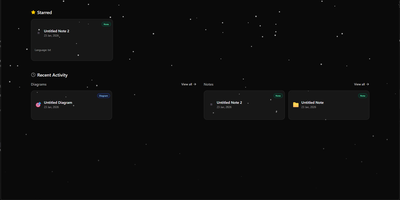
Technical teams frequently struggle to keep software architecture diagrams synchronized with evolving codebases and documentation repositories. Atlantis Diagrams delivers a unified self-hosted workspace that couples code-driven Mermaid.js diagramming with structured Markdown knowledge bases in a responsive web interface. Engineers can compose flowcharts, sequence diagrams, state machines, entity-relationship models, and Gantt schedules using split-view CodeMirror editors with real-time SVG rendering. An integrated version history tracker automatically captures revision checkpoints across the last 15 document states, letting authors compare modifications and restore previous iterations without data loss. The linked notes environment supports rich Markdown editing, LaTeX mathematical formulas, interactive task checklists, tag indexing, and full-text keyword searches across personal documentation libraries. Canvas controls allow users to pan, zoom, inspect individual nodes, and export finalized graphics directly into vector SVG, high-resolution PNG, or printable PDF documents. Storage engines adapt to deployment scale, running on zero-configuration SQLite databases out of the box with optional PostgreSQL, MySQL, and Redis caching layers for high-concurrency environments. Running on a dedicated VPS on RepoCloud with guaranteed CPU, RAM, and SSD, full root SSH access, and a browser serial console. MIT licensed.
Headroom
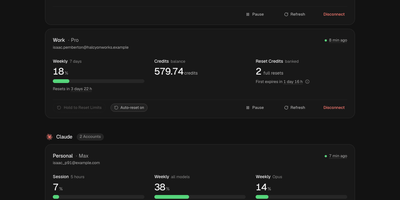
Headroom answers the question every multi-plan AI subscriber asks mid-task: which of my accounts still has room to work? It puts the live limits, reset times, credits, and spend of Claude, Codex, Cursor, Copilot, Grok, Antigravity, and Vercel AI Gateway accounts on one self-hosted dashboard instead of seven provider pages. Connect each account once, through its official CLI sign-in or a credential import, and a background scheduler refreshes every figure on schedule, renews tokens before they expire, and keeps 90 days of readings. Five-hour sessions, weekly pools, per-model limits, credit balances, banked resets, and on-demand spend sit side by side, and unreported figures show as unknown rather than a fake zero. Compare ranks same-provider accounts by the room they have left and names the one to use next, while Timeline lays every reset window on a two-week calendar. Analytics charts when you work, when you run dry, and whether each plan fits, and Wallet totals subscriptions, usage spend, and top-ups in one currency with renewals and budget alerts. In-app notices, Telegram messages, and signed webhooks warn about low limits, expiring resets, and broken sign-ins, and optional automations can spend a banked Codex reset or log a credit top-up the moment it lands. Personal, work, and side-project accounts stay separate under one owner login with passkeys and a Privacy Mode that blurs emails on screen. Running on a dedicated VPS on RepoCloud with guaranteed CPU, RAM, and SSD, full root SSH access, and a browser serial console. MIT licensed.
Cronstable
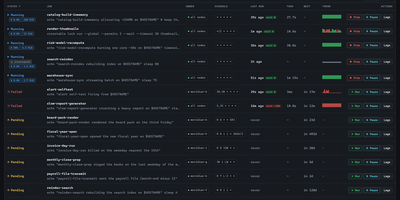
Cronstable gives scheduled jobs what cron never had: retries when they fail, alerts when retries run out, a saved history of every run, and a dashboard to watch it all. Bring your existing crontab or define jobs in YAML, down to business-day schedules, hashed fleet spreading, and per-job time zones, then let failures retry with backoff while alerts head to email, Slack-compatible webhooks, Sentry, or an encrypted push to your phone. Every run is remembered, so history, live logs, and incident timelines answer what happened last Tuesday instead of shrugging. When jobs grow dependencies, they become durable workflows: task graphs with data sharing, dynamic fan-out, sensors, shared resource pools, and approval gates a human taps before the next step runs, with failed tasks replayed selectively instead of starting over. One machine or a whole fleet looks the same from the web dashboard, the terminal, or iOS, and a schedule linter quietly warns you about the job that can never run and the one daylight saving will skip. Running on a dedicated VPS on RepoCloud with guaranteed CPU, RAM, and SSD, full root SSH access, and a browser serial console. MIT licensed.
MillionSend
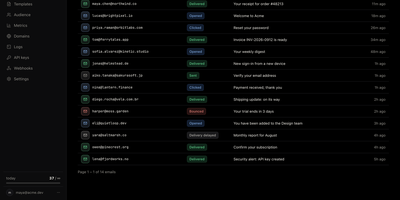
MillionSend is an open-source email platform you run yourself that sends transactional and marketing mail through your own AWS SES account behind a Resend-compatible API. Every message you send becomes a row in the dashboard, and every row opens into a timeline of SES events with the raw payload and the SMTP diagnostic when something bounces. Daily metrics chart sent, delivered, opened, clicked, bounced, and complained volumes against SES thresholds, and broadcasts stop on their own at five percent bounces or 0.1 percent complaints before Amazon can pause your account. Contacts live once for the whole team with custom properties and subscribe state, while segments and topics decide exactly who receives each broadcast. You compose broadcasts from reusable templates with per-contact merge fields, schedule them ahead, and cancel them while they wait. Applications that only speak SMTP send through the relay on port 2587 with an API key as the password, and HTTP integrations use idempotency keys, request logs with secrets redacted, and signed webhooks with a delivery history. Guided domain setup handles DKIM records, hard bounces and complaints are suppressed automatically, and every recipient gets an RFC 8058 one-click unsubscribe. Receiving and agent-ready inboxes are included in beta for mail sent to your verified domains. Running on a dedicated VPS on RepoCloud with guaranteed CPU, RAM, and SSD, full root SSH access, and a browser serial console. AGPL-3.0 licensed.
Kumiho
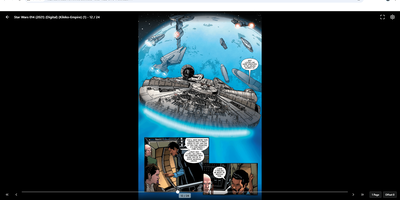
Drop a hard drive's worth of comics, e-books, and audiobooks into folders, point Kumiho at them, and the whole collection becomes a library you can browse and read from any browser. The scanner walks nested folders recursively and treats the folders that actually hold pages or files as series, so an existing collection works as it is, with no metadata matching ritual before the first read. Comics and manga open in a responsive viewer built for the format: page turning on a desktop, continuous webtoon scrolling on a phone or tablet. E-books in EPUB, PDF, and TXT open in the same library, while archives in ZIP and CBZ are read directly without unpacking. Audiobooks get a real player, with a chapter list, resume playback that remembers where you stopped, progress tracking, bookmarks, and a sleep timer for listening at night. A series folder can even carry its own soundtrack: an MP3 whose filename matches starts playing as background music while you read. Everything runs from one lightweight Go server in a single Docker container, storing its database and configuration in mounted volumes, so the library sits comfortably on a small VPS next to the files it serves. Running on a dedicated VPS on RepoCloud with guaranteed CPU, RAM, and SSD, full root SSH access, and a browser serial console. Apache 2.0 licensed.
VolumeVault
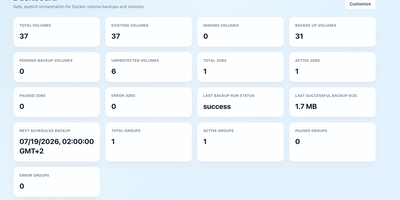
VolumeVault turns Docker volume backups into a routine you can prove: it schedules them, stores them off the box, and restores them into brand-new volumes so original data is never the test subject. A guided web dashboard discovers every Docker volume on the host and shows backup coverage per volume or per Compose and Swarm stack, including the size of the latest known backup, so gaps are visible before they matter. Each job runs on an hourly, daily, weekly or cron schedule with retention by days or archive count, include and exclude filters, and a choice of whether containers stop during the run. Archives land where you keep them: AWS S3, Cloudflare R2, any S3-compatible store, WebDAV, SFTP, Azure Blob, Dropbox, Google Drive or a local path, with credentials encrypted at rest. Restores download and verify the archive first, then unpack it into a new volume by default; overwriting the original demands an explicit confirmation. Several volumes can ride one grouped schedule that reports once for the whole set, and containers can volunteer themselves for backup through Docker labels. Small agent containers extend the same jobs to other Docker hosts, including encrypted cross-host restores into fresh volumes, while API tokens let scripts and dashboards drive everything the UI can. Running on a dedicated VPS on RepoCloud with guaranteed CPU, RAM, and SSD, full root SSH access, and a browser serial console. Apache-2.0 licensed.
Netra
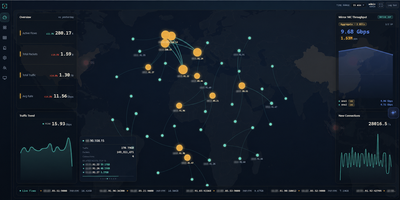
Netra watches your network from the side, plugged into a switch mirror port, and turns everything it sees into a live picture of your traffic without ever sitting in the forwarding path. A single binary loads its eBPF collectors in the kernel, so aggregation happens before packets reach user space and multi-gigabit mirror feeds stay observable instead of dropping samples. The dashboard opens on totals, protocol share, and traffic trends, then lets you drill into flows by address, port, domain, or service, check which countries your traffic talks to on a world map, and read the internal topology as a live graph. Domains surface passively from TLS handshakes, public addresses are enriched with country and organization data, and heuristic detectors flag scanning, flooding, and single-host surges, pushing alerts to your team chat with an optional AI-written explanation. You can ask the built-in assistant questions about real recorded history, connect external MCP servers so it can call your own tools while it answers, and stream flows onward to Kafka for other consumers. History rolls into compressed columnar files on a schedule and stays queryable for a month by default. Running on a dedicated VPS on RepoCloud with guaranteed CPU, RAM, and SSD, full root SSH access, and a browser serial console. GPL-3.0 licensed.
mhub
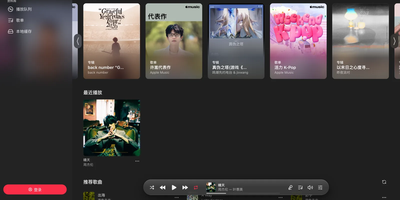
Apple Music, NetEase Cloud, and QQ Music stop being separate apps with MHub: one self-hosted player searches all three and lines their songs up in a single queue. Search any platform, import its playlists, and MHub matches tracks across services, then keeps imported lists following the originals with a daily sync. The queue takes appends, play-next picks, drag reordering, shuffle, and loop, and an AutoPlay radio built from your recent songs keeps playing when it runs dry. ALAC tracks decode losslessly right in the browser with sample-accurate scheduling, and everything else plays natively, with quality chosen at play time. Lyrics land character by character over a background tinted by the cover art, and they convert between Simplified and Traditional Chinese on request. Lock the phone or switch apps and playback rolls on with system media controls, the next track preloaded for a seamless handoff. Songs and lyrics cache on the device for offline listening, and the player installs as a PWA that behaves like a native app. Add a passkey account and your library syncs live between devices, so the playlist you built at your desk is waiting on your phone with your place kept. One Docker container runs it, bound to localhost by default behind your reverse proxy. Running on a dedicated VPS on RepoCloud with guaranteed CPU, RAM, and SSD, full root SSH access, and a browser serial console. AGPL-3.0 licensed.
AgentSDR
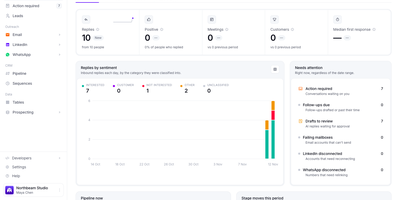
Outbound sales eats hours on list building, sequencing, and reply triage, and AgentSDR puts all three in one self-hosted workspace where AI drafts every reply for your approval. Leads holds every person and company as one record per contact, imported from CSV or Excel, so a reply on any channel lands in the same place. Tables enriches lists row by row with fifteen data providers, AI columns, and HTTP calls. Email sequences send from your own mailboxes with merge fields, sending windows, and daily limits. LinkedIn adds invitations with notes and follow-ups after acceptance, and WhatsApp covers chats and recorded calls. The Action required queue shows each reply with its AI classification, like Meeting Requested or Case Study, next to a drafted answer you edit and approve in one click. Nothing sends on its own. The Pipeline board groups open leads into needs action, waiting on them, and follow-ups exhausted, and Analytics charts replies, positive replies, meetings, and customers by channel. Do Not Contact rules, teams, and organization roles come built in. Founders, small sales teams, and agencies running outbound for clients get a lead-to-meeting engine. Running on a dedicated VPS on RepoCloud with guaranteed CPU, RAM, and SSD, full root SSH access, and a browser serial console. MIT licensed.
FastLLM Proxy
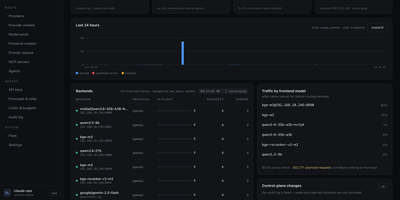
Local vLLM and llama.cpp boxes and hosted providers like OpenRouter, Anthropic, Bedrock, and Gemini all answer to one OpenAI-compatible address once FastLLM Proxy sits in front of them. Clients ask for a frontend model by name, and ordered rules pick the target by caller, prompt size, headers, budget spent, time of day, or how busy a backend is. Prompts that share a prefix return to the node holding their cache, and semantic routing sends coding questions one way and chat another using example prompts you write. API keys carry per-model grants, rate limits, and token or spend budgets, and the management console shows traffic, usage and spend, an append-only audit log, and a fleet topology. Failures fall through to the next target before a byte reaches the caller, and an admission gate turns a flooded engine into a bounded queue. An MCP gateway and an A2A agent endpoint put tool servers and agents behind the same address. Existing LiteLLM configs import unchanged. Running on a dedicated VPS on RepoCloud with guaranteed CPU, RAM, and SSD, full root SSH access, and a browser serial console. Apache-2.0 licensed.

Blombooru
Tens of thousands of saved images become useless the moment you cannot find the one you want, and Blombooru turns that private pile into a searchable, tag-organized library on your own server. Its Danbooru-style tagging uses familiar categories like artist, character, and copyright, with tag-based search and negative exclusion to slice a huge collection down to exactly the post you remembered. A dedicated tag gallery lets you browse and manage the vocabulary itself, and CSV imports bring existing tag lists in through the admin panel. Albums organize media with nested sub-albums and manual sorting, while parent-child relationships and a TF-IDF similarity engine surface variations, multi-page comics, and near-duplicates. Getting media in is flexible: upload files, compressed archives, filesystem scans, or paste a Danbooru or Gelbooru post URL and let it fetch media, tags, rating, and source automatically. AI-generated images keep their SwarmUI, ComfyUI, A1111, or NovelAI metadata viewable, optional WDv3 or PixAI auto-taggers suggest tags with one click, and tag implications and aliases keep everything consistent. Secure mode, share links, thumbnail blurring, scoped API keys, and custom themes from the admin panel finish the picture. Running on a dedicated VPS on RepoCloud with guaranteed CPU, RAM, and SSD, full root SSH access, and a browser serial console. MIT licensed.
Ybkkasi
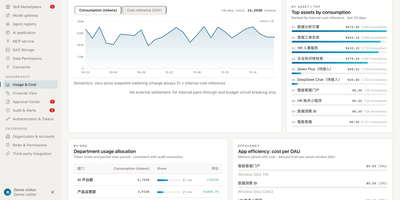
Enterprises keep buying AI tools and wondering why output does not compound, when the real gap is governance: nobody can say which agent owns what, what it may touch, or what it cost. Ybkkasi answers those three questions in one console for every MCP server, skill, agent, and AI application you run. Register each asset and move it through a lifecycle state machine from discovery to retirement, with 85 permission points deciding who can view, call, publish, or approve at every step. Work itself is organized as goals that break into projects and tasks, assigned to digital employees who each carry a home organization, a human supervisor, and a roster status. Approvals route through a dedicated center where lifecycle changes and sensitive actions wait for a human decision instead of happening silently. Every call is metered, so usage and cost reports attribute spend by department, by agent, and by skill, making showback a query rather than an argument. The audit log records who did what to which asset and when, giving compliance a trail they can actually read. Running on a dedicated VPS on RepoCloud with guaranteed CPU, RAM, and SSD, full root SSH access, and a browser serial console. MIT licensed.
Iso
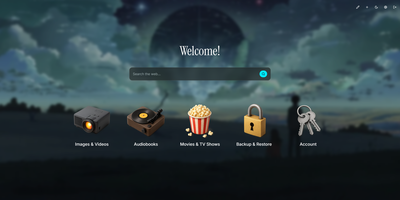
Drop a single container onto your host to launch Iso, a minimalist self-hosted startpage and service launcher that organizes every homelab web application behind a clean isometric icon grid and integrated search bar. No external database is required. Everything lives inside one human-readable JSON file or gets edited directly through the in-browser visual configuration modal. Add new service tiles in seconds, drag to reorder their display priority, and pick from a curated library of 3D isometric icons or upload custom graphics up to 25 megabytes. Switch instantly between built-in color palettes like Amethyst or upload a custom wallpaper with adjustable background blur and opacity sliders. A central search bar sits at the top of your startpage, routing queries directly to Google, DuckDuckGo, Startpage, Qwant, Searx, Bing, or any custom query URL template. Localize the interface into English, Spanish, French, or German with a single toggle. Custom greeting banners and optional page-load animations personalize the daily browsing experience for family members or lab users. Protect the dashboard and its visual editor behind shared password authentication configured via environment variables. Running on a dedicated VPS on RepoCloud with guaranteed CPU, RAM, and SSD, full root SSH access, and a browser serial console. MIT licensed.