Shoutrrr
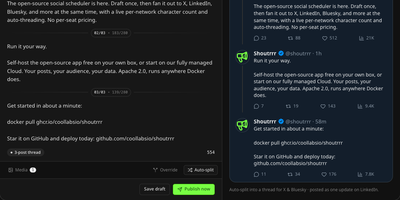
Write one post and Shoutrrr publishes it across X, Bluesky, LinkedIn, Facebook, Instagram, Threads, and Discord at the same moment, or holds it in a queue until the slot you picked. The composer counts characters against each network's limits as you type, attaches media with alt text, adjusts wording per platform when a message needs a local tweak, and splits long posts into threads where the network supports them. Recurring posting slots follow your workspace timezone, drafts drop into those slots from a month calendar, and anything can still go out instantly when news breaks. Every target publishes independently and retries on its own when a network hiccups, leaving a per-attempt trail you can inspect instead of a silent failure. Analytics chart follower and post-count trends for each account and report likes, reposts, replies, and impressions per post wherever the network's API allows. Teams share workspaces with role-based memberships and email invitations, keep clients in separate workspaces, and get in-app alerts the moment a post lands, fails, or needs an account reconnected. Account tokens sit encrypted at rest and refresh themselves, sign-in supports two-factor codes and passkeys, and the built-in MCP server hands AI assistants 22 tools to draft and schedule while publishing, retrying, and deleting refuse to run without your explicit confirmation. Running on a dedicated VPS on RepoCloud with guaranteed CPU, RAM, and SSD, full root SSH access, and a browser serial console. Apache-2.0 licensed.
Nautilo
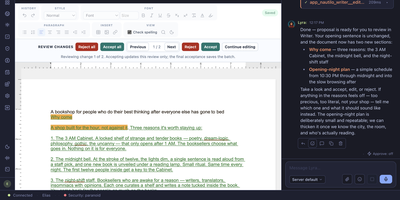
Most AI tools give one person one chat window; Nautilo is built for the room where your whole team, and each person's own AI Genie, work on the same thing at the same time. Give your Genie a personality, memory, face, and voice, then bring colleagues and their Genies into a shared Room to pull an idea apart, draft it, and send an agent off to research the missing piece. Six bundled creative apps cover the work itself: Writer for documents, Sheets for spreadsheets, Slides for decks, Board for planning, Design for visuals, and Video for clips, all editable by people and agents side by side. When the agent's draft misses, you grab the controls and rewrite the paragraph or move the lettering yourself instead of begging a prompt for a three-inch nudge. You choose the models and plug in your own provider API keys, connect tools through MCP, and let Genies operate connected workstations when a task needs real computer use. Membership, access, and tool permissions stay under your server's rules, and web, desktop, and mobile clients all connect to the same self-hosted instance. Running on a dedicated VPS on RepoCloud with guaranteed CPU, RAM, and SSD, full root SSH access, and a browser serial console. MIT licensed.
Tracely
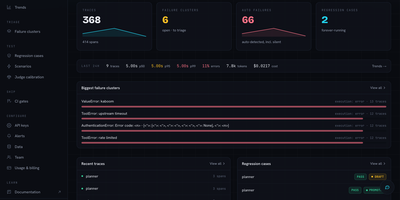
When an AI agent breaks in production, Tracely freezes that exact run into a replayable regression test and blocks the pull request that would ship the bug again. Span soup hides the failure. OTLP/HTTP traces group into conversation threads, and a waterfall marks the failing span in red with its input and output. Nobody knows if an answer was good. Evaluators sit as columns on the trace table, mixing model-free checks with LLM judges at conversation, run, or span level. Thirty-one broken runs, one issue. Clustering turns them into a single counted issue and can suggest the evaluator that would have caught it. A fix nobody can prove. One click promotes a failing trace into a hermetic case with recorded fixtures and a fail-to-pass contract, and scenarios send a red-team model after an adversarial goal. Model bills on every CI run. The suite replays offline with no API keys and no model spend, and tracely gate posts a commit status, comments on the pull request, and blocks regressions. No warning when it breaks again. Alert flows drawn on a canvas react to failed gates, broken conversations, unseen failure modes, or rising failure rates by messaging Slack, sending email, calling a webhook, or prompting an LLM. Coding agents can read traces and write evaluators through an MCP endpoint. Running on a dedicated VPS on RepoCloud with guaranteed CPU, RAM, and SSD, full root SSH access, and a browser serial console. MIT licensed.

HEISS UI
ComfyUI's node graph is where workflows are built, not where pictures get made, and HEISS UI is the calm studio that sits on top of your ComfyUI server for the daily prompt, wait, look, tweak loop. Thirty model families work out of the box, from SD 1.5 and SDXL to Flux.2, Qwen-Image, Krea 2, and Wan 2.2, and missing text encoders, VAEs, or node packs each get a Download button, with Get all for the lot. Pick 2K and the model draws at 2048 in one run with no upscale in between, or send any finished picture to 2K or 4K with SeedVR2 in one click. Import your own workflow and it becomes clean controls over the same graph, with usual inputs connected and guesses marked for review. Paint over part of a picture and say what it becomes, and only that part changes, with inpainting across 18 image families and no extra nodes. The gallery auto-groups ten takes of one idea into a single tile, and opens on your phone while your rendering machine does the work. A Hidden vault locks private images behind Touch ID, Windows Hello, or a password; new PNGs can carry Civitai-ready metadata, and Zen mode shows only prompt and picture. Run it beside ComfyUI with Docker or npm on port 8787, or point it at ComfyUI on another machine. Running on a dedicated VPS on RepoCloud with guaranteed CPU, RAM, and SSD, full root SSH access, and a browser serial console. MIT licensed.
MCPProxy
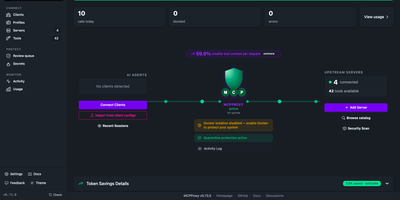
MCPProxy puts one safe endpoint in front of every MCP server your AI agents use, and it holds each new server in quarantine until a person approves it. Add stdio or HTTP servers on the Servers page, then review the captured tool definitions and scanner findings in the Review queue before any agent can call them. The Tools page lists every tool with a Read, Write, or Destructive tier, an approval state, and a usage count, plus switches to hide whatever you do not want exposed. Agents see a short set of discovery and call tools instead of the full catalog, and the Home dashboard estimates how much context that saves per request. The Activity Log records each call with its server, intent, status, and duration, and exports for audits. The Usage page charts calls per tool, response sizes, errors, latency, and activity over time, filtered by profile, client, or token. Profiles and agent tokens scope what each client may reach, a Secrets page keeps credentials out of config files, and a setup wizard connects Claude Code, Claude Desktop, Cursor, Windsurf, and VS Code. Platform teams and solo builders get one place to see and control everything their agents can touch. Running on a dedicated VPS on RepoCloud with guaranteed CPU, RAM, and SSD, full root SSH access, and a browser serial console. MIT licensed.
NetPulse
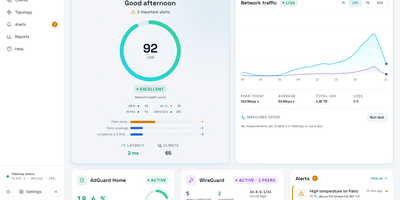
NetPulse is a self-hosted dashboard that turns a pile of routers, switches, and clients into one live picture of how your network is doing. A single score from 0 to 100 condenses latency, loss, uptime, and temperature, and updates every few seconds. The topology map draws itself from bridge and LLDP data, placing wired and wireless clients under the router and port they actually use. Every device is classified by type, with signal strength, band, and first-seen time. Router cards show model, firmware, CPU, memory, temperature, and live traffic. Scheduled WAN speed tests compare results against your contracted plan, and panels for WireGuard peers and AdGuard Home keep VPN and DNS activity in view. Alerts for overheating, new devices, firmware updates, and WAN outages reach you through push notifications, ntfy, Telegram, or webhooks. Admin and viewer accounts share access, a Wi-Fi channel analyzer scores congestion, and OpenWrt firmware upgrades can be started from the browser. MQTT publishing feeds Home Assistant, and an optional read-only MCP endpoint answers questions from your AI assistant. The interface installs as a phone app and speaks English and Spanish. Running on a dedicated VPS on RepoCloud with guaranteed CPU, RAM, and SSD, full root SSH access, and a browser serial console. AGPL-3.0 licensed.
Mosparo
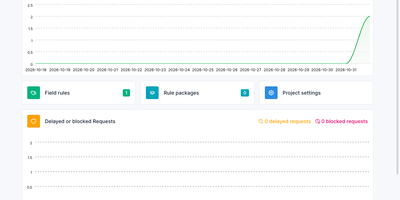
CAPTCHAs make every visitor solve a puzzle to prove they are human; Mosparo takes the opposite route and checks the submitted content itself, no challenges, no image grids, and no tracking cookies. Drop the customizable checkbox widget into any form and Mosparo inspects each field separately, scoring the entry against your rules the way an email spam filter scores a message. Build field rules for banned words, domains, email addresses, IP addresses and subnets, providers, Unicode blocks, user agents, and websites, each with its own rating weight, or subscribe to shared rule packages that refresh themselves automatically. Every submission lands in an admin inbox with its spam rating, IP address, and verification status, and dashboard charts show valid versus spam traffic plus delayed or blocked requests over time. Legitimate users notice nothing but a plain checkbox, which stays fully usable with assistive technology, while everything Mosparo stores is encrypted and automatically deleted after 14 days. Run one instance for many sites with separate projects, project groups, and member roles, and connect your forms over the documented API from any stack that can send an HTTP request. Running on a dedicated VPS on RepoCloud with guaranteed CPU, RAM, and SSD, full root SSH access, and a browser serial console. MIT licensed.
Trading Journal AI
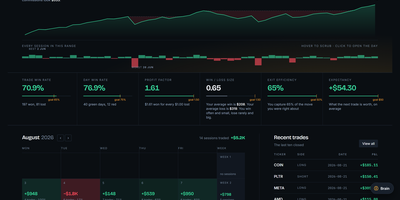
Most traders know their balance and almost nothing else, because the patterns that actually cost money hide across hundreds of individual fills. Trading Journal AI rebuilds your round-trip trades from a broker CSV, grouping partial fills, scale-ins and shorts automatically, then tracks win rate, profit factor, expectancy, drawdown, MFE, MAE and exit efficiency for every account. Thinkorswim and Interactive Brokers import directly, seven more brokers including Tradovate, NinjaTrader, Webull and tastytrade are in beta, and a generic template covers any other broker's export. The Leak Finder ranks groups of trades that share something you knew at entry, an entry window, a weekday, a size habit, an emotion from your diary, and shows which of them quietly drain the account, with confidence scored against the rest of your history. Exit Lab replays your completed stock trades on one-minute prices and compares your actual exits against 1R and 2R targets, breakeven rules, trailing stops and VWAP or EMA exits, in R and in dollars. If you add an Anthropic key, Claude reads your trading diary and grades each day on process rather than outcome; without one, every number still works, because the statistics are plain code and never AI. Four interface themes, one SQLite file, no account and no telemetry complete the picture. Running on a dedicated VPS on RepoCloud with guaranteed CPU, RAM, and SSD, full root SSH access, and a browser serial console. MIT licensed.

DroppedNeedle
Self-hosted music requests, no Lidarr install needed: DroppedNeedle searches MusicBrainz, drives your own slskd or Usenet setup, and files only verified, tagged tracks in your library. Request a whole album or a single track, then retry or cancel from a dedicated requests page. The engine queries slskd, or SABnzbd with Newznab indexers or Prowlarr, and scores every candidate before anything downloads. Files must pass checks for readable tags, a sane duration, and an optional AcoustID fingerprint match. Close calls park for admin review. Failed requests are searched again until a verified copy arrives. Quality floors per format and storage caps keep the library tidy, and better copies replace old ones. The built-in player queues Jellyfin, Navidrome, Plex, local files, and YouTube previews with shuffle, a 10-band equalizer, and embedded lyrics. Prefer your own app? Symfonium, Finamp, Feishin, and other Subsonic or Jellyfin clients connect with revocable app passwords. Discovery rows draw on ListenBrainz and Last.fm history and global charts, and a weekly mix can queue up to five missing albums. Follow artists for new-release alerts, or add Ticketmaster or Skiddle keys for gig listings in cities you choose. Import Spotify playlists, or drag in a zip of music you bought. Admin, Trusted, and User roles decide whether a request starts at once or waits for approval. Running on a dedicated VPS on RepoCloud with guaranteed CPU, RAM, and SSD, full root SSH access, and a browser serial console. AGPL-3.0 licensed.
Google Browser Scraper
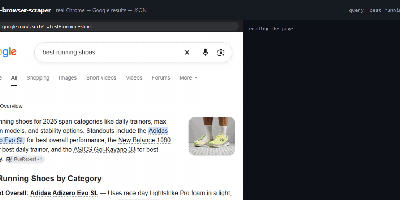
Google Browser Scraper is a self-hosted SERP API that gets Google results from a real Chrome browser and your own residential proxy, because plain HTTP scraping is refused and a fresh browser on a fresh IP is refused almost as fast. It warms a sticky proxy session with ordinary browsing first, lets the browser pass Google's checks, and then switches to a hybrid mode that fetches results pages directly over HTTPS with the browser's own cookies, at about 0.4 MB and 1.4 seconds per search on a warm IP. Every page comes back as SERP-style JSON with organic results, ads, related questions, related searches, pagination, the AI Overview, and local results. If a proxy IP starts serving poisoned pages for some other query, the scraper catches it within a few pages, drops that IP, and asks the query again on a fresh one. Captchas and blocks are reported as captchas and blocks, never disguised as an empty result set, so your pipeline knows when to retry or rotate. Run it as a CLI for keyword files, import it as a Python library, serve it as a local HTTP API, or expose the MCP server so AI agents get live Google search. Every run ends with a traffic and cost summary per thousand pages, and any sticky residential proxy works, with NodeMaven sessions handled for you. Running on a dedicated VPS on RepoCloud with guaranteed CPU, RAM, and SSD, full root SSH access, and a browser serial console. MIT licensed.
Ideon
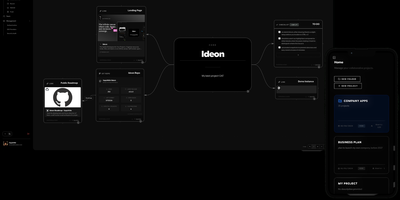
Scattered browser tabs, buried wiki folders, and disconnected issue trackers fragment engineering context across too many tools, which is why Ideon unifies your repositories, notes, and tasks on a shared infinite canvas. Rather than forcing projects into rigid folder hierarchies, you arrange interactive blocks spatially on a two-dimensional map where related documents, checklists, calendar schedules, and code references sit right beside one another. Teams can embed live repository cards and open issue streams directly from GitHub, GitLab, Gitea, and Forgejo onto the workspace, keeping code status visible alongside architecture documentation. Rich content blocks render Markdown notes with threaded comments, Mermaid flowcharts, uploaded files, images, and bookmarked links on the same board. Real-time multiplayer collaboration lets teammates edit blocks simultaneously, follow live cursors across the canvas, and map system designs together without edit conflicts. Built-in Time Travel snapshots capture historical states of the workspace so you can scrub backward to review how a project evolved or trace past design decisions. You can even synchronize an entire project canvas directly to a Git repository, storing notes and spatial block layouts as versioned files. Running on a dedicated VPS on RepoCloud with guaranteed CPU, RAM, and SSD, full root SSH access, and a browser serial console. AGPL-3.0 licensed.
Nestarr
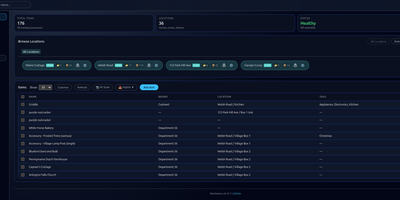
Every box, shelf, and spare part in your home gets a searchable record in Nestarr, complete with photos, receipts, manuals, custom fields, and the exact location path that leads back to it. Properties break down into rooms, shelves, and containers, so the record for a spare charger can read house, garage, top shelf, blue bin instead of a hopeful guess. Scan a UPC barcode and product details fill in automatically; point the AI photo identification at an unfamiliar gadget and it proposes a name and record to start from. Manufacturer and extended warranties sit on each item with expiry alerts timed so coverage gets claimed before it lapses, and recurring maintenance schedules track care for appliances and equipment beside the inventory itself. Print a QR label for an item or a location through NIIMBOT or CUPS printers, stick it on the box, and a later scan lands on the exact record. Multiple properties cover second homes and rentals, scheduled backups copy the database and uploads to Google Drive, and the household shares access through admin, editor, and viewer roles with Google or OIDC single sign-on for bigger setups. Running on a dedicated VPS on RepoCloud with guaranteed CPU, RAM, and SSD, full root SSH access, and a browser serial console. MIT licensed.
Aurora
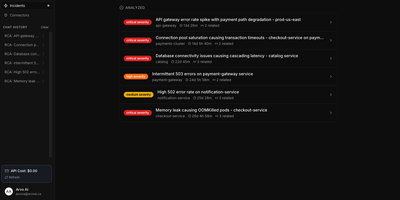
Aurora is an open-source AI SRE agent that investigates production incidents on its own, turning each incoming alert into a structured root cause analysis with evidence and a suggested fix. Alerts arrive from PagerDuty, Datadog, Grafana, New Relic, OpsGenie, incident.io, or CloudWatch, and every one triggers a background investigation without waiting for a human to pick it up. The agents choose from more than thirty tools, run cloud and cluster commands inside sandboxed pods, query logs, compare deployments, and search a knowledge base of past incidents for similar failures. An infrastructure dependency graph shows the blast radius across services and providers. When the root cause is found in code, Aurora can draft the remediation as a pull request instead of stopping at a diagnosis. Finished investigations become postmortems with a timeline, impact assessment, and remediation steps, exportable to Confluence, Notion, or SharePoint, and automated actions can open the fix, notify Slack, or update living documents as new evidence lands. Command policies and guardrails bound what the agents may run, and any major language model provider can power the reasoning, cloud-hosted or local. Running on a dedicated VPS on RepoCloud with guaranteed CPU, RAM, and SSD, full root SSH access, and a browser serial console. Apache-2.0 licensed.
DocsMint
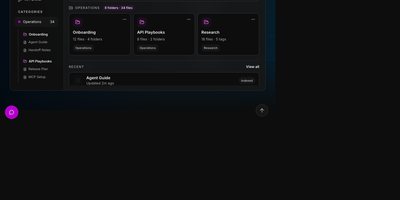
DocsMint is a self-hosted knowledge workspace where your team writes documentation once and both people and AI agents retrieve it through hybrid search and a built-in MCP server. Documents live in a rich visual editor with Markdown import and export, organized by folders, categories, and tags, with sharing and version history. Search blends exact title matches, multilingual keyword search, typo-tolerant fuzzy matching, and semantic vectors, then widens results through graph relationships between documents, so a query in one language or phrasing still finds the right page. Every edit quietly refreshes the index in the background; nothing needs manual re-embedding. Agents connect through 22 MCP tools covering search, reading, creation, updates, folders, snapshots, and export, over a local stdio bridge or the HTTP endpoint on your own installation. Category-scoped API keys hand each integration only the slice of the library it may read, edit, or write, while a global key serves trusted automation. The same operations are available through the REST API, a typed TypeScript SDK, and a terminal CLI for scripts. The web application installs as a PWA with offline reading, and AI features run on your choice of an OpenRouter key or a fully local Ollama setup. Running on a dedicated VPS on RepoCloud with guaranteed CPU, RAM, and SSD, full root SSH access, and a browser serial console. Apache-2.0 licensed.
SimpleDMS
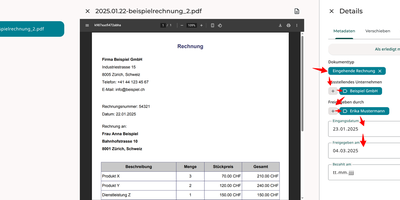
Small businesses file every invoice, contract, and letter by what it is instead of by folder with SimpleDMS, a document management system built around types, tags, and searchable metadata. Upload a document to the inbox, pick its type, and the sidebar offers exactly the tags and fields that type needs, so an incoming invoice asks for the issuing company and receipt date instead of a blank properties page. Name-giving attributes label each file automatically from its own metadata, and the Browse view finds it again by company, date, or approver in seconds. Spaces act as workspaces with their own document types, tags, and permissions, so the team shares project files in one space, exchanges papers with an accountant or customers in another, and keeps private records apart. Tag groups such as companies and employees stay consistent across thousands of documents, date and text fields capture the facts you search by later, and values can be corrected at any time when a document was filed in haste. Dark mode is built in, the interface runs comfortably on a tablet at the scanner, and no analytics or tracking watch how your office works. Running on a dedicated VPS on RepoCloud with guaranteed CPU, RAM, and SSD, full root SSH access, and a browser serial console. AGPL-3.0 licensed.
MindRoom
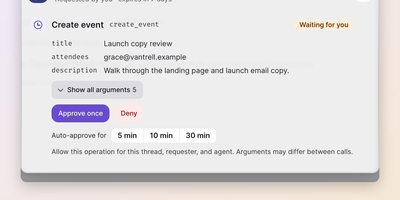
Your team's group chat could have a colleague who has read every email, ticket, and document, remembers all of it, and answers in seconds; MindRoom puts AI agents like that into your chat rooms as full participants. Each agent is a real user on the open Matrix protocol, so you talk to it in MindRoom Chat on web or mobile, in any other Matrix client, or through bridges in Slack, Telegram, WhatsApp, and Discord. Give every agent its own model: a local model for private rooms, a frontier model for hard coding problems, and switch per room or thread whenever the work changes. Agents connect to more than 100 tools, including Gmail, calendars, GitHub, Google Drive, Home Assistant, and any MCP server, and they search your own documents and knowledge bases for answers with sources. Memory persists across conversations and platforms, so an agent remembers people, preferences, and project context months later and can turn repeated work into reusable skills. Before an agent sends an email or runs a command, an approval card shows exactly what will happen; you tap once to allow it, and sandboxed workers keep executed code away from your credentials. Schedule morning briefings, silent inbox checks, and recurring digests in plain language, or wake an agent from any other system with a single HTTP request. Running on a dedicated VPS on RepoCloud with guaranteed CPU, RAM, and SSD, full root SSH access, and a browser serial console. Apache-2.0 licensed.

BrainrotGuard
BrainRotGuard puts a parent between YouTube's recommendation engine and your kid: children search freely, but nothing plays until you tap Approve in Telegram. The request that lands on your phone carries the thumbnail, title, channel, and duration, and one tap either starts the video on the child's tablet instantly or denies it for good. Channels you trust can be allowlisted as educational or entertainment so their new uploads arrive pre-approved, while blocked channels and title word filters stop repeat offenders automatically. Each child gets a profile with its own PIN, watch history, and time budgets, and educational and entertainment content can draw from separate daily limits. Scheduled windows keep the app closed during school hours or after bedtime, with different rules per weekday and bonus minutes grantable for today only. Approved videos stay in a library the child can rewatch without asking again, a dedicated Shorts row can be shown or switched off entirely, and a search-off mode limits younger kids to channels and videos you already approved. You see all of it from the parent side: pending queues, search history, and an activity log of what was watched and for how long. Running on a dedicated VPS on RepoCloud with guaranteed CPU, RAM, and SSD, full root SSH access, and a browser serial console. MIT licensed.
Cezar
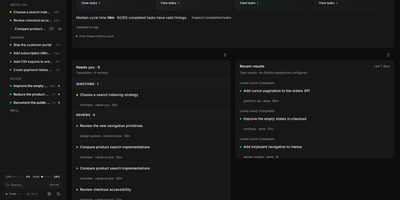
Close the laptop; the agents keep shipping. Cezar is an open-source control center that runs Claude Code, Codex, OpenCode, Copilot, and eight other coding agents in parallel on your own server, around the clock. Every task gets an isolated git worktree, so a dozen agents edit the same repository at once without colliding, and overflow waits in a queue. You watch each run live: the agent's text, its tool calls, token counts, and reported cost stream into one cockpit covering all your projects. The workspace dashboard separates what needs your answer, what is running, and what finished, and the usage view totals spend and tokens per project so a runaway task shows up in dollars, not surprises. Repeatable playbooks are plain Markdown skill files, chained into short YAML workflows that can mix a different agent per step, add checks and gates, and open pull requests; nothing merges on its own. Hand it a GitHub issue in one click, connect Jira or Linear to launch from your tracker, and schedule recurring maintenance with automations. Flip Autonomous and a run stops asking questions and just finishes; run the same task two or three times and keep the best diff. State lives in plain files, no database, and the responsive interface works from your phone. Running on a dedicated VPS on RepoCloud with guaranteed CPU, RAM, and SSD, full root SSH access, and a browser serial console. MIT licensed.