Hi.Events
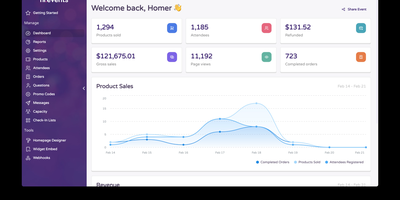
Hi.Events is an alternative to Eventbrite, Tickettailor, and Dice.fm, eliminating per-ticket platform fees entirely when self-hosted. Event organizers create fully brandable event pages supporting paid, free, donation, and tiered ticket types with recurring and multi-date scheduling, sold-out waitlists that automatically release tickets when spots open, and product add-ons with category organization. Stripe Connect integration processes payments directly to the organizer's bank account with instant payouts, while offline payment methods support cash and invoice scenarios. Promo codes offer fixed or percentage discounts with usage limits, expiry dates, and promo-gated hidden tickets for VIP access. QR code check-in enables fast door scanning with multiple check-in lists, scan logs, and real-time attendance tracking across entry points. Custom checkout questions collect attendee information beyond standard fields, with advanced search, filtering, CSV and XLSX export, full and partial refunds, and bulk attendee messaging. The analytics dashboard tracks daily sales, revenue, tax breakdowns, product performance, and promo code usage with exportable reports, while affiliate tracking assigns custom codes to promoters with tracked sales data. Multi-user roles control organizer permissions, automatic invoicing generates receipts, and the REST API ships with interactive OpenAPI documentation. Running on a dedicated VPS on RepoCloud with guaranteed CPU, RAM, and SSD, full root SSH access, and a browser serial console. AGPL-3.0 licensed.
AzuraCast
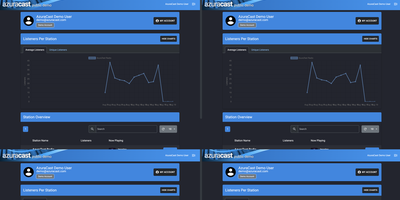
AzuraCast is a solution for running internet radio stations, packaging the entire broadcast stack into a single Docker installation that gets you on air in minutes. Built on PHP with a Vue.js frontend, it uses Liquidsoap as the AutoDJ engine to compile media from playlists, live DJ inputs, and scheduled programming into composited output streams, then broadcasts via Icecast-KH, SHOUTcast 2 DNAS, or Rocket Streaming Audio Server to thousands of concurrent listeners. The media library supports drag-and-drop uploads with automatic metadata extraction, while playlist management handles sequential, random, weighted, and time-scheduled rotations. Live DJ accounts let remote broadcasters connect via BUTT, Mixxx, or any Icecast-compatible software, with automatic crossfade transitions between AutoDJ and live input. The built-in Web DJ tool enables broadcasting directly from the browser without additional software. Each station includes public-facing player pages with now-playing metadata, album art, song history, and embeddable widgets for external websites. The listener request system lets audiences queue songs through the public interface. Multi-station administration hosts unlimited stations on a single server with individual user accounts and granular role-based permissions. Comprehensive analytics track listener counts, geographic distribution, unique listeners, and listening duration with exportable reports. HLS streaming delivers adaptive bitrate broadcasts for mobile compatibility. LADSPA audio plugins enable professional equalization and processing in the stream pipeline. Running on a dedicated VPS on RepoCloud with guaranteed CPU, RAM, and SSD, full root SSH access, and a browser serial console. AGPL-3.0 licensed.
Chartbrew
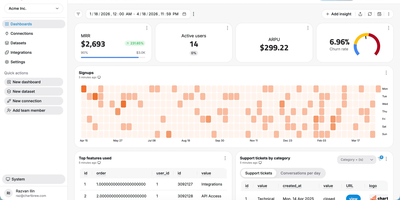
Chartbrew transforms raw database queries and API responses into polished, shareable dashboards without requiring a data engineering team. Connect to MySQL, PostgreSQL, MongoDB, Firestore, or any REST API, then build datasets using the visual query editor with syntax highlighting and auto-completion. Charts render through Chart.js with line, bar, pie, donut, radar, polar, KPI card, and table visualizations, each customizable with colors, legends, filters, and goal indicators. An AI assistant accelerates dashboard creation by generating queries and suggesting chart configurations from natural language descriptions of the metrics you want to track. Reusable datasets let teams prepare data transformations once and share them across multiple charts, while automatic scheduling through BullMQ and Redis refreshes data at intervals from every 10 minutes to monthly. The embed feature generates standalone chart URLs for insertion into external websites, internal tools, or customer portals, and the Reporting API enables programmatic dashboard management and automated report delivery. Team workspaces with role-based permissions control who can view, edit, or manage data connections. Nearly 4,000 GitHub stars reflect steady community adoption. The platform runs on Node.js with Express and Sequelize ORM, supporting MySQL or PostgreSQL as its application database. Running on a dedicated VPS on RepoCloud with guaranteed CPU, RAM, and SSD, full root SSH access, and a browser serial console. FSL-1.1-MIT licensed (converts to MIT two years after each release).
Rotki
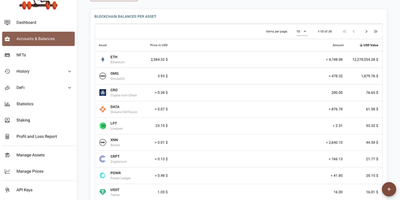
Crypto portfolio tracking that inverts the SaaS model: rotki runs on your own machine, needs no email or account for the free tier, and keeps every wallet address, balance, transaction, and tax event in a local SQLCipher database encrypted with 256-bit AES. By default nothing passes through rotki-operated servers - a design choice that matters when cloud portfolio trackers concentrate exactly the identity-linked holdings data attackers want. Centralized exchanges (Kraken, Binance, Coinbase, Bitstamp, and more) connect through read-only API keys that can see but never withdraw; blockchain accounts cover Ethereum and its L2s, Bitcoin, Solana, Polkadot, and Kusama, with ENS resolution and your choice of RPC endpoint or your own node. rotki decodes on-chain transactions into readable events across major DeFi protocols - Aave, Uniswap, Compound, Curve, Lido - and generates profit-and- loss reports for tax season with customizable accounting settings, including FIFO, LIFO, and HIFO cost-basis methods, plus CSV imports for defunct exchanges. Optional premium sync is zero-knowledge, encrypting the database on-device before upload. AGPLv3-licensed and multiplatform, with a Docker package for server deployment.
SurveyKing
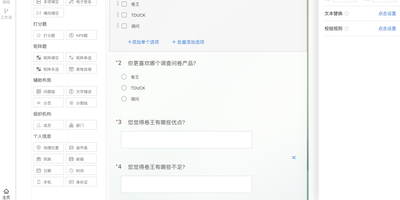
SurveyKing combines survey creation and online examination in a single platform — generate complete questionnaires from plain English via built-in LLM integration, administer timed exams with anti-cheating proctoring, and collect structured data through 20+ question types including matrix questions, cascading selectors, file uploads, and electronic signatures. Built on Spring Boot 3 with a React and TypeScript frontend using the UMI framework and Ant Design components, version 1.12 delivers each question type with independent validation rules, data type controls, and formula calculations. The AI engine connects to mainstream LLMs for survey generation from natural language prompts and provides real-time answer explanations during practice sessions. Exam mode features item banks with Word and Excel bulk import, fixed and randomized question selection, composite paper assembly, live proctoring dashboards with anti-cheating controls, automatic and manual grading with per-question scoring, and PDF score report archiving. The visual logic designer and DSL expression engine handle show/hide conditions, required rules, skip branching, quota controls, randomization, and cross-tabulation analysis with SPSS export. Role-based access controls support multi-user collaboration with department and permission management via Spring Security and JWT authentication. Redis handles caching and queuing while MyBatis Plus manages database operations. Deploy via a single Docker command with embedded H2 for trials or Docker Compose with MySQL for production. Running on a dedicated VPS on RepoCloud with guaranteed CPU, RAM, and SSD, full root SSH access, and a browser serial console. MIT licensed.
Securo
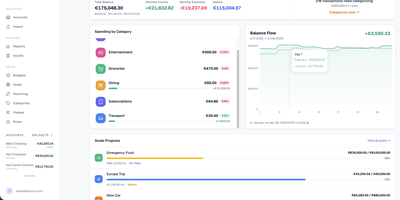
Securo is a privacy-first personal finance platform that keeps all your financial data in your own PostgreSQL instance while connecting to 2,500+ banks across three continents for automated transaction sync. The FastAPI backend with React/TypeScript frontend deploys via Docker Compose on ports 3000 and 8000, with Redis-backed Celery workers handling background synchronization. Bank connections span approximately 2,500 European PSD2 institutions through Enable Banking across 29 countries, US and international banks via SimpleFIN's open protocol, and Brazilian banks through Pluggy, all refreshing automatically every four hours. Multi-account management tracks checking, savings, credit cards, and investments with running balances. The auto-categorization rules engine applies pattern-matching across merchants and amounts. Goal tracking monitors savings targets with progress visualization, asset management handles stocks and custom instruments with configurable valuation growth rules, and reports generate Net Worth and Income vs Expenses charts with category sparklines. Optional AI Agents provide LLM chat with tool-use over your financial data through MCP, supporting OpenAI, Anthropic, Ollama, and compatible providers with per-agent RAG knowledge bases accessible via a global command palette. Multi-user support includes OIDC login, passkey authentication, TOTP two-factor, privacy mode, and multi-currency FX conversion via Open Exchange Rates. 1,500+ stars since March 2026. Running on a dedicated VPS on RepoCloud with guaranteed CPU, RAM, and SSD, full root SSH access, and a browser serial console. AGPL-3.0 licensed.

Wanderer
Wanderer provides a privacy-first alternative to AllTrails and Komoot, giving outdoor enthusiasts complete ownership of their GPS data on a self-hosted server. The platform accepts uploads in GPX, KML, FIT, and TCX formats, automatically extracting distance, elevation gain and loss, duration, and speed statistics to build a searchable trail catalogue. The built-in route planner uses the Valhalla routing engine to calculate hiking, cycling, and walking routes directly on the map, while MapLibre GL renders smooth vector tiles from OpenStreetMap data with configurable tile sources and overlay layers. Each trail supports rich metadata including difficulty ratings, categories, waypoints with descriptions, photo galleries, and summit log entries that track completion dates with optional GPS data. Meilisearch powers instant full-text search across trail names, descriptions, and tags, complemented by map-based spatial filtering and advanced date, distance, and elevation filters. The ActivityPub integration follows the same federation protocol as Mastodon, allowing users to follow explorers on other Wanderer instances and see their public trails, comments, and summit logs in a unified feed without requiring cross-instance accounts. The WASM-based plugin system enables third-party extensions for custom integrations. The Docker Compose stack runs three containers — SvelteKit frontend on port 3000, PocketBase backend with embedded SQLite, and Meilisearch — with startup completing in under 90 seconds. On RepoCloud, deploy Wanderer on a dedicated VPS with root SSH access, persistent storage for your trail database and uploaded photos, and complete control over routing, geocoding, and tile server configurations, all under the AGPL v3 license.
Sourcebot
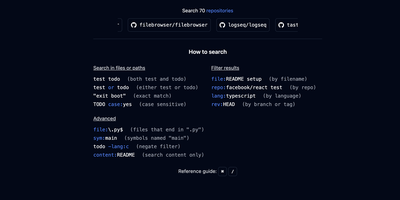
Point Sourcebot at your GitHub, GitLab, Bitbucket, Azure DevOps, Gerrit, or Gitea repositories and get regex, symbol, and filtered search results in under a second across thousands of repos and branches. Backed by Y Combinator with production deployments at NVIDIA, Shutterstock, SeatGeek, Arista, and Red Hat, the Zoekt-powered engine deploys as a single Docker container with zero external data transmission. Ask Sourcebot connects reasoning models like Claude Opus to your entire codebase, enabling natural language questions that return structured answers grounded with inline citations and navigable code snippets, backed by automatic tool calls that search code, follow references, and read files across all indexed repositories. Ask connectors extend this to Jira, Slack, Linear, and Confluence via MCP, pulling external context alongside code for debugging and documentation. IDE-level code navigation provides goto definition and find all references across repository boundaries without local cloning. The built-in file explorer renders any indexed file with syntax highlighting, breadcrumb navigation, and git blame showing per-line commit attribution. An analytics dashboard tracks daily, weekly, and monthly search activity. Permission syncing from GitHub and GitLab enforces access control lists so users only see repositories they are authorized to access. Running on a dedicated VPS on RepoCloud with guaranteed CPU, RAM, and SSD, full root SSH access, and a browser serial console. Other licensed.
osTicket
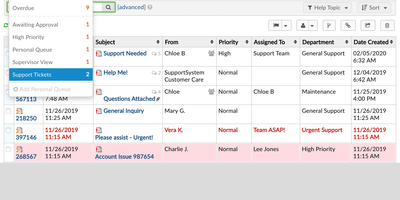
With nearly 3,900 GitHub stars, over 1,800 forks, and continuous development since 2013 culminating in the v1.18.4 release in June 2026, osTicket remains one of the most deployed open-source help desk systems worldwide, trusted by organizations from small businesses to universities and government agencies. The PHP backend on Apache or IIS with MySQL stores every ticket, response, and attachment while the web interface provides separate agent and customer portal views with role-based access control across departments, teams, and individual agents. Customers submit tickets through web forms, email piping, or phone-entry by agents, and configurable ticket filters automatically route incoming requests to the correct department, assign agents or teams, set priority levels, apply SLA plans, and trigger canned responses based on matching criteria including custom field values. Agent collision avoidance locks tickets during response composition to prevent duplicate replies, while SLA plans with business hour schedules track due dates and escalate overdue tickets automatically. Custom forms and fields let organizations capture structured data specific to each help topic — from IT asset tags to billing account numbers — with configurable required and internal-only visibility. The advanced search system with saved queries and CSV export enables reporting across all ticket metadata and custom fields. The customer portal provides ticket tracking, profile management, and knowledge base access. OAuth2 plugin support enables modern email authentication with Microsoft 365 and Google. Running on a dedicated VPS on RepoCloud with guaranteed CPU, RAM, and SSD, full root SSH access, and a browser serial console. GPL-2.0 licensed.
Bigcapital
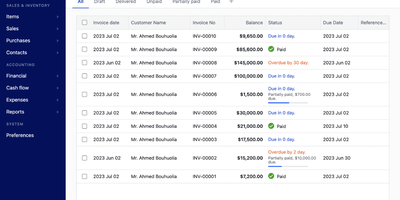
Bigcapital gives small and medium businesses a complete double-entry accounting, invoicing, and inventory management platform they can self-host for free, replacing the per-seat subscriptions of QuickBooks, Xero, and Wave. Every transaction records debits and credits across your chart of accounts, automatically generating balance sheets, profit and loss statements, trial balances, general ledger reports, journal entries, accounts receivable and payable summaries, cash flow analysis, inventory valuation, and inventory summary reports. Sales invoicing supports recurring schedules, customer payment tracking, estimate-to-invoice conversion, and configurable GST/VAT tax rates. Purchase invoicing handles vendor bills with expense categorization for payroll, rent, and operational costs. The inventory module tracks stock levels using FIFO and average cost methods, automatically adjusting quantities on every sale or purchase and providing reorder alerts. Multi-currency accounting converts transactions at real-time exchange rates and consolidates them under customer or vendor profiles with detailed currency reports. The platform deploys via Docker Compose with multi-tenant isolation giving each organization its own separate database, requiring as little as 2GB RAM for the complete production stack. A headless REST API with Postman collections lets developers embed the accounting engine into external applications for programmatic transaction management. Role-based permissions control access for team members and invited accountants across organizations. Running on a dedicated VPS on RepoCloud with guaranteed CPU, RAM, and SSD, full root SSH access, and a browser serial console. AGPL-3.0 licensed.
Shaarli
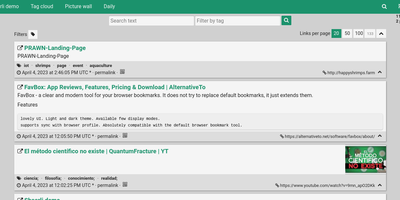
Personal, minimalist, database-free bookmarking - Shaarli is a philosophy as much as an app. Everything lives in a single compressed datastore file inside data/: no MySQL, no PostgreSQL, backup by copying one directory. That write-once/read-many file is usually served straight from OS disk caches, which is why a decade-old Shaarli instance with tens of thousands of links still responds instantly. Designed deliberately single-user, it saves URL, title, unlimited-length description, and tags (with autocomplete, renaming, and merging), marks entries public or private, and automatically strips utm_source and fb tracking parameters from saved URLs. That description field is why the community uses Shaarli as far more than bookmarks: a microblog, read-it-later queue, code-snippet base, pastebin, and shared clipboard between machines. Sharing is one click via bookmarklet or Android apps; consumption is per-tag RSS/Atom feeds plus a daily digest feed; search is full-text with tag filtering. A REST API opens it to any client, a plugin and theme system extends the PHP core (Markdown rendering, thumbnails), and import/export uses browser-standard Netscape HTML - your data enters and leaves freely. LDAP login is supported, no telemetry is sent anywhere, and the UI degrades gracefully without JavaScript. The anti-cloud Delicious.
Grafana OnCall
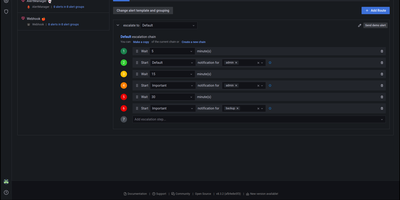
With 3,900 GitHub stars, 140 contributors, and 380 releases since its 2022 launch, Grafana OnCall delivers developer-friendly incident response that routes alerts from any monitoring system to the right engineer at the right time through the right channel. The platform accepts alerts via unique API URLs from Alertmanager, Grafana Alerting, Zabbix, Datadog, Pagerduty-compatible sources, Jira, inbound email, and generic HTTP webhooks, then applies routing templates to direct each alert to the appropriate escalation chain. Escalation chains define notification sequences — notify the primary on-call via Slack, wait 5 minutes, escalate to SMS and phone, wait 10 minutes, page the secondary on-call and notify the engineering manager — continuing until acknowledgment or resolution. On-call schedules support multi-layer rotations with overrides, shift swaps, and timezone-aware handoffs rendered directly inside Grafana dashboards. ChatOps integration publishes alert groups to Slack channels and Telegram groups with interactive buttons for acknowledge, resolve, and silence actions. Template engines based on Jinja2 control alert grouping, appearance rendering, and behavioral automation. The REST API enables programmatic management of integrations, schedules, and escalation policies. Deploy via Docker Compose with PostgreSQL, Redis, and Celery workers alongside your existing Grafana instance. Running on a dedicated VPS on RepoCloud with guaranteed CPU, RAM, and SSD, full root SSH access, and a browser serial console. GNU AGPL v3 licensed.
pgAdmin
pgAdmin 4 is the reference administration GUI for PostgreSQL, bundled by virtually every Linux distribution and supporting versions 14 through 18 including EDB Advanced Server — browse schemas in a hierarchical tree, write and optimize queries with AI assistance, design entity-relationship diagrams visually, monitor live sessions, and run backup/restore operations entirely from the browser. Built on Python Flask with a ReactJS frontend, version 9.17 delivers a comprehensive web-based platform accessible from any device. The Query Tool provides syntax highlighting, auto-completion, query history, an EXPLAIN plan visualizer with graphical node representation, AI-powered SQL generation from natural language prompts, and AI Insights for execution plan analysis that identifies performance bottlenecks. The Graph Visualiser renders query results as line charts, bar charts, stacked charts, and pie charts directly in the interface. The ERD Tool auto-generates entity-relationship diagrams from existing schemas for visual database design. The Schema Browser presents databases, schemas, tables, views, functions, sequences, roles, and extensions in a navigable hierarchy. Server monitoring dashboards display real-time active sessions, locks, transaction throughput, and vacuum status. GUI-driven backup and restore wraps pg_dump and pg_restore with format and compression options. Authentication supports internal, LDAP, Kerberos, OAuth2/OIDC, and webserver modes. The Helm chart includes an HTTPRoute template for Kubernetes Gateway API deployments. Bundled pg_dump, pg_restore, and psql utilities version 18.4. Deploy via Docker with the official dpage/pgadmin4 image. Running on a dedicated VPS on RepoCloud with guaranteed CPU, RAM, and SSD, full root SSH access, and a browser serial console. PostgreSQL License.
Yacht
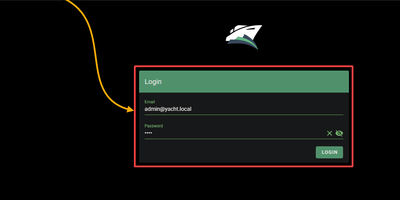
Docker deployment reimagined as an app store: browse a visual catalog of applications, click to deploy with sensible defaults, and customize ports, volumes, and environment variables only when you need to. Point Yacht at any Portainer-compatible template JSON URL and it parses every application into a browsable, searchable interface with pre-configured settings ready for one-click launch. The template framework is fully decentralized — anyone can host template files on GitHub, a personal server, or any URL, creating a community-driven ecosystem of deployment packages without central gatekeeping. Template variables prefixed with ! automatically substitute server-level settings, so !config resolves to your configured path across every deployment without repetitive manual editing. The Python backend handles container lifecycle — start, stop, restart, kill, removal — while streaming real-time logs, providing browser-based shell access, and monitoring resource statistics through the Vuetify dashboard. Docker Compose stacks sit alongside individual containers in the same management interface. Advanced editing lets you modify port mappings, volumes, environment variables, and restart policies on running containers without redeployment. The develop branch introduces agent-managed remote host support for expanding management to additional Docker hosts. Authentication can be disabled for environments behind external proxies like Authelia or Traefik forward auth. Running on a dedicated VPS on RepoCloud with guaranteed CPU, RAM, and SSD, full root SSH access, and a browser serial console. CC-BY-4.0 licensed.

Piwigo
With over 3,800 GitHub stars and continuous development since 2002 spanning 24 years of active maintenance through version 16.4.0 released in May 2026, Piwigo has proven itself as one of the most battle-tested self-hosted photo gallery platforms available, trusted by professional photographers managing 150,000+ high-resolution images alongside small teams sharing event photos. The PHP backend with MySQL or MariaDB storage serves a responsive web interface that organizes photos into hierarchical albums with nested sub-albums, tag-based categorization, and smart albums generated dynamically from search criteria. Batch management tools handle bulk uploads, metadata editing, tag assignment, and album moves across thousands of images simultaneously. User permission controls define access at the album level with configurable public, private, and group-restricted visibility, while guest access allows public galleries without authentication. Image processing via ImageMagick or PHP GD generates multiple thumbnail sizes, watermarks, and responsive derivatives automatically. The plugin ecosystem with over 200 community-built extensions adds functionality from EXIF metadata display and GPS mapping to social sharing, download controls, and Lightroom synchronization for desktop workflow integration. The REST Web API with personal API key authentication enables programmatic album creation, photo uploads, and metadata queries from external applications. Mobile apps for iOS and Android provide on-the-go upload and browsing capability. Docker deployment via the official container or traditional LAMP installation on any hosting provider. Running on a dedicated VPS on RepoCloud with guaranteed CPU, RAM, and SSD, full root SSH access, and a browser serial console. GPL-2.0 licensed.
CPA Manager Plus
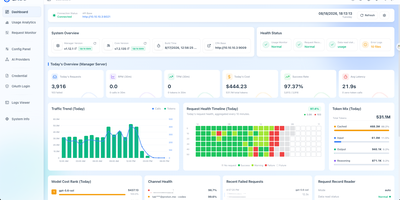
CPA Manager Plus is a self-hosted observability dashboard and management panel that tracks every AI request flowing through your CLI Proxy API gateway, breaking down failures, costs, and account health across providers like OpenAI, Anthropic, xAI, and Codex in one interface. When a request fails, drill into the persistent history to see status codes, affected models, latency, and redacted failure evidence without exposing raw response bodies. The cost analytics engine breaks down token consumption and estimated spend by model, provider, account, API key, project, channel, and time range while tracking input, output, reasoning, cache, and service-tier pricing semantics separately. Model prices sync automatically from models.dev with LiteLLM and OpenRouter fallbacks, and you can add local overrides for aliases or internal models. For teams running Codex or xAI accounts, the health inspector reads quota windows, reset evidence, credential state, and workspace status on a configurable schedule, routing credential failures into an action queue for review rather than letting them silently degrade throughput. Deploy the Lightweight Panel to replace your existing CPA management UI without adding another service, or run Full Mode as a single Docker container that adds the Manager Server with persistent SQLite storage for request history, historical analytics, and automated account inspections. Export or import request history as JSONL for external analysis, and back up the SQLite files alongside your encrypted management keys. Running on a dedicated VPS on RepoCloud with guaranteed CPU, RAM, and SSD, full root SSH access, and a browser serial console. MIT licensed.
OpnForm
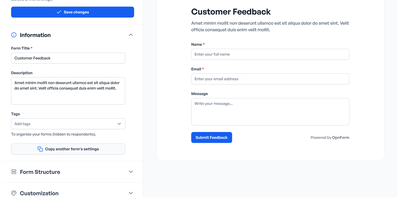
With 3,500+ GitHub stars and 100+ pre-built templates, OpnForm delivers a drag-and-drop form builder that handles everything from simple contact forms to multi-page surveys with conditional branching, calculations, and payment collection. The Laravel 11 API paired with a Nuxt 3 Vue frontend provides a responsive no-code editor supporting 20+ field types including text, date, file upload, signature capture, star ratings, phone numbers with country codes, and rich text. Conditional logic enables dynamic show/hide rules, required-field toggling, and calculated values that react to user input in real time. Submissions flow through configurable integrations — Slack notifications, Discord webhooks, Zapier connections to 5,000+ apps, Google Sheets sync, and custom webhook endpoints with full payload control. AI-powered form generation lets users describe a form in plain language and receive a ready-to-publish result. OIDC single sign-on with configurable state enforcement secures multi-user workspaces, while form-level passwords and CAPTCHA protection guard public-facing pages. Analytics dashboards track submission rates, completion times, and drop-off points. Forms embed via iframe on any website, Notion page, or custom domain with removable branding and custom CSS/JavaScript injection. The Docker Compose stack bundles the API, queue worker, scheduler, Nuxt client, PostgreSQL 16, Redis 7, and Nginx ingress proxy for a single-command deployment. Running on a dedicated VPS on RepoCloud with guaranteed CPU, RAM, and SSD, full root SSH access, and a browser serial console. AGPLv3 licensed.
PipesHub
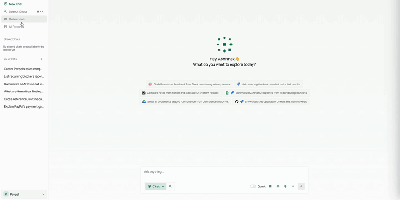
Unify fragmented corporate knowledge across chat channels, documents, and cloud drives with PipesHub, an open-source workplace context platform providing permission-aware search and verifiable answers for teams and autonomous agents. Employees can query enterprise knowledge bases through a conversational interface that retrieves relevant information across Google Workspace, Microsoft 365, Slack, Confluence, Jira, and GitHub while strictly respecting individual user access permissions. Knowledge workers can verify every answer through clickable citation blocks that trace claims directly back to source documents, spreadsheet rows, or chat messages. Teams can assemble custom AI agents visually using a drag-and-drop builder, combining retrieval collections with interactive toolsets to automate multi-step operations like drafting customer responses or creating issue tickets. Autonomous agents connect via Model Context Protocol to inspect shared company knowledge and perform external actions across connected SaaS tools. Organizations can index scanned PDFs, slide decks, markdown pages, and spreadsheets with OCR and document parsing, maintaining synchronized records through automated schedules. Administrators can inspect synchronized records, monitor query history, and manage connector credentials across all integrated business applications. Running on a dedicated VPS on RepoCloud with guaranteed CPU, RAM, and SSD, full root SSH access, and a browser serial console. Apache License 2.0 licensed.