Signed.md
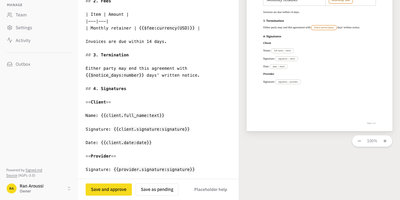
Built for people who ask an agent to do the paperwork, Signed.md has agents draft and send agreements while only humans approve templates and sign. Plain Markdown templates hold placeholders for text, numbers, currency, dates, choices, and signatures, and existing Word or PDF contracts can be imported. Sixteen MCP tools, REST endpoints with an OpenAPI spec, and webhooks give any agent a way to create, preview, and send documents. Guardrails sit in the server, not a prompt: templates an agent writes stay pending until an owner approves them, and changing one comma sends a draft back for another look. Template limits like a minimum fee or allowed notice periods are checked on every draft. Signers need no account or app; a link opens inline fields, a typed or drawn signature applied with one tap, and a progress panel. Signers can download an unsigned copy for their lawyer or decline with a reason. The last signature seals a PDF/A-2b file with a PAdES signature and RFC 3161 timestamps, plus a certificate page listing each signer's consent, times, IP address, and device. A ZIP evidence package, checkable offline by anyone, holds the signed Markdown, the PDF, a hash-chained log, and a signed manifest. Teams get four roles, folders, custom branding, and a record of what people and agents did. Running on a dedicated VPS on RepoCloud with guaranteed CPU, RAM, and SSD, full root SSH access, and a browser serial console. AGPL-3.0 licensed.
Viberglass
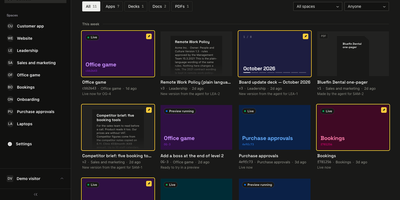
Describe the tool your team needs, and Viberglass has a coding agent build it, preview it, and run it, with nobody on the team touching code. Trackers, approval lists, checklists, and booking calendars replace spreadsheets, each app running on your own servers behind team sign-in, with backups and rollback. Changes run in a preview on a copy of the live data and go live only when the requester or a maintainer says so. The same tasks produce documents and presentations, kept as versioned artifacts that preview in the app, or open GitHub pull requests for engineering to review. For code, the agent writes a plan, asks the right person when something is unclear, takes line-by-line comments, then builds in parts, one pull request each. One task, one thread. Pick Claude Code, Codex, Antigravity, Qwen Code, Mistral Vibe, Kimi Code, OpenCode, or Pi, with provider keys, coding plans, or any OpenAI- or Anthropic-compatible endpoint. Run details show the agent's thinking, tool calls, prompt, worker log, and token usage. Tasks start in Slack, a browser extension, GitHub Issues, Jira, Shortcut, webhooks, schedules, or an MCP client. Roles for members, guests, and read-only viewers, open or private spaces, shared secrets, and an audit log cover a shared installation. Agent runs start in a throwaway container that is removed afterward, and stored credentials are encrypted. Running on a dedicated VPS on RepoCloud with guaranteed CPU, RAM, and SSD, full root SSH access, and a browser serial console. AGPL-3.0 licensed.
Scout Job Search
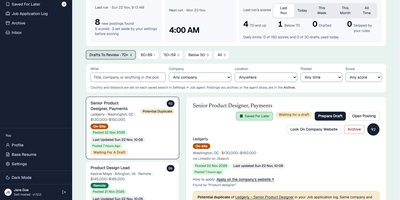
If a job hunt has become a second job, Scout takes the repetitive half: scheduled searches and a tailored resume for each posting worth your time. Saved searches take up to five alternative titles, ten locations, ten followed companies, and filters for work mode, seniority, and pay. The agent skips jobs you have seen, checks the employer's own site for the full posting, and scores the rest out of 100, best first, with reasons and red flags. Your own rules weigh pay, work style, and ZIP-code distance, and fresh postings earn a bonus. Resumes tell each role as a story, fit your two or three page limit in PDF and Word, and earn a letter grade against common US applicant tracking criteria, with rewrites toward an A using only facts your profile backs. A chat applies five changes at once; any section can be edited by hand or rolled back. When several drafts ask for something your resume never says, Scout asks once and adds your answer to every draft you pick. Cover letters appear only on request. A board runs from draft to offer, with a funnel dashboard, a duplicate-application warning, and an inbox for employer replies through Gmail. Claude, OpenAI, Mistral, LM Studio, or Ollama write the drafts under daily, weekly, and monthly spending limits. It never applies for you. Running on a dedicated VPS on RepoCloud with guaranteed CPU, RAM, and SSD, full root SSH access, and a browser serial console. AGPL-3.0 licensed.
Euron Open AI API Gateway
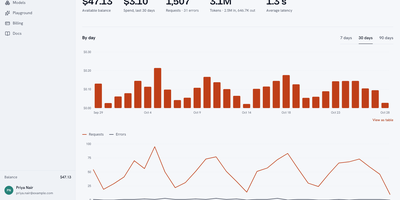
If you resell or share AI model access, Euron Open AI API Gateway turns scattered provider accounts into one key, one price list, and one prepaid balance. Point an OpenAI or Anthropic SDK at it, swap the base URL and key, and every chat model answers in either wire format, with streaming, tools, and images translated both ways. Operators connect OpenAI, Anthropic, Gemini, or hosts like Groq, OpenRouter, and a self-run vLLM, then set a margin by default, per model, account, or key; zero means at cost. Callers top up a USD balance through Stripe, or in rupees through Razorpay with UPI, cards, and netbanking at a rate locked per order. Before any provider is called, the worst-case price is reserved, so parallel requests cannot overspend. A refused request costs nothing. API keys carry a model allow-list, monthly budget, rate limits, and IP rules, and request bodies are logged only when the key's owner opts in. When a provider times out or returns a 429 or 5xx, the request moves to the next route while circuit breakers and health probes sideline the failing one. Developers get a usage log with tokens, latency, and the exact price of every request, plus a streaming playground. The admin console covers accounts, credit grants, rate-limit tiers, circuit health, revenue against provider cost, and an audit trail. Running on a dedicated VPS on RepoCloud with guaranteed CPU, RAM, and SSD, full root SSH access, and a browser serial console. MIT licensed.
EU AI Compliance Auditor
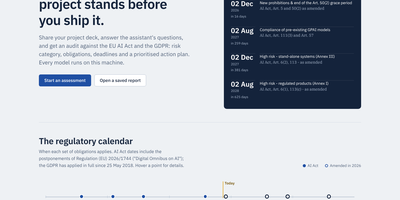
Audit an AI project against the EU AI Act and the GDPR while the deck, the interview, and the analysis never touch a third-party cloud. Upload the project's deck as a PDF or PowerPoint file, or just describe it in plain words. An assistant then interviews you for up to three rounds and asks only what changes the legal assessment, attaching the reason to each question. On the left, a project file shows what it has learned so far. Agents grounded in the official legal texts write the report while every step streams live. The report opens with a verdict: risk category, rationale, next deadline, and score. Deadlines, score, and checklist come from code, never from the model. Obligations list their status and the gap to close, and the action plan runs from P0 blockers down to P3, with a legal basis and due date for each action. The interactive checklist saves as you tick it and travels into the PDF and JSON exports. Ask about this report opens a chat that answers from the report and flags citations missing from the corpus. The overview page keeps the regulatory calendar and shows which obligations apply next. Running on a dedicated VPS on RepoCloud with guaranteed CPU, RAM, and SSD, full root SSH access, and a browser serial console. MIT licensed.
IvaraBase
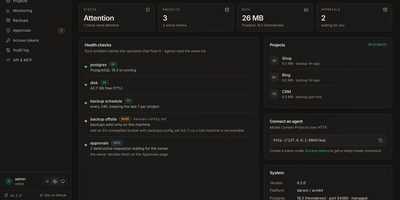
A Supabase-compatible backend that AI agents can run themselves, IvaraBase hosts many projects on one server and pauses for your approval before anything destructive happens. Claude Code, Codex, ChatGPT, Cursor, and Claude Desktop connect over MCP, where each of the 100-plus dashboard operations is also a tool. Tokens are scoped by level, project, and expiry, and by default a destructive call shows a preview, then waits as an approval request you can accept from a phone. The audit log names the agent behind each change. Projects come with a database, SQL and table editors, tracked migrations, generated types, and extensions such as pgvector and PostGIS. Auth covers email and password, magic links, phone codes, anonymous users, multi-factor, Google, GitHub, Apple, and any OpenID Connect provider. Storage adds buckets with row level security, signed URLs, and resumable uploads; realtime streams table changes, broadcast, and presence. Functions get secrets, cron schedules, and logs; webhooks fire on insert, update, or delete with retries and signatures. Existing supabase-js code keeps working after you swap in the project URL and key. Backups are encrypted, restore-tested automatically, and copied to any S3 bucket, and one command rebuilds everything on a new machine. An idle project uses almost no memory, so ten side projects fit on the server you already pay for. Running on a dedicated VPS on RepoCloud with guaranteed CPU, RAM, and SSD, full root SSH access, and a browser serial console. AGPL-3.0 licensed.
NextBoard
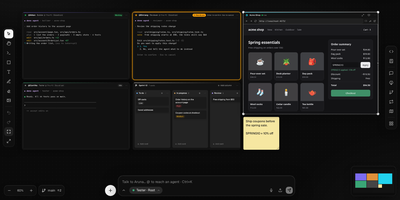
Claude Code, Codex, OpenCode, and other agent CLIs run side by side as live terminal tiles on one shared canvas in NextBoard, a browser-based hub for directing a whole crew of coding agents. Each console wears a WORKING, NEEDS YOU, or READY badge, and a single keypress jumps to the agent that has waited longest. Hand out work with an @mention or let the lead agent plan it, split it, and forward results; reports land in a thread. Groups, handoffs, loops, task boards, and a Mission Map coordinate larger teams. Close the tab and nothing stops. NextCode, the hub's own chat agent, lists every file read, edit diff, and test run as a row and waits for you to approve its plan. The Code view adds an editor with language servers and debuggers, per-file review with keep or undo, Local History, and a git panel for commits and pull requests. A database client browses tables, runs SQL with charts, and keeps production connections read-only by default. One project can span your laptop and several SSH servers, sharing a memory that every agent consults first. Localhost URLs from console output open as live preview tiles, and an encrypted vault lets agents use credentials without seeing them. Bring your own subscriptions or an Anthropic- or OpenAI-compatible API key, with optional monthly budgets. Running on a dedicated VPS on RepoCloud with guaranteed CPU, RAM, and SSD, full root SSH access, and a browser serial console. MIT licensed.
Nerla
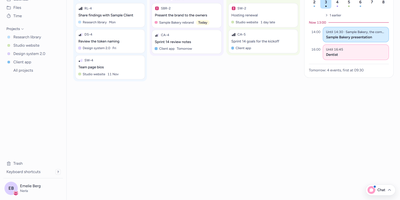
Your team's tasks, calendar, chat, video calls, documents, whiteboards, files, and time sheets all live in Nerla, a workspace with an AI teammate and a pink cat mascot. Home shows tasks from all projects as a board or list beside today's events. Ctrl K jumps to any task, project, file, or teammate. Projects bring their own members, board, chat, and files; tasks carry a status, priority, assignee, due date, and a short number like WEB-12. The calendar handles repeating events, guests, out-of-office days, and working hours, and a team view lines up everyone's week. Chats cover direct messages, groups, and one per project, and any can start a video call with screen sharing and a lobby for outside guests. Papers and whiteboards are edited live by several people and sit in the same folders as files, which can be shared by outside link. The AI teammate acts only as you, answers wherever you mention it, and asks before changing what others see, at a caution level the admin sets. Ollama, OpenRouter, or any model that speaks the OpenAI chat API with tool calling can power it, and outside agents like Claude Desktop connect over MCP. Nothing phones home. A setup script installs the stack and HTTPS, then prints the code that makes your first account the admin. Others join by invite link. Running on a dedicated VPS on RepoCloud with guaranteed CPU, RAM, and SSD, full root SSH access, and a browser serial console. MIT licensed.
Remyral
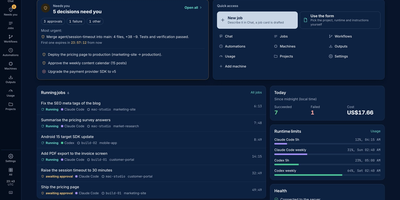
Remyral is a self-hosted control plane that runs Claude Code, Codex, Pi, and OpenCode across your own machines, with a shared queue, approvals, and an audit log. Requests start in chat, where the assistant drafts a job card that you approve, edit, or dismiss; plan mode writes phases and open decisions first and changes nothing until you approve the plan. The queue places each job on a Linux, macOS, Windows, or Docker worker by capacity, disk state, and required runtime, and the project's sandbox applies a network policy of off, allow-list, or web. Workflows mix agent steps with conditions, loops, HTTP calls, code, and approval nodes, started by a schedule, a signed webhook, or the API. A shared memory of rules, facts, decisions, and lessons reaches every runtime the same way, and lessons that agents propose wait for a person to accept them. Three security presets decide which actions need a person plus an authenticator code, and privileged actions land on a hash-chained audit log. Software jobs end as pull requests on GitHub, GitLab, or Bitbucket, with a merge decision and a deploy through Coolify or Cloudflare Pages, while usage and cost are tracked per runtime and account. Transient failures retry on another machine, and jobs that hit a usage limit wait for the window to reopen. Running on a dedicated VPS on RepoCloud with guaranteed CPU, RAM, and SSD, full root SSH access, and a browser serial console. Apache-2.0 licensed.
Curatarr
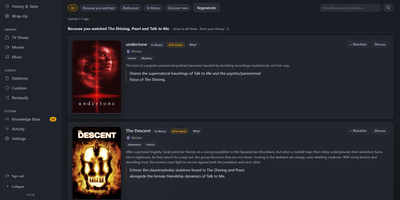
Your Plex or Jellyfin library grows without a plan until Curatarr takes over as curator, learning what the household really watches, suggesting additions, and arguing for removals. Each person in the house gets a taste profile built from their own plays, and recommendations arrive with a match score and a plain-language reason. Picks come from your own library or open-ended discovery, filtered by category or mood. When something should go, a four-part judge weighing taste, household use, custodianship, and resonance writes out the case beside Keep, Discuss, and Delete buttons. Nothing is deleted until you approve it. Approval removes the files through Radarr, Sonarr, or Lidarr, and a title with a major award is only ever your call. Ask the chat about anything you own and the answer comes from the viewing record and verified facts, even who watched which episodes. Wrap-Up retells any member's last 30 days, six months, year, or all time as an archetype, stat tiles, a roast, and a toast. Spotify and Netflix exports count as plays, and playlists are written back to Plex. About 45 maintenance jobs tidy the library knowledge. Prompts run on local Ollama models, from 4 GB cards up, and a NAS can borrow a gaming PC's GPU while nobody is playing. Running on a dedicated VPS on RepoCloud with guaranteed CPU, RAM, and SSD, full root SSH access, and a browser serial console. AGPL-3.0 licensed.
OneCamp
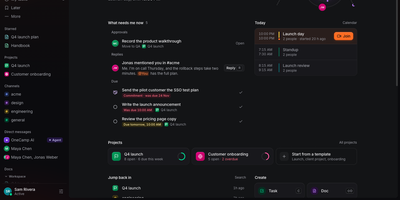
Channels, docs, projects, tables, a shared calendar, and video calls for the whole team, plus AI teammates that act as the person who sponsors them and never more. Threads and direct messages carry the talk, a scheduled check-in asks what everyone worked on, and voice, video, or screen clips of up to five minutes go out like a file. Mention an agent and it acts with your permissions and no more, asks before changing things until told otherwise, and loses access the moment you do. Agent actions are signed, chained to the entry before, and written down before they run; one that cannot be recorded does not run. Projects flip between list, board, timeline with dependencies, releases, and reports, with SLA timers that follow business hours. Docs are edited together live from templates, and tables link to each other, add up rows, and compute with formulas. Calendars connect to Google and Outlook, and meeting rooms book without clashes. Call recaps land on the calendar event, ready to become tasks. Admins get SAML, OIDC, and LDAP sign-in, SCIM provisioning, and a Slack importer with a bridge for the move. Desktop apps cover Windows, macOS, and Linux, and a running OneCamp server never phones home. Running on a dedicated VPS on RepoCloud with guaranteed CPU, RAM, and SSD, full root SSH access, and a browser serial console. AGPL-3.0 licensed.
WAJ AI Engine
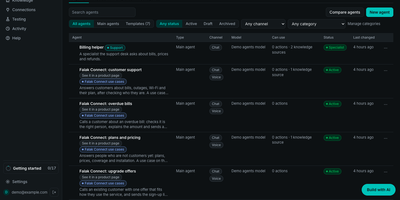
Building an agent in WAJ AI Engine takes configuration, not code: write its instructions, pick a model, attach MCP tools and knowledge, and let it hand off to specialists. The admin portal handles daily work, while an admin MCP server lets Claude, Cursor, or any MCP client build and test agents with the same steps. Uploaded PDF, Word, Markdown, text, and HTML files become a knowledge base the agent searches before it answers. Test suites check answers for required words or tool calls, or score them against a rubric with a judge model, and run against a draft or the live version. A GitHub Action runs a suite on pull requests and fails the job when the pass rate drops. Overview and Conversations show chats, hand-offs to a person, and failed actions per agent, and conversations open with the tool calls they used. Versions, a staging-to-production switch, and an activity log record who changed what and when. Changes reach callers on their next message. Published agents answer over a streamed chat API, an OpenAI-compatible endpoint that lets OpenAI SDKs treat them as models, and voice calls. Models can come from Google Gemini, OpenAI, Azure OpenAI, Anthropic, Ollama, or any OpenAI-compatible server, and a local model needs no API key. Running on a dedicated VPS on RepoCloud with guaranteed CPU, RAM, and SSD, full root SSH access, and a browser serial console. Apache-2.0 licensed.
Githome
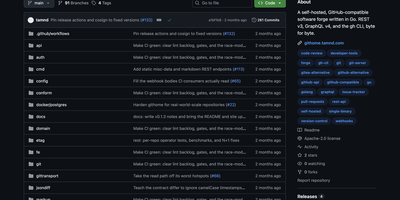
Point the gh CLI at your private Githome server and it works identically to github.com, because every REST v3 and GraphQL v4 endpoint returns byte-for-byte compatible JSON shapes, headers, Link pagination, and ETag caching. A single compiled Go binary serves the REST API under /api/v3, GraphQL under /api/graphql, git smart-HTTP transport, and a server-rendered web UI implementing the GitHub Primer design system with full functionality when JavaScript is disabled. The web interface provides repository browsing with Markdown rendering and syntax highlighting, issue tracking, pull requests with unified diffs and inline code review threads, full-text search, user profiles, and a notifications inbox. Authentication supports personal access tokens with prefix-based identification, OAuth device and web flows, and scoped permissions on every response header with only token hashes stored. The pull request system implements the complete lifecycle including async mergeable state computation, squash, merge, and rebase strategies, commit statuses, check runs, and statusCheckRollup fields. Webhooks deliver events with X-Hub-Signature-256 verification, SSRF protection, and at-least-once retry semantics. Storage supports SQLite for single-node deployments or PostgreSQL for production configurations. Performance optimizations include batch loaders replacing N+1 queries, keyset pagination, FTS-backed search, and GraphQL dataloaders. Docker deployment pulls the official multi-arch container image from GitHub Container Registry. Running on a dedicated VPS on RepoCloud with guaranteed CPU, RAM, and SSD, full root SSH access, and a browser serial console. Apache-2.0 licensed.
Orrery
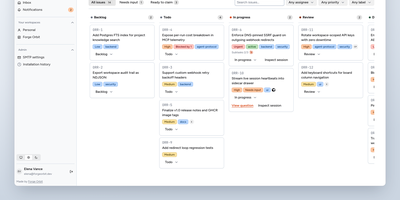
One board, two kinds of workers: Orrery is project management where people and AI coding agents pick up the same issues, and claims keep two agents off the same task. Issues move across a six-column board with drag-and-drop, instant search, filters for status, assignee, priority, and label, plus subtasks and blocked-by dependencies. Agents like Claude Code, Codex, and Cursor take ready work under a five-minute lease, so a crashed laptop releases the issue on its own. A sidebar inspector shows each live session's model, token costs, and test results, and a person can raise a stop signal for the agent to see. Blocked agents open a Needs-input question with a proposed fallback; people answer in Markdown, and after one hour the project's policy pauses the issue or applies the fallback. Prefer to delegate from the board? A local runner launches OpenCode and other ACP-compatible agents in isolated git worktrees while Live Session Studio streams plans, diffs, and test runs. My work gathers assignments, sessions, and questions across every workspace, and notifications flag review handoffs and expiring leases. Shared workspaces add per-project grants, email invitations, a full audit history, and signed webhooks that retry failed deliveries. Official plugins connect Claude Code and Codex to a 39-tool endpoint, and nothing needs an open port on a laptop. Running on a dedicated VPS on RepoCloud with guaranteed CPU, RAM, and SSD, full root SSH access, and a browser serial console. AGPL-3.0 licensed.
Callwrit
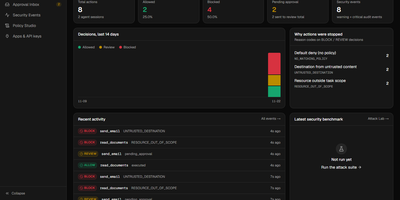
Callwrit stands between your AI agents and their tools and checks every proposed action before it runs: allow it, send it to a human for approval, or block it with reasons. Per-task mandates list the tools, resources, and destinations an agent may touch, and the agent cannot widen them. Default deny covers the rest. Addresses that came from an email or web page, or that the model invented, are never auto-allowed, which stops injected instructions from mailing data out. Approvals bind to the exact call, its arguments, and the policy version, work once, and expire. Allowed calls return a signed single-use token that your tool service can verify. All decisions are written to a hash-chained audit log with a one-click integrity check. The MCP gateway fronts any MCP server for Claude Desktop, Claude Code, or Cursor without code changes, and client SDKs plus an HTTP API cover your own agents. Policy Studio edits versioned rules, tests a hypothetical call in a simulator, and invalidates older approvals when a new version goes live. Attack Lab runs 37 scenarios with and without the guard and charts the difference. Overview, Approval Inbox, and Security Events show what was stopped and why, with filters by decision, severity, and type. Running on a dedicated VPS on RepoCloud with guaranteed CPU, RAM, and SSD, full root SSH access, and a browser serial console. AGPL-3.0 licensed.
Euron Open SupportDesk
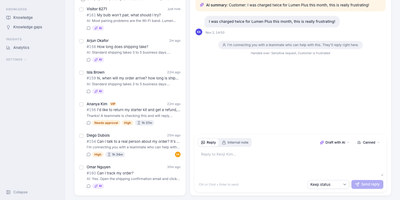
Behind one script tag on your website, Euron Open SupportDesk runs an AI help desk that answers customers from your documents, cites sources, and hands everything else to your team. Feed it PDFs, Word files, Markdown, HTML, or FAQ CSVs, or point it at a page or sitemap, and it indexes them in the background. No source, no answer. Your team gets the handoff with the transcript, a summary, and the reason. Refunds, cancellations, account changes, billing disputes, and data deletion are held for approval, and VIP or frustrated customers go straight to a person. Questions the documents miss become knowledge gaps. An agent's reply turns into the draft article, and publishing it lets the AI answer next time. Start with no API key at all, quoting your documents, or pick a local Ollama model, Anthropic, OpenAI, or vLLM. A ledger tracks tokens, cost, and delay for every model call, and daily or monthly budgets cap the spend. Around the AI sits a full helpdesk: shared inbox, views, round-robin routing by capacity, SLA timers, canned replies, and bulk actions. Customers reach you through the widget, threaded email, a magic-link portal, or a public help center. Analytics track first response, resolution time, deflection, and CSAT, and a REST API with signed webhooks feeds your other tools. Running on a dedicated VPS on RepoCloud with guaranteed CPU, RAM, and SSD, full root SSH access, and a browser serial console. MIT licensed.
TalentFlow AI
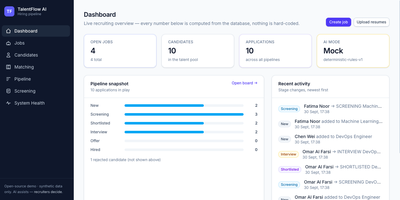
Where most AI hiring tools return one mystery score, this hiring pipeline ranks candidates requirement by requirement and quotes the resume line behind the verdict. Paste a job description or upload a PDF, DOCX, or TXT file, and the requirements split into must-haves and preferences with skills, years, education, and location pulled out. Upload several resumes at once and each becomes a structured profile with an experience timeline, certifications, and canonical skills that keep their evidence line. Match scores print their own formula and weights, and semantic similarity stays a supporting signal that can never override a miss. A pipeline board carries candidates from New through Screening, Shortlisted, Interview, and Offer to Hired, with a Reject off-ramp and an append-only audit trail of every move. The AI assists; the recruiter decides. Screening question sets are generated per application from the match results, probing strengths and honest gaps. Without an OpenAI key the app runs a deterministic mock mode that labels extracted records as mock, and with a key it switches to live extraction and embeddings. A health page reports database and AI configuration without exposing secrets. No protected characteristics are stored or inferred, and the platform never issues a hire or no-hire verdict. Running on a dedicated VPS on RepoCloud with guaranteed CPU, RAM, and SSD, full root SSH access, and a browser serial console. MIT licensed.
Agentic Researcher
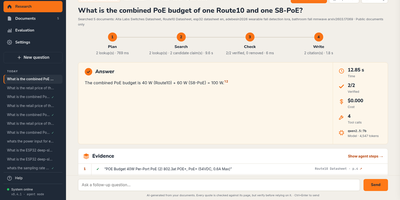
For questions that need several lookups across datasheets and papers, Agentic Researcher plans the searches, checks each quote against its page, and cites every sentence of the answer. A planner splits each question into lookups and resolves follow-ups from conversation memory. A researcher then searches your PDFs through an MCP tool server, mixing vectors and keywords so part numbers and units still match. A critic drops any claim whose quote is missing from the page, whose nearby text gives instructions to the AI, or whose numbers and product names the quote lacks. The writer keeps only cited sentences, and clicking a citation opens the PDF at the quoted page in a side drawer. A price missing from the documents gets "Not found" rather than a guess, and a question answered only in part pauses to ask whether to show a partial answer. Each answer starts as an AI draft until a named reviewer marks it reviewed, and the audit log records who asked, what the agents did, and who reviewed it. Export PDF prints a report with the evidence table and log. The agent steps list every lookup and tool call, Documents takes dropped PDFs, and Evaluation compares agent and baseline runs. Settings pick Claude or a local Ollama model as main, the other as fallback, with a cost cap per run. Running on a dedicated VPS on RepoCloud with guaranteed CPU, RAM, and SSD, full root SSH access, and a browser serial console. MIT licensed.