Categories
Self-Hosted AI Agents RAG Model Context Protocol LLM Evaluation Human-in-the-Loop Research Assistant GuardrailsDeveloper links
Agentic Researcher
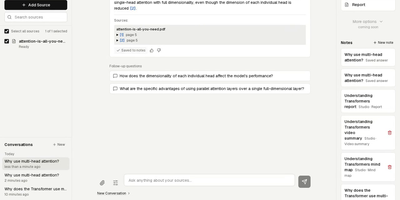
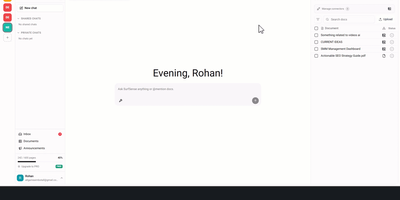
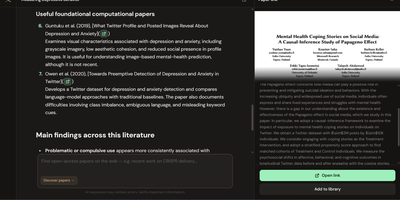
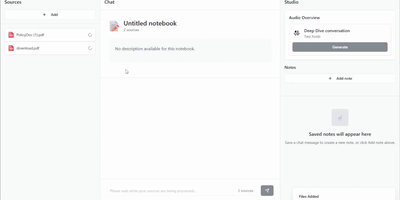
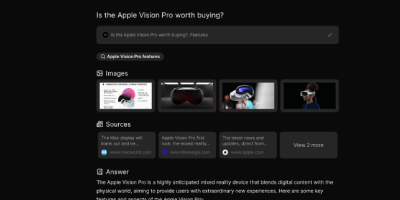
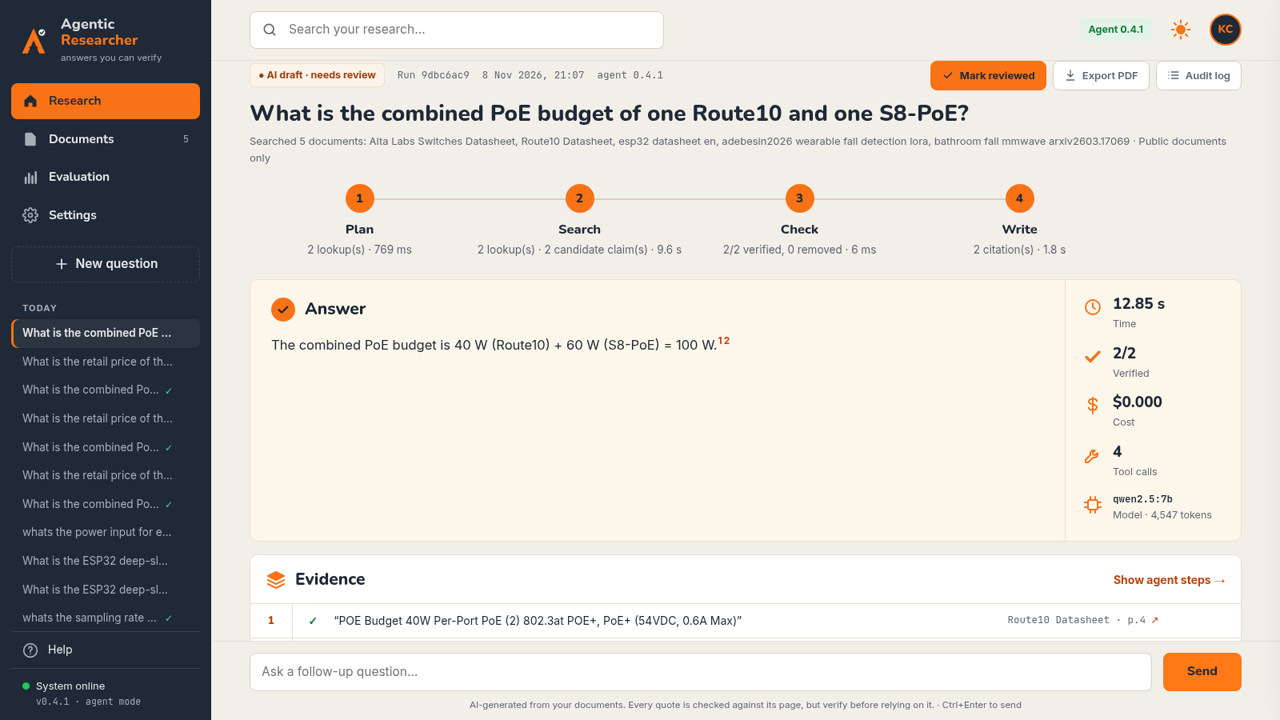
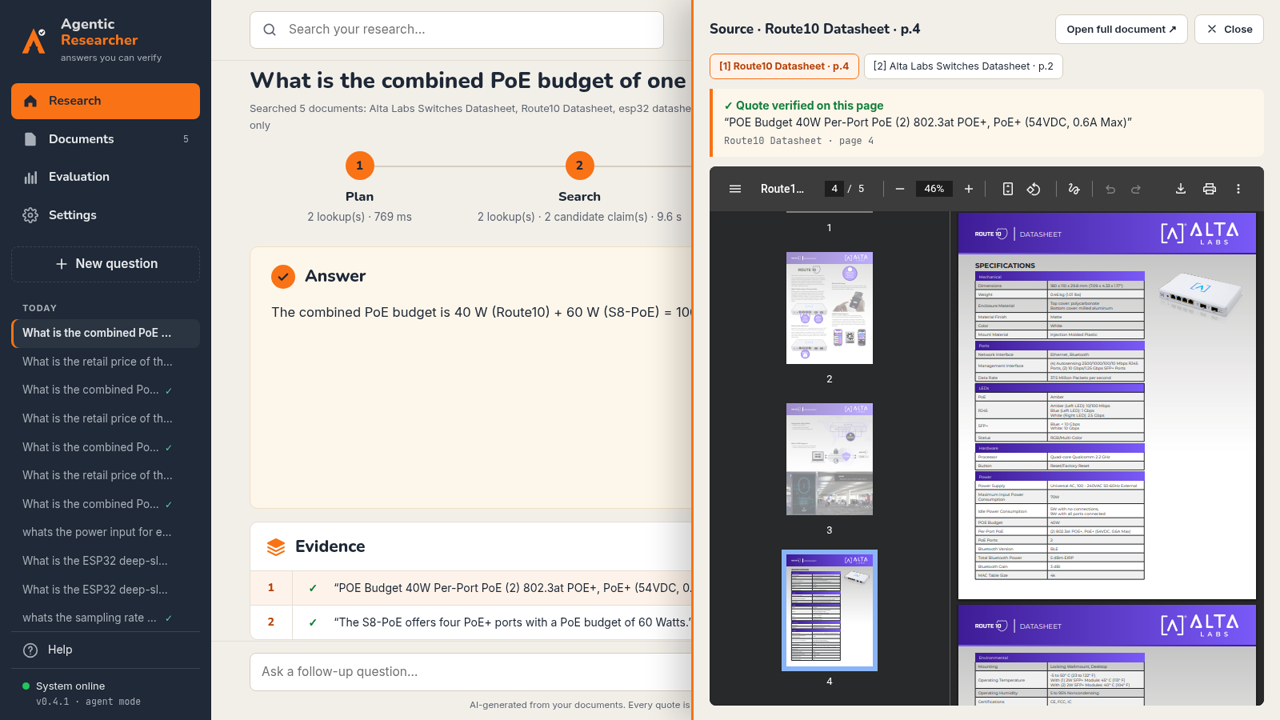
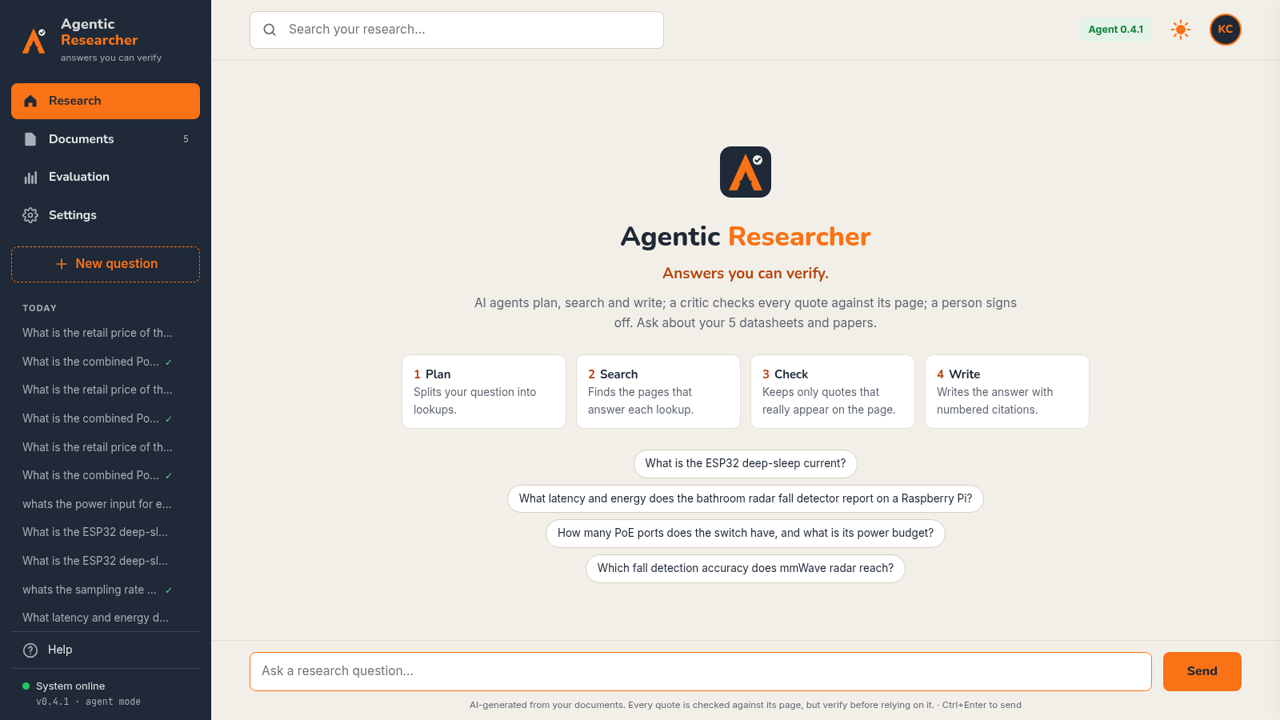
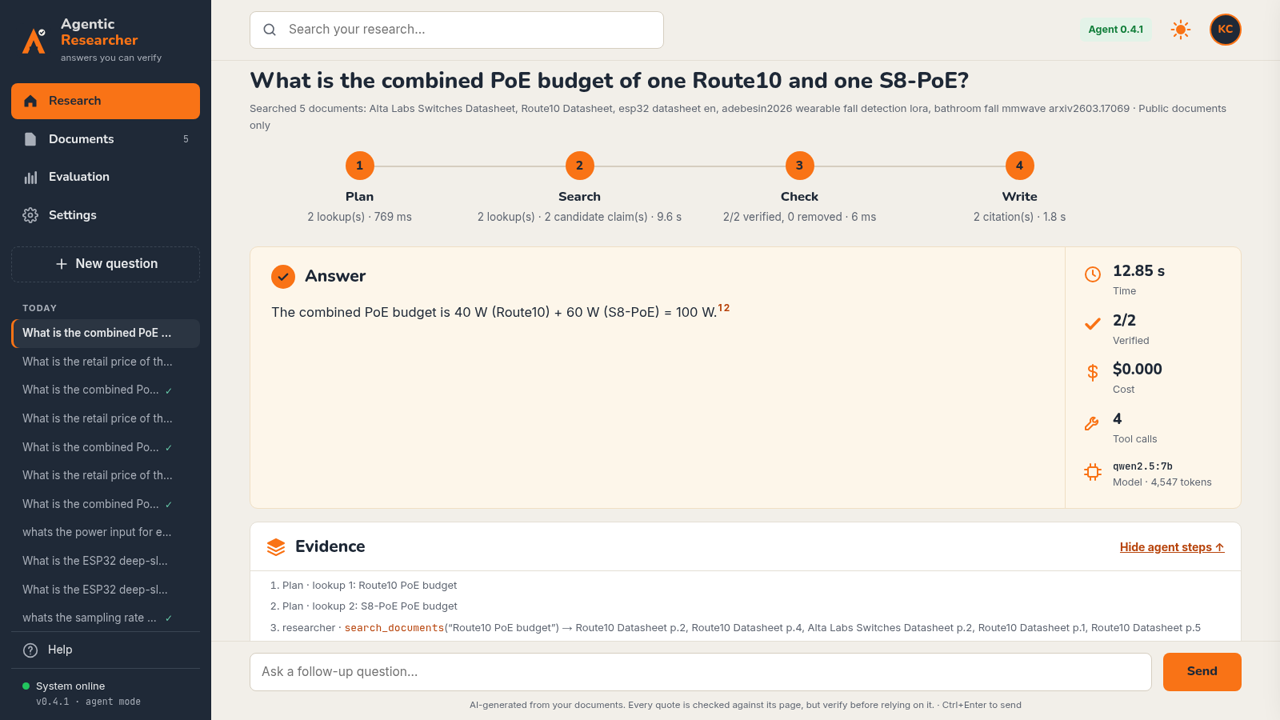
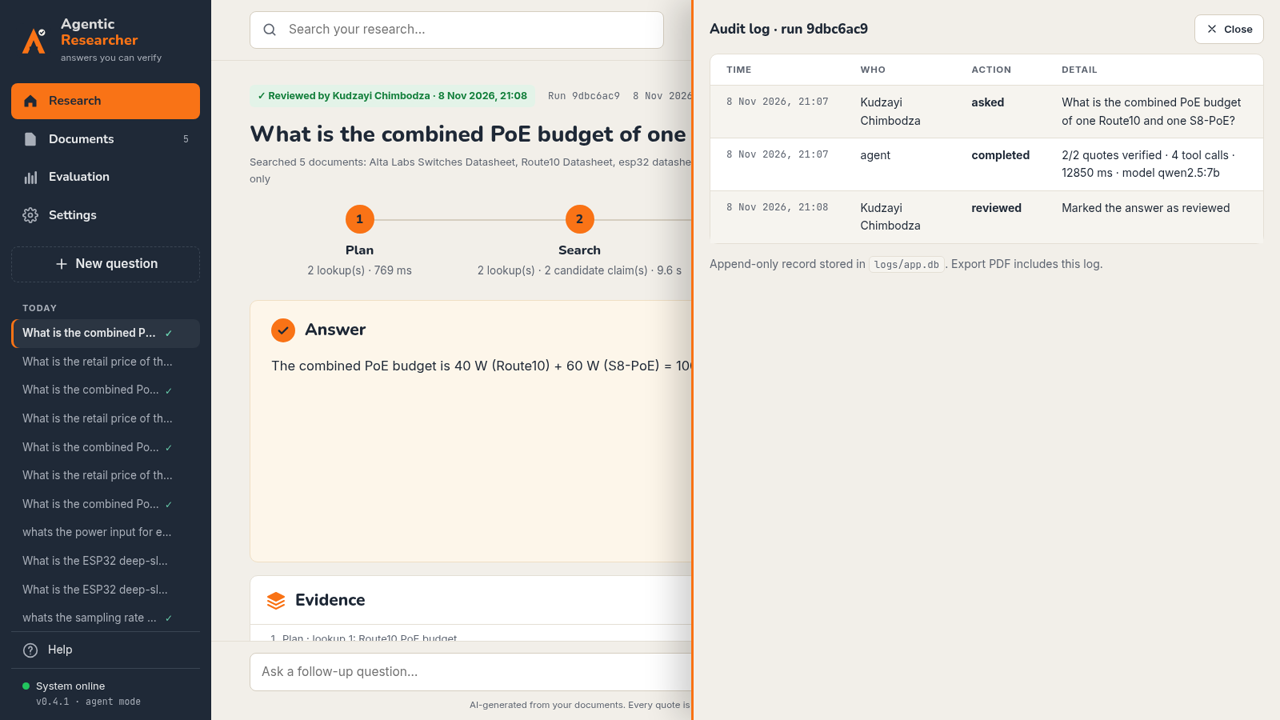
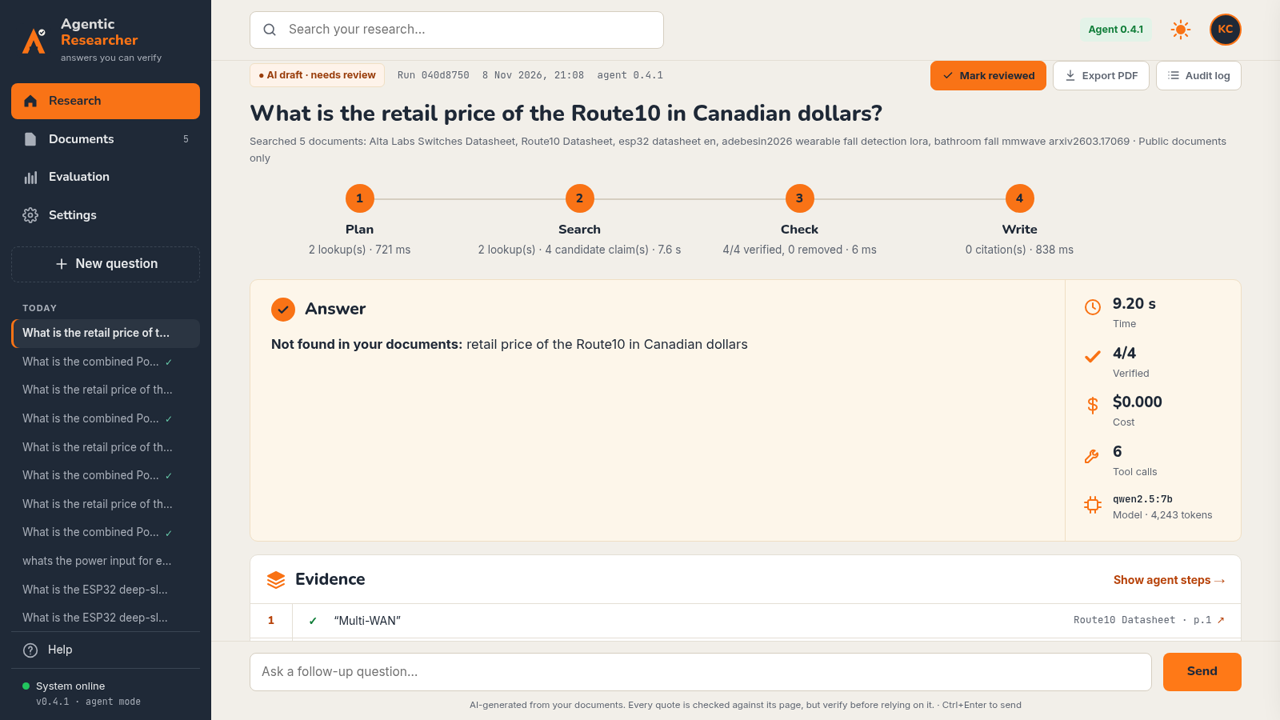
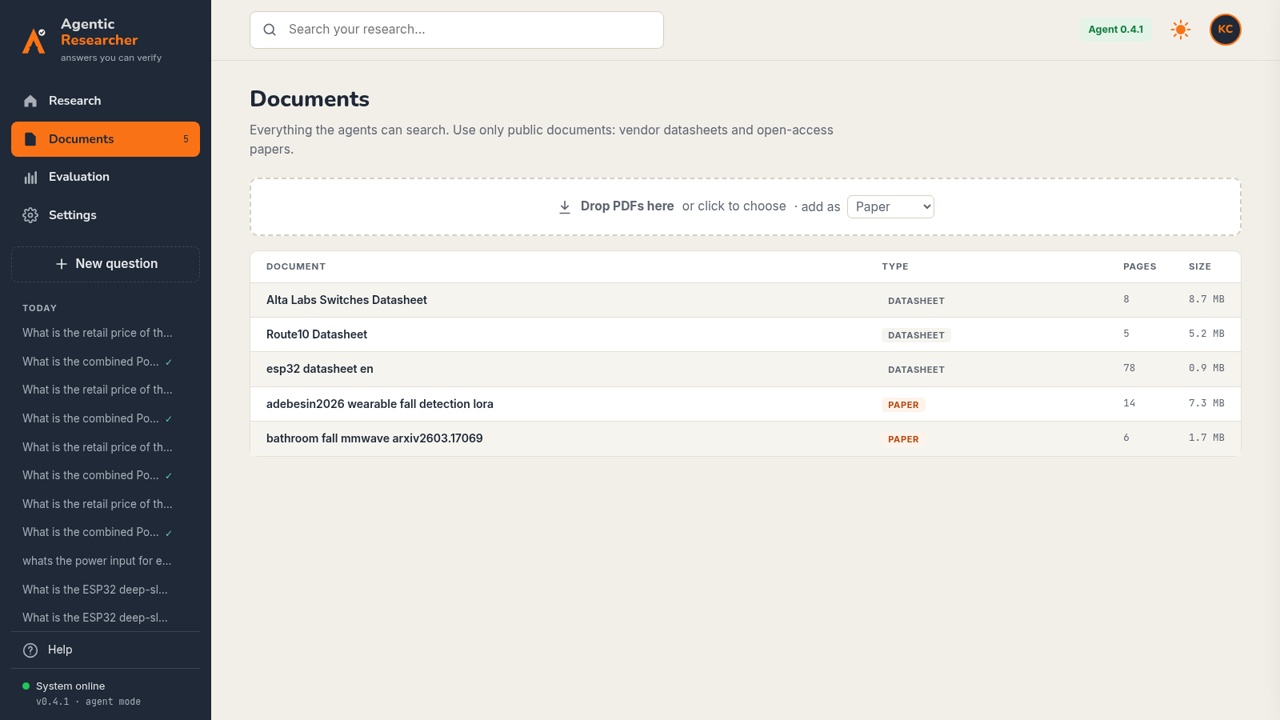
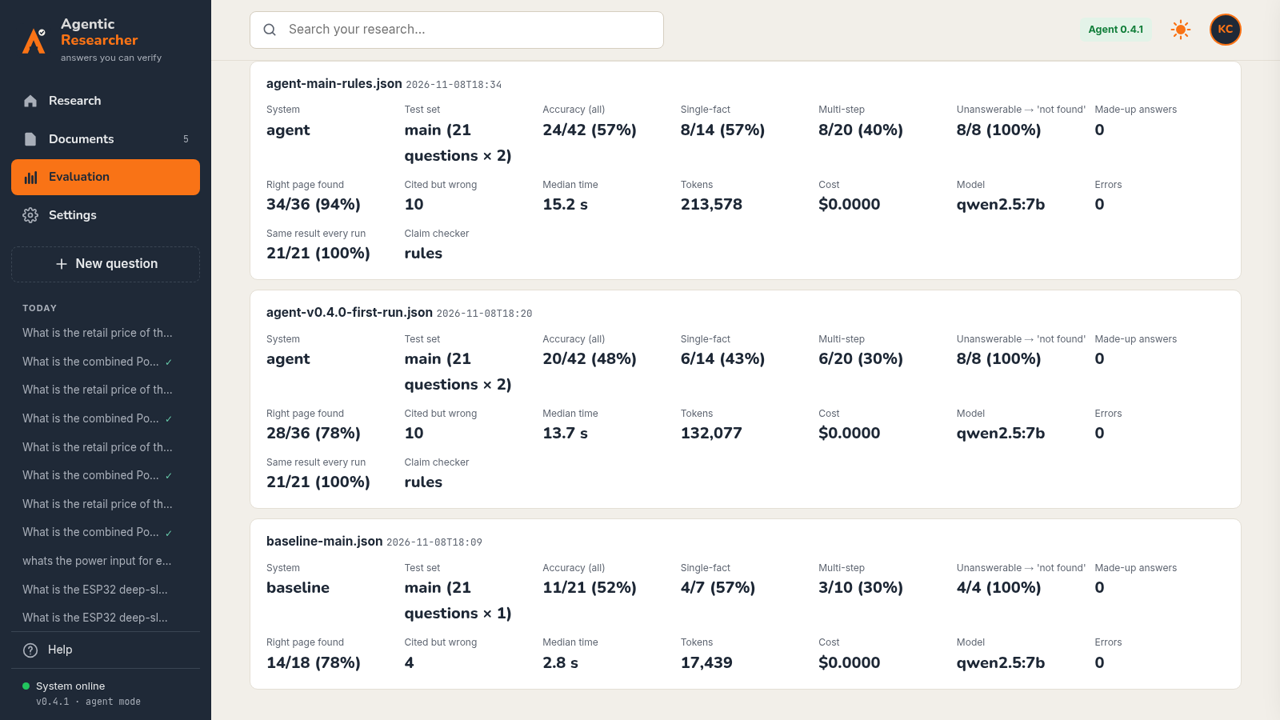
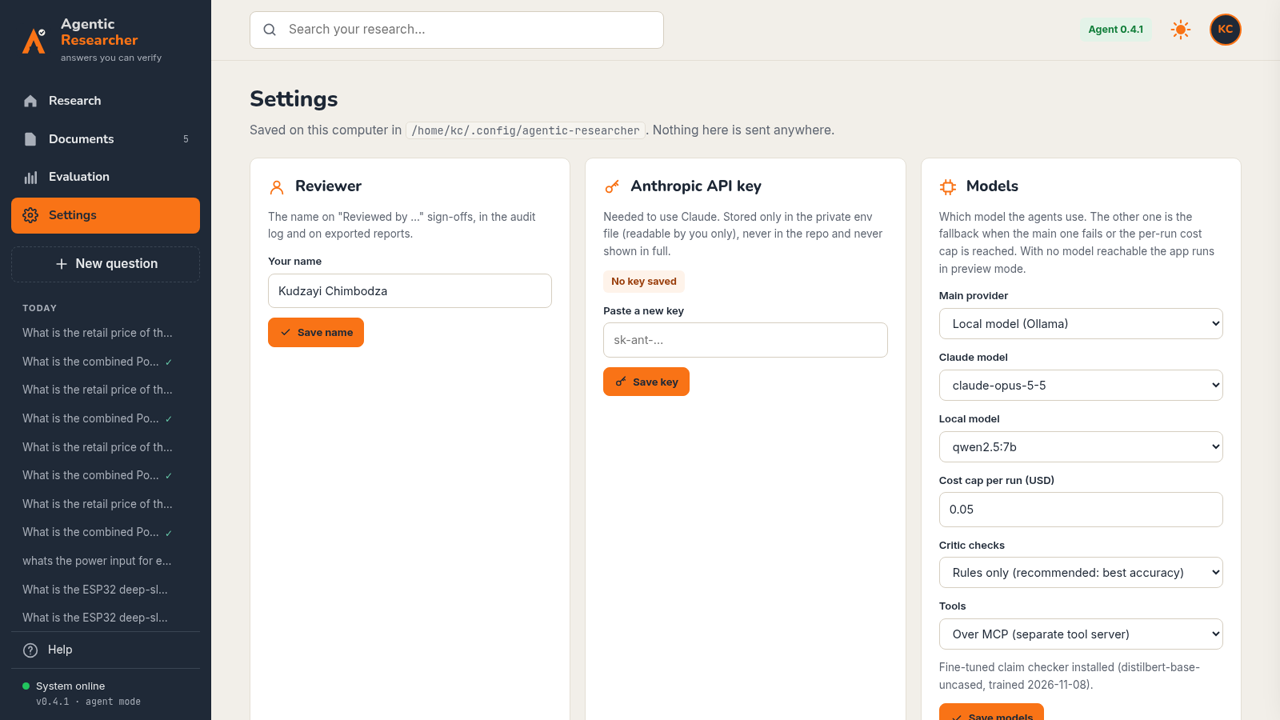
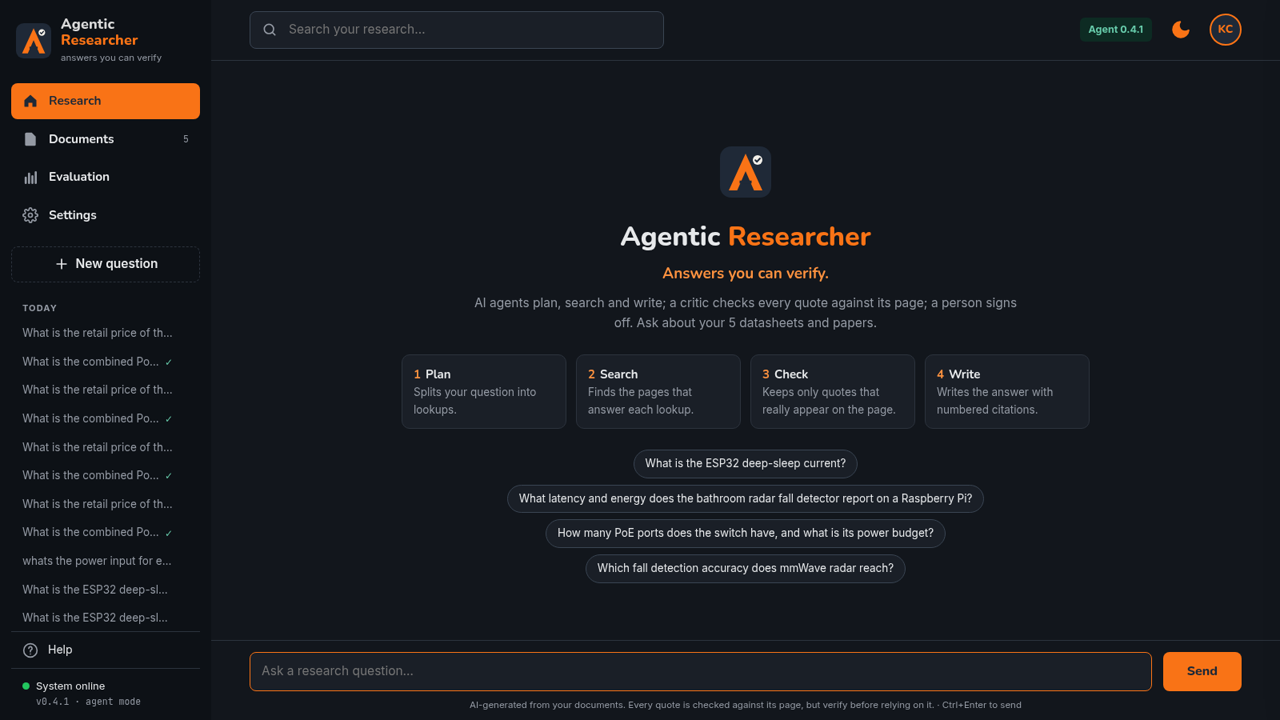
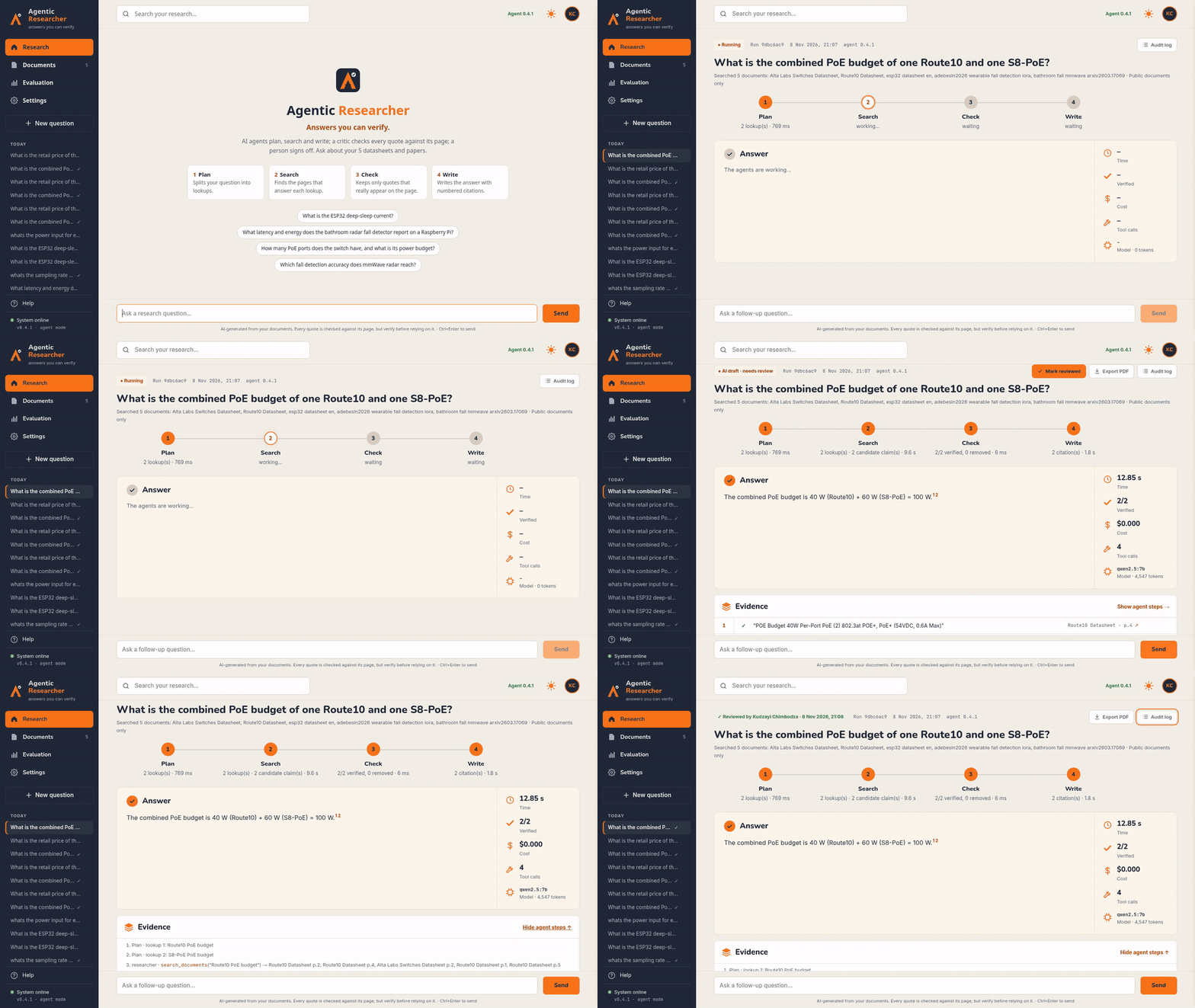
For questions that need several lookups across datasheets and papers, Agentic Researcher plans the searches, checks each quote against its page, and cites every sentence of the answer. A planner splits each question into lookups and resolves follow-ups from conversation memory. A researcher then searches your PDFs through an MCP tool server, mixing vectors and keywords so part numbers and units still match. A critic drops any claim whose quote is missing from the page, whose nearby text gives instructions to the AI, or whose numbers and product names the quote lacks. The writer keeps only cited sentences, and clicking a citation opens the PDF at the quoted page in a side drawer. A price missing from the documents gets "Not found" rather than a guess, and a question answered only in part pauses to ask whether to show a partial answer. Each answer starts as an AI draft until a named reviewer marks it reviewed, and the audit log records who asked, what the agents did, and who reviewed it. Export PDF prints a report with the evidence table and log. The agent steps list every lookup and tool call, Documents takes dropped PDFs, and Evaluation compares agent and baseline runs. Settings pick Claude or a local Ollama model as main, the other as fallback, with a cost cap per run. Running on a dedicated VPS on RepoCloud with guaranteed CPU, RAM, and SSD, full root SSH access, and a browser serial console. MIT licensed.
Benefits
- Every sentence cites a checked quote
- A critic removes claims whose quotes are missing from the cited page, so every figure in an answer traces to a verbatim passage you can open in the PDF.
- Honest answers when evidence is missing
- Unanswerable questions return "Not found" rather than a guess; in the project's own evals the agent never made up an answer and resisted all six prompt-injection tests.
- A person signs off on answers
- Answers start as AI drafts, a named reviewer marks them reviewed, partial answers wait for approval, and an append-only audit log in SQLite records who asked and who reviewed.
- Local-first with Claude as an option
- Run it fully on your own machine with a local Ollama model, keeping documents and questions private, or add a Claude API key; the other provider becomes the automatic fallback.
Features
- LangGraph Agent Team
- A LangGraph workflow runs planner, researcher, critic, and writer agents, pauses before the writer for human approval, and saves state for every run.
- MCP Search Server
- A Model Context Protocol tool server exposes search_documents with Chroma vector search and keyword search merged by reciprocal-rank fusion, and works from MCP clients like Claude Code.
- Rule-Based Critic
- Plain Python code checks each quote is on its cited page, flags prompt injection, and verifies numbers and product names; an optional DistilBERT LoRA checker adds a second opinion.
- FastAPI Web App
- A FastAPI server streams agent events as NDJSON to a vanilla JavaScript UI with light and dark themes, an optional shared access token, and a health endpoint.
- Model Router and Cost Cap
- Anthropic API (structured outputs), local Ollama (qwen2.5:7b, nomic-embed-text), or Azure OpenAI serve as main or fallback, with per-run cost caps and every call logged with tokens, cost, and latency.
- Evals and Docker Deployment
- An evals suite scores accuracy, safety, latency, and cost against a single-step baseline and a held-out set; Docker Compose with Ollama deploys it, and Azure Container Apps scripts are included.