OpenAthlete
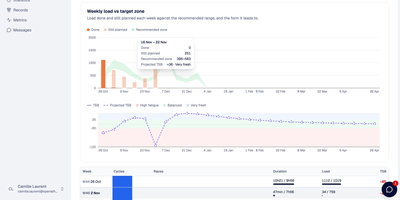
Serious endurance training should not require renting your own training history back by the month. OpenAthlete plans your season as blocks, weeks, and sessions, with A, B, and C races marked and illness or travel periods that move the sessions they cover. You build structured workouts from your own zones, pace, power, heart rate, or percentages of VMA and FTP, save them to a reusable library, and send them straight to Garmin, COROS, and Suunto watches at the next sync. Completed activities arrive from Garmin, COROS, Suunto, Polar, and Strava, or as FIT, GPX, and TCX files, and each interval is graded against what was planned. Analysis covers detected climbs, time in zones, aerobic decoupling, gradient-adjusted pace, and weather, with non-destructive fixes for heart-rate spikes. Progress views track records by distance and duration, critical speed and power, and fitness, fatigue, and form projected over your upcoming sessions, alongside HRV, resting heart rate, and sleep from your watch. Coaches see compliance, volume, and form for every athlete on one screen, get alerts for reported pain or inactivity, and exchange comments and real-time chat with athletes. A calendar feed keeps Google, Apple, and Outlook in step, and the web app installs on your phone home screen. Running on a dedicated VPS on RepoCloud with guaranteed CPU, RAM, and SSD, full root SSH access, and a browser serial console. AGPL-3.0 licensed.
SyncWatch
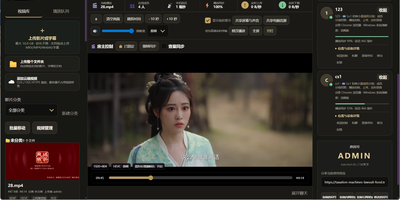
Movie night should not depend on everyone pressing play at the same second; SyncWatch runs your own watch-party server so friends in different places watch the same frame together. The host controls play, pause, seeking, and playback speed for the whole room, and late joiners or drifting clients are corrected back to the shared position automatically. You build the program from uploads or direct HTTPS media links, with subtitles, audio, images, and documents handled in the same library. Rooms can be permanent or temporary, protected by passwords and member limits, with host, admin, and permission-group control over who may operate playback. Between scenes, people talk through public and private chat, on-screen danmaku comments, emoji, voice messages, or full-room voice. Anyone can share a browser tab, window, desktop, or phone screen into the room, so a clip, a game, or a presentation becomes the shared screen. The server also keeps friends, notifications, online presence, bans, registration approvals, and an operations log, so a private community can run itself without a platform account. Uploaded media is analyzed and thumbnailed automatically, with browser-compatible versions generated for awkward formats. Backups, data export, a recycle bin, mail verification, and network diagnostics round out the admin side. Running on a dedicated VPS on RepoCloud with guaranteed CPU, RAM, and SSD, full root SSH access, and a browser serial console. Apache-2.0 licensed.
JellyGlance
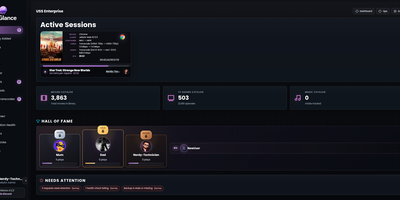
Running a Jellyfin or Emby server usually means a dozen open tabs; JellyGlance folds your whole media server into one screen you can leave open on a wall. Live sessions show who is watching what, from where, on which client, with direct play or transcode state, codec, bitrate, subtitles, and progress for every stream. Playback history accumulates in its own database, so statistics survive even when the media server forgets: top movies, series, libraries, clients, and users, watch-time trends, activity heatmaps, and weekly, monthly, and yearly recaps rendered as shareable cards. The home dashboard arranges by drag and drop, with presets, density controls, themes, kiosk mode for a wall display, and alert rules. Recently added shelves group by library, while library views surface totals and metadata gaps. Jellyseerr and Overseerr requests appear with poster cards, requester context, and admin actions, and the release calendar pulls upcoming titles from your *arr apps beside the queues of your torrent and Usenet clients, stalled items included. Wizarr invites, Tdarr transcodes, and Maintainerr cleanup connect from the same integrations area. Notifications travel by webhook, Discord, Gotify, and email newsletters, backups export to a plain folder, and sign-in spans local accounts, Jellyfin Quick Connect, and OIDC. Running on a dedicated VPS on RepoCloud with guaranteed CPU, RAM, and SSD, full root SSH access, and a browser serial console. MIT licensed.
Joulenap
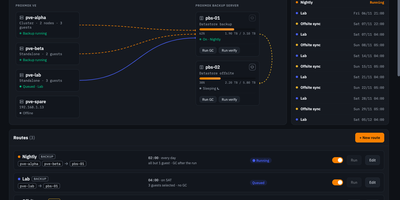
A dedicated backup server is the right way to keep copies on separate hardware, and a strangely expensive one to leave humming in the corner for a job that runs twenty minutes a night. Joulenap lets that machine sleep: at the scheduled hour it sends a Wake-on-LAN packet to your Proxmox Backup Server, waits until the API answers, runs the backup, applies retention, runs garbage collection and verification if you asked for them, then powers the box back down or suspends it for network cards that only wake from sleep. You describe your setup as routes: which hosts back up to which backup server, on what schedule, keeping how many copies, with guests as everything on a host or an explicit list. Fan several hosts into one server nightly, or copy one backup server to another across town for an off-site second copy with its own retention. A second route kind starts nothing at all: your Proxmox hosts keep their own schedules while Joulenap simply wakes the box, watches their tasks, and switches it off when they go quiet. Watch live task output, stop a run mid-flight if you must, and get results through Apprise, Telegram, ntfy, Discord or email per route. Status widgets feed Homepage, Homarr, Dashy and Glance, and a Prometheus endpoint lets Grafana alert you when a guest stops being backed up. Running on a dedicated VPS on RepoCloud with guaranteed CPU, RAM, and SSD, full root SSH access, and a browser serial console. AGPL-3.0 licensed.
Media Journal
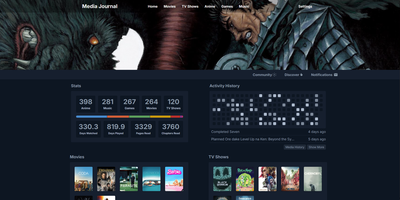
Every movie, series, anime, manga, book, game and album you finish deserves a line in one diary, not seven accounts on seven tracking sites. Media Journal keeps separate lists for each of the seven media types, and every entry carries your status, episode or page progress, rating and private notes. Rate on the scale that fits how you think: five stars, 1 to 10, 1 to 100, or simple faces. Group anything into collections, mark favorites, and watch your home page fill with stats, recent activity and your latest collections. The Discover page surfaces trending and popular titles, and built-in search pulls metadata and artwork from TMDB, IGDB and other providers once you add your free API keys. A community page lets everyone on your instance post thoughts and updates about what they watched, read or played, and a calendar plus history views keep your year in media organized. Saved songs play through the built-in YouTube music player while you browse, and automatic checks flag sequels and new seasons of things you already track. Running on a dedicated VPS on RepoCloud with guaranteed CPU, RAM, and SSD, full root SSH access, and a browser serial console. AGPL-3.0 licensed.
plumio
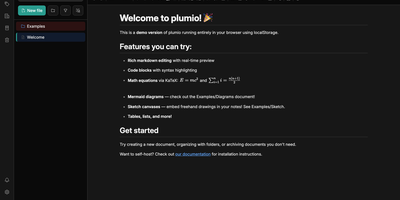
Notes belong on a server you control, and plumio gives them a quiet, fast home there with a polished markdown editor and a live preview. Write headings, task lists, tables, code blocks, math equations, and Mermaid diagrams in one document, then add a freehand sketch canvas for quick drawings. Each change saves as you type. Folders, tags, and custom colors keep a growing library tidy, favorites keep the important pages close, and full-text search finds a half-remembered phrase in seconds. Turn on AES-256 encryption and every document is protected at rest on disk. One instance can host several users and several organizations, so a family, a study group, or a small company each gets a separate workspace with roles for admins and members. Deleted notes land in a trash and archived ones stay out of the way until needed. Export everything as a zip of plain markdown files, or import a folder from another editor, Obsidian included. Webhooks announce document events to other services, API keys let scripts create and search notes, and optional SMTP email handles password resets. A daily backup job keeps compressed copies with automatic retention, and a desktop app can connect to your server. Running on a dedicated VPS on RepoCloud with guaranteed CPU, RAM, and SSD, full root SSH access, and a browser serial console. AGPL-3.0 licensed.
Flowplan
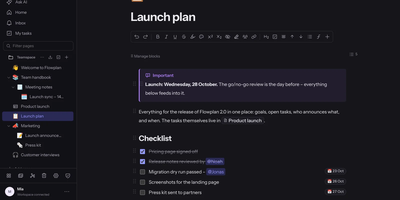
Flowplan puts your team's documents, databases, whiteboards, handwriting notebooks, and daily journal into one self-hosted page tree, so the work lives in a single place you control instead of five subscriptions. Write in a block editor that stays out of the way, and when a number appears mid-sentence, type the calculation and press Tab to drop in the result, or graph functions and vectors in 2D and 3D without leaving the page. The same records can be viewed as a table, board, calendar, timeline, gallery, list, feed, chart, form, or sprint board, with relations, rollups, and formulas tying them together, and projects get ticket numbers, sprints with burndown, and automations on top. Brainstorm on whiteboards with sticky notes, mind maps, and voting; keep a journal page per day with templates and an optional PIN lock; and write by hand in notebooks with lined, grid, or Cornell paper, annotate PDFs, and sketch inside documents with a pressure-sensitive pen. Teammates edit together with live cursors, comment in inline threads, and share single pages with guests through password-protected, expiring links, while permissions reach down to a single record. AI is off until an admin enables it, per feature and per person, and it can run entirely on your own hardware or answer questions about the workspace with links to its sources. Running on a dedicated VPS on RepoCloud with guaranteed CPU, RAM, and SSD, full root SSH access, and a browser serial console. AGPL-3.0 licensed.
Blocky UI
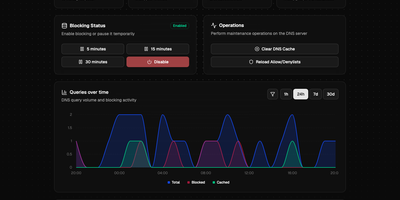
BlockyUI gives your Blocky DNS server a clean browser dashboard for seeing what gets queried, what gets blocked, and how quickly answers come back. Overview cards show total queries, blocked requests, cache hit rate, listed domains, and average response time. Pause blocking for 5, 15, or 30 minutes with one click, or disable it outright, then let it return on its own. Clear the DNS cache and reload allow and deny lists without touching the command line. A queries over time chart switches between 1 hour, 24 hours, 7 days, and 30 days, with filters for a single domain or client. Paginated top lists rank the busiest domains and devices and offer a blocked-only view. The query tool tests how any domain resolves, so a new filtering rule can be checked in seconds. Query logs are searchable and filterable by reason and record type, and they read from MySQL, PostgreSQL, Timescale, SQLite, CSV, or VictoriaLogs. Panels that depend on logging or statistics appear when your Blocky instance supports them, and the dashboard adapts otherwise. Settings live in one YAML file that points at your Blocky server. Running on a dedicated VPS on RepoCloud with guaranteed CPU, RAM, and SSD, full root SSH access, and a browser serial console. MIT licensed.
Open Walnut
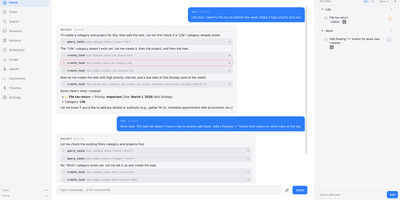
Open Walnut replaces your scattered terminals and notes with one self-hosted command center where a CEO agent and a lead for each project run your Claude Code sessions like a small company. You talk to the CEO; each project lead plans the work, spawns worker sessions, checks their output, and only brings you the questions that actually need a person. Every session sits in its own column with live output, permission controls, terminals, and files, and sessions survive browser disconnects, dropped SSH connections, and server restarts. Codex, Gemini, OpenCode, and Goose sessions join the same columns, on your laptop or on remote dev boxes reached over SSH. Finished work comes back as a per-session diff: comment on individual lines and send the review straight back into the session that wrote it. Around the agents sit your tasks with subtasks, dependencies, and due dates, Markdown notes with wiki links and backlinks, a calendar, and long-term memory that a background job keeps consolidated. Search covers notes, tasks, sessions, and memory together, mixing keyword matching with local embeddings, so nothing you told it last month gets lost. Routines run one-time, interval, and cron jobs; plugins add whole apps, tools, and skills; and paired phones reach the same console through device tokens. Running on a dedicated VPS on RepoCloud with guaranteed CPU, RAM, and SSD, full root SSH access, and a browser serial console. MIT licensed.
Deadair
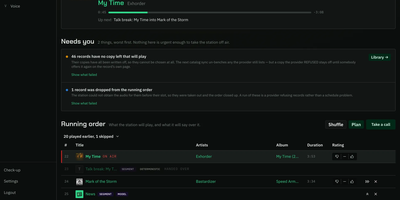
Somewhere in your house, a presenter is introducing the next record, and that presenter is a language model running on your own server. Deadair builds you a real radio station rather than another playlist: it picks records from your Navidrome, Jellyfin, Emby, or Plex library, or from Spotify, YouTube Music, Pandora, and Apple Music, writes what the host says between songs, speaks it in that host's own voice, and broadcasts the result as one shared live stream over Icecast, with no skip button and the same show for every listener. From the console you steer it in plain sentences: tell it "rap like Snoop Dogg" and the next hours programme themselves to that brief, or ask why the record on air was chosen and get an answer. The forward lineup runs several hours deep, visible and editable, and nothing reaches air until its audio is already on the machine, so the stream never stutters waiting on a download. Words and voice are separate choices, swapped live in Settings: break-writing can run on a hosted model while a local Kokoro or Chatterbox voice reads it, and a station with no model at all still talks. Twenty-seven bundled plugins cover music sources, metadata, news, weather, and speech, and third-party plugins install from the console. Running on a dedicated VPS on RepoCloud with guaranteed CPU, RAM, and SSD, full root SSH access, and a browser serial console. MIT licensed.
Ovumcy
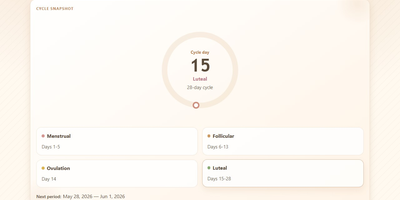
Your cycle history is among the most personal data you will ever record, and Ovumcy keeps it on a server you control instead of a tracker's cloud. Log period days, flow intensity, symptoms, and free-form notes in seconds from any browser, and define your own custom symptoms when the preset list misses something you feel. The calendar view lays out your month with predicted period, ovulation, and fertile-window days marked, while statistics views surface cycle length trends and patterns across months. Predictions come from your own logged history, refined when temperature or cervical-mucus entries sharpen the estimate. Reminders reach you three ways: a dashboard banner before an expected period, a webhook ping to your own ntfy or Gotify server, or a private read-only calendar subscription that drops estimates into the calendar app you already use. Install it to your phone home screen and it opens like a native app, in English, Russian, Spanish, French, German, or Italian. Export the full history as CSV or JSON whenever you want a backup or a change of tools. Optional OIDC sign-in and TOTP two-factor authentication protect access, and the app makes no analytics or telemetry calls at all. Running on a dedicated VPS on RepoCloud with guaranteed CPU, RAM, and SSD, full root SSH access, and a browser serial console. AGPL-3.0 licensed.
Cronstable
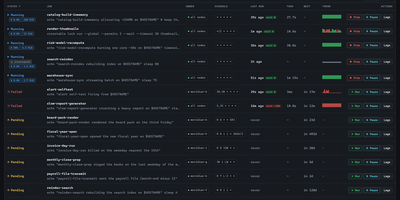
Cronstable gives scheduled jobs what cron never had: retries when they fail, alerts when retries run out, a saved history of every run, and a dashboard to watch it all. Bring your existing crontab or define jobs in YAML, down to business-day schedules, hashed fleet spreading, and per-job time zones, then let failures retry with backoff while alerts head to email, Slack-compatible webhooks, Sentry, or an encrypted push to your phone. Every run is remembered, so history, live logs, and incident timelines answer what happened last Tuesday instead of shrugging. When jobs grow dependencies, they become durable workflows: task graphs with data sharing, dynamic fan-out, sensors, shared resource pools, and approval gates a human taps before the next step runs, with failed tasks replayed selectively instead of starting over. One machine or a whole fleet looks the same from the web dashboard, the terminal, or iOS, and a schedule linter quietly warns you about the job that can never run and the one daylight saving will skip. Running on a dedicated VPS on RepoCloud with guaranteed CPU, RAM, and SSD, full root SSH access, and a browser serial console. MIT licensed.
UWAS
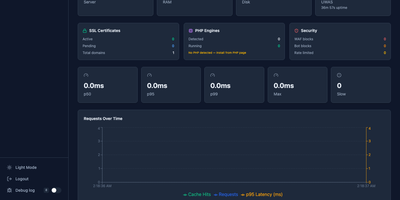
One 18 MB Go binary does the job of Apache, Nginx, Varnish, Caddy, and cPanel combined. Point UWAS at your /var/www directory and it auto-detects sites, provisions Let's Encrypt certificates, enables HTTP/3 via QUIC, and activates a two-tier caching engine with L1 memory shards and L2 disk storage, all before you write a single line of configuration. The React 19 admin dashboard provides 42 management pages for domains, PHP versions, databases, cron jobs, DNS records, file management, backup and restore, SFTP users, and uptime monitoring with real-time SSE updates. PHP sites run through FastCGI with connection pooling and full .htaccess compatibility, so WordPress, Laravel, and legacy applications work without migration effort. The built-in WAF catches SQL injection, XSS, path traversal, and shell exploits, while per-domain rate limiting and bandwidth caps protect against abuse. Reverse proxy mode supports five load balancing algorithms, circuit breakers, canary deployments, and mirroring for blue-green rollouts. Git deploy clones your repository, runs the build, checks health, and restarts the service with rollback on failure. An MCP server lets AI agents manage domains, cache, and deployments through natural language. The Nginx and Apache migration CLI converts existing configurations to UWAS format automatically. Deploy on a dedicated VPS on RepoCloud with guaranteed CPU, RAM, and SSD, full root SSH access, and a browser serial console. AGPL-3.0 licensed.
WyrmRSS
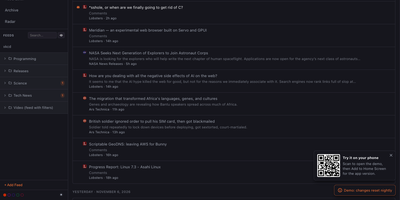
Your reading, back under your own roof: WyrmRSS is a self-hosted RSS reader that follows all your feeds from one web and mobile interface you control. Paste a blog homepage or a YouTube channel URL and feed discovery finds the actual feed for you, then background polling keeps every subscription fresh on an interval you set. Posts can be browsed per feed or as one combined river, and each feed gets a display mode: River for the main flow, Feed only for direct visits, or Radar for quiet sources you check occasionally. Folders in a collapsible sidebar carry unread counts and survive OPML import and export, so moving an existing subscription list in or out takes minutes. Per-feed filters include or exclude entries by URL, title, or content patterns, which tames noisy channels by dropping shorts, trailers, or job posts before they reach you. YouTube and HLS or Reddit video play inline in the reader, full-text search covers titles and descriptions, and Read Later plus archiving keep the important pieces. Keyboard shortcuts move, open, mark, save, and archive without the mouse and can be rebound in Settings, webhooks notify Discord, Slack, or custom endpoints on new posts, and feeds behind authentication are handled with per-host credentials. Running on a dedicated VPS on RepoCloud with guaranteed CPU, RAM, and SSD, full root SSH access, and a browser serial console. GPL-3.0 licensed.
Flare
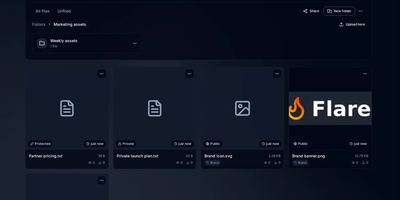
Screenshot, copy link, done: that is the loop Flare is built to make instant on your own server. Connect ShareX, Flameshot, KDE Spectacle, or a plain upload script once, and captures land in a vault you control instead of a third-party host that deletes them next month. Files live in folders with nested structure, bulk moves, automatic tagging rules, and one share link per folder, while previews handle images, video, PDFs, and syntax-highlighted code without downloading anything. Search digs through filenames, dates, and text extracted from images by OCR, so the screenshot from three weeks ago is findable by what it says. Password-protect a sensitive file, keep another private entirely, or publish it with a rich embed that unfurls properly wherever you paste the link. An appearance studio restyles branding, color palettes, and share page layouts, upload profiles carry reusable defaults between browser and screenshot tools, and the extras round out the kit: a URL shortener with click tracking, a pastebin, storage quotas, invite links, and tokens with signed webhooks for your own integrations. Running on a dedicated VPS on RepoCloud with guaranteed CPU, RAM, and SSD, full root SSH access, and a browser serial console. MIT licensed.
Campfire Rust
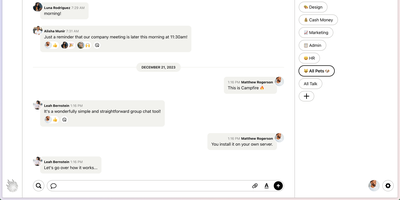
Your team chat can be one executable on your own server: Campfire Rust runs rooms, direct messages, attachments, and search as a single binary that replaces the whole Ruby, Puma, Redis, Resque, and Thruster stack. Create rooms with access controls for projects, departments, or a private board discussion, and keep direct messages beside them for quick questions. File attachments arrive with previews, mentions pull the right person into a thread, and search finds the decision someone made months ago. Web Push notifications reach browsers and phones, so a quiet room still finds its people when it matters. Chatbots connect through a simple HTTP API for sending and receiving messages and attachments, which makes Campfire a home for build alerts, deploy notices, and support pings. Existing Campfire installs upgrade in place because the Rust binary reads the same SQLite database, storage layout, and signed cookies, with no data migration and no mass sign-out. Automatic TLS with Let's Encrypt certificates, HTTP/2, and Action Cable-compatible WebSockets are built in, and the whole system works on air-gapped networks that never touch the internet. Run it as your primary chat, as a backup for the day a hosted service goes down, or as a walled garden for executives and events. Running on a dedicated VPS on RepoCloud with guaranteed CPU, RAM, and SSD, full root SSH access, and a browser serial console. MIT licensed.
Nimbus
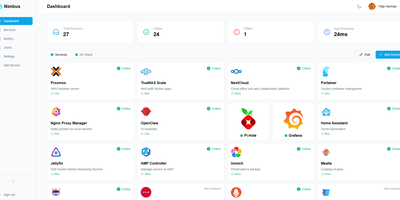
Nimbus is a self-hosted homelab dashboard that turns your scattered pile of services into a polished, organized command center with real-time health monitoring for every endpoint you care about. The dashboard displays live status cards for each registered service, tracking response times down to the millisecond and graphing uptime history so you can spot degradation before it becomes an outage. Health checks run on configurable intervals with smart self-signed certificate handling, meaning your internal services with self-issued TLS do not trigger false alarms. Multi-user support comes standard: local accounts authenticate via JWT, while OAuth2 integration with Google, GitHub, and Discord lets team members sign in with existing credentials. Role-based access control and a built-in admin panel give you granular authority over who sees what. Each user personalizes their view with custom backgrounds, light or dark mode, accent color themes, and drag-and-drop service tile arrangement. Services group into named categories and cards resize to fit your preferred layout, with both grid and list view modes available. Prometheus metrics export feeds your existing Grafana stack, and webhook notifications alert you instantly when a service goes offline. Custom service icons upload directly or auto-fetch from the Dashboard Icons collection. Zero-config Docker deployment gets you running in under 30 seconds with a single docker-compose command. Running on a dedicated VPS on RepoCloud with guaranteed CPU, RAM, and SSD, full root SSH access, and a browser serial console. AGPL-3.0 licensed.
ivfi
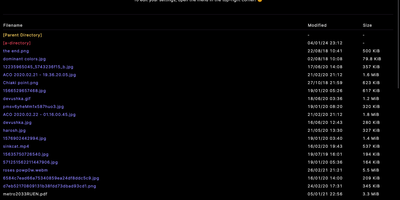
IVFi-PHP turns folders on your server into browsable media galleries: drop one PHP file into a web root and every directory of photos, videos, and audio becomes a polished, searchable index page. Hovering a filename previews the image or video inline, and clicking opens the gallery view where you can move through a whole directory's media, download originals, or reverse-search an image. Audio files play in place with a live visualiser, seeking, and their own volume control. Finding things is instant: filter filenames or file types with plain text, wildcards, or full regular expressions, sort by name, date, or size with settings that persist between visits, and dates automatically match the visitor's timezone. Select any set of files and download them as a single ZIP archive, or share direct download links file by file. Directories can render their README files as documentation pages, listings can hide sensitive entries through server-side filters, and optional Digest authentication keeps a listing private without any account database. Themes and per-visitor display preferences restyle the index, basic listings work even with JavaScript disabled, and the whole application also ships as a Docker image for a one-container deployment. Running on a dedicated VPS on RepoCloud with guaranteed CPU, RAM, and SSD, full root SSH access, and a browser serial console. GPL-3.0 licensed.