Split Pro
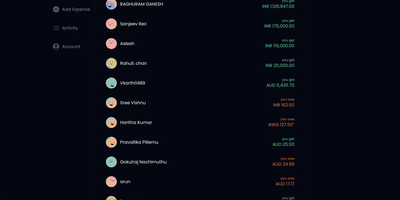
Split Pro settles the question that ruins group dinners, who owes whom, with a private expense ledger that runs on your own server instead of an ad-supported app. Create a group for the apartment, the trip, or the team lunch rotation, then log each shared cost with its category, currency, date, and a photo of the receipt. Every expense splits your way: equally, by percentage, by shares, by exact amounts, or with manual adjustments when someone covered the tip. Rent, utilities, and subscriptions can repeat on a schedule so recurring bills enter the ledger on their own. The balances view shows exactly who is ahead and who owes, and debt simplification collapses a web of small obligations into the fewest possible payments. Negative expenses record refunds and corrections without breaking the math, and the activity feed keeps a visible history of every edit and deletion. Coming from Splitwise, you can import your friends and groups to pick up where you left off, and bank transactions from supported providers convert straight into expenses. On phones it installs as a progressive web app with push notifications whenever a new expense lands. Logins use email magic links, Google, or your own OIDC provider, and signups can be closed so the instance stays limited to your circle. Running on a dedicated VPS on RepoCloud with guaranteed CPU, RAM, and SSD, full root SSH access, and a browser serial console. MIT licensed.

OpenReader
With OpenReader, any EPUB, PDF, Word document, Markdown file, or plain text book transforms into an interactive reading workspace paired with natural text-to-speech playback and multi-chapter audiobook export. Documents render natively in their original page layout rather than flattening into plain text, using layout-aware block detection and cross-page stitching so multi-column academic papers, technical manuals, and textbooks flow in the right reading order while skipping headers and footnotes. As narration plays, word-level forced alignment highlights each spoken word directly on the page in real time, and progressive background generation starts audio playback on the first segment while synthesizing upcoming pages ahead of your cursor. Readers can connect local speech engines such as Kokoro, KittenTTS, and Orpheus or cloud voice providers, select language-aware voices for multilingual books, adjust playback speed, and switch among thirteen light and dark reading themes. Cached audio segments persist across seeks and browser reloads, allowing the background worker to assemble complete M4B or MP3 audiobooks for offline listening on mobile devices while syncing reading progress, queues, and library imports across sessions. Running on a dedicated VPS on RepoCloud with guaranteed CPU, RAM, and SSD, full root SSH access, and a browser serial console. MIT licensed.
Maintainerr
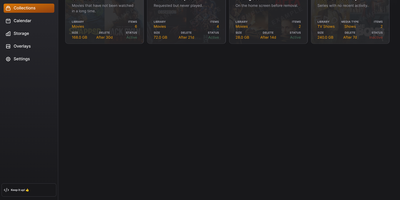
Automating media server storage reclamation, Maintainerr is an open-source library maintenance platform that identifies unwatched, abandoned, or stale movies and shows across Plex, Jellyfin, and Emby and clears them on a schedule. Storage drives fill up rapidly when household members request four-season series or high-bitrate films, watch a single episode, and abandon the rest indefinitely. Instead of forcing administrators to audit disks by hand, the rule engine evaluates metadata from your media server alongside Tautulli watch histories, Seerr and Ombi request records, and Radarr, Sonarr, or Sportarr profiles every eight hours. Matching items enter a staging collection that syncs back to your media server home screen as a Leaving Soon row, complete with dynamic poster overlays displaying the exact removal date so viewers have a grace period to finish watching. Before enabling any destructive workflow, you can run the Test Media inspector against any movie or episode to preview rule evaluations and protect favorites with global or per-collection exclusions. Once the countdown expires, the collection handler deletes or unmonitors files, updates import-list exclusions so automated lists never re-download removed titles, clears orphaned requests in Seerr and Ombi, removes leftover sidecar folders, and dispatches alerts through Discord, Slack, Telegram, Pushover, Gotify, Email, or webhooks. Running on a dedicated VPS on RepoCloud with guaranteed CPU, RAM, and SSD, full root SSH access, and a browser serial console. MIT licensed.
Open DroneLog
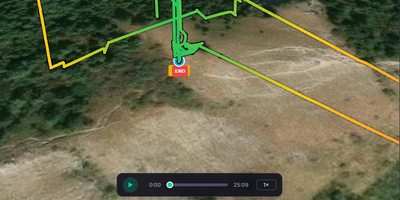
Every DJI and Litchi flight you have ever logged becomes a searchable dashboard on your own server with Open DroneLog, a free, open-source alternative to DroneLogbook, Airdata UAV, and Flight Reader. Drop in DJI .txt logs, Litchi CSV files, or Airdata CSV exports and units are detected automatically, while deduplication on drone serial, battery serial, and start time lets you re-import a folder without duplicate flights. Each flight opens as a 3D terrain map with satellite, topographic, and OpenStreetMap layers, then replays from 0.5x to 16x speed with live telemetry and an RC joystick overlay. Synchronized charts plot height, speed, battery cell voltages, attitude, RC signal, GPS, and distance to home, with drag-to-zoom. Filters narrow flights by date, drone, battery, controller, duration, altitude, distance, tag, or map area, and automatic tags such as Night Flight and Low Battery arrive with offline reverse-geocoded locations. The overview dashboard adds an activity heatmap, per-drone and per-battery charts, and a cluster map. Battery health bars track cycle counts and capacity history, and maintenance thresholds show as color-coded progress bars. Export flights as CSV, JSON, GPX, or KML, build printable HTML flight reports that save as PDF, or generate a FlyCard image for social media. A sync folder imports new logs automatically, pilot profiles can sit behind passwords, and full-database backup and restore moves data between desktop and Docker. Running on a dedicated VPS on RepoCloud with guaranteed CPU, RAM, and SSD, full root SSH access, and a browser serial console. AGPL-3.0 licensed.
BookLogr
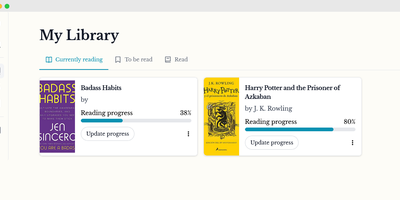
For avid readers who want to catalog their home bookshelves and track annual reading progress without handing personal habits to commercial social networks, BookLogr delivers a self-hosted personal library and reading tracker that replaces Goodreads and The StoryGraph. Searching by title, ISBN-10, or ISBN-13 pulls book covers, author names, page counts, and descriptions directly from OpenLibrary, while manual entry and user-defined custom fields let you record text, numbers, dates, selections, or boolean attributes for rare and indie editions. Configurable library tabs organize titles across Reading, To Be Read, Already Read, Did Not Finish, and All views with instant author filtering. As you read, you can update your current page number or completion percentage, log start and finish dates across multiple re-reads, and rate completed books on a granular 0.5 to 5.0 star scale. Readers can capture page-linked notes and favorite quotes, keeping reflections private or publishing them to a dedicated Notes and Quotes feed on a shareable public profile. Automated Mastodon integration posts reading milestones to the fediverse, while OpenID Connect single sign-on and single-user mode adapt the workspace for households or solo collectors. Built-in Goodreads CSV import and one-click exports to CSV, JSON, and HTML guarantee complete data portability. Running on a dedicated VPS on RepoCloud with guaranteed CPU, RAM, and SSD, full root SSH access, and a browser serial console. Apache-2.0 licensed.
Ocular
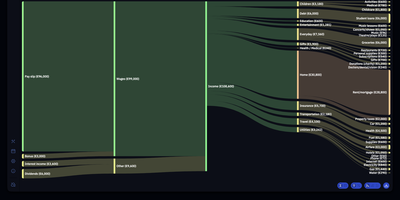
Ocular provides a modern personal finance workspace that plots your household income and expenditures across multi-year horizons to eliminate surprises in annual budgeting. Users can define custom income streams, configure recurring fixed obligations like rent and utilities, and allocate discretionary spending allowances into designated category groups. Interactive Sankey diagrams and cumulative balance curves visualize projected net savings trajectories, signaling upcoming cash crunches months in advance. The annual planning matrix breaks down monthly figures across twelve periods, calculates automatic net savings, and highlights active fiscal cycles. Keyboard shortcuts accelerate data entry with inline arithmetic expression evaluation directly inside currency cells. Built-in multi-currency conversion and localization settings allow international households and remote professionals to manage diverse revenue streams effortlessly. A dedicated privacy mode masks sensitive monetary amounts when working in public spaces, while complete ledgers export cleanly as portable JSON archives. Running on a dedicated VPS on RepoCloud with guaranteed CPU, RAM, and SSD, full root SSH access, and a browser serial console. MIT licensed.
Backrest
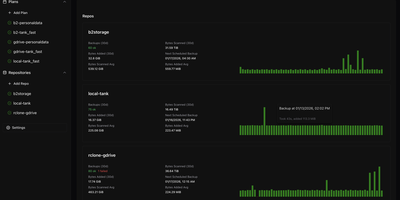
Backrest turns the command-line restic backup engine into a visual, browser-managed disaster recovery platform that schedules encrypted snapshots, orchestrates repository maintenance, and restores individual files from a unified web dashboard. Import existing restic repositories or initialize new encrypted backup stores across Amazon S3, Backblaze B2, Google Cloud Storage, Azure Blob Storage, SFTP servers, local directories, and any storage provider supported by rclone. Define granular backup plans with directory inclusion lists, glob exclusion rules, and flexible schedules driven by cron expressions, hourly intervals, or last-run-time clocks that prevent missed backups after server downtime. Automated retention policies handle snapshot forgetting, repository pruning, and cryptographic integrity checks in the background without manual intervention. When a file is accidentally deleted or corrupted, open the interactive snapshot tree browser to inspect historical directory structures and download or restore specific files directly to disk. Pre-backup and post-backup shell command hooks let administrators dump databases or pause containers before snapshots start, while configurable alerts dispatch status reports to Discord, Slack, Gotify, Healthchecks, and Shoutrrr endpoints whenever an operation succeeds or fails. Running on a dedicated VPS on RepoCloud with guaranteed CPU, RAM, and SSD, full root SSH access, and a browser serial console. GPL-3.0 licensed.
Swing Music
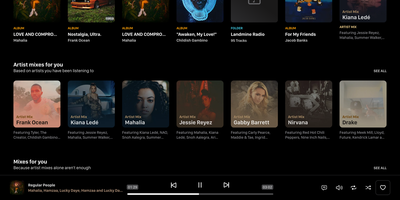
Swing Music transforms your personal audio collection into a private streaming platform with a responsive interface modeled after modern on-demand music apps. The server scans local directories, normalizes messy metadata tags, and categorizes tracks by version labels such as Deluxe, Remaster, or Live editions. Listeners can explore automated Daily Mixes compiled from real listening activity, browse folder hierarchies directly, or curate custom collections across related artists and releases. Audio playback combines intelligent silence detection with configurable cross-fade transitions to deliver seamless, uninterrupted listening across web browsers and mobile devices. Integrated Last.fm scrobbling keeps external listening statistics updated in real time, while personal playback history powers internal analytics and favorites. Multi-user account support enables family members to preserve separate playlists, favorites, and mix recommendations on a shared audio library. Running on a dedicated VPS on RepoCloud with guaranteed CPU, RAM, and SSD, full root SSH access, and a browser serial console. GNU AGPLv3 licensed.
PinePods
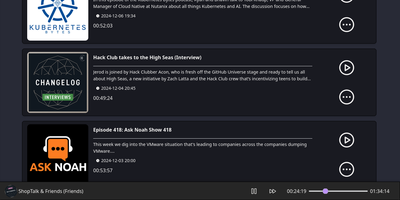
PinePods delivers a centralized, self-hosted podcast ecosystem that liberates personal listening histories, audio files, and show subscriptions from commercial streaming walled gardens. Users can discover new shows through built-in search connectors across Podcast Index, iTunes, and YouTube, streaming audio and video episodes with variable playback speed, chapter markers, and synchronized transcripts. A persistent queue and custom playlist builder keep media sequences orderly across web browsers, desktop installations, and mobile clients with native CarPlay and Android Auto support. Built-in gPodder server synchronization enables seamless cross-device progress tracking with third-party podcast apps like AntennaPod. Automatic episode downloader engines monitor subscribed feeds, archiving new releases to local server storage according to customizable retention rules and storage quotas. Multi-user authentication secures household access through OIDC single sign-on and two-factor TOTP verification, while an integrated terminal client lets command-line enthusiasts manage queues directly over SSH. Running on a dedicated VPS on RepoCloud with guaranteed CPU, RAM, and SSD, full root SSH access, and a browser serial console. GPL-3.0 licensed.
FitTrackee
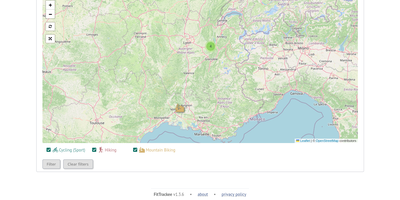
Cyclists, runners, hikers, and kayakers can log every GPS route in FitTrackee, a workout tracker where each workout stays private until shared. Upload a GPX, FIT, KML, KMZ, or TCX file and the workout appears with a map and charts. Zip archives and manual entry work too. Charts plot speed or pace, elevation, heart rate, cadence, and power on one graph or several. Each workout holds 20 photos at most, and photos with GPS coordinates appear on the map. Twenty-seven sports are available, including cycling, running, kayaking, and swimrun. Shoes, bikes, and boards each tally distance, duration, and workouts, and sports can have default equipment. The dashboard shows a monthly chart and a calendar of workouts and records, and statistics group totals by day, week, month, year, or sport. Filters narrow the workouts list by date, sport, equipment, location and radius, distance, or speed, and results can be mapped. A global map plots workouts, filtered by date and sport. Workout data, charts, map, and photos each get a visibility setting: private, followers only, or public. Follow requests need approval by default, and unwanted users can be blocked. Comments accept limited Markdown, and the five latest public workouts publish as an Atom or RSS feed. Data export bundles an account's workouts and uploaded files. Running on a dedicated VPS on RepoCloud with guaranteed CPU, RAM, and SSD, full root SSH access, and a browser serial console. AGPL-3.0 licensed.
NutriTrace
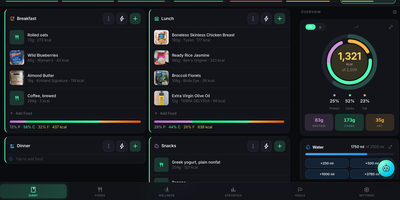
Stop handing your daily food diary, body weight history, and biometric sleep data to ad-funded fitness clouds: NutriTrace brings complete calorie, macro, micronutrient, and wellness tracking to your own server with an offline-capable web PWA and native Android app. Log meals across customizable slots using live Open Food Facts and USDA FoodData Central lookups, barcode scanning, AI nutrition label OCR, or direct recipe imports from Mealie and CookTrace. Calorie and macro targets adjust automatically through three goal engines, including an inspectable Adaptive TDEE algorithm that regresses 35 days of intake against scale weight at 7,700 kcal per kilogram. Connect Fitbit via Google Health, Garmin, Withings, and Android Health Connect to pull steps, heart rate variability, sleep stages, and body composition into unified Sleep, Readiness, and Resilience scores. An integrated Trace AI assistant and Smart Log let you log meals by voice, text, or meal photo, while the opt-in Model Context Protocol server exposes 20 read, write, and management tools to Claude Desktop, Cursor, and Codex. Multi-user households get OpenID Connect SSO and one-step migration from MyFitnessPal, Cronometer, Lose It, and Waistline. Running on a dedicated VPS on RepoCloud with guaranteed CPU, RAM, and SSD, full root SSH access, and a browser serial console. AGPL-3.0 licensed.

HomeGallery
HomeGallery turns the photo and video folders on your server into a mobile-friendly web gallery. Your files and folder structure stay exactly as they are. Point it at camera files, phone files, or offline drives, and previews and metadata are extracted once. Scroll one endless stream, newest first. Open any image for its file name, dimensions, capture date, source paths, camera settings, street address, tags, and detected objects. Swipe between photos, then pinch or double-tap to zoom. The Map view clusters photos by place, with counts. The plant button lists similar images, so one sunset finds every other sunset. Face search finds the same person in other photos. A search box accepts expressions like tags in (vacation, family), type:video year in [2015:2020] order by duration, or not exists(geo). In Edit mode, select many photos at once and type comma-separated tags; a minus prefix removes one. Videos are transcoded for playback. Renamed or moved files keep their previews. An archive disk can stay unplugged once indexing is done. Optional logins limit each user to a query filter. Install it as a PWA for a lightweight mobile app. Running on a dedicated VPS on RepoCloud with guaranteed CPU, RAM, and SSD, full root SSH access, and a browser serial console. MIT licensed.
Donetick
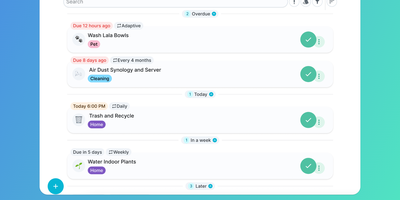
Recurring household chores and shared team checklists stay on schedule when Donetick coordinates assignments, reminders, and completion tracking from one self-hosted hub. Type a phrase like "change water filter every 6 months" and the natural-language parser extracts the due date and cadence automatically. Adaptive scheduling even adjusts future intervals from your actual completion history. Rotation rules distribute tasks fairly across family members or roommates via round-robin, random, or least-completed logic. Nested subtasks reset themselves each cycle. Finished chores earn points in the built-in gamification engine that members redeem in an admin-approved reward store. Stateful "Things" track numerical, boolean, or text metrics to trigger tasks automatically when values change. Tap physical NFC tags to check off chores on the spot, or mount a dedicated kiosk dashboard on a wall tablet for one-tap account switching. Real-time updates sync across devices alongside iCal calendar feeds, Home Assistant cards, OIDC single sign-on, and Pushover or Telegram notifications. Running on a dedicated VPS on RepoCloud with guaranteed CPU, RAM, and SSD, full root SSH access, and a browser serial console. AGPL-3.0 licensed.
Fava
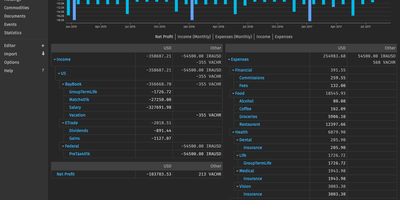
If your books live in a plain-text Beancount ledger, Fava turns that file into a browsable dashboard of statements, charts, and a built-in editor. Income Statement, Balance Sheet, Trial Balance, Journal, Holdings, and Statistics reports render as tables and charts, with stacked or single bars, monthly breakdowns, and at-cost conversion. Three top-bar filters narrow every report. Match by date, account pattern, #tag, ^link, payee, metadata, or amount; spaces require all conditions, commas accept any. The Query page runs Beancount Query Language statements like bean-query. Two-column results become line or treemap charts, and every result exports to CSV, plus XLSX and ODS with the Excel extra. The browser editor autocompletes accounts, payees, and tags. Press n for a quick-add form that records a new transaction. Drag a receipt onto an account name to file it in that account's documents folder, or onto a Journal row to attach it to the transaction. Budget directives from daily to yearly show remaining amounts in charts and reports. Colored indicators flag passed or failed balance checks on opted-in accounts. Importers feed a review list; extensions add custom report pages. Gmail-style keyboard shortcuts speed up daily use. Running on a dedicated VPS on RepoCloud with guaranteed CPU, RAM, and SSD, full root SSH access, and a browser serial console. MIT licensed.
Mitra
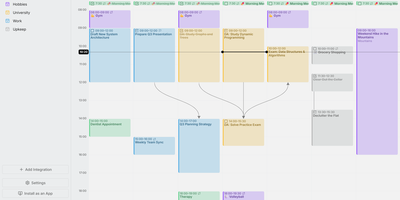
Mitra is a self-hosted calendar that puts your tasks on the same timeline as your events, so planning a week finally happens in one place instead of two. Drag across empty grid space to make an entry, drag it to move it, and stretch its edges to resize it. Tasks without a date sit in the Planning tab with a due date and an estimate until you drag them into the week. Subtasks and dependencies draw as lines between entries. Availability shading lays your working hours under the grid so double-booking becomes obvious before it happens. Keep calendars inside Mitra with no account behind them, or connect the ones you already use: CalDAV, Google Calendar, Apple Calendar, Notion, Todoist, and Tempo all sync both ways, and published feeds arrive as read-only subscriptions. Lists sort, filter, and change many entries at once. Files attach to entries, guests reply, reminders land as push notifications, and a command palette drives everything from the keyboard. Claude, Cursor, and other AI tools can read and plan your calendars over MCP. Eight languages, right-to-left layouts, light and dark themes, phone install, and OIDC sign-in for several people round it out. Running on a dedicated VPS on RepoCloud with guaranteed CPU, RAM, and SSD, full root SSH access, and a browser serial console. AGPL-3.0 licensed.
AiSOC
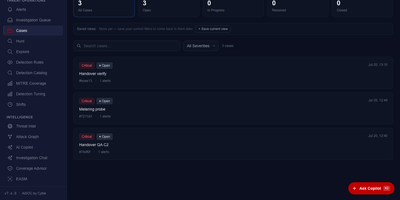
AiSOC delivers an open-source AI Security Operations Center that unifies event ingestion, graph correlation, autonomous triage, and purple-team adversary emulation into a single self-hosted console. Security analysts triage alerts across an interactive Investigation Rail that visualizes six-event attack timelines, pivot-path entity graphs, and recommended containment steps. The underlying LangGraph agentic engine reasons over ingested telemetry, querying MITRE ATT&CK frameworks, CISA Known Exploited Vulnerabilities catalogs, and Shodan intelligence while recording every prompt, tool execution, and evidentiary citation in an immutable Investigation Ledger. Incident responders execute automated containment playbooks, including host network isolation, credential revocation in identity providers, and firewall blocklist updates with human-in-the-loop sign-offs. Threat hunters input plain-English hypotheses into the natural-language hunt workbench to generate and execute ES|QL, SPL, and KQL queries against historical telemetry stores. Platform operators connect over seventy vendor connectors spanning CrowdStrike, SentinelOne, Microsoft Defender, AWS Security Hub, Okta, and Cloudflare to normalize streaming events into Open Cybersecurity Schema Framework standards. Running on a dedicated VPS on RepoCloud with guaranteed CPU, RAM, and SSD, full root SSH access, and a browser serial console. MIT licensed.
Gramps Web
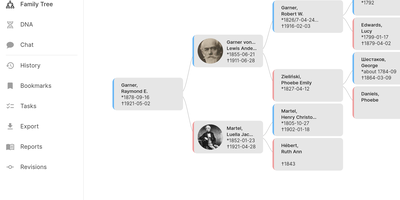
Together with relatives and fellow researchers anywhere in the world, family historians can build, visualize, and preserve shared ancestry databases using Gramps Web, a self-hosted collaborative genealogy platform. Interactive family tree charts let you explore ancestor, descendant, hourglass, relationship, and fan views across configurable generation depths, while inline editing buttons allow you to add parents, spouses, and children directly inside the graph and export finished diagrams as SVG files. When tracing where ancestors lived and migrated, the interactive map plots life events across OpenStreetMap and OpenHistoricalMap layers with a historical time slider and custom image overlays, complemented by a zoomable chronological timeline spanning centuries. Photograph collections become searchable archives through automated face detection that tags relatives in two clicks, alongside an integrated family history blog for publishing illustrated biographical stories. Researchers can also analyze autosomal DNA match segments in an interactive chromosome browser, determine patrilineal Y-DNA haplogroups locally without sending genetic data to third parties, and query people, places, citations, and notes using Gramps Query Language filters or a conversational AI assistant. Bidirectional synchronization with Gramps Desktop, full transaction history with undo, role-based privacy controls for living individuals, and pre-filled searches for FamilySearch and Ancestry keep every record accurate and protected. Running on a dedicated VPS on RepoCloud with guaranteed CPU, RAM, and SSD, full root SSH access, and a browser serial console. AGPL-3.0 licensed.

Surmai
When a family vacation or group expedition spans multiple airlines, hotels, rental cars, and currencies, Surmai brings every reservation and shared cost into one collaborative travel planner. Each trip breaks down into dedicated sections for transportation legs, lodging stays, daily activities, and travel notes. Confirmation codes, terminal numbers, departure times, and street addresses stay right where everyone in your party can find them. Built-in airport, city, and airline directories auto-complete flight routes in seconds, or you can forward booking confirmation emails directly into an active trip for automatic parsing. The chronological itinerary view then weaves flights, hotel check-ins, and excursions into a clean day-by-day timeline so your group can spot layover gaps immediately. Boarding passes, train tickets, and PDF vouchers live inside a central attachment vault. Installing the Progressive Web App caches your entire itinerary and travel documents on your phone for offline viewing at airport gates or remote trailheads. A built-in expense ledger logs shared purchases across multiple currencies so nobody has to guess who paid for dinner. Administrators can invite fellow travelers over SMTP email, enable OAuth2 or OpenID Connect login with Authentik, Keycloak, Google, or Microsoft, and replicate backups continuously to S3-compatible object storage. Running on a dedicated VPS on RepoCloud with guaranteed CPU, RAM, and SSD, full root SSH access, and a browser serial console. MIT licensed.