Koillection
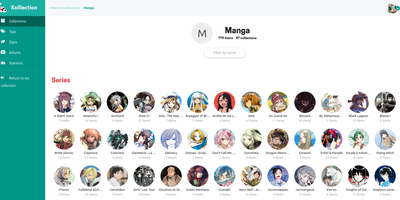
Koillection is a self-hosted physical collection and inventory manager that organizes books, vinyl records, video games, stamps, trading cards, and any custom hobby catalog using hierarchical folders, reusable metadata templates, wishlists, and loan tracking. Collectors can structure nested sub-collections like a file system and attach tailored attributes to each item, ranging from star ratings, purchase dates, and country flags to autographs, PDF manuals, and video clips. Reusable item templates and choice lists standardize data entry across uniform categories so adding a new comic issue or board game takes seconds rather than repetitive typing. Custom HTML and JSON scrapers let you pull item titles, cover art, and structured fields directly from external catalog websites into your forms using XPath or JMESPath selectors. Cross-collection tags link related pieces across separate folders, while dedicated photo albums store supplementary event galleries or condition photographs alongside your main inventory. Built-in wishlists track desired acquisitions with target prices and currencies, and a loan manager records which friend borrowed an item and when it was returned. Granular visibility settings let households run independent multi-user accounts or share read-only collection pages with guests, and a REST API exposes every catalog entity for external automation. Running on a dedicated VPS on RepoCloud with guaranteed CPU, RAM, and SSD, full root SSH access, and a browser serial console. MIT licensed.
BookLogr
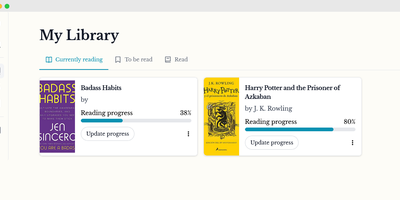
For avid readers who want to catalog their home bookshelves and track annual reading progress without handing personal habits to commercial social networks, BookLogr delivers a self-hosted personal library and reading tracker that replaces Goodreads and The StoryGraph. Searching by title, ISBN-10, or ISBN-13 pulls book covers, author names, page counts, and descriptions directly from OpenLibrary, while manual entry and user-defined custom fields let you record text, numbers, dates, selections, or boolean attributes for rare and indie editions. Configurable library tabs organize titles across Reading, To Be Read, Already Read, Did Not Finish, and All views with instant author filtering. As you read, you can update your current page number or completion percentage, log start and finish dates across multiple re-reads, and rate completed books on a granular 0.5 to 5.0 star scale. Readers can capture page-linked notes and favorite quotes, keeping reflections private or publishing them to a dedicated Notes and Quotes feed on a shareable public profile. Automated Mastodon integration posts reading milestones to the fediverse, while OpenID Connect single sign-on and single-user mode adapt the workspace for households or solo collectors. Built-in Goodreads CSV import and one-click exports to CSV, JSON, and HTML guarantee complete data portability. Running on a dedicated VPS on RepoCloud with guaranteed CPU, RAM, and SSD, full root SSH access, and a browser serial console. Apache-2.0 licensed.
YunoHost
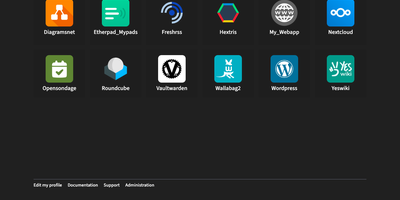
Host your own email, files, calendars, and passwords on a single server with YunoHost, a server operating system that puts every app behind one web admin and one shared login. Browse a catalog of more than 500 apps, such as Nextcloud, WordPress, and Vaultwarden, filter by quality level, and install in a few clicks, or paste a Git URL for a custom app. Each person signs in once at a portal that shows a tile for every app they may open, and apps with single sign-on skip their own login screen. Groups and per-app permissions control access, including public access for visitors, and the Admins group adds web admin, SSH, and sudo. A full mail stack handles incoming and outgoing email per domain with DKIM signing, and Let's Encrypt certificates renew automatically. The domain screen suggests the DNS records you need and can push them to a supported registrar's API, while free .nohost.me, .noho.st, and .ynh.fr subdomains configure themselves. Backups bundle system settings, mail data, and chosen apps into downloadable archives that can be restored selectively from the admin or the command line. Twice a day a built-in diagnosis checks DNS records, mail setup, and system resources, then emails the admins if anything needs attention, with a firewall editor and fail2ban protection alongside. Running on a dedicated VPS on RepoCloud with guaranteed CPU, RAM, and SSD, full root SSH access, and a browser serial console. AGPL-3.0 licensed.
Azimutt
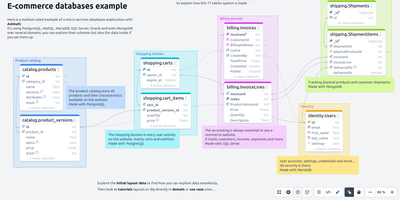
Inheriting a sprawling database with hundreds of undocumented tables usually means weeks of guesswork, unless you open it in Azimutt to visually map schemas, trace relationships, and inspect live rows in one workspace. Instead of dumping every table onto a cluttered canvas that crashes your browser, the visual explorer starts clean so you can search across entity names, column types, and SQL comments to reveal only the tables relevant to your investigation. Clicking foreign-key or primary-key indicators expands incoming and outgoing relations step by step, while the graph path-finder automatically calculates the shortest join route between any two distant entities. When debugging production issues or answering support tickets, you can query live records across PostgreSQL, MySQL, MariaDB, SQL Server, Oracle, SQLite, MongoDB, Couchbase, Snowflake, and BigQuery, then click directly through foreign keys in the result rows to follow data lineage visually. Architects and developers also design new schemas at typing speed using Azimutt Markup Language (AML), attach contextual markdown notes, tags, and memos to saved layouts for team onboarding, and run automated schema analysis that flags missing primary keys, implicit foreign keys, inconsistent column types, and oversized tables. Running on a dedicated VPS on RepoCloud with guaranteed CPU, RAM, and SSD, full root SSH access, and a browser serial console. MIT licensed.
Marmot
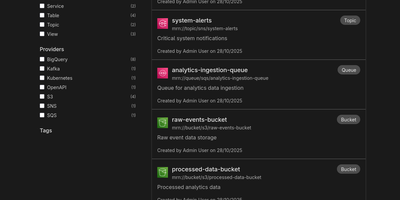
Cataloging tables, topics, queues, and APIs across fragmented data stacks usually demands heavyweight enterprise governance suites, yet Marmot delivers fast full-text asset discovery and AI-ready metadata context in a single self-hosted service. Data engineering and platform teams use its 71 official plugins to automatically ingest schemas, run histories, and dependencies from Apache Kafka, Airflow, Iceberg, Superset, PostgreSQL, BigQuery, and AsyncAPI specifications without moving raw table rows or message payloads. From the web interface, analysts can run structured boolean queries, filter assets by custom tags or PII classifications, and inspect column-level schemas in seconds. Interactive upstream and downstream lineage graphs let engineers trace how events flow from message brokers into warehouse tables and BI dashboards so they can assess what breaks before renaming a column or deprecating an endpoint. Shared business glossaries, bidirectional ownership assignments, and curated data product bundles ensure every department speaks the same language and knows exactly which team maintains each pipeline. Through the built-in Model Context Protocol server, AI assistants in Cursor, Claude Desktop, and LibreChat can invoke tools like discover_data, find_ownership, and lookup_term to answer natural-language questions against live catalog metadata instead of guessing. Platform administrators can also manage catalog resources declaratively using the REST API, CLI, Terraform provider, or Pulumi integration. Running on a dedicated VPS on RepoCloud with guaranteed CPU, RAM, and SSD, full root SSH access, and a browser serial console. MIT licensed.