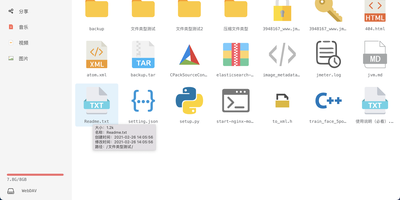
Jmal Cloud
Jmal Cloud is a self-hosted private cloud drive that keeps your files on your own server, with online previews, resumable uploads, full-text search, and WebDAV access. The web manager previews photos, videos, Office documents, PDFs, EPUB books, and even CAD DWG drawings in the browser, then puts recently modified files, favorites, shared folders, and a trash bin a click away. Huge uploads resume from the exact chunk that stopped, while full-text search drills into text, PDFs, and Office documents when filenames fail you. Connect Alibaba Cloud OSS, Tencent Cloud COS, or MinIO as storage backends and browse every bucket through the same folders. Wire in a self-hosted OnlyOffice Document Server and draw.io to edit Word, Excel, and PowerPoint files and sketch flowcharts or mind maps without leaving the drive. Mount the library as a local network drive over WebDAV, share folders through links for upload and download, and push scheduled backups with the Rust jmalcloud CLI. Packages and Docker images cover Ubuntu, Debian, CentOS, Fedora, and Arch on x86_64 and ARM64, and the interface speaks English, Chinese, and Japanese. Running on a dedicated VPS on RepoCloud with guaranteed CPU, RAM, and SSD, full root SSH access, and a browser serial console. MIT licensed.
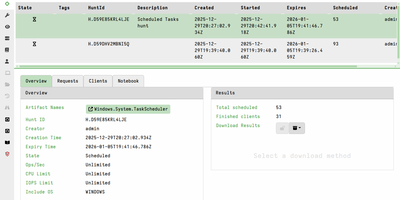
Velociraptor
Hunting for a suspicious file, process, or registry key across every endpoint becomes a single hunt in Velociraptor, an endpoint visibility and digital forensics platform. A web console sends tasks to clients on Windows, Linux, and macOS machines, which hold a persistent connection and run each task as soon as it is issued. A hunt runs a VQL artifact, one of more than 400 built in, across selected endpoints, picks up machines that reconnect later, and tracks which hosts have answered. Each hunt and collection opens into a notebook where markdown and live VQL cells group, filter, and timeline the results. A virtual file system browses a client's directories and fetches files through file, NTFS, and registry accessors, with hex and text viewers. Offline collectors bundle chosen artifacts into one binary that writes an optionally encrypted container for later import, suiting machines that never reach the server. Client event queries stream telemetry such as DNS lookups to the server, and server event queries can alert Slack, email, Elastic, or Splunk. Quarantine confines a host's network traffic to the Velociraptor server, and the Shell page runs commands on it. Sign-in works through Google, Azure, GitHub, OIDC, or SAML, with reader, analyst, investigator, and administrator roles. Responders reach for it during threat hunts, compromised host triage with KapeFiles targets, and dead disk image analysis. Running on a dedicated VPS on RepoCloud with guaranteed CPU, RAM, and SSD, full root SSH access, and a browser serial console. AGPL-3.0 licensed.
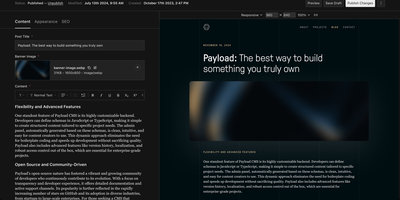
Payload CMS
Backed by 44,000 GitHub stars and now part of Figma, Payload is the first headless CMS that installs natively into your Next.js application's /app directory rather than running as a separate service. The code-first architecture uses TypeScript config files to define collections, globals, and field schemas — from which Payload auto-generates database tables with migrations, a fully customizable React admin panel, REST and GraphQL endpoints, and type-safe Node.js local APIs you can call directly in React Server Components. The Lexical-based rich text editor supports block-based layout building, inline media embeds, and nested field structures, while the built-in localization engine handles unlimited locales with field-level translations. Authentication ships out of the box with HTTP-only cookie sessions, CSRF protection, role-based access control definable at the document, field, and operation level, and support for OAuth providers. Version history tracks every document change with full draft and publish workflows, and Live Preview renders content edits in real-time using server components. The job queue system manages background tasks and multi-step workflows deployable via Vercel Cron or standalone workers. Database flexibility spans PostgreSQL, MongoDB, and SQLite through swappable adapters, and the plugin ecosystem includes official modules for SEO, form builders, redirects, nested documents, and search alongside hundreds of community extensions. Running on a dedicated VPS on RepoCloud with guaranteed CPU, RAM, and SSD, full root SSH access, and a browser serial console. MIT licensed.

13ft
One article should not require a subscription, an account, and your tracking consent. 13ft is a self-hosted alternative to the defunct 12ft.io that fetches web articles the way a search-engine crawler receives them, then shows you the clean page without paywall walls, ad clutter, and pop-up nonsense attached. Paste a link into the single input, or better, install the companion bookmarklet: one click on any article page rewrites the address to your own server, and the reading copy comes back from infrastructure you control. Because it is yours, there is no third-party service logging every article you read, no central site that can be taken down and strand the habit, and nobody selling a premium tier of unblocking. It handles the stubborn cases with a loading page and multiple fallback retrieval methods that kick in when the first approach fails, ships localised interface strings in several languages, and the whole thing is one small application that runs from a container and sits politely behind a reverse proxy. Casual readers reclaim the occasional long-form piece; researchers and archivists get a reproducible way to fetch the same copy a search index saw. Running on a dedicated VPS on RepoCloud with guaranteed CPU, RAM, and SSD, full root SSH access, and a browser serial console. MIT licensed.
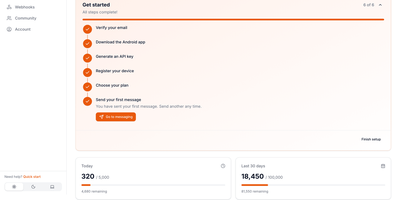
TextBee
TextBee turns an Android phone with a SIM card into an SMS gateway your applications can call, so one-time codes, alerts, reminders, and two-way conversations go out as ordinary texts from a real number. Pair a phone by scanning a QR code in the dashboard, then send messages from the REST API, the dashboard, or the JavaScript SDK. Bulk campaigns load from a CSV file and are paced to stay within carrier limits, and any message can be scheduled up to 72 hours ahead. With several phones or SIM cards attached, each message can name the device and SIM it should use. Every message moves through pending, dispatched, sent, delivered, or failed, and the history view lists all devices together. Incoming texts appear in the dashboard and the API, and webhooks push received messages and delivery reports to your server with an HMAC-SHA256 signature you can verify. An official MCP server lets AI assistants send texts and read replies. API keys, devices, usage, and webhook subscriptions are all managed from one web interface. Running on a dedicated VPS on RepoCloud with guaranteed CPU, RAM, and SSD, full root SSH access, and a browser serial console. MIT licensed.
Online Document Editor
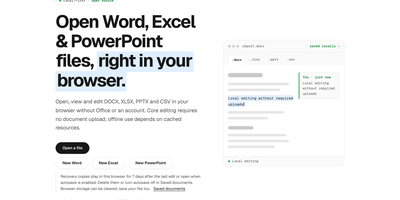
Open a browser tab and a full office suite appears, with no account to create and your files kept on your own device. Start a new Word document, spreadsheet, or presentation, or drop in a file, and edit with the familiar ribbon: styles and bullets in documents, formulas and charts in sheets, slides with layouts and notes. PDFs open for reading, commenting, highlighting, and filling, then save back out. Convert Word, Excel, and PowerPoint files to PDF, or move spreadsheets to CSV and back, without uploading a byte. An optional AI assistant, off by default, can rewrite, summarize, or translate a passage, fill spreadsheet cells, draft slides, or answer questions about a PDF page, using an on-device model or an AI service you connect. WebMCP tools let compatible browser agents open, convert, and export documents. Recovery copies stay in the browser for seven days, autosave can be switched off, and the site installs as a PWA for offline use. Host it as one static container or embed the editor in your own app through an iframe API. Running on a dedicated VPS on RepoCloud with guaranteed CPU, RAM, and SSD, full root SSH access, and a browser serial console. AGPL-3.0 licensed.
Websurfx
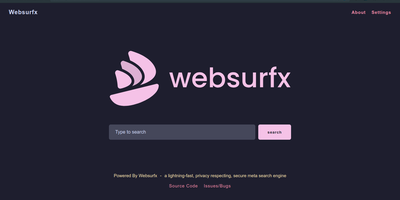
Websurfx aggregates results from multiple search engines into one private, ad-free interface that never tracks your queries. Written in Rust, the backend provides memory safety against buffer overflows and data races at the language level while handling concurrent requests across upstream providers like DuckDuckGo and Searx. A built-in re-ranking algorithm scores and merges results by relevance, producing a unified page that draws from many sources while appearing as one coherent search. Safe-search filtering operates across four levels from unrestricted to complete content blocking, with regex-based filter lists for parental controls in schools and organizations. Upstream requests route through configurable proxy chains or Tor, preventing search providers from correlating your queries with a specific IP address. Four Docker image variants target different caching strategies: hybrid Redis plus in-memory for maximum throughput, Redis-only, in-memory-only, or zero-persistence for environments where cached queries must never touch disk. The Lua configuration file controls engine selection, request timeouts, rate limiting thresholds, and production-mode delays that throttle upstream traffic to prevent abuse. Quick-result widgets handle calculations, currency conversions, and unit transformations inline without external redirects. Image search capabilities serve visual discovery for designers and researchers who need media results without surveillance. Runs on a RepoCloud VPS with dedicated resources and full root access. AGPL-3.0 licensed.

CC Our Story
CC Our Story gives a couple a private website of their own, a shared home for the timeline of small moments, anniversaries, wishes, and messages that no social platform gets to index, advertise against, or quietly delete. The home page shows the two of you, how long you have been together, and the memories you most recently added. Every photo and note lands on a moments timeline you scroll like a story, anniversaries count down so the next one never sneaks past, and a guestbook lets friends leave blessings without creating accounts, identified by a privacy-preserving fingerprint instead of a sign-up form. A wish shop turns promises into something playful: post the things you would do for each other as redeemable wishes, spend the heart points you earn, and have your partner confirm when the wish is fulfilled. Sensitive records can be locked, private extras include synchronized-answer compatibility tests and gentle cycle tracking with daily notes, and the database ever holds exactly two accounts, yours. Web Push and email notifications run as independent channels so a new post, comment, or heartbeat reaches the other phone even if one channel fails, while an optional AI companion group with named personas drops by occasionally to comment on new moments through any OpenAI-compatible endpoint, never seeing drafts or locked posts. Running on a dedicated VPS on RepoCloud with guaranteed CPU, RAM, and SSD, full root SSH access, and a browser serial console. MIT licensed.
Shaarli
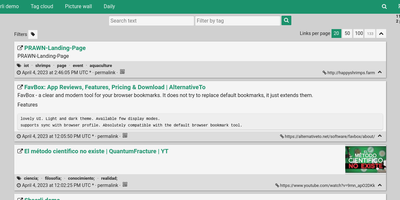
Personal, minimalist, database-free bookmarking - Shaarli is a philosophy as much as an app. Everything lives in a single compressed datastore file inside data/: no MySQL, no PostgreSQL, backup by copying one directory. That write-once/read-many file is usually served straight from OS disk caches, which is why a decade-old Shaarli instance with tens of thousands of links still responds instantly. Designed deliberately single-user, it saves URL, title, unlimited-length description, and tags (with autocomplete, renaming, and merging), marks entries public or private, and automatically strips utm_source and fb tracking parameters from saved URLs. That description field is why the community uses Shaarli as far more than bookmarks: a microblog, read-it-later queue, code-snippet base, pastebin, and shared clipboard between machines. Sharing is one click via bookmarklet or Android apps; consumption is per-tag RSS/Atom feeds plus a daily digest feed; search is full-text with tag filtering. A REST API opens it to any client, a plugin and theme system extends the PHP core (Markdown rendering, thumbnails), and import/export uses browser-standard Netscape HTML - your data enters and leaves freely. LDAP login is supported, no telemetry is sent anywhere, and the UI degrades gracefully without JavaScript. The anti-cloud Delicious.
Mularr
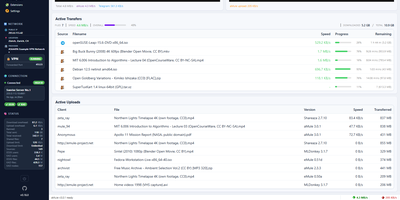
Classic eD2k and Kad downloading gets a browser interface with the look of Windows XP, Windows Classic, a clean modern dashboard, or green-on-black Hacker mode. Mularr wraps an aMule daemon and shows live download and upload graphs, active transfers with progress and remaining time, and the uploads other clients are pulling. Transfers can be started, paused, stopped, categorized, and bulk imported from ED2K links. Servers, search, shared files, categories, and extensions each get their own page. For automation it presents itself as a qBittorrent download client and a Torznab indexer, so Sonarr and Radarr can use it with their standard settings. Extensions for Sonarr and Radarr read the Wanted list and publish matches into a feed the apps can poll. Telegram can act as an extra download provider and notification channel, and Hispashare releases appear in search results next to aMule's. A VPN panel reports Gluetun health and the forwarded port, and the settings page covers ports, bandwidth limits, IP filters, a blacklist, and shared folders. One container image and a single data volume are enough to get started. Running on a dedicated VPS on RepoCloud with guaranteed CPU, RAM, and SSD, full root SSH access, and a browser serial console. MIT licensed.
PlugNmeet
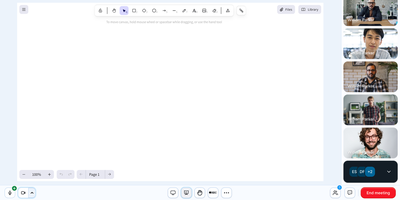
Video meetings on your own domain, branded your way, with no per-host bill: PlugNmeet is a self-hosted web conferencing system that runs full meetings in the browser. The room covers HD video and screen sharing, a collaborative whiteboard that annotates PDFs and office files, a shared notepad, chat, polls, and breakout rooms. Classes use raise hand, waiting rooms, per-user locks, and quiz-mode polls; webinars stream out over RTMP to YouTube or take in an OBS feed. Every meeting can be recorded to MP4, joined by phone through SIP dial-in, and captioned, translated, transcribed, and summarized by an AI agent connected to your own provider. Moderators manage participants and permissions, optional end-to-end encryption keeps even the server out of the media, and plugins drop the same rooms into WordPress, Moodle, Joomla, or any LMS over LTI. Behind it, APIs and PHP or JavaScript SDKs create rooms and mint join tokens from your product. Running on a dedicated VPS on RepoCloud with guaranteed CPU, RAM, and SSD, full root SSH access, and a browser serial console. MIT licensed.
Grimoire
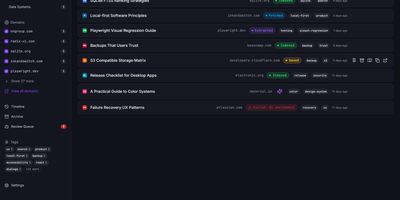
Grimoire captures, extracts, and indexes the content behind your bookmarks so you can search what pages actually say, not just their titles and URLs. The ingestion pipeline accepts links from the web UI, REST API, MCP server, browser bookmarklet, or bulk import, then fetches each page and extracts readable content using specialized parsers for GitHub repos, GitHub issues, StackOverflow threads, YouTube transcripts, PDFs, and standard web articles. Everything stores locally in SQLite with file-based content archives. Search operates in three modes: FTS5 keyword matching for exact terms, semantic embedding search for meaning-based retrieval using vector similarity, or a hybrid ranking mode combining both. Optional AI providers including OpenAI, Ollama, Anthropic, DeepSeek, and any OpenAI-compatible endpoint generate automatic tags, summaries, and embeddings without being required for core functionality. The interface built with React 18, Vite, TypeScript, Tailwind CSS, and Radix UI supports categories, nested tags, notes, archive and trash states, read-later flags, and multi-user isolated spaces. A single Bun-powered Hono process serves both the compiled frontend and the REST API on port 3210, requiring only one Docker container and a SQLite volume. Backup and restore export bookmarks, content, settings, and metadata as portable ZIP archives. Nearly 3,000 GitHub stars reflect growing adoption among developers and researchers. Running on a VPS on RepoCloud with guaranteed CPU, RAM, and SSD, full root SSH access, and a browser serial console. MIT licensed.

Galene
Galene is a self-hosted video conferencing system that runs full meetings, lectures, and tutorials in the browser while asking remarkably little of the server it runs on. Every group gets its own page with video tiles, a user list, and a chat pane, and participants join from desktop or mobile browsers with nothing to install. Presenters share a screen or individual windows, stream a video or audio file straight from disk, and switch to blackboard mode when a slide needs resolution more than frame rate. Moderators can warn or remove participants and lock the group, raise-hand status keeps question queues orderly, and anyone can blur their background or exchange files directly with peers. Groups are simple configuration files: set public or private rooms, passwords or login tokens, client limits, and expiry windows, then create users with moderator or presenter privileges using the galenectl command. Automatic subgroups spin up identical breakout rooms on demand, the pattern its author uses to supervise forty students working in pairs during computer science practicals. Calls stay smooth on poor networks because the server adapts video quality per participant, recovers lost packets, and relays media through its built-in TURN server when firewalls block direct paths. Running on a dedicated VPS on RepoCloud with guaranteed CPU, RAM, and SSD, full root SSH access, and a browser serial console. MIT licensed.
sandboxd
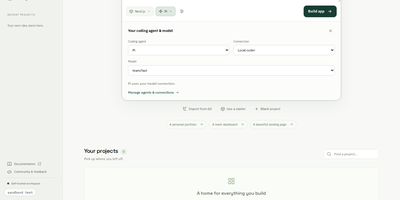
Describe an app in one sentence and sandboxd, a self-hosted AI app builder, has a coding agent build it in an isolated sandbox and hand back a live preview URL. Start from a blank prompt, a React, Next.js, Express, or FastAPI starter, or an imported public Git repo. Refine it in one persistent chat beside Preview, Code, Terminal, and Git tabs. Pick OpenCode, Pi, or Claude Code. Point OpenCode or Pi at local or remote OpenAI-compatible and Anthropic-compatible endpoints, LiteLLM gateways included. A proxy injects provider keys on the wire, so nothing secret lands in a sandbox. Did the agent get it wrong? Every task is checkpointed first, so one click reverts the turn. Snapshots, forks, and named versions keep known-good points to branch from. Edit files in the browser, review file-by-file diffs, commit, and push. Secrets are write-only and encrypted per app. Idle sandboxes sleep and wake on the next request. One modest server can host per-user previews, coding playgrounds, or an agent platform. The app library installs 80+ curated open-source apps, such as Ghost, n8n, Gitea, and Grafana, each in its own sandbox. Every console action is also a /v1 HTTP call with an OpenAPI spec. Upgrades back up the database, health-check the new version, and roll back on failure. Running on a dedicated VPS on RepoCloud with guaranteed CPU, RAM, and SSD, full root SSH access, and a browser serial console. MIT licensed.
JobNavigator
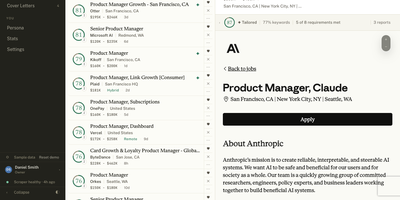
JobNavigator runs your whole job hunt as an automated pipeline, scraping career pages and job boards, scoring every posting against your résumés, and tracking each application to its outcome. Discovery fans out across company career pages through twelve ATS handlers, aggregators like LinkedIn, Indeed, and ZipRecruiter, and a Chrome extension that saves any posting you stumble on. Each new job is scored against your base résumés, lightly for a quick number or in full, with keyword coverage and requirement mapping that show exactly where you match and where you do not. Strong matches get a tailored résumé from eight PDF templates and a cover letter written from your persona, ready for your review before anything is sent. The extension then auto-fills application forms and drafts answers to free-text questions from your stored Q&A bank. Every application moves through stages and interviews in one tracker, while Gmail polling spots replies and updates the status for you, and Telegram delivers new-job alerts and a daily digest. A household can share one install with up to five accounts, each keeping its own jobs, résumés, and PIN, while scraping runs once for everyone. Running on a dedicated VPS on RepoCloud with guaranteed CPU, RAM, and SSD, full root SSH access, and a browser serial console. MIT licensed.

ANX Calibre Manager
ANX Calibre Manager puts your Calibre library in your pocket, with a phone-friendly interface for the collection that used to require sitting down at the big machine. Browse and search the whole library from the sofa, open a book in the browser previewer, and have it read aloud when your eyes are done for the day. Any EPUB can become a proper audiobook with chapter markers, playable right in the app with your listening position saved, and ready for dedicated audiobook servers too. Your e-reader stays in the loop: reading progress and time sync back from KOReader devices, books push straight to Anx-reader folders, and sending to Kindle quietly converts to the right format first when the book you have is not the format Kindle wants. Every account gets its own WebDAV library for compatible readers, invite codes keep registration to people you actually know, and roles decide who may edit whose books. Reading statistics build themselves into a year heatmap with your current and finished lists, shareable or private as you choose, and you can even ask a book questions and get answers drawn from its pages. Running on a dedicated VPS on RepoCloud with guaranteed CPU, RAM, and SSD, full root SSH access, and a browser serial console. GPL-3.0 licensed.
Directory Lister
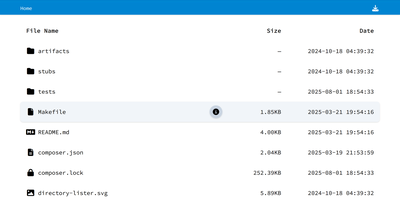
Drop Directory Lister into a folder and that folder becomes a tidy public file library. Visitors browse directories in the browser, search filenames, sort the listing the way they think, and download single files or the whole directory as one zip. There is nothing to configure for the first run, which makes it the fastest honest answer to "how do I just share these files" for release archives, documentation bundles, media collections, and project downloads. A README placed in a folder renders right on the listing page, so instructions travel with the files instead of living in a separate post nobody opens. File hashes appear beside downloads for people who verify what they fetched, and light and dark themes keep the listing presentable on a project site or a personal server. Multiple languages localize the interface for the audience actually downloading. Point it at the folder, share the link, and the files present themselves. One caution belongs in the pitch itself: everything in the exposed folder is public, hidden files included, so this is a publishing tool, never a place for private material. Running on a dedicated VPS on RepoCloud with guaranteed CPU, RAM, and SSD, full root SSH access, and a browser serial console. MIT licensed.
RStudio Server
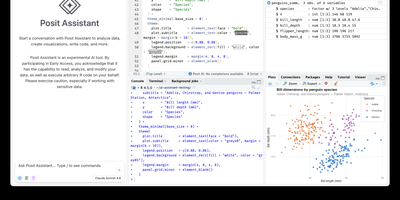
Open a browser tab, sign in, and the whole RStudio workbench is waiting there, running against R on a Linux server instead of your laptop. The familiar four-pane layout holds a source editor, an R console, Environment and History tabs, and Files, Plots, Packages, Help, and Viewer tabs. The editor opens R scripts, R Markdown, Quarto, and Python files, with code completion, diagnostics, section outlines, and a visual mode for Quarto documents. A Terminal tab and a Python console sit beside the R console, and the Data Viewer sorts, filters, and searches data frames and nested lists. Editor breakpoints and tracebacks help debug functions, while Background Jobs run long scripts in separate R sessions so the IDE stays usable. Shiny apps and Plumber APIs run as background jobs with live reload, and a Git pane handles diffs, commits, pushes, and branches. The Connections tab browses databases, and finished reports go to Posit Connect, shinyapps.io, Quarto Pub, or RPubs. Optional Posit Assistant adds an AI chat pane that works with the model provider you choose, and administrators can switch it off. Because everything runs server-side, a class, a lab, or a team can share one large-memory machine and keep computation next to the data without installing anything locally. Running on a dedicated VPS on RepoCloud with guaranteed CPU, RAM, and SSD, full root SSH access, and a browser serial console. AGPL-3.0 licensed.