Orbeon Forms
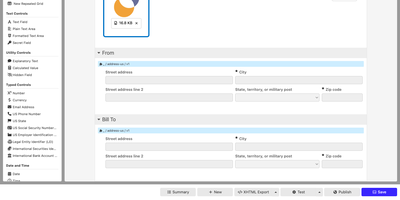
Orbeon Forms lets you design complex web forms in your browser, such as permit applications and consent forms, then collect validated data, attachments, and ready-made PDFs from the people who fill them in. The Form Builder arranges sections and grids on a twelve-column layout, and its toolbox drops in text fields, dropdowns, date fields, radio buttons, and file uploads. Validation covers required fields, data types, length limits, and custom formulas, and errors, warnings, and informational messages appear beside each answer. Repeated grids and sections handle invoice lines, dependents, or inventory rows while formulas multiply and total the numbers as people type. Long applications switch to a wizard view with a table of contents on the left, Prev and Next buttons, and red highlights on pages that still hold errors. Every form produces a read-only PDF that mirrors its on-screen look, with a default header and footer. A summary page lists saved records in a searchable table where column headers sort the rows, and records can be created, edited, duplicated, deleted, or opened as PDFs. Owner and group permissions let each person see only their own records or those of their group, and autosave protects half-finished submissions. Demo forms such as Bookshelf, Invoice, Feedback Form, Building Permit Application, and Health History give a fresh install something to click through on day one. Running on a dedicated VPS on RepoCloud with guaranteed CPU, RAM, and SSD, full root SSH access, and a browser serial console. LGPL-2.1 licensed.
Easy Invoice PDF
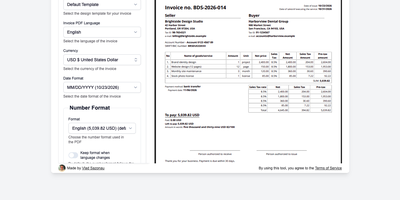
Freelancers, contractors, and small shops can turn a short form into a client-ready PDF invoice, with a live preview that redraws on every keystroke and no account to create. Fill in seller and buyer details, then add line items with quantity, unit, net price, and tax rate; net amounts, tax, totals, and the amount in words are calculated automatically. Item discounts take a percentage or fixed amount off any line under a custom label, and tax applies to the discounted figure. Pick a classic layout or a Stripe-style template, and add your logo as a JPEG, PNG, or WebP file. Invoices can be written in 13 languages, including Brazilian Portuguese, with 122 currencies, 18 date formats, and a number format setting that survives a language switch. Tax labels can read VAT, GST, Sales Tax, or anything else, or the tax columns can be dropped entirely. Bank account, SWIFT/BIC, payment method, due date, and notes sit alongside an optional QR code that can carry a payment link, UPI details, or contact information. Long invoices flow onto extra pages automatically. Saved seller and buyer profiles fill in the next invoice for you, and the data stays in the browser. Download the PDF or copy a shareable link that opens the same invoice for your client. Running on a dedicated VPS on RepoCloud with guaranteed CPU, RAM, and SSD, full root SSH access, and a browser serial console. AGPL-3.0 licensed.
Textpattern
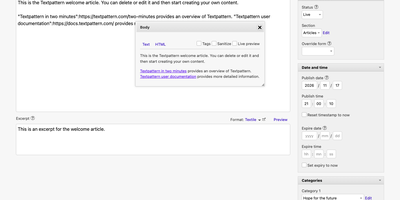
Writers who want to keep their markup in their own hands publish blogs, magazines, portfolios, and company sites with Textpattern, a lightweight open-source CMS driven by a readable tag-based template language. An author fills Title, Body, and Excerpt in the Write panel, flips between Text, HTML, and Preview tabs, formats with Textile or plain HTML, and files each piece under a section with up to two categories and a URL-only title for a clean permalink. Draft, Pending, Hidden, Live, and Sticky statuses track where a piece stands, publish and expire dates schedule its arrival and departure, and freelancers submit work as Pending for review before anything goes live. Six built-in roles (Publisher, Managing Editor, Copy Editor, Staff Writer, Freelancer, and Designer) limit each account to the panels it needs. Designers edit page templates, form templates, and stylesheets in the browser and reshape the markup without touching the server. Custom fields, an article image, and per-article form overrides make one setup work as a photoblog, a portfolio, or a news site. The Images panel creates thumbnails and stores captions and alternate text once for every place a picture appears. Plugins extend the editor and admin area, admin themes restyle the back end, the interface is translated into over 50 languages, and one codebase can power several websites, each with its own theme and admin login. Running on a dedicated VPS on RepoCloud with guaranteed CPU, RAM, and SSD, full root SSH access, and a browser serial console. GPL-2.0 licensed.
Token Bank
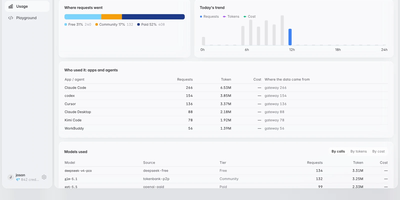
Run one local gateway and every AI coding agent you use shares the same address, key, and usage ledger. Token Bank onboards Claude Code, Codex CLI, Kimi Code, OpenCode, Claude Desktop, OpenClaw, and WorkBuddy in one click by injecting base-URL variables or patching configs, and Revert restores the official settings. Agents keep native model names while the gateway quietly reroutes requests to Ollama, Groq, Cerebras, or DeepSeek, converting between Anthropic Messages, OpenAI Chat, and Codex Responses. Route chains step from local models to free APIs, subscriptions, and pay-as-you-go keys with failover, scene and task presets, and optional lossless JSON compression. Every call is traced with route, model, tokens, latency, and cost, local session logs are imported, and signed-in devices merge into one dashboard. An assets library holds MCP servers, skills, prompts, and agent templates, projects them onto each installed runtime, and a rule-driven butler repairs broken projections. The unified agent API dispatches tasks to local apps, professional templates, external agents joined by pairing code, or agents hired per task, returning results synchronously, in the background, or as a stream. A credit-based market lets you rent out idle quota while keys stay on your machine. The container build serves the desktop interface in a browser on port 11431, with the gateway on 11430 and access control left to your firewall or proxy. Running on a dedicated VPS on RepoCloud with guaranteed CPU, RAM, and SSD, full root SSH access, and a browser serial console. Apache-2.0 licensed.

FoJin
Ask a question about Buddhist scripture in plain language and get an answer that points to the exact passage it came from. FoJin brings thousands of texts from hundreds of digital libraries into one search box, so a reader no longer jumps between a dozen archives with different layouts. The AI assistant, called XiaoJin, answers with clickable citations that open the original text, and it can also reply in the voice of historical masters scoped to their own tradition. Search covers classics, translators, and catalog numbers, with filters by country and collection. Reading pages show full text, and parallel views line up translations in many languages, with Chinese, Pali, and Tibetan versions of the same sutra side by side. Thirty-nine dictionaries answer term lookups, a knowledge graph maps people, lineages, and places, and a data source directory shows what each collection offers. Readers can save collections, bookmarks, and annotations, then export citations in BibTeX, RIS, or APA. A read-aloud mode highlights each sentence in sync with audio. Quote verification confirms that a sentence really exists in the canon, and where. Running on a dedicated VPS on RepoCloud with guaranteed CPU, RAM, and SSD, full root SSH access, and a browser serial console. Apache-2.0 licensed.
Chunky
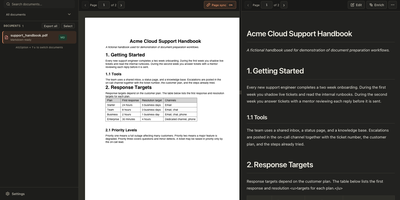
See exactly what your documents look like before a retrieval pipeline swallows them. Chunky puts the original PDF next to the converted Markdown with page-aware scrolling, so broken tables, scrambled columns, and stray artifacts are visible at a glance. Pick a converter, edit the Markdown by hand, then split it into color-coded chunks you can edit, delete, or enrich one at a time. Compare two converters on the same pages in a side-by-side dialog to find which one handles your layouts best. Try token, recursive, sentence, semantic, table, code, and heading-based splitters with adjustable size and overlap, and save the chunk sets that work. Optional model-powered enrichment adds titles, one-sentence context, summaries, keywords, and retrieval questions to each chunk. Process many documents in one batch and export everything as a ZIP. Judge chunk quality by eye, not by guesswork, before any of it reaches an embedding model. Running on a dedicated VPS on RepoCloud with guaranteed CPU, RAM, and SSD, full root SSH access, and a browser serial console. MIT licensed.
OpenHermit
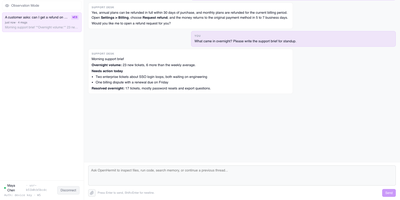
Run a whole fleet of AI agents as managed services, each with its own model, memory, schedules, and sandboxed workspace, from one admin console. Create an agent, point it at OpenAI, Anthropic, OpenRouter, or any OpenAI-compatible endpoint, store its API keys encrypted, and it is ready to chat in the browser. People sign in with a device key and get a session list, streaming replies, and file attachments. The Agents table shows status, last activity, sessions, errors, and token spend for the past 24 hours, and the Stats page tracks users, sessions, events, and total tokens. Cron or one-shot schedules let an agent send a daily brief, and each run is logged. Owner, user, and guest roles control who may talk to an agent or change it, and policy and approval tabs gate risky tool calls. Skills and MCP servers are registered once and enabled for one agent or the whole fleet, and instructions can be pushed to every agent at once. Sessions, memories, and secrets sit in PostgreSQL, so state persists across gateway restarts. Use it for an internal agent platform, a support desk, or one agent per customer. Running on a dedicated VPS on RepoCloud with guaranteed CPU, RAM, and SSD, full root SSH access, and a browser serial console. MIT licensed.
keinsaas Navigator
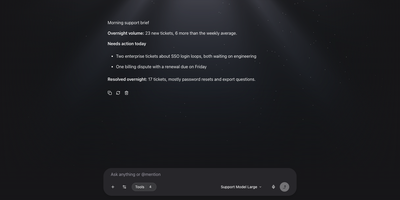
Chat apps, agent builders, workflow tools, and tool servers usually live in four separate products, and keinsaas Navigator folds them into one self-hosted AI workspace. Point it at Ollama, LM Studio, or any OpenAI-compatible endpoint, register the models you want, and pick one for each conversation. Type an at sign in the composer to pull an agent, a workflow, or a tool straight into the message. Agents carry their own role, instructions, model, and tool list, and each one stays private or is shared with the team. The workflow editor connects Input, LLM, Condition, Tool, HTTP, Template, Note, and Output nodes on a canvas, and a published workflow becomes a tool that any chat can call. MCP servers connect over HTTP or local commands, and a built-in tester runs each tool with JSON input before an agent depends on it. Projects keep shared documents and memory with vector search. Agents can run on a schedule for recurring jobs like morning briefs. Teams get accounts and sharing, and the first person to sign up becomes the administrator. A support desk copilot, a private assistant, or a prototype for the next automation all start from the same screen. Running on a dedicated VPS on RepoCloud with guaranteed CPU, RAM, and SSD, full root SSH access, and a browser serial console. MIT licensed.
Dim0
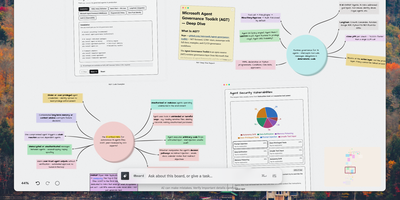
What if the whiteboard could read everything pinned to it and hand you back finished work, which is exactly the workspace Dim0 builds on your own server? One infinite board holds rich notes, hand-drawn and geometric shapes, images, documents, code sandboxes, and nested boards, all editable in place by a whole team at once with live cursors. The built-in agent sees the current board and your selected nodes, takes multi-step actions with its tools, and drops the answer back onto the canvas as a note, a mind map, or a working mini-app instead of burying it in a chat thread. Describe a tool in plain words and Dim0 generates a real interactive React app that lives on the board, reads the data sitting next to it, and can be opened, edited, and exported as code. Code nodes run in sandboxes, uploaded documents become searchable through retrieval, and presentation frames turn any board into a slideshow without exporting to a separate deck tool. You bring your own model keys for OpenAI, Anthropic, Gemini, Mistral, DeepSeek, or Qwen and switch providers whenever you like. Boards holding thousands of nodes still pan and zoom smoothly, and light, dark, and paper-and-ink themes restyle the whole surface. Running on a dedicated VPS on RepoCloud with guaranteed CPU, RAM, and SSD, full root SSH access, and a browser serial console. MIT licensed.
Astrum Repository
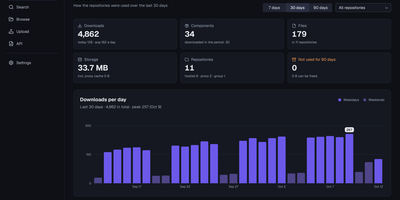
One server can hold every package your builds pull, publish, and cache, so the team stops juggling a different registry for every language. Astrum Repository hosts your own artifacts, proxies public registries so builds keep working when an upstream is down, and groups both behind a single address your tools already understand. Thirty-nine formats share that address: Docker and OCI images, Maven, npm, PyPI, Cargo, Go modules, Helm charts, NuGet, Terraform modules, APT and Yum packages, Hugging Face models, browser extensions, Git LFS, and even remote caches for Nx and Turborepo. Blob storage grows with you, moving between disk, S3, and agent-connected stores that combine into groups without relocating data. Access stays deliberate through users, roles, privileges, and content selectors, with LDAP and OpenID Connect sign-in and access tokens minted for CI pipelines. Day-to-day operations are visible rather than guessed: health endpoints, Prometheus metrics, scheduled tasks, cleanup policies, audit trails, and backups are built in, and several servers can share one database when a single node is no longer enough. The web interface speaks twelve languages, so a platform team spread across regions still works in one console. Running on a dedicated VPS on RepoCloud with guaranteed CPU, RAM, and SSD, full root SSH access, and a browser serial console. MIT licensed.
NodeDR Restaurant POS
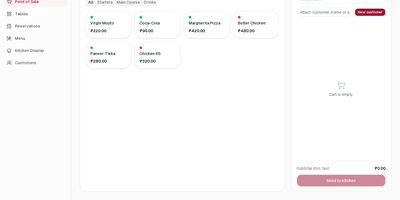
OrderRestro runs an entire restaurant from one server on the premises: tills take orders, the kitchen watches tickets arrive, tables fill and clear, and the books close at night, all without a subscription, and it keeps working when the internet drops. Billing covers dine-in and takeaway with merged bills, discounts, gift cards, tips, and refunds, and it taxes under India GST, US sales tax, EU VAT, or Spanish IVA, with UPI QR payments confirmed by an audible alert. A visual floor plan follows every table while reservations and a waitlist manage the door, and guests scan a table QR code to order, add modifiers, call the waiter, or request the bill. Kitchen tickets route to the right station on the display system with preparation tracking, and the menu supports modifier groups, combos, seasonal menus, and scheduled availability. Ingredient inventory with recipe costing, purchase orders, goods receiving, and waste tracking keeps food costs honest, and accounting closes cash nightly with variance checks, profit and loss, a balance sheet, and bank reconciliation. Staff clock in and out, shifts are scheduled with clash checks, payroll comes from clocked hours, and loyalty points, memberships, coupons, and happy-hour campaigns keep regulars returning. Delivery runs on zones with fees, minimums, and driver assignment, chains switch branches and transfer stock between them, and eighteen reports export to print, CSV, Excel, or PDF. Running on a dedicated VPS on RepoCloud with guaranteed CPU, RAM, and SSD, full root SSH access, and a browser serial console. AGPL-3.0 licensed.
Hoppscotch
Backed by nearly 80,000 GitHub stars and recognized as one of the most popular developer tools in the open-source ecosystem, Hoppscotch delivers a complete API development platform that runs instantly in any browser with zero installation. The platform supports six protocols out of the box including REST with full HTTP method coverage, GraphQL with schema introspection and multi-column documentation, WebSocket for full-duplex communication, Socket.IO, MQTT for IoT messaging, and Server-Sent Events for real-time streaming. Request collections organize your API calls into logical groups with support for sub-folders, environment variables with scope inheritance, pre-request scripts and post-request test scripts written in JavaScript, and automatic code snippet generation in over twenty languages and frameworks. Teams can collaborate in real-time with shared workspaces, role-based access controls, and cloud synchronization across devices. Migration from Postman, Insomnia, or OpenAPI specifications happens with a single click import. The self-hosted edition deploys via Docker Compose with PostgreSQL for data persistence, supporting SSO authentication through SAML and OAuth providers, SMTP configuration with OAuth2, and admin dashboard for user management. The platform also ships as a native desktop application for macOS, Windows, and Linux with offline support, plus a CLI tool for running collections in CI/CD pipelines. A built-in proxy mode bypasses CORS restrictions during development, and an interceptor enables request debugging and response modification. Running on a dedicated VPS on RepoCloud with guaranteed CPU, RAM, and SSD, full root SSH access, and a browser serial console. MIT licensed.
Event Schedule
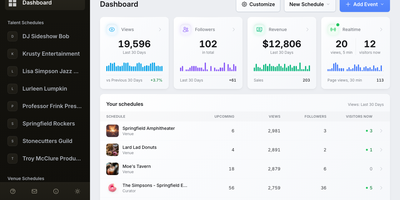
One self-hosted site can publish your event calendar, sell tickets, take bookings, and send the newsletter. Event Schedule gives venues, performers, and curators their own schedule types, and a curator page gathers events from the venues and performers it follows. Recurring patterns cover daily, weekly, monthly-by-weekday, and yearly dates with per-date exceptions, and calendars import from ICS feeds, Google Calendar, or Eventbrite. Tickets come in several types with promo codes, waitlists, gift cards, and a drag-and-drop seating plan, and payments go through Stripe, PayPal, Payfast, Razorpay, or cash straight to your own accounts. Door staff scan QR tickets in a browser and a live dashboard counts arrivals. Appointment pages sync both ways with Google Calendar, Outlook, and CalDAV. The newsletter editor sends segmented, A/B tested campaigns through your own SMTP server, and optional AI features turn pasted text or flyer images into draft events. Analytics, an audit log, TOTP two-factor login, signed webhooks, a REST API, and twelve interface languages cover the admin side. Running on a dedicated VPS on RepoCloud with guaranteed CPU, RAM, and SSD, full root SSH access, and a browser serial console. AAL licensed.
Larasend
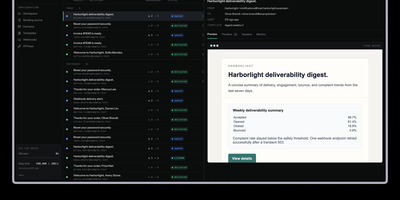
Larasend gives Laravel teams a self-hosted transactional email platform that sends through their own Amazon SES or Cloudflare account while keeping the dashboard, delivery logs, and message data on their own servers. Send mail with a simple POST to the emails API, or point existing mailables and notifications at the Larasend transport with one environment variable and no code rewrite. Every message lands in an activity dashboard where you can filter by status, search recipients and message IDs, open a preview with headers and metrics, and resend failures in one click. Delivery, bounce, complaint, open, and click events stream back from the provider and update each message timeline, so a missing receipt becomes a traceable record instead of a support mystery. Suppression lists build themselves from bounces and complaints, and guardrails watch complaint rates and verified domains before reputation damage can spread. Scoped API keys with expiration and rotation keep each project separate, while workspace roles control who can view, send, and administer. When replies arrive, the shared inbox threads inbound and outbound mail into conversations your team can assign, snooze, annotate, and answer with attachments and drafts. Webhooks notify your other systems about deliveries and inbound mail, and reusable templates keep recurring notices consistent across projects. Running on a dedicated VPS on RepoCloud with guaranteed CPU, RAM, and SSD, full root SSH access, and a browser serial console. MIT licensed.
Casnode
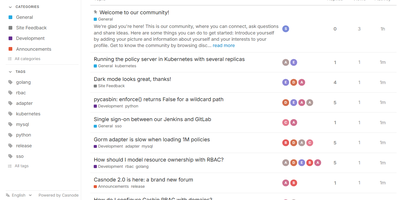
Casnode is a community forum that feels like Discourse from the first click, with topic lists, timelines, and a docked composer your members already know how to use. Readers browse Latest, New, Unread, Hot, and Top topics by category or tag, follow threads with a timeline scrubber and topic map, and jump back in exactly where they stopped reading. Writing feels familiar too: the composer offers Markdown with live preview, drag-and-drop image uploads, mentions, quoting, drafts, and emoji, so long technical answers are painless to produce. Every page is rendered on the server with canonical URLs, Open Graph data, sitemaps, and RSS feeds, which means search engines index your discussions properly instead of seeing an empty app shell. Accounts work out of the box with email and password, and administrators can add single sign-on through any OpenID Connect or OAuth provider, or connect Casdoor for SAML, LDAP, and a hundred more identity sources. Moderators get flags, a review queue, and controls to close, pin, archive, or recover topics, while the admin panel handles site settings, branding, users, categories, and posting limits. Personal messages, user profiles, notification levels from Watching to Muted, and light and dark themes round out daily life for the community. Running on a dedicated VPS on RepoCloud with guaranteed CPU, RAM, and SSD, full root SSH access, and a browser serial console. Apache-2.0 licensed.
UptimeKit
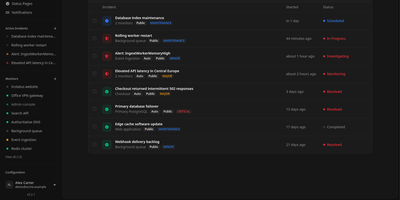
UptimeKit watches your services from several regions at once and publishes the verdict on a status page your customers can actually read. A central dashboard assigns checks to worker probes that run them on schedule, covering HTTP and HTTPS, TCP, ICMP ping, DNS, keyword matches, and JSON responses. Monitors are sorted into nested groups and tags, and HTTPS targets get automatic certificate expiry tracking. When something breaks, an incident takes shape with severity, status transitions, comments, and a resolution flow, either from the dashboard or from a Prometheus AlertManager alert. Status pages come in multiple flavors: public, password protected, or tied to a custom domain, with themes, uptime history bars, and email subscribers who hear about every update. Notifications reach Discord, Google Chat, Telegram, ntfy, Apprise, and plain webhooks. Organizations with roles keep several teams in one installation, and OIDC single sign-on connects the login to an existing identity provider. Response time charts break latency into percentiles per region over any period you pick. A planned maintenance window announces itself on the status page before it begins. Running on a dedicated VPS on RepoCloud with guaranteed CPU, RAM, and SSD, full root SSH access, and a browser serial console. MIT licensed.
Shelfarr
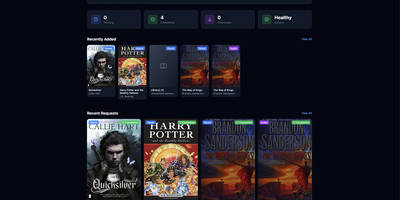
Shelfarr is the request button your book library was missing: anyone in your household can search millions of ebooks and audiobooks, request the format they want, and let automation fetch and shelve it. Discovery searches Open Library, Hardcover, and Google Books with covers, series, editions, and narrator details, so picking between the ebook and the audiobook takes a glance. Hardcover shelves and public reading lists can be previewed and requested, and following an author means their next release surfaces without a manual search. Requests wait for an admin's approval or move straight to searching, where your indexers are queried and every result is scored against your preferred formats, bitrate, and language. The winning release goes to the download client you route it to; finished files are renamed with your templates and delivered into your library's watched folders, which are told to rescan. Nothing found is not the end: searches retry with back-off and flag the request for attention instead of losing it. Family members get their own accounts with roles, two-factor authentication or single sign-on, notifications in the app or on Discord and Telegram, and admins keep manual uploads, API tokens, and download routing under their control. Running on a dedicated VPS on RepoCloud with guaranteed CPU, RAM, and SSD, full root SSH access, and a browser serial console. GPL-3.0 licensed.
Sonarr
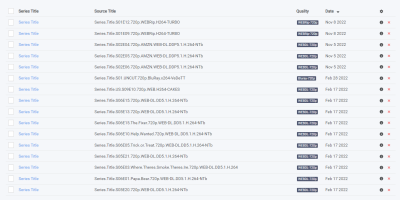
Add a series once, set a quality profile, and everything downstream is automated: Sonarr is the smart PVR for Usenet and BitTorrent users. It monitors RSS feeds from your indexers, detects new episodes the moment they release, sends matching grabs to SABnzbd, NZBGet, qBittorrent, Deluge, or another download client, then renames files with fully configurable templates, sorts them into consistent folder structures, and notifies Plex, Kodi, or Jellyfin to update the library. Quality profiles define what's acceptable (HDTV, WEB-DL, Blu-ray, up to 4K) and an upgrade cutoff - when a better release appears, Sonarr replaces the existing file automatically, stepping from HDTV to WEB-DL to Blu-ray until the cutoff is met. Custom formats add weighted scoring for finer-grained release selection, with community-maintained TRaSH Guides presets as the widely accepted defaults. Failed downloads are handled without intervention: Sonarr retries with another release, and manual search shows every candidate with the reasons any was rejected. It scans existing libraries for missing episodes, fully supports specials, multi-episode files, and daily and anime series types, and a calendar view shows upcoming episodes across every tracked show. Runs on Linux, Windows, macOS, and Raspberry Pi, and pairs naturally with Prowlarr for centralized indexer management.