Owncloud
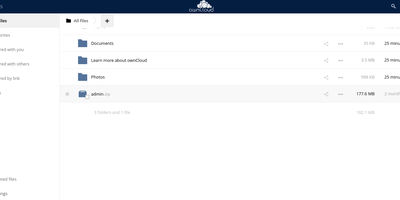
The project that proved organizations could have Dropbox-style convenience with complete data ownership: ownCloud is the original open-source file sync and share platform - the codebase Nextcloud later forked from. This deployment runs the classic ownCloud Server (PHP over PostgreSQL or MariaDB, with Redis caching), the battle-tested edition trusted across enterprises, universities, and public institutions worldwide. The core loop: store files on your server, sync them via desktop clients for Windows, macOS, and Linux plus iOS and Android apps, and access everything through the web interface or standard WebDAV. Sharing is granular - internal users and groups, external recipients via public links with passwords and expiration dates, and federated sharing that connects separate ownCloud instances into one network. Security controls include file firewall rules, multi-factor authentication, encryption, and detailed audit-friendly lifecycle management with versioning and trash-bin recovery. An app marketplace extends the platform, and Web Office integrations bring collaborative document editing through Collabora Online, OnlyOffice, or Microsoft Office Online directly into your files. LDAP and Active Directory integration slots it into existing identity infrastructure. For teams that need a proven, self-hosted alternative to Dropbox or Google Drive - where compliance demands knowing exactly which disk your data sits on - ownCloud remains a foundational choice.
Lobsters
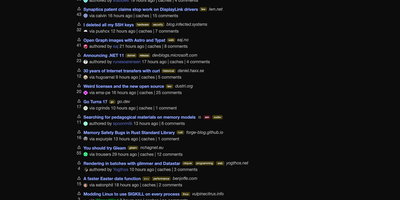
Lobsters is a link-sharing and discussion site you can run for your own community, with the threaded conversations and tight topic focus of the original lobste.rs. Members submit links or text posts, pick tags from a fixed list, and vote stories up the front page. Every tag has its own feed, and readers hide the tags they never want to see, with logged-out visitors keeping their filters in a browser cookie. Comments nest into threads that collapse with one click, and each story shows archive links so readers can still open a page after the original disappears. Moderation stays in the open: a public log records banned users, deleted stories, and tag changes with the reason for each action, and filters narrow it by moderator and by type. Growth stays manageable because new members arrive by invitation, the full invitation tree is public, and accounts in their first 70 days appear in green with limits on flagging and self-promotion. Flags carry an explanation so disagreement is not punished, and verified hats label comments from people speaking for a project or company. Use it for a developer forum, an internal engineering link board, a club for a niche craft, or a small group that wants good discussion without a personalized feed. Running on a dedicated VPS on RepoCloud with guaranteed CPU, RAM, and SSD, full root SSH access, and a browser serial console. BSD-3-Clause licensed.
ManimCat
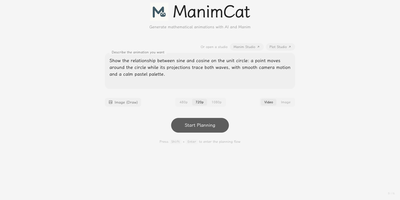
Describe a math idea in plain language and ManimCat plans it, writes the Manim code, renders it, and hands back a video or image ready for a lesson. A planning card settles the question, the one-line answer, and the step structure first, and every card is editable before generation starts. Render failures go back to the model automatically, finished clips re-render from saved code, and an AI edit pass changes only what you ask for. Reference images can be uploaded or sketched on a built-in canvas with freehand strokes, shapes, text, and live function plots. Edge TTS narration is aligned to sentence-level cues, with soft subtitles or burned-in hard subtitles on download. The in-development Agent mode opens Manim Studio and Plot Studio, where a builder agent reads, writes, edits, and searches the Manim API with every tool call visible. Each pipeline role has an editable prompt template, and the interface offers English, Chinese, and light and dark themes. Bring any OpenAI-compatible key or set server-side model routes. Submitted code runs in a mandatory bubblewrap sandbox with no network access. Running on a dedicated VPS on RepoCloud with guaranteed CPU, RAM, and SSD, full root SSH access, and a browser serial console. AGPL-3.0-or-later licensed.

ArchivesSpace
ArchivesSpace manages an archive from the moment a donation arrives to the day a researcher finds it online. Accession records capture what was received, whether a single item or a large aggregation, and can be spawned into other record types so details are never retyped. Resource records describe a collection as a tree of series, files, and items with dates, extents, notes, and rights statements, while digital object records point to born-digital files and digitized surrogates held elsewhere. Shared subject and agent records give persons, families, organizations, and software one set of authority terms linked across accessions, resources, and digital objects. Assessment records rank condition and research value, and location records track the shelves, drawers, and bins where boxes sit. Staff move data with spreadsheet importers and with EAD, EAC-CPF, MARCXML, METS, MODS, and Dublin Core, and an OAI-PMH responder lets aggregators harvest published records. The optional public interface offers keyword search, year ranges, and filters, plus browsing by collection, subject, and name, with a switcher for six languages, and shows only records a staff member has deliberately published. Several repositories can share one installation, each user receives granular permissions, and the REST API, plugins, and LDAP sign-in connect it to the rest of an institution. Running on a dedicated VPS on RepoCloud with guaranteed CPU, RAM, and SSD, full root SSH access, and a browser serial console. ECL-2.0 licensed.
TriliumNext
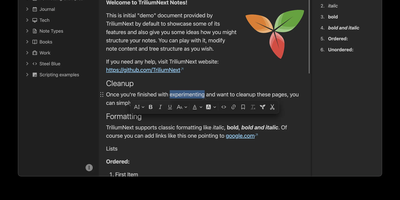
TriliumNext organizes notes in an infinitely deep tree where any single note can be cloned into multiple branches without duplication, building personal knowledge bases that mirror how ideas actually connect rather than forcing a single rigid folder hierarchy. Carrying forward the original Trilium project under active community stewardship with nearly 37,000 GitHub stars, the application is built on TypeScript with a CKEditor 5 WYSIWYG editor supporting rich text, tables, images, KaTeX math expressions, Mermaid diagrams, Excalidraw canvases, mind maps, spreadsheets with XLSX and CSV import/export, and code blocks with full syntax highlighting. A built-in JavaScript scripting engine runs on both frontend and backend, enabling custom widgets, automated workflows, scheduled tasks, and direct interaction with external REST services through a typed Script API. Full-text and fuzzy search with attribute-based queries locates any note instantly across databases tested at over 100,000 notes without performance degradation. The v0.104 release introduced importers for OneNote, Notion, Google Keep, Anytype, and Obsidian alongside 16 dedicated security fixes. Per-note AES encryption, OpenID Connect authentication, and TOTP two-factor protection safeguard sensitive content. The sync server keeps desktop clients, the progressive web app, and mobile devices in lockstep with zero third-party cloud dependency. Web Clipper captures content directly from browsers. Running on a dedicated VPS on RepoCloud with guaranteed CPU, RAM, and SSD, full root SSH access, and a browser serial console. AGPL-3.0 licensed.
MyBB
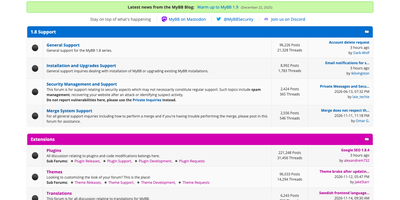
MyBB is a free, extensible discussion forum platform where communities hold threaded conversations, run polls, trade private messages, and moderate their own boards. Styled thread prefixes mark threads as solved or by topic, and polls let members vote for several options, close after a set number of days, and allow undoing a vote. Members quote several posts in one reply, answer from a quick reply box without reloading, and rate each other positive, neutral, or negative in public reputation reports. The private messenger addresses many recipients, shows when each message was read, pulls back unread ones, and exports messages as CSV, text, or HTML. Moderators act on selected posts inline, run custom moderation macros, delay actions by days, clear approval queues, and issue warnings that trigger automatic bans or restrictions at set levels. The Admin Control Panel promotes users by post count, reputation, or registration age, schedules mass mail by user group, and charts daily activity. Themes layer multiple stylesheets and attachable base colors, while plugins hook into the front end and admin area and edit templates. An official Merge System converts an existing phpBB, vBulletin, SMF, XenForo, or other forum into MyBB module by module. A task scheduler lifts expired bans, clears old search history, and logs every run, and large boards can add database fail-over, replication, and memory caching. Running on a dedicated VPS on RepoCloud with guaranteed CPU, RAM, and SSD, full root SSH access, and a browser serial console. LGPL-3.0 licensed.
Password Pusher
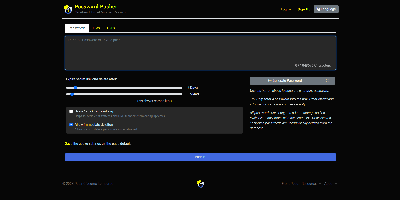
Credentials sitting forever in email threads and chat scrollback - Password Pusher solves that everyday security failure. Instead of pasting a password into Slack, you push it - a password, note, file, URL, or QR code - and share a unique one-time link that expires after a set number of views, a time limit, or both. Content is encrypted at rest with AES-GCM under a configurable master key, optionally guarded by a passphrase, and permanently deleted from the database the moment it expires; a retrieval-step option keeps URL-scanning bots from consuming views. Full audit logs record when each link was created and viewed (and by whom, with logins), and TOTP two-factor authentication can be required instance-wide. The delivery page is deliberately unbranded - no logos or confusing links for recipients - and the interface ships in 31 languages with light and dark themes. Automation runs through a JSON API (v2), an official CLI for pushing and expiring secrets from the terminal, a Chrome extension, and a catalog of third-party integrations. Apache-2.0 licensed Ruby on Rails, deployable via Docker, Kubernetes, or Helm, with SQLite or PostgreSQL storage - the sysadmin staple for sending credentials that clean up after themselves.
Saiku Analytics
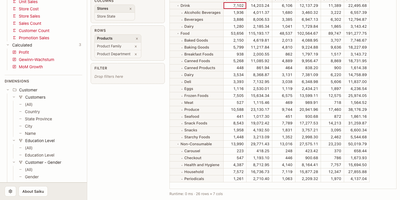
Point Excel, dashboards, and AI agents at one governed cube and Saiku Analytics, an open-source semantic layer, answers all three with the same numbers. The Query Editor writes the MDX as analysts drop measures and levels onto rows, columns, and filters, then shows a pivot grid or 16 chart types such as treemap and sunburst. Dashboards mix KPI, chart, table, text, and image tiles with cross-filtering, drill-down, conditional formatting, and forecast overlays, then export to PDF or PNG, share read-only links, or embed as a web component. An Excel add-in drops governed PivotTables that refresh live, and a Google Sheets add-on inserts cube data as tables that refresh in place. Agents get a typed REST API that lists cubes and measures, accepts JSON questions at /ai/query, and returns the exact field and legal values when validation fails. An MCP server connects Claude Desktop, Cursor, and Cline with a one-click .dxt install, and agent spaces limit each persona to chosen cubes and markdown skills. No semantic model yet? Saiku drafts cubes, dimensions, measures, and joins from a warehouse schema for review. Queries run on DuckDB, ClickHouse, Snowflake, BigQuery, Postgres, and dozens more databases, and model diff flags every saved query or dashboard a schema change would break. Okta and Entra ID provision accounts over SCIM 2.0, and sign-in runs through OIDC or SAML. Running on a dedicated VPS on RepoCloud with guaranteed CPU, RAM, and SSD, full root SSH access, and a browser serial console. Apache-2.0 licensed.
selfoss
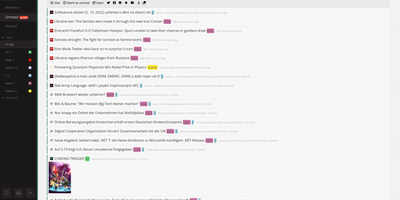
Every site you follow, folded into one calm river of headlines that you host yourself. selfoss is an open-source RSS reader and feed aggregator that gathers updates from websites, blogs, news outlets, and social platforms into a single reading stream on your own server. The newest, unread, and starred views keep triage fast: skim the river, star what deserves a slower read, and mark the rest done; tags with their own colours sort sources into topics, and full-text search finds the article you half-remember. Feeds refresh on a schedule you set through a cron job or timer, thumbnails and favicons are cached locally, and sharing buttons send finds to other services. Because it is plain PHP with SQLite by default, it runs almost anywhere, on the smallest hosting, with no database server to babysit; MySQL and PostgreSQL are there when the archive grows. Optional login protects the reader, public mode can share a stream, and the responsive layout reads as well on a phone as on a wide monitor. Your reading habits stay on hardware you control, and the archive keeps growing for exactly as long as you keep the server. Running on a dedicated VPS on RepoCloud with guaranteed CPU, RAM, and SSD, full root SSH access, and a browser serial console. GPL-3.0 licensed.
MongooseIM
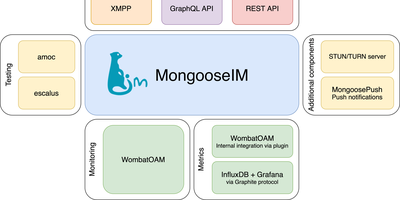
Running chat for a dozen people is easy; running it for a city-sized crowd, on servers you control, with group rooms, archived history, and phones that still buzz when the app is closed, is the job MongooseIM was built for. MongooseIM is an XMPP server at the core of a messaging platform, so any standard XMPP client on desktop, mobile, or web can connect, and browser clients reach it over WebSockets or BOSH. Group conversations run in multi-user chat rooms, message archive management keeps searchable history on the server, and message carbons deliver real-time copies to every signed-in device a person owns. Offline messages wait for reconnecting clients, rosters carry contact lists and presence, and privacy settings plus vCard profiles round out the everyday chat features. Operators manage users, rosters, messages, and settings through a GraphQL API over HTTP or the mongooseimctl command line, and more than fifty built-in metrics show what is happening inside each node. Accounts authenticate against internal storage, MySQL, PostgreSQL, Cassandra, LDAP, or external scripts, and multi-tenancy support creates thousands of chat domains dynamically on one deployment. Adding cluster nodes raises capacity as the audience grows, and the companion push component wakes mobile apps through push notifications. Running on a dedicated VPS on RepoCloud with guaranteed CPU, RAM, and SSD, full root SSH access, and a browser serial console. GPL-2.0 licensed.
dpaste
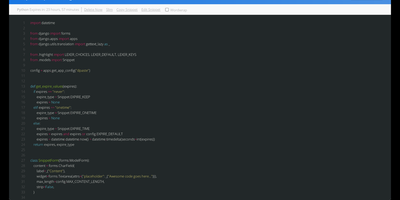
dpaste is a self-hosted pastebin that turns code snippets, log excerpts, and config files into short highlighted links with expiry and access rules you control. Paste code, stack traces, or plain notes, pick the language, and highlighting makes the result readable at a glance in the browser. Set the paste to expire in an hour, a week, a month, or never, or make it a one-time snippet that deletes itself after it has been viewed. Every paste offers a raw view for clean copying and terminal friendly reading, and random short slugs keep links tidy in tickets and commit messages. Scripts post through the API with a single request, so deploy tooling and CI jobs can publish their output where humans can read it. Run it standalone for the team, or fold it into an existing Django project as an app, and tune slug length, default language, maximum size, and expiry choices to your habits. Nobody has to wonder which public paste site a sensitive debug log landed on, because the bin answering the link is yours. Running on a dedicated VPS on RepoCloud with guaranteed CPU, RAM, and SSD, full root SSH access, and a browser serial console. MIT licensed.
Heimdall
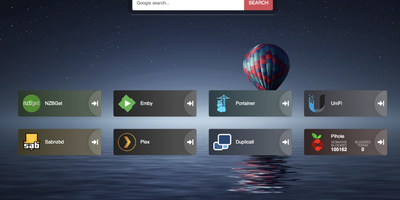
Links stop drowning in browser bookmarks once Heimdall - the application dashboard from the LinuxServer.io team - gives every web app and service you run a single, organized front door. Items come in three tiers. Generic items link to anything on the web with a name, color, and optional icon. Foundation apps are recognized as you type, auto-filling the application's icon and tile color so a full homelab dashboard assembles in minutes. Enhanced apps go further: supply API credentials and the tile shows live data - queue size and download speed for SABnzbd and NZBGet, plus integrations for Sonarr, Radarr, Plex, Jellyfin, Pi-hole, Portainer, Transmission, and many more. There are no iframes and no apps-within-apps; tiles are honest links with real-time stats layered on. Tiles arrange by drag and drop, backgrounds are customizable, an optional search bar (Google, Bing, or DuckDuckGo) makes it work as a browser start page, and optional multi-user authentication keeps dashboards personal. Built on Laravel with SQLite file-based storage - no external database - it stays light, responsive on mobile, and simple to back up. A natural first deployment: the page that ties every other self-hosted service together.
Thumbor
Born at Brazilian media giant Globo.com, Thumbor answers imaging CDNs like Imgix and Cloudinary with an HTTP service where every image variant is just a URL. Ask for /300x200/smart/your-image.jpg and Thumbor fetches the original, crops and resizes on demand, and caches the result - one source file, unlimited renditions, no batch pre-generation pipeline. The "smart" in the URL is the signature feature: OpenCV-based face detection finds people in the frame and crops around them (no more thumbnails with severed heads), and when no faces exist, feature detection finds visually important corners and computes a weighted center of mass as the focal point. Beyond cropping, a chainable filter pipeline handles brightness, contrast, grayscale, blur, red-eye removal, rounded corners, rotation, watermarks, and format conversion with quality control - applied in order via URL segments. All common image formats work out of the box, and every layer is pluggable: loaders (HTTP, local, S3), storages and result storages (local, S3, Ceph, and community backends), engines, optimizers, filters, and even custom detectors, with the awesome-thumbor list cataloging the ecosystem. URL signing prevents abuse of your processing capacity. Integrations exist for Django, Rails, Node, WordPress, and most frameworks. MIT-licensed, battle- tested for over a decade.
Directory Lister
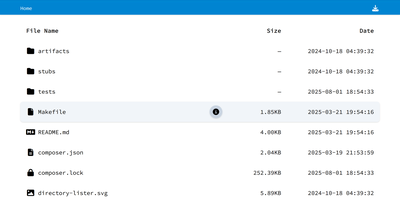
Drop Directory Lister into a folder and that folder becomes a tidy public file library. Visitors browse directories in the browser, search filenames, sort the listing the way they think, and download single files or the whole directory as one zip. There is nothing to configure for the first run, which makes it the fastest honest answer to "how do I just share these files" for release archives, documentation bundles, media collections, and project downloads. A README placed in a folder renders right on the listing page, so instructions travel with the files instead of living in a separate post nobody opens. File hashes appear beside downloads for people who verify what they fetched, and light and dark themes keep the listing presentable on a project site or a personal server. Multiple languages localize the interface for the audience actually downloading. Point it at the folder, share the link, and the files present themselves. One caution belongs in the pitch itself: everything in the exposed folder is public, hidden files included, so this is a publishing tool, never a place for private material. Running on a dedicated VPS on RepoCloud with guaranteed CPU, RAM, and SSD, full root SSH access, and a browser serial console. MIT licensed.
Gollum
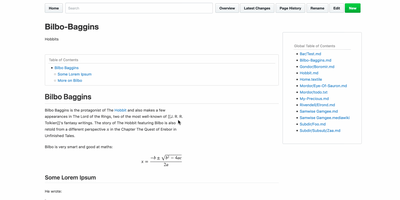
Every wiki page lives as a plain-text file in a standard Git repository, giving you full version history, branching, merging, and the freedom to edit with any text editor or IDE alongside the web interface. Originally built by GitHub's founders as the engine behind GitHub's own wiki feature, Gollum supports Markdown, AsciiDoc, reStructuredText, Org-mode, Textile, MediaWiki, Creole, and Pod markup formats with live preview rendering as you type. PlantUML and Mermaid diagrams render inline for architecture documentation, MathJax handles mathematical notation, and BibTeX integration via Pandoc provides academic citation management. YAML frontmatter controls per-page sidebars, headers, footers, and table of contents generation. CriticMarkup annotations enable editorial review workflows with tracked insertions, deletions, substitutions, and comments. Macros extend pages with dynamic content injection, file includes, and navigation helpers. The wiki maintains compatibility with GitHub and GitLab wiki repositories, so teams can clone existing platform wikis for local editing and offline access. The official Docker image at gollumwiki/gollum exposes port 4567 with volume-mounted repositories, requiring roughly 170 MB of container storage and minimal RAM. Authentication integrates via OmniAuth supporting GitHub, GitLab, Google, and other OAuth providers. Over 14,300 stars on GitHub since 2009. MIT licensed.
Dokuwiki
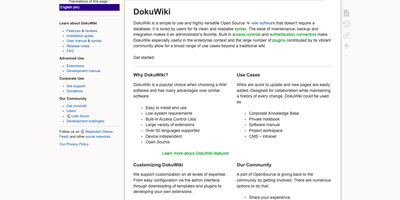
Every page in a DokuWiki knowledge base is just a plain text file on disk, so a team wiki can run for years on modest hardware with no database to feed, ever. Writers edit pages in a clean, readable syntax, fix just one section of a long document at a time, and lean on the toolbar, breadcrumbs, automatic tables of contents, and conflict locking to keep collaboration painless. Every change is kept as a revision with colored side-by-side diffs, recent-changes feeds go out over RSS, and an index-based full-text search finds content across thousands of pages in milliseconds. Namespaces organize content into a browsable tree, while built-in access control lists decide per page or per branch who may read, edit, upload, or administer, with logins checked against LDAP and other backends. Media uploads embed straight into pages, configuration happens in the browser, and the whole installation backs up by copying a folder, which makes migrations and disaster recovery almost boringly simple. When the basics stop being enough, more than twelve hundred community plugins and a hundred templates add galleries, multilingual structures, diagrams, and data tables without changing how the wiki itself works. Running on a dedicated VPS on RepoCloud with guaranteed CPU, RAM, and SSD, full root SSH access, and a browser serial console. GPL-2.0 licensed.
Elgg
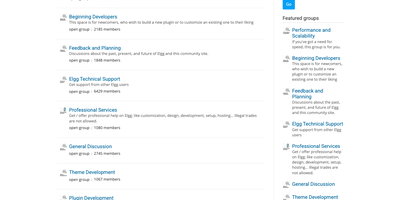
Elgg is a social networking engine for running your own community site, with member profiles, groups, blogs, discussions, and private messaging included and plugins for everything else. Profile fields are configurable and each carries its own access setting, so members decide who sees what. Groups give every team or class a page, discussion forum, file repository, pages, and message board, with open or invitation-only membership. Members publish through blogs, hierarchical pages with history, bookmarks, file uploads with photo galleries, and The Wire microblog. Comments, likes, tags, and per-item access levels keep conversations organized and private where needed. Friendships work like follows by default or can require approval, and a personal dashboard of widgets gives each member an overview. Email and on-site notifications, a rich text editor with mentions, reported content, user validation by email, and friend invitations help administrators moderate and grow the community. A web services plugin connects mobile apps and other systems, and translation support serves multilingual communities. Running on a dedicated VPS on RepoCloud with guaranteed CPU, RAM, and SSD, full root SSH access, and a browser serial console. GPL-2.0-only licensed.
phpMyFAQ
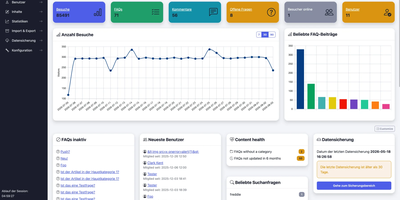
Publish the answers your team keeps repeating as a multilingual, searchable FAQ with phpMyFAQ, a knowledge base whose admin area handles writing, review, and permissions. Organize entries in nested categories that you rearrange by drag and drop, attach files, add tags and related FAQs, and let visitors leave comments. A WYSIWYG editor with an image manager writes each answer, a wiki-style revision history restores earlier versions, and a news system posts announcements. Full-text search covers every language, and optional Elasticsearch or OpenSearch backends handle larger collections. The interface covers more than 40 languages with right-to-left layouts, automatic content negotiation, and translated categories and entries. Privileges work per user and per group, so an editor can change an entry without being allowed to delete it, and categories can be limited to chosen readers. Sign in through LDAP, Active Directory, or Microsoft Entra ID, protect accounts with two-factor authentication, or try experimental passkeys. The dashboard charts 30 days of visits, lists inactive FAQs, and checks installed files against published hashes. Export entries to PDF, publish a dynamic sitemap, back up your content, and filter spam with built-in protections. Dark, light, and high-contrast themes keep the public site comfortable to read. Scripts and AI assistants reach the knowledge base through a REST API with an OpenAPI specification or an experimental MCP server, and plugins extend it. Running on a dedicated VPS on RepoCloud with guaranteed CPU, RAM, and SSD, full root SSH access, and a browser serial console. MPL-2.0 licensed.