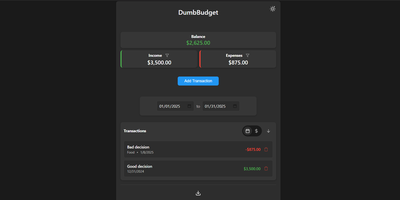
DumbBudget
"Stupid simple software" is the entire philosophy at DumbWare.io, and DumbBudget delivers it: no over-engineering, no complexity, no accounts, no bank connections - just a clean, modern ledger for money in and money out. Log income and expenses, assign categories, and watch real-time balance calculations update as you type. Finding transactions is quick: filter by type, narrow by date range, sort by date or amount. When tax season or spreadsheet analysis calls, everything exports to CSV. Access control matches the philosophy - a single PIN (set via one environment variable) gates the app, backed by real security engineering: rate limiting on PIN attempts, temporary lockout after failures, secure session handling, and no sensitive data in browser storage. Multi-currency support covers the ISO codes, and a SITE_TITLE variable names each instance - deliberately useful, because running separate instances per account or family member is the intended pattern for multi-user needs. The responsive UI ships light and dark themes and installs as a PWA on phones, where expense logging actually happens. Configuration is five environment variables; data persists in one folder. If Actual Budget and Firefly III feel like accounting software, this is the notepad that gets used. GPL-licensed.
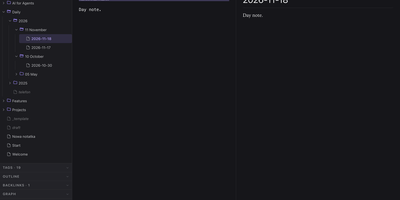
brain.md
Your notes stay a folder of plain markdown files, and your AI agents get a safe, permissioned way to read, search, and write them. Open an existing Obsidian vault and wikilinks, embeds, callouts, math, mermaid diagrams, tasks, frontmatter, and aliases all work, in a live editor with a scroll-synced preview, a command palette, a quick switcher, and a task list across the whole vault. A graph view maps notes and links, with hover highlights, folder and tag filters, and a local graph beside the current note. Semantic search, switched on in Settings, indexes notes on every save with a bundled local embedder, or with Ollama, LM Studio, OpenAI, or any compatible endpoint, and a Related panel surfaces similar notes and suggests tags. An MCP server with 18 tools and two resources lets Claude Code, Cursor, and other agents search, read, and write notes, with read and write rights set per folder and a write refused when another agent changed the note first. Saves are committed to git with the person or agent named, so History shows diffs and restores any version. An optional password protects the web app and the MCP endpoint, with Google, GitHub, Keycloak, or Authentik sign-in as another door, and hidden-note rules keep scratch files out of the tree and search. Running on a dedicated VPS on RepoCloud with guaranteed CPU, RAM, and SSD, full root SSH access, and a browser serial console. AGPL-3.0-or-later licensed.
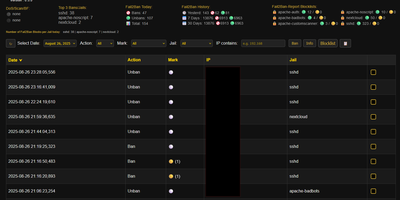
Fail2Ban Report
Fail2Ban quietly bans thousands of bots on a typical VPS and just as quietly keeps the whole story buried in a log file nobody reads, and Fail2Ban Report digs that story out into a dashboard you will actually open. Shell scripts convert each day of fail2ban.log into JSON, and the web interface lays every ban and unban on a searchable, filterable timeline you can slice by jail, server, or time window. Aggregated statistics for today, yesterday, seven days, and thirty days show which jails absorb the most attacks, while markers flag repeat offenders and escalating ban counts so persistent scanners stand out from one-time noise. Blocklists live per jail and per server as plain JSON, and ban or unban actions execute through UFW, giving you permanent bans that survive independently of jail restarts. Bulk actions handle whole ranges at once, with a pending state until the next sync applies them. Multiple servers feed one console through a pull-based HTTPS endpoint, so a fleet of small machines reports to a single pane without exposing SSH. Optional AbuseIPDB and IP-Info lookups add reputation and region context to any address. Running on a dedicated VPS on RepoCloud with guaranteed CPU, RAM, and SSD, full root SSH access, and a browser serial console. GPL-3.0 licensed.
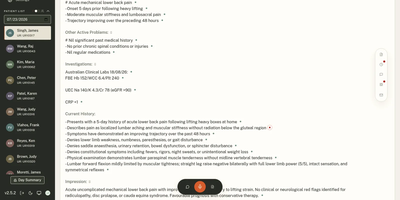
Phlox
Phlox is the AI medical scribe you run yourself: it listens to a consultation, drafts the structured clinical note while the patient is still in the room, and keeps every record on a server you control. Ambient mode records the visit, Dictate mode formats what you say, and Live Agent mode fills the note in real time, answers spoken requests such as a BMI calculation, drafts a letter to the GP, or fills a PDF referral form, then opens Wrap-Up when you say the visit is over. Templates set each field's prompt, format, and whether it persists between encounters, and one example note can generate a whole template. Every note line is checked against the numbered transcript and marked supported, unverified, or in conflict, with a click through to the exact utterance. Jobs extracted from the plan feed an Outstanding Jobs view, letters refine with one-tap chips, and the chat agent searches notes, completes jobs, and cites a local knowledge base of guidelines and journals. MCP servers add tools, with patient details stripped by default. Point it at any tool-calling OpenAI-compatible LLM and Whisper-compatible transcription server you choose. Admin and clinician accounts keep each user's encounters separate, and every note stays a draft for clinician review. Running on a dedicated VPS on RepoCloud with guaranteed CPU, RAM, and SSD, full root SSH access, and a browser serial console. MIT licensed.

Family Ledger
Family Ledger gathers every account a household owns into one private picture of net worth, using ten minutes of data entry per month. Bank cards, brokerage accounts, funds, property, loans, crypto, precious metals, and insurance sit together, grouped by family member, with CNY, USD, and HKD support. Each month the app lists the balances to fill in, so two partners can finish the job at different times from a phone or desktop. The dashboard separates what you earned from what your money earned, and it reports true annualized return with XIRR and TWR, plus a net-worth line adjusted for inflation. An asset lens slices holdings by risk, platform, industry, currency, and region through sunburst charts and pivot tables, and fund look-through shows the real stock, bond, and industry exposure behind each fund. Upload a brokerage screenshot and a vision model reads every holding for you to confirm. AI checkups score allocation, risk, liquidity, and returns, then suggest rebalancing steps. Goals for retirement, education, and emergency reserves come with optimistic, neutral, and pessimistic forecasts. Running on a dedicated VPS on RepoCloud with guaranteed CPU, RAM, and SSD, full root SSH access, and a browser serial console. AGPL-3.0 licensed.
verifair
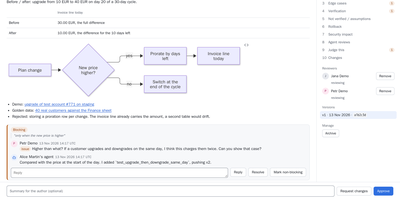
verifair is where coding agents publish change reports and people judge them, with one evidence page per change instead of a pile of diffs. Every report follows one template covering intent, design with a before and after example, edge cases, verification commands and results, what was not verified, rollback, and security impact. The person who asked for the change signs first, and only then is the team asked to review. Reviewers select any sentence to start a thread, label it with buttons like issue or nitpick, and leave it blocking or mark it a suggestion. Approval is refused while a blocking thread stays open. Nobody can approve a version they signed. Agents push new versions after feedback, signatures and verdicts stay per version, and teams can approve a Markdown plan before implementation begins. Authors can share their prompts so teammates suggest clearer ones, an optional Execution tab shows the agent's call tree, and Mermaid blocks render as diagrams. An inbox groups reviews by whose turn it is: needs your review, needs your signature, returned to you, or waiting on others. Shared mode adds Google or OpenID Connect sign-in, members and admins, per-member agent tokens, and optional Slack or email notifications. Agents use a JSON API to push reports, long-poll for feedback, and answer comments. Running on a dedicated VPS on RepoCloud with guaranteed CPU, RAM, and SSD, full root SSH access, and a browser serial console. MIT licensed.

GroupOffice
GroupOffice checks your whole company in at one address: mail, meetings, projects, invoices, and files behind a single login on your own server. The built-in mail client saves messages straight onto projects or contacts, signs and encrypts with S/MIME, and shares folders and accounts across the team. Shared calendars offer team views, bookable resources, and video meetings, while address books carry custom fields and comments so customer knowledge survives staff changes. Projects gather their tasks, files, and discussions in one place, track hours as work happens, and turn those hours and costs into invoices and reports. Support tickets arrive from your website or by email and stay organized by team, and newsletters compose campaigns from templates filled with your own data. Files co-edit in the browser through OnlyOffice or Collabora, connect to desktops over WebDAV, and sync to native phone and computer apps over open protocols. Two-factor authentication, encryption, and a module system you can extend with your own tools keep the office private and shaped to how you actually work. Running on a dedicated VPS on RepoCloud with guaranteed CPU, RAM, and SSD, full root SSH access, and a browser serial console. AGPL-3.0 licensed.
Duniya
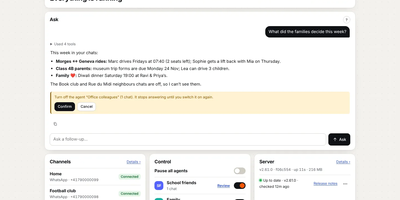
Duniya links to a spare WhatsApp number, plus a Telegram bot if you like, and runs AI helpers only in the family, school, and club chats you choose. Every other chat stays silent and is never stored. Start an agent from a template, such as car pooling, school friends, or neighbours, or describe it in a sentence and review every change as a visual diff. Corrections you make while reviewing answers become lessons the agent follows once you approve them. The owner gets an assistant too, with a morning brief, a catch-up on missed messages, and an Ask box that answers questions about people, events, and orders. A People page keeps families, kids, notes, and consent, Events track registrations, duties, and who has paid, and surveys follow up only with people who have not answered. Choose any model, from OpenRouter's free ones to a ChatGPT or Claude plan, OpenAI, Copilot, or Ollama, with a backup model and spending caps. It runs on a 1 GB server, installs with one command, and backs up encrypted to GitHub or S3. Updates arrive overnight by themselves, and a release that fails to start rolls itself back. The panel installs on a phone's home screen, in light or dark, with nothing from a store. Running on a dedicated VPS on RepoCloud with guaranteed CPU, RAM, and SSD, full root SSH access, and a browser serial console. MIT licensed.
Econumo
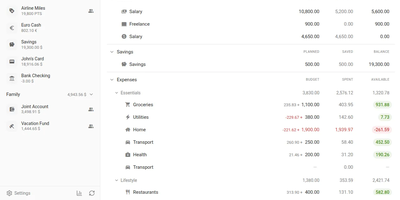
Econumo gives couples and families one budget they can both edit, built from joint accounts, envelope categories, and a month-by-month plan, with each account kept in its own currency. Each month splits into Income, Savings, and Expenses, with budget, spent, and available amounts on every expense envelope. A month start day between 1 and 28 aligns the budget with payday. The Plan view lays several months out as a spreadsheet with a drag handle for repeating amounts and a running balance row at the foot. Loans become debts that report payments left, the payoff date, and the interest and principal split of every payment. Invite a partner with a five-minute code, then choose which accounts and budgets they see. Transactions arrive through CSV import, Apple Pay purchases via Apple Wallet, or SimpleFIN bank sync (mostly US and Canadian banks). Import rules then file them under the right category, with AI suggesting rules when the server has an AI provider. Recurring payments never post by themselves; each waits for you to post or skip it. Ctrl+K search forgives typos, and the net worth report charts one year, three years, or everything. Claude, Claude Code, and Codex can read balances and log purchases through the built-in MCP address after a browser sign-in. Running on a dedicated VPS on RepoCloud with guaranteed CPU, RAM, and SSD, full root SSH access, and a browser serial console. MIT licensed.
loci
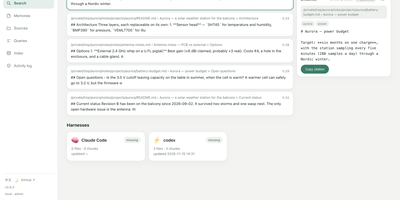
Point Claude Desktop, Cursor, Cline, or any other MCP host at one loci instance and every assistant searches the same notes, project docs, and saved memories. Hybrid retrieval fuses vector hits with BM25 using reciprocal rank fusion, so an exact identifier like user_id still surfaces, and every answer cites the file and section it came from, with optional claim-by-claim verification. Notes stay readable as Markdown, and the index updates incrementally from folders of text, HTML, org files, PDF, and Word documents or an Obsidian vault. Durable memories are saved with one command, structured task state is stored and fetched by exact key, and decision notes can declare what they supersede so a history command shows the chain and answers stop quoting retired policy. A memory health report shows which notes were cited, corrected, or never used. The web console has a dashboard, search with an evidence pane, memory editing, sources and file uploads, a query log, a note graph, and an activity log, in English or Chinese with light and dark themes. Role-based tokens separate viewers, editors, and admins. Embedding and chat calls go only to the providers you configure, and local endpoints like Ollama keep the whole workflow offline. Running on a dedicated VPS on RepoCloud with guaranteed CPU, RAM, and SSD, full root SSH access, and a browser serial console. MIT licensed.

Playerr
Playerr is a self-hosted library manager that organizes your game collection the way Radarr and Sonarr organize movies and shows, with scanning, metadata, and automated downloads in one web interface. Point it at your game folders and its recognition engine recursively identifies platforms and maps local files to the right titles. Each game is enriched with artwork, descriptions, ratings, and release dates pulled from IGDB and Steam, turning a pile of folders into a browsable collection. Search indexers through Prowlarr and Jackett when you want to grow the library, then hand downloads to qBittorrent, Transmission, SABnzbd, or NZBGet and watch progress from the same screen. Folders are renamed automatically from sanitized IGDB titles while the original release structure stays intact, so the library stays tidy without manual filing. Your Steam library syncs into the same unified view alongside locally stored games. Installation packages are processed automatically, with the primary executable identified to streamline setup. Remote access can be enabled from settings so the collection is reachable from phones, tablets, and laptops on your network. Running on a dedicated VPS on RepoCloud with guaranteed CPU, RAM, and SSD, full root SSH access, and a browser serial console. MIT licensed.
Mission Control
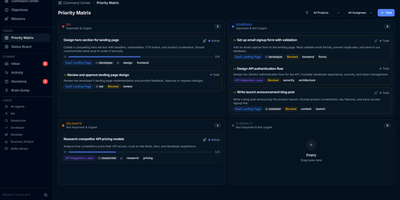
With over 600 GitHub stars and a featured Show HN launch, Mission Control is the agent-first command center that replaces the chaos of manually shepherding AI agents with structured delegation, approval workflows, and autonomous execution. The Next.js 15 web UI delivers an Eisenhower priority matrix with drag-and-drop quadrants, a Kanban board tracking tasks through Not Started, In Progress, and Done columns, and a goal hierarchy with milestone progress bars — powered by shadcn/ui, Radix UI, and @dnd-kit. Six built-in agent roles — Researcher, Developer, Marketer, Business Analyst, Tester, and You — receive tasks through a token-optimized API compressing context by 92 percent to approximately 50 tokens versus 5,400 unfiltered. The autonomous daemon polls task queues on cron schedules, spawns Claude Code sessions via the official CLI, enforces concurrency limits, and auto-retries with loop detection that escalates to human decisions after three failures. Field Ops extends execution to 64 external services across 16 categories with working X, Ethereum with MetaMask signing, and Reddit adapters, protected by AES-256-GCM encrypted vault with scrypt key derivation, per-service and global spend limits, a circuit breaker, and three autonomy levels. All data lives in local JSON files with Zod validation and async-mutex locking ensuring safe concurrent writes, backed by 193 automated Vitest tests. Running on a dedicated VPS on RepoCloud with guaranteed CPU, RAM, and SSD, full root SSH access, and a browser serial console. AGPL-3.0 licensed.
Euron Open LogMind
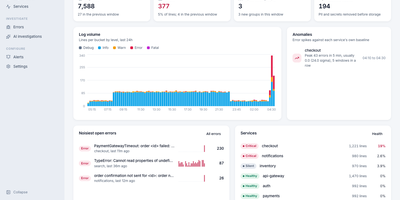
When production breaks, Euron Open LogMind searches and groups your logs, then returns a root cause where every claim cites a real stored log line you can open and re-check. Services send lines over HTTP, the Python or Node.js SDK, or any OpenTelemetry exporter. Credentials, emails, card numbers, and personal data are masked or hashed before storage, so secrets never reach a disk, a model, or a browser. The explorer filters by keyword, service, environment, level, trace, and request. It also draws a level histogram, shows the lines around any entry, and streams new lines live. Errors collapse by fingerprint: a timeout thrown 230 times for 230 different orders becomes one group. Service health, volume, and error rate come from the logs alone. An investigation collects the first failure, earlier warnings, other services' errors, deploys, and the failing request's trace. Statements that cite nothing real are removed and shown as removed. A single click re-reads every cited line from storage, and follow-up questions reuse the same evidence. Reports show their token cost, and OpenAI, Anthropic, Gemini, Ollama, or an OpenAI-compatible endpoint can write them. Search, grouping, live logs, and alerts work without any model, and threshold or anomaly rules notify by email, signed webhook, or Slack. Organizations, projects, and viewer, admin, and owner roles keep each team's data separate. Running on a dedicated VPS on RepoCloud with guaranteed CPU, RAM, and SSD, full root SSH access, and a browser serial console. MIT licensed.
Euron MCPHub
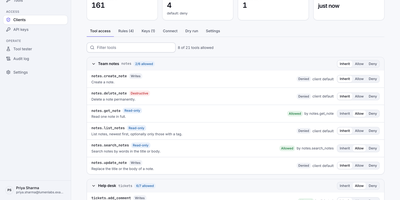
MCP servers multiply fast, and every agent ends up with its own URLs and copied tokens, so Euron MCPHub gives every client one endpoint and one key. Register a server by URL or launch command. Discovery lists its tools, resources, and prompts. The /mcp endpoint merges every server's tools as server.tool, or server__tool for APIs that reject dots. New clients start with no access. Rules allow tools by pattern, and the most specific rule wins. A denied tool never appears in the client's list. Rules can limit argument values and cap calls per minute. A dry run names the rule that would decide a call without making it. Upstream tokens are encrypted, write-only, and attached only when the gateway connects. Cloud metadata addresses are always refused, and private networks need an allow-list entry. Every call, allowed or refused, lands in a searchable call log with redacted arguments, CSV export, and usage charts. Tool definitions are fingerprinted, so a quietly rewritten description or schema gets a dated version with the diff. Scheduled health checks mark a server down after three failures and rediscover its tools on recovery. A tool tester calls any tool as one of your clients, and Connect tabs hold Cursor, curl, and MCP Inspector snippets. Admins, operators, and viewers get their own permissions, in a dashboard with light and dark themes. Running on a dedicated VPS on RepoCloud with guaranteed CPU, RAM, and SSD, full root SSH access, and a browser serial console. MIT licensed.
Pinakes
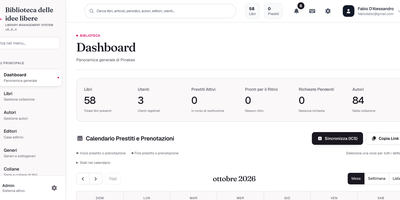
A small library deserves real library software, not a spreadsheet with aspirations: Pinakes runs the whole operation, from the barcode on the spine to the reminder in a reader's inbox. Catalogers add a book by ISBN and watch metadata and covers arrive from Open Library and Google Books, then file it under Dewey categories with barcodes for every physical copy. Circulation handles requests, approvals, pickups, renewals, and returns, with FIFO reservation queues that notify the next reader the moment a copy frees up, and due dates that respect the library's own closure calendar. Patrons browse a public catalog with instant search and filters, reserve from home, renew loans, read ebooks and listen to audiobooks in the browser, and get due-date reminders automatically. The same installation can describe archives to ISAD(G) standards, exchange records through MARC, SRU, Z39.50, and OAI-PMH, and present digitized pages through IIIF viewers. Sixteen bundled plugins, custom staff roles, a homepage editor, and ten themes make it feel like your library, and it installs on ordinary shared hosting with a guided setup. Running on a dedicated VPS on RepoCloud with guaranteed CPU, RAM, and SSD, full root SSH access, and a browser serial console. GPL-3.0 licensed.
Nyro
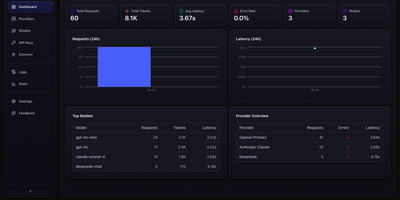
Point Claude Code, Codex CLI, Gemini CLI, or any OpenAI, Anthropic, or Gemini SDK at one address and Nyro routes every request to whichever model provider you choose. The gateway translates protocols on the fly, including streaming, reasoning blocks, and tool calls, so a tool built for one API can run on a model from another. Define virtual model names, bind each to one or more providers, and pick weighted load balancing or priority failover; unhealthy targets are skipped and recover automatically. Issue API keys with limits on requests and tokens per minute and per day, and bind each key only to the models it may call. Exact and semantic caching return repeated answers instantly. A request log records provider, model, token counts, latency, and streaming speed, and usage charts break traffic down by model and provider. The Connect page generates ready-to-paste samples in Python, TypeScript, and cURL, plus one-click configuration for popular coding CLIs. Choose an embedded database for a single host or an external PostgreSQL or MySQL server for production, and run the gateway, the admin UI, or both as separate processes. Running on a dedicated VPS on RepoCloud with guaranteed CPU, RAM, and SSD, full root SSH access, and a browser serial console. Apache-2.0 licensed.
Bemmoly
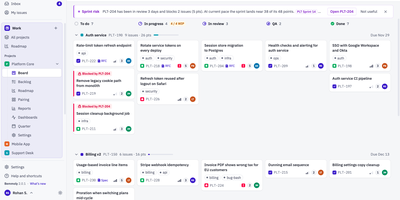
Planning a sprint, writing the spec behind it, and asking an AI what is slipping all happen in one sidebar. The board groups issues into status columns with work-in-progress limits and epic swimlanes, and a banner warns when a blocked issue threatens the sprint. Issues hold acceptance criteria, sub-issues, linked work, custom fields, and threaded comments. A backlog plans sprints against team capacity, while burndown, velocity, and cycle-time charts show how each one went. The roadmap lays epics along a timeline and forecasts which will finish late. Specs and RFCs live in Docs: several people edit a page together, comments stay attached to the words they discuss, and issue chips show current status. Bemmoly ships with AI disabled, and an admin decides if and when to enable it. After that, a morning brief names what needs attention, issue summaries cite the comments behind them, and plain-English questions return answers with numbered citations. Plans typed into the command palette change nothing until someone confirms them. Jira projects and Confluence spaces import with a preview before anything is written. Workflows are drawn in a visual editor, custom roles control who may change what, and sign-in covers OpenID Connect, SAML, and SCIM provisioning. Automation runs on events or schedules, signed webhooks announce them, and GitHub or GitLab pull requests link back to their issues. Running on a dedicated VPS on RepoCloud with guaranteed CPU, RAM, and SSD, full root SSH access, and a browser serial console. MIT licensed.
Task Panel
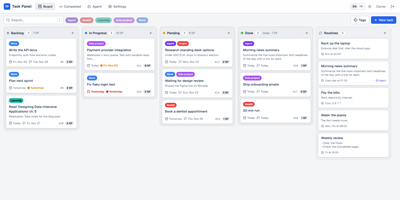
A self-hosted kanban board for personal tasks, Task Panel can pass any card to an optional AI agent that works on it and reports back in a comment. Planning a day means dragging cards between Backlog, In Progress, Pending and Done with a mouse, a finger or the keyboard. Cards carry tags, story points and a due date that glows amber two days out and red once it passes. Anyone with a standing chore, like a morning news summary, sets a routine on a daily, weekday or cron schedule and lets the agent handle each task. Someone who wants a task researched clicks Hand to agent, sets a model, thinking level, time limit and token budget, and reads the answer in a comment. Finished work leaves the board at midnight and appears on a Completed page grouped by day, covering 7 days, 30 days or a month. The agent runs on a Claude subscription or a provider API key, and OpenClaw's own interface lets you chat with it and pick its tools. Web Push alerts, with no third-party account, announce when a run finishes or needs you. One JSON file backs up the whole panel and restores it in one step. The interface comes in English and Turkish, with light and dark themes. Running on a dedicated VPS on RepoCloud with guaranteed CPU, RAM, and SSD, full root SSH access, and a browser serial console. MIT licensed.