Categories
Self-Hosted AI Agents MCP Server Knowledge Management Semantic Search Second Brain Markdown Notes Obsidian AlternativeStars
Forks
Watchers
Developer links
brain.md
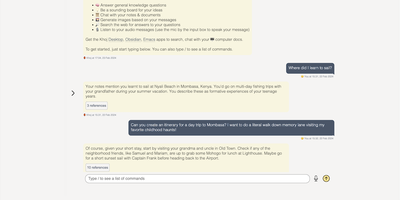
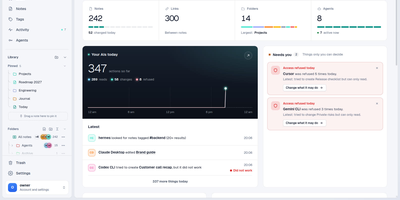
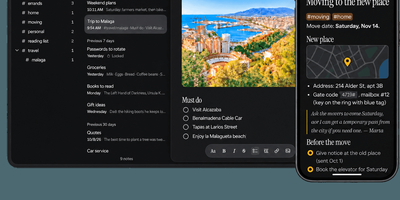
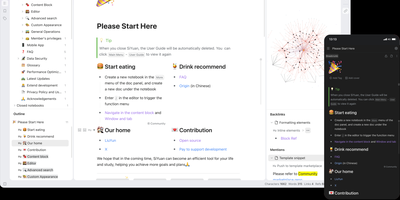
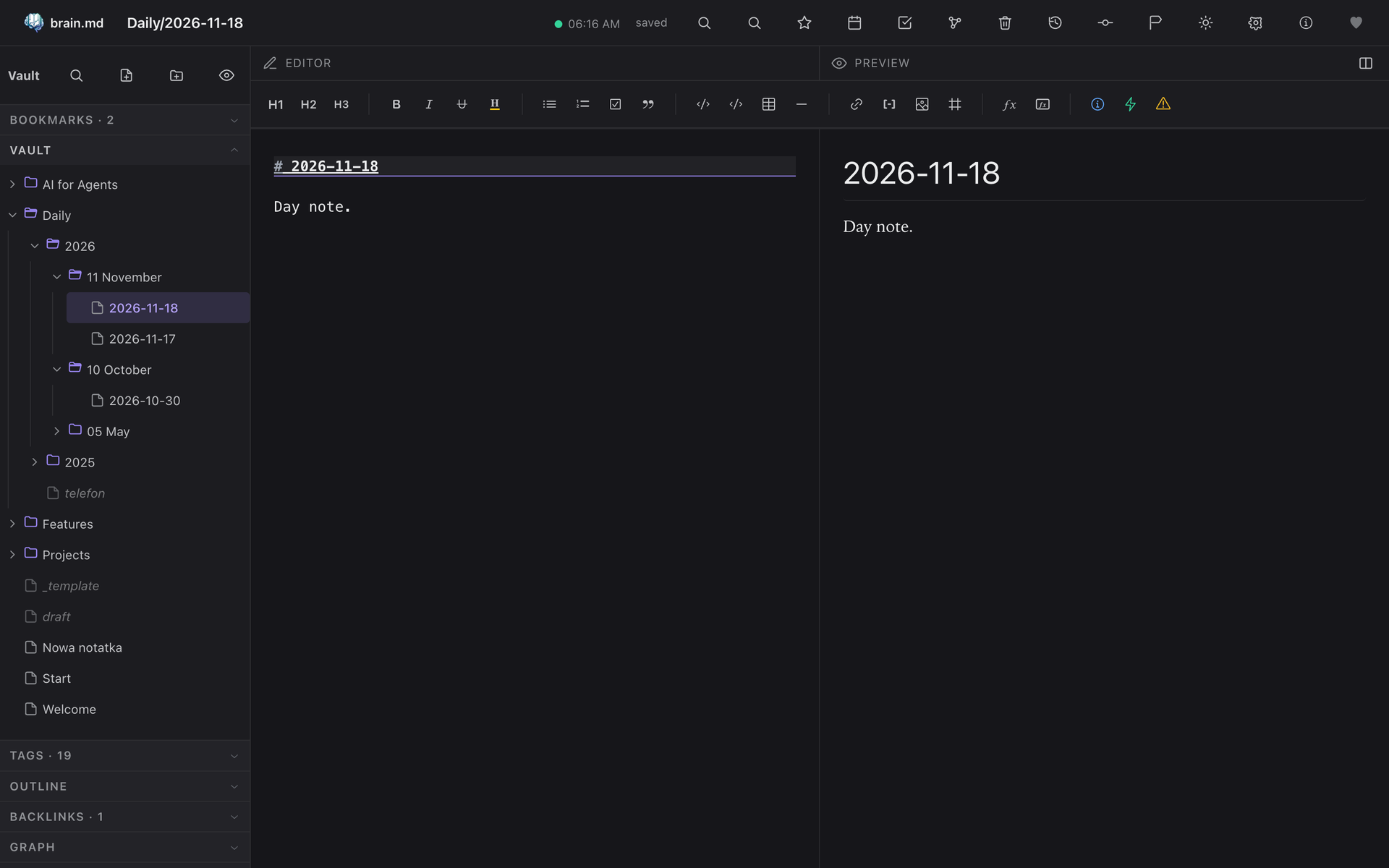
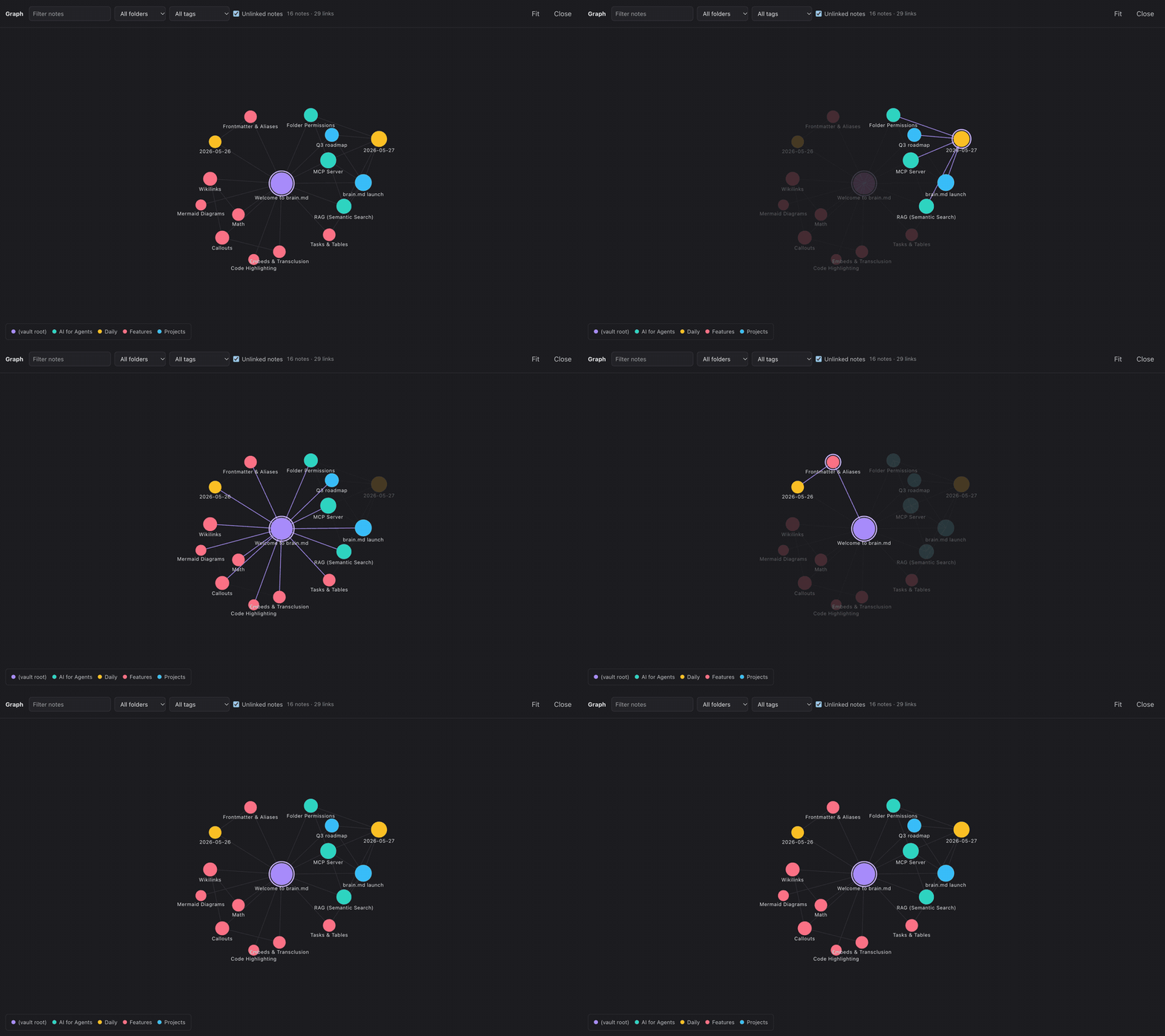
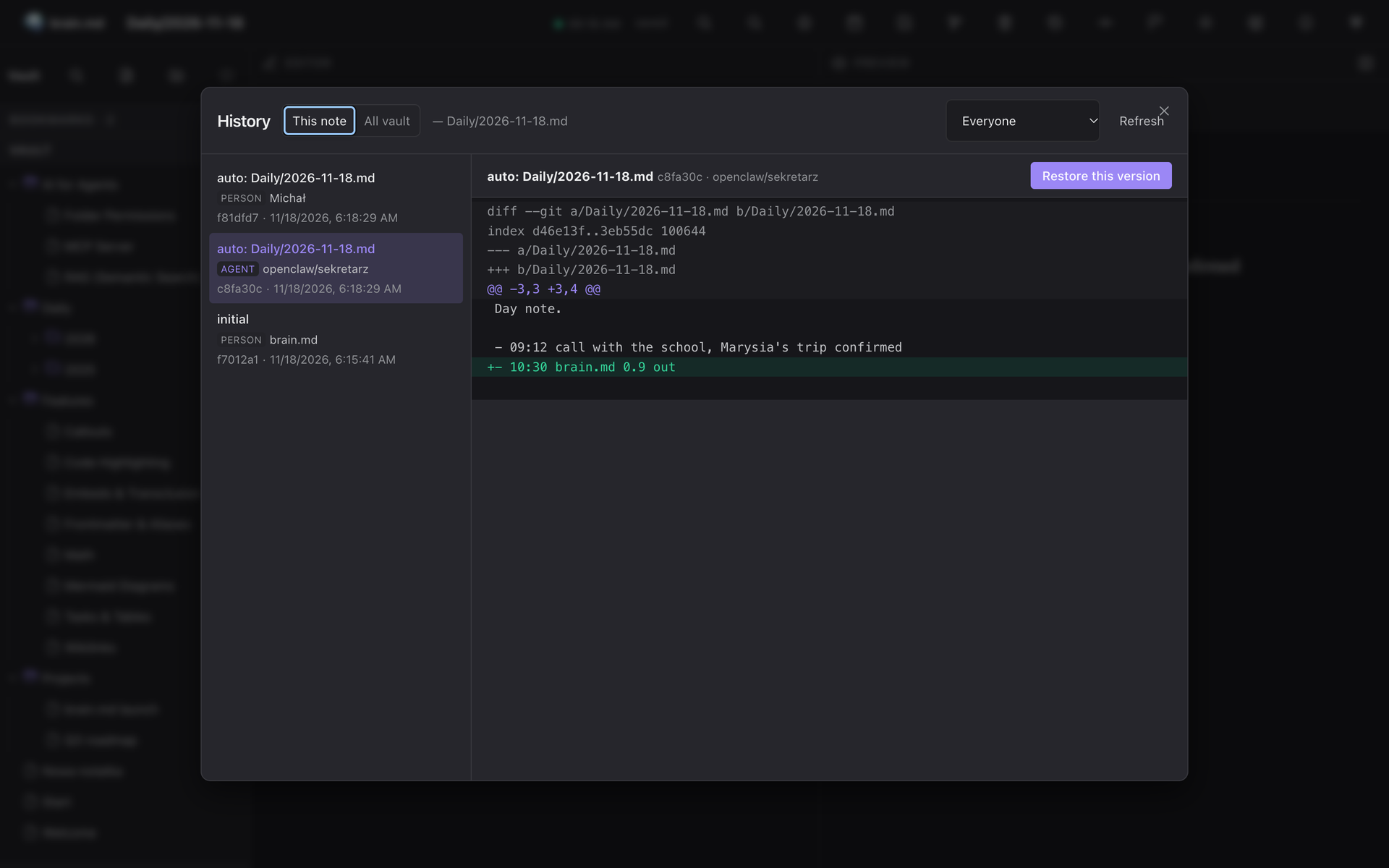
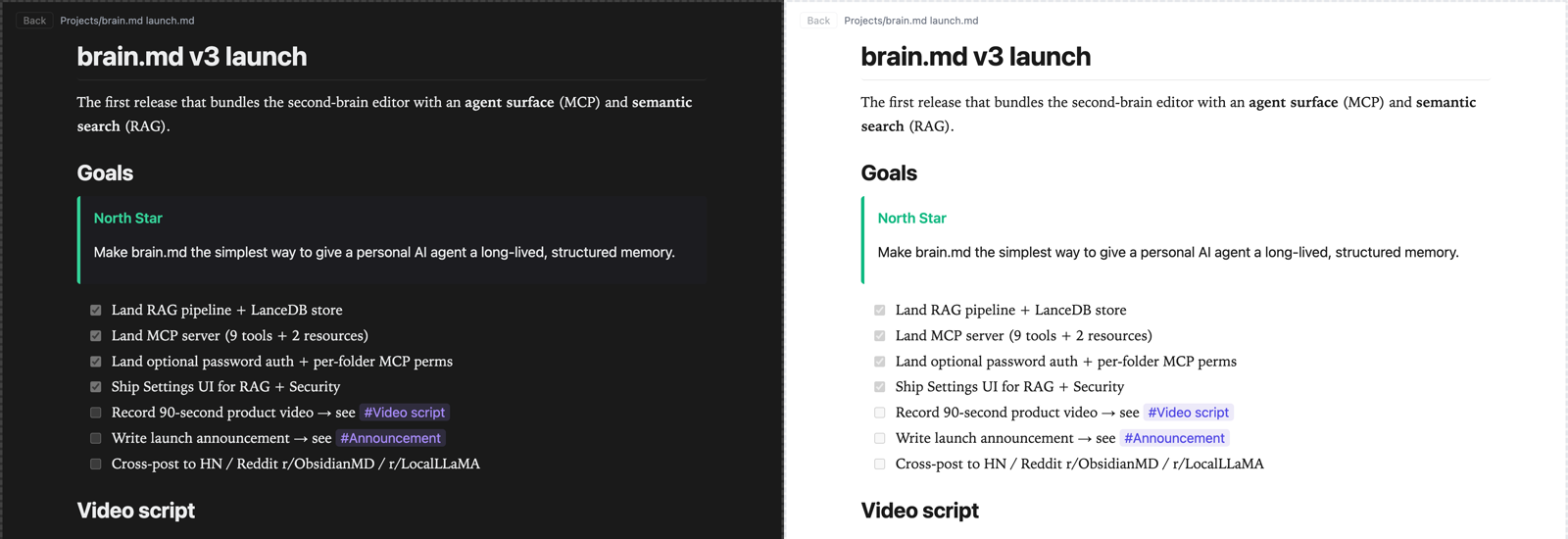
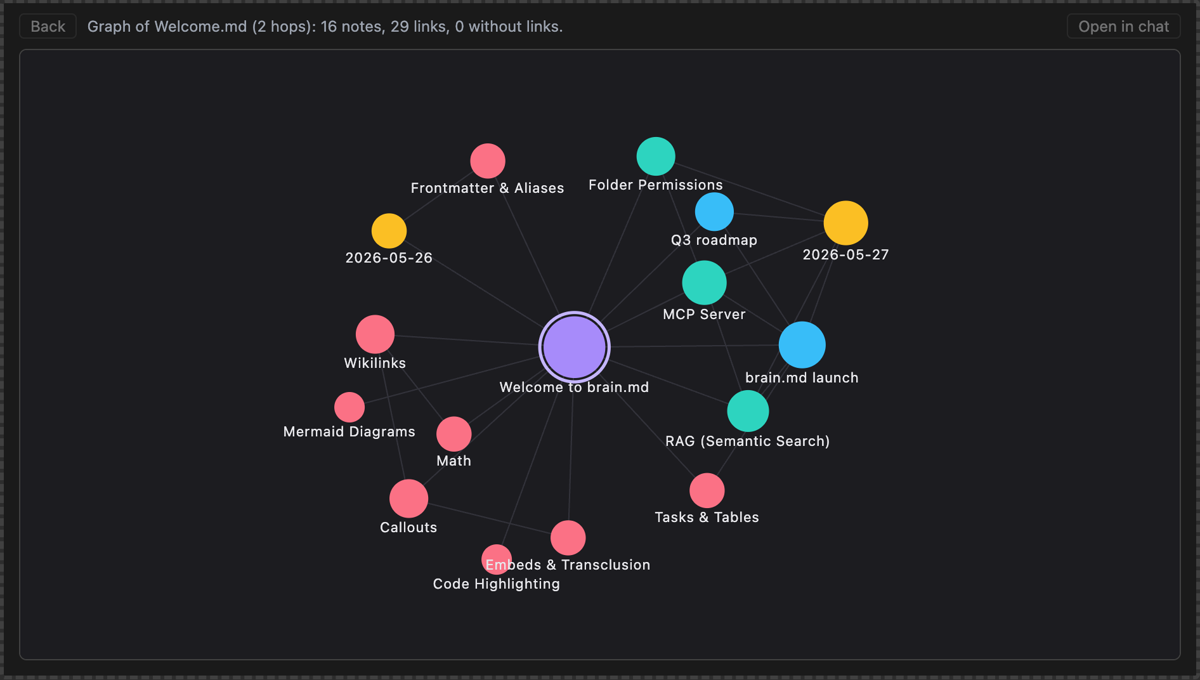
Your notes stay a folder of plain markdown files, and your AI agents get a safe, permissioned way to read, search, and write them. Open an existing Obsidian vault and wikilinks, embeds, callouts, math, mermaid diagrams, tasks, frontmatter, and aliases all work, in a live editor with a scroll-synced preview, a command palette, a quick switcher, and a task list across the whole vault. A graph view maps notes and links, with hover highlights, folder and tag filters, and a local graph beside the current note. Semantic search, switched on in Settings, indexes notes on every save with a bundled local embedder, or with Ollama, LM Studio, OpenAI, or any compatible endpoint, and a Related panel surfaces similar notes and suggests tags. An MCP server with 18 tools and two resources lets Claude Code, Cursor, and other agents search, read, and write notes, with read and write rights set per folder and a write refused when another agent changed the note first. Saves are committed to git with the person or agent named, so History shows diffs and restores any version. An optional password protects the web app and the MCP endpoint, with Google, GitHub, Keycloak, or Authentik sign-in as another door, and hidden-note rules keep scratch files out of the tree and search. Running on a dedicated VPS on RepoCloud with guaranteed CPU, RAM, and SSD, full root SSH access, and a browser serial console. AGPL-3.0-or-later licensed.
Benefits
- Agents see only permitted folders
- Each folder carries its own read and write rights for the MCP endpoint, so a private journal stays out of agent reach while the rest of the vault remains searchable and editable.
- Your notes remain plain markdown
- The vault is an ordinary folder of .md files inside a real git repository, so VSCode, Obsidian, or cat can open it, and leaving brain.md costs you nothing.
- Every change names who made it
- Autosaves are committed to git with the person, API key, or agent named, so History shows each diff and restores a single file without touching the rest of the vault.
- Search by meaning, even offline
- A bundled embedder runs fully offline after a one-time model download, and Ollama, LM Studio, OpenAI, or a llama-server box can replace it when you want better quality.
Features
- Obsidian-flavored editor
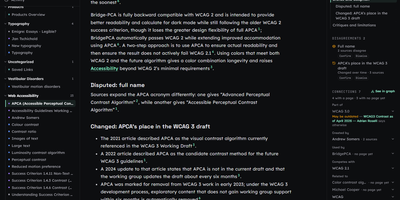
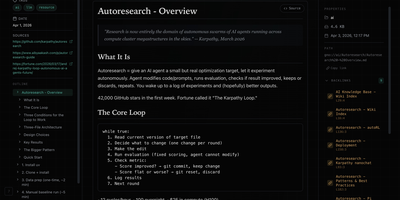
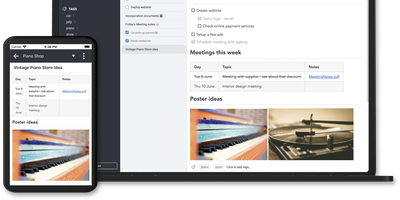
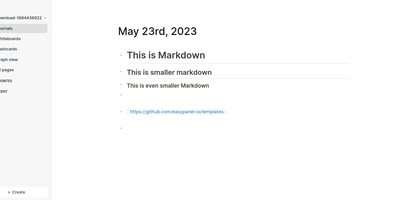
- CodeMirror 6 editor with a scroll-synced preview renders wikilinks, embeds, callouts, KaTeX math, and mermaid diagrams, plus a command palette, quick switcher, and a task view across the vault.
- Interactive graph view
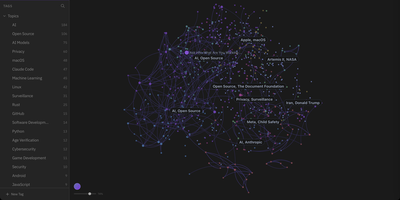
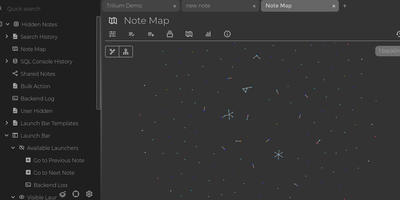
- Notes are dots, wikilinks are lines, colored by folder, with hover highlights, folder and tag filters, a local graph in the sidebar, and smooth dragging on thousands of notes.
- MCP server, 18 tools
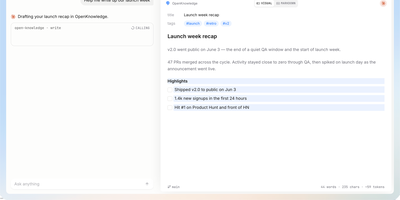
- A streamable HTTP endpoint at /mcp offers search, similar notes, backlinks, graph, tasks, and write tools to Claude Code, Cursor, and other agents, plus an MCP Apps note view.
- Semantic search and RAG
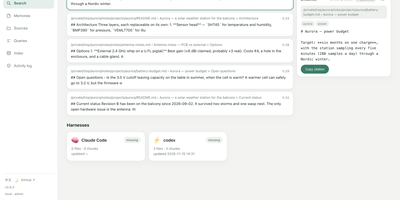
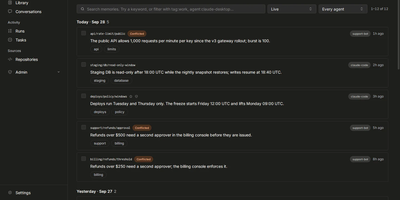
- A per-vault vector store with a bundled WASM ONNX embedder, or Ollama, LM Studio, OpenAI, and llama-server endpoints, powers similar notes, the Related panel, and a keyword fallback.
- Git history and restore
- Saves are auto-committed after about 15 seconds; the History panel filters by note, vault, or author, shows unified diffs, and restores one version of one file.
- Permissions and sign-in
- Per-folder read and write rights for agents, an optional argon2id password, OAuth 2.1 for Claude.ai connectors, and Google, GitHub, Keycloak, or Authentik sign-in for the web app.