Categories
Self-Hosted Developer Tools AI Agents Access Control Model Context Protocol MCP Gateway Audit Logging Secrets ManagementDeveloper links
Euron MCPHub
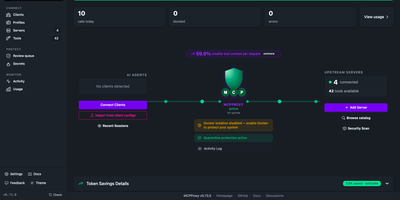
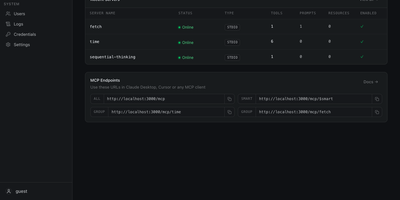
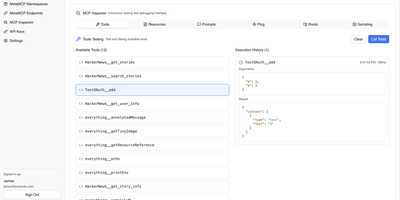
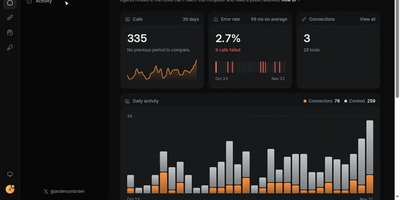
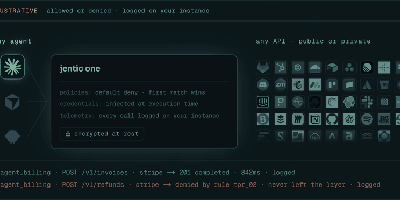
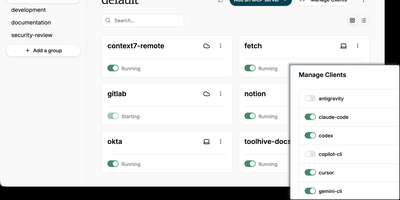
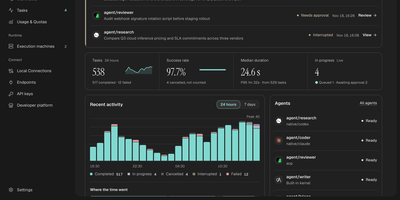
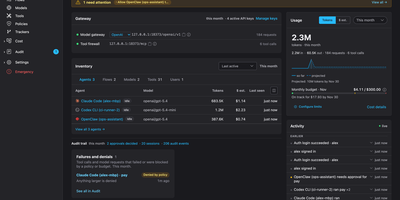
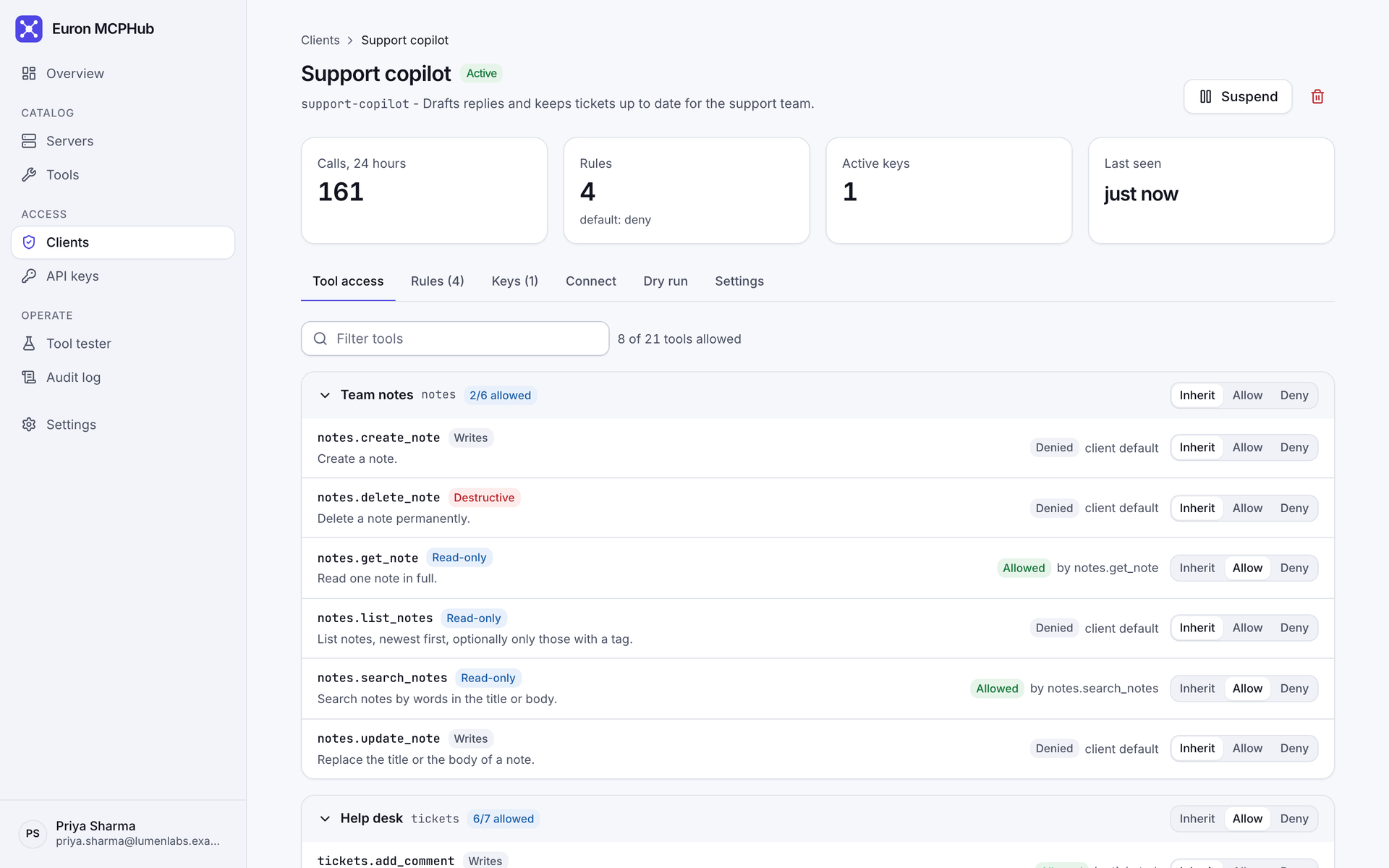
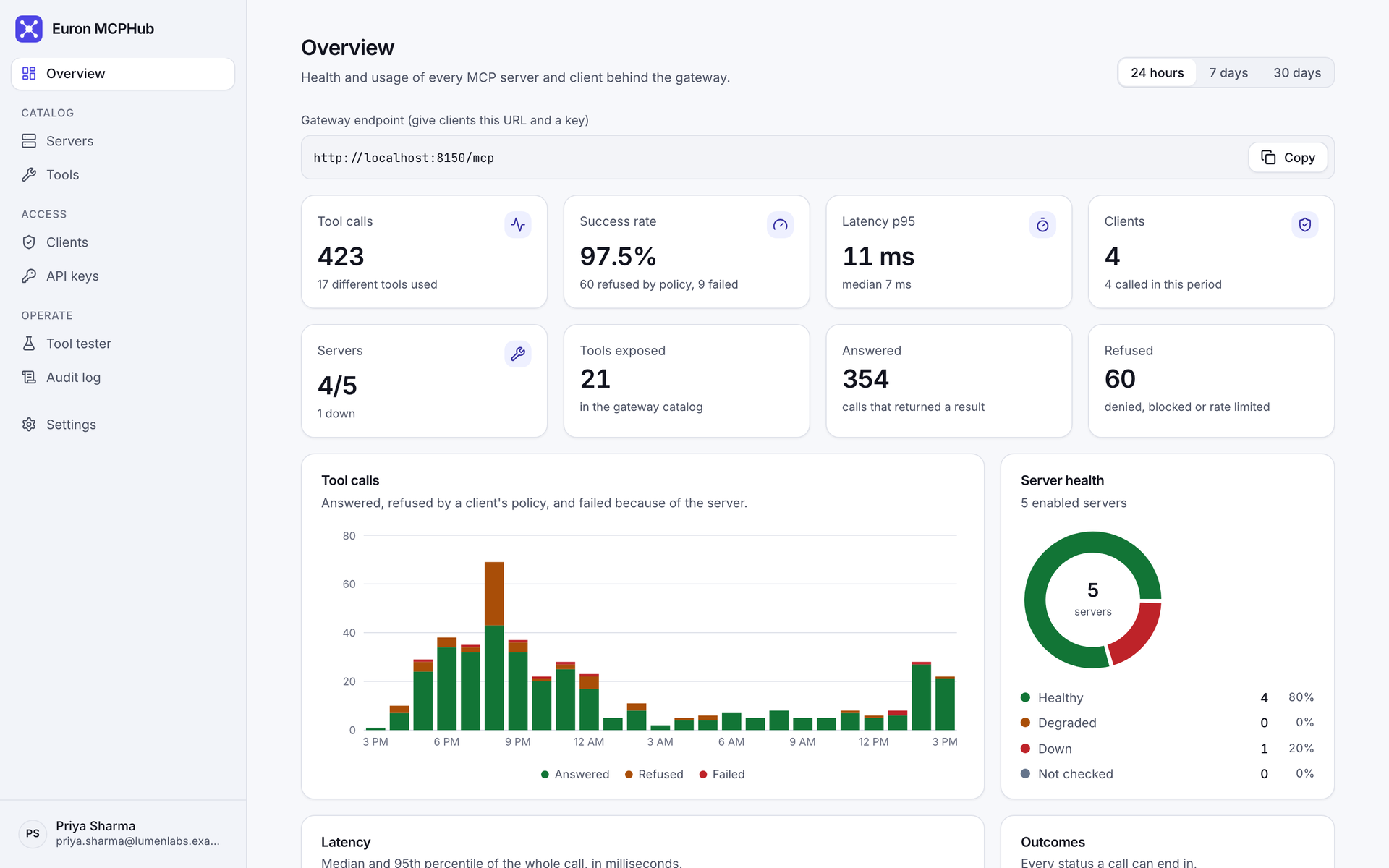
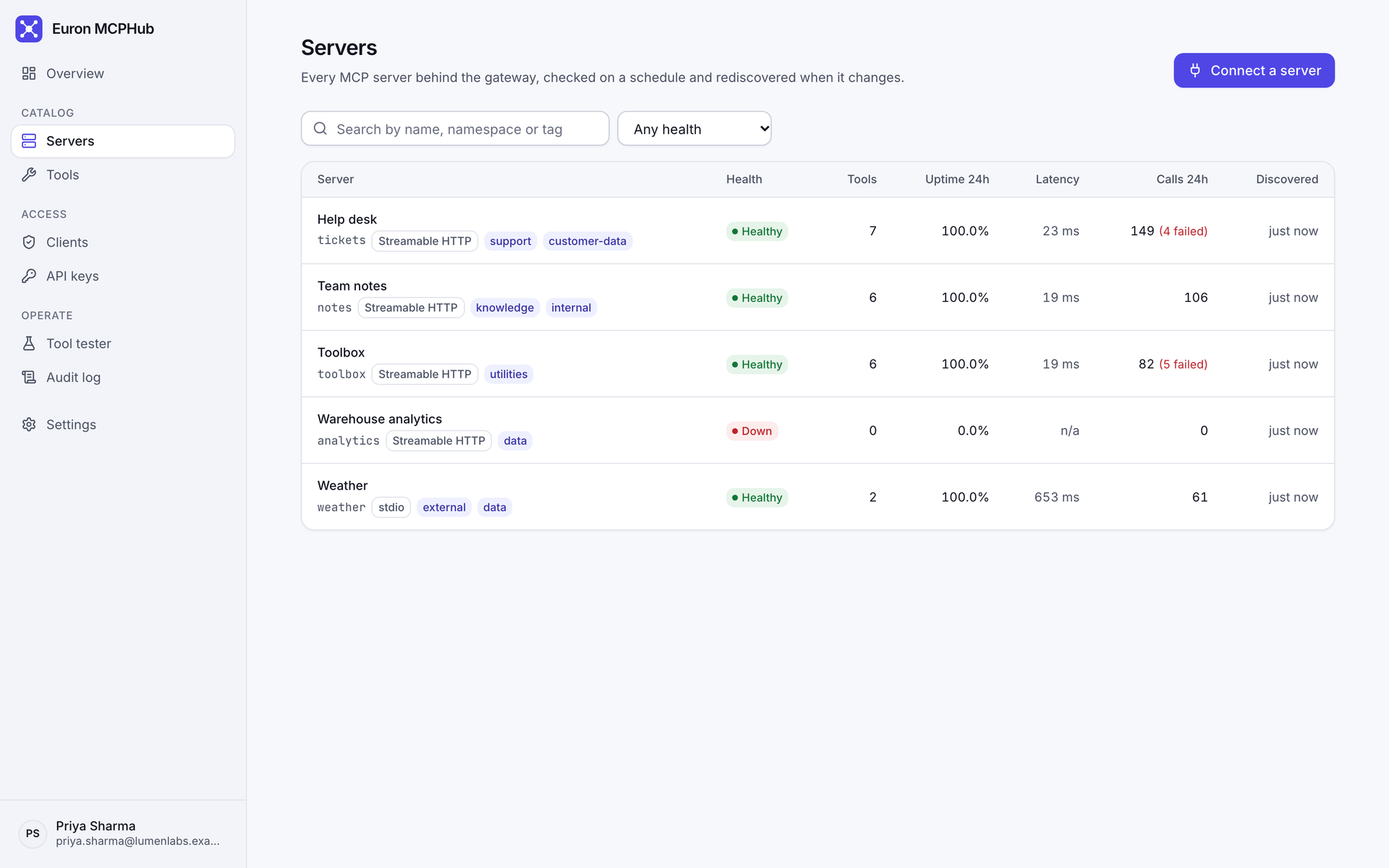
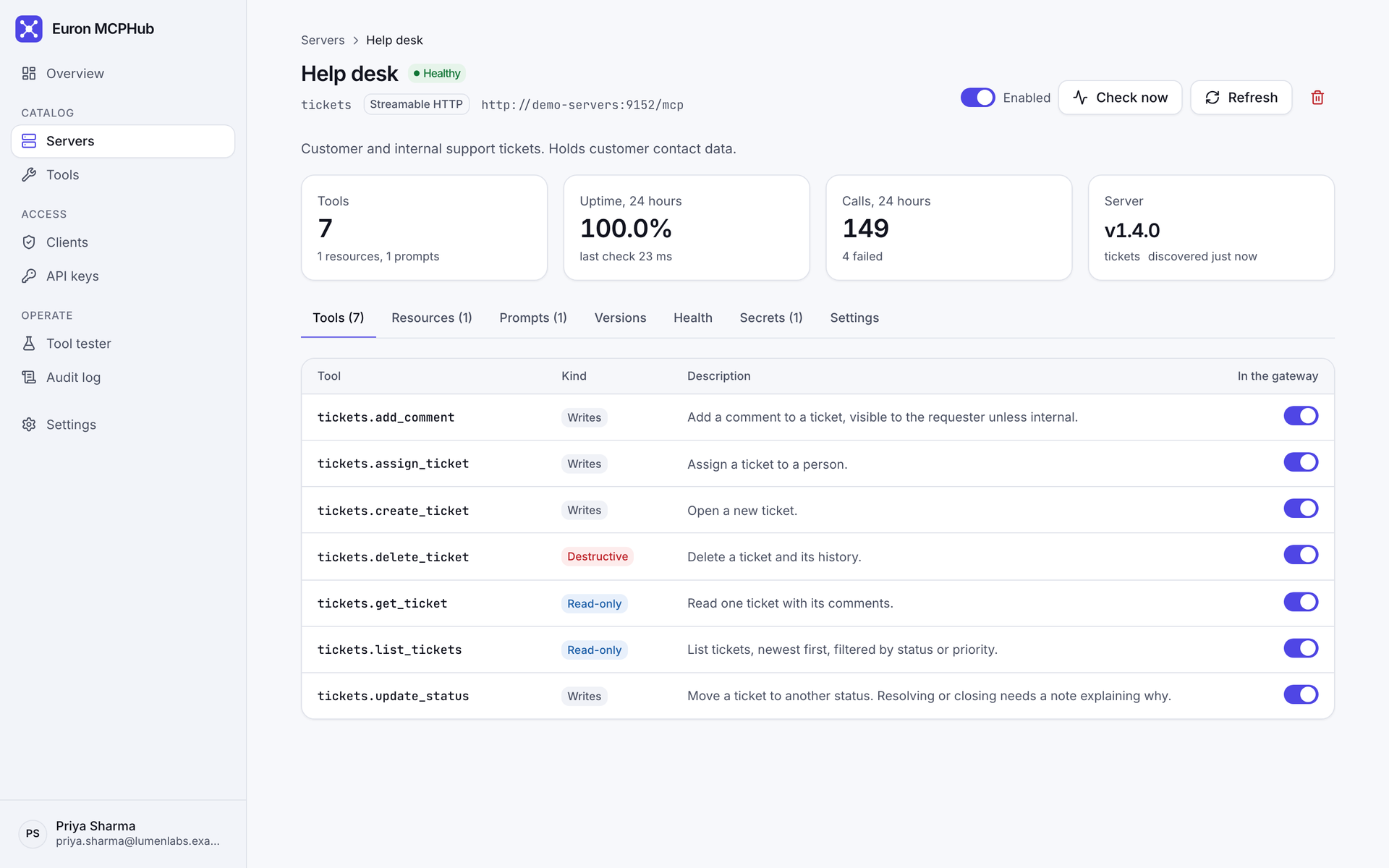
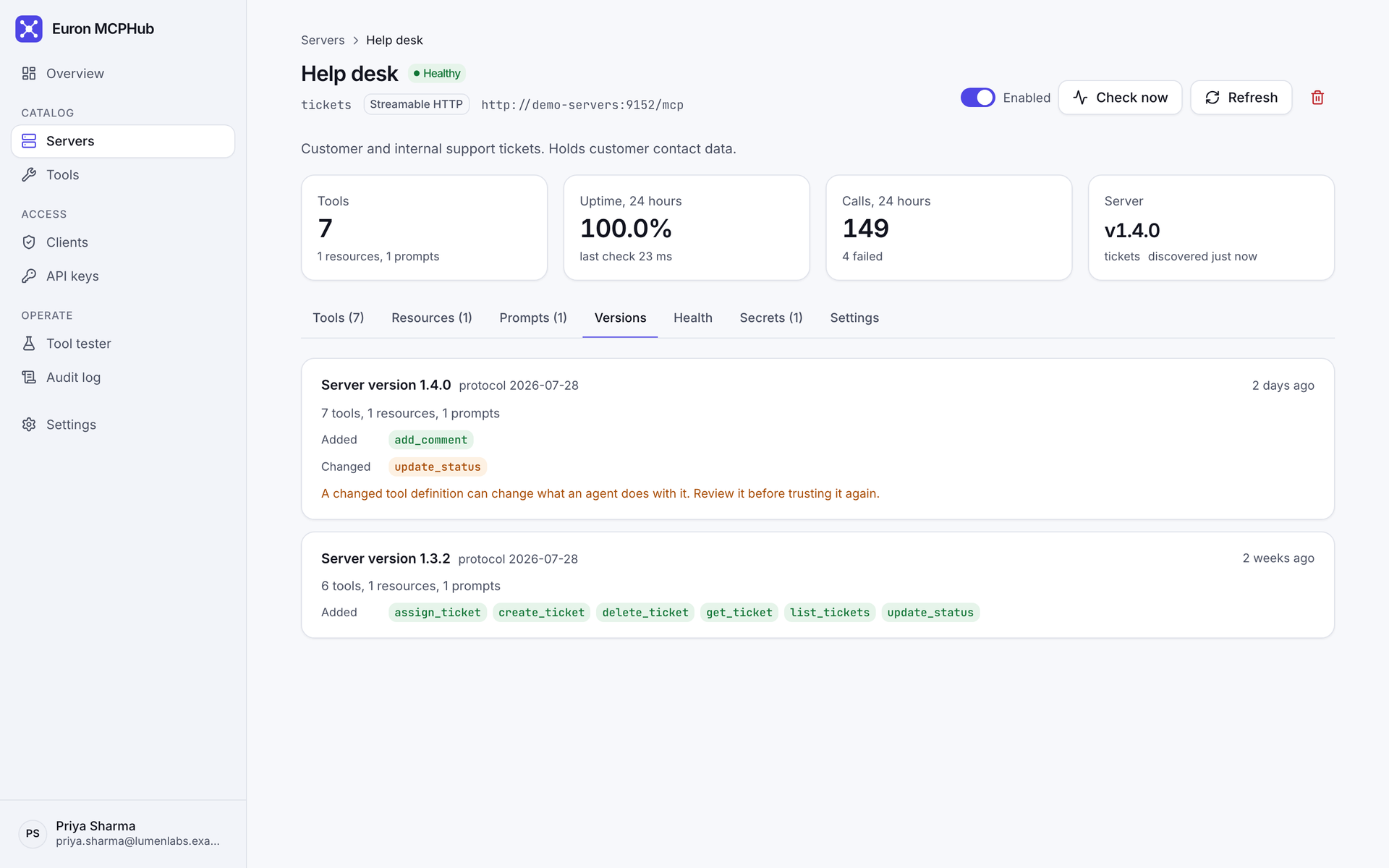
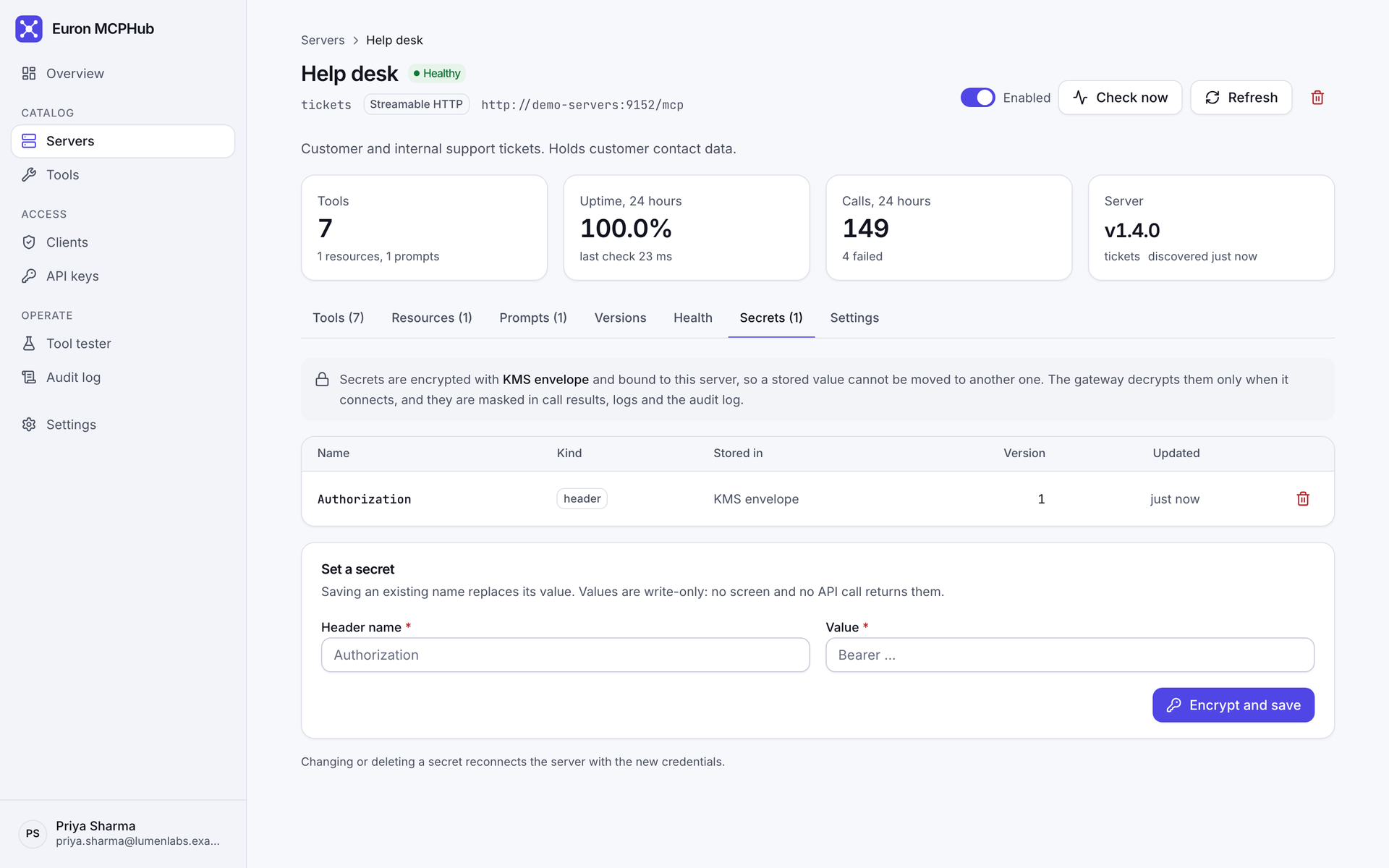
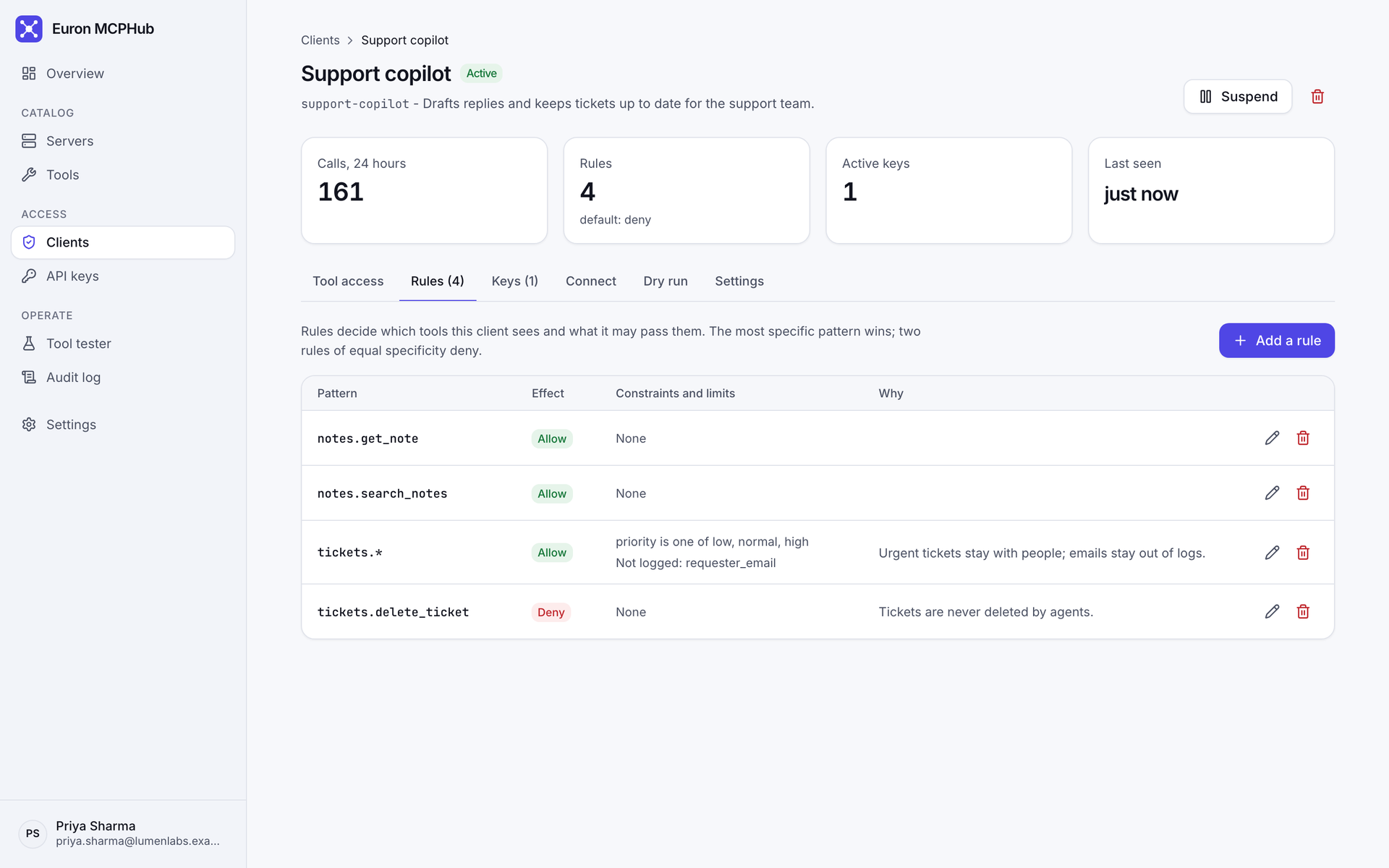
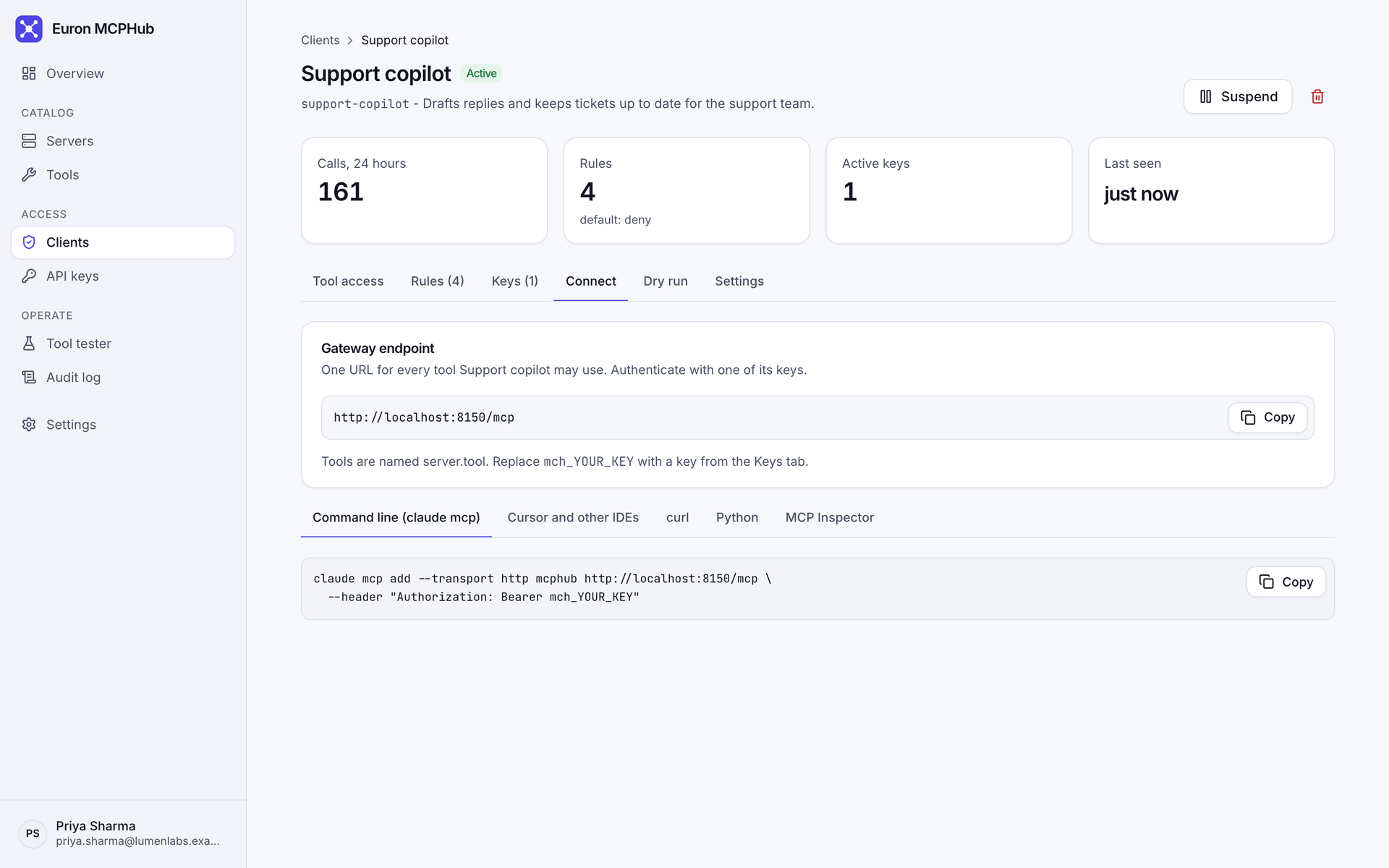
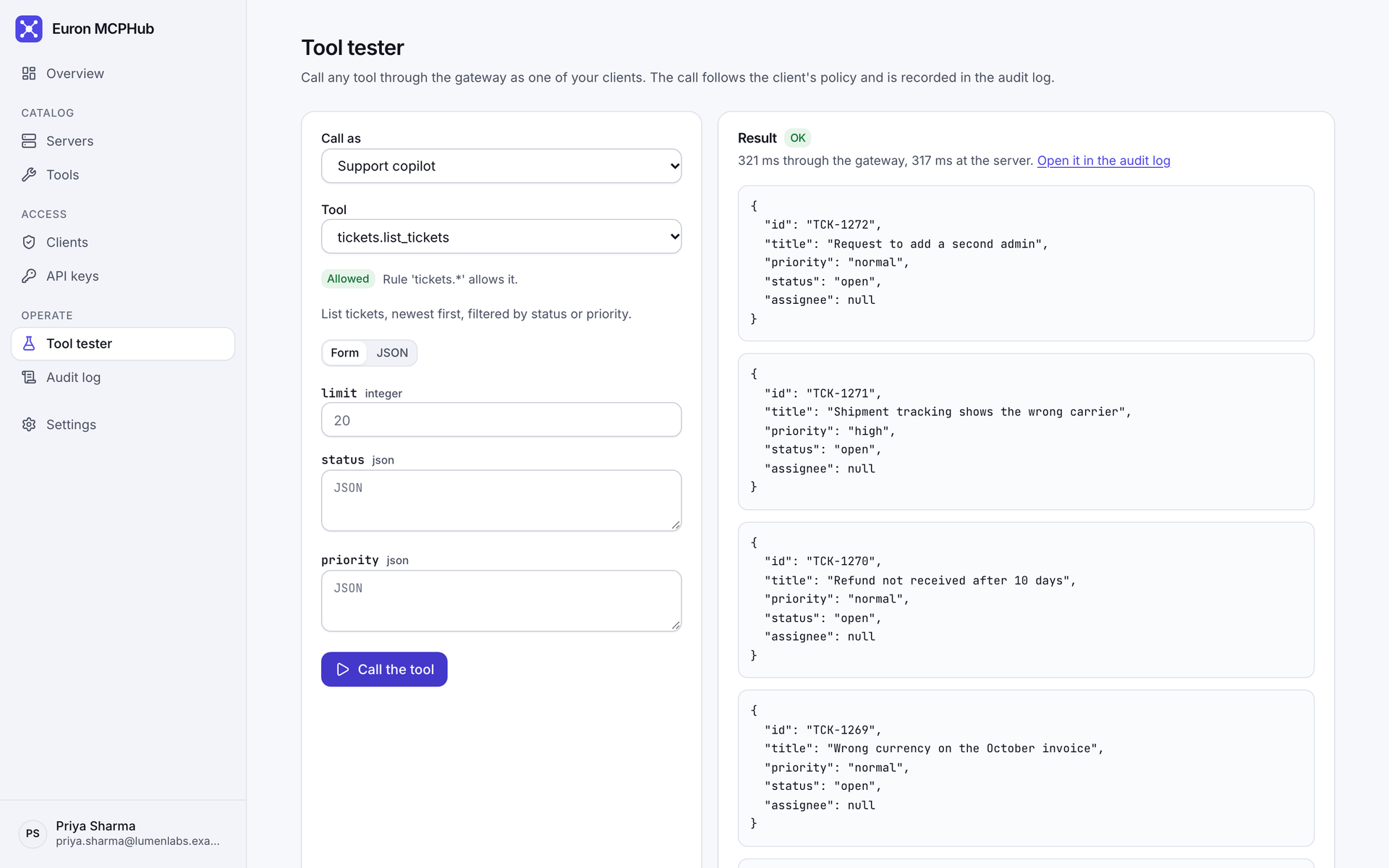
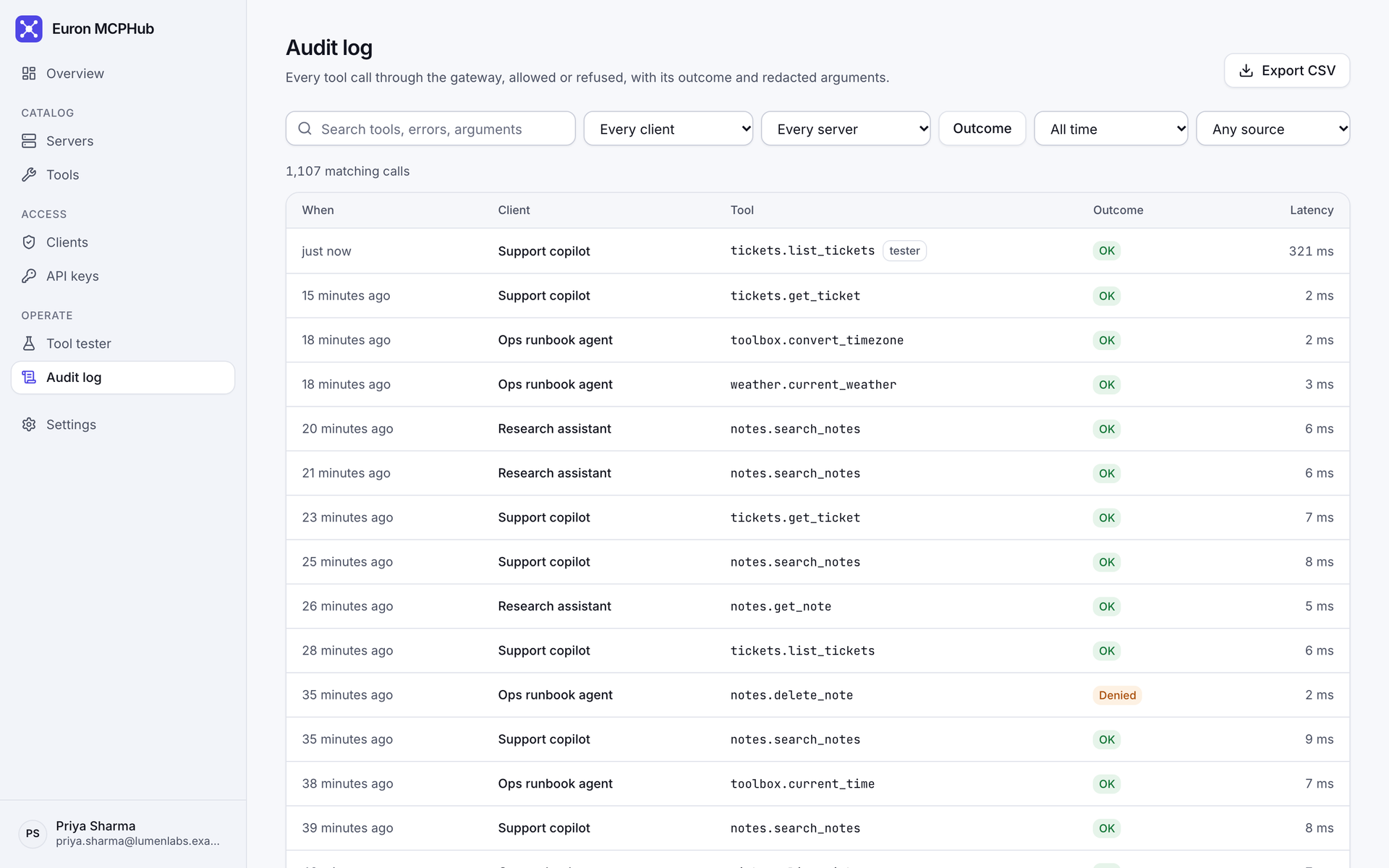
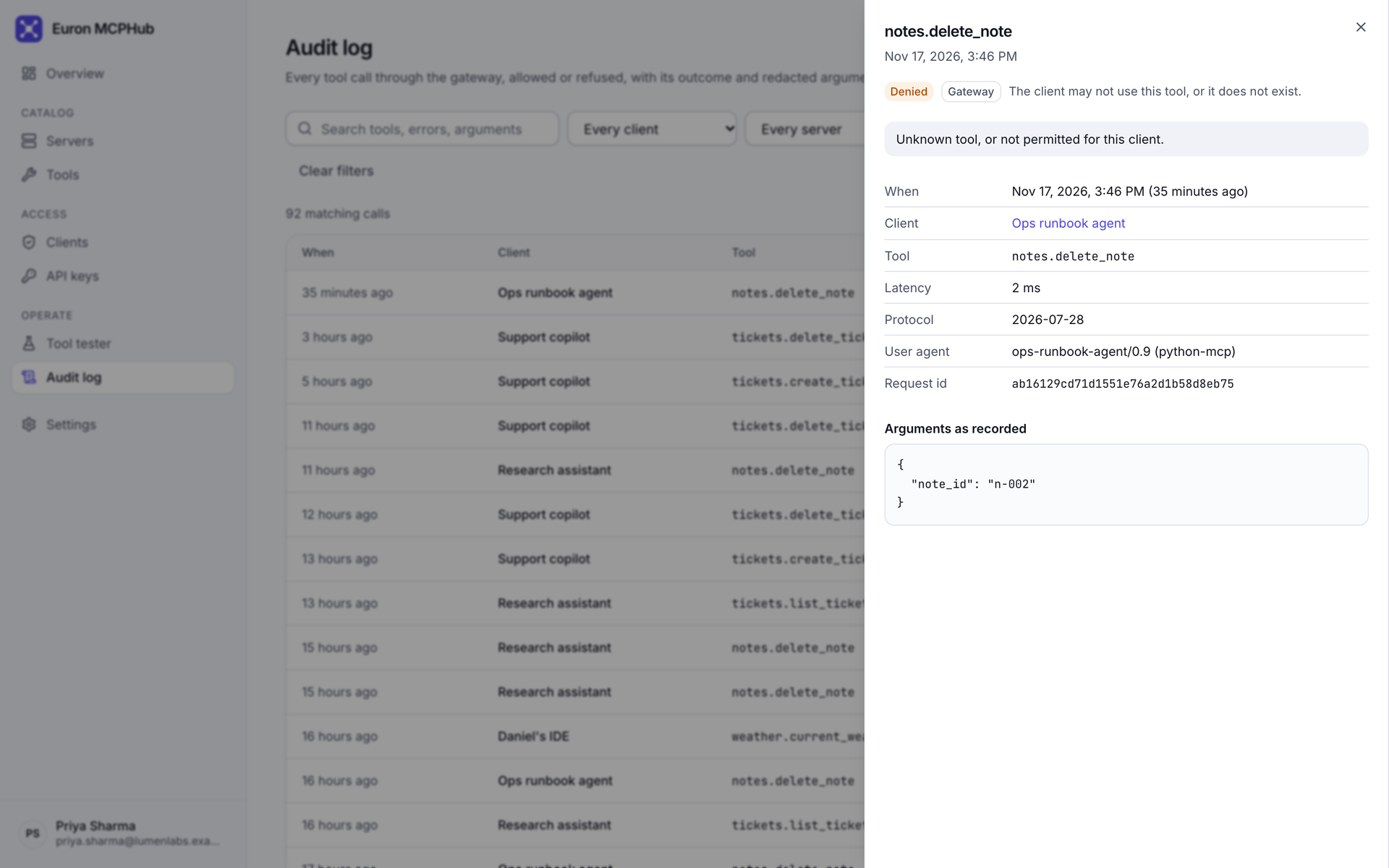
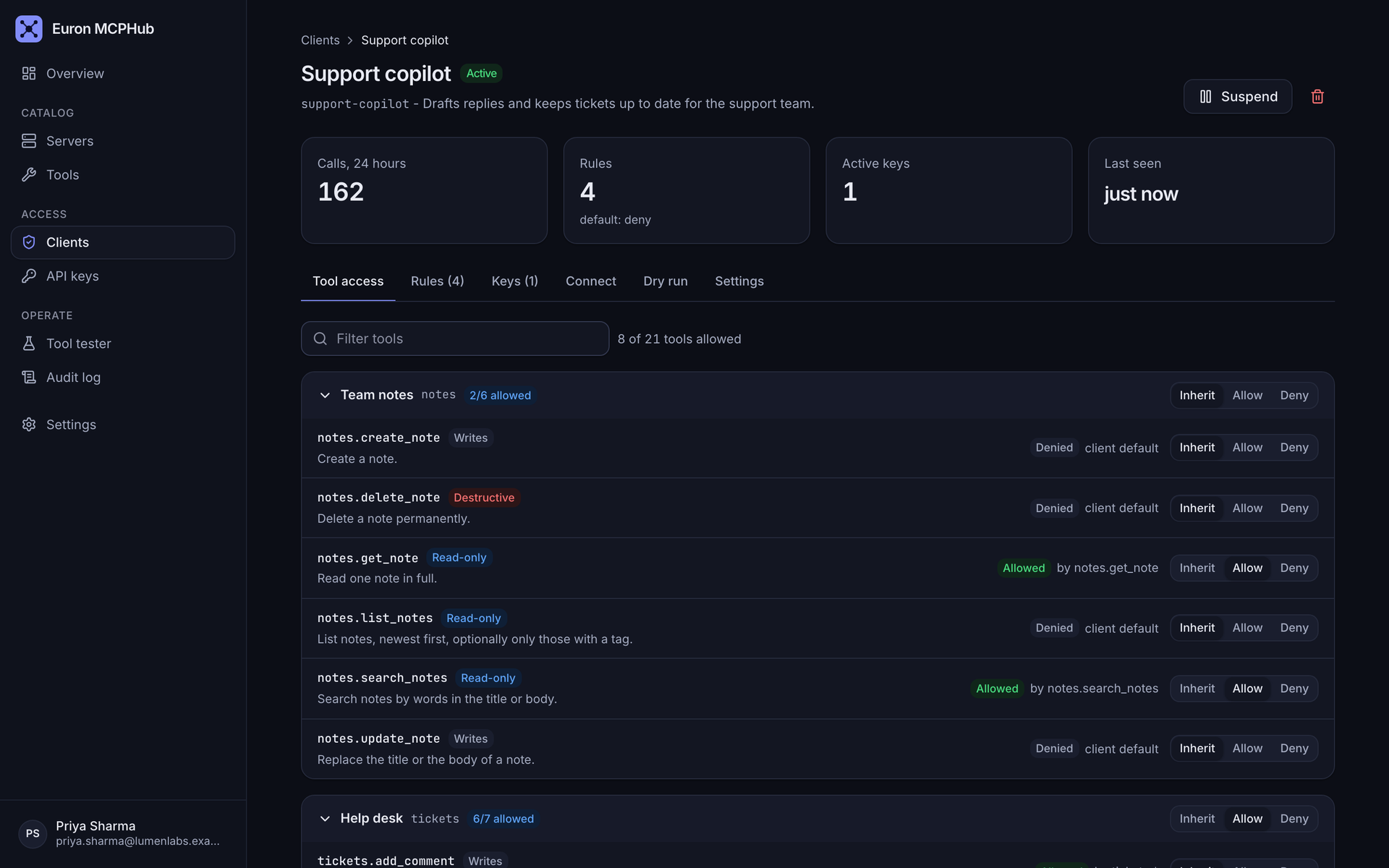
MCP servers multiply fast, and every agent ends up with its own URLs and copied tokens, so Euron MCPHub gives every client one endpoint and one key. Register a server by URL or launch command. Discovery lists its tools, resources, and prompts. The /mcp endpoint merges every server's tools as server.tool, or server__tool for APIs that reject dots. New clients start with no access. Rules allow tools by pattern, and the most specific rule wins. A denied tool never appears in the client's list. Rules can limit argument values and cap calls per minute. A dry run names the rule that would decide a call without making it. Upstream tokens are encrypted, write-only, and attached only when the gateway connects. Cloud metadata addresses are always refused, and private networks need an allow-list entry. Every call, allowed or refused, lands in a searchable call log with redacted arguments, CSV export, and usage charts. Tool definitions are fingerprinted, so a quietly rewritten description or schema gets a dated version with the diff. Scheduled health checks mark a server down after three failures and rediscover its tools on recovery. A tool tester calls any tool as one of your clients, and Connect tabs hold Cursor, curl, and MCP Inspector snippets. Admins, operators, and viewers get their own permissions, in a dashboard with light and dark themes. Running on a dedicated VPS on RepoCloud with guaranteed CPU, RAM, and SSD, full root SSH access, and a browser serial console. MIT licensed.
Benefits
- One endpoint and key per client
- Register every MCP server once, then give each agent, IDE, or app one URL and one key; adding, moving, or retiring a server changes one place, not every config.
- Least privilege by default
- A new client can call nothing until a rule allows it, argument constraints narrow what a tool may receive, and tools a client may not use never appear in its list.
- Agents never hold your credentials
- Upstream tokens are write-only, encrypted with KMS, bound to their server, and injected only when the gateway connects, so a leaked client key exposes permissions, not a credential.
- A record of every tool call
- Every call, allowed or refused, is logged with the client, latency, reason, and redacted arguments, searchable, exportable as CSV, and bounded by a 90-day retention period by default.
Features
- MCP Gateway Endpoint
- FastAPI serves a stateless streamable HTTP /mcp endpoint on the official MCP SDK that aggregates every registered server's tools as server.tool and proxies calls over pooled connections.
- Policy Engine and Dry Run
- Default-deny rules by pattern, the most specific wins; six argument constraint types, per-client and per-rule rate limits, redaction paths, and a dry run that explains a call.
- KMS Envelope Secrets
- Header and environment secrets are envelope-encrypted with KMS under a server-bound context, or kept in Secrets Manager; local AES-GCM is for laptops only and refused in production.
- Egress Guard
- Cloud metadata and link-local addresses are always refused, private ranges and stdio commands need an allow-list, and calls have timeouts and a 1 MiB result limit.
- Dashboard and Worker
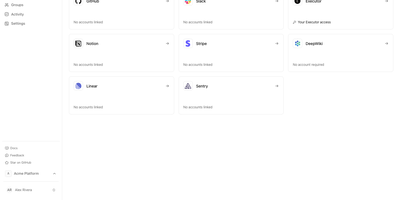
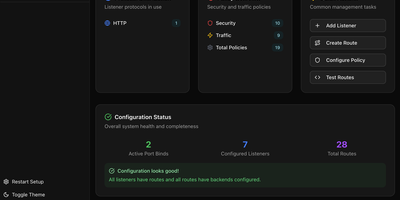
- A Next.js 16 dashboard covers catalog, clients, keys, tester, and audit log; a leader-elected worker runs health checks, rediscovery, and retention, with Prometheus metrics.
- Compose and Terraform Deploy
- Docker Compose runs PostgreSQL 16, Valkey 8, an emulated AWS (Floci), API, worker, and dashboard with no cloud account; Terraform modules deploy ECS Fargate, RDS, and ElastiCache on AWS.