Categories
Self-Hosted DevOps OpenTelemetry Error Tracking Log Management AI Observability Root Cause Analysis Log RedactionStars
Forks
Watchers
Developer links
Euron Open LogMind
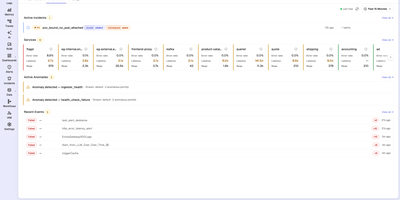
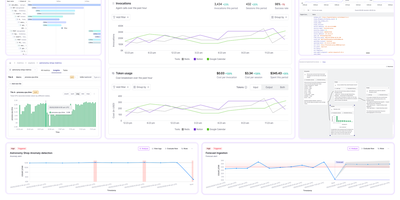
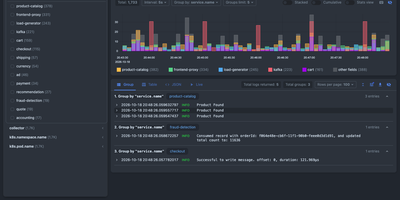
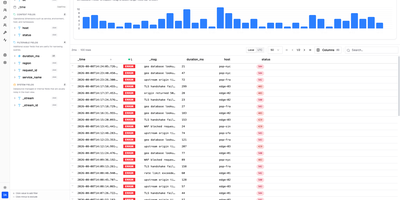
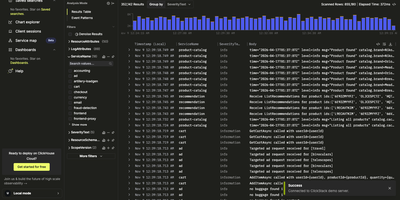
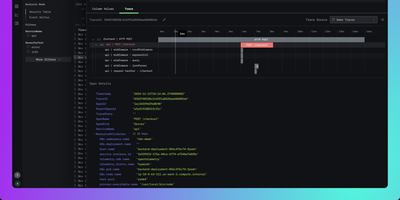
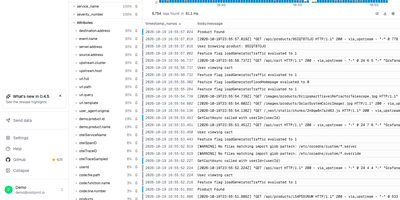
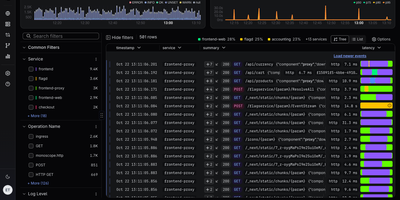
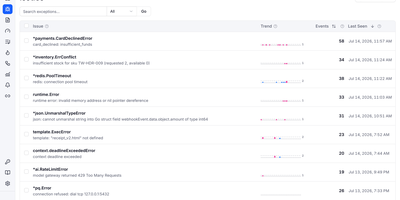
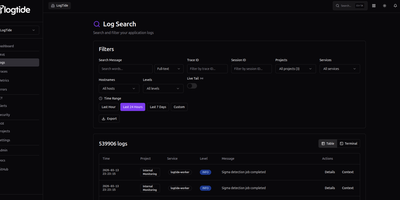
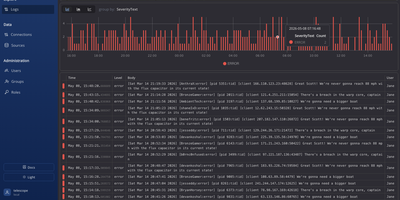
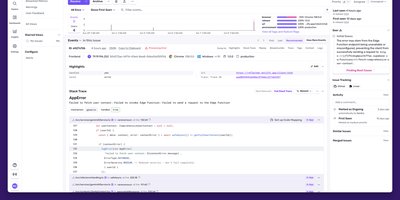
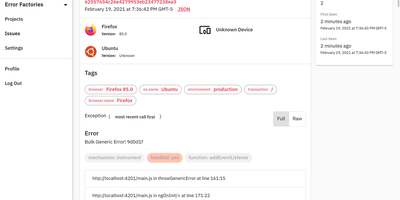
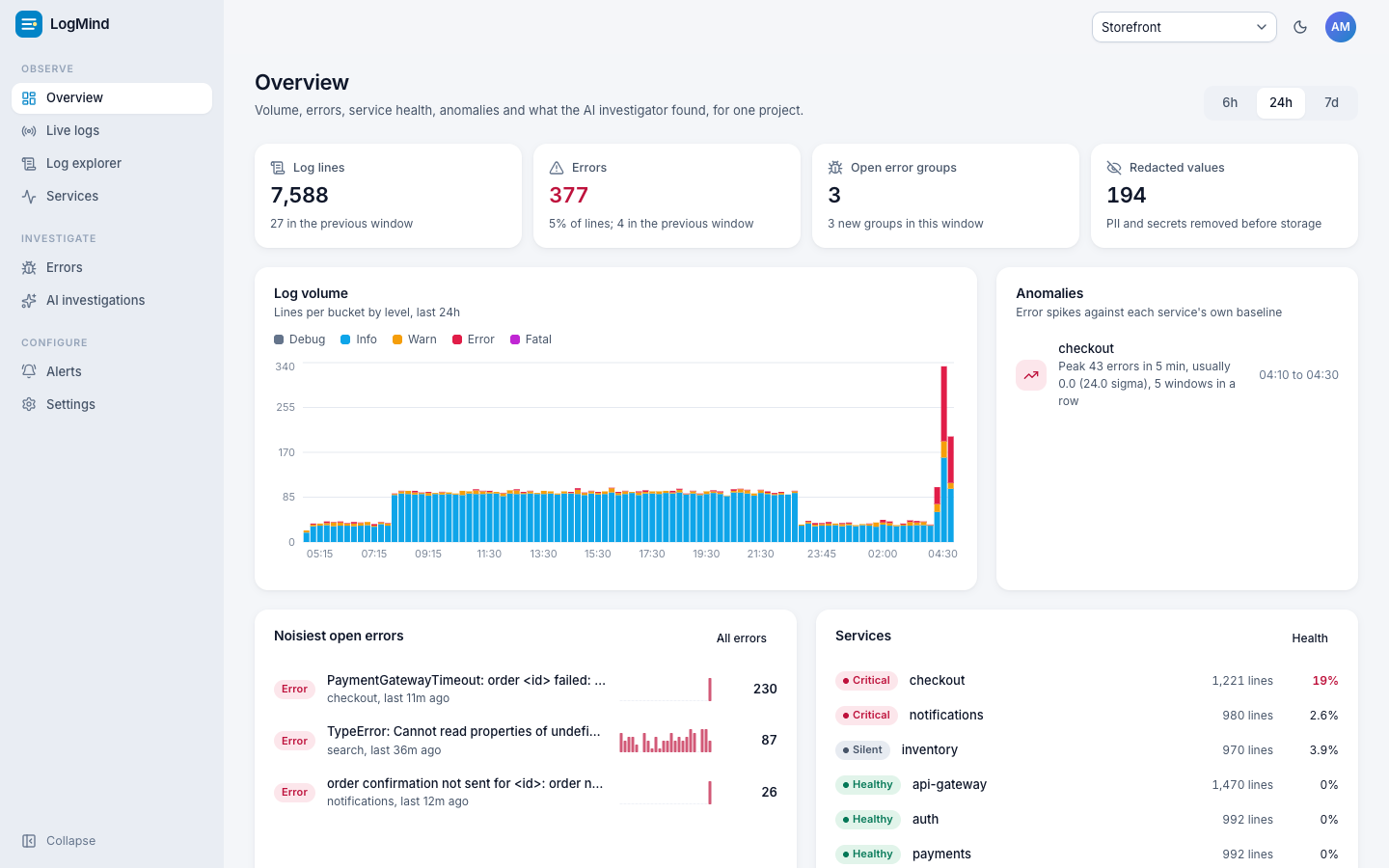
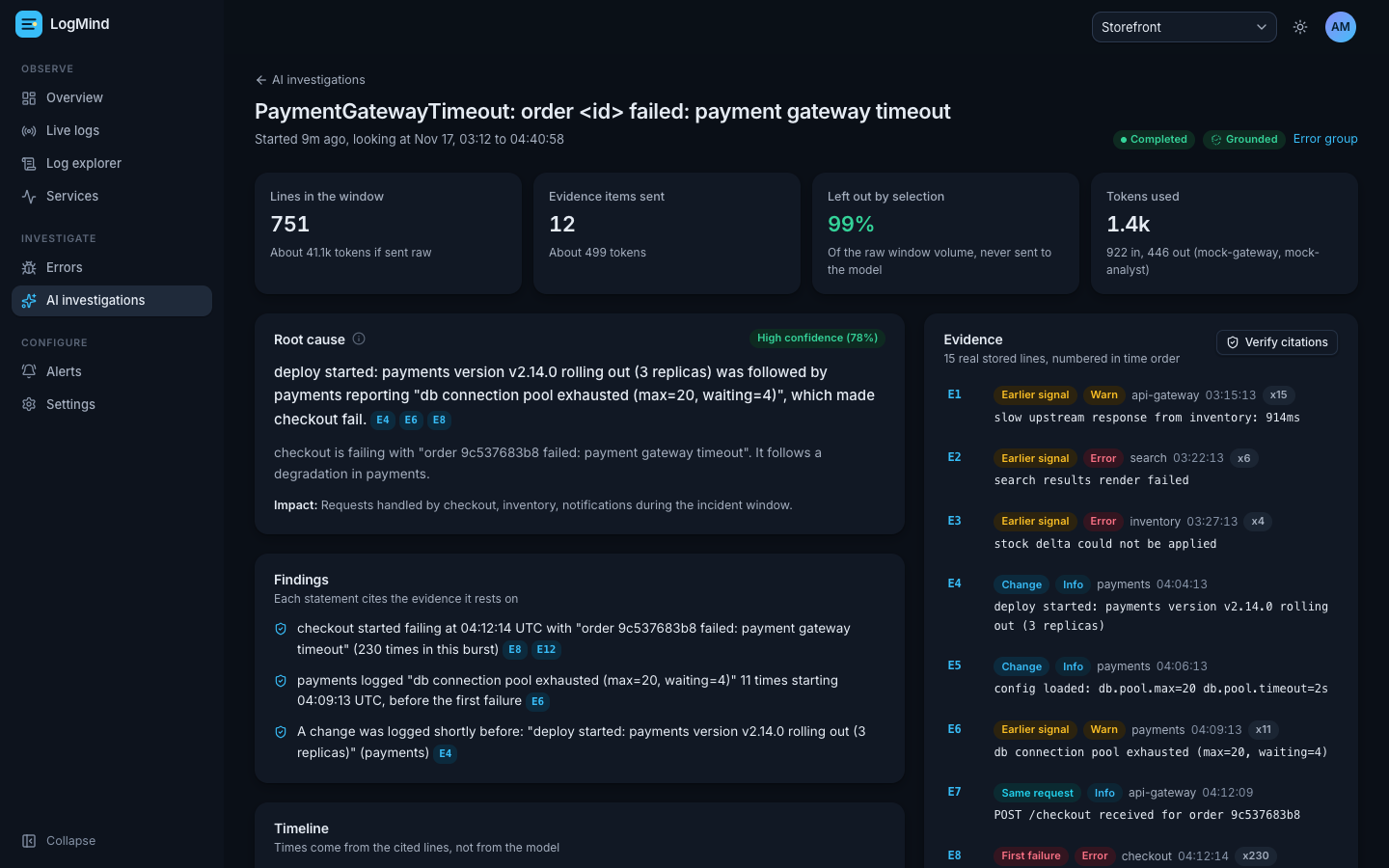
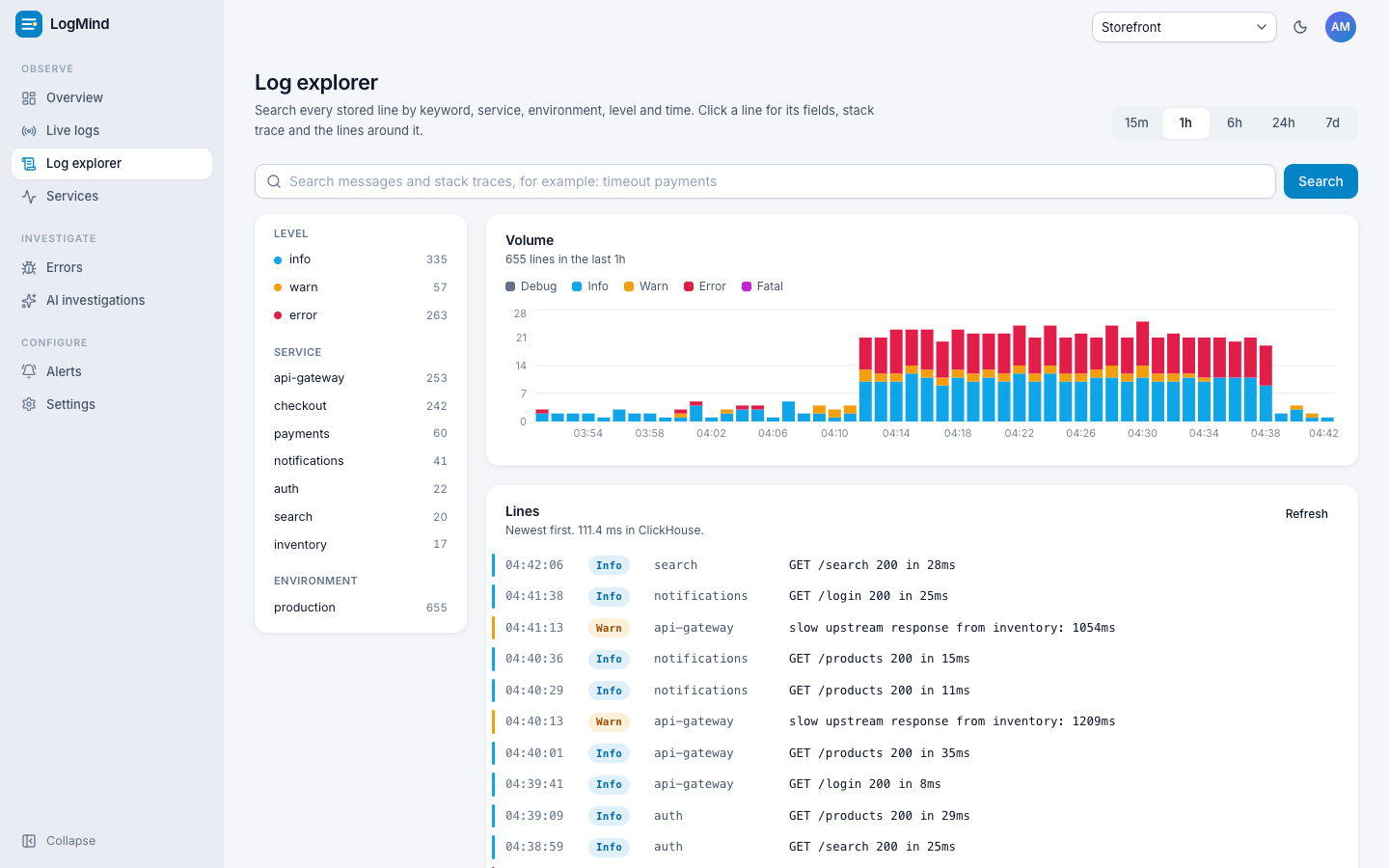
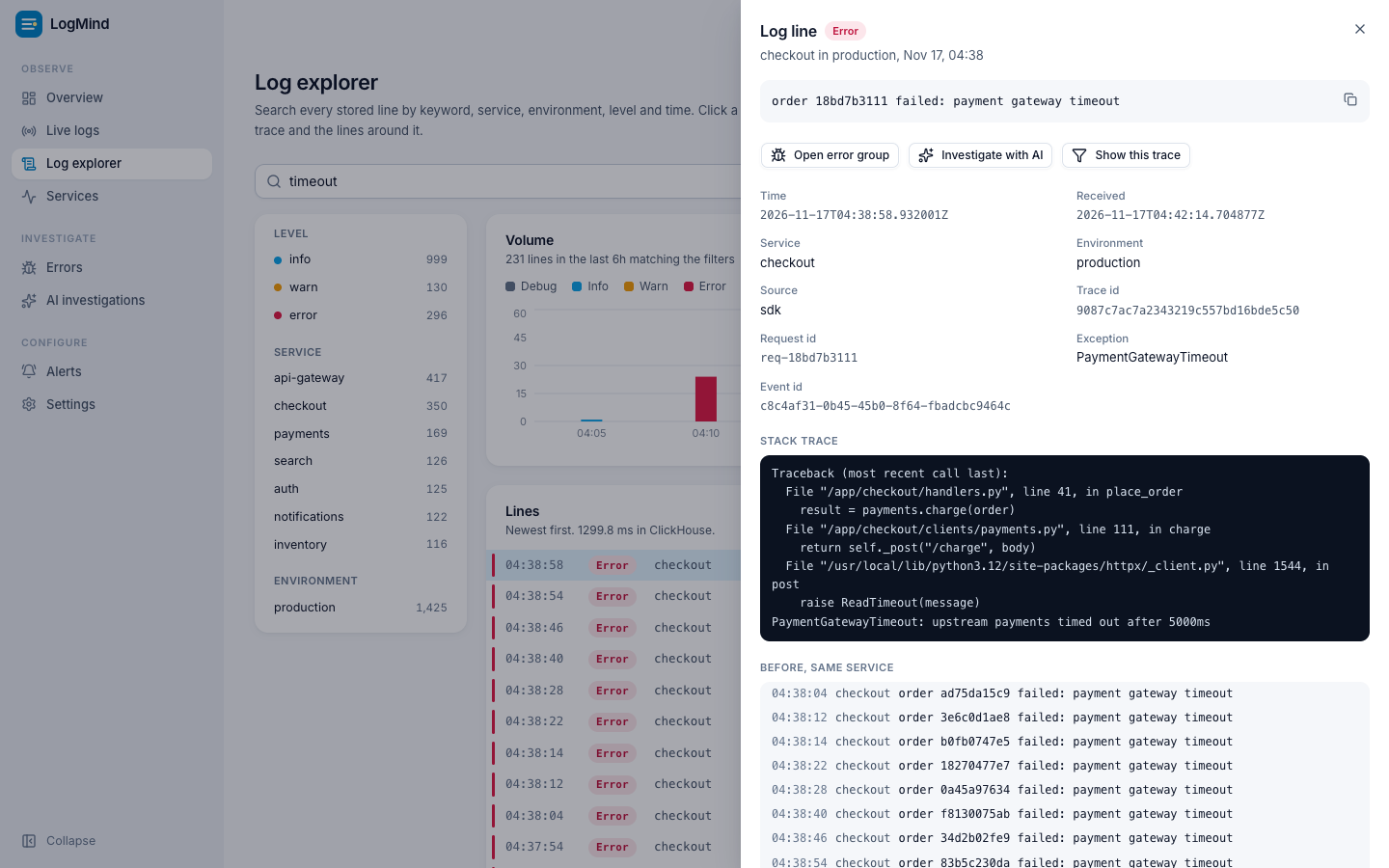
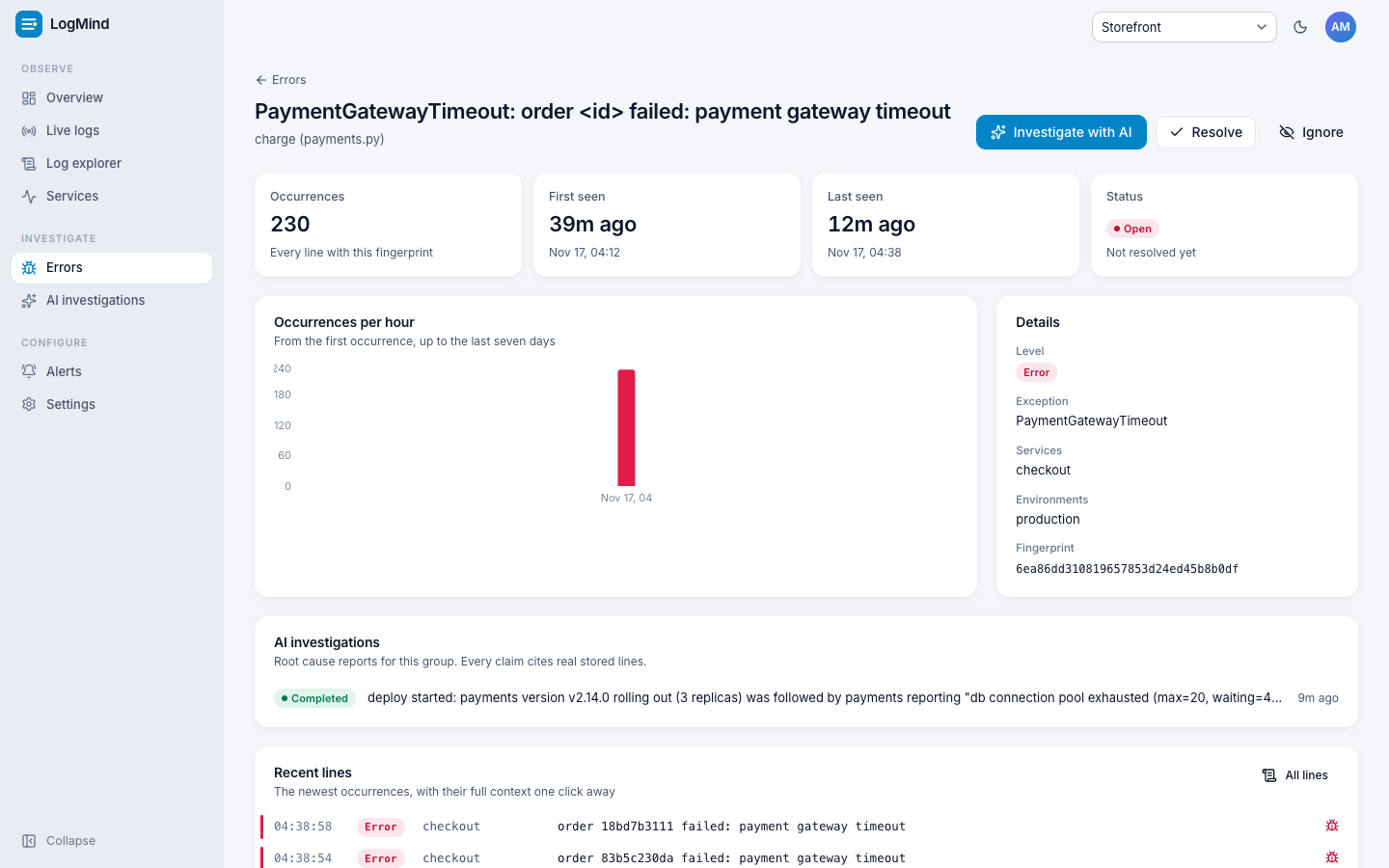
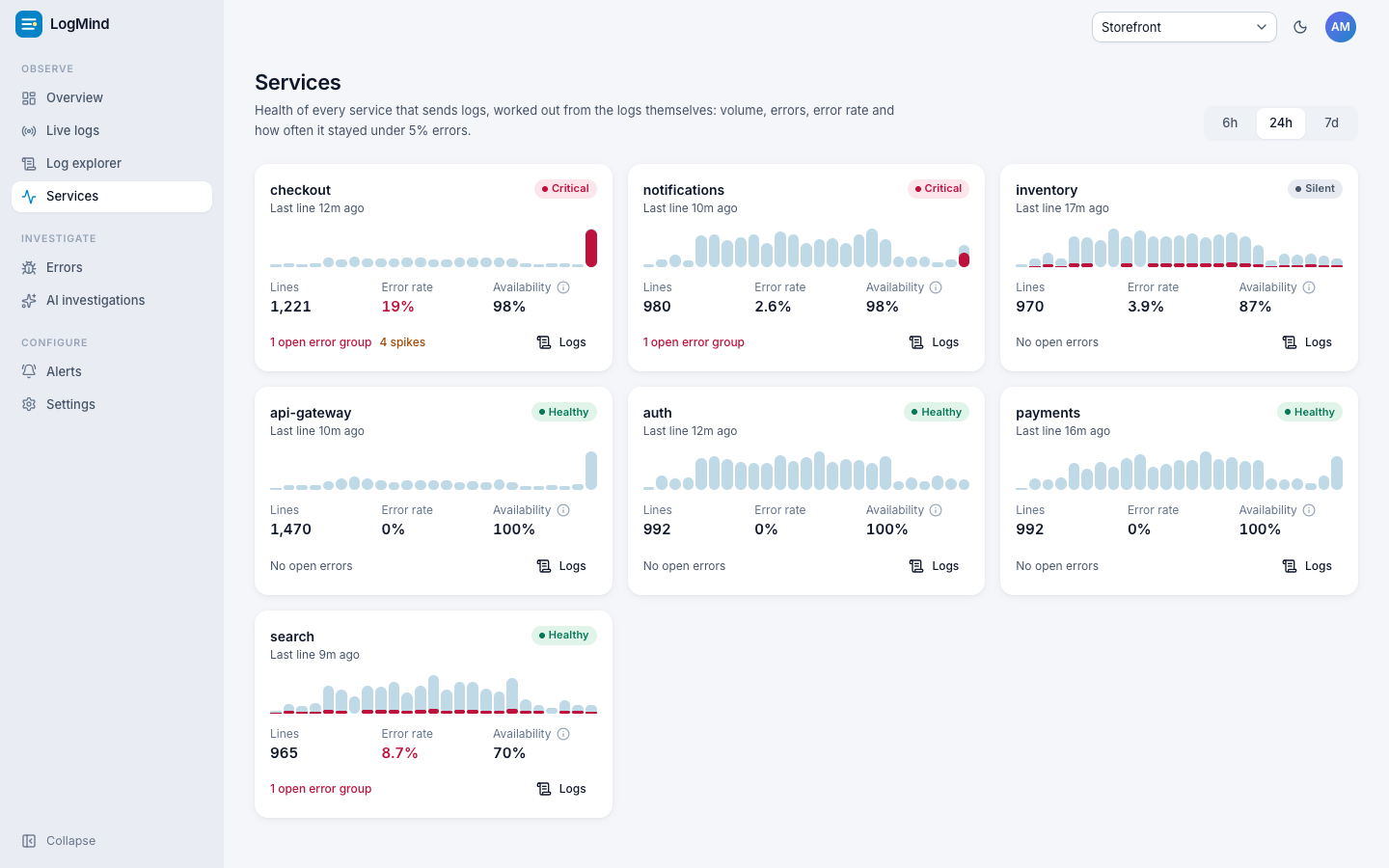
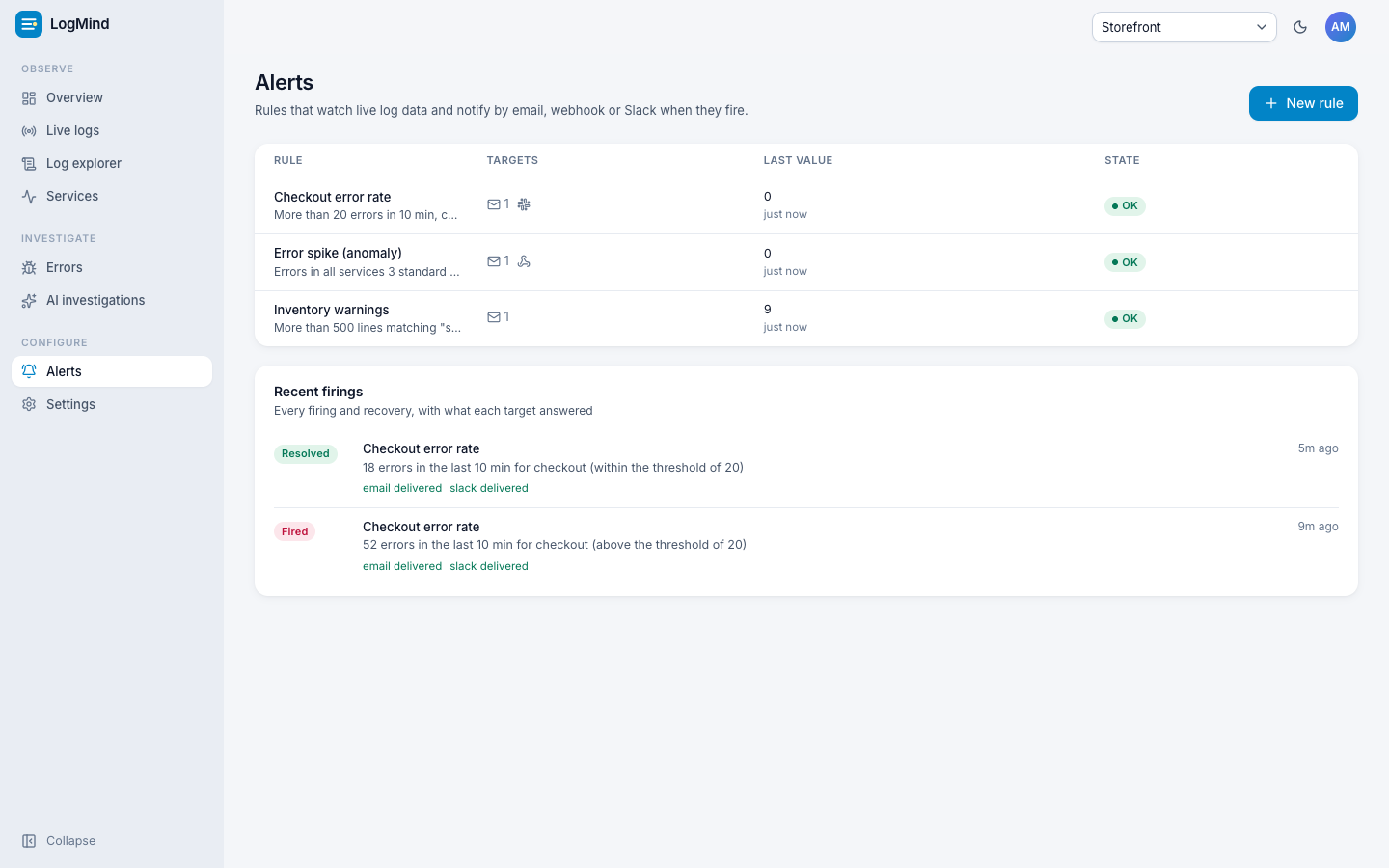
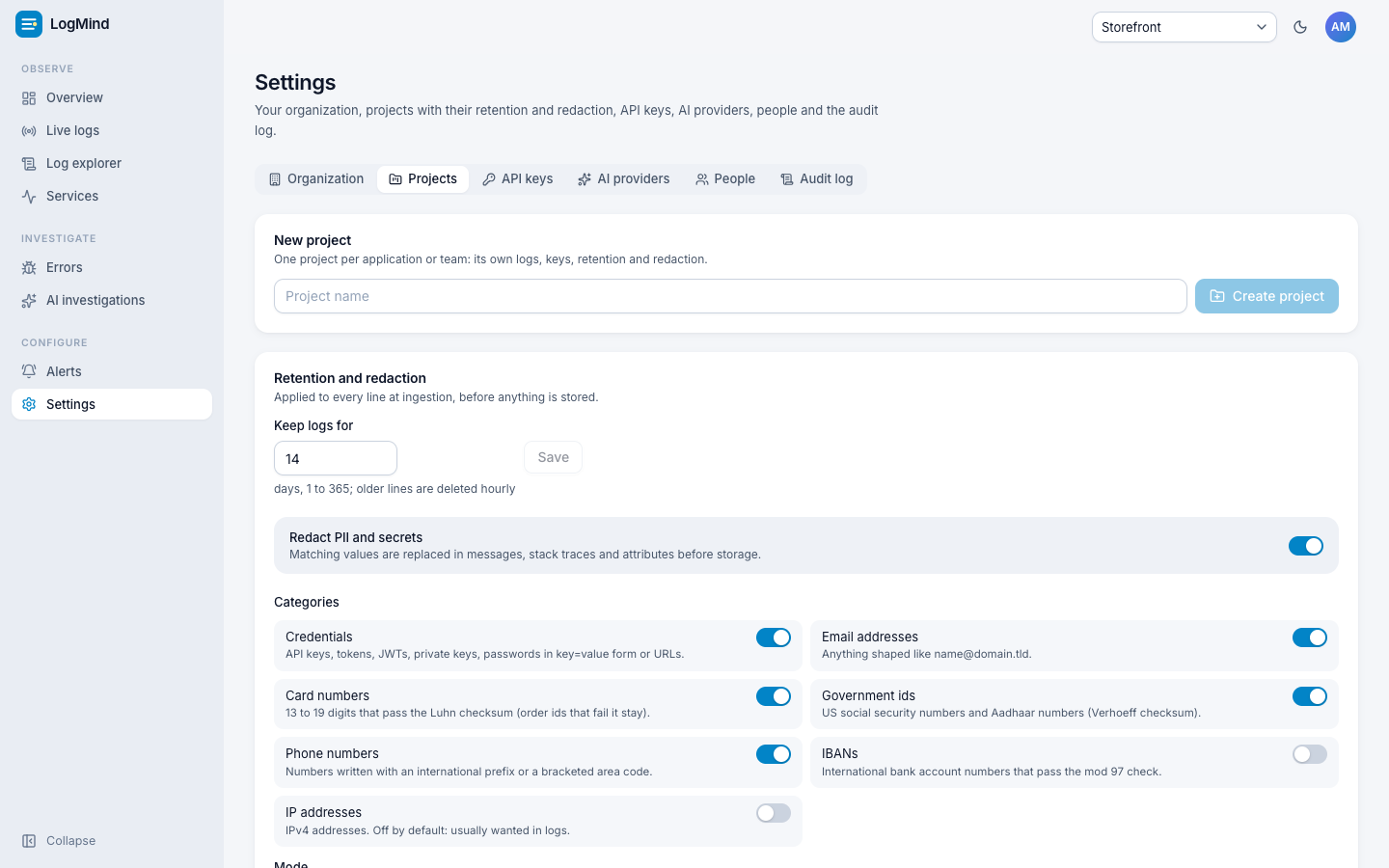
When production breaks, Euron Open LogMind searches and groups your logs, then returns a root cause where every claim cites a real stored log line you can open and re-check. Services send lines over HTTP, the Python or Node.js SDK, or any OpenTelemetry exporter. Credentials, emails, card numbers, and personal data are masked or hashed before storage, so secrets never reach a disk, a model, or a browser. The explorer filters by keyword, service, environment, level, trace, and request. It also draws a level histogram, shows the lines around any entry, and streams new lines live. Errors collapse by fingerprint: a timeout thrown 230 times for 230 different orders becomes one group. Service health, volume, and error rate come from the logs alone. An investigation collects the first failure, earlier warnings, other services' errors, deploys, and the failing request's trace. Statements that cite nothing real are removed and shown as removed. A single click re-reads every cited line from storage, and follow-up questions reuse the same evidence. Reports show their token cost, and OpenAI, Anthropic, Gemini, Ollama, or an OpenAI-compatible endpoint can write them. Search, grouping, live logs, and alerts work without any model, and threshold or anomaly rules notify by email, signed webhook, or Slack. Organizations, projects, and viewer, admin, and owner roles keep each team's data separate. Running on a dedicated VPS on RepoCloud with guaranteed CPU, RAM, and SSD, full root SSH access, and a browser serial console. MIT licensed.
Benefits
- Every AI claim cites real lines
- The server discards any statement that does not point at a numbered evidence line it retrieved, and one click re-reads every cited line from ClickHouse to prove the report.
- Secrets never reach disk or models
- Values are replaced in messages, stack traces, and attributes before the ClickHouse insert, the error sample, and the live stream, so a secret never reaches a disk, model, or browser.
- AI optional and token-bounded
- Search, grouping, live logs, health, and alerts work with no model, and when AI is on it receives a compressed, redacted evidence pack instead of raw log volume.
- One row per recurring bug
- Fingerprints ignore line numbers, ids, addresses, and quoted values and skip dependency frames, and a new occurrence after a resolve reopens the group as a regression.
Features
- Multi-source log ingestion
- POST batches of up to 1000 lines to a native JSON API, send OTLP/HTTP logs, or use the Python and Node.js SDKs with project keys stored as peppered HMACs.
- ClickHouse log storage
- Lines live in a ClickHouse table ordered by tenant and time with skip indexes and a per-minute rollup, while PostgreSQL holds everything relational.
- FastAPI, worker, and Next.js
- A FastAPI API, a worker on a PostgreSQL queue for investigations and alerts, and a Next.js 15 dashboard start together with Docker Compose through make up.
- Pluggable AI providers
- OpenAI, Anthropic, Gemini, Ollama, OpenAI-compatible endpoints, and a deterministic mock plug in per organization, with keys sealed by KMS and a Test button making one real call.
- Alert rules and delivery
- Threshold rules and anomaly rules that compare the last five minutes with a service's own baseline notify by email, HMAC-signed webhooks, and Slack, with cooldowns and recorded outcomes.
- Terraform modules for AWS
- Twelve Terraform modules and three environments cover ECS Fargate, RDS, ElastiCache, ClickHouse on EC2, S3, KMS, SES, and WAF, and the aws-dev stack was applied against an emulator.