Shelf
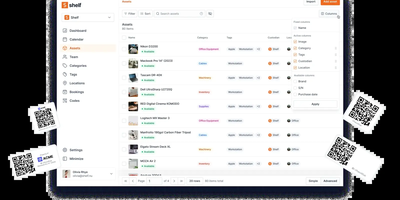
Shelf answers the three questions every equipment manager dreads — who has it, where is it, and when is it coming back — using QR-code-first tracking where every asset gets a unique scannable label, every handover is logged with timestamps and e-signed custody agreements, and every scan captures GPS coordinates displayed on a map. Built on React Router 7 with React 19, TypeScript 5, Prisma 6 ORM, and Tailwind CSS 3 with Radix UI components, the platform generates QR codes and barcodes (Code128, Code39, Datamatrix) printable on DYMO, Brother, and Zebra label printers. The custody system records every handover with user details and generates PDF custody agreements with e-signatures for high-value items, while a complete audit trail tracks responsibility from check-out to return. The visual booking calendar prevents double-bookings automatically, supports partial check-outs and returns with segmented lifecycle bars, and handles quantity-tracked consumables alongside individually serialized equipment. Asset Models enable bulk creation of identical items with shared defaults while maintaining individual QR codes and custody histories. Location tracking displays last-scanned GPS coordinates on MapTiler maps. Supabase Auth provides email and SSO authentication, pg-boss handles background job queuing, and Nodemailer delivers SMTP email. The Shelf Companion app on iOS and Android enables field scanning and bookings. Export Asset Inventory, Asset Distribution, and Custody Snapshot reports for compliance. Deploy via Docker with PostgreSQL and Supabase. Running on a dedicated VPS on RepoCloud with guaranteed CPU, RAM, and SSD, full root SSH access, and a browser serial console. AGPL v3.0 licensed.
Shelve
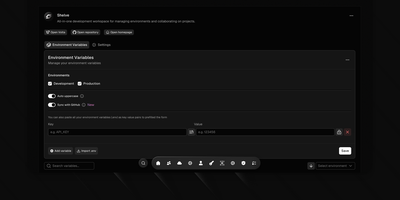
Eliminate scattered configuration files and leaked credentials across development teams with Shelve, an open-source secrets management platform that secures environment variables across development, staging, and production tiers. Engineering teams can organize sensitive database passwords and third-party API credentials within a centralized vault protected by AES-256 encryption and SHA-256 integrity verification. The platform synchronizes configurations directly to GitHub Actions and repository secret stores through an official GitHub App integration. Developers can inject encrypted variables directly into local processes using the dedicated CLI without saving plain-text secrets to disk. The built-in sharing vault creates self-destructing, password-protected links to exchange sensitive credentials securely with external contractors. Administrators can define custom workspace teams with granular role-based access controls, track change audit logs across configuration histories, and navigate management views using a keyboard-driven command palette. Automated schema validation engines detect missing parameters and enforce uniform uppercase naming standards across application tiers. Running on a dedicated VPS on RepoCloud with guaranteed CPU, RAM, and SSD, full root SSH access, and a browser serial console. Apache 2.0 licensed.
Mediarium
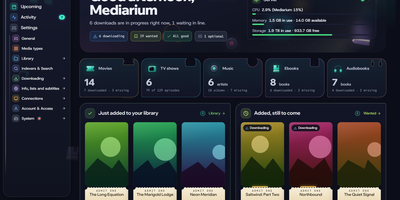
Find a title tonight and wake up to it named, filed, and ready to play: Mediarium is a self-hosted media manager that finds, downloads, repairs, and organizes movies, TV, music, ebooks, and audiobooks from one web page on your own server. Search once and it queries your Usenet and torrent indexers together, grabs the best release, unpacks it, applies your naming rules, and places it where Plex, Jellyfin, or Emby expects it. Quality profiles with upgrades and fallbacks keep hunting better copies automatically, while delay profiles, a blocklist with retries, and tags such as Kids or 4K keep the wrong releases out and collections tidy. Subtitles are matched to your exact file, with a timing fix when one runs out of sync. Family accounts carry permissions of their own: relatives who cannot add titles send requests you approve, and watch history read from your media server drives statistics and optional cleanup rules. The built-in Books app reads ebooks, plays audiobooks chapter by chapter, remembers your place everywhere, and even opens Kindle books. Torrents can run behind a built-in WireGuard VPN with a kill switch, downloads repair and unpack themselves, and notifications, backups, and a post-import script keep the routine invisible. Moving over reads your Radarr, Sonarr, Prowlarr, SABnzbd, and other existing setups without changing them. Running on a dedicated VPS on RepoCloud with guaranteed CPU, RAM, and SSD, full root SSH access, and a browser serial console. AGPL-3.0 licensed.
B1Admin
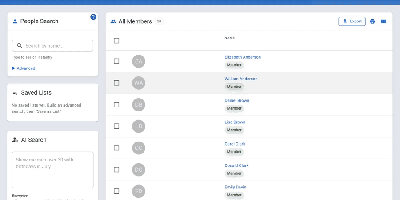
Churches run on spreadsheets and memory until B1Admin gives members, visitors, groups, attendance, and giving one shared home that the whole staff can trust. You keep detailed records on members and guests, follow up with visitors before they drift away, and coordinate small groups with their own rosters and communication. Sunday morning runs smoother with attendance tracking and a self check-in app, so families register children and members mark themselves present without a paper bottleneck at the door. Donations are tracked with detailed reports for the treasurer, online giving connects through Stripe, PayPal, or Kingdom Funding with recurring gifts and webhook-confirmed settlements, and custom forms collect registrations, signups, and requests without a separate forms tool. The same deployment serves your public website at the root, the admin dashboard for staff, a member portal where congregants manage their own information, and an API for integrations, all behind automatic HTTPS on one domain. Upgrades back up your data first, and because it is free and open source, a small church gets the same system as a large one. Running on a dedicated VPS on RepoCloud with guaranteed CPU, RAM, and SSD, full root SSH access, and a browser serial console. MIT licensed.
DefGuard
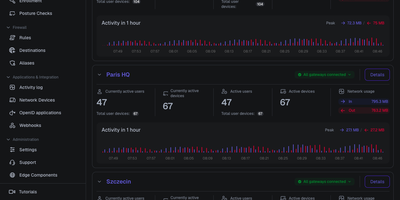
Behind one admin panel, DefGuard runs a WireGuard VPN, an identity provider, and multi-factor authentication, so every person and device proves who they are before reaching your private network. Administrators define VPN locations, assign which users and groups may enter each one, and enforce firewall rules that allow or deny traffic per location, with changes applied to gateways in real time. People enroll remotely through a guided self-service flow, register their own laptops and phones, and connect with desktop and mobile clients that show live connection statistics. Sign-in goes well beyond passwords, because the built-in OpenID Connect provider gives internal tools single sign-on, while TOTP codes, WebAuthn and FIDO2 keys, email tokens, and mobile biometrics gate each connection. Directory teams sync accounts from LDAP and Active Directory, or federate sign-in through Google, Microsoft, and custom OpenID providers, instead of maintaining a separate user list. Every authentication, enrollment, and policy change lands in a searchable activity log, and webhooks plus a REST API let surrounding systems react to access events automatically. Gateways keep enforcing access from a local cache when the control plane is unreachable, and several gateways can front the same location for failover. Running on a dedicated VPS on RepoCloud with guaranteed CPU, RAM, and SSD, full root SSH access, and a browser serial console. AGPL-3.0 licensed.
Invoice Ninja
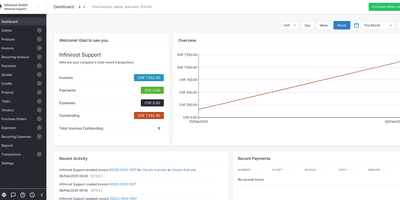
With nearly 10,000 GitHub stars and over a decade of development since 2013, Invoice Ninja is the most complete source-available invoicing platform for freelancers and small businesses — combining professional invoicing, online payments, expense tracking, and project management in a single self-hosted application. The Laravel API backend powers a React web portal and Flutter native applications for Windows, macOS, Linux, iOS, and Android, delivering a consistent experience across every device. Create professional invoices and quotes with real-time PDF preview, product libraries, custom templates, and automatic tax calculations. Clients receive branded emails and access their dedicated portal at your custom domain to view documents, approve quotes with e-signatures, and pay with one click via Stripe, PayPal, Square, GoCardless, Authorize.net, Braintree, or Mollie. Recurring invoices with auto-billing charge saved payment methods on schedule — weekly, monthly, or annually — with automatic reminders and late fee calculations. The built-in project management suite includes Kanban boards for task organization, billable time tracking with start/stop timers, and vendor expense management with receipt attachments. Bank account synchronization via Yodlee or GoCardless automatically imports transactions for reconciliation. E-invoicing with PEPPOL network integration supports electronic invoicing standards for European and government compliance. Reports cover invoices, expenses, profit and loss, tax summaries, and aged receivables. Running on a dedicated VPS on RepoCloud with guaranteed CPU, RAM, and SSD, full root SSH access, and a browser serial console. Elastic License v2.
ccLoad
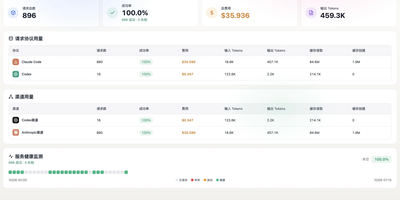
An upstream dies mid-stream. The session does not have to. ccLoad is a self-hosted AI gateway that stands between your coding agents and every key, relay, and subscription you own, retrying the next source before the first byte reaches your client. Claude Code, Codex, Gemini, and OpenAI-compatible tools all point at one address and present one ccLoad token. Behind it, each source becomes a channel with a model list, a priority, and health-based ordering. Requests are matched by the model name the client asked for. Protocol differences disappear in transit, with Anthropic, OpenAI, Codex Responses, and Gemini converted in either direction, streamed responses included. Failure gets a narrow blast radius. A revoked key cools down alone, a failing model cools down alone, and a dead URL cools down alone, each with exponential backoff that respects upstream reset times. Errors disguised as successful responses still trigger failover. Subscription accounts work as channels beside API keys, tokens refresh on their own, and quota use is tracked against each provider's reset window. Every request lands in the logs with its cost, priced with cache reads, cache writes, and long-context tiers included. Tokens carry model restrictions, budgets, and concurrency caps. Channels carry daily spend limits. Sensitive text can be masked on the way out and restored on the way back. Running on a dedicated VPS on RepoCloud with guaranteed CPU, RAM, and SSD, full root SSH access, and a browser serial console. MIT licensed.
Flus
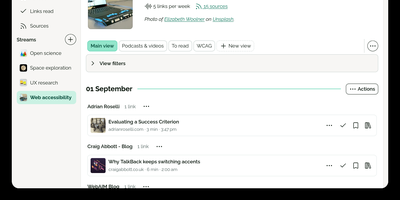
Flus is a calm feed reader, read-later app, and bookmarking space combined into one self-hosted reading home for the blogs, podcasts, video channels, and articles you follow. You follow sources through RSS, Atom, or JSON feeds and organize them into thematic streams, then let the Journal suggest what to read next from everything you follow at a pace you control. Links you want to keep move into collections where annotations and tags record why they mattered, and the to-read and already-read lists keep unfinished reading from silently disappearing. Collections, streams, and individual links can be shared publicly on your profile so others can follow them, or privately with specific collaborators, and everything interoperates through Atom feeds, Mastodon sharing, OPML import, full data export, and a developer API. A powerful search engine finds saved material later, tracking parameters are detected and stripped from URLs, and the installable web app plus browser extensions for Firefox and Chrome make saving a link a one-click habit from anywhere. Running on a dedicated VPS on RepoCloud with guaranteed CPU, RAM, and SSD, full root SSH access, and a browser serial console. AGPL-3.0 licensed.

ArchivesSpace
ArchivesSpace manages an archive from the moment a donation arrives to the day a researcher finds it online. Accession records capture what was received, whether a single item or a large aggregation, and can be spawned into other record types so details are never retyped. Resource records describe a collection as a tree of series, files, and items with dates, extents, notes, and rights statements, while digital object records point to born-digital files and digitized surrogates held elsewhere. Shared subject and agent records give persons, families, organizations, and software one set of authority terms linked across accessions, resources, and digital objects. Assessment records rank condition and research value, and location records track the shelves, drawers, and bins where boxes sit. Staff move data with spreadsheet importers and with EAD, EAC-CPF, MARCXML, METS, MODS, and Dublin Core, and an OAI-PMH responder lets aggregators harvest published records. The optional public interface offers keyword search, year ranges, and filters, plus browsing by collection, subject, and name, with a switcher for six languages, and shows only records a staff member has deliberately published. Several repositories can share one installation, each user receives granular permissions, and the REST API, plugins, and LDAP sign-in connect it to the rest of an institution. Running on a dedicated VPS on RepoCloud with guaranteed CPU, RAM, and SSD, full root SSH access, and a browser serial console. ECL-2.0 licensed.
Kamra PMS
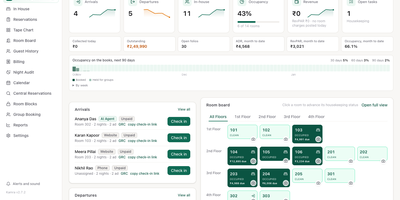
Running a hotel means arrivals, housekeeping, billing, and dinner service all happening at once, and Kamra is the open-source property management system that keeps every one of those moving parts on a single screen. The front desk opens on a Today view with arrivals, departures, in-house guests, balances due, and a live room board, then handles walk-ins, guided check-in with guest ID cards, group check-in, and self check-in by link. The tape chart lets staff book from an empty cell, move rooms, or extend a stay, while groups get rooming lists, deposits, and quotations. Housekeeping supervisors work a room board while floor staff use a phone app to claim rooms, start and finish with a photo, and track guest requests against service deadlines. Folios support split and routed billing, payment links, security deposits, cashier tills, and a night audit wizard that posts the day and saves an audit pack, even running itself at 3 a.m. Restaurant POS adds table maps, room charges, and kitchen displays; banquets run from enquiry to event order; a booking engine at /book sells rooms directly with live rates. An AI assistant and MCP tools let Claude or ChatGPT work as permission-checked staff, with every action logged. Running on a dedicated VPS on RepoCloud with guaranteed CPU, RAM, and SSD, full root SSH access, and a browser serial console. AGPL-3.0 licensed.
Indico
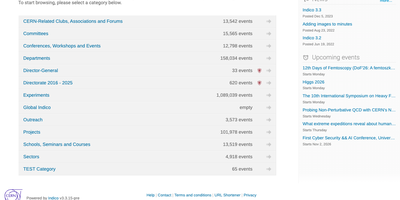
From the call for abstracts to the badge handed over at the registration desk, Indico handles every step of running a conference, plus the weekly meetings and one-off lectures that fill the calendar around it. Events live in a nested tree of categories, and access rules can be set per category, event, session, or single contribution, with custom roles inside each event. Speakers submit abstracts, track reviewers score them against questions the organizers define, judges accept or reject them, and accepted talks become contributions that sit in a drag-and-drop timetable of color-coded sessions. Registration forms are assembled field by field, carry fees, and take payment through PayPal, Stripe, or SIX Payment plugins; attendees get QR-coded tickets, and a badge editor prints name tags for the whole room. A paper reviewing workflow collects full papers. Meeting pages keep minutes and slide decks attached to the talk they belong to. The room booking module adds approvals, recurring reservations, and audiovisual equipment, and the Zoom plugin creates online sessions straight from an event page. Calendar views span a month, week, or day, filter by category, and export to iCal for subscriptions. Scripts pull event data from the HTTP export API as JSON or XML with personal API tokens. Running on a dedicated VPS on RepoCloud with guaranteed CPU, RAM, and SSD, full root SSH access, and a browser serial console. MIT licensed.
Markus
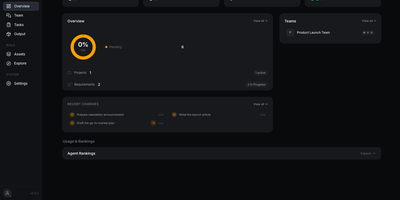
Markus is an AI workforce you run yourself: describe a goal in plain language and a team of specialist agents plans it, splits it into tasks, does the work, and reports back. A built-in Secretary agent hires agents from role templates, groups them into teams, and turns requirements into dependency-linked tasks. Work runs in parallel, each task in its own workspace, and a peer reviewer approves or sends back every delivery before it counts as done. Follow progress on a backlog table, a kanban board, or a dependency graph that shows which task unblocks which. Agents keep persistent memory, patrol their own task board around the clock, and can join team group chats or take direct messages. Connect Slack, Telegram, Discord, WhatsApp, or Feishu so people can reach agents where they already talk, and give agents browser and desktop automation through an optional Chrome extension. Pick any model provider, including Anthropic, OpenAI, Google, DeepSeek, OpenRouter, or a local Ollama server, and import skills from MCP servers or community hubs. A REST and WebSocket API, usage rankings, and an audit trail round out the control room. Running on a dedicated VPS on RepoCloud with guaranteed CPU, RAM, and SSD, full root SSH access, and a browser serial console. Apache-2.0 licensed.
Berth
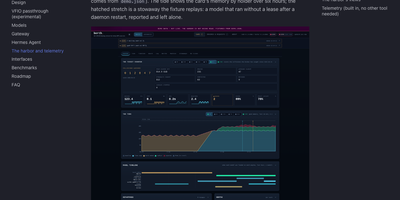
A single GPU can only hold so many models at once, and when a chat server, an image pipeline, and a voice engine all grab VRAM together, somebody runs out of memory and crashes. Berth fixes the scramble by making every engine lease the card: wrap a launch in berth run and the daemon grants memory in turn, queues the rest with an honest place in line and a start estimate, and drains a holder cleanly before the next load begins. The broker learns each engine's real footprint from its runs, so grants are sized by measured peaks instead of guesses, and processes that grab memory without a lease are reported as stowaways, never killed, with contested grants flagged in plain sight. A collisions board counts what the scheduling prevented: avoided collisions, VRAM handed off, drains, stuck releases, and refusals, and every count links back to a gap free event log you can follow live. The Harbor web UI turns that into a departures board of leases, a six hour tide of memory by holder, engine cards with decode throughput and a token ledger, plus a per model leaderboard and thirty days of stored history. Alerts reach your desktop or a webhook, Prometheus scrapes the metrics endpoint, and multi GPU machines can even pass one card through to a VM while the others keep serving. Running on a dedicated VPS on RepoCloud with guaranteed CPU, RAM, and SSD, full root SSH access, and a browser serial console. Apache-2.0 licensed.
ZenNotes
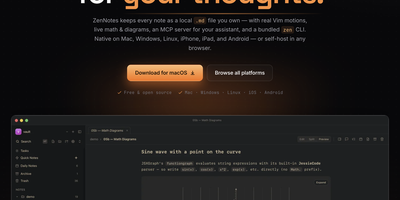
With over 2,200 GitHub stars and a philosophy that your notes should be files you own rather than rows in a database, ZenNotes is the keyboard-first Markdown editor that runs as a self-hosted web app backed by a Go server accessible from any browser on your network. Every note is a plain .md file in a vault directory you mount, with zero proprietary lock-in. Modal editing with real Vim motions, leader-key flows, and a command palette keeps your hands on the keyboard through edit, split, and preview modes. The rendering engine handles KaTeX math, Mermaid diagrams, TikZ graphics, and JSXGraph plots directly from Markdown syntax alongside wiki links and callout blocks. A first-party MCP server ships in the box with one-click integration for Claude Desktop and Cursor, letting AI assistants read and write the same Markdown files on disk without sync layers or duplicate copies. The bundled zen CLI provides note creation, search, tagging, task toggling, and piped capture with JSON output for shell scripting. Board views render plain CSV files as Kanban columns. Daily notes, quick capture, archive, and trash round out the vault workflow. The Go backend serves the browser frontend on port 7878 with token-based authentication, configurable browse roots, TLS proxy support, and file permission hardening at 0600/0700 defaults. Deploy via the multi-arch Docker image for linux/amd64 and linux/arm64. Running on a dedicated VPS on RepoCloud with guaranteed CPU, RAM, and SSD, full root SSH access, and a browser serial console. MIT licensed.
37Studio
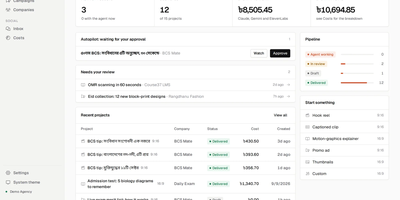
37Studio is a self-hosted AI video studio and social media desk that turns a short brief into on-brand videos, posts them to nine social platforms, and drafts replies to the messages that come back. Paste a company website and it builds a brand library of logos, photos, fonts, and colours, plus a knowledge base every later video and reply draws on. An editor agent builds each video as an animated composition, checks its own rendered frames, and takes revision requests in plain words. The same workflow yields hook reels, captioned clips, explainers, podcast clips, promo ads, and thumbnails, and any finished video can become a template. A two-hour recording becomes a shelf of short clips: transcription runs locally in about 100 languages at no cost, and YouTube or Drive links import directly. Publishing reaches Facebook Pages, Instagram, YouTube, TikTok, LinkedIn, X, Pinterest, Bluesky, and Mastodon in one action, now or scheduled, each with its own caption. Autopilot goes further: state a content plan in one sentence and a fresh video is made before every slot, waiting for one-click approval. Messenger, Instagram, and WhatsApp messages and social comments land in one inbox, with replies drafted in the customer's language under rules each brand sets. Exact AI spend shows on every project, and an MCP server lets your own AI tools run the studio. Running on a dedicated VPS on RepoCloud with guaranteed CPU, RAM, and SSD, full root SSH access, and a browser serial console. MIT licensed.
MeshCentral
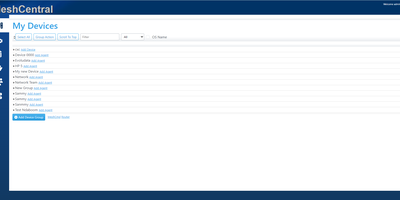
With over 7,000 GitHub stars and continuous development since 2017 by former Intel engineer Ylian Saint-Hilaire, MeshCentral has become the go-to self-hosted alternative to ConnectWise Control and Splashtop for managing devices remotely without per-seat licensing fees. The Node.js server installs via a single npm command and manages Windows, macOS, Linux, and FreeBSD endpoints through lightweight agents that maintain persistent WebSocket connections for real-time remote desktop, terminal access, and file transfer directly in the browser. Intel AMT integration provides out-of-band hardware management including power control and BIOS access even when the operating system is unresponsive. Device groups organize endpoints by location, customer, or function with granular role-based access control for multi-technician environments. Session recording captures remote desktop interactions for compliance auditing, while Wake-on-LAN powers on machines remotely across subnets. The server supports MongoDB for production deployments handling thousands of agents or the embedded NeDB for smaller setups under 200 devices, with a single 8GB VPS comfortably managing 1,500 concurrent agents. Security features include mandatory TLS with automatic Let's Encrypt certificate provisioning, multi-factor authentication via TOTP and FIDO2, SAML-based single sign-on, IP filtering, and HashiCorp Vault integration for secrets management. The web console provides real-time device monitoring with hardware and software inventory, network topology visualization, and customizable branding. TacticalRMM uses MeshCentral as its remote access layer. Running on a dedicated VPS on RepoCloud with guaranteed CPU, RAM, and SSD, full root SSH access, and a browser serial console. Apache-2.0 licensed.
farmOS
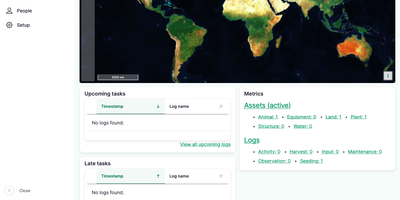
farmOS is the record book, map, and planning board for a working farm, replacing the notebook, the spreadsheet, and the whiteboard with one web app the whole crew can check from the field. The dashboard opens on a map of your land, so you click a field, a barn, or a pasture to reach every record tied to that place. Assets are the things you manage, from fields and animals to equipment and plantings, and Logs are everything that happens to them: seedings, harvests, treatments, movements, and observations, each with dates, notes, and photos. Quantities attach real numbers to those logs, such as kilograms harvested, litres applied, or hours worked, turning daily notes into yields and input costs you can compare across seasons. Quick forms make common entries fast on a phone, and upcoming or late tasks on the dashboard keep pending work from being forgotten. Plans group assets and logs around a purpose such as a grazing rotation or a season of crop production, while reports summarize the records for analysis. Crew members get their own accounts with permissions, records stay private by default, and an API plus add-on modules connect sensors and other farm tools. Running on a dedicated VPS on RepoCloud with guaranteed CPU, RAM, and SSD, full root SSH access, and a browser serial console. GPL-2.0 licensed.
OpenSign
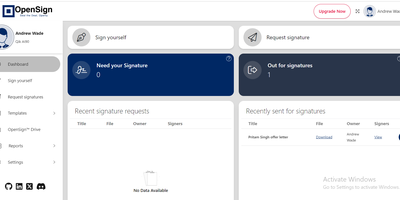
With 6,700 GitHub stars, 79 releases, and 40 contributors since its October 2023 launch, OpenSign delivers a fully free electronic signature platform that removes the per-envelope pricing and seat limits of commercial e-signing services. The React-based frontend provides a drag-and-drop interface for placing signature fields, initials, date stamps, text inputs, and checkboxes onto PDF documents, while the Parse Server backend built on Node.js handles document routing through configurable multi-signer workflows with sequential or parallel signing order. Guest signers authenticate via one-time-password email verification without requiring account creation, while registered users manage documents through OpenSign Drive — a centralized vault with folder organization and status tracking across draft, in-progress, completed, and declined states. Every signing action generates tamper-proof audit trails logging timestamps, IP addresses, email addresses, and phone numbers, culminating in a detailed completion certificate attached to the finished document. The REST API v1.2 exposes endpoints for document creation, template dispatch, self-signing, and real-time webhook notifications on document lifecycle events, with regional deployments available in US and EU. PDF templates with pre-placed widgets enable repeated dispatch to different signers in a single API call. Custom branding controls email invitation templates, signing page appearance, and completion certificate styling. Deploy via Docker Compose with MongoDB, Caddy reverse proxy, and automatic HTTPS provisioning. Running on a dedicated VPS on RepoCloud with guaranteed CPU, RAM, and SSD, full root SSH access, and a browser serial console. AGPL-3 licensed.