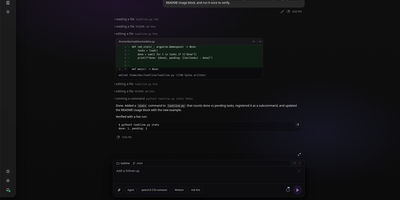
Coddy
A single static binary is all it takes to put a tireless AI agent on your server, ready to read your codebase, run shell commands, edit files, and report back through a web UI, a terminal console, your editor, or a Telegram chat. Start it as a server and the embedded web interface gives you streaming chat sessions with visible tool calls, session history, plan documents, a background task board, and a visual map of connected nodes. Point any OpenAI-compatible client at its HTTP API, or drive the same sessions from Zed, VS Code, or Obsidian through the built-in ACP editor server. Delegate bounded work to subagents that run in isolated contexts with narrowed permissions, then resume them later in their own sessions if a run stops short. Teach it your project once: rules are picked up from .coddy, .cursor, .claude, and .codex folders, AGENTS.md files are honored as work proceeds, and installable skill packs turn repeatable procedures into slash commands. Schedule recurring jobs as plain Markdown files on a cron timetable, keep long-term memory across conversations, and connect external tool servers over MCP globally or per workspace. A Prometheus exporter reports provider calls, tokens, and task health for the whole fleet. Running on a dedicated VPS on RepoCloud with guaranteed CPU, RAM, and SSD, full root SSH access, and a browser serial console. MIT licensed.
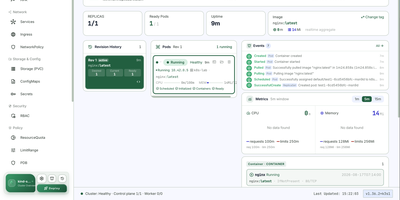
AliangBoard
AliangBoard puts every Kubernetes cluster you run behind one web panel, where you manage resources yourself or ask an AI agent to do it with your approval. Connect each cluster with a bearer token or basic auth and the panel persists the connection, so switching clusters, namespaces, and workloads takes one click instead of another kubeconfig. More than thirty resource types stay in sync: create workloads, services, ingress, config, storage, and RBAC through structured forms, edit anything as YAML, apply multi-document manifests at once, and delete optimistically with automatic rollback when the API refuses. Pod work goes deep: a tmux-backed exec terminal survives browser refreshes, port-forwards resolve services to their backend pods, files move up and down with progress, and debug containers inject into running pods without restarting them. Day-two operations are buttons, not flag memorization: scale, rolling restart, rollout undo, manual CronJob triggers, and node cordon or drain. Global search, a layered namespace topology, live event streams, and CPU and memory metrics keep orientation effortless. Then there is the operator: an Agent workbench and MCP server let your LLM read logs, debug containers, and propose changes in natural language, while every write waits for a human click and lands in an audit log that names who did what. Running on a dedicated VPS on RepoCloud with guaranteed CPU, RAM, and SSD, full root SSH access, and a browser serial console. Apache-2.0 licensed.
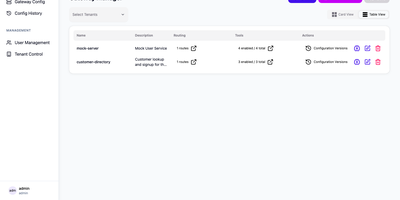
Unla
Unla puts a friendly front door on every API you already run, so AI clients can call it as an MCP server without anyone writing a line of glue code. Describe an endpoint in YAML or the form editor, name its arguments, choose where each one goes in the request, and the gateway exposes it as a tool over SSE or streamable HTTP. Import an OpenAPI file to generate a whole server at once, or proxy a third-party MCP server and route it under a prefix of your choice. The Gateway Manager shows every server as a card or table row with its routes, enabled tools, and tool counts. Every save creates a numbered config version with its author and timestamp, so changes are easy to audit and roll back. Tenants keep teams separate, user accounts carry roles, and CORS settings sit next to each route. Configuration hot reloads, syncs across replicas, and persists to disk, SQLite, PostgreSQL, or MySQL. Running on a dedicated VPS on RepoCloud with guaranteed CPU, RAM, and SSD, full root SSH access, and a browser serial console. MIT licensed.
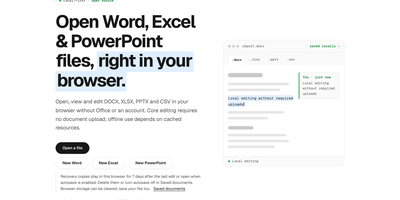
Online Document Editor
Open a browser tab and a full office suite appears, with no account to create and your files kept on your own device. Start a new Word document, spreadsheet, or presentation, or drop in a file, and edit with the familiar ribbon: styles and bullets in documents, formulas and charts in sheets, slides with layouts and notes. PDFs open for reading, commenting, highlighting, and filling, then save back out. Convert Word, Excel, and PowerPoint files to PDF, or move spreadsheets to CSV and back, without uploading a byte. An optional AI assistant, off by default, can rewrite, summarize, or translate a passage, fill spreadsheet cells, draft slides, or answer questions about a PDF page, using an on-device model or an AI service you connect. WebMCP tools let compatible browser agents open, convert, and export documents. Recovery copies stay in the browser for seven days, autosave can be switched off, and the site installs as a PWA for offline use. Host it as one static container or embed the editor in your own app through an iframe API. Running on a dedicated VPS on RepoCloud with guaranteed CPU, RAM, and SSD, full root SSH access, and a browser serial console. AGPL-3.0 licensed.
Activepieces
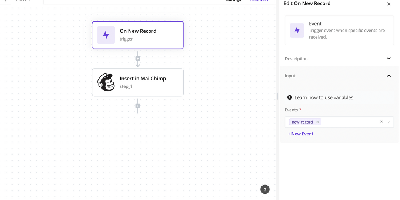
Zapier's job, on your own server: Activepieces is an open-source workflow automation platform built to be exactly that replacement. Flows are built in a visual no-code editor with triggers, actions, loops, conditional branches, auto-retries, raw HTTP steps, and code steps that run JavaScript or TypeScript with full npm package support. Integrations are "pieces" - type-safe TypeScript npm packages with hot reloading for local development - and the catalog spans 600+ services, with the large majority contributed by the community. The platform is AI-first in two directions: native AI pieces call OpenAI, Anthropic, Google, and Azure models inside flows, and every piece automatically doubles as an MCP server, so assistants like Claude Desktop and Cursor can invoke your integrations and workflows through natural language. A built-in MCP server also exposes 30 tools for building flows, managing tables, and running tests agentically. Flows are fully versioned with draft and locked states. The core is MIT-licensed and runs on TypeScript with PostgreSQL and Redis.
Chatty
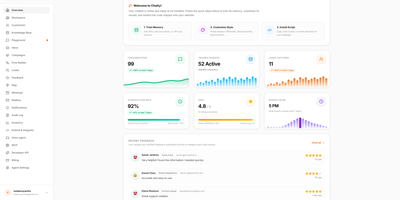
When a customer asks a question on your website, WhatsApp, Telegram, Messenger, Instagram, TikTok, SMS, or email, the Chatty AI agent answers from your own content and hands the chat to a person on request. Its knowledge base ingests PDF, DOCX, CSV, and text files plus crawled sites and sitemaps, and a WooCommerce connection looks up order status, live stock, and cart links. The agent captures leads into a CRM with CSV export and books meetings with Google Meet, Microsoft Teams, or Zoom links. A shared inbox streams conversations live, shows SLA breach warnings, and lets a human take over a thread with one click. A drag-and-drop flow builder adds rule-based paths with time-of-day conditions, webhooks, and an AI copilot that drafts the graph. Proactive campaigns fire on exit intent, time on page, or scroll depth, and a five-pillar scorecard grades conversion, deflection, accuracy, reliability, and satisfaction. An optional voice agent holds real-time spoken conversations with instant interruption and live transcripts, an 81-tool MCP server lets Claude, Cursor, or Codex run the dashboard, and each bot can use your own Gemini, OpenAI, Anthropic, Groq, or OpenRouter key. Running on a dedicated VPS on RepoCloud with guaranteed CPU, RAM, and SSD, full root SSH access, and a browser serial console. MIT licensed.
Ferret
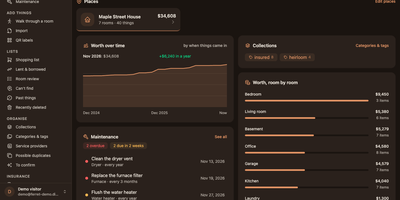
From the tent in the garage to the warranty on the fridge, Ferret keeps one searchable home inventory that your household runs on its own server. Properties, rooms, and boxes hold things with photos, receipts, manuals, serial numbers, and prices, and a quick add accepts a photo, a barcode scan, or a picture of a whole room to sort through. Printed QR labels on boxes and shelves open the list of what is inside. Warranties count down to the last day with a claim shortcut, return windows warn before they close, and maintenance repeats by date or by use, with reminders and how-to videos. Stock levels feed a shopping list, a lending log remembers who borrowed the saw, and a replacement forecast estimates what wears out and when. An insurance report totals value by room and category, exports PDF and spreadsheet files, and can be shared by link. Households have owners, admins, members, and read-only viewers, with invitations and single sign-on. Optional AI reads receipts, suggests details from photos, and answers questions in plain words, while a built-in MCP server lets Claude search, add, and update items with a key that can be read-only. Running on a dedicated VPS on RepoCloud with guaranteed CPU, RAM, and SSD, full root SSH access, and a browser serial console. MIT licensed.
MetaMCP
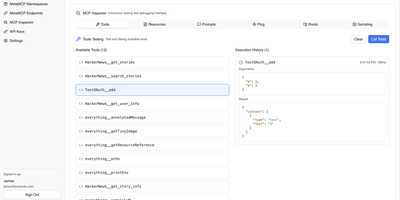
With 2,600+ GitHub stars, MetaMCP solves the MCP server sprawl problem by aggregating any number of upstream servers into a single authenticated endpoint that any MCP client connects to once. Group servers into namespaces — development tools in one, data sources in another — then publish each namespace as its own SSE, Streamable HTTP, or OpenAPI endpoint with API-key authentication in headers or query parameters, or full OAuth per the MCP Spec 2025-06-18 standard. The aggregation engine discovers tools, resources, and prompts from all active servers in parallel, prefixes tool names with server identifiers to prevent collisions, and applies configurable middleware including tool filtering to reduce context-window bloat and description overrides to improve LLM comprehension. The web management UI lets you configure MCP servers with stdio, SSE, or Streamable HTTP transports, toggle servers active or inactive per namespace, create and revoke API keys per endpoint, and inspect discovered tools with their schemas. Nested MetaMCP support enables hierarchical architectures where one MetaMCP instance consumes another, creating multi-level tool organization with automatic name resolution. Compatible with Claude Desktop, Claude Code, Cursor, Open WebUI, and any MCP-compatible client through a single connection URL. The Docker container packages the TypeScript backend with PostgreSQL for configuration persistence, exposing the management UI on port 12005 and MCP endpoints on configurable ports. Running on a dedicated VPS on RepoCloud with guaranteed CPU, RAM, and SSD, full root SSH access, and a browser serial console. MIT licensed.
Imbo
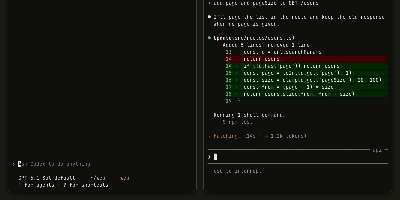
Your coding agents work in separate terminals and cannot ask each other anything; Imbo gives Claude Code, Codex, opencode, Cursor CLI, and six other agent tools one shared messaging network, so a session can send a question to another session and get an answer while both keep working. Messages land inside the receiving session mid-task, and a reply wakes an idle session so it can act on the answer. You add people by account ID, and their agents can message yours; group chats let several sessions from several people coordinate on one brief, with every reply reaching every member. Sessions can send files that land in the receiving machine's ~/.imbo/files folder, and an agent asks you first before sending your data out, deleting files, spending money, or touching production. From the web app or the iPhone app you can message your own sessions from anywhere, and a closed Claude Code session reopens in the background to pick the message up. The server is a single binary with a bundled PostgreSQL, HTTPS through Let's Encrypt, email code sign-in, and optional domain restrictions on who may register. Running on a dedicated VPS on RepoCloud with guaranteed CPU, RAM, and SSD, full root SSH access, and a browser serial console. Apache-2.0 licensed.
Platypus
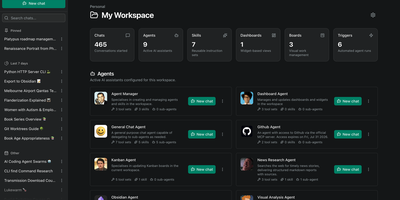
Platypus gives a whole team always-on AI agents that reason, call tools, and keep working on your own servers while everyone is offline. Build an agent once by choosing a provider and model, writing its instructions, and capping its tool-calling loop, then reuse that preset across chats and scheduled runs. Agents load reusable Skills on demand and delegate specialist work to sub-agents that appear to the parent as tools. Connect local and remote data through Model Context Protocol servers, or expose an agent to outside agents and chat platforms through A2A endpoints with a token per client. Triggers run agents on a cron schedule, as one-off jobs, or when workspace events such as a card moving on a board occur, and every run records its result. Kanban boards give agents work they can move and update themselves, while notifications and HMAC-signed webhooks push board and workspace events into your own systems with filtering and retries. Facts and preferences are extracted from conversations in the background and injected into future chats, so returning users are remembered. Sandbox backends give agents shell and filesystem access inside an isolated per-workspace environment instead of the host. Organizations and workspaces keep each team's agents and data separate, and blueprints package shared agents, skills, MCP servers, and providers so a new workspace starts pre-equipped. Running on a dedicated VPS on RepoCloud with guaranteed CPU, RAM, and SSD, full root SSH access, and a browser serial console. MIT licensed.
Sara
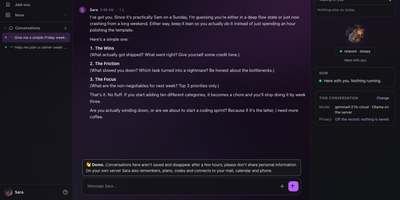
Meet Sara, an AI companion with a personality you design and a coding partner that writes, runs, and tests real software, using any model you choose. Pick a name and pronouns, start from a character or set dials for playfulness and bluntness, and keep memories you can inspect, correct, and forget. Chat from the web app, Windows and Mac apps, Android, iPhone, Telegram, Discord, Signal, or email, and talk through live voice calls you can interrupt or video calls with her moving portrait. A planner turns plain sentences into to-dos, reminders, and notes, with a board, a Today home screen, and routines such as a morning briefing. The library reads PDFs, scans, Word, Excel, PowerPoint, and e-books, then answers with the document and page it came from. For code, each project gets a sandboxed workspace with files, a shell, and git; Sara asks before risky commands, shows test results as cards, and lists every command and its output under each reply. Goals finish only when your own check passes. Use Ollama, vLLM, or llama.cpp locally, connect OpenAI, Anthropic, xAI, or OpenRouter, or reuse the ChatGPT and Claude plans you already pay for. Connect coding agents over MCP, call an OpenAI-compatible API, and add plugins from a signed store. Business workspaces add passkeys, roles, and shared workspaces. Running on a dedicated VPS on RepoCloud with guaranteed CPU, RAM, and SSD, full root SSH access, and a browser serial console. MIT licensed.
Signet
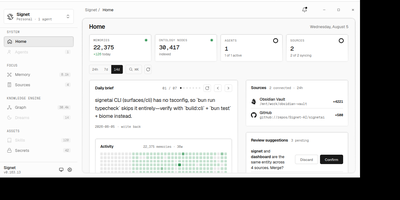
Give every AI agent you use the same memory, and a coding session stops starting from zero each time the tool changes. Signet runs as a daemon that captures transcripts, imported documents and connected sources, then builds a structured map of the people, projects, facts and relationships inside that history through a background process called dreaming. Each connection links back to its source passage, so an agent can trace a recalled fact to the exact transcript or file that produced it. Hooks, plugins and MCP integrations feed relevant memory into Claude Code, Codex, OpenCode, Gemini CLI, Kimi Code, Pi and more before the next prompt begins, and the same memory follows the work when the harness changes. Agents can also leave messages for each other through Signet, delivered at the start of the recipient's next session. The browser dashboard presents a daily brief, recent memories, a searchable memory graph, source connections and system status, plus a chat that answers questions over the memory with citations to the underlying records. Imports cover Word, PowerPoint, Excel, PDF, EPUB, CSV and web pages, with Notion databases and Discord channels syncing into the same graph. Per-agent read isolation, encrypted secrets and credential redaction keep sensitive material bounded. Running on a dedicated VPS on RepoCloud with guaranteed CPU, RAM, and SSD, full root SSH access, and a browser serial console. Apache-2.0 licensed.
Agentring
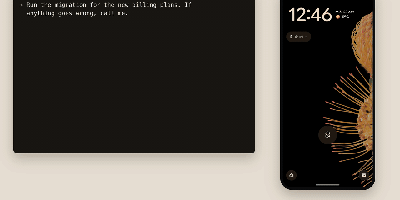
"Run the migration and call me if anything fails" is an instruction your agent can finally obey, because Agentring is the self-hosted bridge that lets AI agents ring your phone and talk it through with you. When an agent needs a decision, hits a wall, or finishes a long job, your phone rings even locked and in Doze; a realtime voice AI explains why it is calling, answers your questions, and hands the transcript back so the agent carries on with your decision. You can also call your agents back from the Android app and ask what CI said while driving; the voice AI can consult your other agents mid-call, and a slow answer arrives when ready, or as a message if you have hung up. A missed call turns into a message you can answer from the notification. Anything that speaks MCP can reach you, including Claude Code, Codex, opencode, OpenClaw, and Hermes, and scripts or n8n reach you through the REST API and CLI. Pick your voice: Gemini Live by default, OpenAI Realtime, Grok Voice, Phonic, or your own local speech server with no key at all. The relay and LiveKit run in one Docker Compose behind Caddy, the daemon sits beside your agents and connects outbound only, and FCM push wakes the locked phone. No phone numbers, no Twilio, no per-minute fees. Running on a dedicated VPS on RepoCloud with guaranteed CPU, RAM, and SSD, full root SSH access, and a browser serial console. Apache-2.0 licensed.
OpenPencil
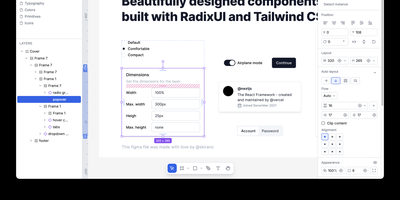
OpenPencil is the open-source design editor that reads and writes native Figma .fig files using the same Kiwi binary format — enabling bidirectional copy-paste between Figma and OpenPencil without data loss. The built-in AI assistant provides 90+ design tools through a chat interface, creating and modifying shapes, fills, strokes, auto-layout, components, variables, and boolean operations from natural language prompts, with BYOK support for Anthropic, OpenAI, Google AI, OpenRouter, Z.ai, MiniMax, and compatible endpoints. A Skia CanvasKit WASM renderer paired with Yoga WASM layout engine delivers Figma-parity rendering with flex and CSS Grid support including gap, padding, and alignment. The headless CLI inspects node trees via XPath queries, lints naming and accessibility, converts between document formats, analyzes color and typography patterns, extracts design tokens, and exports to PNG, SVG, JSX/Tailwind, and HTML. An MCP server exposes all design operations over stdio and HTTP, connecting Claude Code, Cursor, Windsurf, and Gemini CLI for AI-assisted design automation. Real-time P2P collaboration via WebRTC with Yjs CRDT synchronization requires no server and no account. The Vue SDK provides headless components for embedding the editor into custom applications. Ships as a 7 MB Tauri v2 desktop app for macOS, Windows, and Linux, or runs in any browser as a PWA. Running on a dedicated VPS on RepoCloud with guaranteed CPU, RAM, and SSD, full root SSH access, and a browser serial console. MIT licensed.
MCPHub
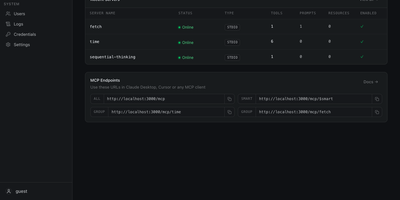
One endpoint for every MCP server you run: MCPHub gathers local and remote Model Context Protocol servers behind stable URLs, so AI clients connect once and see what you allow. Claude Code, Cursor, and Cherry Studio can use four routes: everything at /mcp, a named group at /mcp/{group}, one server at /mcp/{server}, or semantic tool search at /mcp/$smart. Smart routing runs vector search on PostgreSQL with pgvector and an OpenAI-compatible key, so the model gets a shorter tool list. Servers attach over stdio, SSE, or streamable HTTP, OpenAPI services can be wrapped as MCP tools, and changes apply without downtime. In the other direction, MCP tools can be exported as an OpenAPI 3.0.3 spec for OpenWebUI and other OpenAPI clients. Bearer keys, OAuth 2.0 (client and server modes), and GitHub or Google sign-in in database mode control access, with per-user visibility for servers and groups. Encrypted per-user credentials let one shared server use each person's own key. Logs show tool-call activity, request status, and latency, health checks track each connection, and the dashboard controls which tools, prompts, and resources each server exposes. Large text tool results can be compressed, interactive MCP Apps are proxied through MCPHub routes, and a built-in market lets you browse a server catalog. Typical uses include a team-wide gateway, per-project groups, and direct single-server routes for debugging. Running on a dedicated VPS on RepoCloud with guaranteed CPU, RAM, and SSD, full root SSH access, and a browser serial console. Apache-2.0 licensed.
AsoBeast
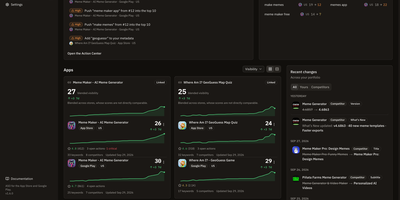
AsoBeast keeps score of your app in the App Store and Google Play, so you always know which keywords you rank for, which ones moved, and what to fix next. Paste a store URL and tracking starts on import: rankings are checked daily in your home storefront and any other market you add, and every keyword is scored for popularity, difficulty, and opportunity so you can tell a winnable term from a vanity one. The dashboard leads with your keywords in the top 10, this week's movement, and an Action Center that turns the data into specific moves, like defending a keyword where two new rivals just entered the top 10, with the reason and the fix spelled out beside each item. Competitor listings are diffed over time, so a rival's new title, subtitle, version, or release notes show up as a before-and-after entry instead of a surprise. Metadata snapshots keep the raw store payload, localization and keyword field analysis shows wasted words, reviews feed the audit score, and the same data is exposed to your AI tools through the built-in MCP server. Registration closes itself once your owner account exists, and store requests run from your own server. Running on a dedicated VPS on RepoCloud with guaranteed CPU, RAM, and SSD, full root SSH access, and a browser serial console. AGPL-3.0 licensed.
GoRaven
GoRaven transforms AI chat from a question-answer window into a full engineering workstation where agents read files, write code, run shell commands, query databases via MCP tools, and deliver structured results — orchestrating across OpenAI, Claude, DeepSeek, Gemini, Qwen, GLM, and Ollama with task-based routing that allocates the right model for each job based on cost and capability. Built on a Go backend using the Freedom framework with Iris HTTP and a React/TypeScript frontend powered by Vite and Tailwind CSS, each user operates in an isolated workspace with team-shared project areas and centrally managed model quotas. The skill marketplace packages prompts, scripts, and workflows as reusable installable units with automatic dependency resolution and centralized versioning. MCP toolchain integration connects agents to internal APIs, databases, private services, and CLI tools so they query data, invoke services, and trigger actions directly. RAG-powered knowledge bases ingest policies, documentation, and business data for real-time retrieval during planning, coding, and Q&A with source attribution. Long-running task support decomposes complex work through a main agent coordinating sub-agents that execute in parallel across sessions. Plugin hooks inject custom logic at conversation start and end, tool calls, and SSE event streams without forking core code. The operations dashboard tracks usage metrics, model consumption, and team activity. Supports SQLite, MySQL, or PostgreSQL with Redis or local memory caching. Deploy with a single Docker command. Running on a dedicated VPS on RepoCloud with guaranteed CPU, RAM, and SSD, full root SSH access, and a browser serial console. Apache 2.0 licensed.
Nightingale
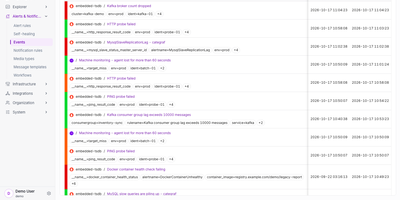
When a query crosses its threshold, Nightingale, a self-hosted alerting engine, decides who hears about it and how, without moving data out of the stores you already run. Rules use PromQL, log queries, or SQL against Prometheus, VictoriaMetrics, Elasticsearch, Loki, ClickHouse, MySQL, or PostgreSQL, graded S1, S2, or S3 with a for-duration that absorbs brief spikes. Existing Prometheus alert rules import from YAML. Business groups give each team its own rules and dashboards, and sign-in works through OIDC, OAuth2, LDAP, or CAS. Once a rule fires, mute rules silence the noise, subscriptions add recipients, and event pipelines rewrite labels or route conditionally. Delivery reaches Slack, PagerDuty, Discord, Telegram, Jira, email, DingTalk, Feishu, WeCom, SMS, and voice calls, plus HTTP webhooks and scripts for anything else. Evaluation records, active and historical events, and notification results show what happened at each step. If an alert misbehaves, the built-in AI agent explains why it fired or never arrived, and it drafts rules, dashboards, and mutes from plain-language requests. Claude Code, Cursor, and other MCP clients can query alerts and manage alerting through /mcp, read-only by default and bound by the caller's own permissions. At remote sites, n9e-edge keeps evaluating and notifying when the link to the center drops. Running on a dedicated VPS on RepoCloud with guaranteed CPU, RAM, and SSD, full root SSH access, and a browser serial console. Apache-2.0 licensed.