Categories
Developer Tools API Gateway Model Context Protocol Proxy AI Infrastructure Middleware MCP GatewayStars
Forks
Watchers
Developer links
MetaMCP
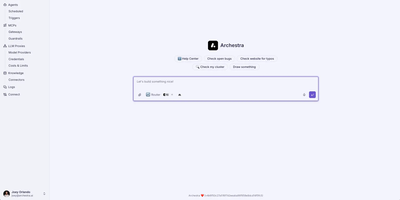
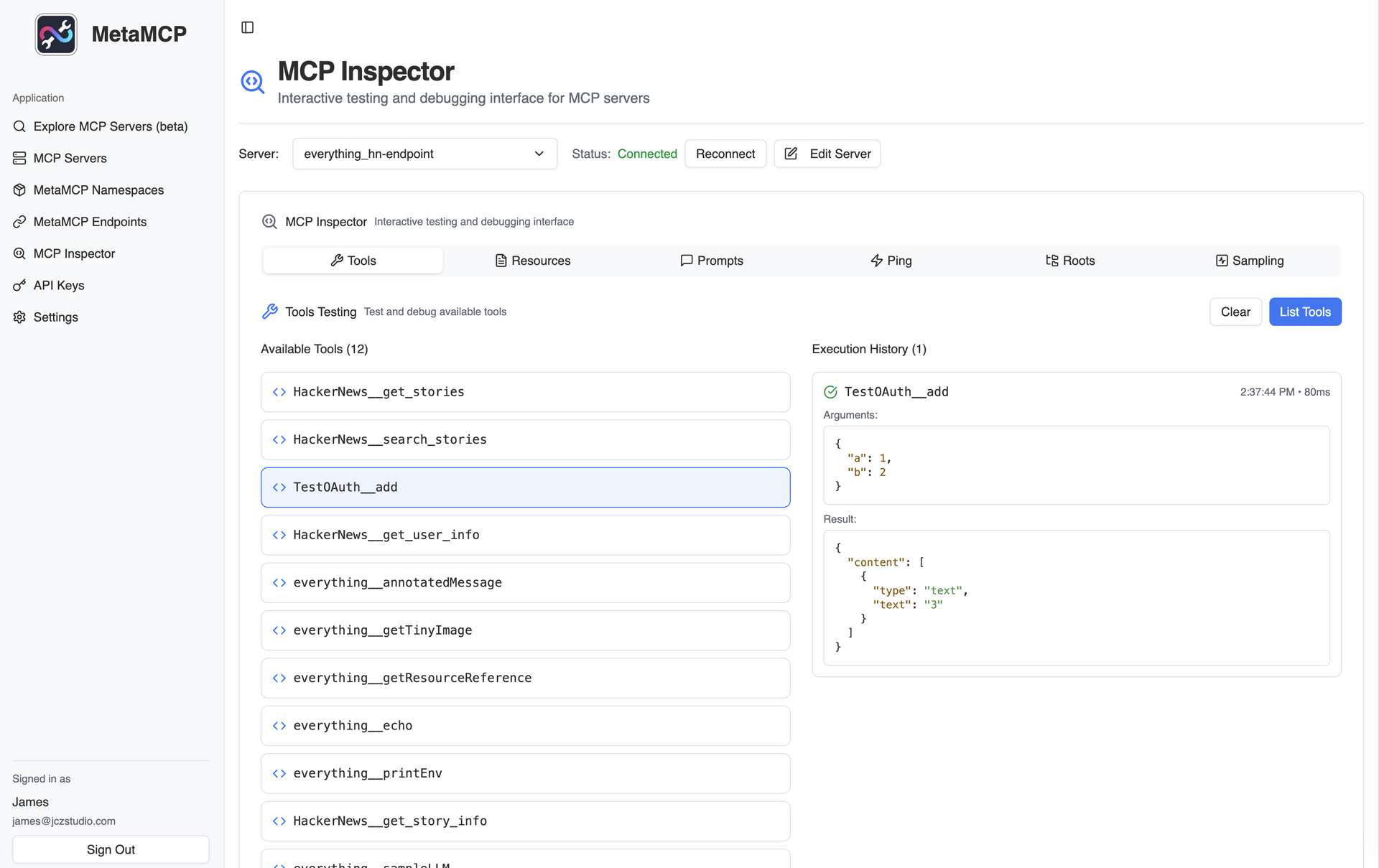
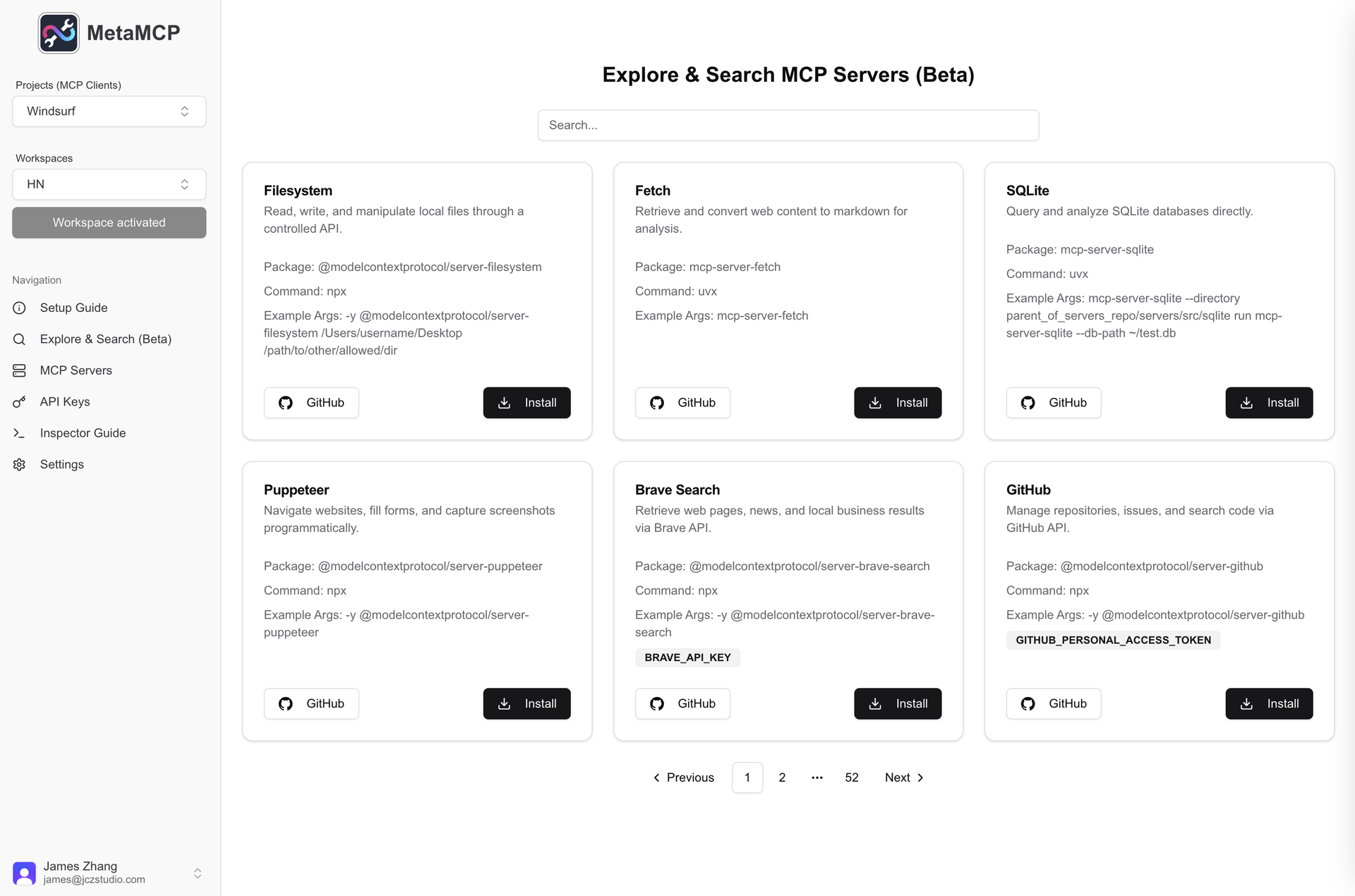
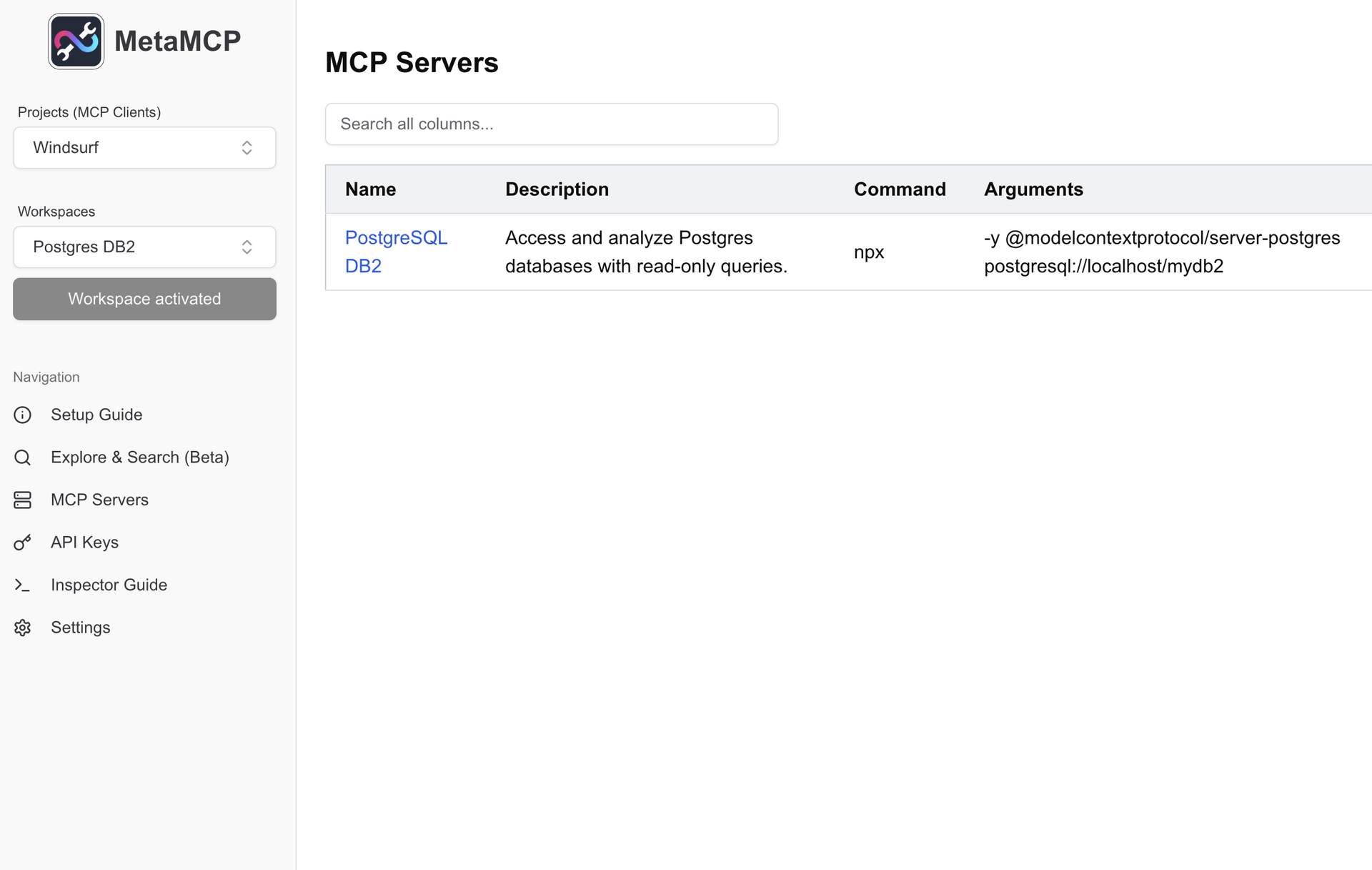
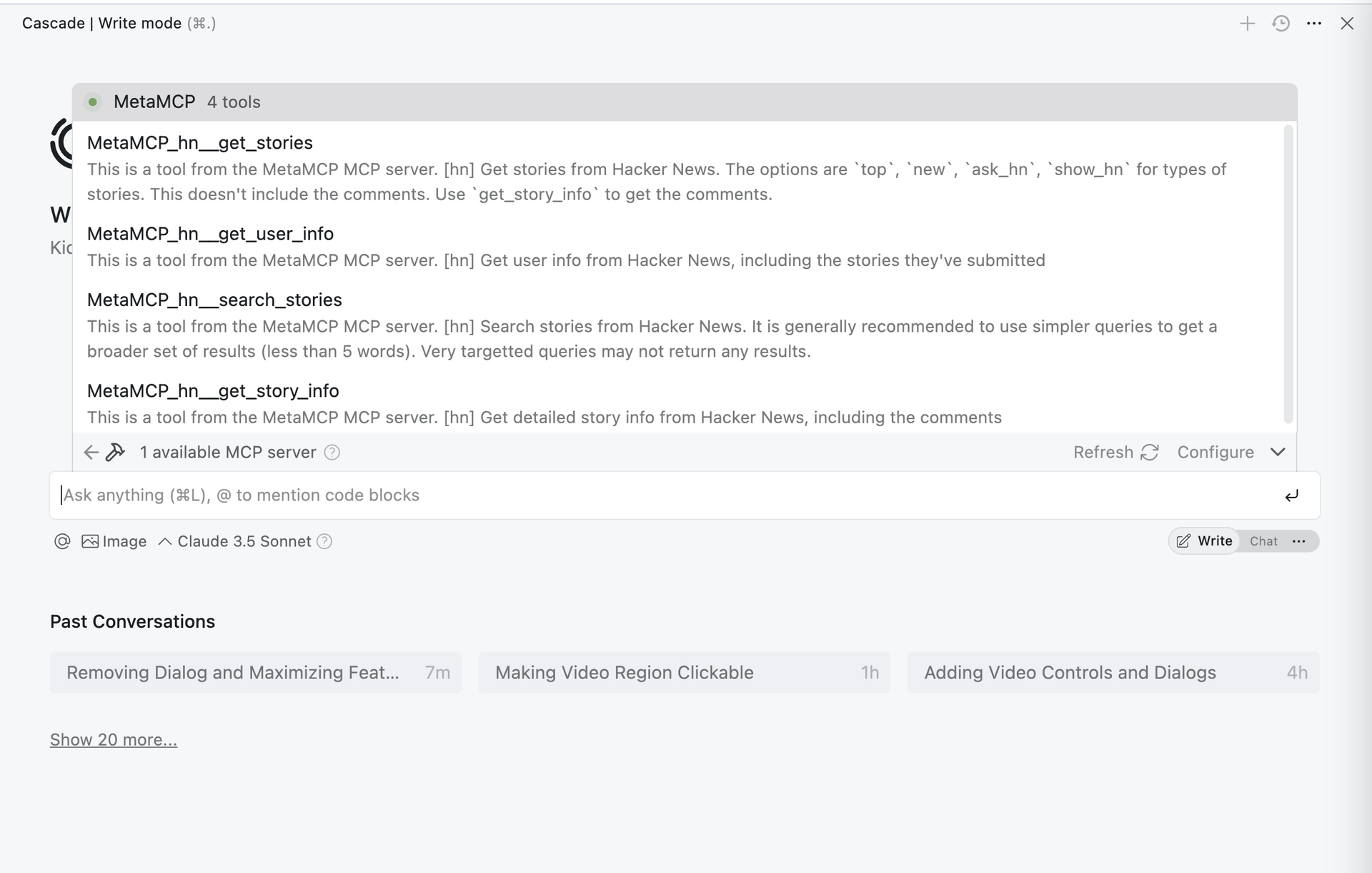
With 2,600+ GitHub stars, MetaMCP solves the MCP server sprawl problem by aggregating any number of upstream servers into a single authenticated endpoint that any MCP client connects to once. Group servers into namespaces — development tools in one, data sources in another — then publish each namespace as its own SSE, Streamable HTTP, or OpenAPI endpoint with API-key authentication in headers or query parameters, or full OAuth per the MCP Spec 2025-06-18 standard. The aggregation engine discovers tools, resources, and prompts from all active servers in parallel, prefixes tool names with server identifiers to prevent collisions, and applies configurable middleware including tool filtering to reduce context-window bloat and description overrides to improve LLM comprehension. The web management UI lets you configure MCP servers with stdio, SSE, or Streamable HTTP transports, toggle servers active or inactive per namespace, create and revoke API keys per endpoint, and inspect discovered tools with their schemas. Nested MetaMCP support enables hierarchical architectures where one MetaMCP instance consumes another, creating multi-level tool organization with automatic name resolution. Compatible with Claude Desktop, Claude Code, Cursor, Open WebUI, and any MCP-compatible client through a single connection URL. The Docker container packages the TypeScript backend with PostgreSQL for configuration persistence, exposing the management UI on port 12005 and MCP endpoints on configurable ports. Running on a dedicated VPS on RepoCloud with guaranteed CPU, RAM, and SSD, full root SSH access, and a browser serial console. MIT licensed.
Benefits
- One URL for All MCP Servers
- Aggregate dozens of MCP servers into a single authenticated endpoint. Clients connect once and access every tool across all servers without individual connection configuration for each upstream.
- Reduce Context Window Bloat
- Tool filtering middleware lets you expose only the tools each client needs, preventing large tool catalogs from consuming valuable context window tokens and improving LLM tool selection accuracy.
- Namespace-Based Team Organization
- Group servers into logical namespaces — development, data, communication — and publish each as an independent endpoint with its own authentication, enabling team-scoped or project-scoped tool access.
- Any Transport, Any Client
- Supports SSE, Streamable HTTP, and OpenAPI output transports connecting Claude Desktop, Claude Code, Cursor, Open WebUI, and any MCP-compatible client through a standard authenticated URL.
Features
- Parallel Server Aggregation
- Discovers tools, resources, and prompts from all active namespace servers concurrently, with server-name prefixing to prevent tool name collisions across providers.
- OAuth and API-Key Auth
- Endpoints authenticate via API keys in headers or query parameters, or through full OAuth flows per MCP Spec 2025-06-18 for secure multi-tenant access control.
- Tool Middleware Engine
- Configurable middleware applies tool filtering, description overrides, and name transformations after aggregation, customizing the tool surface each client sees.
- Web Management Interface
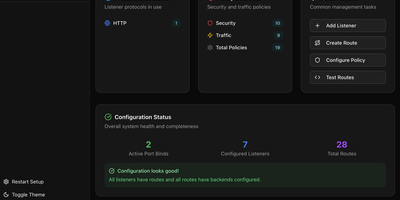
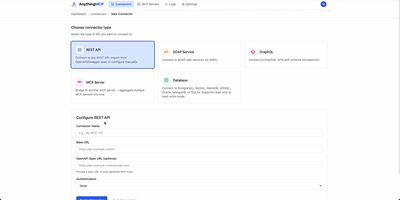
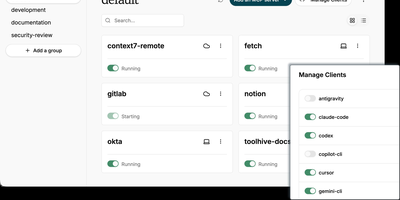
- Browser-based UI for configuring upstream servers, managing namespaces and endpoints, creating API keys, and inspecting discovered tool schemas with live connectivity status.
- Nested MetaMCP Support
- One MetaMCP instance can consume another as an upstream server, enabling hierarchical multi-level tool organization with automatic nested name resolution across deployment tiers.