Categories
Developer Tools AI Agents Observability TypeScript Access Control Model Context Protocol MCP Gateway Tool RoutingStars
Forks
Watchers
Developer links
MCPHub
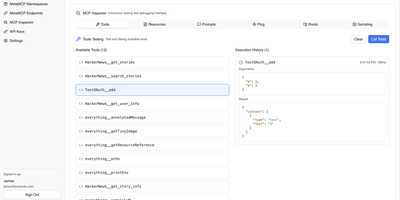
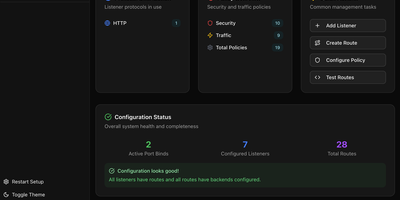
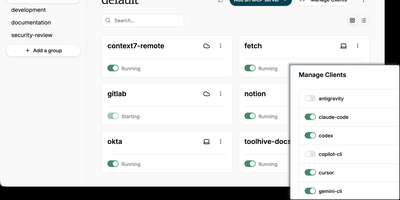
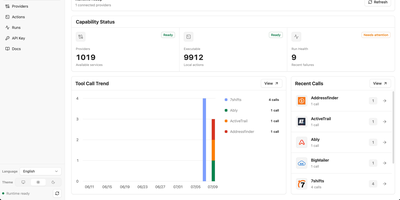
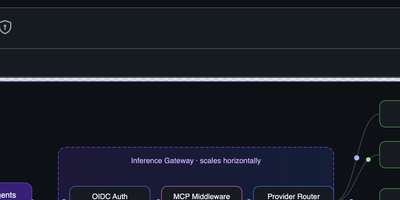
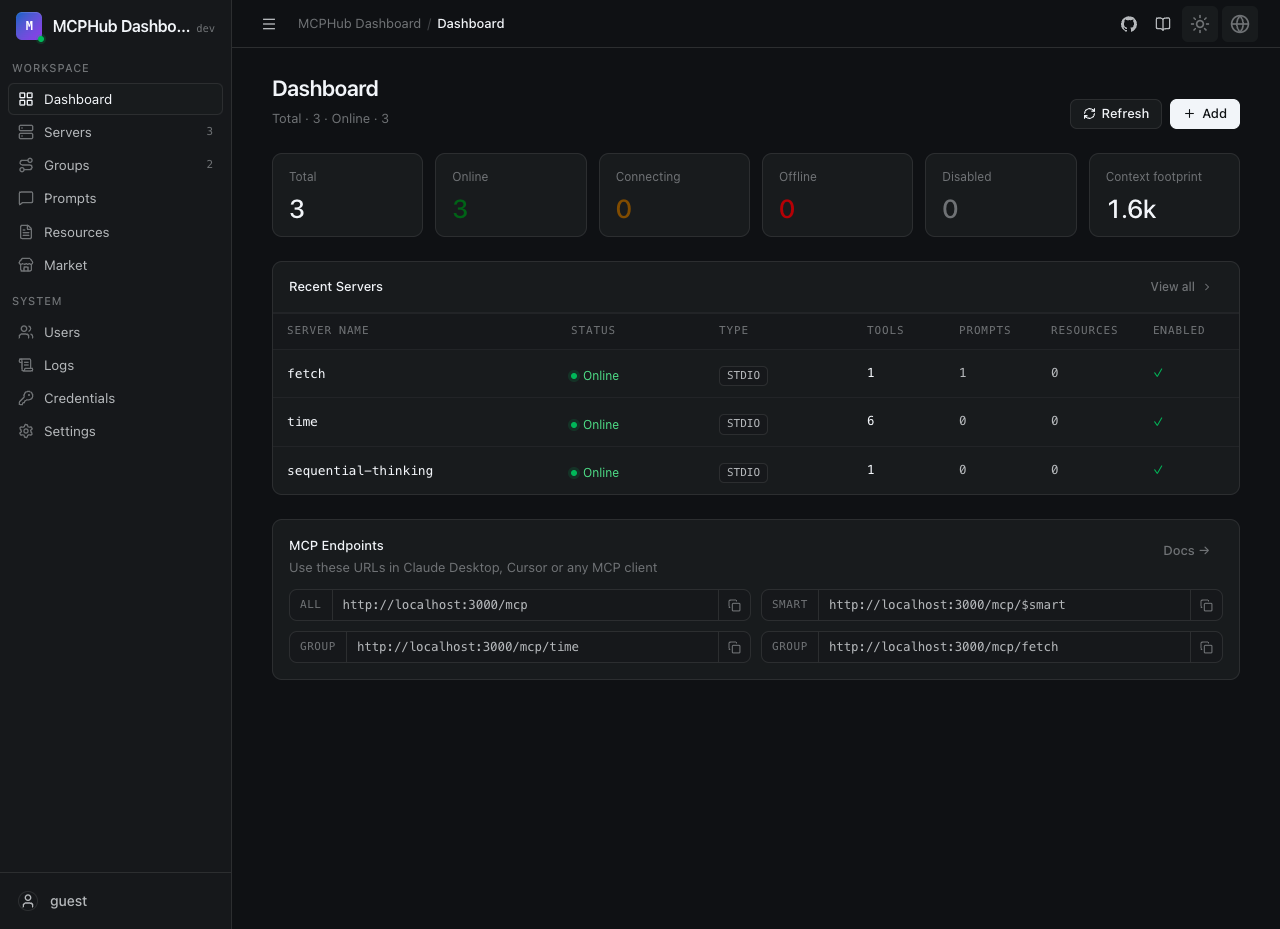
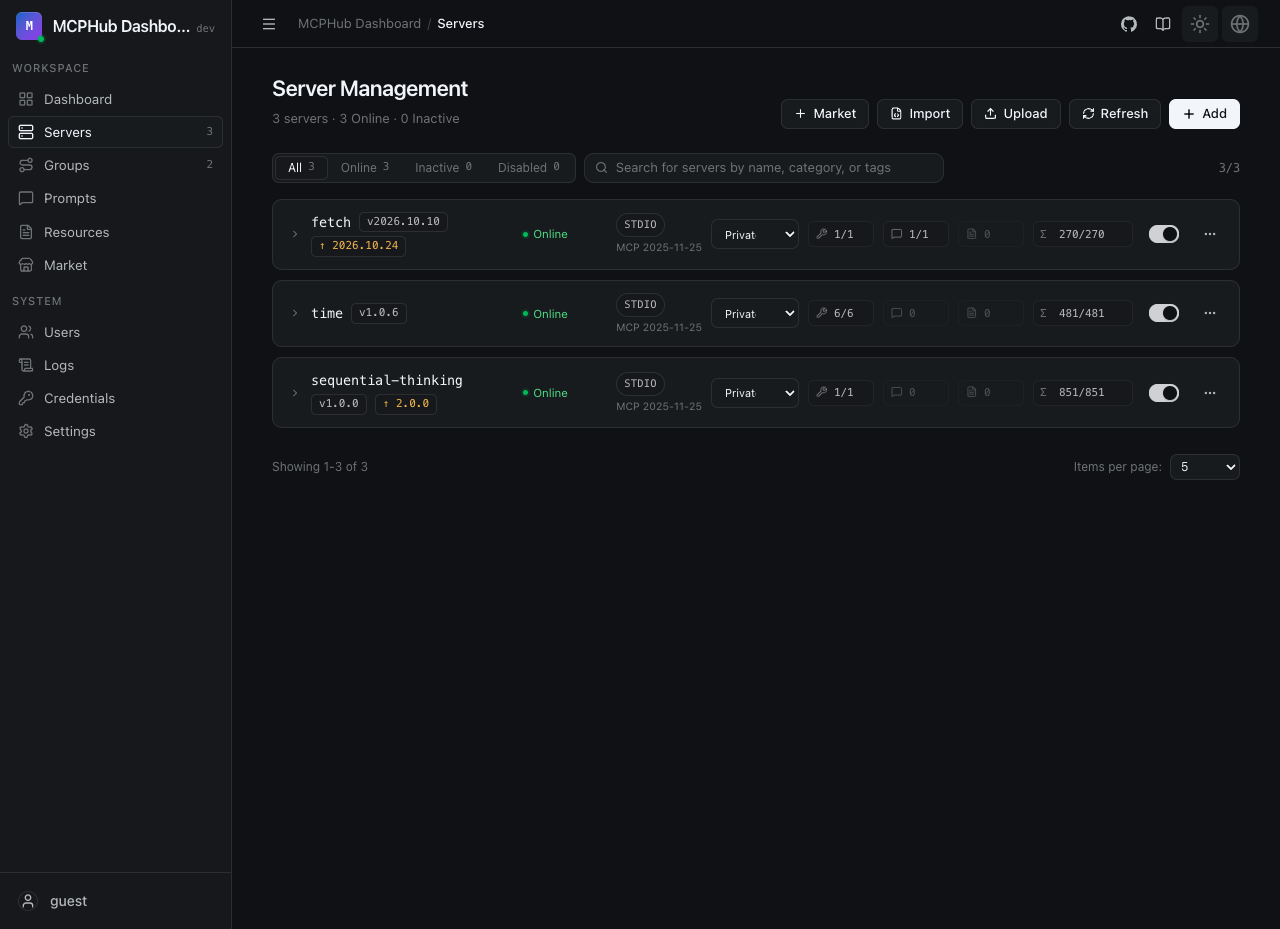
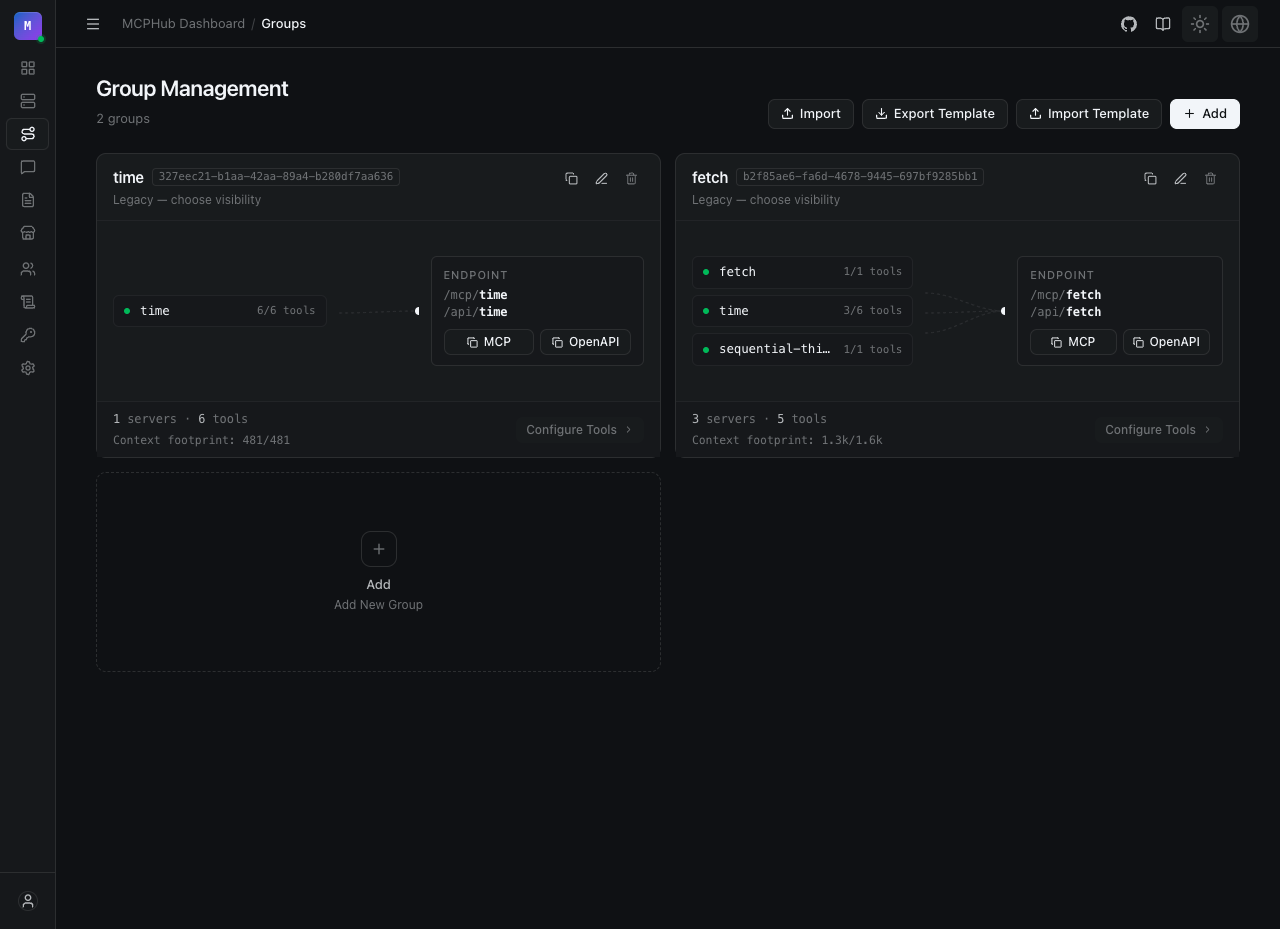
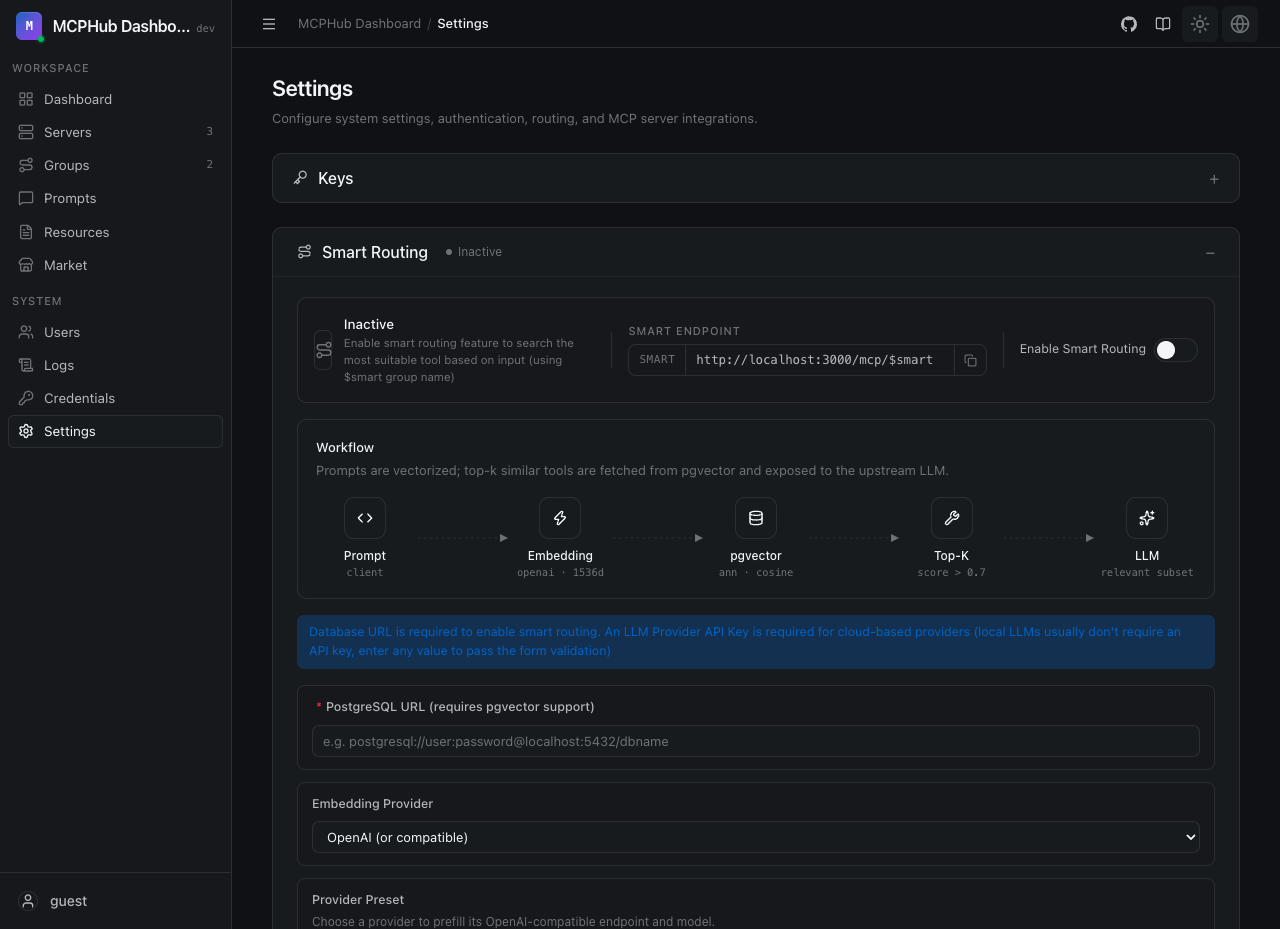
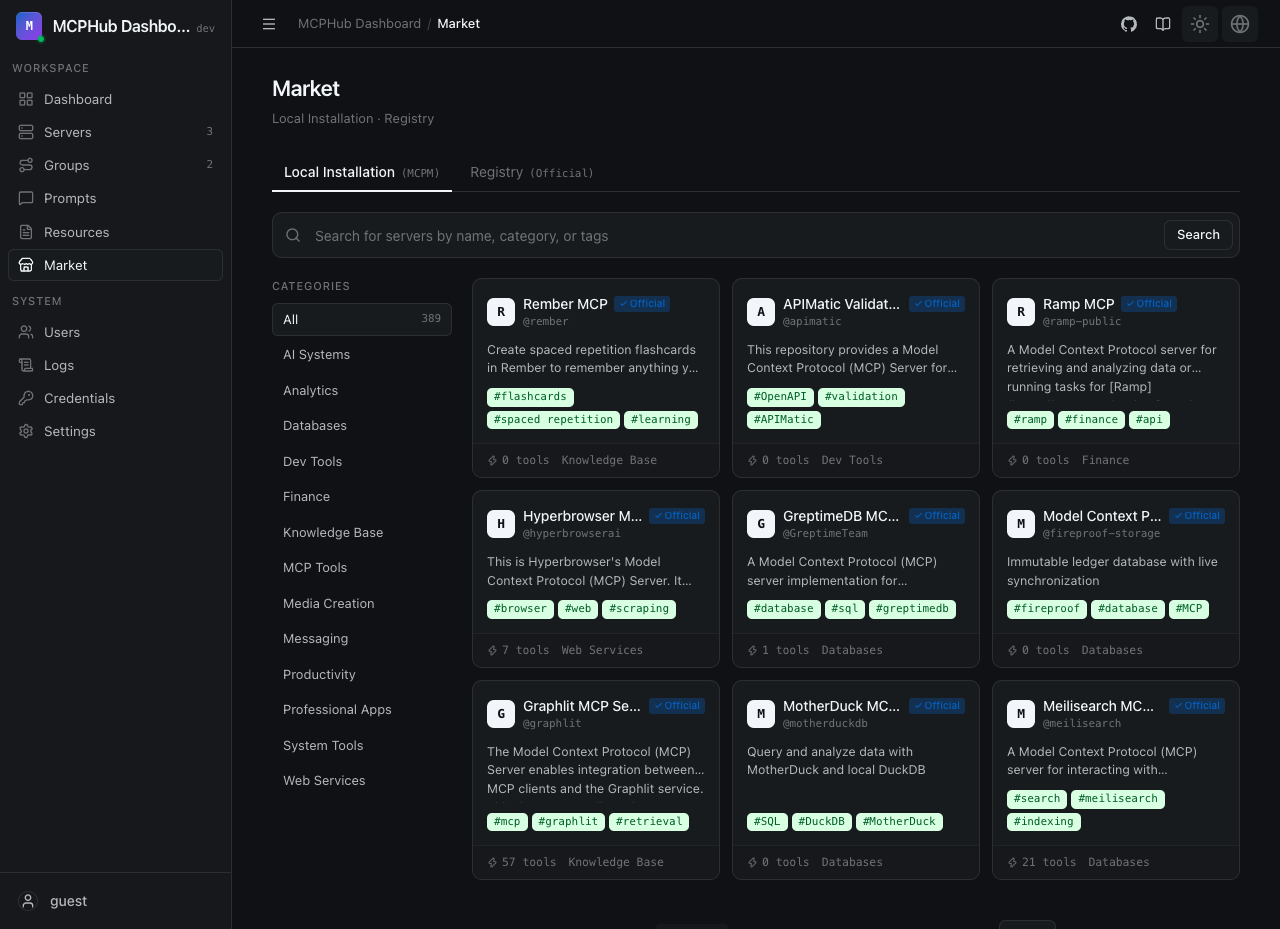
One endpoint for every MCP server you run: MCPHub gathers local and remote Model Context Protocol servers behind stable URLs, so AI clients connect once and see what you allow. Claude Code, Cursor, and Cherry Studio can use four routes: everything at /mcp, a named group at /mcp/{group}, one server at /mcp/{server}, or semantic tool search at /mcp/$smart. Smart routing runs vector search on PostgreSQL with pgvector and an OpenAI-compatible key, so the model gets a shorter tool list. Servers attach over stdio, SSE, or streamable HTTP, OpenAPI services can be wrapped as MCP tools, and changes apply without downtime. In the other direction, MCP tools can be exported as an OpenAPI 3.0.3 spec for OpenWebUI and other OpenAPI clients. Bearer keys, OAuth 2.0 (client and server modes), and GitHub or Google sign-in in database mode control access, with per-user visibility for servers and groups. Encrypted per-user credentials let one shared server use each person's own key. Logs show tool-call activity, request status, and latency, health checks track each connection, and the dashboard controls which tools, prompts, and resources each server exposes. Large text tool results can be compressed, interactive MCP Apps are proxied through MCPHub routes, and a built-in market lets you browse a server catalog. Typical uses include a team-wide gateway, per-project groups, and direct single-server routes for debugging. Running on a dedicated VPS on RepoCloud with guaranteed CPU, RAM, and SSD, full root SSH access, and a browser serial console. Apache-2.0 licensed.
Benefits
- Point Clients At One URL
- Claude Code, Cursor, Cherry Studio, and OpenWebUI connect to a single stable endpoint, so adding, removing, or updating servers never means editing every client's configuration again.
- Give The Model Fewer Tools
- Smart routing at /mcp/$smart searches tools by meaning, using PostgreSQL with pgvector and an OpenAI-compatible key, so the model sees a short relevant list instead of every tool.
- Control Who Can Use What
- Bearer keys, OAuth 2.0, and per-user visibility decide who reaches each server or group, while encrypted per-user credentials let one shared server use each person's own key.
- See What Your Servers Are Doing
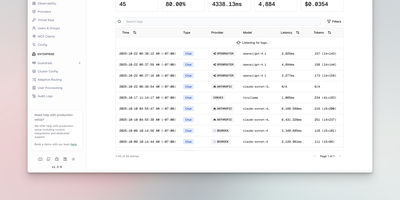
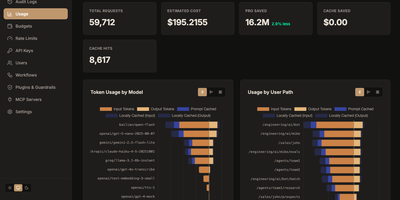
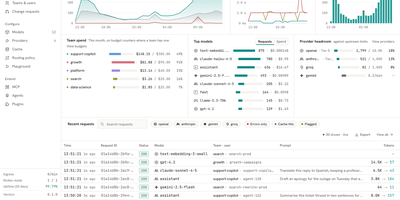
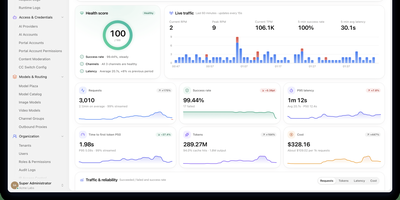
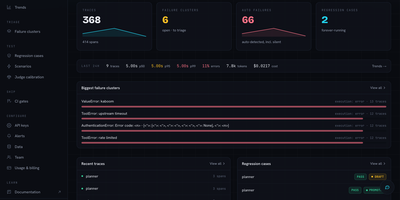
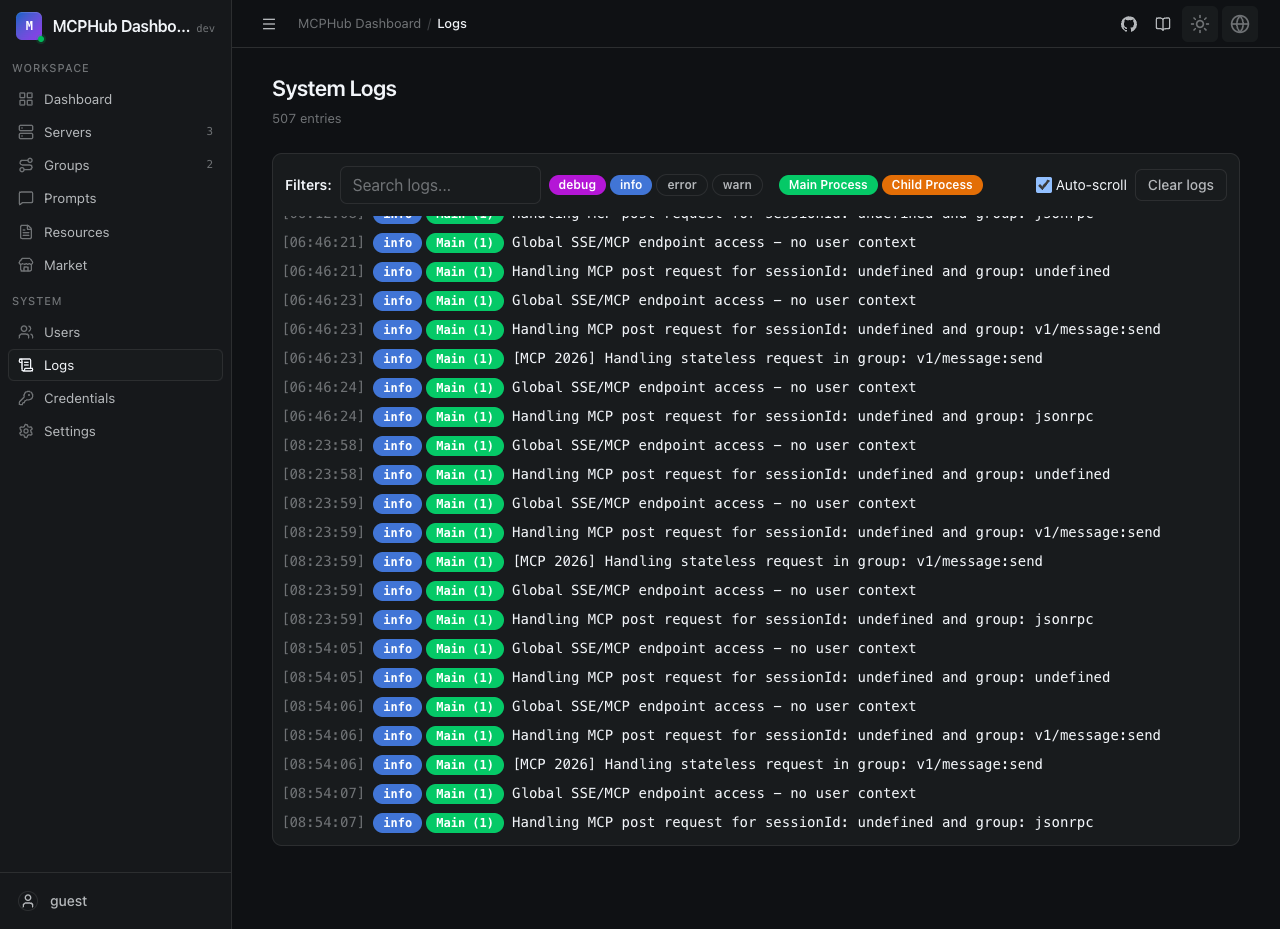
- Logs record tool-call activity, request status, and latency, and health checks track each upstream connection, so every MCP server can be inspected from one place.
Features
- Four Routing Modes
- Aggregate every server at /mcp, expose a named group at /mcp/{group}, pass through one server at /mcp/{server}, or use semantic discovery at /mcp/$smart.
- Multi-Transport Server Support
- Connect upstream servers over stdio, SSE, or streamable HTTP, or wrap an OpenAPI service as MCP tools; hot-swappable configuration applies changes without downtime.
- Smart Tool Discovery
- AI-powered tool discovery using vector semantic search, backed by PostgreSQL with pgvector and an OpenAI or compatible provider key; also works within a single group.
- OAuth And Access Control
- Bearer keys, a built-in OAuth 2.0 server, OAuth 2.0 client mode, JWT login with bcrypt hashing, and optional GitHub or Google sign-in through Better Auth in database mode.
- Per-User Credentials
- Bind personal API keys to one shared server, with encrypted storage and isolated stdio runtimes, so each user's calls run with their own credentials.
- Logs And Health Monitoring
- Inspect tool-call activity, request status, latency, and server logs, and watch connection health from one place; database mode stores configuration in PostgreSQL for production.