
Lunarr
Lunarr turns the movie and TV folders you already store into a private streaming service with posters, progress tracking, and play-anywhere convenience. Point it at local disks or at libraries living on SFTP and WebDAV servers, and it scans, identifies, and decorates everything with TMDb artwork, cast pages, similar titles, and because-you-watched recommendations. Press play and the file either streams directly or is transcoded on the fly into seekable HLS, generating only the segments around the moment you are watching instead of converting whole films up front. Continue watching follows you between sessions, sidecar subtitles are picked up automatically, and known intros and credits can be skipped. Send the picture to the big screen with Chromecast or AirPlay, pair new devices without typing passwords, and hand a guest a share link instead of your account. Underneath, an admin console manages users, roles, and which libraries each person may see, watches background jobs, and holds API keys and registration settings. Rescans run on schedules you set from minutes to a month, local folders can be watched live for new arrivals, and metadata refreshes itself on a timer. Running on a dedicated VPS on RepoCloud with guaranteed CPU, RAM, and SSD, full root SSH access, and a browser serial console. Apache-2.0 licensed.
Music Player
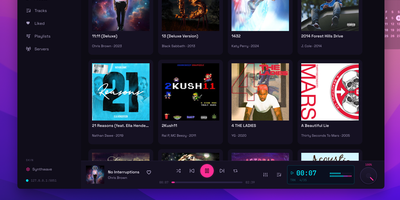
One binary scans your music folder and turns it into a server you can browse, search, and play from anywhere on your network. Start it and the daemon serves gRPC on port 5051, WebSocket events on 5052, and the web UI plus GraphQL on 5053. Later invocations detect the running daemon and act as clients, so the same command drives playback from a second terminal. Search lands instantly because tracks, albums, and artists sit in SQLite FTS5 tables kept current by database triggers. Playback handles more than 40 formats, from FLAC and Opus to WavPack, APE, and chiptunes, with EQ presets, crossfade, and ReplayGain. Browse and stream libraries hosted on Subsonic, Navidrome, and Jellyfin servers beside your own files. Cast to Chromecast and UPnP or DLNA renderers, or control another Music Player daemon as the output. Internet radio search covers Radio Browser and TuneIn stations, with bookmarks and a fullscreen now-playing view. Chromaprint fingerprints name badly tagged files from AcoustID and MusicBrainz data. Import Spotify, Last.fm, and Rocksky history into DuckDB analytics and ask about sessions, skips, and taste drift. Scrobble plays to Rocksky, sync radio bookmarks through the AT Protocol, and pick skins in the browser, desktop, or terminal interface. Running on a dedicated VPS on RepoCloud with guaranteed CPU, RAM, and SSD, full root SSH access, and a browser serial console. MIT licensed.
Runtipi
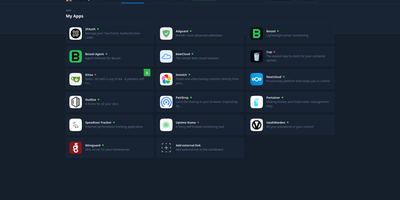
Runtipi makes any Linux server a personal app platform where installing services like Plex, Nextcloud, or Home Assistant takes a single click from a curated store of 265+ applications. With 9,500+ GitHub stars and 50 contributors, the React frontend backed by NestJS orchestrates Docker Compose projects for each installed app, automatically generating environment files, compose configurations, and Traefik reverse proxy labels for domain routing and SSL certificate provisioning via Let's Encrypt. The integrated Traefik reverse proxy handles all incoming traffic routing, HTTPS termination, and forward-auth protection for securing applications behind Runtipi's authentication layer without manual configuration. One-click updates notify administrators of new app versions and apply container image upgrades with automatic pre-update backup creation, while the restore feature rolls back application data to any saved snapshot. Custom app stores extend the ecosystem through Git repositories following the Runtipi app definition format, enabling organizations and communities to maintain private catalogs alongside the official store. The Docker Compose override system preserves user customizations across updates, allowing advanced modifications without losing changes. Architecture-aware filtering detects ARM64 or x86 platforms and displays only compatible applications. All apps deploy as standard Docker containers, and compose files can be exported for independent operation without lock-in. Running on a dedicated VPS on RepoCloud with guaranteed CPU, RAM, and SSD, full root SSH access, and a browser serial console. GPL-3.0 licensed.
Jump
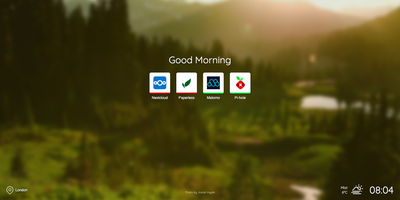
Open a new tab and the whole homelab should answer two questions instantly: where is everything, and is it still alive? Sites appear as large tappable icons with custom artwork, or Jump fetches each service's original favicon on its own. Green means up, red means down: real-time status monitoring paints every entry, so a failed service announces itself before anyone files a complaint. Tags spread links across multiple pages, and the tag panel jumps between home, media, admin, or any grouping you invent. A keyboard shortcut opens search, matching names, tags, and URLs as you type, and the same box can hand a query to your chosen search engines for everything beyond the lab. Weather and local time sit in the corner through OpenWeatherMap, backed by your own background photos or a fresh Unsplash image each visit. Greeting, clock format, and site name are all switchable, and the layout adapts to a phone screen held in one hand. Configuration lives in plain mapped folders for backgrounds, favicons, search engines, and sites, so a backup is just a copy. It serves on port 8080 in Docker, installs on Kubernetes with a community Helm chart, or runs directly under PHP on a web server. Running on a dedicated VPS on RepoCloud with guaranteed CPU, RAM, and SSD, full root SSH access, and a browser serial console. MIT licensed.
TheOneFile Verse
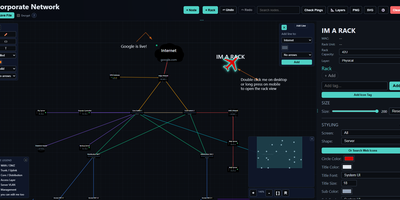
TheOneFile Verse is a self-hosted workspace where teams draw networks, smart homes, and infrastructure together on one live canvas. Each room is a shared map where nodes, racks, wires, zones, and text sync instantly between everyone connected, with live cursors, per-room chat, and an undo that only reverses your own edits. Status probes cover ICMP ping, TCP ports, HTTP, and DNS, and Network Discovery scans a subnet, names hosts through reverse DNS, mDNS, and SNMP, tags more than 70 common services with selfh.st icons, and drops the results onto the map as nodes. An Enter 3D button turns any map into a walkable, multiplayer 3D space with procedural device models, and rack views show equipment mounted by U slot. The admin dashboard manages rooms, users, roles, invite codes, OIDC providers, SMTP delivery, email templates, backups, API keys, and audit logs. Rooms can carry passwords, guest access, or an automatic self-destruct timer. Anyone can export a portable copy as one self-contained HTML file, with optional AES-256 encryption, and import it back later to keep collaborating. Running on a dedicated VPS on RepoCloud with guaranteed CPU, RAM, and SSD, full root SSH access, and a browser serial console. Unlicense licensed.
WebThings Gateway
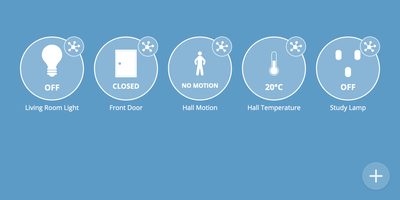
WebThings Gateway is a self-hosted smart home hub that puts monitoring and control of your whole house in one private web interface, with no vendor cloud in the middle. Lights, plugs, locks, thermostats, and sensors appear as live Things you can watch and operate from any browser, at home or remotely through your own server. Devices from different ecosystems meet here: adapter add-ons bridge a wide range of protocols into a standardized Web of Things API, so gear that never spoke the same language shares one dashboard. A drag and drop rules editor automates the house with if-this-then-that logic, turning motion into light, schedules into climate, and events into actions without code. Sensor history is logged and visualized over time, which makes energy use, temperature drift, and occupancy patterns visible instead of guessed. An interactive floorplan lays devices out on a plan of your home for at-a-glance status and control room by room. Add-ons extend compatibility with more devices and protocols as your setup grows, and everything runs locally, so the house keeps working on your terms and your data stays in the building. It installs from a Docker image and serves its interface over the web from your own hardware. Running on a dedicated VPS on RepoCloud with guaranteed CPU, RAM, and SSD, full root SSH access, and a browser serial console. Mozilla Public License 2.0 licensed.
Mstream
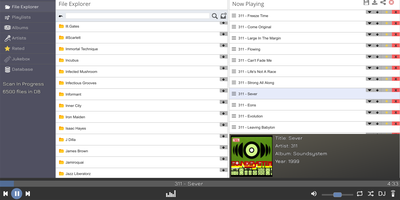
"The easiest music streaming server available" is mStream's own billing, and the claim holds up: a lightweight Node.js app that turns a folder of audio files into a private streaming service in minutes, no external database required. Its filesystem-based design is the clever part - the API mirrors your folder structure, so you can browse and play music immediately, before any library scan finishes, and your organization on disk is your organization in the app. It streams flac, mp3, wav, ogg, opus, aac, and m4a, which matters to the audiophile crowd: FLAC plays uncompressed, bit-perfect, with gapless playback for live albums and continuous mixes. The web player runs anywhere a browser does and packs personality - a Milkdrop-style visualizer (Butterchurn), playlist sharing via links, and drag-and-drop uploads straight through the file explorer. Native iOS and Android apps add the feature streaming subscriptions can't match: sync your collection to your phone for true offline playback of music you own. Multi-user support assigns separate directories and permissions per account. Resource usage is famously light - mStream is tested on multi-terabyte libraries and runs happily on a Raspberry Pi, so a small RepoCloud instance serves a lifetime's collection. GPL-licensed, with zero listening-habit telemetry.

OpenHAB
Over 400 technologies and thousands of smart devices from any manufacturer, unified under one roof: openHAB is the vendor-neutral home automation platform with a pluggable binding architecture. Each binding translates a device or service into openHAB's clean abstraction: Things expose Channels, Channels link to Items, and Items feed a rules engine that runs your home. That engine meets you at your skill level: Blockly gives non-programmers drag-and-drop visual logic, JS Scripting (GraalJS with the openhab-js library) is the modern text-based standard, the classic Rules DSL remains supported, and JSR223 opens the door to Python, Ruby, and Groovy. Time- and event-based triggers, scripts, notifications, and voice control compose into automations of any complexity, and users report decade-old rule sets still running rock solid. The Main UI handles configuration, semantic modeling, and now built-in charting - no external Grafana required. Built in Java on Apache Karaf's OSGi runtime and stewarded by the non-profit openHAB Foundation, it requires no cloud to function: everything runs locally, talking directly to your devices. Optional connectors bridge to Alexa, Google Assistant, and HomeKit, with iOS, Android, and web apps for control from anywhere.
HomeGenie
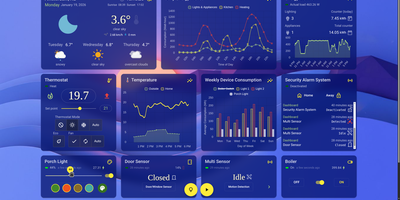
HomeGenie runs your whole smart home locally, controlling lights, sensors, cameras, and automations from hardware in your own house, so everything keeps obeying you even with the internet cable pulled. The dashboard is your control room: watch energy consumption, security zones, and environmental conditions in real time, then customize layouts, themes, and charts until the view matches your household. Automations suit every skill level, from a visual editor where scenarios assemble without code, to full programs in C#, JavaScript, or Python against a documented API. The built-in AI assistant, Lailama, runs locally: speak or type natural-language commands and it reasons about your home's context, orchestrates multiple devices, and shows the exact code it executed, so nothing happens by opaque magic. Voice works locally too, with Whisper recognizing speech and Piper answering through the browser. Cameras gain brains through VisionCore, which detects people, vehicles, and objects in real time, records buffered event clips, and feeds what it sees into your automations. A data browser turns months of sensor history into interactive charts with filters like moving averages, so "why did heating spike Tuesday" gets an answer. Virtual modules let you prototype sensors before buying hardware, and the interface speaks more than 90 languages. Running on a dedicated VPS on RepoCloud with guaranteed CPU, RAM, and SSD, full root SSH access, and a browser serial console. AGPL-3.0 licensed.
DCM
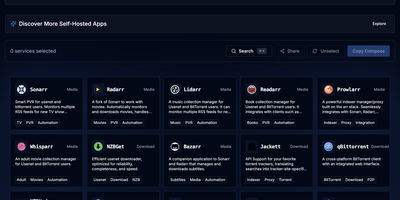
DCM is a visual builder that eliminates docker-compose copy-paste anxiety for home server enthusiasts. The TypeScript and Next.js web interface on port 7576 presents a curated catalog of popular self-hosted applications organized into categories: media management with Jellyfin, Plex, Sonarr, Radarr, and Prowlarr; dashboards like Homarr and Heimdall; databases including PostgreSQL, MariaDB, MongoDB, and Redis; monitoring stacks with Grafana and Prometheus; download clients like qBittorrent and NZBGet; security tools including Vaultwarden; storage solutions like Nextcloud; and home automation via Home Assistant. Select any combination of containers and DCM generates both compose.yaml and .env files with correct volume mounts, environment variables, PUID/PGID ownership, network modes, and port mappings — ready to paste into your terminal. Automatic port conflict detection identifies clashing services and reassigns ports before you ever hit a deployment error. The Template Gallery ships predefined multi-container stacks for common setups: media servers, development environments, database clusters, and monitoring solutions — some incorporating ten or more services in a single template. Built as a static Next.js export served from a 62 MB multi-arch Docker image supporting amd64, arm64, and arm/v7, DCM runs on everything from rack servers to Raspberry Pis. Share generated configurations via URL or download them locally. Running on a dedicated VPS on RepoCloud with guaranteed CPU, RAM, and SSD, full root SSH access, and a browser serial console. AGPL-3.0 licensed.
Emoncms
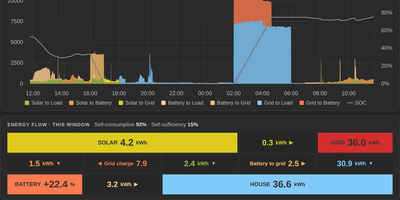
Energy meters, solar systems, heat pumps, and temperature sensors report to Emoncms, which logs every reading as a time series and turns it into graphs, dashboards, and ready-made apps. Readings arrive over an HTTP input API, MQTT topics beneath emon/, or AES-encrypted posts for devices without HTTPS, from scripts, Node-RED, Home Assistant, or emonHub. Input processing calibrates values, combines inputs, converts watts to cumulative kilowatt-hours, and logs the result to a feed. Device templates configure known hardware in one step, and schedules limit processes to set time windows. The graph viewer plots feeds on two axes, groups them into daily, weekly, monthly, or annual bars, and offers feed statistics and CSV export. Virtual feeds calculate values like heat pump COP on request and store nothing; post processing rebuilds feeds from recorded data. My Electric Flow charts live solar, battery, and grid power with an energy-flow breakdown and a Tariff explorer for Octopus Agile and other time-of-use tariffs. My Heatpump reports COP and SCOP. Other apps cover boilers, solar diversion, CO2 air change rates, and the UK grid fuel mix. The dashboard editor places dials, gauges, thermometers, charts, text, and images, and a dashboard can be made public. Sync uploads feeds to another server on a schedule and downloads them for recovery; the Backup module backs up and restores data. Running on a dedicated VPS on RepoCloud with guaranteed CPU, RAM, and SSD, full root SSH access, and a browser serial console. AGPL-3.0 licensed.
Heimdall
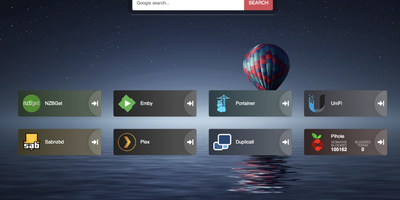
Links stop drowning in browser bookmarks once Heimdall - the application dashboard from the LinuxServer.io team - gives every web app and service you run a single, organized front door. Items come in three tiers. Generic items link to anything on the web with a name, color, and optional icon. Foundation apps are recognized as you type, auto-filling the application's icon and tile color so a full homelab dashboard assembles in minutes. Enhanced apps go further: supply API credentials and the tile shows live data - queue size and download speed for SABnzbd and NZBGet, plus integrations for Sonarr, Radarr, Plex, Jellyfin, Pi-hole, Portainer, Transmission, and many more. There are no iframes and no apps-within-apps; tiles are honest links with real-time stats layered on. Tiles arrange by drag and drop, backgrounds are customizable, an optional search bar (Google, Bing, or DuckDuckGo) makes it work as a browser start page, and optional multi-user authentication keeps dashboards personal. Built on Laravel with SQLite file-based storage - no external database - it stays light, responsive on mobile, and simple to back up. A natural first deployment: the page that ties every other self-hosted service together.
Sonarr
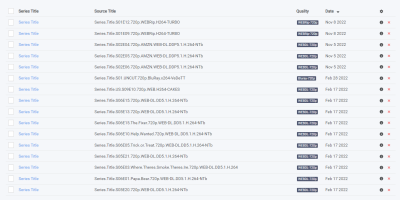
Add a series once, set a quality profile, and everything downstream is automated: Sonarr is the smart PVR for Usenet and BitTorrent users. It monitors RSS feeds from your indexers, detects new episodes the moment they release, sends matching grabs to SABnzbd, NZBGet, qBittorrent, Deluge, or another download client, then renames files with fully configurable templates, sorts them into consistent folder structures, and notifies Plex, Kodi, or Jellyfin to update the library. Quality profiles define what's acceptable (HDTV, WEB-DL, Blu-ray, up to 4K) and an upgrade cutoff - when a better release appears, Sonarr replaces the existing file automatically, stepping from HDTV to WEB-DL to Blu-ray until the cutoff is met. Custom formats add weighted scoring for finer-grained release selection, with community-maintained TRaSH Guides presets as the widely accepted defaults. Failed downloads are handled without intervention: Sonarr retries with another release, and manual search shows every candidate with the reasons any was rejected. It scans existing libraries for missing episodes, fully supports specials, multi-episode files, and daily and anime series types, and a calendar view shows upcoming episodes across every tracked show. Runs on Linux, Windows, macOS, and Raspberry Pi, and pairs naturally with Prowlarr for centralized indexer management.
House Planner
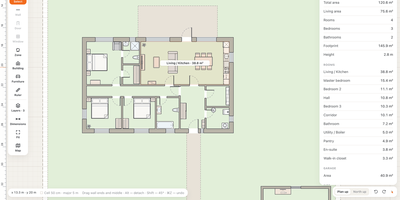
House Planner holds the design of your house in one browser workspace, from true-scale floor plans drawn over a satellite photo of your plot to costed wiring, plumbing, sewer, and heating layouts. Draw walls at true scale in millimetres with thickness and materials, add doors, windows, garage gates, and furniture with true dimensions, and watch room areas and plot coverage total as you work. Flip into 3D for a massing model or the house finished with material textures and facade colours, with cut-down walls for reading the layout from above. Every utility network gets an engineering layer: route sewer lines to a septic tank with slopes and cleanouts, auto-route electrical circuits with breaker and voltage-drop checks, and run water piping from well and boiler to each fixture. Underfloor heating loops lay out room by room, split before 80 metres, and balance flow against heat loss. The bill of materials computes quantities from the plan and networks, producing a priced estimate you can print, tick off as you buy, or export to CSV. Every save is a numbered version with restorable snapshots, tabs cannot overwrite each other, and the JSON plan can be edited by an AI assistant through the same API. One password guards the project, phones get a read-only view for on-site checks, and the whole thing runs in one Docker container with no database. Running on a dedicated VPS on RepoCloud with guaranteed CPU, RAM, and SSD, full root SSH access, and a browser serial console. MIT licensed.
DumbAssets
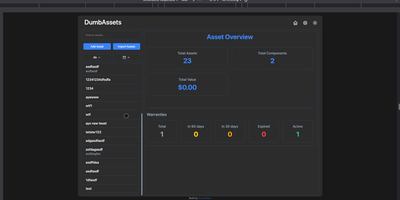
DumbAssets delivers a deliberately simple physical asset tracker that does exactly one thing well — keeping tabs on everything you own, from server racks down to individual HDDs, with hierarchical component nesting that mirrors real-world organization. The Node.js backend stores all data in JSON files within a single /data directory, making backups trivial with one folder copy while the PWA-enabled frontend provides responsive access from any device with light and dark theme persistence. Assets track model numbers, serial numbers, purchase dates, warranty expiration dates, and custom descriptions while sub-components nest infinitely — attach a Dell R730 to your server rack, then attach individual drives, CPUs, and NICs to that server with separate warranty and maintenance schedules for each. The Apprise notification engine fires configurable alerts for warranty expirations and maintenance events with direct links back to the specific asset in the web interface. Photo uploads attach visual records to any asset, receipt storage keeps purchase documentation alongside the item it covers, and a flexible tagging system enables cross-cutting organization beyond the hierarchy. PIN authentication with brute-force protection secures the interface, while search covers names, models, serials, and descriptions with sorting by warranty status, tags, components, or alphabetical order. Deploy with a single Docker command mapping port 3000 and one data volume. Running on a dedicated VPS on RepoCloud with guaranteed CPU, RAM, and SSD, full root SSH access, and a browser serial console. GPL v3 licensed.
Beszel
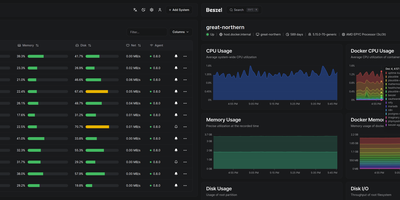
Reaching 24,000 GitHub stars within two years of its first commit in July 2024, Beszel delivers Netdata-grade monitoring dashboards from a single Docker container with no Prometheus stack, no external database, and no complex configuration — just a one-binary hub on PocketBase (SQLite embedded) and a sub-15 MB agent per host that auto-discovers Docker and Podman containers on contact. The agent connects outbound via WebSocket or SSH tunnel, requiring zero open ports on monitored servers and zero manual network configuration. Per-host metrics cover CPU usage, memory with swap and ZFS ARC breakdown, disk I/O across multiple partitions, network throughput, load average, sensor temperatures, battery charge, and GPU utilization with power draw for Nvidia, AMD, and Intel cards — features that competitors lock behind paid tiers. S.M.A.R.T. disk health including eMMC wear indicators and Linux mdraid array status surface hardware degradation before failures occur. Container statistics track CPU, memory, and network history per container with automatic discovery as new containers start. Configurable threshold alerts notify via email, Discord, Telegram, ntfy, Pushover, Gotify, Matrix, Mattermost, Signal, Slack, Microsoft Teams, and Twilio when metrics exceed defined limits. Multi-user accounts with OAuth/OIDC authentication let teams share monitored systems with role-based access, while automatic backups persist data to disk or S3-compatible storage. Running on a dedicated VPS on RepoCloud with guaranteed CPU, RAM, and SSD, full root SSH access, and a browser serial console. MIT licensed.
Dashy
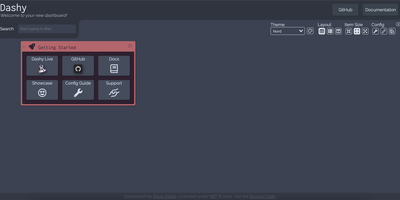
Every service you run, behind one polished start page: Dashy is the most customizable homelab dashboard, built as a Vue.js homepage. Configuration lives in a single YAML file, but you never have to hand-edit it: an integrated UI editor with real-time validation writes changes back to disk, so both config-as-code and point-and-click camps are served. Status indicators put a live health dot next to every app - HTTP checks or pings on custom intervals, with response time and status details on hover - giving you an at-a-glance uptime overview before anything breaks. Over 50 built-in widgets pull dynamic content from the services you already run: Pi-hole and AdGuard block stats, Proxmox lists, Nextcloud status, Netdata CPU/memory history, Prometheus data, plus weather, RSS, crypto prices, and generic iframe/API-response widgets for anything with an endpoint. Instant fuzzy search launches any app as you type, with customizable hotkeys and web-search fallthrough. Theming is deep: dozens of built-in themes, a UI color palette editor, and custom CSS over CSS variables. Alternate views include a fast-loading minimal startpage and a workspace view that embeds apps side-by-side without leaving the dashboard. Icons resolve from Font Awesome, homelab icon packs, emojis, or auto-fetched favicons. Built-in authentication, multi-page support, cloud backup/sync, and multi-language round out an MIT project with a massive community.
Ether
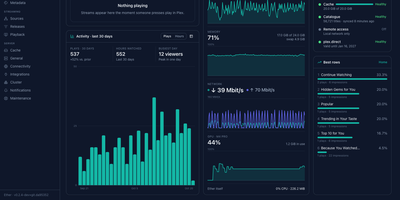
One Ether install puts the TMDB catalogue inside your TV apps and streams titles on demand from your own accounts, holding no media files at all. It appears as a normal server inside the Plex, Jellyfin, Emby, Infuse and Stremio apps your household uses, with the whole catalogue browsable as if it were local. Press Play and Ether resolves the best release across your sources, health checks it, and streams only the byte ranges the player asks for, so scrubbing lands at the right keyframe instead of restarting a download. Pull titles from Real-Debrid, TorBox, AllDebrid and Premiumize accounts, Usenet providers through a built-in Newznab and Torznab manager, Cardigann definitions, or Stremio stream addons pasted in as sources. Released titles need no request queue: each viewer's Plex and Trakt watchlists sync in, and newly playable titles surface in a Now Available row on their home screen. A poster studio renders 4K, Dolby Vision, Atmos and rating badges onto artwork in the browser, and rule-based collections can run as 24/7 virtual channels in the Live TV guide. Subtitles arrive matched and retimed to the cut playing, with skip markers. A self-evicting cache keeps replays instant and preloads the next episode as you watch. Local playback needs no Plex Pass, and Docker runs Ether on port 32400 beside your library rather than replacing it. Running on a dedicated VPS on RepoCloud with guaranteed CPU, RAM, and SSD, full root SSH access, and a browser serial console. GPL-3.0 licensed.