NetPulse
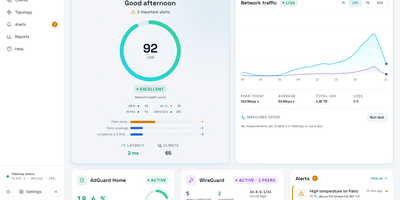
NetPulse is a self-hosted dashboard that turns a pile of routers, switches, and clients into one live picture of how your network is doing. A single score from 0 to 100 condenses latency, loss, uptime, and temperature, and updates every few seconds. The topology map draws itself from bridge and LLDP data, placing wired and wireless clients under the router and port they actually use. Every device is classified by type, with signal strength, band, and first-seen time. Router cards show model, firmware, CPU, memory, temperature, and live traffic. Scheduled WAN speed tests compare results against your contracted plan, and panels for WireGuard peers and AdGuard Home keep VPN and DNS activity in view. Alerts for overheating, new devices, firmware updates, and WAN outages reach you through push notifications, ntfy, Telegram, or webhooks. Admin and viewer accounts share access, a Wi-Fi channel analyzer scores congestion, and OpenWrt firmware upgrades can be started from the browser. MQTT publishing feeds Home Assistant, and an optional read-only MCP endpoint answers questions from your AI assistant. The interface installs as a phone app and speaks English and Spanish. Running on a dedicated VPS on RepoCloud with guaranteed CPU, RAM, and SSD, full root SSH access, and a browser serial console. AGPL-3.0 licensed.

Halcyon Video
Friday night, 1994: you are standing in the Action aisle deciding what the weekend looks like, except the shelves are stocked with your own library and the store lives in your browser. Halcyon Video rebuilds that ritual in 3D around your Jellyfin, Plex, or Emby server, turning libraries into aisles and genres into signed sections you can walk. Pick a case off the shelf and it comes up in your hand at true rental proportions; flip it over for the synopsis, cast, runtime, ratings, and a technical table read from the actual file. Seasons arrive as box sets, popular titles sit deeper on the shelf, and the clerk behind the counter searches by title, director, or genre and recommends from your catalog and watch history. Carry an armful to the checkout and she bags them in plastic that folds around the cases, receipt and all. A RomM connection opens a games department with platform-correct cartons and clamshells, while Jellyseerr requests appear as discovery cases you can order in-store. Drive it from the couch with a TV remote, gamepad, keyboard, or phone, or let attract mode tour the floor past the ceiling CRTs. Running on a dedicated VPS on RepoCloud with guaranteed CPU, RAM, and SSD, full root SSH access, and a browser serial console. GPL-3.0 licensed.
Tesserae
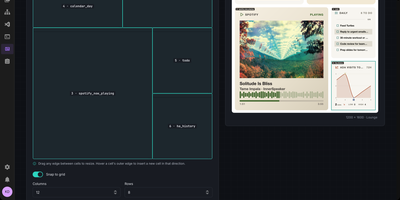
Built for e-ink screens, Tesserae composes calm wall dashboards from your calendar, weather, and Home Assistant data in a browser, then renders each frame at the panel's exact resolution. Lay out pages as a grid of cells or on a free canvas of widgets, text, and shapes, with a live preview. What you see is what paints. Dozens of bundled widgets cover weather, calendars, clocks, news, to-do lists, and photos, and a community catalog adds more widgets, themes, and templates. Frames are dithered to each panel's measured palette, so photos and gradients stay clean on Spectra 6 color, mono, and grayscale screens. One server drives a whole fleet. Each panel keeps its own dashboards, schedules, and rotations, and smart sync renders just before a battery panel wakes while quiet hours let it sleep overnight. Seeed reTerminal and XIAO panels flash from the browser, and Pimoroni Inky, Waveshare, M5Stack, TRMNL-compatible devices, and KOReader Kindles and Kobos work too. Inside Home Assistant it runs as a sidebar App. Home Assistant widgets show entities, history, energy, and cameras, and MQTT discovery turns each panel into a device with its frame, battery level, and signal. No account is needed, and update checks stay off unless you opt in. Ask Claude or any MCP client to lay out a dashboard, check a preview, and push it. Running on a dedicated VPS on RepoCloud with guaranteed CPU, RAM, and SSD, full root SSH access, and a browser serial console. AGPL-3.0 licensed.
Komga
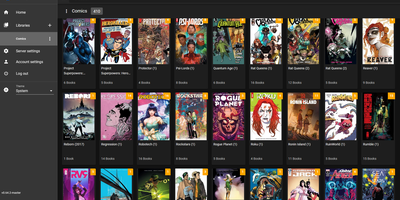
What Jellyfin is for video, Komga is for comics, manga, BDs, magazines, and eBooks: point it at folders of CBZ, CBR, CBT, PDF, and EPUB files and it becomes a proper library with cover art, embedded metadata import, and per-user reading progress. The responsive web reader handles multiple reading modes - left-to-right for western comics, right-to-left for manga, webtoon scrolling - while collections and read lists organize crossovers and story arcs, with ComicRack .cbl read list import for existing curation. Its openness is the real differentiator: OPDS v1.2 and v2.0 feeds serve virtually every reader app (Panels, Moon+ Reader, Mihon/Tachiyomi, KyBook), with OpenSearch and page-streaming extensions so mobile apps fetch pages on demand instead of whole archives. E-ink support is built in, not bolted on - Kobo devices sync directly against Komga instead of Kobo's servers, with two-way read progress, on-the-fly KEPUB conversion via Kepubify, and optional proxying so official Kobo purchases still work; KOReader sync covers everything else. Multi-user management brings per-library access control, age restrictions, and label restrictions for family setups. Housekeeping tools detect duplicate files and duplicate pages, and a REST API feeds a healthy ecosystem of community scripts. Runs from a single Docker container with embedded SQLite.
TelltaleDNS
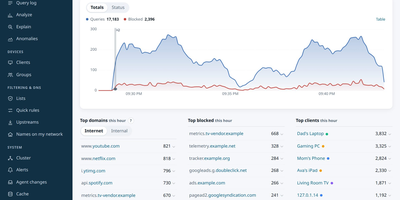
Every connection your devices make starts with a DNS lookup, and TelltaleDNS is the resolver that answers it, filters it per device, and explains exactly why it answered that way. The query log ties each question to a named device, using names from your router's leases, mDNS, or the UI, times every stage, and a Why panel shows the list and rule behind each block. Groups per network or VLAN carry their own blocklists, schedules, safe search, blocked services, and rewrites, and a new rule can be previewed against yesterday's real traffic before you save it. Serve devices over DoT, DoH, or DoQ, give each one a client ID that follows it onto mobile data, forward to encrypted upstreams, validate DNSSEC, or resolve recursively from the root servers. The dashboard adds a traffic map, a heatmap of when your network asks, a flow diagram from groups to answers, and anomaly alerts, with Prometheus metrics, OpenTelemetry, and dnstap for your SIEM. A Raspberry Pi and Kubernetes nodes can share one configuration, with canary rollouts, automatic failover, and failover drills. It answers queries only from private and Tailscale address ranges unless you widen that, and it imports Pi-hole and Technitium setups. A REST API, command line, and MCP tools with approval serve scripts and agents. Running on a dedicated VPS on RepoCloud with guaranteed CPU, RAM, and SSD, full root SSH access, and a browser serial console. Apache-2.0 or MIT licensed.
multi-scrobbler
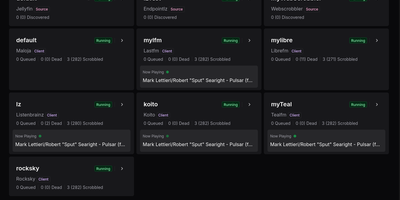
Listening to music across Spotify on your commute, Jellyfin at your desk, and Sonos in the living room usually leaves your play history fragmented across walled gardens, which is why multi-scrobbler unifies over 30 music sources and routes every track to your chosen scrobble backends automatically. Instead of relying on brittle browser plugins per device, you configure active polling or ingress webhooks once for sources including Plex, Navidrome, Subsonic, Apple Music, Deezer, YouTube Music, MPD, VLC, Chromecast, and Music Assistant. Every detected play passes through an intelligent pipeline that verifies listen duration thresholds, cleans messy track titles or featured artist tags using regex rules, and enriches missing metadata against the MusicBrainz, Spotify, or Rocksky catalogs. Before forwarding a play to Last.fm, ListenBrainz, Libre.fm, Maloja, Koito, teal.fm, Discord Now Playing, or Tuneshine, the engine checks temporal and title similarity scores to block duplicate scrobbles. When a downstream service goes offline, failed scrobbles enter a persistent retry queue so you never lose listening history, while Gotify, Ntfy, and Apprise webhooks alert you to source issues. Running on a dedicated VPS on RepoCloud with guaranteed CPU, RAM, and SSD, full root SSH access, and a browser serial console. MIT licensed.
Peach
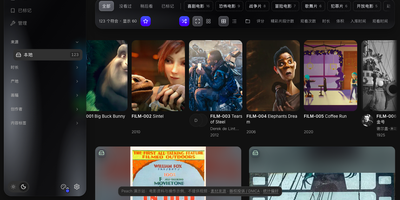
Peach is a self-hosted video library manager that scrapes rich metadata for your own collection and serves it through a polished web player you can open on any device. Point it at local drives, SMB shares, mounted cloud storage, or a PikPak library and it scans everything into one browsable catalog without moving or modifying your files. The scraper recognizes video codes, reads existing NFO files, and fills in titles, performers, studios, and cover art from multiple sources while always preserving corrections you make by hand. Playback happens right in the browser with subtitle support, variable speed, rotation, resume points, and timeline previews you can scrub through before committing to a scene. A follow system tracks performers and creators so new releases surface automatically, and the discovery views plus a want list help you decide what to add next. When something is missing, search by video code or drop in a magnet link and completed downloads are filed into the library on their own. Tagging, duplicate detection, and multi-version grouping keep large collections tidy, while the task center lets you pause, resume, or cancel scans and downloads and watch their resource use as they run. Running on a dedicated VPS on RepoCloud with guaranteed CPU, RAM, and SSD, full root SSH access, and a browser serial console. AGPL-3.0-or-later licensed.
Prowlarr
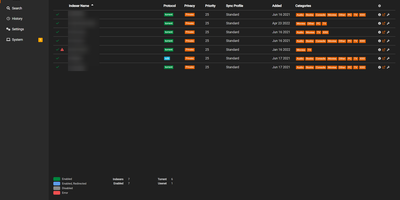
Configure each indexer once, not five times: Prowlarr is the indexer hub of the *arr stack, removing the most tedious duplication in a media automation setup. Instead of configuring the same torrent trackers and Usenet indexers separately in Sonarr, Radarr, Lidarr, Readarr, and Mylar3, you add each one once in Prowlarr and it syncs them to every connected app automatically, complete with category mappings; with Full Sync enabled, adding or removing an indexer propagates everywhere, and a tracker URL change is a one-place fix. Coverage is the deepest available: 500+ torrent trackers with definitions added constantly, 24 native Usenet indexers, generic Newznab and Torznab support for anything else, and custom Cardigann YML definitions with JSON and XML parsing for obscure sources. Built on the same .NET/React base as its siblings, it also earns a place as a search tool in its own right: unified manual search queries every indexer simultaneously at a category level, and you can push multiple releases straight to your download clients without touching Sonarr or Radarr. Health checks and status notifications flag failing indexers, per-indexer statistics track success rates and response times so you can cull unreliable sources, and per-indexer proxy support (SOCKS4/5, HTTP, FlareSolverr) handles trackers behind Cloudflare.
Pulse
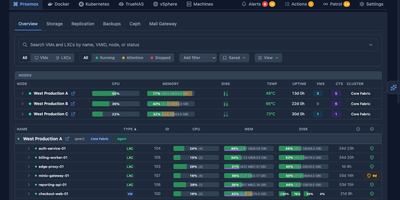
Pulse monitors your entire heterogeneous infrastructure from one screen: Proxmox VE, Proxmox Backup Server, Proxmox Mail Gateway, Docker, Podman, Docker Swarm, Kubernetes, TrueNAS SCALE/CORE, VMware vSphere, and standalone Linux/Windows/macOS machines. The Go binary embeds a SolidJS/TypeScript frontend, delivering WebSocket-driven dashboards with sub-second metric updates on port 7655. A unified agent auto-detects Docker, Podman, Kubernetes, and Proxmox on each host without manual configuration and self-updates silently, while Proxmox nodes need only API credentials with zero agent installation. Smart alerts use adaptive hysteresis-based thresholds to prevent notification floods, pushing to Discord, Slack, Telegram, Teams, email, ntfy.sh, Gotify, and generic webhooks with per-resource overrides. The standout feature is Pulse Patrol: scheduled AI health checks running every ten minutes to seven days using OpenAI, Anthropic, Gemini, or local Ollama models. Patrol catches silent backup failures, capacity creep, restart loops, unhealthy containers, and clock drift that dashboards miss when nobody is watching. Platform-specific views render Proxmox nodes, Ceph clusters, Docker Compose projects, Kubernetes workloads, TrueNAS pools, and vSphere VMs in familiar layouts. OIDC, SSO, and SAML authentication with credential encryption at rest secures access. 6,500+ stars and 441 releases since February 2025. Running on a dedicated VPS on RepoCloud with guaranteed CPU, RAM, and SSD, full root SSH access, and a browser serial console. MIT licensed.
nexdeck
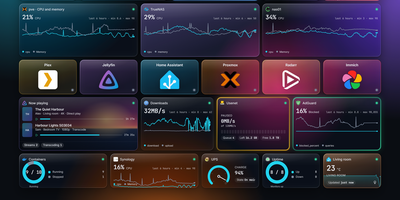
Every homelab ends up with twenty browser tabs, and nexdeck turns them into one board of cards that update on their own. The server asks each service in its own rhythm and pushes changes to every open browser, so ten tabs cost a service only one request. Cards cover Proxmox, Docker, Synology, TrueNAS, Pi-hole, Plex, Radarr, Home Assistant, and over two hundred more. Administrators can act from the cards by restarting a container, starting a VM, or pausing downloads, and every action is logged. Pages arrange freely on a 12, 24, or 36 column grid, with a phone layout that stacks cards in order and a kiosk link for wall displays that needs no sign-in. A network page draws a live UniFi plan with traffic on every link. A chronicle records outages and changes, history charts reach back two years, and alerts go to Telegram, email, Web Push, ntfy, Gotify, Discord, Slack, or Apprise. Boards export as YAML for Git, Docker labels create tiles, and OpenID Connect handles sign-in with roles and board sharing. Thirteen colour themes, light and dark modes, skins, and twelve languages make it yours. A demo board with invented data offers a safe first look. Running on a dedicated VPS on RepoCloud with guaranteed CPU, RAM, and SSD, full root SSH access, and a browser serial console. AGPL-3.0 licensed.
LabTether
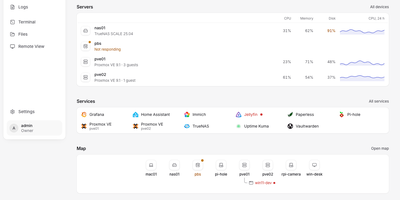
LabTether is a self-hosted control hub that puts every machine, VM, and container in your homelab on one screen. The dashboard surfaces what needs attention first, then lists servers with CPU, memory, disk, and 24-hour charts beside the services you run. Connect Proxmox VE, Proxmox Backup Server, TrueNAS, Portainer, and Home Assistant with an API key, and add agents on Linux, macOS, or Windows machines for live metrics. Open a terminal, a file browser, or a VNC, RDP, SPICE, or WebRTC remote desktop on any node from the browser. Alert rules, notification routes, and maintenance silences group related problems into incidents you can track to the fix, and a dependency map shows what else goes down before you reboot something. Saved actions run on a group or a schedule, webhooks forward hub events, and package updates start with a dry run. A built-in MCP server hands Claude, Cursor, or any MCP client 32 tools, each API key limited to the scopes you allow. Two-factor login, OIDC single sign-on, owner, admin, operator, and viewer roles, and an audit log keep access tidy. Running on a dedicated VPS on RepoCloud with guaranteed CPU, RAM, and SSD, full root SSH access, and a browser serial console. Apache-2.0 licensed.

LubeLogger
Vehicle maintenance records shouldn't live in a homemade spreadsheet and a shoebox of receipts - LubeLogger exists because of exactly that. It's a self-hosted .NET web application (from Hargata Softworks) that gives every vehicle in your garage a complete digital history: service, repair, and upgrade records categorized and searchable, with invoices and receipts attached as documents; fuel fill-ups that compute economy in MPG, UK MPG, L/100KM, or KM/L without spreadsheet tedium; taxes, odometer logs, inspections, equipment, and supplies inventory for tracking the parts and fluids on your shelf. The reminder system is what saves engines: recurring reminders trigger by date, odometer reading, or whichever comes first - exactly how real service intervals work - so oil changes and timing belts stop relying on memory. A dashboard summarizes expenses by year, month, and category, a planner tracks to-dos by type, priority, and progress, and professional vehicle reports print a full history - genuinely useful when selling a car. Collaboration is built in: invite household members as collaborators on shared vehicles, with single sign-on support. Custom fields adapt records to your needs, CSV import/export moves data freely, an API enables automation, and the mobile-tested UI installs as a PWA on iOS and Android. MIT-licensed.
Glance
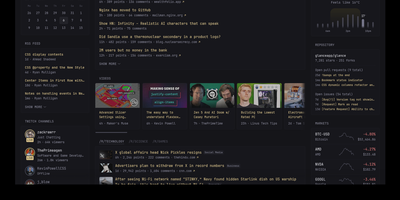
With over 35,000 GitHub stars in just two years, Glance has become the most popular self-hosted dashboard project on GitHub, outpacing established alternatives like Homarr and Homepage. Built as a single Go binary under 20MB with minimal JavaScript and zero external dependencies, Glance delivers a blazing-fast personal information dashboard that consolidates your entire digital morning routine into one beautiful page. Configure everything through clean YAML files that support modular includes and environment variable interpolation, with automatic hot-reload that applies changes without restarting the server. The widget ecosystem covers RSS and Atom feeds, Reddit and Hacker News frontpages, YouTube channel subscriptions, GitHub release timelines, weather forecasts from Open-Meteo, stock market quotes, Docker container status, Twitch live streams, calendar events via iCal, site monitor uptime checks, and custom HTML or iframe embeds. A community widgets repository extends functionality even further with user-contributed integrations. The theming system provides light, dark, and custom color schemes with multiple layout options including slim and wide column configurations. Authentication support added in 2025 secures access with username and password protection. Preconfigured page templates let you get started in seconds with curated layouts for development, homelab monitoring, news reading, and entertainment tracking. Deploy via Docker Compose or as a standalone binary on Linux, macOS, or Windows across AMD64 and ARM64 architectures. Running on a dedicated VPS on RepoCloud with guaranteed CPU, RAM, and SSD, full root SSH access, and a browser serial console. AGPL-3.0 licensed.
Joulenap
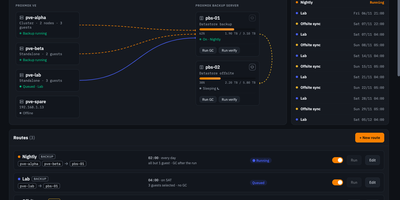
A dedicated backup server is the right way to keep copies on separate hardware, and a strangely expensive one to leave humming in the corner for a job that runs twenty minutes a night. Joulenap lets that machine sleep: at the scheduled hour it sends a Wake-on-LAN packet to your Proxmox Backup Server, waits until the API answers, runs the backup, applies retention, runs garbage collection and verification if you asked for them, then powers the box back down or suspends it for network cards that only wake from sleep. You describe your setup as routes: which hosts back up to which backup server, on what schedule, keeping how many copies, with guests as everything on a host or an explicit list. Fan several hosts into one server nightly, or copy one backup server to another across town for an off-site second copy with its own retention. A second route kind starts nothing at all: your Proxmox hosts keep their own schedules while Joulenap simply wakes the box, watches their tasks, and switches it off when they go quiet. Watch live task output, stop a run mid-flight if you must, and get results through Apprise, Telegram, ntfy, Discord or email per route. Status widgets feed Homepage, Homarr, Dashy and Glance, and a Prometheus endpoint lets Grafana alert you when a guest stops being backed up. Running on a dedicated VPS on RepoCloud with guaranteed CPU, RAM, and SSD, full root SSH access, and a browser serial console. AGPL-3.0 licensed.
Larapaper
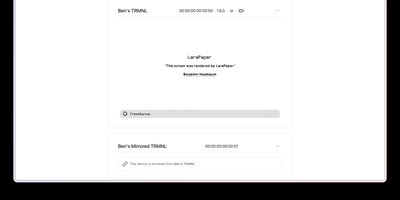
An e-ink frame on your kitchen wall should show your calendar, not beg a cloud subscription for permission; Larapaper is the self-hosted TRMNL server that keeps those screens yours. Devices on your network announce themselves and auto-join, and the admin panel tracks each unit's battery, WiFi strength, firmware, and current screen, from the official TRMNL OG and X to SeeedStudio DIY kits, reTerminal panels, Kindle and Kobo e-readers, and Raspberry Pi displays. Content comes from wherever you like: native plugins and recipe mashups, more than a thousand catalog recipes importable from TRMNL and the community, your own Liquid or Blade markup written in the web editor, or a simple POST to the screen API from any script. Playlists rotate screens on a schedule, so the morning shows trains and weather while the afternoon shows the build board. The render pipeline draws with headless Chrome, converts through ImageMagick to each device's exact palette, and caches results so sleepy e-ink clients wake, fetch, and sleep again in seconds. Run it beside the official cloud as a proxy when you want hybrid coverage, on SQLite for a shelf box or Postgres for a fleet, with dark mode in the admin and Docker Compose for deployment. Running on a dedicated VPS on RepoCloud with guaranteed CPU, RAM, and SSD, full root SSH access, and a browser serial console. MIT licensed.
Navidrome
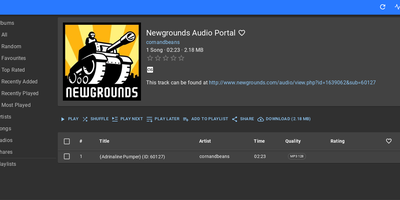
Spotify economics without the subscription or catalog gaps: Navidrome, the reference self-hosted music server, streams your own FLAC, MP3, and ALAC collection from a single Go binary with a React/Material UI web player. Its Subsonic/OpenSubsonic API compatibility is the superpower: 50+ existing clients work out of the box, from Symfonium and DSub on Android to Feishin and Sonixd on desktop, plus Android Auto, CarPlay, and Android TV apps. Transcoding is server-managed and FFmpeg-backed - FLAC direct-plays at home and downsamples to MP3, AAC, or Opus over mobile bandwidth, with the OpenSubsonic transcoding extension letting clients declare capabilities and receive per-track direct-play or transcode decisions automatically. Multi-user support gives every account its own play counts, favorites, ratings, and playlists, and multi-library support scopes different collections to different users. The feature list covers serious listening: Last.fm and ListenBrainz scrobbling, artist bios and images, embedded and external lyrics, audiobook bookmarks, saved play queues that resume on another device, internet radio, jukebox mode, and M3U playlist auto-import kept in sync with your folder. Resource usage is famously low - it runs happily on a Raspberry Pi and scales to six-figure track counts.
OpenNVR
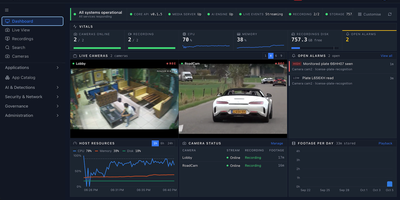
OpenNVR turns your own cameras and hardware into a video platform where recording, live viewing, and AI analysis all stay inside your perimeter. Any ONVIF or RTSP camera connects, including an Android phone running the companion camera app, and footage is written in one-minute chunks whether or not any model is running. Detection overlays appear moments after a camera is added, and you search recorded events in natural language instead of scrubbing timelines. Twelve installable applications cover intrusion detection, loitering, occupancy counting, line crossing, license plates, camera tampering, gate watching, and a doorbell that recognizes your family, each declaring its camera and network permissions before an administrator approves it. Swapping the underlying model changes nothing else, because every detector, plate reader, face recognizer, or vision-language model answers through the same adapter contract. Two Python SDKs let you write your own app as a rule over platform events or wrap your own model as a first-class capability. Cameras, zones, and apps surface in Home Assistant automatically through MQTT discovery. Offline and local-only modes return errors to every cloud route until an operator opts in, model weights are fingerprinted with SHA-256 and re-checked every minute, and an append-only audit log traces each alert to the exact weights that produced it. Running on a dedicated VPS on RepoCloud with guaranteed CPU, RAM, and SSD, full root SSH access, and a browser serial console. AGPL-3.0 licensed.
portracker
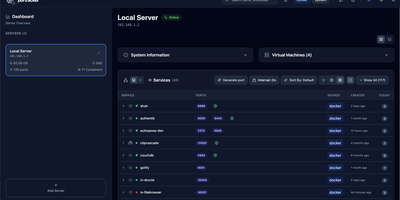
No spreadsheet has to track which service owns which port, because portracker discovers every service and port on your servers and keeps the list current from a self-hosted dashboard. Begin with a single port, shown with its owning service, its source (Docker or the host system), and its address, with internal container ports told apart from ports published to the host. Step back and ports gather into services: expandable cards carrying an icon, a health dot, and a port count, in list, grid, or table layouts, where a Why this status popover names the failing component and the rule that fired. Step back again and each server gets its own panel with hostname, OS, CPU, memory, and uptime, plus TrueNAS apps, VMs, and LXC containers once an API key is added. Step back once more and the whole fleet appears, because other portracker instances can be linked as peers, a VM's instance can be nested under its host, and every server can be searched at once. Along the way, rename services, hide the noisy ones, attach notes, act on a selection in bulk, or press Generate port for an unused number before deploying something new. Optional sign-in with a first-run setup wizard, an autoxpose link that shows public URLs and SSL status, light and dark themes, and keyboard shortcuts finish the picture. Running on a dedicated VPS on RepoCloud with guaranteed CPU, RAM, and SSD, full root SSH access, and a browser serial console. MIT licensed.