GrowChief
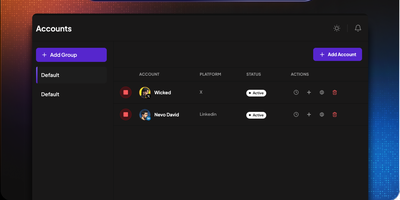
GrowChief delivers a self-hostable social media automation engine that replaces expensive SaaS tools like PhantomBuster, Expandi, and Zopto with a Docker-deployable alternative you fully control. The React and NestJS monorepo architecture runs headful Chrome via xvfb with Playwright and Patchright for maximum stealth — natural mouse movements and randomized interaction patterns make automation indistinguishable from manual browsing. Temporal orchestration manages workflow execution with built-in concurrency control that throttles actions to one every ten minutes per account even when ten workflows trigger simultaneously, preventing rate-limiting and account flags. The enrichment waterfall resolves profile URLs from partial data — provide an email address or organization name and GrowChief queries multiple providers to locate the correct social profile automatically. Working hours scheduling ensures outreach runs only during configurable business hours regardless of when leads enter the pipeline via the public REST API. Proxy support accepts custom SOCKS5 and HTTP proxies per account for geographic distribution and IP isolation. The public API enables full workflow management and lead injection from n8n, Make, Zapier, or any HTTP client, with a dedicated n8n custom node shipping ready to install. The multi-step workflow builder lets you chain connection requests, profile visits, message sends, and conditional delays into repeatable sequences. Running on a dedicated VPS on RepoCloud with guaranteed CPU, RAM, and SSD, full root SSH access, and a browser serial console. AGPL-3.0 licensed.

Open-Meteo
High-resolution weather forecasts became a free commodity because of Open-Meteo - and this deployment puts the whole open-source engine on your own infrastructure. The public open-meteo.com service aggregates national weather models (NOAA GFS, DWD ICON, ECMWF, Meteo-France, and others) into one consistent JSON interface; self-hosting gives you that same API without rate limits, third-party dependency, or usage metering. The architecture is two cooperating services: the API server exposes forecast endpoints fully compatible with Open-Meteo query parameters - latitude, longitude, hourly and daily variables like temperature, precipitation, wind, and radiation - while a background sync worker downloads fresh weather model data on a configurable interval into a shared persistent volume at /app/data, so forecasts stay current and survive restarts without re-downloading. You control which weather models to mirror, which variables to store, how much historical depth to keep, and how often to refresh - meaning a lean deployment can sync only the model and region you actually query. Responses are plain HTTP/JSON, so integration with dashboards, Home Assistant-style automations, agricultural monitoring, IoT fleets, or any application takes minutes. For anyone making thousands of forecast calls a day, replacing a metered weather API with your own instance turns a recurring bill into a flat infrastructure cost.
Shlink
With over 5,100 GitHub stars and eight years of active development since 2016, Shlink has become the definitive self-hosted URL shortener for teams that need unlimited links, full visitor analytics, and complete data ownership without per-link pricing or monthly caps. The PHP backend built on the Mezzio framework with Doctrine ORM serves redirects through any number of custom domains on a single instance, generating unique short codes or accepting custom slugs including multi-segment paths and emoji characters. Every click is tracked with anonymized visitor data including geolocation by country, city, and coordinates, browser and operating system identification, referrer source, and device type classification, all stored in your choice of MySQL, MariaDB, PostgreSQL, Microsoft SQL Server, or SQLite. Dynamic redirect rules route visitors to different destinations based on geolocation, device type, or browser language, enabling targeted campaigns from a single short URL. The REST API exposes every operation with OpenAPI documentation and an interactive sandbox at api-spec.shlink.io, while the CLI provides equivalent functionality for scripting and automation. The official progressive web app at app.shlink.io manages multiple Shlink instances from a single interface with URL creation, tag management, and detailed visit charts. Real-time event integration supports both Mercure and RabbitMQ for webhook-style notifications on new visits. Third-party imports migrate existing short URLs from Bitly and YOURLS with visit history preserved. Running on a dedicated VPS on RepoCloud with guaranteed CPU, RAM, and SSD, full root SSH access, and a browser serial console. MIT licensed.

Maxun
With over 16,800 GitHub stars and growing rapidly, Maxun has become the go-to open-source platform for teams who need structured web data without writing scrapers. The TypeScript-based platform provides a no-code visual recorder that captures point-and-click interactions in real-time browser sync, automatically generating reusable extraction robots that handle pagination, infinite scrolling, and dynamic content. LLM-powered extraction accepts natural language prompts like "Extract 10 companies from the Y Combinator website" without requiring a URL — Maxun identifies the source and performs the extraction autonomously. The platform handles authentication-protected pages, adapts automatically to website layout changes through self-healing selectors, and exports directly to Google Sheets, Airtable, or any destination via webhooks. Robots run on configurable schedules with cron-based timing, turning any website into a perpetually fresh RESTful API endpoint. The crawl engine discovers and processes linked pages across entire domains with configurable depth and URL filtering, while the search capability runs automated queries across multiple engines. Official Node.js and Python SDKs provide programmatic control over robot creation, execution, and data retrieval, with MCP integration enabling direct connection to AI tools like Claude. The n8n community node enables workflow automation without custom code. Running on a dedicated VPS on RepoCloud with guaranteed CPU, RAM, and SSD, full root SSH access, and a browser serial console. AGPLv3 licensed.
OmniRoute
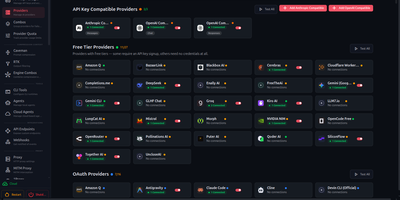
OmniRoute is an AI gateway, aggregating 338 LLM providers including OpenAI, Anthropic Claude, Google Gemini, DeepSeek, Kimi, MiniMax, and GLM into a single OpenAI-compatible endpoint at localhost:20128. The gateway catalogs over 1,200 models across 90 free-tier providers and 40 free-forever providers, automatically rotating through tier-1, tier-2, and tier-3 fallback chains when any provider exhausts its quota or returns errors. RTK plus Caveman stacked token compression reduces eligible context by 15 to 95 percent before forwarding requests, cutting API costs dramatically without degrading output quality. OmniRoute exposes its full routing engine through a built-in MCP server with 104 tools across 31 scopes over stdio, HTTP, and SSE transports, plus an A2A protocol server with six autonomous agent skills and JSON-RPC 2.0 streaming. The gateway integrates directly with Claude Code, Cursor, GitHub Copilot, Codex CLI, OpenCode, and Cline through standard base-URL configuration. Seventeen routing strategies include latency-optimized, cost-minimized, and auto-scoring modes that evaluate candidates on success rate, context fit, model fitness, quota state, and circuit-breaker health. The Next.js dashboard provides real-time provider status, usage analytics, combo chain configuration, and model catalog browsing via a responsive PWA. Running on a dedicated VPS on RepoCloud with guaranteed CPU, RAM, and SSD, full root SSH access, and a browser serial console. MIT licensed.
Agent Gateway
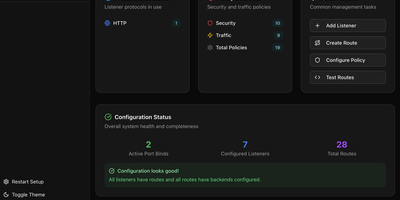
Backed by the Linux Foundation with contributions from AWS, Cisco, IBM, Microsoft, Red Hat, and Shell, Agentgateway is the first data plane built from the ground up for AI agent workloads — providing a unified Rust-based proxy that handles conventional HTTP and gRPC traffic alongside MCP tool servers, A2A agent communication, and LLM inference endpoints through a single deployment. The LLM gateway routes requests to OpenAI, Anthropic, Gemini, AWS Bedrock, and other providers through an OpenAI-compatible unified API with per-tenant budget controls, spend tracking, prompt enrichment, load balancing across multiple model endpoints, and automatic failover when providers experience outages. The MCP gateway federates multiple tool servers behind one endpoint, supporting stdio, HTTP/SSE, and Streamable HTTP transports with built-in OAuth authentication compliant with the MCP auth specification, integrating Auth0 and Keycloak out of the box. OpenAPI integration exposes existing REST APIs as MCP-native tools without code changes, enabling legacy services to participate in agent workflows. Policy-based RBAC controls which agents access which tools, while OpenTelemetry integration provides distributed tracing across agent communication chains. Deploy as a standalone binary with flat YAML configuration or on Kubernetes using the built-in controller with Gateway API support for declarative infrastructure-as-code management. Running on a dedicated VPS on RepoCloud with guaranteed CPU, RAM, and SSD, full root SSH access, and a browser serial console. Apache 2.0 licensed.
MetaMCP
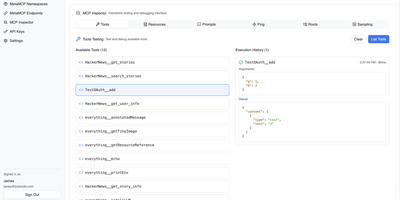
With 2,600+ GitHub stars, MetaMCP solves the MCP server sprawl problem by aggregating any number of upstream servers into a single authenticated endpoint that any MCP client connects to once. Group servers into namespaces — development tools in one, data sources in another — then publish each namespace as its own SSE, Streamable HTTP, or OpenAPI endpoint with API-key authentication in headers or query parameters, or full OAuth per the MCP Spec 2025-06-18 standard. The aggregation engine discovers tools, resources, and prompts from all active servers in parallel, prefixes tool names with server identifiers to prevent collisions, and applies configurable middleware including tool filtering to reduce context-window bloat and description overrides to improve LLM comprehension. The web management UI lets you configure MCP servers with stdio, SSE, or Streamable HTTP transports, toggle servers active or inactive per namespace, create and revoke API keys per endpoint, and inspect discovered tools with their schemas. Nested MetaMCP support enables hierarchical architectures where one MetaMCP instance consumes another, creating multi-level tool organization with automatic name resolution. Compatible with Claude Desktop, Claude Code, Cursor, Open WebUI, and any MCP-compatible client through a single connection URL. The Docker container packages the TypeScript backend with PostgreSQL for configuration persistence, exposing the management UI on port 12005 and MCP endpoints on configurable ports. Running on a dedicated VPS on RepoCloud with guaranteed CPU, RAM, and SSD, full root SSH access, and a browser serial console. MIT licensed.
GPT Load
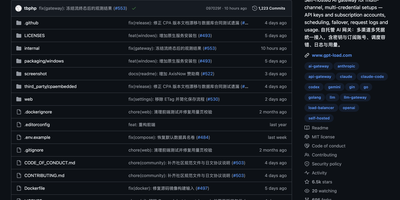
GPT Load has become the go-to self-hosted AI gateway for teams managing multiple LLM provider credentials behind a single URL. The Go-built proxy transparently preserves native API formats for OpenAI Chat Completions, OpenAI Responses, Anthropic Messages, and Google Gemini — applications swap one base URL and keep their existing SDK integration untouched. Twenty built-in channels cover official APIs (OpenAI, Anthropic, Gemini, xAI), cloud platforms (Azure OpenAI, AWS Bedrock, Google Vertex AI), model services (DeepSeek, Moonshot AI, SiliconFlow, Zhipu AI, Alibaba Cloud, Volcengine, OpenRouter, Groq), and subscription accounts (Codex, Claude, Antigravity, Grok) using the same credential management, scheduling, and health system. The intelligent key pool rotates among valid credentials using atomic counters for fair high-concurrency distribution, automatically blacklists failing keys after configurable thresholds, and recovers them via scheduled health checks — all transparent to clients. Weighted load balancing distributes traffic across multiple upstream endpoints while per-credential proxies route individual keys through different egress paths. The Vue 3 management dashboard provides real-time statistics, group configuration, key testing, request logs with full debugging context, per-model cost estimates, and route inspection. Docker deployment exposes the management interface and proxy on port 3001 with SQLite by default, MySQL or PostgreSQL optional, and Redis for distributed leader-follower cluster scaling. Running on a dedicated VPS on RepoCloud with guaranteed CPU, RAM, and SSD, full root SSH access, and a browser serial console. MIT licensed.
Centrifugo
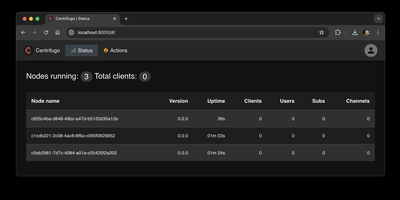
Benchmarked at one million concurrent WebSocket connections and 30 million delivered messages per minute on a single server, Centrifugo is a self-hosted real-time messaging server that integrates with any backend language — Node.js, Python, Go, Ruby, PHP, Java — without requiring architectural changes to your existing application. It handles persistent connections over WebSocket, HTTP-streaming, Server-Sent Events, gRPC, and experimental WebTransport, routing messages through a channel-based PUB/SUB model with automatic reconnection recovery that replays missed messages from hot channel history. Built-in horizontal scaling operates through Redis (including Redis Cluster, AWS ElastiCache, Valkey, KeyDB, and DragonflyDB), NATS, or PostgreSQL brokers, allowing multi-node deployments without external message queues. The server provides JWT-based authentication using HMAC or RSA keys, granular channel permissions, online presence tracking showing who is currently subscribed to a channel, and an RPC proxy that forwards client calls to your backend over HTTP or gRPC. The embedded ReactJS admin web interface displays real-time connection statistics, node information, and provides an interactive API console for publishing messages, managing subscriptions, and inspecting channel history. Official client SDKs are available for JavaScript, Dart, Go, Swift, and Java, with unidirectional transports requiring no SDK at all. Centrifugo also supports delta updates to minimize bandwidth, connection event proxying, and Prometheus-compatible metrics for Grafana monitoring. Running on a dedicated VPS on RepoCloud with guaranteed CPU, RAM, and SSD, full root SSH access, and a browser serial console. Apache 2.0 licensed.

Hoppscotch
Backed by nearly 80,000 GitHub stars and recognized as one of the most popular developer tools in the open-source ecosystem, Hoppscotch delivers a complete API development platform that runs instantly in any browser with zero installation. The platform supports six protocols out of the box including REST with full HTTP method coverage, GraphQL with schema introspection and multi-column documentation, WebSocket for full-duplex communication, Socket.IO, MQTT for IoT messaging, and Server-Sent Events for real-time streaming. Request collections organize your API calls into logical groups with support for sub-folders, environment variables with scope inheritance, pre-request scripts and post-request test scripts written in JavaScript, and automatic code snippet generation in over twenty languages and frameworks. Teams can collaborate in real-time with shared workspaces, role-based access controls, and cloud synchronization across devices. Migration from Postman, Insomnia, or OpenAPI specifications happens with a single click import. The self-hosted edition deploys via Docker Compose with PostgreSQL for data persistence, supporting SSO authentication through SAML and OAuth providers, SMTP configuration with OAuth2, and admin dashboard for user management. The platform also ships as a native desktop application for macOS, Windows, and Linux with offline support, plus a CLI tool for running collections in CI/CD pipelines. A built-in proxy mode bypasses CORS restrictions during development, and an interceptor enables request debugging and response modification. Running on a dedicated VPS on RepoCloud with guaranteed CPU, RAM, and SSD, full root SSH access, and a browser serial console. MIT licensed.
Unkey
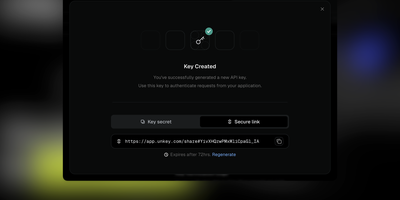
Unkey is the open-source platform that unifies API key management, rate limiting, deployment, and observability into a single control plane. The Go API service validates keys with sub-millisecond latency using regional Redis caches and MySQL 8.0 persistent storage, while ClickHouse captures every verification event for per-key and per-keyspace analytics with filterable time-series charts, request counters, and active key tracking. Keyspaces organize API keys by product, environment, or tier, each configurable with custom prefixes, byte lengths, IP whitelists, encrypted key recovery, and delete protection. Per-key settings include expiration dates, rate limit quotas with configurable windows, RBAC roles and permissions, owner identities linking multiple keys to a single user or organization, and key rotation with grace periods from immediate revocation through 24-hour overlap. The deployment pipeline connects GitHub repositories for automatic Docker container builds, generates preview environments per commit, promotes tested versions to production, and validates releases with OpenAPI diff detection flagging breaking changes before production. The edge gateway authenticates and rate-limits requests at the closest region before routing to the nearest API instance. Immutable audit logs track every key creation, verification, deletion, and configuration change with actor, timestamp, and event metadata. The CLI provides terminal access to key management, analytics queries, and deployment operations. On RepoCloud, deploy Unkey on a dedicated VPS with Docker, root SSH access, and complete control over your API infrastructure, all under the AGPL license.
Bifrost
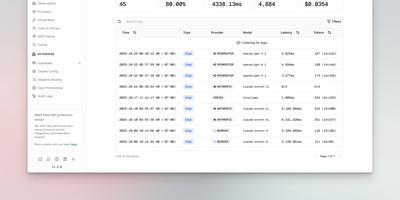
Bifrost is an open-source AI gateway that unifies 23+ LLM providers into a single OpenAI-compatible endpoint with automatic failover, semantic caching, and built-in cost governance, so one provider going down never takes your production AI application with it. Point your existing OpenAI or Anthropic SDK at Bifrost's local endpoint and gain access to OpenAI, Anthropic, AWS Bedrock, Google Vertex, Azure, Groq, Mistral, and Ollama without changing application code. Define fallback chains that automatically switch providers when one returns errors or exceeds latency thresholds, keeping response times stable during outages. The built-in web dashboard at port 8080 lets you configure providers, create virtual API keys, monitor live request traffic, and review analytics without editing configuration files. Semantic caching combines exact hash matching with vector similarity search via Weaviate, serving cached responses for identical or paraphrased prompts in sub-millisecond time to cut costs on repetitive workloads. The MCP gateway connects AI agents to external tools like filesystems, databases, and web APIs, exposing them to clients such as Claude Desktop and Cursor with per-key allow-lists. Four-tier budget hierarchy at customer, team, virtual key, and provider levels enforces spend caps, rate limits, and model restrictions across your organization. Extend functionality through custom Go plugins for analytics, monitoring, or security middleware. Native Prometheus metrics and OpenTelemetry distributed tracing give operations teams full production observability. Running on a dedicated VPS on RepoCloud with guaranteed CPU, RAM, and SSD, full root SSH access, and a browser serial console. Apache 2.0 licensed.
Apache APISIX
With 17,000 GitHub stars, 460+ contributors, and deployments across telecommunications, automotive, and financial services running on over 10,000 CPU cores at the largest known installations, Apache APISIX delivers a fully dynamic API gateway achieving 140,000 QPS on eight cores with sub-millisecond latency through NGINX's event-driven architecture and LuaJIT-compiled plugin execution. The 100+ open-source plugins cover authentication (JWT, OAuth 2.0, OIDC, Keycloak, LDAP), observability (Prometheus, Datadog, SkyWalking, OpenTelemetry), traffic management (rate limiting, circuit breaking, canary releases, traffic splitting), and security (CORS, IP restriction, CSRF protection) — all hot-reloadable without process restarts via etcd-based real-time configuration synchronization. Multi-protocol support handles HTTP, gRPC, MQTT, TCP, UDP, and WebSocket traffic for both north-south API access and east-west service mesh communication. AI gateway capabilities proxy requests to 20+ LLM providers with semantic caching, token-aware rate limiting, provider failover routing, and content moderation. Custom plugins extend the gateway in Lua, Go, Java, Python, or WebAssembly. Radixtree route matching handles 100,000+ routes without performance degradation. Functions as a Kubernetes ingress controller with native service discovery for Consul, Nacos, and Eureka. Deploy via Docker or Helm charts with horizontal scaling through etcd cluster coordination. Running on a dedicated VPS on RepoCloud with guaranteed CPU, RAM, and SSD, full root SSH access, and a browser serial console. Apache 2.0 licensed.
OpenLLM
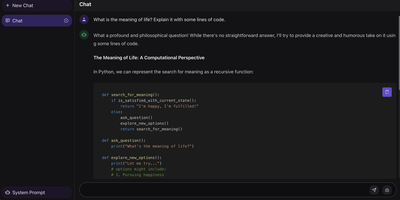
OpenLLM serves any large language model as an OpenAI-compatible API endpoint from a single CLI command, handling model download, backend selection, quantization, and port binding automatically. It supports the full spectrum of popular models including Llama 3.3, Qwen2.5, DeepSeek, Mistral, and Phi3, choosing between vLLM and PyTorch inference backends based on hardware capabilities. When vLLM is available, continuous batching with PagedAttention achieves up to 23x throughput improvement over naive serving, while GPTQ and bitsandbytes quantization reduces memory requirements for GPU-constrained deployments. The server exposes a RESTful API on port 3000 with full OpenAI client library compatibility, enabling drop-in replacement for commercial providers in any application using the standard chat completions format. A built-in web chat UI at the /chat endpoint provides immediate interactive testing without external clients. Custom model repositories allow teams to maintain private catalogs of fine-tuned models alongside the default repository that tracks the latest releases. Deployment workflows generate production-ready Docker images automatically, with Kubernetes manifest support for orchestrated scaling. Native integration with LangChain and LlamaIndex supports RAG pipelines, Transformers Agents enables tool-calling workflows, and HuggingFace Hub handles model discovery. Server-Sent Events enable real-time token streaming across all API endpoints. Backed by BentoML's production ML infrastructure. Running on a dedicated VPS on RepoCloud with guaranteed CPU, RAM, and SSD, full root SSH access, and a browser serial console. Apache 2.0 licensed.

Ory Hydra
Ory Hydra is an OpenID Certified OAuth 2.0 and OpenID Connect provider that plugs into any existing user database or authentication system through a headless consent and login bridge, letting you own your authorization infrastructure without rebuilding identity management from scratch. The Go binary ships at under 15MB with zero system dependencies and exposes two distinct API surfaces: a public endpoint on port 4444 handling authorization code flows, token exchanges, PKCE challenges, device authorization grants per RFC 8628, and OpenID Connect discovery, plus an admin endpoint on port 4445 managing client registration, token introspection, consent session lifecycle, and JWKS rotation. Access tokens can be issued as opaque reference tokens or signed JWTs for stateless validation at resource servers, while refresh token rotation, token revocation per RFC 7009, and pairwise subject identifiers provide granular security controls. Persistent storage spans PostgreSQL, MySQL, and CockroachDB with automatic schema migrations, and the architecture supports horizontal scaling behind load balancers with shared database state. Dynamic client registration per RFC 7591 enables automated provisioning, and the OAuth 2.0 Threat Model security considerations are implemented as default behaviors rather than optional add-ons. Trusted by OpenAI and other internet-scale platforms. Helm charts and Docker Compose quickstarts provide production-ready deployment paths alongside the broader Ory ecosystem including Kratos for identity management, Oathkeeper for zero-trust API proxying, and Keto for fine-grained permissions. Running on a dedicated VPS on RepoCloud with guaranteed CPU, RAM, and SSD, full root SSH access, and a browser serial console. Apache 2.0 licensed.
CPA Manager Plus
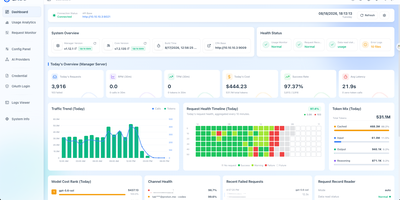
CPA Manager Plus is a self-hosted observability dashboard and management panel that tracks every AI request flowing through your CLI Proxy API gateway, breaking down failures, costs, and account health across providers like OpenAI, Anthropic, xAI, and Codex in one interface. When a request fails, drill into the persistent history to see status codes, affected models, latency, and redacted failure evidence without exposing raw response bodies. The cost analytics engine breaks down token consumption and estimated spend by model, provider, account, API key, project, channel, and time range while tracking input, output, reasoning, cache, and service-tier pricing semantics separately. Model prices sync automatically from models.dev with LiteLLM and OpenRouter fallbacks, and you can add local overrides for aliases or internal models. For teams running Codex or xAI accounts, the health inspector reads quota windows, reset evidence, credential state, and workspace status on a configurable schedule, routing credential failures into an action queue for review rather than letting them silently degrade throughput. Deploy the Lightweight Panel to replace your existing CPA management UI without adding another service, or run Full Mode as a single Docker container that adds the Manager Server with persistent SQLite storage for request history, historical analytics, and automated account inspections. Export or import request history as JSONL for external analysis, and back up the SQLite files alongside your encrypted management keys. Running on a dedicated VPS on RepoCloud with guaranteed CPU, RAM, and SSD, full root SSH access, and a browser serial console. MIT licensed.
Spree
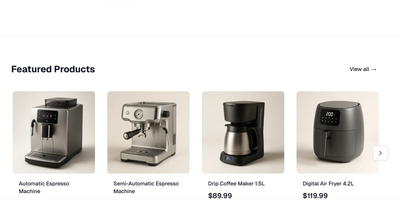
Spree Commerce provides a complete headless ecommerce backend where products, orders, payments, and promotions are managed through typed REST APIs with OpenAPI 3.0 specs and TypeScript SDKs providing autocomplete and type safety. Fifteen years of production history and 15,600+ GitHub stars back a mature ecosystem that ships a production-ready Next.js 16 storefront built with React 19 and Tailwind CSS 4, including multi-region URL routing and Stripe payments supporting Apple Pay, Google Pay, Klarna, and Affirm. Sales Channels model distinct contexts from a single instance: DTC storefronts, wholesale portals, mobile apps, and point-of-sale terminals, each with its own catalog, pricing, and checkout flow. The rules-based promotion engine supports coupon codes, multi-condition discounts, gift cards, and digital product fulfillment. Multi-warehouse inventory tracks stock across locations in real time with reservations and advanced order routing that splits shipments across fulfillment centers. B2B capabilities include customer-specific price lists, storefront access gating, wholesale portals with approval workflows, and quick order forms. The admin dashboard built with Tailwind CSS provides role-based permissions, product management, order processing with refunds, and scaffold generators for custom pages. BSD 3-Clause licensed with zero platform or transaction fees. Running on a dedicated VPS on RepoCloud with guaranteed CPU, RAM, and SSD, full root SSH access, and a browser serial console.
CubeJS
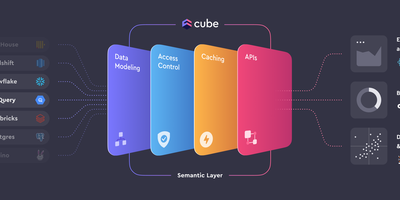
Between your databases and everything that consumes data - BI tools, embedded analytics, AI agents - sits Cube (formerly Cube.js), an open-source semantic layer. Metrics, dimensions, joins, and access rules are defined once as code in YAML, JavaScript, or Python, forming a governed data model that every downstream consumer shares, so "revenue" means the same thing in every dashboard. Caching is two-level: an in-memory cache absorbs bursts of identical queries, and declared pre-aggregations - rollup tables built in the warehouse or in Cube Store, Cube's distributed columnar engine, and refreshed in the background - deliver sub-second latency while cutting warehouse compute costs. The query planner routes each request to cache, rollup, or source automatically. Consumers connect through a Postgres-compatible SQL API (any tool that speaks Postgres works), plus REST, GraphQL, and a Meta API for model introspection. Row-level security and multi-tenancy are enforced in the layer itself, upstream of every client. Sources include Snowflake, BigQuery, Databricks, Postgres, MySQL, Presto, and Athena. Headless by design - bring your own UI.