Categories
Developer Tools Automation Authentication API Gateway AI Infrastructure MCP Server Integration Platform OAuthStars
Forks
Watchers
Developer links
Open Connector
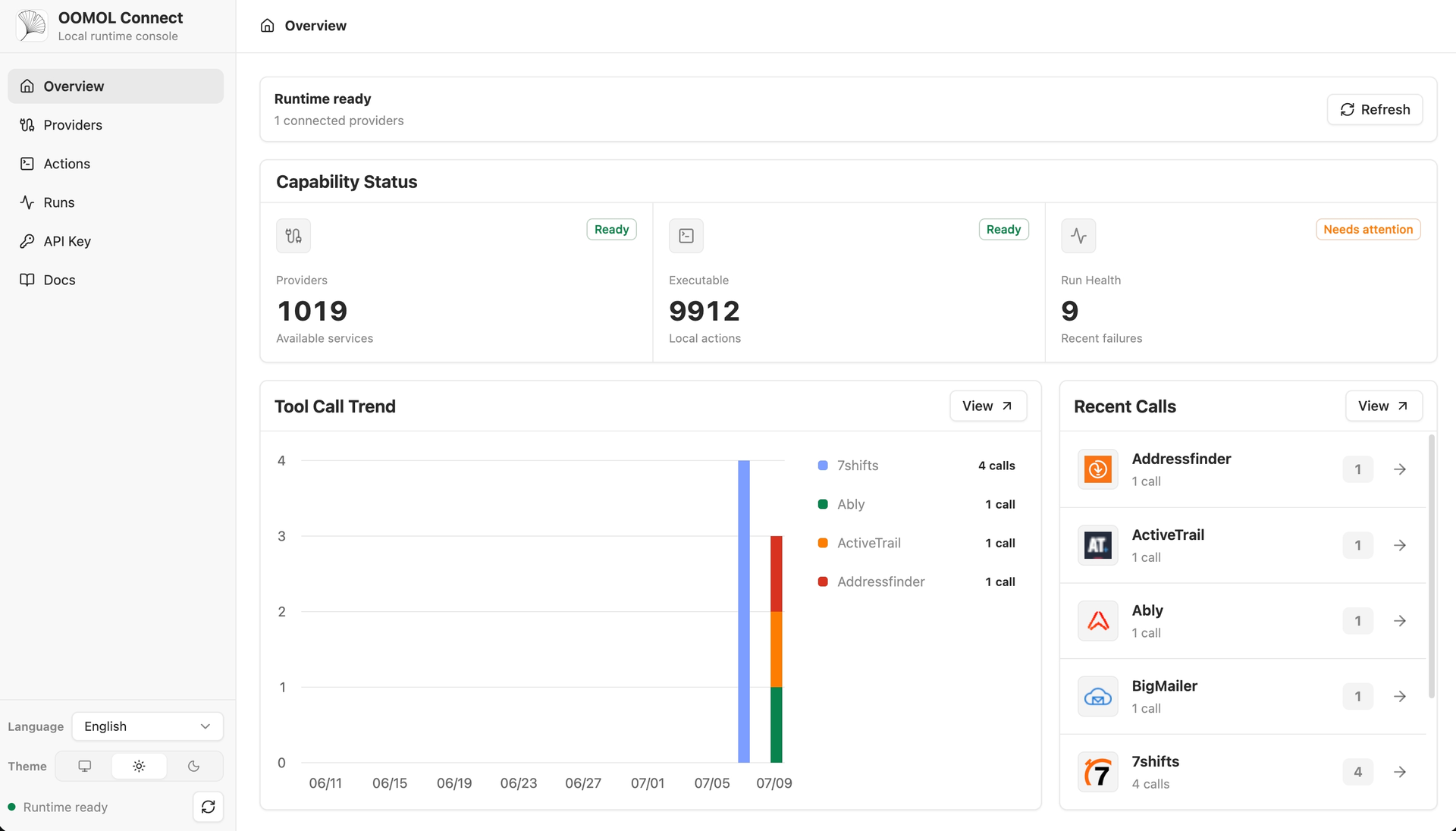
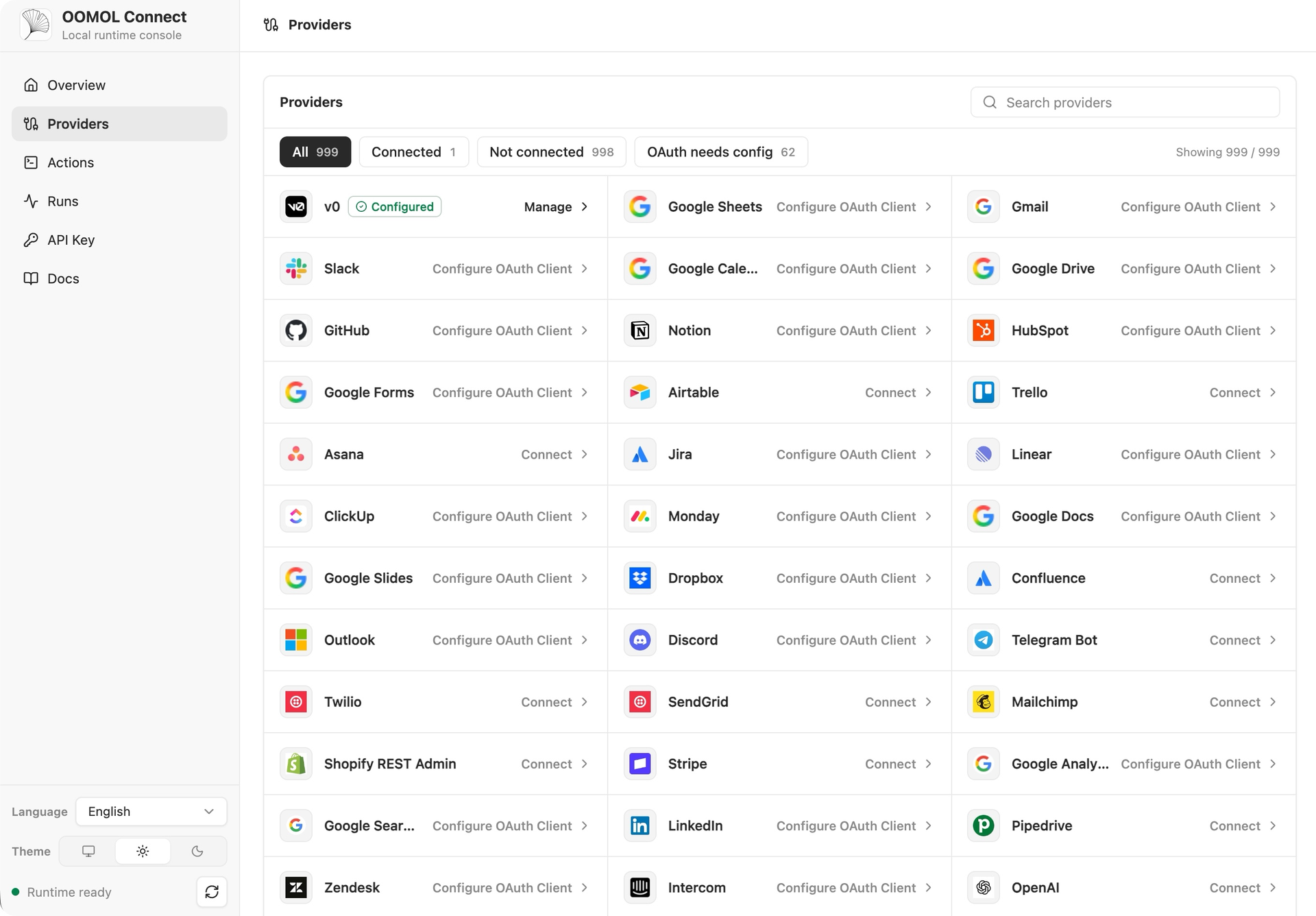
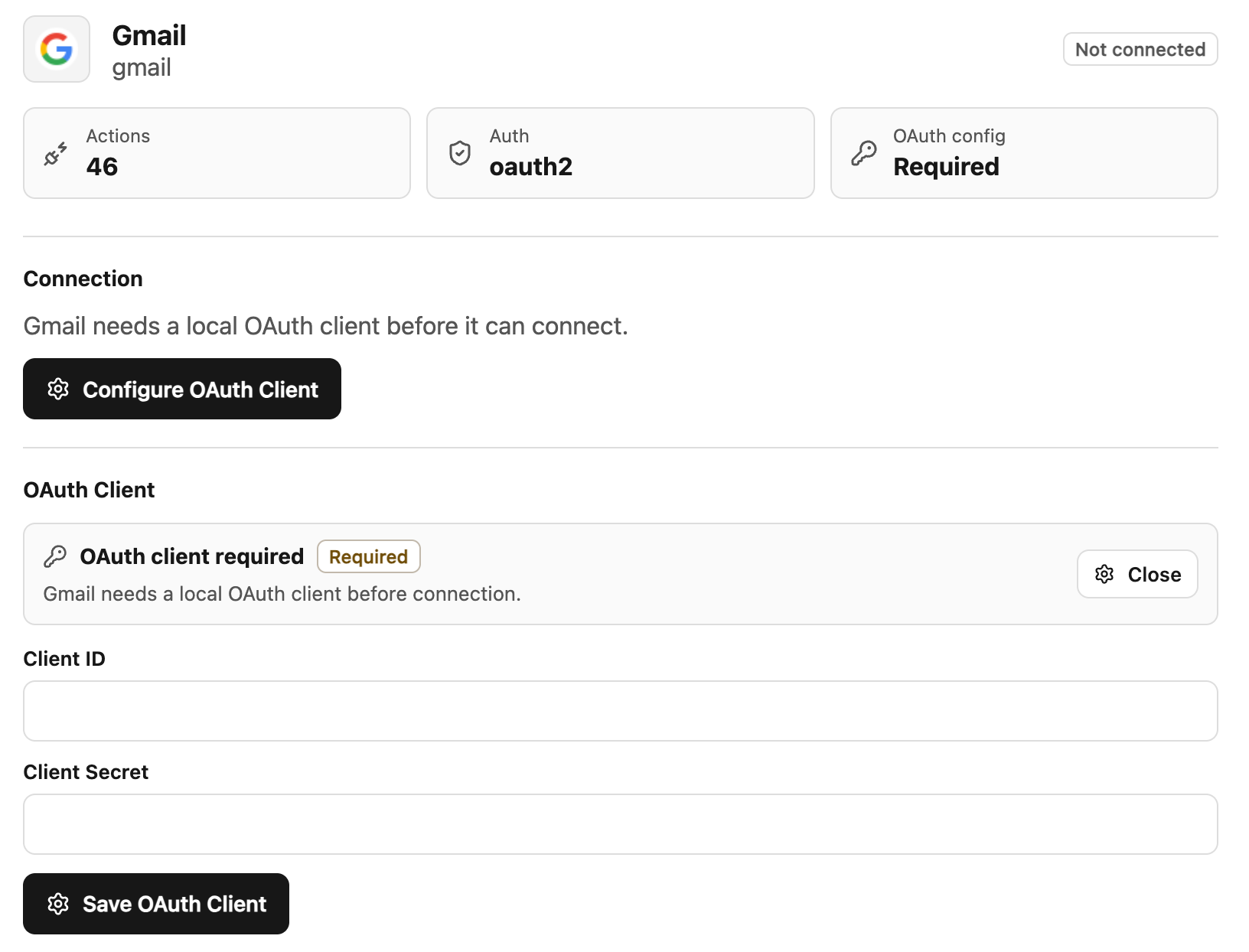
With over 5,000 GitHub stars since its June 2026 launch, OOMOL OpenConnector bridges the gap between AI agents and the real world by handling the authentication nightmare that stops LLMs from calling external APIs safely. The runtime connects to more than 1,000 SaaS providers — GitHub, Gmail, Notion, Slack, Microsoft, HubSpot, Google Workspace, and hundreds more — through 10,000+ prebuilt typed Actions that agents can discover and execute without ever touching raw credentials. OAuth2 flows, API key rotation, custom credentials, and no-auth providers are all managed centrally with AES-encrypted storage, scoped runtime tokens, and configurable action allowlists and blocklists that enforce least-privilege access. Agents interact through five access surfaces: the Model Context Protocol endpoint at /mcp for Claude and other MCP-capable hosts, a full REST API at /v1 for programmatic control, an auto-generated OpenAPI specification for code generation, a TypeScript SDK for application integration, and the oo CLI for local agent relay. The built-in Web Console provides browser-based administration for configuring OAuth apps, managing connections, inspecting action schemas, and reviewing execution logs with redacted inputs. Deploy via Docker Compose with SQLite for single-server setups, run from source on Node.js 22+, or push to Cloudflare Workers with D1 and R2 for edge deployment. Running on a dedicated VPS on RepoCloud with guaranteed CPU, RAM, and SSD, full root SSH access, and a browser serial console. Apache 2.0 licensed.
Benefits
- Agents Never See Raw Credentials
- OAuth tokens, API keys, and secrets remain encrypted within the runtime boundary. Agents receive only typed action results, eliminating credential leakage through prompt injection or context window exposure.
- 1,000+ Providers, One Interface
- Connect GitHub, Gmail, Slack, Notion, HubSpot, Microsoft, and hundreds more through a unified action catalog. Each provider ships prebuilt typed schemas that agents can discover and call without custom integration code.
- Five Access Surfaces for Any Client
- MCP for agent hosts, REST API for scripts, OpenAPI for code generators, TypeScript SDK for applications, and CLI for local relay — every client type connects through its preferred protocol without adaptation layers.
- Deploy Anywhere in Minutes
- Single-server Docker Compose with SQLite, source runtime on Node.js 22+, Cloudflare Workers with D1 and R2, or Fly.io with persistent volumes. One codebase runs identically across all deployment targets.
Features
- Model Context Protocol
- Native MCP endpoint at /mcp exposes discovery tools and action execution to Claude, Cursor, and any MCP-capable agent host with runtime token authentication.
- OAuth2 Flow Management
- Handles authorization code grants, token refresh, callback routing, and scope management for providers like Google, Microsoft, Slack, and GitHub automatically.
- Action Policy Engine
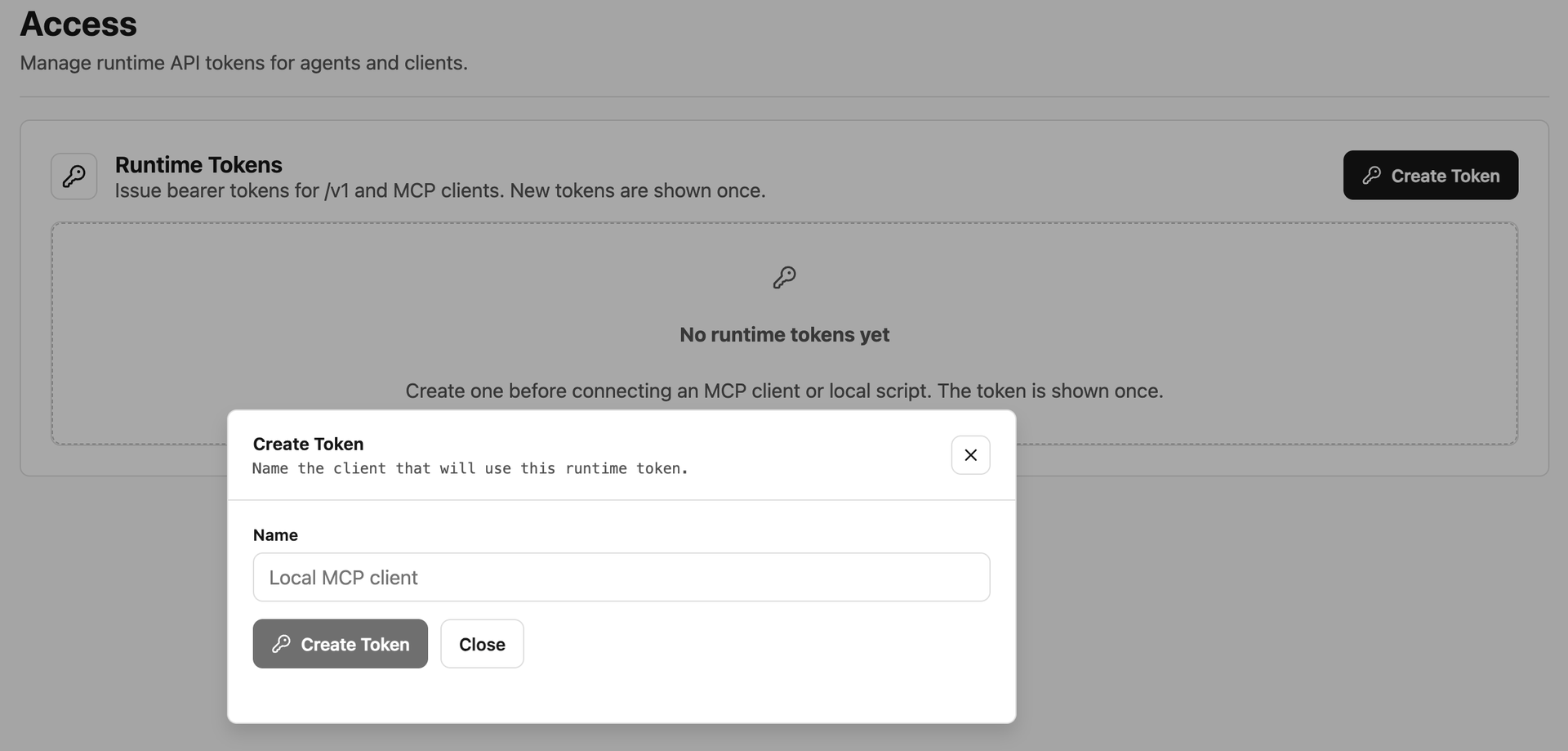
- Configurable allowlists and blocklists per runtime token restrict which actions agents can execute, enforcing least-privilege boundaries at the gateway level.
- Web Console Administration
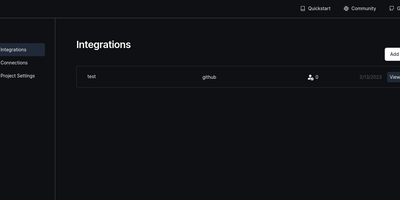
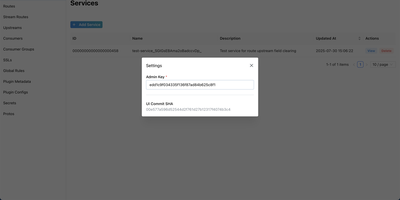
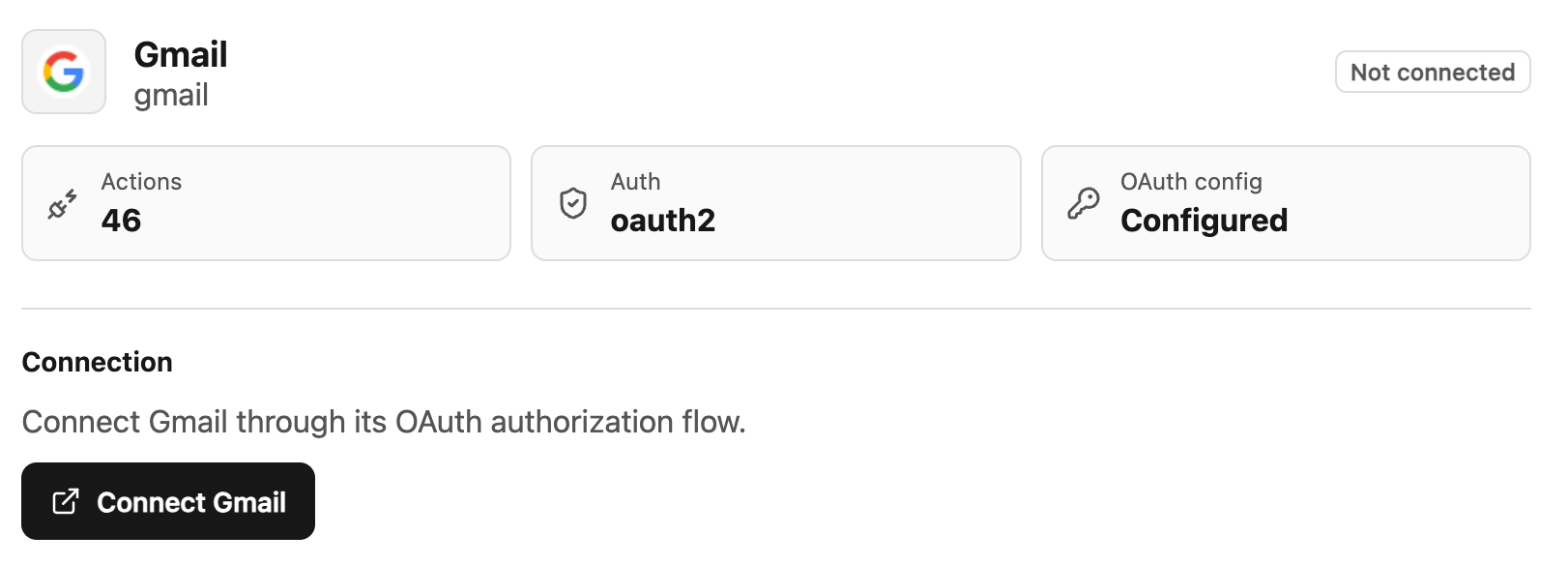
- Browser-based interface for browsing providers, configuring OAuth apps, managing connections, inspecting schemas, reviewing run logs, and issuing runtime tokens.
- Typed Action Schemas
- Every action exposes input/output JSON schemas and agent-readable markdown guides, enabling LLMs to discover capabilities and construct valid requests without hallucination.