
QMReader
QMReader is a self-hosted reading workbench that treats RSS as raw material for knowledge you keep, not a pile of unread badges waiting to be cleared. Subscribe to RSSHub routes, direct feeds, sitemaps, Hacker News, Product Hunt, GitHub Trending, and Hugging Face Papers, and new items land in the article list immediately while translation and rewriting finish in the background. English headlines gain Chinese translations automatically, and full articles can be read as the original, a Chinese translation, or a plain-language rewrite, all kept side by side on the same page. Highlight passages, attach your own commentary, and open an AI conversation scoped to the article in front of you instead of starting from a blank chat box. Work you produce becomes a public reading asset with a stable link: translations, rewrites, comments, and dialogues collect on contributor pages and flow out through asset catalogs and RSS feeds for the next reader. Split background workers keep fast feed fetching separate from slower AI processing, and search, unread, popular, favorites, and history views keep a heavy reading habit navigable. Running on a dedicated VPS on RepoCloud with guaranteed CPU, RAM, and SSD, full root SSH access, and a browser serial console. MIT licensed.
OpenNVR
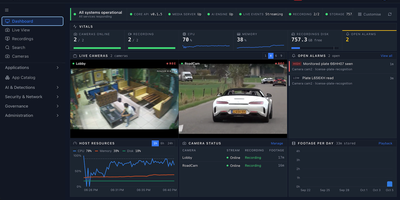
OpenNVR turns your own cameras and hardware into a video platform where recording, live viewing, and AI analysis all stay inside your perimeter. Any ONVIF or RTSP camera connects, including an Android phone running the companion camera app, and footage is written in one-minute chunks whether or not any model is running. Detection overlays appear moments after a camera is added, and you search recorded events in natural language instead of scrubbing timelines. Twelve installable applications cover intrusion detection, loitering, occupancy counting, line crossing, license plates, camera tampering, gate watching, and a doorbell that recognizes your family, each declaring its camera and network permissions before an administrator approves it. Swapping the underlying model changes nothing else, because every detector, plate reader, face recognizer, or vision-language model answers through the same adapter contract. Two Python SDKs let you write your own app as a rule over platform events or wrap your own model as a first-class capability. Cameras, zones, and apps surface in Home Assistant automatically through MQTT discovery. Offline and local-only modes return errors to every cloud route until an operator opts in, model weights are fingerprinted with SHA-256 and re-checked every minute, and an append-only audit log traces each alert to the exact weights that produced it. Running on a dedicated VPS on RepoCloud with guaranteed CPU, RAM, and SSD, full root SSH access, and a browser serial console. AGPL-3.0 licensed.
jshERP
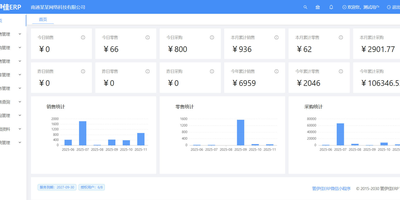
jshERP lets a small or midsize business, from a shop to a wholesaler, run purchasing, stock, sales, and money from one place instead of scattered spreadsheets. A purchase requisition becomes a purchase order, then a receipt that raises stock. A sales order becomes an outbound delivery that lowers it, or a purchase order when more must be bought in. Retail sales, returns, and serial-number scanning run through the same stock. Products sit in a category tree up to three levels deep, with barcodes, images, multiple attributes, customer-specific prices, and a base unit plus up to three secondary units. Transfers move goods between warehouses, assembly and disassembly merge and split products, and shelf locations record where each item sits. Other receipts and issues cover opening stock, stocktake corrections, and scrapped goods, while moving-average cost keeps valuation current. Finance logs income, expenses, receipts, payments, transfers, and prepayments against settlement accounts, and customer and supplier reconciliation reports export to Excel. Reports track stock levels, low-stock alerts, in-out statistics, and purchase and sales summaries, and the home page totals yesterday's and retail sales. Roles limit access down to single menus and buttons and can mask prices. A tenant model runs several businesses on one installation, and the interface switches among 73 languages. Running on a dedicated VPS on RepoCloud with guaranteed CPU, RAM, and SSD, full root SSH access, and a browser serial console. Apache-2.0 licensed.
VyManager
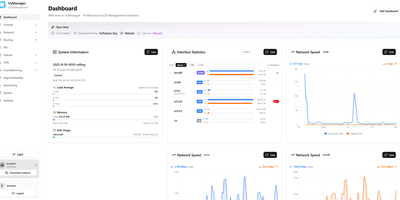
VyManager puts every VyOS router you run, across every site, into one web control plane with live dashboards and per-site permissions. Organize instances into logical sites, from the datacenter core to the smallest branch office, and add or remove routers without touching a command line. Live dashboards stream interface counters, system information, network graphs, and WireGuard peer status, so a saturated link announces itself before your users do. Configuration adapts to each router's VyOS version, with 1.4, 1.5, and rolling releases supported side by side during the longest upgrade cycle. Access is granted per site with OWNER, ADMIN, and VIEWER roles, API keys authenticate the machines, and SSH credentials stay encrypted at rest. A setup wizard walks a fresh deployment to its first managed router, and light, dark, and custom themes keep the night shift comfortable. For automation, AI assistants can be connected through the companion MCP integration, and the whole stack arrives as Docker Compose services you can redeploy in minutes. Running on a dedicated VPS on RepoCloud with guaranteed CPU, RAM, and SSD, full root SSH access, and a browser serial console. GPL-3.0 licensed.
MarimoHub
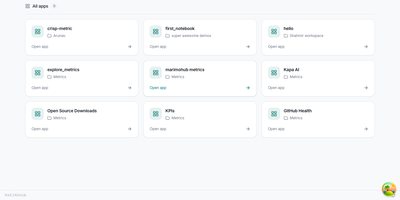
Running one marimo notebook is easy; running a team's worth of them, with storage, sign-on, versions, and somewhere for the results to live, is the job MarimoHub takes on. Notebooks gather in a searchable gallery organized by project, where every edit session leaves a version you can compare side by side, inspect, and restore when an experiment takes a wrong turn. Projects connect their data sources once through a versioned integration catalog, with sensitive values encrypted or pulled from external secret stores, and every new session receives the configuration automatically. When a notebook is ready for people who should never see its code, publish it as an interactive app: viewers get the controls and outputs while rollouts shift versions underneath them. Scheduled jobs rerun notebooks on a clock, GitHub sync keeps repository-backed notebooks current, and an assistant can work inside the notebook context with managed AI keys that never reach the sandbox. Underneath, you pick the object storage, the compute, and the identity provider, and back up one bucket to back up the whole hub. Running on a dedicated VPS on RepoCloud with guaranteed CPU, RAM, and SSD, full root SSH access, and a browser serial console. Apache 2.0 licensed.
AnywhereLAN
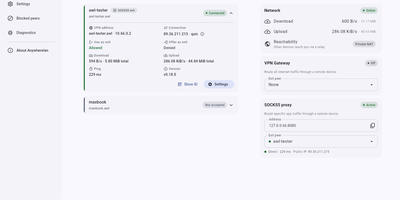
Open your laptop in a Lisbon cafe and your files at home answer as if the laptop never left the desk: AnywhereLAN stitches your own machines into one private mesh network with stable names like work-laptop.awl, no port forwarding and nothing exposed to internet scanners. There is no coordination server to trust. Peers announce themselves in the libp2p DHT, identify with ed25519 keys and connect directly over QUIC or TCP with TLS 1.3, hole-punching through NAT and borrowing a community relay only when both ends sit behind hostile firewalls. Send a browser out through the house connection with the built-in SOCKS5 proxy on 127.0.0.1:1066, handy on regional blocks and hostile hotel Wi-Fi. Prefer the full tunnel: the VPN gateway routes every IPv4 byte through a chosen peer, so the whole machine presents the exit node's address to the world. Devices join through invite links or QR codes. Every peer approves its friends and grants exit rights individually, and identity is a keypair you hold, so no account recovery email can betray the network. Manage it from the bundled web UI at admin.awl, script it from the awl CLI, watch it through Prometheus metrics on port 8639, and run it on Windows, macOS, Linux servers and Android phones. Running on a dedicated VPS on RepoCloud with guaranteed CPU, RAM, and SSD, full root SSH access, and a browser serial console. MPL-2.0 licensed.
Calibre-Web Automated
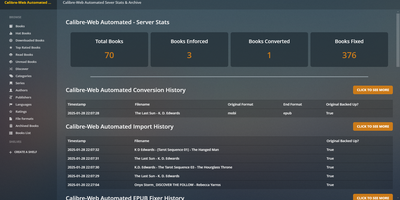
Turn any chaotic digital book archive into an autonomous, self-organizing reading portal using Calibre-Web Automated, a digital library manager featuring hands-free format conversions, metadata fetching, and e-reader synchronization. Readers can drop raw ebook files into the automated intake directory and watch the system instantly convert between twenty-eight distinct file types, repair malformed EPUB internal markup, and fetch enriched metadata from Hardcover, Kobo, and ISBN databases. The responsive web reader lets you browse collections, read directly in any desktop or mobile browser, and organize titles into dynamic rules-based Magic Shelves that update automatically. Built-in KOReader sync harmonizes reading progress and bookmarks across mobile devices and e-ink readers, while native OPDS feeds connect seamlessly to your favorite external reader applications. Administrative tools empower you to run hybrid SQL and fuzzy duplicate detection scans, perform batch metadata editing across entire series, enforce cover art changes directly into source files, and auto-dispatch newly ingested books to Kindle or Kobo devices via scheduled email delivery. Granular multi-user controls allow administrators to assign folder permissions, restrict downloads, enforce dark mode themes, and authenticate readers securely through OAuth and OpenID Connect identity providers. Running on a dedicated VPS on RepoCloud with guaranteed CPU, RAM, and SSD, full root SSH access, and a browser serial console. GNU General Public License v3.0 licensed.
Datakeel
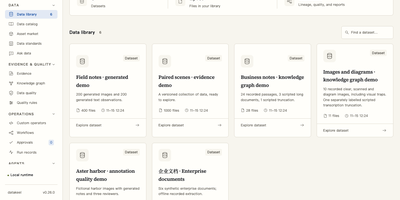
Datakeel is a workbench where teams proofread AI training data, trace every business number back to its definition, and approve risky changes before anything is deleted. Evidence review marks each claim as present, absent, or unknown, so missing annotations never pass as clean, and accepted decisions are stored apart from the extracted evidence. Ask data answers a question like last quarter's retail revenue from registered metrics, shows the bound SQL, source tables, and time range, and refuses or asks for clarification when a question is ambiguous. A data catalog maps sources, tables, fields, owners, lineage, and glossary terms, and an asset market handles access requests with purpose and expiry. A knowledge graph review queue turns document extractions into entities and relations that stay candidates until a person checks the source sentence. Dataset versions freeze file manifests with SHA-256 hashes, quality scores rank samples, and workflows run health checks, cleanups, and metric changes that pause at an approval sheet bound to a digest of the plan. Built-in agents and an MCP server can propose actions but never apply them alone, every receipt is kept in an append-only history, and the interface ships in English and Chinese with three themes. Running on a dedicated VPS on RepoCloud with guaranteed CPU, RAM, and SSD, full root SSH access, and a browser serial console. Apache-2.0 licensed.
Paperclip
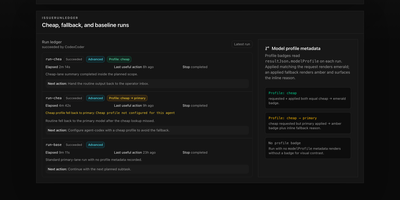
With over 77,000 GitHub stars accumulated in under five months since its March 2026 launch, Paperclip has become the default control plane for teams running multiple AI agents in production. Rather than juggling dozens of terminal tabs with Claude Code sessions, Codex instances, and Gemini CLI workers, Paperclip organizes all agents into a company structure with org charts, reporting lines, role-based permissions, and per-agent monthly budgets that trigger hard-stops when exceeded. The platform supports any runtime through its adapter system — Process adapters manage local CLI agents like Claude Code, Codex, Cursor, Pi, and OpenCode as child processes, while HTTP adapters trigger remote agents via webhooks to OpenClaw, serverless platforms, or custom endpoints. Heartbeat-based execution wakes agents on configurable schedules, injecting goal context, budget state, and workspace paths directly into the invocation payload. The Work and Task System provides atomic checkout with execution locks, first-class blocker dependencies, and structured work products to eliminate duplicate effort. Governance features include approval workflows, decision tracking, emergency stops, and full audit trails tracing every mutation to an actor. Deployment runs as a single Node.js process with embedded PostgreSQL locally or scales to external Postgres for production, installable in one command via npx paperclipai onboard. Running on a dedicated VPS on RepoCloud with guaranteed CPU, RAM, and SSD, full root SSH access, and a browser serial console. MIT licensed.
Hindsight
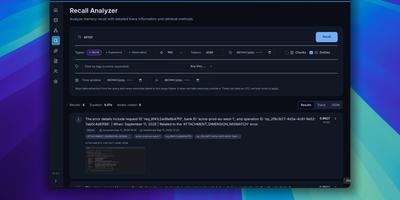
Memory that survives the session: Hindsight extracts facts, entities, and timestamps from everything an AI agent retains, then lets the agent search or reason over it later. Adding it to an existing LLM client takes a two-line wrapper, and more than 60 integrations cover Claude Code, Cursor, LangGraph, CrewAI, and n8n. Every bank also exposes its own MCP endpoint. Retain sends text, images, or files through an LLM that extracts facts, timestamps, entities, and relationships. Recall runs semantic, keyword, graph, and temporal searches in parallel, merges them with reciprocal rank fusion, reranks with a cross-encoder, and trims to a token budget. Reflect reasons across memories for questions that need synthesis, shaped by per-bank skepticism, literalism, and empathy traits. In the background, related facts consolidate into observations that keep exact quotes and proof counts and are refined, never silently overwritten. Mental models and wiki-style knowledge pages hold standing answers that rewrite themselves as the bank learns. Each user, agent, or project gets an isolated bank with no cross-bank leakage, and Memory Defense redacts or blocks secrets and PII against 45 patterns. The Control Plane adds a Recall Analyzer with traces, a memory constellation graph, and a knowledge page editor. Extraction and reasoning can run on 25+ LLM providers, including local Ollama and llama.cpp. Running on a dedicated VPS on RepoCloud with guaranteed CPU, RAM, and SSD, full root SSH access, and a browser serial console. MIT licensed.

Fugleramme
Garden birdsong as a framed collage: Fugleramme draws the species heard right now as hand-cut illustrations from 1800s natural-history plates, for an e-ink panel, a TV, or any browser. The birds come from BirdNET-Go, which can listen on the same machine or elsewhere on the network, so the microphone can stay near the birds while the frame hangs in the living room. Nearly 1200 cut-outs cover over 650 species, none of them AI-generated, and each bird is sized by its real body mass, larger ones toward the centre. The page redraws only when the birds change. Heard nothing in the lookback window? A bare perch appears. Collage mode shows everything heard within a window from 15 minutes to all time, latest-bird mode changes only when a different species calls, and newest-arrival mode holds until a new species turns up. An optional spotlight puts the latest bird in the middle. Spiral or voids layouts rearrange the sheet, and a species limit keeps the most heard or the rarest. Names sit beside the birds or in a poster-style numbered key, in two languages at once from over 40, and a star flags a bird the station has never heard before for its first 24 hours. A web admin page covers display, detector address, and optional password sign-in. Running on a dedicated VPS on RepoCloud with guaranteed CPU, RAM, and SSD, full root SSH access, and a browser serial console. MIT licensed.
FreeLLMAPI
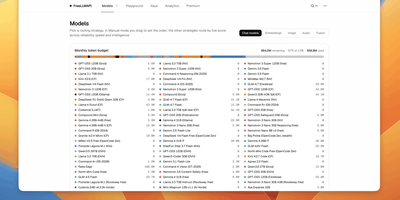
FreeLLMAPI collapses the chaos of 29 free LLM providers — Google AI, Cerebras, Groq, Mistral, OpenRouter, GitHub Models, Cohere, Cloudflare Workers AI, NVIDIA NIM, HuggingFace, SiliconFlow, Reka, Z.ai, and more — into a single /v1 endpoint that speaks both OpenAI and Anthropic protocols. The smart router selects the best available model for each request, automatically fails over to the next provider when rate limits hit, and tracks per-key token consumption so you never exceed a free-tier cap. Keys are stored with AES-256-GCM encryption and clients authenticate using a single unified bearer token, never exposing upstream provider credentials to downstream applications. The catalog tracks 251 model families across 358 provider/model endpoints with approximately 4 billion tokens per month of aggregate free-tier capacity, auto-refreshing from a signed manifest at freellmapi.co twice daily without requiring git pulls. Beyond chat completions, the proxy handles embedding, image generation, and audio/TTS endpoints, plus structured outputs with JSON schema forwarding, JSON healing, and format-ignore failover. An integrated MCP server at /mcp provides gateway introspection for coding agents, while the self-hosted OpenAPI reference at /v1/docs documents every route. Compatible with OpenAI SDKs, LangChain, LlamaIndex, Continue, Claude Code, and Hermes — just change base_url. Deploy via Docker, npm, or build from source. Running on a dedicated VPS on RepoCloud with guaranteed CPU, RAM, and SSD, full root SSH access, and a browser serial console. MIT licensed.
magpie
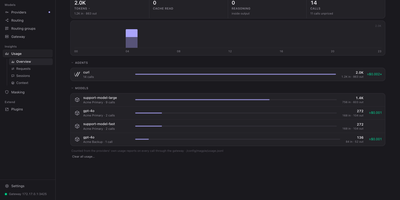
Point every coding agent and chat client at one self-hosted gateway, then choose which model answers from a single browser console. Add providers by preset or custom OpenAI-compatible URL, or sign in with the subscriptions you already pay for. Routing groups bundle several models into one name and move to the next member when a quota runs out, so the calling agent never sees the error. Create a gateway key per client, cap each with daily token or cost budgets, restrict its models, and watch usage counted separately. The Usage pages chart tokens, cost, request counts, cache hit rate, and a yearly heatmap, split by model, provider, or agent, with CSV export. A Routing view replays how each request was routed, with timing for masking, connecting, and the vendor. Masking swaps passwords, API keys, and tokens for placeholders before a prompt leaves your server and restores them in the answer. The browser page is protected by a key you set at launch. Running on a dedicated VPS on RepoCloud with guaranteed CPU, RAM, and SSD, full root SSH access, and a browser serial console. MIT licensed.
Sentry
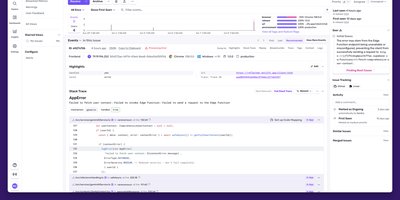
Backed by 44,000 GitHub stars and trusted by over four million developers, Sentry is the debugging platform that captures errors, traces, replays, profiles, and metrics from your applications and connects them all through distributed tracing. The error tracking engine captures full stack traces with source context, breadcrumbs, and automatic demangling for native crashes, while intelligent grouping consolidates duplicate events into actionable issues with regression detection and automatic assignment. Performance monitoring instruments your frameworks automatically, capturing every database query, API call, cache hit, and queue operation as spans within distributed traces that flow across frontend, backend, and mobile boundaries. Session Replay produces video-like recordings of real user sessions showing DOM interactions, network requests, console messages, and errors on a synchronized timeline, with AI-powered summaries that describe what happened without watching the full replay. Continuous profiling captures CPU execution data at the function and line level for Node.js, Python, iOS, and Android, linking slow spans directly to the exact code responsible. Cron monitoring tracks scheduled jobs for failures, missed runs, and duration anomalies. The alerting engine fires notifications through Slack, PagerDuty, Opsgenie, and webhooks on new issues, regressions, error spikes, or when latency and crash-free session rate thresholds are crossed. Self-hosted deployment runs as a Docker Compose stack with PostgreSQL, ClickHouse, Kafka, Redis, and Relay. Running on a dedicated VPS on RepoCloud with guaranteed CPU, RAM, and SSD, full root SSH access, and a browser serial console. FSL licensed.

HEISS UI
ComfyUI's node graph is where workflows are built, not where pictures get made, and HEISS UI is the calm studio that sits on top of your ComfyUI server for the daily prompt, wait, look, tweak loop. Thirty model families work out of the box, from SD 1.5 and SDXL to Flux.2, Qwen-Image, Krea 2, and Wan 2.2, and missing text encoders, VAEs, or node packs each get a Download button, with Get all for the lot. Pick 2K and the model draws at 2048 in one run with no upscale in between, or send any finished picture to 2K or 4K with SeedVR2 in one click. Import your own workflow and it becomes clean controls over the same graph, with usual inputs connected and guesses marked for review. Paint over part of a picture and say what it becomes, and only that part changes, with inpainting across 18 image families and no extra nodes. The gallery auto-groups ten takes of one idea into a single tile, and opens on your phone while your rendering machine does the work. A Hidden vault locks private images behind Touch ID, Windows Hello, or a password; new PNGs can carry Civitai-ready metadata, and Zen mode shows only prompt and picture. Run it beside ComfyUI with Docker or npm on port 8787, or point it at ComfyUI on another machine. Running on a dedicated VPS on RepoCloud with guaranteed CPU, RAM, and SSD, full root SSH access, and a browser serial console. MIT licensed.
Mediarium
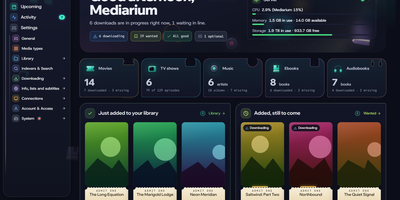
Find a title tonight and wake up to it named, filed, and ready to play: Mediarium is a self-hosted media manager that finds, downloads, repairs, and organizes movies, TV, music, ebooks, and audiobooks from one web page on your own server. Search once and it queries your Usenet and torrent indexers together, grabs the best release, unpacks it, applies your naming rules, and places it where Plex, Jellyfin, or Emby expects it. Quality profiles with upgrades and fallbacks keep hunting better copies automatically, while delay profiles, a blocklist with retries, and tags such as Kids or 4K keep the wrong releases out and collections tidy. Subtitles are matched to your exact file, with a timing fix when one runs out of sync. Family accounts carry permissions of their own: relatives who cannot add titles send requests you approve, and watch history read from your media server drives statistics and optional cleanup rules. The built-in Books app reads ebooks, plays audiobooks chapter by chapter, remembers your place everywhere, and even opens Kindle books. Torrents can run behind a built-in WireGuard VPN with a kill switch, downloads repair and unpack themselves, and notifications, backups, and a post-import script keep the routine invisible. Moving over reads your Radarr, Sonarr, Prowlarr, SABnzbd, and other existing setups without changing them. Running on a dedicated VPS on RepoCloud with guaranteed CPU, RAM, and SSD, full root SSH access, and a browser serial console. AGPL-3.0 licensed.
Squidex
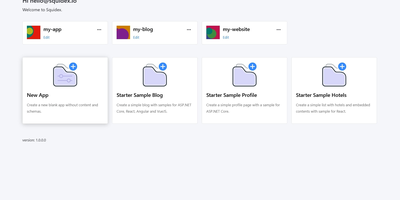
The front end should never dictate how your content is shaped. Squidex is an open-source headless CMS that stores content once and delivers it to any website, app, or service through REST, OData, and GraphQL APIs, so teams design schemas around their domain instead of around a theme. Editors work in a clean management UI: define schemas with validation and localisation, write content with references and components, manage images and files with resizing built in, and move drafts through custom workflows that say who creates, reviews, and publishes. Nothing waits on a developer for routine changes, and nothing ships unreviewed in organisations that need approval chains. Rules react to every content event, pushing fresh posts to syndication partners, notifying search indexes, invalidating caches, or calling your own webhooks; backups, versioning with diff-style history, and role-based permissions keep an auditable operation. Multiple projects live in one installation, clients authenticate API consumers, and content plugs into static-site generators, storefronts, and mobile apps from one hub. Because you run it yourself, the database options span MongoDB and several SQL servers, and the API your applications depend on answers from infrastructure you control with no per-seat tax on editors. Running on a dedicated VPS on RepoCloud with guaranteed CPU, RAM, and SSD, full root SSH access, and a browser serial console. MIT licensed.
SyncWatch
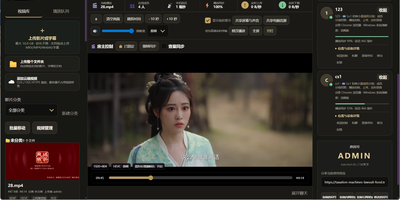
Movie night should not depend on everyone pressing play at the same second; SyncWatch runs your own watch-party server so friends in different places watch the same frame together. The host controls play, pause, seeking, and playback speed for the whole room, and late joiners or drifting clients are corrected back to the shared position automatically. You build the program from uploads or direct HTTPS media links, with subtitles, audio, images, and documents handled in the same library. Rooms can be permanent or temporary, protected by passwords and member limits, with host, admin, and permission-group control over who may operate playback. Between scenes, people talk through public and private chat, on-screen danmaku comments, emoji, voice messages, or full-room voice. Anyone can share a browser tab, window, desktop, or phone screen into the room, so a clip, a game, or a presentation becomes the shared screen. The server also keeps friends, notifications, online presence, bans, registration approvals, and an operations log, so a private community can run itself without a platform account. Uploaded media is analyzed and thumbnailed automatically, with browser-compatible versions generated for awkward formats. Backups, data export, a recycle bin, mail verification, and network diagnostics round out the admin side. Running on a dedicated VPS on RepoCloud with guaranteed CPU, RAM, and SSD, full root SSH access, and a browser serial console. Apache-2.0 licensed.