OpenRun
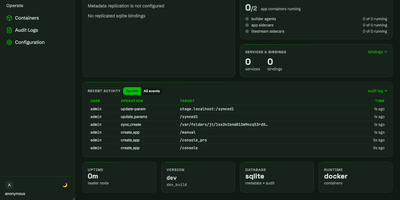
OpenRun replaces the patchwork of CI/CD pipelines, reverse proxies, and identity providers that teams typically assemble when deploying internal tools, offering declarative GitOps-based deployment of web applications to Docker, Podman, or Kubernetes from a single self-hosted Go binary. Point it at a Git repository and it builds containers from AppSpec templates, routes requests by domain or URL path, provisions TLS certificates automatically, and scales idle applications to zero when unused. Blue-green staged deployments promote new versions through development, staging, and production environments with atomic rollback across multiple apps simultaneously. Every deployed application inherits SSO authentication through OAuth, OpenID Connect, or SAML providers alongside role-based access control, all configured once at the platform level rather than per app. Service bindings provision isolated PostgreSQL, MySQL, SQLite, or Redis credentials for each application, while Litestream integration replicates SQLite databases to S3 for automatic disaster recovery. The management console provides a web interface for monitoring containers, reviewing audit logs, configuring syncs, and managing server operations. AppSpec templates handle Streamlit, Gradio, FastAPI, Flask, and FastHTML projects out of the box, deploying existing Python applications without requiring custom Dockerfiles. Running on a dedicated VPS on RepoCloud with guaranteed CPU, RAM, and SSD, full root SSH access, and a browser serial console. Apache-2.0 licensed.
Canonry
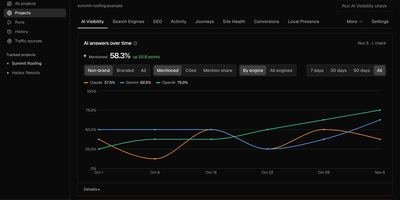
When a buyer asks ChatGPT which company to call, your brand is either inside the answer or invisible: Canonry tracks those mentions and citations across ChatGPT, Claude, Gemini, Meta Muse, and Perplexity, then joins them with the search, ads, and traffic data that explains them. You see mention share against named competitors, the exact answers and sources behind every result, and where rivals get cited while you do not. Server-side traffic analysis reads your own logs to show which pages GPTBot, ClaudeBot, and other AI crawlers visit, which pages AI assistants open for users, and who clicks through. Site Health crawls score every page for AI readiness and map the internal links between them, with each finding listing the pages it affects. Keyword volume, difficulty, rankings, and search gaps come from DataForSEO, while the content engine points at the pages to write or improve next and can draft them to WordPress for review. Your connected agent works the same evidence through the REST API, CLI, or MCP: find competitor citations, prepare a fix, publish and submit URLs to Google and Bing, then rerun checks and report what changed. Schedules rerun everything on a clock with alerts to Discord or Slack, and Aero, the built-in analyst, reads the evidence and explains what moved. Running on a dedicated VPS on RepoCloud with guaranteed CPU, RAM, and SSD, full root SSH access, and a browser serial console. MIT licensed.

Scrob
Scrob is your own private Letterboxd and Trakt: it syncs Jellyfin, Plex, and Emby libraries, tracks every movie and episode you watch, and keeps ratings and lists on your server. Connect Jellyfin, Plex, Emby, Nuvio, ARVIO, or Stremio and Scrob imports libraries, watched status, and playback progress, then pushes watched state and ratings back to keep every server aligned. Webhooks from Jellyfin, Plex, and Emby and the scrob-kodi addon mark items watched the moment playback finishes; a manual scrobble starts a live session from any title page. Rate titles on a ten point scale, score seasons separately, add reviews, and log repeat plays with their own dates. Personal lists stay private or open to other users on your instance, comments attach to titles, seasons, and episodes, and following users surfaces their ratings and activity. TMDB powers discovery: trending titles, genre and provider filters, release schedules, and search across people and collections merged with your library. Detail pages combine posters, cast, trailers, and your files' quality details, and one click sends a missing title to Radarr or Sonarr. Continue Watching and Next Up cards, a fifteen day episode calendar, and Pick a Movie or Pick a Show suggestions answer what to watch next. Trakt, Simkl, and MDBList sync moves history and ratings in both directions. Running on a dedicated VPS on RepoCloud with guaranteed CPU, RAM, and SSD, full root SSH access, and a browser serial console. GPL-3.0 licensed.
mkfd
Plenty of sites you follow have no feed, a broken feed, or announcements buried in an inbox, and mkfd turns all three into clean RSS feeds you control. You point it at a webpage, a REST API, or an IMAP mailbox and describe what counts as a story: an item selector plus selectors for title, link, date, author, and enclosures. Drill chains follow links across several pages when the real content sits deeper than the listing page, and an advanced scraping mode with a real browser handles pages that need JavaScript or your own browser extensions. An integrated selector helper helps you pinpoint elements on the target page instead of guessing. Email feeds watch a folder continuously and publish new messages as feed items the moment they arrive, with mailbox passwords encrypted before they touch disk. Every feed gets a schedule, is rebuilt in its own worker, and is served from an endpoint your reader can subscribe to, and the whole configuration lives in a portable file you can version and reuse. Access to the builder is guarded by a passkey, and feed endpoints stay open for your reader. Running on a dedicated VPS on RepoCloud with guaranteed CPU, RAM, and SSD, full root SSH access, and a browser serial console. MIT licensed.
JadeAI
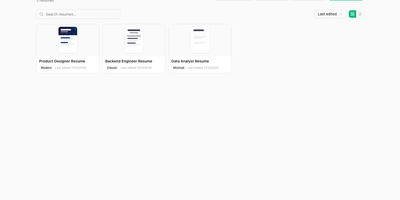
JadeAI is a self-hosted resume builder that pairs a clean drag-and-drop editor with AI help for writing, polishing, and tailoring every application. Pick from 50 templates, then adjust colors, fonts, spacing, and margins in a live preview, with undo and redo keeping every experiment reversible. Paste a job description to get a keyword match, an ATS score, and concrete suggestions, then generate a cover letter in a formal, friendly, or confident tone. A grammar check flags weak verbs and vague claims, a translation tool converts the whole resume into ten languages, and an in-editor chat assistant rewrites sections on request. Upload an existing PDF or image and the AI extracts every field for you. Practice with six preset interviewers, from HR to technical to leader, then review a scored report with a competency radar and an improvement plan. Export to PDF, one-page PDF, DOCX, HTML, TXT, or JSON, and share a link with an optional password and a view counter. Every user brings their own OpenAI, Anthropic, or compatible API key. Running on a dedicated VPS on RepoCloud with guaranteed CPU, RAM, and SSD, full root SSH access, and a browser serial console. Apache-2.0 licensed.

Wastebin
Wastebin is a self-hosted pastebin that turns any text or code snippet into a shareable link with syntax highlighting, optional password encryption, and expiration you control. Code pastes are highlighted for more than 170 languages, and nine built-in color themes in light and dark variants keep long listings readable. Markdown pastes render as formatted HTML with tables, task lists, and admonitions, and a single keystroke flips between the rendered page and the highlighted source. Sensitive snippets can be locked behind a password, and links can expire after a set time or burn after a single reading, which makes it a clean way to hand over credentials, tokens, and one-off secrets. Every paste view can show a QR code that opens the same page on your phone, and keyboard shortcuts cover raw view, URL copying, line wrapping, and the rendered toggle without touching the mouse. There are no accounts to create: you paste anonymously, and an owner cookie lets you delete your own entries later. Scripts and terminals are first-class citizens through a small JSON API, and a Neovim plugin pastes the current buffer without leaving the editor. The whole service is one small program with almost no upkeep, and stored pastes are compressed on disk so a busy instance stays lean for years. Running on a dedicated VPS on RepoCloud with guaranteed CPU, RAM, and SSD, full root SSH access, and a browser serial console. MIT licensed.
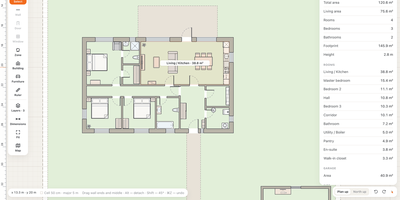
House Planner
House Planner holds the design of your house in one browser workspace, from true-scale floor plans drawn over a satellite photo of your plot to costed wiring, plumbing, sewer, and heating layouts. Draw walls at true scale in millimetres with thickness and materials, add doors, windows, garage gates, and furniture with true dimensions, and watch room areas and plot coverage total as you work. Flip into 3D for a massing model or the house finished with material textures and facade colours, with cut-down walls for reading the layout from above. Every utility network gets an engineering layer: route sewer lines to a septic tank with slopes and cleanouts, auto-route electrical circuits with breaker and voltage-drop checks, and run water piping from well and boiler to each fixture. Underfloor heating loops lay out room by room, split before 80 metres, and balance flow against heat loss. The bill of materials computes quantities from the plan and networks, producing a priced estimate you can print, tick off as you buy, or export to CSV. Every save is a numbered version with restorable snapshots, tabs cannot overwrite each other, and the JSON plan can be edited by an AI assistant through the same API. One password guards the project, phones get a read-only view for on-site checks, and the whole thing runs in one Docker container with no database. Running on a dedicated VPS on RepoCloud with guaranteed CPU, RAM, and SSD, full root SSH access, and a browser serial console. MIT licensed.
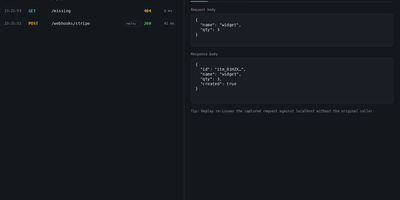
Rustunnel
Rustunnel turns a service running on your laptop or private network into a public HTTPS, TCP, or UDP endpoint without opening inbound ports on the machine where it lives. Point the client at a local port and share the public address for webhook testing, a quick demo, an AI agent tool, SSH access, a game server, or an IoT device that cannot accept inbound connections. Give tunnels custom subdomains on your own wildcard domain, terminate HTTPS with automatic Let's Encrypt certificates, and keep client traffic encrypted from edge to local service. Put several backends behind one subdomain or TCP port and let TCP or HTTP health probes remove sick members before visitors hit them. When two peers can reach each other directly, start a P2P tunnel with NAT hole punching and QUIC, with relay fallback when the direct path fails. Watch sessions, tunnel health, traffic, and request logs from the live dashboard, inspect headers and bodies in the local request inspector, and replay a captured call while debugging a webhook. Manage tunnels, tokens, groups, captured requests, and history through the REST API, scrape Prometheus metrics, review audit logs, or let an MCP-compatible coding assistant create and close tunnels in plain language. Running on a dedicated VPS on RepoCloud with guaranteed CPU, RAM, and SSD, full root SSH access, and a browser serial console. AGPL-3.0 licensed.
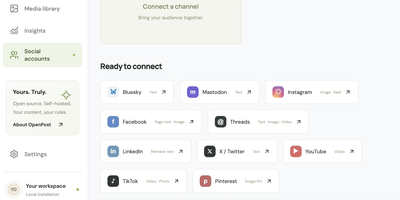
LightPost
Write a post once in LightPost and it goes out to Bluesky, Mastodon, X, Instagram, Threads, Discord, LinkedIn, Telegram, and Facebook Pages on your schedule, with YouTube video uploads handled in the same workspace, from a dashboard running on your own server. The composer fans one message out to every connected account, including several accounts on the same platform, and each destination can receive text, images, or both within that network's limits. Drafts can be saved, edited, and duplicated, and scheduled times follow your browser's timezone so a week of announcements can be queued in one sitting. Images come in from public JPEG links or a saved library, with alt text and a preview before anything ships. Every delivery is tracked per account with links to the published posts, and when one network fails you retry just that destination instead of blasting the successful ones twice. The queue persists across restarts and overdue posts resume on their own, so an overnight reboot never eats a scheduled campaign. Built-in setup guides walk you through eligibility, credentials, and permissions for each platform, account connections can be verified or reconnected from the same panel, and your credentials stay encrypted on your disk with optional password protection and exportable post history. Running on a dedicated VPS on RepoCloud with guaranteed CPU, RAM, and SSD, full root SSH access, and a browser serial console. MIT licensed.

OpenTutor
Your lecture slides go in one end, and a personal tutor who has actually read them comes out the other: OpenTutor turns uploaded course material into structured notes, flashcards, quizzes, and a chat tutor that answers from your own documents. Drop in a PDF, DOCX, or PPTX file, or connect Canvas LMS, and within seconds the workspace fills with generated study material organized into twelve composable blocks you can rearrange as your habits change. Ask the tutor questions and every answer cites the source material it came from, with a Socratic mode that prods you toward the answer and depth that adjusts when your replies show fatigue or repeated mistakes. Practice with seven question types, from multiple choice and fill-in-blank to matching, ordering, and coding, and wrong answers are tracked with diagnostic feedback that reshapes later difficulty. Flashcards return on an FSRS 4.5 spaced-repetition schedule tuned to what you are about to forget, and an experimental knowledge graph maps concept mastery, prerequisites, and weak spots into a learning path. Plan study sessions on the calendar, watch progress in analytics, export your work, and connect ten or more LLM providers or a local Ollama model so your documents never have to leave your server. Running on a dedicated VPS on RepoCloud with guaranteed CPU, RAM, and SSD, full root SSH access, and a browser serial console. MIT licensed.
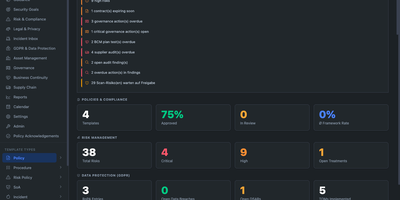
ISMS Builder
For teams that need ISO 27001, NIS2, and GDPR evidence without handing compliance data to a SaaS vendor, ISMS Builder is a self-hosted information security management system for policies, risks, assets, audits, and incidents. Compliance managers move policies from draft through review to approved and archived, and recipients confirm each one through a token link that needs no login. Security officers close gaps in a Statement of Applicability that cross-maps BSI IT-Grundschutz, NIS2, EUCS, the EU AI Act, and the Cyber Resilience Act, with ISO 27001 controls imported from their own licensed copy. Risk owners keep treatment plans, turn Greenbone and OpenVAS reports into risk drafts, and score assets for confidentiality, integrity, availability, and authenticity. Data protection officers run records of processing, processor agreements, impact assessments, data subject requests, a 72-hour timer, and a deletion log with email alerts. The CISO inbox collects incidents, including reports from a public form that needs no login, beside a 30-item NIS2 Article 21 checklist and Article 23 deadline alerts. Auditors work from a findings register, a compliance matrix, and an exportable audit log of every create, update, delete, and login. Administrators enforce TOTP two-factor sign-in, choose among German, English, French, and Dutch, run semantic search locally through Ollama, and publish approved policies to Nextcloud or ownCloud as PDFs. Running on a dedicated VPS on RepoCloud with guaranteed CPU, RAM, and SSD, full root SSH access, and a browser serial console. AGPL-3.0 licensed.
UWAS
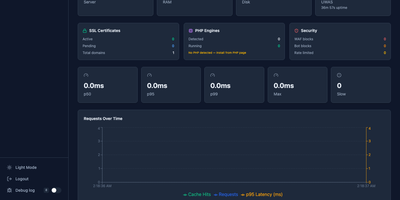
One 18 MB Go binary does the job of Apache, Nginx, Varnish, Caddy, and cPanel combined. Point UWAS at your /var/www directory and it auto-detects sites, provisions Let's Encrypt certificates, enables HTTP/3 via QUIC, and activates a two-tier caching engine with L1 memory shards and L2 disk storage, all before you write a single line of configuration. The React 19 admin dashboard provides 42 management pages for domains, PHP versions, databases, cron jobs, DNS records, file management, backup and restore, SFTP users, and uptime monitoring with real-time SSE updates. PHP sites run through FastCGI with connection pooling and full .htaccess compatibility, so WordPress, Laravel, and legacy applications work without migration effort. The built-in WAF catches SQL injection, XSS, path traversal, and shell exploits, while per-domain rate limiting and bandwidth caps protect against abuse. Reverse proxy mode supports five load balancing algorithms, circuit breakers, canary deployments, and mirroring for blue-green rollouts. Git deploy clones your repository, runs the build, checks health, and restarts the service with rollback on failure. An MCP server lets AI agents manage domains, cache, and deployments through natural language. The Nginx and Apache migration CLI converts existing configurations to UWAS format automatically. Deploy on a dedicated VPS on RepoCloud with guaranteed CPU, RAM, and SSD, full root SSH access, and a browser serial console. AGPL-3.0 licensed.
MirrorProxy
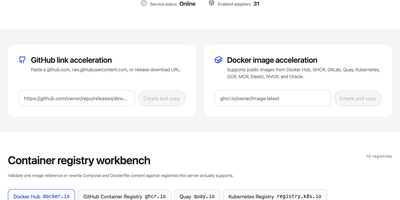
Stop hunting for a public mirror that still works this week: MirrorProxy puts every software source your builds depend on behind one domain you control, so GitHub releases, container images, npm and PyPI packages, and operating-system repositories all come from the same stable gateway. Point it at a source and it fetches and caches on demand, with no full mirror to store or sync, and when an upstream times out or starts rate-limiting, it fails over to the next endpoint and keeps your builds moving. Around thirty adapter types cover the everyday sprawl: Docker Hub and nine other registries, Cargo and Go modules, Maven and NuGet, Homebrew and WinGet, and more than thirty Linux and BSD distributions, plus custom static repositories you define yourself. Sharing the gateway is safe: invite users, set monthly quotas per person or team, restrict which sources each team may use, and gate access with rate limits and IP rules, while the console shows traffic trends, visitor regions, cache behavior, and the health of every source. Email and webhook alerts warn you before a quota runs out or an upstream outage drags on, and the cross-platform client switches a workstation's sources to your gateway and back. Running on a dedicated VPS on RepoCloud with guaranteed CPU, RAM, and SSD, full root SSH access, and a browser serial console. MIT licensed.
Gramax
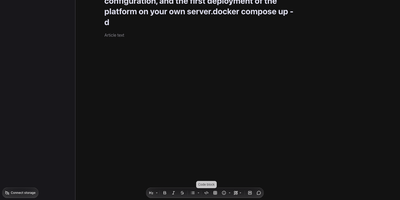
Gramax keeps your documentation in a Git repository as plain Markdown, gives writers a visual editor that feels like a word processor, and publishes the result as a searchable website. Writers format pages with tabs, tables, code blocks, embedded videos, and diagrams drawn in Mermaid, Excalidraw, or Diagrams.net, plus Swagger descriptions that render live API references. Every change is a normal Git commit, so review happens in pull requests on GitHub, GitLab, Bitbucket, or Gitea, and the full history of every page stays auditable. Catalogs organize articles into a hierarchy for a product portal, an internal knowledge base, or project documentation, and styles can be customized to match your brand. Teams moving off older tools import existing pages from Confluence and Notion with formatting and hierarchy preserved. Documentation can be written in 17 languages, with parallel catalogs for each audience. The editor runs on Windows, Mac, and Linux or straight in the browser, always working on local files that open in any text editor. A built-in AI agent answers questions over your catalog and helps draft pages from inside the editor. On the server, the portal container pulls fresh content from your repository on an interval you set, so publishing a page is just merging a branch. Readers get a dedicated, customizable documentation website instead of raw repository files. Running on a dedicated VPS on RepoCloud with guaranteed CPU, RAM, and SSD, full root SSH access, and a browser serial console. GPL-3.0 licensed.
Cup
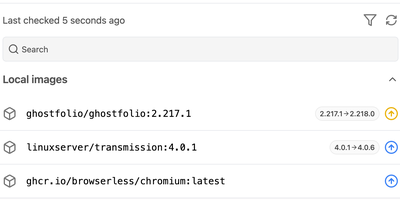
A fast, read-only radar for outdated Docker images. Cup reads the images behind your running Docker or Podman containers, asks each registry whether a newer digest or tag exists, and flags every result as a major, minor, or patch bump, a plain digest change, or up to date. Docker Hub, ghcr.io, Quay, lscr.io, and Gitea-style registries are supported, private ones through token authentication, and checks are designed not to exhaust registry rate limits. The browser dashboard on port 8000 counts monitored, outdated, up-to-date, and unknown images, adds search and filters, and opens any image to show its update type, check time, and a copyable pull command. Prefer automation? Schedule refreshes with a cron expression, trigger one through the API, or run the cup check command from a cronjob for table or JSON output. Rules in cup.json exclude images, ignore registries, and skip chosen update types, even per image. The JSON API feeds Homepage widgets, Home Assistant, and custom dashboards, one dashboard can aggregate several Cup servers, and agent mode serves the API without the interface. Cup only reports, so deciding when to update stays with you. Running on a dedicated VPS on RepoCloud with guaranteed CPU, RAM, and SSD, full root SSH access, and a browser serial console. AGPL-3.0 licensed.
imgpush
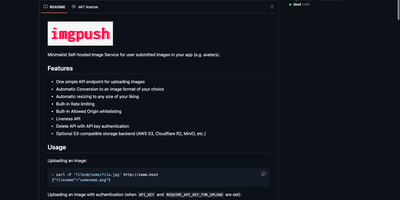
Your app needs avatars, attachments and user photos, and imgpush is the tiny service that takes them off your hands. Send one upload request with a file or a URL and you get back a filename; ask for that file with a width and height in the address and you receive exactly that crop, converted to the format you configured. Originals live on local disk or in any S3-compatible bucket (AWS S3, Cloudflare R2, MinIO or Backblaze B2), with resized variants cached locally for fast serving. Abuse controls come built in: per-IP upload quotas per minute, hour and day, an allowed-origins whitelist, and an optional nudity filter that can also sample video frames before an upload is accepted. An API key can be required for uploads, deletes remove the original together with every cached size, and a liveness endpoint keeps Docker and Kubernetes health checks honest. One Docker container on port 5000, a page of environment variables, and your application never writes image code again. Running on a dedicated VPS on RepoCloud with guaranteed CPU, RAM, and SSD, full root SSH access, and a browser serial console. MIT licensed.

NovelVids
Short dramas and illustrated stories come together in NovelVids, a workbench that carries a project from manuscript import to assembled episode. Import a TXT, Markdown, DOCX, or PDF manuscript, review the chapter boundaries and story analysis, then develop the story chapter by chapter. Characters, locations, and props live in an asset library with reference images, aliases, variants, and voice bindings that stay linked to every shot. The storyboard editor holds shot descriptions, complete prompts, reference media, and generation parameters, and each generated result lands beside its inputs for inspection. An infinite canvas connects assets, videos, and enhanced results, and you can switch between storyboard and workflow views of the same project. Ask the creation assistant to revise selected objects, inspect the recorded diffs, and undo supported edits before anything regenerates. Start image or video clips from the home page by choosing a model, attaching reference images, video, or audio, and reviewing the estimate first. Remake studio analyzes reference videos you are authorized to use and converts their shots into an editable project. Track generation tasks and versions, assemble finished episodes, and optionally enhance resolution at the end. Running on a dedicated VPS on RepoCloud with guaranteed CPU, RAM, and SSD, full root SSH access, and a browser serial console. MIT licensed.
ccLoad
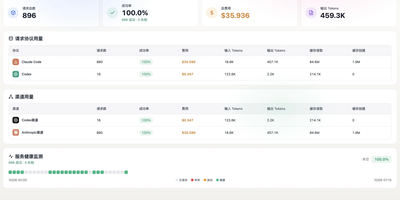
An upstream dies mid-stream. The session does not have to. ccLoad is a self-hosted AI gateway that stands between your coding agents and every key, relay, and subscription you own, retrying the next source before the first byte reaches your client. Claude Code, Codex, Gemini, and OpenAI-compatible tools all point at one address and present one ccLoad token. Behind it, each source becomes a channel with a model list, a priority, and health-based ordering. Requests are matched by the model name the client asked for. Protocol differences disappear in transit, with Anthropic, OpenAI, Codex Responses, and Gemini converted in either direction, streamed responses included. Failure gets a narrow blast radius. A revoked key cools down alone, a failing model cools down alone, and a dead URL cools down alone, each with exponential backoff that respects upstream reset times. Errors disguised as successful responses still trigger failover. Subscription accounts work as channels beside API keys, tokens refresh on their own, and quota use is tracked against each provider's reset window. Every request lands in the logs with its cost, priced with cache reads, cache writes, and long-context tiers included. Tokens carry model restrictions, budgets, and concurrency caps. Channels carry daily spend limits. Sensitive text can be masked on the way out and restored on the way back. Running on a dedicated VPS on RepoCloud with guaranteed CPU, RAM, and SSD, full root SSH access, and a browser serial console. MIT licensed.