OpenAgentCore
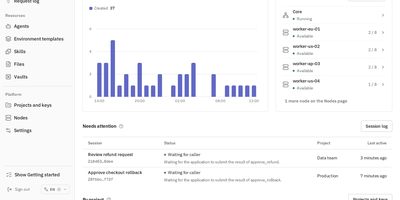
OpenAgentCore puts Codex, Claude Code, and MiniMax Code behind one self-hosted Agents API, so your applications start agent sessions through the official OpenAI SDK while the work runs on machines you control. Set OPENAI_BASE_URL to your installation and issue a Project API key, and the same client code that talks to OpenAI now talks to your Core. Each session runs a native harness, exactly as it runs on a developer's machine, with the model provider, model ID, and protocol you configure per harness or per session. Choose where sessions execute: microsandbox nodes you operate, Docker, E2B, or a self-hosted workstation, VM, or container connected by the oac-daemon with a credential scoped to one environment. Idle microsandbox sessions release their compute and resume on a compatible node with workspace files intact, so long investigations do not rent a machine while they sleep. The Web console walks operators through setup, tracks sessions and turns, manages models and credentials, and issues keys, while the separate Core API serves operators and the Agents API serves applications. Durable execution state in PostgreSQL keeps events, results, and schedules recoverable across restarts. Sandbox providers, workspace filesystems, harnesses, and model providers all plug in through defined protocols, so every layer can be replaced on its own. Running on a dedicated VPS on RepoCloud with guaranteed CPU, RAM, and SSD, full root SSH access, and a browser serial console. MIT licensed.
GlitchTip
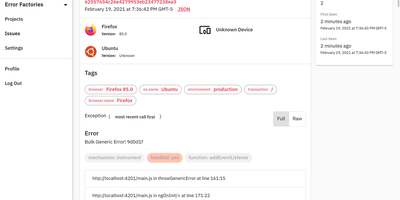
GlitchTip speaks Sentry's protocol without Sentry's operational weight - open-source error tracking that your existing SDKs already understand. The pitch is pragmatic: instrument your application with the official Sentry SDKs you already know - any language they cover - and point the DSN at your own GlitchTip instance instead. Errors, exceptions, log messages, and Content Security Policy violations flow into one place for triage, grouped into issues with stack traces, with alerts delivered by email or webhook the moment things break. Where self-hosted Sentry has ballooned into a docker-compose stack of twenty-plus containers, GlitchTip is a deliberately lean Django and PostgreSQL application a small team can actually run. Beyond errors, it bundles three more monitoring concerns: performance monitoring takes a works-out-of-the-box approach - no dashboard building, just your slowest web requests, database queries, and transactions surfaced automatically; uptime monitoring pings your sites and alerts on failures, or runs in reverse as a dead-man's-switch heartbeat for cron jobs that must check in on schedule; and log search puts application logs alongside errors for faster debugging. Unlimited projects and team members, MIT-licensed, built by Burke Software - your event volume is limited only by your own hardware.
Ybkkasi
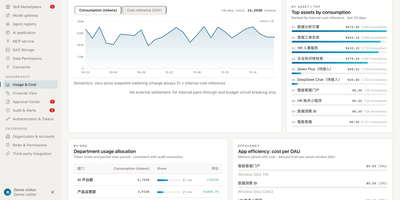
Enterprises keep buying AI tools and wondering why output does not compound, when the real gap is governance: nobody can say which agent owns what, what it may touch, or what it cost. Ybkkasi answers those three questions in one console for every MCP server, skill, agent, and AI application you run. Register each asset and move it through a lifecycle state machine from discovery to retirement, with 85 permission points deciding who can view, call, publish, or approve at every step. Work itself is organized as goals that break into projects and tasks, assigned to digital employees who each carry a home organization, a human supervisor, and a roster status. Approvals route through a dedicated center where lifecycle changes and sensitive actions wait for a human decision instead of happening silently. Every call is metered, so usage and cost reports attribute spend by department, by agent, and by skill, making showback a query rather than an argument. The audit log records who did what to which asset and when, giving compliance a trail they can actually read. Running on a dedicated VPS on RepoCloud with guaranteed CPU, RAM, and SSD, full root SSH access, and a browser serial console. MIT licensed.
DocIntel
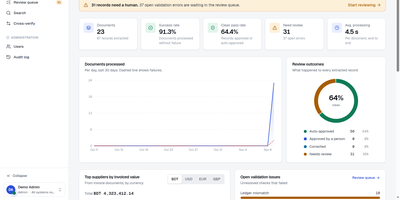
Drop in a pile of invoices, receipts, scans, or ledgers and DocIntel hands back validated, searchable records, asking a person only about the doubtful ones. It reads PDFs, phone photos, TIFF scans, Excel sheets, and CSV files. Scans get deskewed, denoised, and upscaled before OCR. A 1,000-page PDF is split into individual invoices in seconds. Every extracted value must be found on the page, or it is stored as null instead of guessed. A rule engine reads each document, and an optional model from Anthropic, Gemini, Groq, OpenAI, or Ollama adds a second opinion that flags disagreements. Totals, taxes, line items, dates, and duplicate files are checked for consistency. Invoices can be cross-verified against a ledger in another PDF or an Excel file, with field-level differences. The review screen shows the source page beside the fields and highlights where each value was found. Inline corrections trigger re-validation and keep a full history. Search works by keyword, by meaning, or both, with filters and export to CSV, Excel, or JSON. Viewer, reviewer, and admin roles control who can upload, approve, or delete, and an audit log records every action. Administrators can switch the AI model, key, and OCR engine from the settings page without a restart. Running on a dedicated VPS on RepoCloud with guaranteed CPU, RAM, and SSD, full root SSH access, and a browser serial console. MIT licensed.
AgentTape
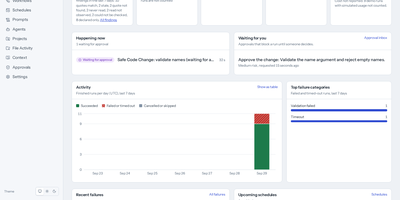
When a coding agent says the tests already cover a case, AgentTape checks the lines it cites against a recording of the run and shows a verdict beside them. The verdicts are Quote matches, Quote not found, Never read, Read not observed, and Stale, where the file changed after the read and both hashes are displayed. A finding with no citation reads Declared only. Matching is deterministic and no model judges anything: line endings, Unicode, and trailing spaces are normalized before each quote is compared. Confidence climbs a ladder from declared, to commands re-run, to a person's confirmation, and a second agent can challenge a finding, labeled as judgment. Today Claude Code findings are verified, while Codex CLI and any allowlisted command are recorded alongside them. Runs launched from the UI, CLI, API, a schedule, a webhook, or a workflow leave an ordered record of the prompt, commands, output, files read, and files changed. Any run can be replayed as recorded or forked with one variable changed, and the two are compared side by side. Workflows chain agent steps, commands, evaluation gates, and approval nodes that pause for a person, and evaluators check exit codes, diffs, regex, JSON schema, duration, and cost. Work happens in a separate Git worktree and commits locally only after approval. Running on a dedicated VPS on RepoCloud with guaranteed CPU, RAM, and SSD, full root SSH access, and a browser serial console. MIT licensed.
Loom Control Station
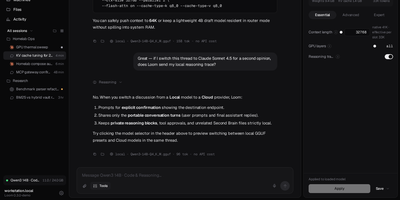
From one browser tab, Loom runs local and cloud models in a single conversation, steers coding agents such as Claude Code and Codex, and manages notes and machines. Local inference covers llama.cpp, or vLLM on Linux with CUDA or ROCm, with a Hugging Face GGUF library, saved presets and a VRAM estimate before loading. Cloud providers speaking the Chat Completions format join the same thread, and Loom asks for confirmation before any portable turn leaves the machine. Codeman integration lists live agent sessions, surfaces approvals with Allow once and Deny buttons, arranges terminals in a tmux-style grid and runs cron schedules. Second Brain is a confined Markdown workspace with a rich editor, slash commands and conflict detection, and its file browser reaches paired machines. Machines appear as capability bricks for local AI, voice, Codeman, files and terminals, pair with a single-use code or plain SSH, and report CPU, memory and GPU use. Quota pages track Claude, Codex, Antigravity and Copilot subscriptions with pace projection, alongside token usage, OpenRouter balance and a Model Watch feed. An OpenAI-compatible /v1 API swaps models safely and issues named keys with usage limits, and the /mcp/loom gateway lets external agents use machine and Codeman tools under revocable tokens. Local voice, an installable phone app for approvals and push notifications, and English or French interfaces are optional extras. Running on a dedicated VPS on RepoCloud with guaranteed CPU, RAM, and SSD, full root SSH access, and a browser serial console. MIT licensed.
Viberglass
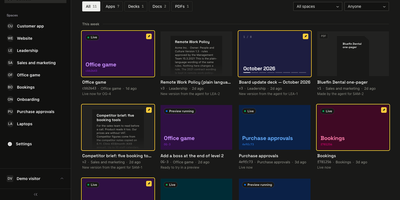
Describe the tool your team needs, and Viberglass has a coding agent build it, preview it, and run it, with nobody on the team touching code. Trackers, approval lists, checklists, and booking calendars replace spreadsheets, each app running on your own servers behind team sign-in, with backups and rollback. Changes run in a preview on a copy of the live data and go live only when the requester or a maintainer says so. The same tasks produce documents and presentations, kept as versioned artifacts that preview in the app, or open GitHub pull requests for engineering to review. For code, the agent writes a plan, asks the right person when something is unclear, takes line-by-line comments, then builds in parts, one pull request each. One task, one thread. Pick Claude Code, Codex, Antigravity, Qwen Code, Mistral Vibe, Kimi Code, OpenCode, or Pi, with provider keys, coding plans, or any OpenAI- or Anthropic-compatible endpoint. Run details show the agent's thinking, tool calls, prompt, worker log, and token usage. Tasks start in Slack, a browser extension, GitHub Issues, Jira, Shortcut, webhooks, schedules, or an MCP client. Roles for members, guests, and read-only viewers, open or private spaces, shared secrets, and an audit log cover a shared installation. Agent runs start in a throwaway container that is removed afterward, and stored credentials are encrypted. Running on a dedicated VPS on RepoCloud with guaranteed CPU, RAM, and SSD, full root SSH access, and a browser serial console. AGPL-3.0 licensed.
Agenvo
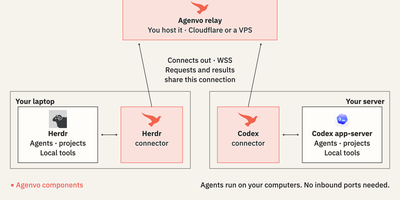
Your coding agents are scattered across a laptop, a server, and whatever machine you left running at home, and Agenvo is the self-hosted relay that lets one AI assistant reach all of them through a single MCP endpoint. Ask ChatGPT on your phone to check on Codex running on your server, or have an agent in Herdr on your laptop fix a failing test, from wherever you are. Connectors for Herdr, Codex app-server, Paseo, and Lody dial out to the relay over WSS, so the computers running agents need no inbound ports, no VPN, and no port forwarding. Your assistant sees the agents running in Herdr without restarting them, resumes Codex threads later, and starts new work where it fits: a Codex thread on the server, or Codex, Claude, or Devin in a Herdr pane. When an agent finishes a turn, waits for input, or exits, the relay pushes a change event back, so a watching assistant or ChatGPT dot reads the output and takes the next step. Closing the chat or losing the network does not stop the agents; connectors reconnect on their own, and your assistant picks up from each agent's current state. Deploy the relay on a single VPS with Docker or on Cloudflare, authorize MCP clients with OAuth over Streamable HTTP, and discover targets and method schemas with search before calling execute. Running on a dedicated VPS on RepoCloud with guaranteed CPU, RAM, and SSD, full root SSH access, and a browser serial console. Apache-2.0 licensed.
RabiRoute
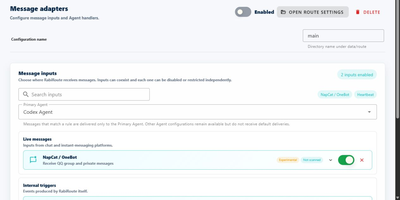
Which agent should answer a question that just arrived in your QQ group, and how much of the conversation should it see? RabiRoute is the self-hosted message gateway that answers those routing questions before your agent ever wakes up. Chat messages from QQ groups and direct chats (through NapCat and OneBot), webhooks, schedules, voice, desktop selections, and device events all arrive at one gateway, and message Routes decide which agent or local program receives each one. Every role keeps its own message history plus references to plans, memories, and skills, while each Route limits how many recent messages travel with a delivery. Roles can also fire agents on interval, time-window, daily, or one-time schedules, or run a configured local script, so recurring checks and reports happen without anyone typing a prompt. Replies to QQ, RabiLink, and other channels leave through a single sending API that validates targets, quoted messages, and sender identity, then records receipts for everything delivered. The Windows desktop side adds selected-text actions, screenshots, and annotations; speech, phone, glasses, wearable, and remote-computer clients connect as experimental integrations, and the Linux Host serves the Manager and browser WebGUI from a Node.js process. Running on a dedicated VPS on RepoCloud with guaranteed CPU, RAM, and SSD, full root SSH access, and a browser serial console. MIT licensed.
Genkan
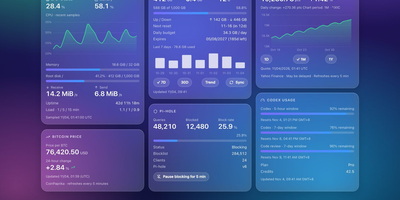
Your homelab home page can take orders from an AI assistant: ask Claude or Cursor to add Jellyfin, Sonarr and Radarr to Media with health checks, and Genkan updates the page on the spot. Other requests work the same way: group services by type, pin the five used most, or move dead links to an Archive category. The AI tab in Settings offers a one-click prompt for the Agent Skill, which calls the REST API, and a built-in MCP server with 29 tools. Links sit on a wallpaper as frosted-glass capsules, grouped into workspaces and categories, with a pinned row and sorting by use, recency or dragging. Slash or Ctrl+K searches every workspace and falls back to a web search. Seventeen bundled plugins add resizable widgets for weather, world clocks, countdowns, Pi-hole stats, RSS, Hacker News, a to-do list and Markdown notes, plus wallpaper feeds such as NASA APOD. Plugins from other authors show their permissions and source in a market before you enable one, and each runs in a sandbox with time and memory limits. A green or red dot beside each link reports its health, and favicons download on their own. Editing needs the admin login, a read-only guest mode shares the page, and JSON export and import carry everything to another instance. Running on a dedicated VPS on RepoCloud with guaranteed CPU, RAM, and SSD, full root SSH access, and a browser serial console. MIT licensed.
Pitot
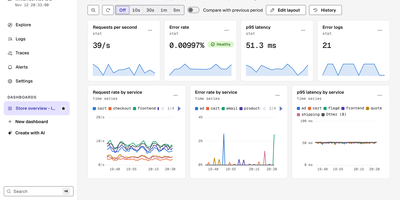
Point your OpenTelemetry exporters at one port and get traces, logs, metrics, dashboards, alerts, and an AI investigator, with no storage cluster to babysit. Pitot accepts OTLP over gRPC and HTTP, keeps everything in a single data directory as Parquet files you own, and lets you query with Explore and PitotQL even when no AI provider is configured. Ask the built-in agent which service is slowest right now and it runs typed queries across traces, logs, and metrics, then explains the evidence inline. Describe a dashboard in one sentence and it drafts, checks, and saves panels for request rate, error rate, p95 latency, service dependencies, slowest operations, and recent errors. Alerts watch service error rate, latency, throughput, and log volume. Prefer your own assistant? A remote MCP endpoint lets Claude Code or any MCP client search logs, inspect traces, query telemetry, and create dashboards after you approve its scopes through OAuth in the browser. Sign in with single-use login links or an OIDC provider, choose OpenAI or Anthropic for chat, and set how many days of telemetry to keep, 30 by default. Pitot runs as one node, which suits a single machine's worth of telemetry rather than fleet-scale clusters. Running on a dedicated VPS on RepoCloud with guaranteed CPU, RAM, and SSD, full root SSH access, and a browser serial console. Apache-2.0 licensed.

Myriad
Myriad gathers your games, music, anime, and social posts from eleven platforms into one self-hosted homepage that has a resident character of its own. Connect GitHub, Steam, Bilibili, NetEase Cloud Music, and seven more platforms, and every account lands in one database that the report cards and library read. Report cards, a music player, weather, friend links, and recent activity fill a homepage you arrange on a grid or a free sticker canvas. The library shelves the collections as games, anime, films, books, and music, and clicking a report card plays a three-act portrait: your persona there, your taste, and your highlights. Her layered 2.5D portrait blinks, mouths each reply, and shifts expression in the browser, and a long press opens her panel anywhere on the site. In Chat she stays in character; in Help she plans, asks you to confirm, then acts inside the permissions you granted. The studio turns notes into a static Hugo blog, and the built-in reader follows your RSS, Notion, and RSSHub subscriptions. Tapps run sandboxed as pages or homepage widgets, and the Playground previews one from a single typed sentence before you install or export it. Follow other sites over ActivityPub, pair QQ, Telegram, or Discord bots that answer mentions in group chats, and keep registration and module visibility under your own switches. Running on a dedicated VPS on RepoCloud with guaranteed CPU, RAM, and SSD, full root SSH access, and a browser serial console. AGPL-3.0 licensed.
Open Walnut
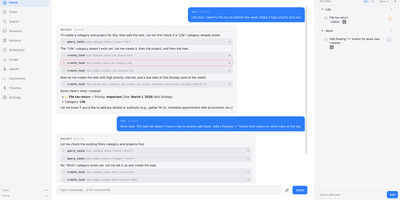
Open Walnut replaces your scattered terminals and notes with one self-hosted command center where a CEO agent and a lead for each project run your Claude Code sessions like a small company. You talk to the CEO; each project lead plans the work, spawns worker sessions, checks their output, and only brings you the questions that actually need a person. Every session sits in its own column with live output, permission controls, terminals, and files, and sessions survive browser disconnects, dropped SSH connections, and server restarts. Codex, Gemini, OpenCode, and Goose sessions join the same columns, on your laptop or on remote dev boxes reached over SSH. Finished work comes back as a per-session diff: comment on individual lines and send the review straight back into the session that wrote it. Around the agents sit your tasks with subtasks, dependencies, and due dates, Markdown notes with wiki links and backlinks, a calendar, and long-term memory that a background job keeps consolidated. Search covers notes, tasks, sessions, and memory together, mixing keyword matching with local embeddings, so nothing you told it last month gets lost. Routines run one-time, interval, and cron jobs; plugins add whole apps, tools, and skills; and paired phones reach the same console through device tokens. Running on a dedicated VPS on RepoCloud with guaranteed CPU, RAM, and SSD, full root SSH access, and a browser serial console. MIT licensed.
Ferret
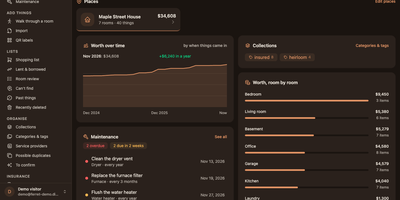
From the tent in the garage to the warranty on the fridge, Ferret keeps one searchable home inventory that your household runs on its own server. Properties, rooms, and boxes hold things with photos, receipts, manuals, serial numbers, and prices, and a quick add accepts a photo, a barcode scan, or a picture of a whole room to sort through. Printed QR labels on boxes and shelves open the list of what is inside. Warranties count down to the last day with a claim shortcut, return windows warn before they close, and maintenance repeats by date or by use, with reminders and how-to videos. Stock levels feed a shopping list, a lending log remembers who borrowed the saw, and a replacement forecast estimates what wears out and when. An insurance report totals value by room and category, exports PDF and spreadsheet files, and can be shared by link. Households have owners, admins, members, and read-only viewers, with invitations and single sign-on. Optional AI reads receipts, suggests details from photos, and answers questions in plain words, while a built-in MCP server lets Claude search, add, and update items with a key that can be read-only. Running on a dedicated VPS on RepoCloud with guaranteed CPU, RAM, and SSD, full root SSH access, and a browser serial console. MIT licensed.
Aurral
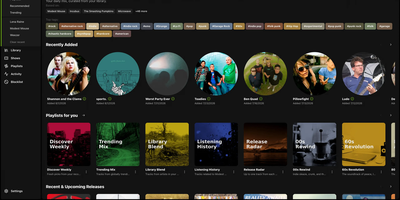
Discover, preview, and curate your personal music collection with Aurral, a self-hosted music discovery and library management server that turns listening history into automated playlists and album acquisitions. Connect your Last.fm, ListenBrainz, or Koito scrobble history to surface tailored artist recommendations, genre trends, upcoming releases, artist news, and nearby concert dates. Build scheduled rotating discovery flows that refresh automatically on your chosen cadence, or import existing playlists directly from Spotify, YouTube Music, Last.fm, and ListenBrainz. Preview tracks instantly in the browser before committing them to your permanent collection. Manage downloads through a built-in yt-dlp engine or route requests to slskd, SABnzbd, NZBGet, Prowlarr, deemix, and Lidarr with full queue, history, and upgrade controls. Stream your indexed library from the web player, connect Subsonic and OpenSubsonic apps such as Feishin or Music Assistant, and publish generated playlists straight to Navidrome, Plex, Plexamp, and Jellyfin. Multi-user profiles support granular permissions, custom discovery layouts, and single sign-on via OpenID Connect, Plex, Google, or reverse-proxy headers. Running on a dedicated VPS on RepoCloud with guaranteed CPU, RAM, and SSD, full root SSH access, and a browser serial console. MIT licensed.
ShowAI
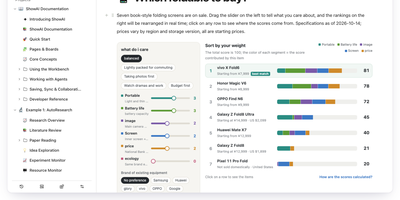
Your coding agent answers a question, and instead of a wall of Markdown you get a page you can actually use. ShowAI turns replies into interactive pages built from text, tables, charts, flow diagrams, sliders, and boards, so you can drag a weight, compare options, or step through an idea and watch the result change. Every page is saved as versioned files in a local project, with undo, retained drafts, and conflict protection, and the agent reads your edits before it continues. Select any text, cell, or board object to ask the agent to expand, reorganize, or visualize it, and run several conversations on one project in parallel. When a needed component is missing, the agent builds it, and pages that work can be distilled into templates. Export a page as standalone HTML, an inline fragment, or a static site. Connect a self-hosted ShowAI Server for projects shared by administrators, editors, and viewers, with account login and device management. Running on a dedicated VPS on RepoCloud with guaranteed CPU, RAM, and SSD, full root SSH access, and a browser serial console. MIT licensed.
SerOps
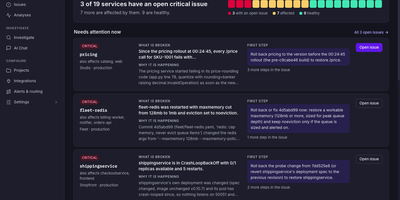
Root cause first, dashboards second: SerOps reads the logs, metrics, traces, deploys, and commits you already produce and explains why an incident happened, even when no alert fired. It plugs into Elasticsearch, Loki, Splunk, Datadog, and the big three clouds for logs, plus Prometheus, VictoriaMetrics, Jaeger, and Tempo. GitHub, GitLab, Bitbucket, Azure DevOps, Jenkins, Argo CD, and Flux supply the other half of the story: which change shipped, and when. Analyses come back as a plain-language root cause, the reasoning behind it, and numbered next steps, with the suspect commit linked beside it. Evidence, not guesses. The Overview page opens on what is broken, why, and the first thing to try, so whoever is on call starts at the fix. Issues are deduplicated and land in a table you can filter by severity, status, project, environment, or service, then resolve, mute, or acknowledge. Need an answer now? Run an investigation over a window you pick, then keep asking in AI Chat, which sees the same evidence. Choose Claude, Gemini, OpenAI, DeepSeek, or local Ollama, cap monthly spend, and re-run any analysis on a second model to compare answers. Regex masking strips secrets and personal data from what goes to the model, and quiet windows skip the AI call. Alerts reach Slack, Teams, PagerDuty, OpsGenie, or email, with routing rules, quiet hours, and digests. Running on a dedicated VPS on RepoCloud with guaranteed CPU, RAM, and SSD, full root SSH access, and a browser serial console. AGPL-3.0 licensed.
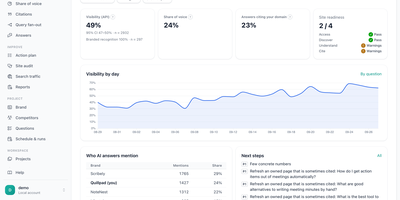
Craftsail Growth
Buyers now ask an AI assistant for recommendations instead of typing a search, and Craftsail Growth shows whether those answers name your brand or a competitor. It puts your buyers' questions to ChatGPT, Claude, Gemini, Grok, Perplexity, DeepSeek, Kimi, Doubao, GLM, and MiniMax through their official APIs several times a day, so visibility per engine and per question carries confidence intervals instead of one vanity number. Share of voice ranks you against the competitors you track with a leaderboard and a trend line. Citation reports sort every cited URL into owned, competitor, review, social, and reference sources next to the web searches the engines actually ran. A site audit works through access, discovery, understanding, and citation in fix order, checking robots rules for AI crawlers, llms.txt, structured data, and answerable content. A ranked action plan blends citations, the audit, and Search Console data, and each accepted action carries an acceptance check that verifies itself on the next run. Creating a project from your website address crawls the site and drafts brand facts, competitors, and buyer prompts for you to review. Google Search Console and GA4 import, generated llms.txt, JSON-LD, and FAQ snippets, scheduled runs, reports, several projects and users, manual sampling sheets, and a dashboard in English, Chinese, and Portuguese round it out. Running on a dedicated VPS on RepoCloud with guaranteed CPU, RAM, and SSD, full root SSH access, and a browser serial console. AGPL-3.0 licensed.