Categories
LLM Document Management OCR Data Extraction Document Intelligence Invoice Processing Accounting Automation Hybrid SearchDeveloper links
DocIntel
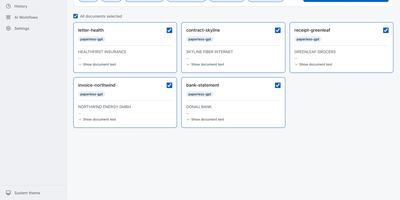
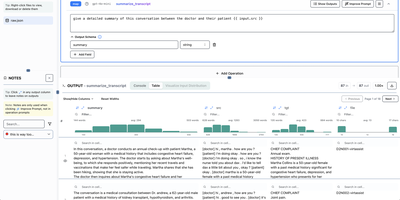
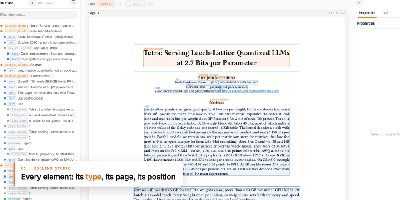
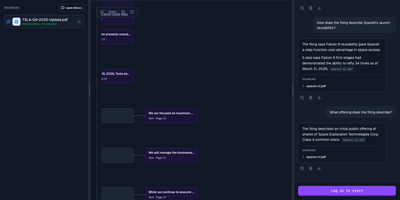
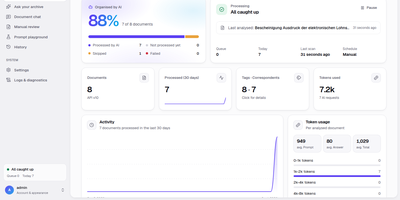
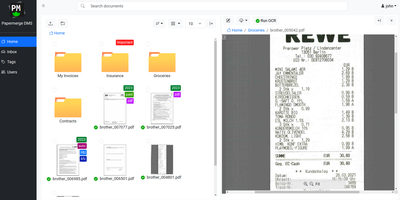
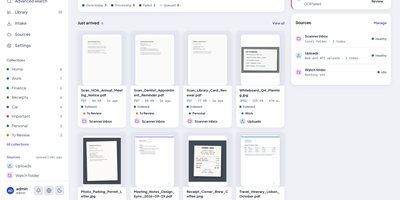
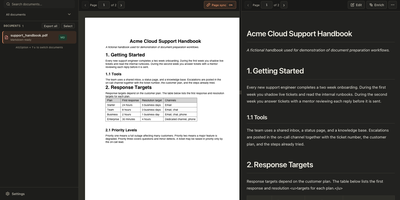
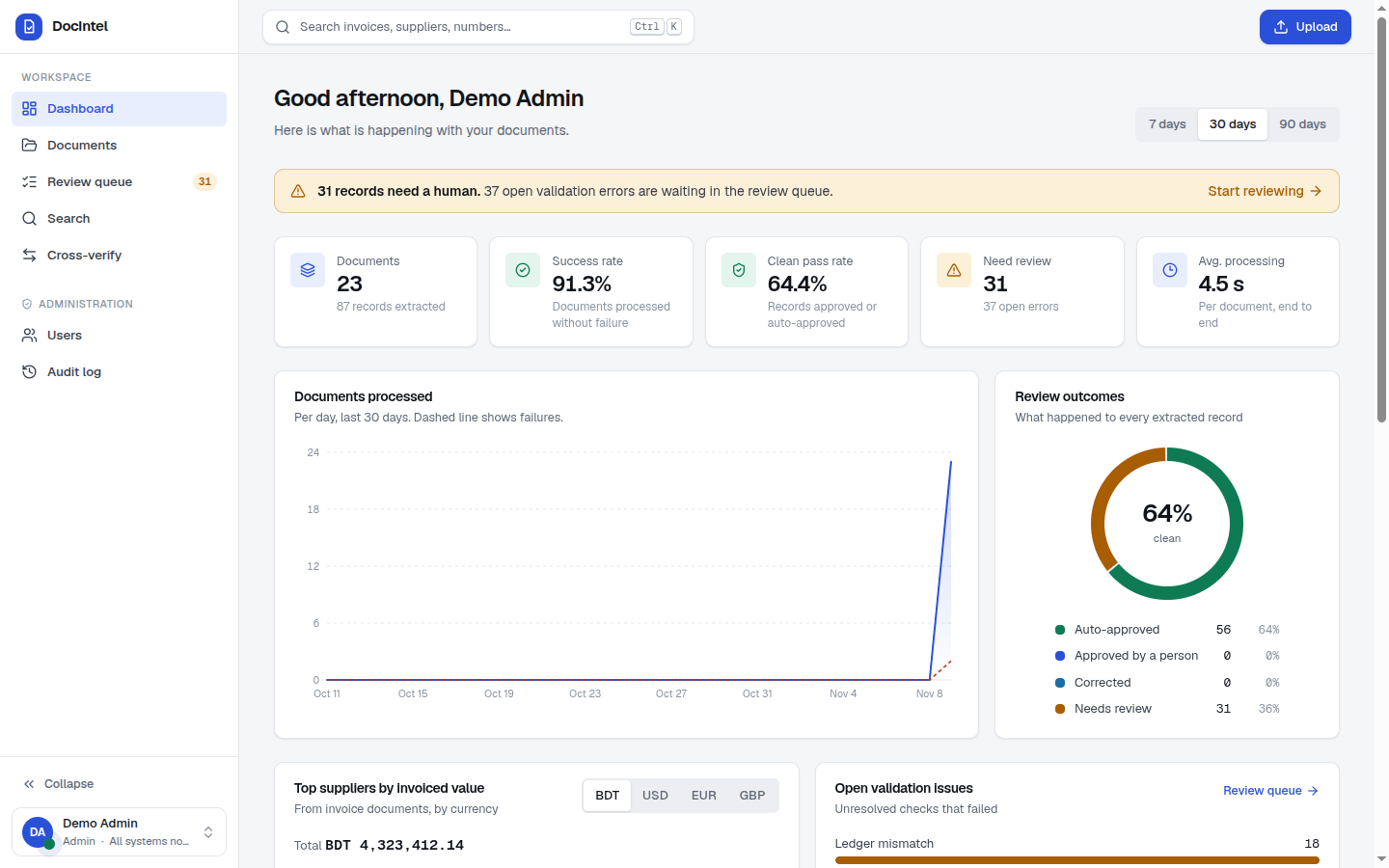
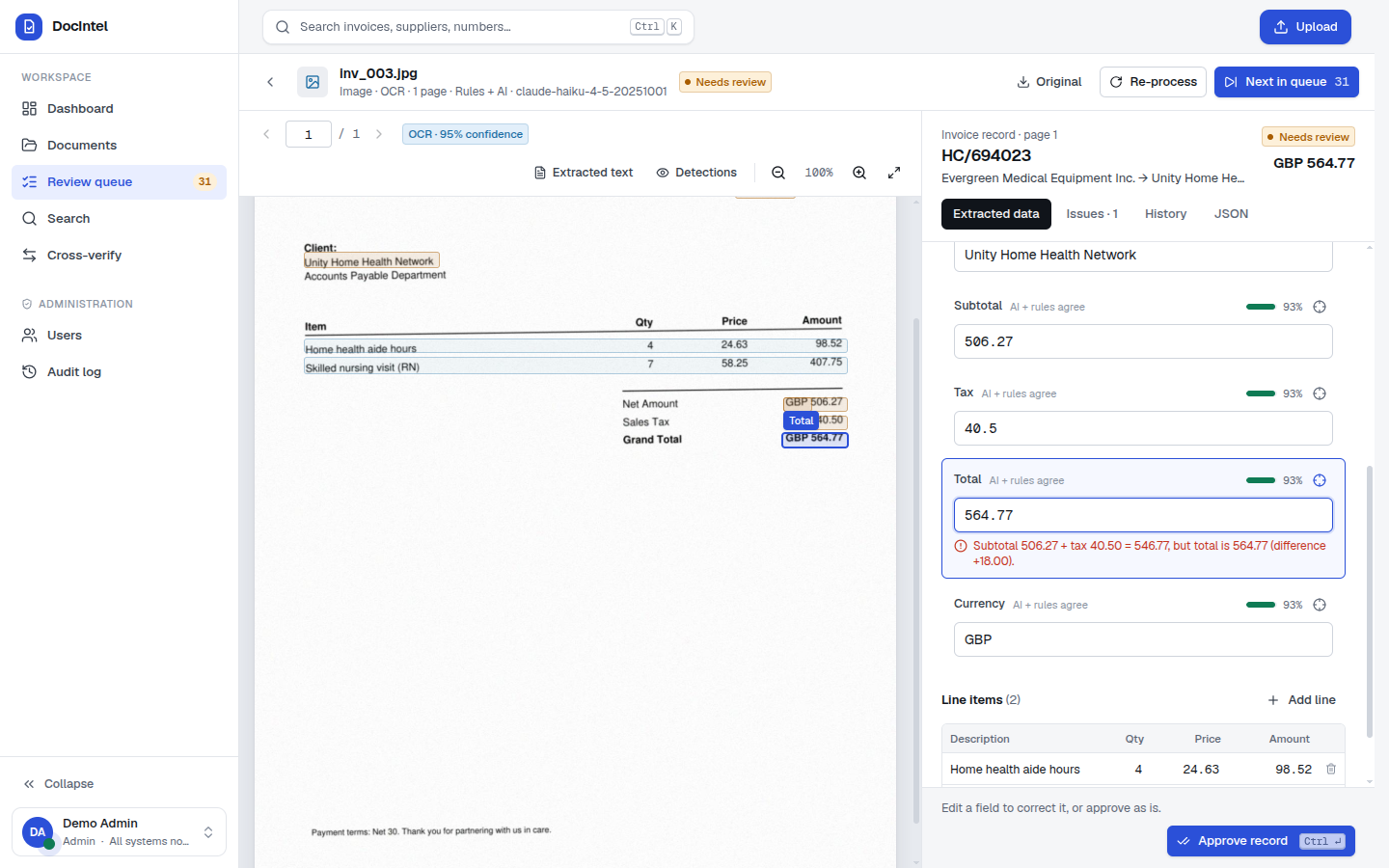
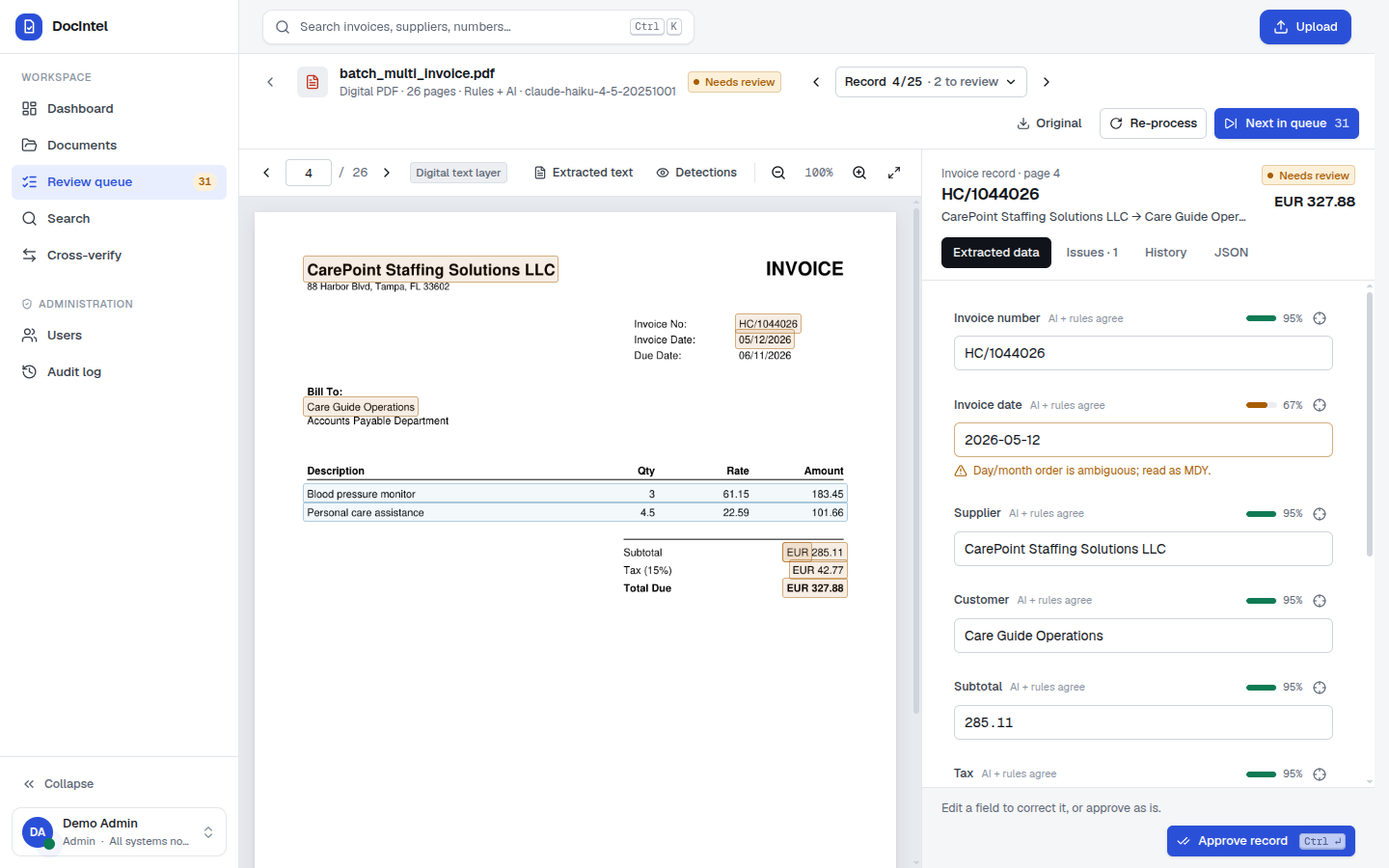
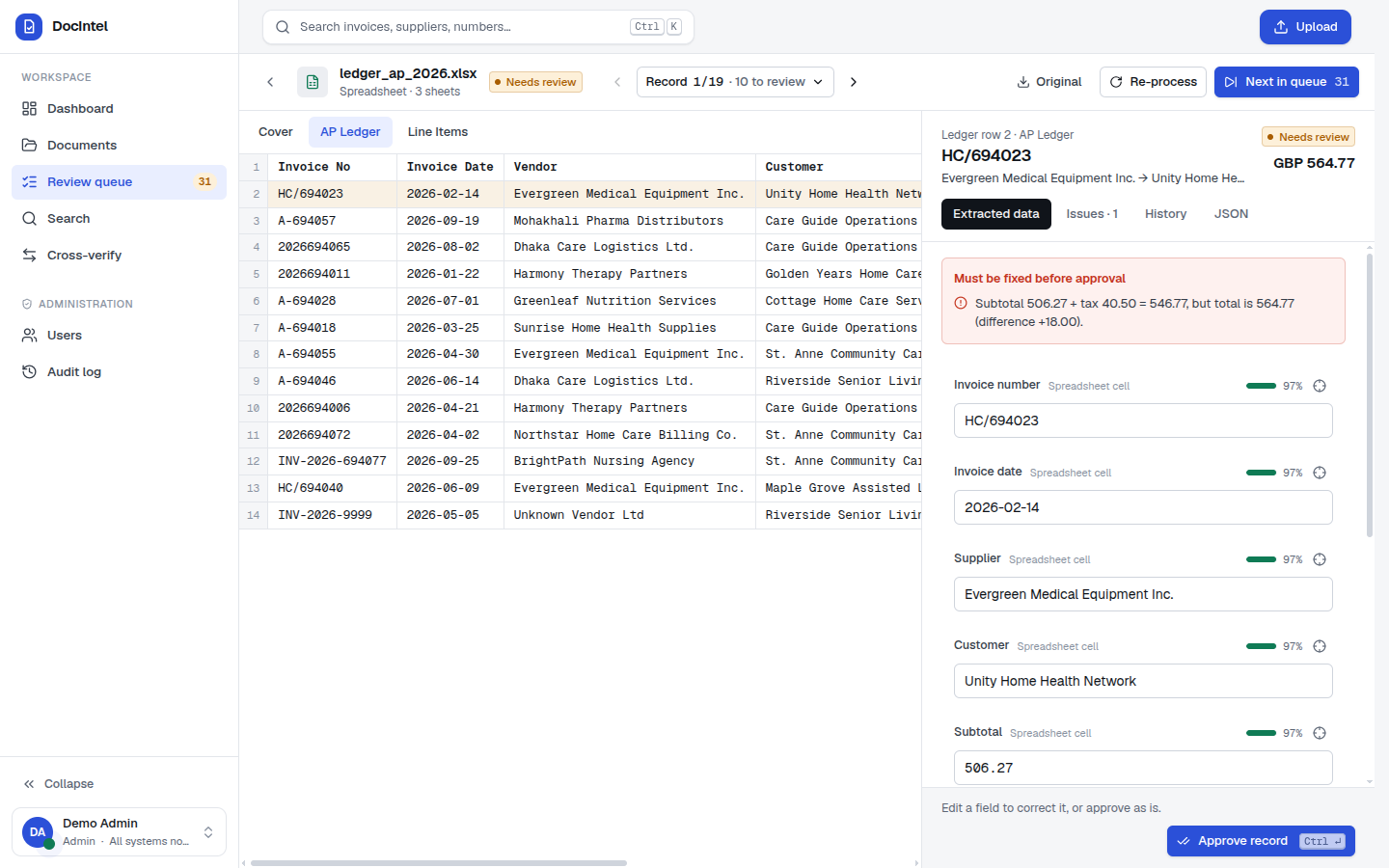
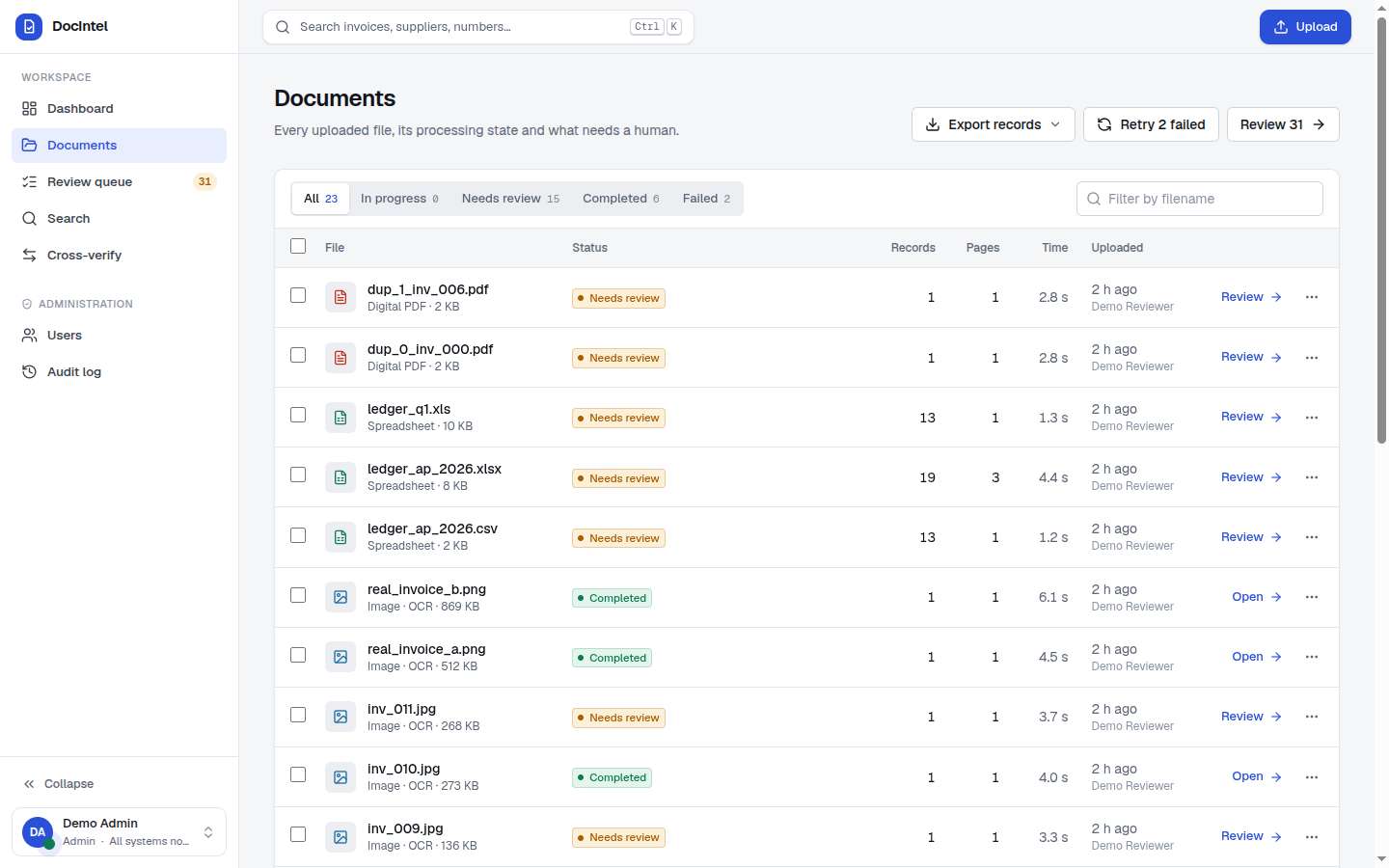
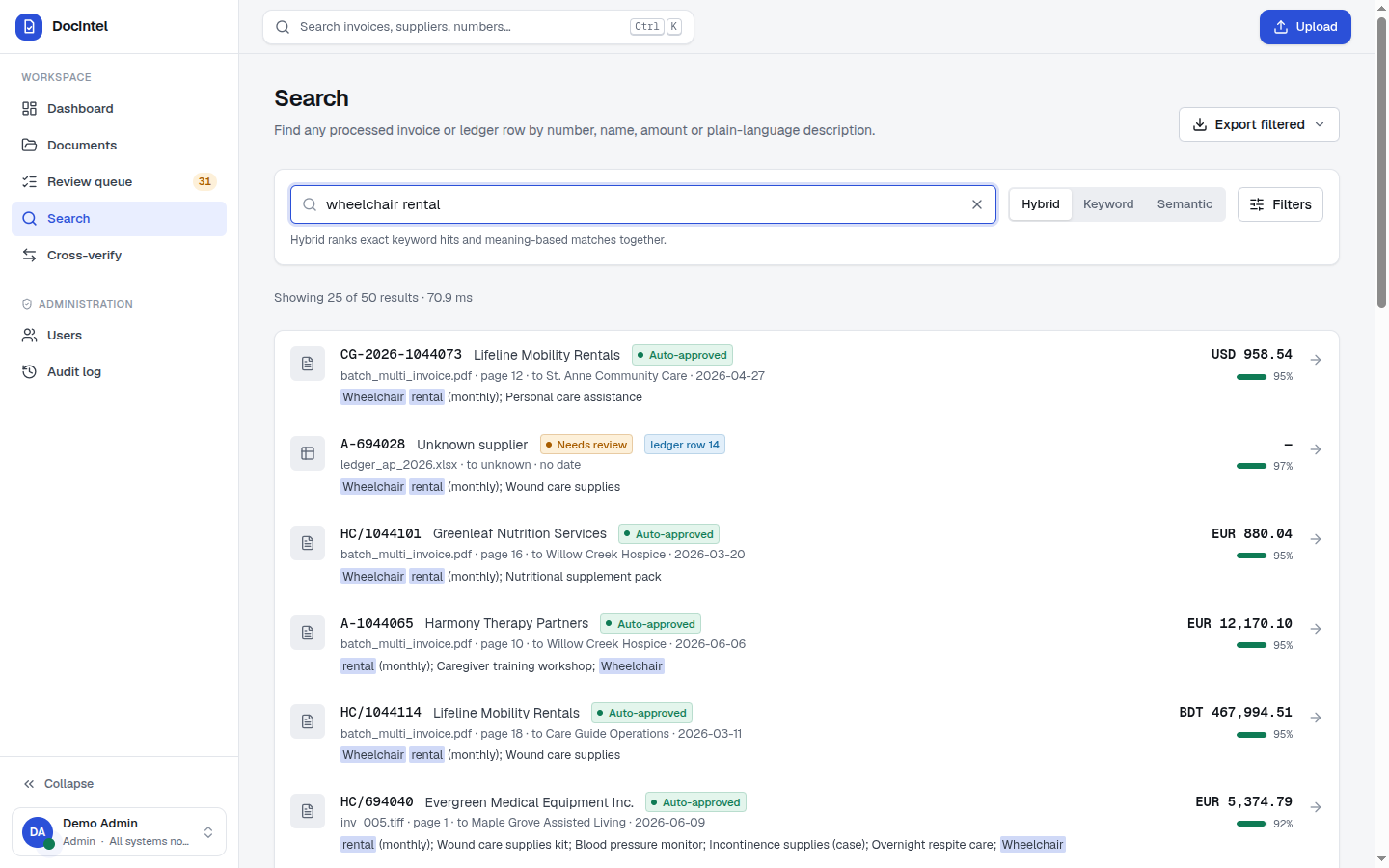
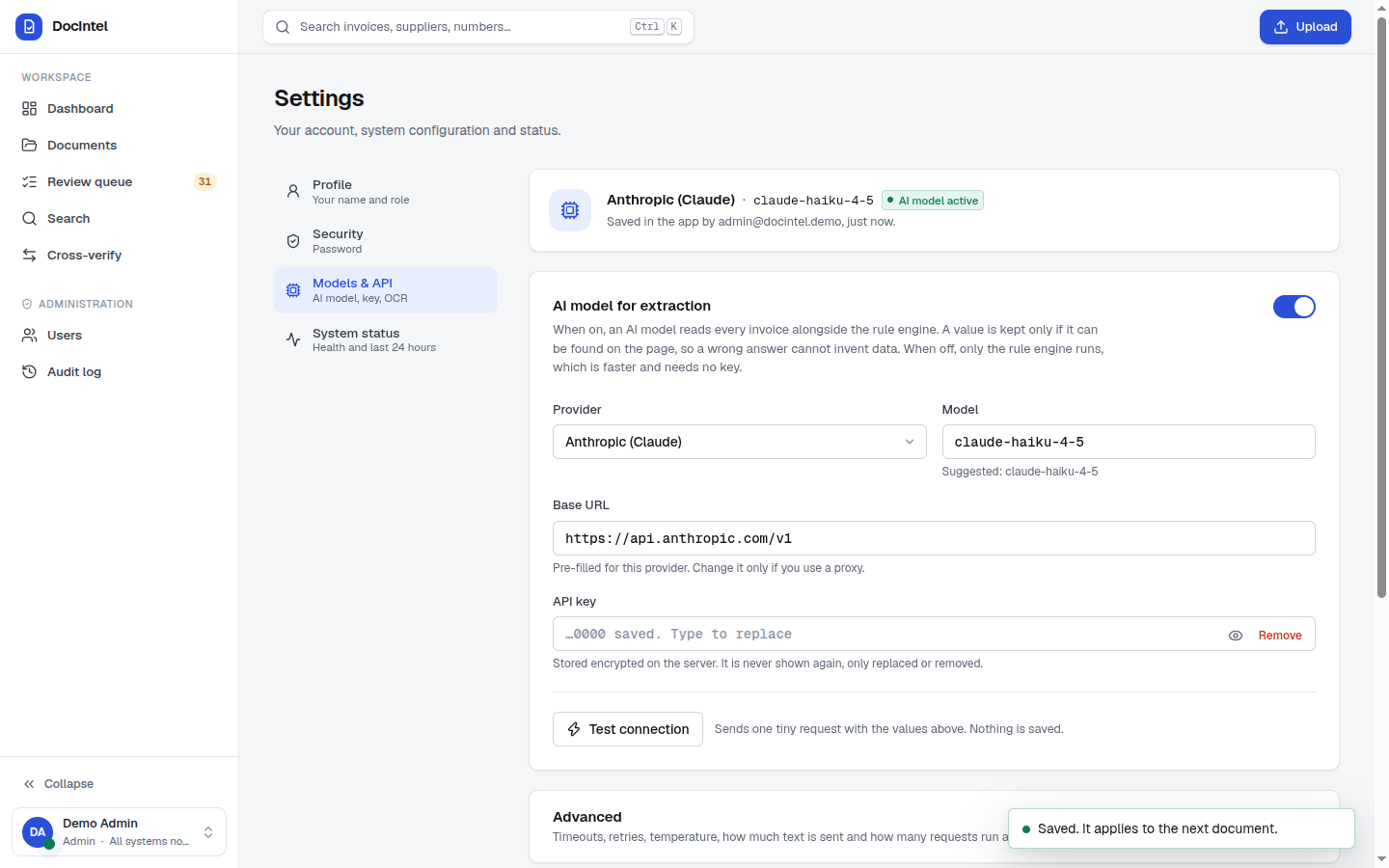
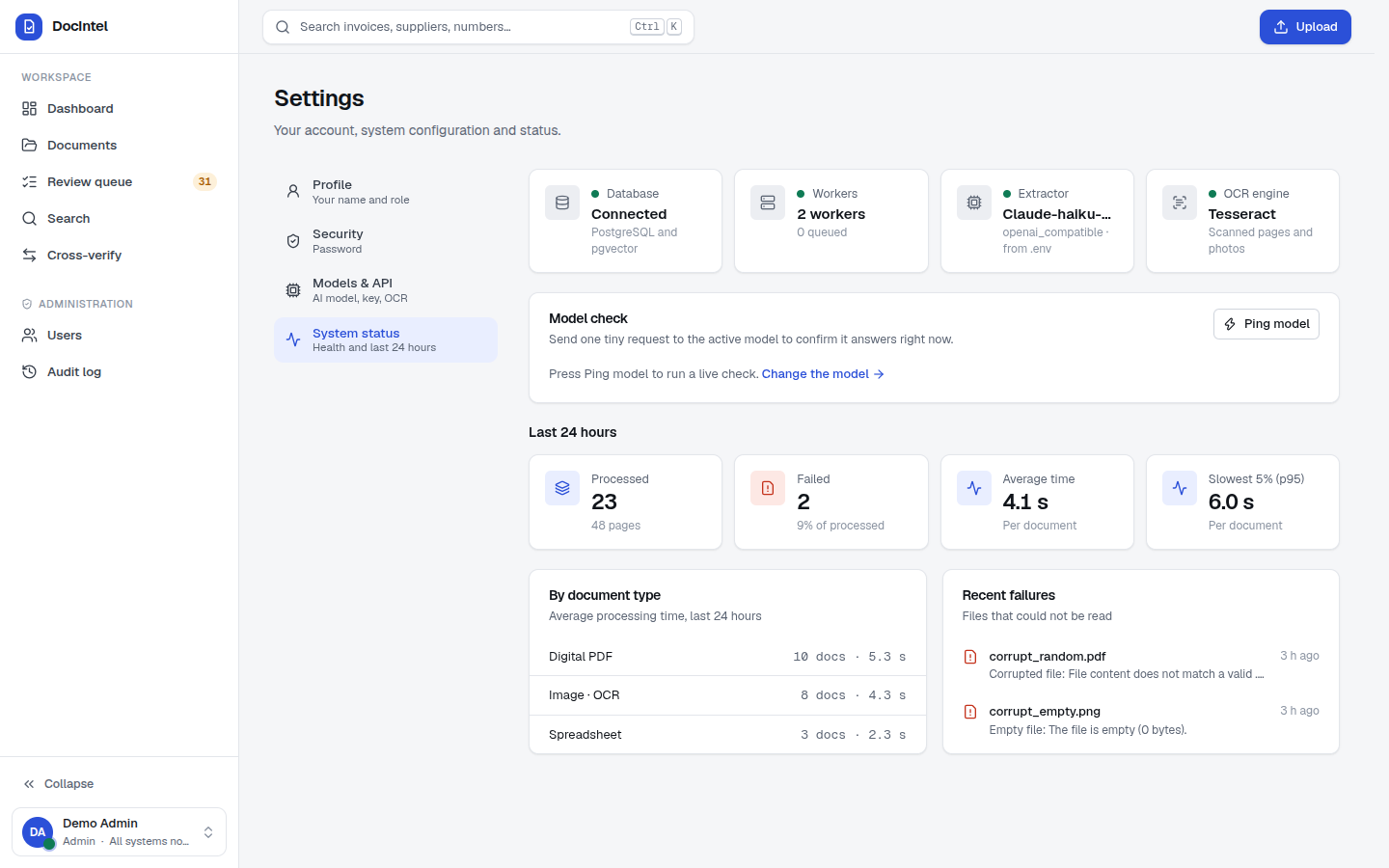
Drop in a pile of invoices, receipts, scans, or ledgers and DocIntel hands back validated, searchable records, asking a person only about the doubtful ones. It reads PDFs, phone photos, TIFF scans, Excel sheets, and CSV files. Scans get deskewed, denoised, and upscaled before OCR. A 1,000-page PDF is split into individual invoices in seconds. Every extracted value must be found on the page, or it is stored as null instead of guessed. A rule engine reads each document, and an optional model from Anthropic, Gemini, Groq, OpenAI, or Ollama adds a second opinion that flags disagreements. Totals, taxes, line items, dates, and duplicate files are checked for consistency. Invoices can be cross-verified against a ledger in another PDF or an Excel file, with field-level differences. The review screen shows the source page beside the fields and highlights where each value was found. Inline corrections trigger re-validation and keep a full history. Search works by keyword, by meaning, or both, with filters and export to CSV, Excel, or JSON. Viewer, reviewer, and admin roles control who can upload, approve, or delete, and an audit log records every action. Administrators can switch the AI model, key, and OCR engine from the settings page without a restart. Running on a dedicated VPS on RepoCloud with guaranteed CPU, RAM, and SSD, full root SSH access, and a browser serial console. MIT licensed.
Benefits
- Nothing invented, everything traceable
- Every extracted value must be located on the page before it is accepted. Values that cannot be found are stored as null, and the rejected candidate is kept for the reviewer.
- Reviewers open only doubtful records
- Rule checks and optional model agreement run first, so people open only the records flagged as uncertain instead of every invoice in a large batch.
- Measured accuracy on real invoices
- The project's own evaluation reports 99.0% field accuracy on third-party-labelled real invoices and on a synthetic set, with no invented values, using the rule engine and Tesseract alone.
- Documents can stay on your server
- The rule engine alone, or a local Ollama model, keeps every document inside your network. Hosted AI providers are optional, and API keys saved in the interface are stored encrypted.
Features
- Multi-Engine OCR Pipeline
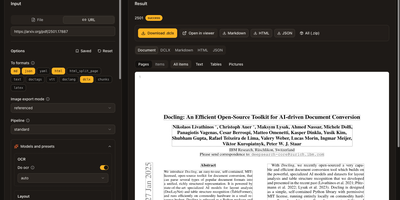
- PyMuPDF reads digital PDFs, while Tesseract or RapidOCR with OpenCV deskew and denoise handle scans, phone photos, and multi-page TIFF files.
- Provenance-Checked Extraction
- A rule engine and an optional LLM through Anthropic, Gemini, Groq, OpenAI, Ollama, or any OpenAI-compatible gateway return JSON, and each value is traced to a page location.
- Ledger Cross-Verification
- Invoices are compared against a ledger in another PDF or Excel file with field-level differences, and subtotal, tax, line-item, and total consistency is validated.
- Hybrid Search Engine
- PostgreSQL full-text (GIN), pgvector embeddings from bge-small-en-v1.5, and Reciprocal Rank Fusion combine keyword and semantic matches, with structured filters and CSV, Excel, or JSON export.
- Queued Background Workers
- FastAPI hands jobs to Redis and RQ workers that scale horizontally, while a Next.js 15 interface served by nginx handles review, dashboards, and administration.
- Roles, Sessions, Audit Log
- Viewer, reviewer, and admin roles use scrypt-hashed passwords and server-side sessions, and an audit log records sign-ins, uploads, corrections, approvals, exports, and administrative changes.