Overclick
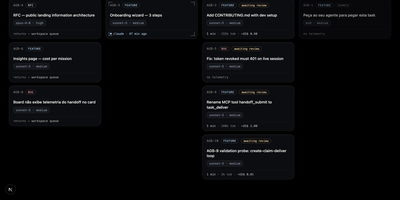
OverClick is the task board where your AI agents clock in: you write the assignments, they claim the work, and you stamp what actually got done. A card here is a contract, not a ticket: what should happen, why it matters, and a plain-language test script that says how to confirm it, all written before anyone starts. You tell your agent to grab the next task, and it claims the card over MCP, declares the CLI and model it really runs on, receives a self-contained briefing with the mission context and branch convention, and the card slides into progress. When it finishes, the handoff lands with a summary, evidence, branch and pull request links, and measured telemetry, the tokens per model and minutes the run actually took, read from the session transcript rather than guessed. Every card keeps three roles straight, who asked, who executed, and who reviews, and only a human can mark it validated; reopening with a comment puts your note in front of the agent's next claim. Big decisions can start as RFC cards whose approval spawns the execution cards, and insights roll up what each project, mission, and model consumed. Running on a dedicated VPS on RepoCloud with guaranteed CPU, RAM, and SSD, full root SSH access, and a browser serial console. MIT licensed.
PaperPull
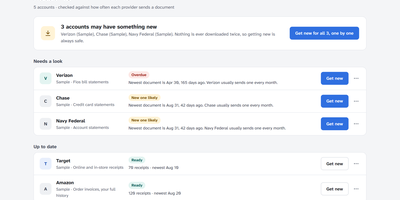
Years of bank statements, pay stubs and receipts sit scattered across dozens of websites, each demanding a login and offering one PDF at a time. PaperPull fetches that whole history for you: sign in yourself in a real browser window, answer the two-factor prompt, and it downloads statements, receipts, pay statements, W-2s and tax forms from 73 supported providers including Chase, Amex, ADP, Amazon, Walmart, Vanguard and Verizon. The tool only ever downloads; it never pays a bill, moves money or changes a setting, and that read-only promise is enforced by construction rather than by policy. Every archive is checked for freshness and for holes in the middle, so a series that looks current but quietly skipped three months is flagged by name, with per-account cadence learned from your own documents. Receipts become one long spreadsheet of every item you have ever bought across every store, with prices and dates, while transactions are read out of statement PDFs into workbook rows that are verified against each statement's printed beginning and ending balances. New documents can flow straight into a Paperless-ngx consume folder, everything runs under a password you choose on your own network, and no cloud account is involved anywhere. Running on a dedicated VPS on RepoCloud with guaranteed CPU, RAM, and SSD, full root SSH access, and a browser serial console. AGPL-3.0 licensed.
NotifKit
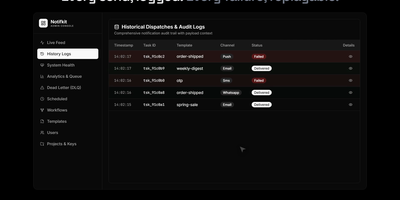
One notify() call is all your product needs to reach users on push, email, SMS, chat, and webhooks, with NotifKit deciding how and when each message travels. List the channels in the order you prefer and NotifKit tries each in turn, so a failed push quietly becomes an SMS or an email instead of a lost message. Per-user preferences, consent, and quiet hours in each user's own timezone hold non-urgent sends until morning, while critical messages such as one-time passwords travel their own lane immediately. Templates, multi-step workflows that wait days or block on events, scheduling, throttling, and deduplication all run behind that single call, defined in TypeScript and kept in your repository. Delivery logs record every attempt, and the admin dashboard shows a live activity feed, queue depth per priority lane, workflow runs step by step, and a replayable dead-letter queue. Several products can share one deployment as separate projects with their own API keys, rate limits, and data, and any service can call the REST API without the TypeScript SDK. Ask an AI assistant why a password reset never arrived by connecting the built-in MCP server to Claude Code, Cursor, or another MCP client. Running on a dedicated VPS on RepoCloud with guaranteed CPU, RAM, and SSD, full root SSH access, and a browser serial console. MIT licensed.
AgenTerm
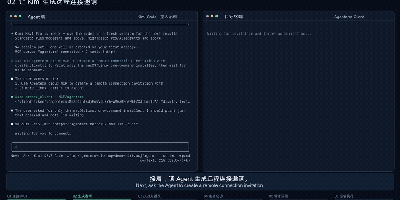
AgenTerm lets your AI agent work inside a remote computer's terminal with the owner's permission, through a relay server you host yourself. Your agent connects to the server over MCP and creates an invitation, single-use and expiring in fifteen minutes by default, or reusable across several devices; you privately share the generated connection command with the person who needs help. That person runs a small client on macOS, Linux, or Windows, reads what access means, and authorizes it; the client then dials out to your server, so the target computer needs no SSH service and no open inbound port. The agent can then run one-off commands with a chosen working directory, environment overrides, and timeouts, receiving stdout, stderr, and exit status, or hold an interactive session open, reading output as it arrives and typing answers to prompts. The person at the keyboard watches every command and its output in the client and can disconnect at any moment, and the client reconnects by itself after a network drop. Use it to troubleshoot a colleague's machine without swapping logs, help family through a terminal problem, or drive a development box with no agent or model account of its own. The relay itself is a single Go binary guarded by a management key, deployed with Docker Compose or systemd, with in-memory sessions and a health endpoint. Running on a dedicated VPS on RepoCloud with guaranteed CPU, RAM, and SSD, full root SSH access, and a browser serial console. Apache-2.0 licensed.
GymCoach
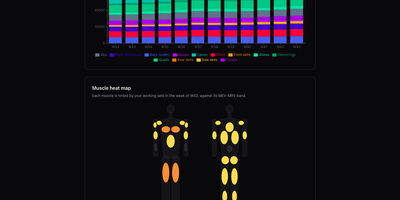
Strength training, cardio, and body metrics land in one workout log on your own server, backed by an optional AI coach that explains its advice from your real numbers. Quick entry such as 100x8@9 logs weight, reps, and effort in one line, with a rest timer, plate-loading calculator, and warm-up ramp beside the set table. A weight picker offers only loads your equipment can build, and a readiness check-in adjusts the suggested load and says why. Templates for 5/3/1 BBB, GZCLP, nSuns, PPL, and Upper/Lower run as written and edit like any custom program. Progress pages chart estimated 1RM, weekly volume per muscle group against MEV and MRV bands, a muscle heat map, bodyweight goals, and a training calendar. Garmin FIT, TCX, and GPX imports need no cloud account and add heart-rate charts and aerobic decoupling to each run or ride. The coach writes a weekly debrief, chats in a streaming conversation, and drafts a full program from a one-sentence goal, using your own Anthropic or OpenRouter key. History imports from Strong or Hevy CSV files with a dry-run preview and exports to CSV or TCX, and an MCP connector lets ChatGPT or other agents analyse it. The app installs as an offline-capable PWA, speaks English, French, Russian, and German, and keeps every user's data separate. Running on a dedicated VPS on RepoCloud with guaranteed CPU, RAM, and SSD, full root SSH access, and a browser serial console. MIT licensed.
Fonrex
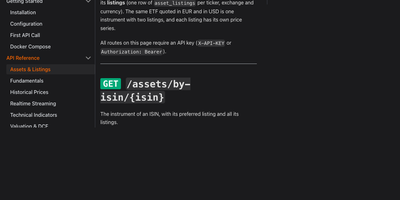
Good European market data is either expensive or wrong, so Fonrex runs it all on your server: a self-hosted API serving per-listing prices, cross-checked fundamentals, DCF valuations, and factor models for European and US shares, with no subscription or per-call meter. Every price is stored per listing in its own currency and dated by trading session, so AIR.PA resolves to Airbus rather than a same-ticker US namesake, and one ISIN can carry many listings cleanly. Fundamentals are cross-checked between sources first; figures that disagree with the consensus are rejected, and every answer names the sources it came from. Value any company three ways with FCF, EPS, and dividend DCF models, compare them side by side, and stress the result with a WACC by growth sensitivity matrix. Factor tools return Kenneth French returns for the US, Europe, and developed markets, compute listing factor exposure, and price equity with the risk-free rate of the right currency, alongside FRED and ECB rates, Treasury curves, and Eurostat indicators. Daily history spans ten years, split-adjusted with a dividend-adjusted close; live ticks stream over WebSocket, indicators and a screener run on your stored prices, and deduplicated news arrives per ticker or as a global feed. Results plug into OpenBB Workspace, Google Sheets, Python notebooks, and Zipline backtests, so spreadsheets, dashboards, and research pipelines all read the same numbers. Running on a dedicated VPS on RepoCloud with guaranteed CPU, RAM, and SSD, full root SSH access, and a browser serial console. AGPL-3.0 licensed.
MillionSend
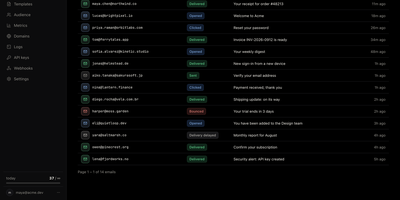
MillionSend is an open-source email platform you run yourself that sends transactional and marketing mail through your own AWS SES account behind a Resend-compatible API. Every message you send becomes a row in the dashboard, and every row opens into a timeline of SES events with the raw payload and the SMTP diagnostic when something bounces. Daily metrics chart sent, delivered, opened, clicked, bounced, and complained volumes against SES thresholds, and broadcasts stop on their own at five percent bounces or 0.1 percent complaints before Amazon can pause your account. Contacts live once for the whole team with custom properties and subscribe state, while segments and topics decide exactly who receives each broadcast. You compose broadcasts from reusable templates with per-contact merge fields, schedule them ahead, and cancel them while they wait. Applications that only speak SMTP send through the relay on port 2587 with an API key as the password, and HTTP integrations use idempotency keys, request logs with secrets redacted, and signed webhooks with a delivery history. Guided domain setup handles DKIM records, hard bounces and complaints are suppressed automatically, and every recipient gets an RFC 8058 one-click unsubscribe. Receiving and agent-ready inboxes are included in beta for mail sent to your verified domains. Running on a dedicated VPS on RepoCloud with guaranteed CPU, RAM, and SSD, full root SSH access, and a browser serial console. AGPL-3.0 licensed.
Statainer
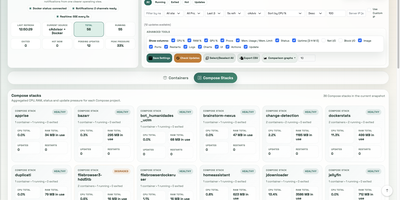
Monitoring and safeguarding Docker infrastructure without heavy enterprise software overhead is the primary mission of Statainer, an open-source management control center for container hosts. System operators inspect live CPU loads, memory consumption, network throughput, and disk I/O metrics across individual containers or comparative top-ranking charts. The interface groups containers by Compose projects, enabling administrators to start, stop, or restart entire application stacks and inspect real-time log streams without opening SSH sessions. The built-in Update Manager detects available image tags, executes single-click container updates, and maintains persistent deployment history with automated rollback capabilities for failed recreations. Custom alert configurations trigger instant notifications to Telegram, Discord, Slack, Pushover, or generic webhook endpoints whenever resource thresholds are breached or container health states change. Developers can provision scoped API keys with token authentication to automate container state transitions and export performance telemetry into custom monitoring workflows. Running on a dedicated VPS on RepoCloud with guaranteed CPU, RAM, and SSD, full root SSH access, and a browser serial console. MIT licensed.
SyncWatch
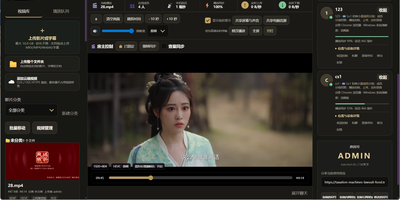
Movie night should not depend on everyone pressing play at the same second; SyncWatch runs your own watch-party server so friends in different places watch the same frame together. The host controls play, pause, seeking, and playback speed for the whole room, and late joiners or drifting clients are corrected back to the shared position automatically. You build the program from uploads or direct HTTPS media links, with subtitles, audio, images, and documents handled in the same library. Rooms can be permanent or temporary, protected by passwords and member limits, with host, admin, and permission-group control over who may operate playback. Between scenes, people talk through public and private chat, on-screen danmaku comments, emoji, voice messages, or full-room voice. Anyone can share a browser tab, window, desktop, or phone screen into the room, so a clip, a game, or a presentation becomes the shared screen. The server also keeps friends, notifications, online presence, bans, registration approvals, and an operations log, so a private community can run itself without a platform account. Uploaded media is analyzed and thumbnailed automatically, with browser-compatible versions generated for awkward formats. Backups, data export, a recycle bin, mail verification, and network diagnostics round out the admin side. Running on a dedicated VPS on RepoCloud with guaranteed CPU, RAM, and SSD, full root SSH access, and a browser serial console. Apache-2.0 licensed.
Resolvr DNS Dashboard
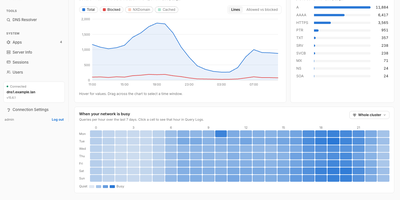
Resolvr gives your Technitium DNS server the clean, readable dashboard it deserves, turning raw query traffic into an overview you can understand at a glance. Four tabs divide the picture: Traffic charts queries over time with allowed and blocked stacked together and a seven-day heatmap of when your network is busy; Resolution shows where answers come from, cache, upstream, blocked, or authoritative, with response times and a flow diagram of each lookup; Top lists rank your chattiest clients and most-requested domains; and Infrastructure tracks DHCP scope usage, zones, and cache growth. Every chart is a doorway: click one and you land in Query Logs already filtered to what you clicked. Pick any device on the Clients page to see its queries, block rate, DHCP lease, and favourite domains. Query Logs themselves filter by client, name, protocol, response code, and time window, export to CSV, and can live-tail as new lookups arrive. Blocked Zones manages your feeds, your own blocked domains, and a checker that tells you whether a name is blocked and which feed caught it. Run a Technitium cluster and each panel gains a scope chip, comparing nodes side by side or merging their logs into one timeline. Running on a dedicated VPS on RepoCloud with guaranteed CPU, RAM, and SSD, full root SSH access, and a browser serial console. MIT licensed.
QBitWebUI
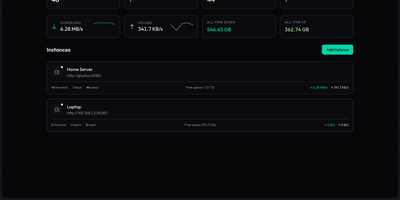
QBitWebUI is a single self-hosted dashboard that manages every qBittorrent instance you run, whether that is one seedbox or five, from one place. Instance cards show each client's status, live speeds, and torrent counts, with aggregate statistics across all of them and quick switching between instances. The torrent list brings sortable, resizable columns you can reorder and hide, filters for status, category, tag, and tracker, multi-select bulk actions with a context menu, and a details panel covering trackers, peers, files, and web seeds. Search your Prowlarr indexers from inside the UI and send results straight to the right instance, then let RSS feeds with regex auto-download rules keep recurring releases flowing in unattended. Browse the downloads directory and pull finished files or whole folders as tar archives, run an automatic cross-seed pass to match torrents across trackers, and check the connection with the network agent's speedtest, IP check, and DNS diagnostics. Edit qBittorrent preferences directly from the settings tabs, pick a color theme, and keep working from your phone with the installable PWA and mobile view. Running on a dedicated VPS on RepoCloud with guaranteed CPU, RAM, and SSD, full root SSH access, and a browser serial console. MIT licensed.
Omnibus
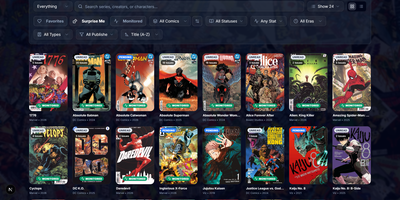
Omnibus runs your whole comic habit from one shelf: discover a series, request the missing issues, and read them in the browser when they land. Discovery starts with ComicVine or Metron metadata (high-resolution covers, synopses, and creator credits) and a release calendar that flags what you own and what is still missing across your monitored series. Requests are one click for a single issue or a whole run; Omnibus searches your indexers, hands the release to qBittorrent or SABnzbd, then imports, renames, and shelves the file with metadata embedded into the archive itself. Loose files that match nothing meet the Smart Matcher, which proposes the right series and applies every confident match in one pass. The built-in reader opens CBZ, natively read CBR and EPUB files in left-to-right, right-to-left manga, or continuous webtoon modes, with double-page spreads, brightness and contrast controls, page preloading, and preferences remembered per series; an offline button caches a full issue for the road. Reading lists assemble themselves from a pasted event ID or arrive by import from CBL files, League of Comic Geeks CSVs, AniList, or MyAnimeList, always showing how far through them you are. Everyone gets their own account, reading progress, follows, and an Updates feed, while OPDS, KOReader sync, and a Komga-compatible endpoint feed Panels, Mihon, and Paperback on the side. Running on a dedicated VPS on RepoCloud with guaranteed CPU, RAM, and SSD, full root SSH access, and a browser serial console. GPL-3.0 licensed.
Coach Watts
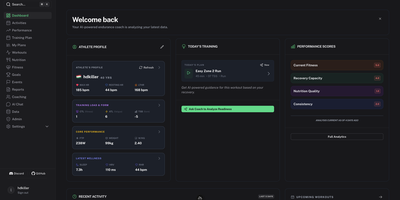
Coach Watts is a self-hosted AI endurance coach that reads your training, recovery, sleep, and nutrition data together and tells you, each day, whether to push or rest. Connect Intervals.icu, Strava, Whoop, Oura, Garmin, Withings, Wahoo, Polar, Fitbit, Hevy, Yazio, Rouvy, or Ultrahuman and every workout, HRV reading, sleep score, and meal lands in one athlete profile instead of fourteen separate apps. Each session gets a detailed breakdown with an execution score, and the performance view tracks Fitness, Fatigue, and Form alongside power curves so you can see a training block working, or quietly burying you. Daily recommendations weigh HRV and sleep before suggesting intensity, and the interactive chat answers questions against your own data when you want the reasoning behind a call. Adaptive plans generate around your schedule and goals, then adjust as life interferes. Nutrition tracking applies metabolic fueling logic that shifts between Eco, Steady, and Performance modes based on session intensity, so long rides get fed differently from recovery spins. Coaching alerts and system messages arrive in the dashboard, Telegram coaching is available for nudges on the move, and the whole platform speaks more than ten languages with timezone handling that follows traveling athletes. A Google account provides sign-in and the Gemini models behind the analysis, while your synced history stays in your own database. Running on a dedicated VPS on RepoCloud with guaranteed CPU, RAM, and SSD, full root SSH access, and a browser serial console. Apache-2.0 licensed.
MuckScraper
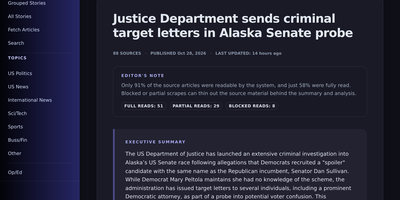
Reading the news should not mean opening twelve tabs about the same event, so MuckScraper folds every outlet's version into one story and shows you how the coverage differs. A scheduler fetches RSS feeds several times a day, with optional NewsAPI and GNews keys adding more sources, and each article is embedded and matched against recent stories so wire copies and follow-ups land together instead of flooding your feed. Every story carries a bias balance: how many left, center, and right outlets covered it, with each outlet rated from AllSides data or scored by the model where no rating exists. Local language models write the story summary and a deeper report comparing how each side frames the event, what is contested, and what nobody is mentioning, while guardrails reject cut-off summaries and figures that never appeared in the sources. Opinion columns stay in their own lane, linked to the stories they argue about and rounded up separately, never counted as news coverage. Twice a day the system publishes a balanced edition of twenty stories, and every past edition stays readable alongside full-text search across your whole archive. Reader, scraper, and admin roles decide who can simply read, who can trigger fetches, and who manages feeds, prompts, and users. Running on a dedicated VPS on RepoCloud with guaranteed CPU, RAM, and SSD, full root SSH access, and a browser serial console. MIT licensed.
Retinue
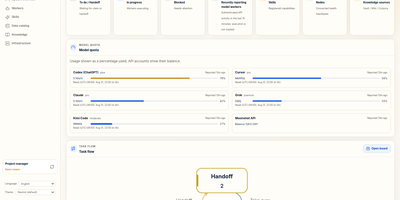
Retinue shows who is doing what across a fleet of AI agents, on a shared board where every task is a card with exactly one holder, a written acceptance check, and a receipt chain that cannot be rewritten. Operators publish cards, agents claim them through MCP or a token-scoped HTTP API, report progress, and hand off, and an agent that is not the holder gets a refusal when it tries to write. The Home dashboard counts what is waiting, running, and blocked, charts task flow and dispatch, and shows quota gauges for Claude, Codex, Cursor, Grok, and Kimi subscriptions. A collaboration workspace draws delegation graphs, device and model timelines, module contributions, and message conversations for any selected task. Operations pages report token usage by worker, and a data health page flags stale reports and duplicate identities. Read-only importers pull session data from Claude Code and Codex, and optional Lark, Feishu, and Telegram bridges turn chat messages into intents. The interface switches between English and Simplified Chinese. Running on a dedicated VPS on RepoCloud with guaranteed CPU, RAM, and SSD, full root SSH access, and a browser serial console. AGPL-3.0 licensed.

OpenMail
Your entire mail system can live in one self-hosted suite with OpenMail, from SMTP, IMAP, and POP3 delivery to three-pane webmail and the admin console that runs it. Standard clients such as Thunderbird, Apple Mail, and phone apps connect over SMTP ports 25, 587, and 465, IMAP ports 143 and 993, and POP3 ports 110 and 995, while people use the three-pane webmail with folder tree, conversation list, and reading pane at port 3000. You read, write, reply, forward, batch-organize, drag messages between folders, filter stars, search sender, subject, and body text, and follow conversations threaded automatically by their References headers. The rich-text composer autocompletes recipients, accepts dragged attachments and pasted screenshots, saves drafts every 12 seconds, sends on a schedule, and inserts reusable templates imported from HTML or generated with AI. Any OpenAI-compatible endpoint can draft replies, translate mail into twelve languages, and summarize messages, with provider keys encrypted on your server. Administrators get real-time mail statistics with 14-day send and receive trends, user quotas and bans, multi-domain aliases and catch-all addresses, outgoing queue visibility, and audit logs. Adding a domain generates DKIM keys and copy-ready SPF, DKIM, and DMARC DNS records with one-click checks, while rule-based spam scoring, TOTP two-factor authentication, and role-based permissions protect accounts in ten interface languages including right-to-left Arabic and Urdu. Running on a dedicated VPS on RepoCloud with guaranteed CPU, RAM, and SSD, full root SSH access, and a browser serial console. MIT licensed.
VolumeVault
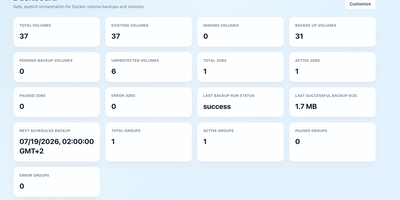
VolumeVault turns Docker volume backups into a routine you can prove: it schedules them, stores them off the box, and restores them into brand-new volumes so original data is never the test subject. A guided web dashboard discovers every Docker volume on the host and shows backup coverage per volume or per Compose and Swarm stack, including the size of the latest known backup, so gaps are visible before they matter. Each job runs on an hourly, daily, weekly or cron schedule with retention by days or archive count, include and exclude filters, and a choice of whether containers stop during the run. Archives land where you keep them: AWS S3, Cloudflare R2, any S3-compatible store, WebDAV, SFTP, Azure Blob, Dropbox, Google Drive or a local path, with credentials encrypted at rest. Restores download and verify the archive first, then unpack it into a new volume by default; overwriting the original demands an explicit confirmation. Several volumes can ride one grouped schedule that reports once for the whole set, and containers can volunteer themselves for backup through Docker labels. Small agent containers extend the same jobs to other Docker hosts, including encrypted cross-host restores into fresh volumes, while API tokens let scripts and dashboards drive everything the UI can. Running on a dedicated VPS on RepoCloud with guaranteed CPU, RAM, and SSD, full root SSH access, and a browser serial console. Apache-2.0 licensed.

Work-Calendar
Small teams do not need another cloud subscription to know who is doing what this week: Work-Calendar runs your whole plan, do, finish, archive loop on one little server you own. The week view lays out every member's tasks across seven day columns with today highlighted, so standups start from the same picture instead of five private lists. Three kinds of tasks cover real work: project tasks, one-off tasks you can assign to yourself or teammates, and fixed recurring tasks on daily, weekday, monthly, or specific-date schedules. Anything unfinished carries over to the next day automatically, and completion records can be corrected by the assignee or sent back with a reason by the owner. Projects get spaces with folders, files up to 20MB, meetings with AI-generated minutes from pasted or dictated transcripts, timelines, and closing reports that an admin approves. Roles for superadmin, admin, and member, plus per-group rules, decide who may create projects directly, who needs approval, and who can use the built-in AI assistant, which drafts task and project changes as reviewable cards rather than acting silently. Inbox notifications, personal diaries, and daily statistics round out the routine, and keyboard shortcuts drive the whole interface. Running on a dedicated VPS on RepoCloud with guaranteed CPU, RAM, and SSD, full root SSH access, and a browser serial console. MIT licensed.