Nojoin
Nojoin takes notes on your Meet, Teams, and Zoom calls without sending a bot into the meeting: it records from your browser and transcribes on your own server. Nothing extra joins the call and nothing announces itself to the room; you meet as usual, press record, and the browser captures the audio. Transcription runs locally with Whisper or Parakeet, so the audio never leaves your hardware, and speaker recognition matches voiceprints across calls, so a person you name once is labelled correctly in later meetings too. AI notes can come from an API provider, your existing Claude or ChatGPT subscription, or Ollama on the same machine for fully local processing. During the call, Meeting Edge suggests questions, flags points you may have missed, and explains unfamiliar terms in real time. Afterward, analytics measured from the audio report talk-time share, turn-taking, and overlapping speech. A built-in MCP server hands Claude or ChatGPT 32 tools over your library, 19 of them writable, so an assistant can search every meeting, correct a misheard line, turn action items into tasks, and reconcile attendees with your CRM. Google and Outlook calendars sync automatically, every meeting carries its own chat, and finished notes export to PDF, Word, or plain text. Stored credentials are encrypted with a key you control, and anonymous telemetry can be switched off entirely. Running on a dedicated VPS on RepoCloud with guaranteed CPU, RAM, and SSD, full root SSH access, and a browser serial console. AGPL-3.0 licensed.
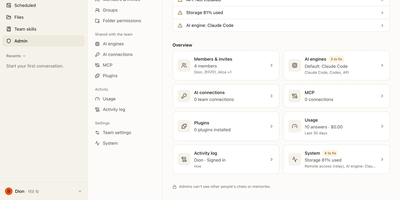
Trina AX
Trina AX is a self-hosted AI workspace where your team chats with real Claude Code and Codex agents that work from your company's own folders, so answers arrive in your formats, with your figures, in your house style. Picture the first morning of a new hire: she asks for a client proposal, and the draft that comes back already reads like the team lead wrote it, because the agent found the same templates and numbers everyone else uses. Admins stock shared, group, and project folders once; everyone else just opens a browser chat on desktop or phone and asks. Nothing leaks sideways in the process, since every file an agent opens is permission-checked as the person asking, and a folder someone cannot see does not exist for their agent in answers, search, previews, or trash. The know-how that makes answers sound right becomes SKILL.md playbooks, governed like ordinary files, and the agent asks a person before editing one. Agents can run up to 150 tool rounds per answer, search the web, spawn sub-agents, and follow scheduled tasks, while admins read an activity log of files touched, never the private conversations themselves. Bring the company Claude or OpenAI account, set per-person usage limits, or route through an Anthropic-compatible gateway to models such as DeepSeek, Kimi, or GLM. Running on a dedicated VPS on RepoCloud with guaranteed CPU, RAM, and SSD, full root SSH access, and a browser serial console. AGPL-3.0 licensed.
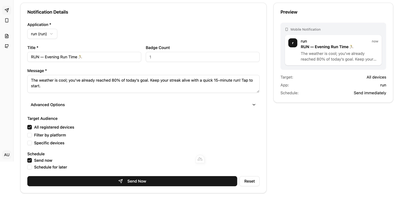
NitroPing
NitroPing sends push notifications to your iOS, Android, and web apps through Apple APNs, Firebase FCM, and Web Push, from a service you host yourself instead of a rented vendor. Create an app to receive its API key, register each device token with its platform, then send notifications to chosen devices with a GraphQL mutation. Provider credentials for APNs, FCM, and Web Push are stored encrypted per app, so several projects can share one instance with isolated keys and data. Delivery tracking records every send with its status, and analytics views show performance metrics and real-time updates as notifications land. Apps are managed with JWT sign-in and per-app API keys, rate limits protect the endpoints, and webhook secrets sign delivery callbacks to your servers. Native Swift and Kotlin SDKs handle registration inside iOS and Android apps, so the device side needs a few lines instead of a custom client. Running on a dedicated VPS on RepoCloud with guaranteed CPU, RAM, and SSD, full root SSH access, and a browser serial console. MIT licensed.
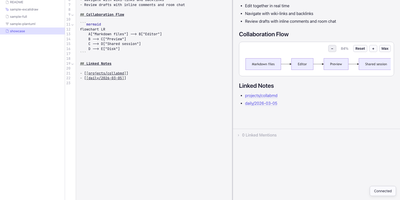
CollabMD
Your team's knowledge already lives in a folder of Markdown files, and CollabMD turns that exact folder into a shared workspace everyone can edit together in the browser, with nothing to migrate and no database swallowing your notes. Point it at an Obsidian vault, a plain docs directory, or a git-backed repository and the filesystem stays the source of truth: files are never moved, renamed, or deleted unless someone does it deliberately in the app. Several people can type in the same document at once with live cursors and presence indicators, follow a collaborator's view while they present, and drop comments anchored to a specific line or text selection instead of scattering feedback across chat threads. Edits made outside the browser, in Obsidian or any text editor, sync back into open documents automatically, so local and remote work never fork. Diagrams are first-class citizens: Mermaid, PlantUML, Structurizr C4 models, Excalidraw canvases, and draw.io files all open and render beside your prose, and a git panel lets you review changes and commit with a message without leaving the tab. Global full-text search, wiki-links with backlinks, team chat, file uploads, and optional password or Google sign-in round out a workspace that respects how your files already live. Running on a dedicated VPS on RepoCloud with guaranteed CPU, RAM, and SSD, full root SSH access, and a browser serial console. MIT licensed.
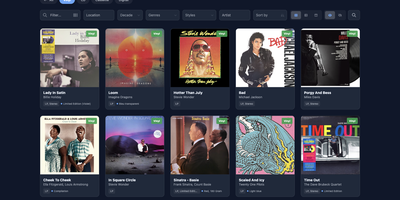
DVinyl
Self-hosted and plugin-based, DVinyl keeps vinyl, CDs, cassettes, books, movies, video games, LEGO sets, and board games in one catalog, with cover art and metadata fetched for every item. Adding an item takes an ID, a camera scan of its barcode, or a bulk import from Discogs or Goodreads. Each media type is a plugin that switches on per collection, with Discogs behind music, TMDB behind film, IGDB behind games, and Rebrickable behind LEGO. Once cataloged, a collection appears as a grid, a compact table, or virtual shelves with spine view and customizable furniture. Custom lists, track playlists, and a wishlist of items still being hunted sit alongside. Music collections get live value estimates with price history charts, games show completion times, and printable QR codes and barcodes label the physical copies. Separate collections can belong to you, the family, or a room, each with admin, editor, and viewer roles and optional OIDC single sign-on through Authentik, Keycloak, Authelia, or pocketID. Read-only links and QR codes let anyone browse a whole collection or just one section. Fourteen themes in light and dark, a modular dashboard, and a Markdown info page with photos make each instance personal. A no-code editor adds custom item types. Running on a dedicated VPS on RepoCloud with guaranteed CPU, RAM, and SSD, full root SSH access, and a browser serial console. MIT licensed.
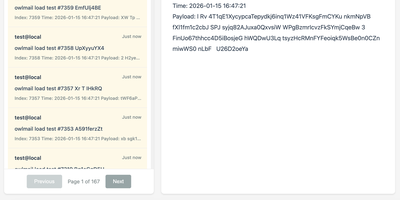
Owlmail
Every email your app sends while you build and test it lands in OwlMail's browser inbox instead of a customer's mailbox. Point any application's SMTP settings at OwlMail and every message is ready to open as rendered HTML, plain text, headers, or raw source. Attachments and inline images sit beside the body, and seven preset preview widths show how the message lays out on phones, tablets, and desktops before anyone real sees it. A Verify panel checks subject, body, and link hosts against expectations, while CI pipelines use the REST API with delivery cursors to wait for exactly the messages their test run produced, assert on them, and clean up afterwards. Coding agents get the same inbox read-only over MCP, so an assistant can confirm a signup email arrived without touching your mail server. When a message proves itself, relay it onwards to a real SMTP server, by hand or automatically under filtering rules, or fire webhooks with HMAC signatures and retry queues into the rest of your automation. Everything stores as plain .eml files on disk, with optional SQLite indexing, S3 attachment storage, and ZIP exports for archiving. Running on a dedicated VPS on RepoCloud with guaranteed CPU, RAM, and SSD, full root SSH access, and a browser serial console. MIT licensed.
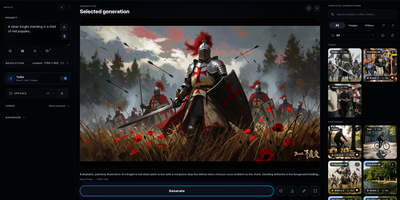
Mix Studio
Mix Studio gives ComfyUI a calm, touch-friendly workspace where image and video generation happens through focused controls instead of a fresh node graph for every job. The Create view runs curated families including Krea 2, Flux 2 Klein, and Qwen Image with exact resolution, seed, batching, LoRA, and prompt enhancement controls. Region mode places aspect-correct boxes on the canvas, each carrying an independent prompt, LoRA stack, and reference image, then resolves them into one coherent generation. Edit mode combines whole-image editing, identity editing, and multi-reference Remix flows with masks, inpainting, outpainting, and source preservation. Video workspaces cover text-to-video, first and last frame control, reference-to-video, character animation, face lipsync, and motion transfer driven by a trimmed performance clip. An experimental photo-to-3D path turns a picture into an orbit video and a Gaussian splat you can view interactively and export. Upscaling pairs synchronized pan and zoom with a movable before-and-after divider for detail inspection. The Library keeps generations and uploads searchable with folders, groups, metadata, reusable settings, recoverable trash, and ZIP export, and separate profiles can carry PIN access. Live queue progress, cancellation, guided setup with dependency checks, and automatic backups keep daily operation orderly. Running on a dedicated VPS on RepoCloud with guaranteed CPU, RAM, and SSD, full root SSH access, and a browser serial console. GPL-3.0 licensed.
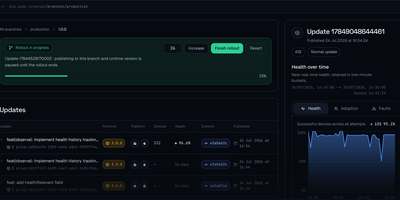
Xprem
xprem is a self-hosted update server for Expo applications that speaks the official Expo Updates protocol, so any app built with expo-updates can fetch its bundles from your infrastructure instead of a hosted service. Publishing works from the eoas CLI, from CI, or from the dashboard, and devices receive the corrected bundle on their next check with no app store review in between. Channels such as production and staging map to branches, which means each build flavor receives exactly the code meant for it. A rollout can serve an update to a slice of the fleet first and widen as confidence grows, and a bad release rolls back instantly instead of stranding users. One channel can even serve two branches at once, splitting devices deterministically for A/B tests. Every manifest is signed with a private key you own, and the matching certificate embedded in the app makes expo-updates refuse anything that fails verification, so a compromised bucket cannot push code into your product. The bundles themselves live in your S3, Google Cloud Storage, Azure Blob, Cloudflare R2, MinIO, or local storage and download through your CDN, while a single server hosts as many applications as you ship. Running on a dedicated VPS on RepoCloud with guaranteed CPU, RAM, and SSD, full root SSH access, and a browser serial console. MIT licensed.
Quantum
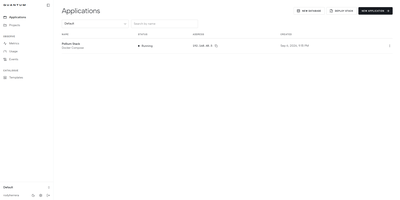
From a bare Linux server, Quantum builds and runs GitHub repositories, multi-service Docker Compose stacks, and managed databases through a self-hosted PaaS dashboard with automated webhook deployments and live container telemetry. Connect a GitHub account, pick a branch, and let the build engine compile from a Dockerfile or custom install, build, and start commands on every git push or release tag. Multi-service Compose files can be pulled from a repository or pasted into the editor, with automatic `${VAR}` placeholder detection and isolated internal networks so containers communicate by service name. Provision PostgreSQL, MySQL, MariaDB, MongoDB, and Redis instances with one-click backups, or deploy pre-configured templates for n8n, Directus, WordPress, Uptime Kuma, and Ollama. Live log streams, an interactive browser terminal, `.env` secret management, persistent volume mounts, and private registry credentials come built into every service view. Need to patch a file quickly? Clicking Open in VS Code launches a sidecar `code-server` instance mounted directly to the container filesystem. Organization and project roles enforce granular access while real-time CPU, memory, and network charts track health across 15-minute to 24-hour windows. Running on a dedicated VPS on RepoCloud with guaranteed CPU, RAM, and SSD, full root SSH access, and a browser serial console. MIT licensed.
Initiative
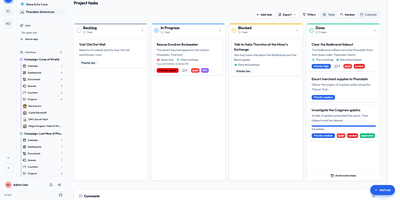
Initiative is a self-hosted, multi-tenant project management platform that organizes projects, tasks, collaborative documents, and schedules into strictly isolated community workspaces without enterprise complexity. Users create distinct communities where data remains strictly partitioned across separate database schemas, allowing agencies, volunteer groups, and gaming guilds to manage multiple client environments from a single deployment. Within each community, initiatives group related projects and documents while interactive drag-and-drop Kanban boards track task progression across custom columns, priorities, and deadlines. Integrated collaborative documents enable team members to co-author notes, project briefs, and meeting minutes in real time with threaded inline discussions and user mentions. Granular role-based permissions let administrators specify exact view and edit privileges down to individual items, while a recoverable trash system prevents accidental deletions from interrupting live operations. Curated marketplace apps supply customizable analytics dashboards, and optional bring-your-own-key artificial intelligence integrations generate task suggestions and summarize lengthy discussion threads. Running on a dedicated VPS on RepoCloud with guaranteed CPU, RAM, and SSD, full root SSH access, and a browser serial console. GNU AGPLv3 licensed.
OpenVPM
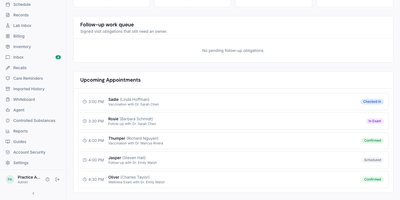
A clinic day starts before the first patient arrives, and OpenVPM has the whole of it on one screen: the schedule, the charts, the invoices, and the shelves. The calendar gives every doctor a column across day and week views, color-codes appointment types, flags doctor and room conflicts, and walks each visit from Scheduled to Checked In, In Exam, and Checked Out. Any chart opens in seconds through fuzzy search, carrying species, breed, weight trend charts, microchip numbers, photos, and allergy alerts that surface before anyone prescribes. SOAP notes sit beside problem lists, vaccination records with reminders and downloadable certificates, lab results against reference ranges, and prescriptions with a dosing calculator and refill tracking. Checkout ties the medicine to the money: treatment templates draft itemized invoices with tax, estimates convert to invoices, payments post to the account balance, and stock deducts itself when products are dispensed. Owners get their own portal for health records, appointment requests, vaccination certificates, invoices, and active prescriptions. The practice whiteboard refreshes itself as animals move between rooms, so the whole team always knows who is waiting, who is in exam, and who is done. Running on a dedicated VPS on RepoCloud with guaranteed CPU, RAM, and SSD, full root SSH access, and a browser serial console. AGPL-3.0 licensed.
QVMConsole
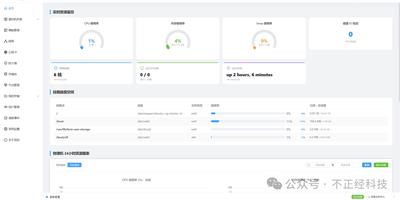
QVMConsole turns a KVM host into a small private cloud where tenants create, clone, snapshot, and console into their own virtual machines from one web panel without ever touching the hypervisor. Create machines from templates, linked clones, or ISO images across x86_64 and ARM hosts with BIOS or UEFI firmware, multiple disks, and multiple network cards, then manage power, reinstalls, imports, and exports from the same console. Each tenant receives an isolated VPC built on Open vSwitch with its own logical switch, VLAN, DHCP, NAT, and access control, plus cloud-style security groups, port forwarding with health checks, bandwidth limits, and monthly traffic quotas. Storage pools span host disks and LVM volumes, VM disks migrate between pools online, and snapshots carry their own quotas with restore and UEFI safeguards. Open any machine in the browser through the noVNC console, complete with shortcut keys and one-click password paste, and follow long operations in an asynchronous task center that streams progress live. Administrators enforce two-factor authentication, confirm sensitive actions a second time, and cap every tenant by CPU, memory, disk, VM count, public IPs, and runtime hours through fine-grained quotas or a lightweight cloud mode. Running on a dedicated VPS on RepoCloud with guaranteed CPU, RAM, and SSD, full root SSH access, and a browser serial console. Apache-2.0 licensed.
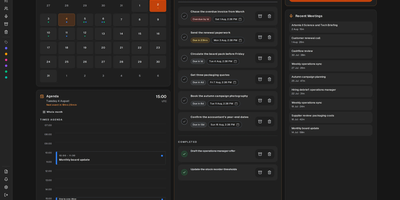
dayGLANCE
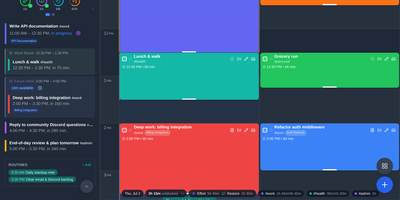
Instead of locking your daily schedule inside proprietary cloud calendars, dayGLANCE offers a privacy-first visual time-blocking planner that syncs directly with your own WebDAV server, Nextcloud instance, or Obsidian vault. Drag tasks from a prioritized Smart Inbox onto an interactive 24-hour timeline, resize blocks as priorities shift, and carve out recurring energy-tagged Frames for deep work or administrative batches. The live Glance panel highlights your current commitment, remaining free time, and daily routines, then transitions into GLANCEahead each evening to preview tomorrow's start time, deadlines, and total committed hours. Switch between multi-day, single-day, weekly, and monthly layouts, or launch the fullscreen Day Dial to view your schedule, solar daylight arc, and watch-style progress complications on a secondary wall display. Long-term work stays organized inside a Goals and Projects hierarchy with duration-weighted progress bars, visual roadmaps, and dedicated hyperGLANCE focus workspaces that pair a Pomodoro timer with project notes and subtasks. Bidirectional Obsidian synchronization reads and writes markdown daily notes and wikilinked tasks directly, while optional bring-your-own-key AI assistants and encrypted backups keep your productivity workflow completely under your control. Running on a dedicated VPS on RepoCloud with guaranteed CPU, RAM, and SSD, full root SSH access, and a browser serial console. MIT licensed.
Cupdate
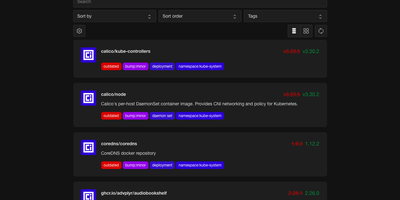
Cupdate keeps a watchful eye on every container image you run, reporting which ones are outdated or vulnerable while deliberately never touching the update button itself. Point it at a Kubernetes cluster, a Docker socket, or Podman hosts (local or remote, one or several) and it inventories every image in use with no configuration to write. Each image is matched against its registry to find the newest available version, and the dashboard shows the gap between what you deployed and what you could be running, with release notes inline so the decision to upgrade takes seconds instead of a changelog hunt. Vulnerability data is layered on top from four sources: Docker Scout for Docker Hub images, Clair for participating Quay images, GitHub Advisories for images tied to repositories, and osv.dev correlation for images shipping SBOMs. A dependency graph explains why each image exists in your stack by showing which workloads pull it, which ends the "can I delete this?" guessing game. Subscribe to the RSS feed to hear about new releases passively, query the REST API to drive scripts that update compose files or kustomizations, or surface outdated and vulnerable counts in a Homepage dashboard widget. Prometheus metrics and traces are available when you want the watcher itself watched. Running on a dedicated VPS on RepoCloud with guaranteed CPU, RAM, and SSD, full root SSH access, and a browser serial console. MIT licensed.
Polaris Control Plane
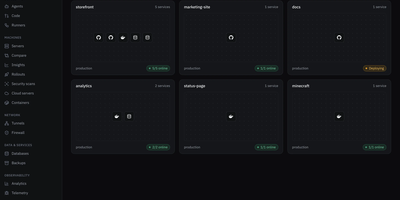
Polaris puts app deploys, file storage, team chat, tasks, and a password vault behind one login on a server you control. Deploy from a Git repository or an image with databases, volumes, environment variables, logs, a terminal, and a domain, published through your own domain, a Cloudflare tunnel, or DuckDNS. Enroll more machines over SSH with one generated command, then watch their containers and metrics and schedule backups with restore. Drive spans local disks, SFTP, S3-compatible storage, SMB, NFS, Google Drive, OneDrive, and Dropbox, with password-protected public links, expiry, and drop points for people without an account. Vault works with the Bitwarden apps and extensions and encrypts in the browser, so the server never sees your master password. Chat brings channels, threads, direct messages, voice and video calls, screen sharing, and a soundboard, while Tasks adds lists, boards, sprints, goals, and time tracking, and can hand work to coding agents over MCP. Calendar syncs both ways with Google, Microsoft 365, and CalDAV and offers booking pages. Game servers run Minecraft, ARK, and FiveM, a firewall blocks countries, networks, and bots, and one-click Marketplace installs add more apps. The interface comes in English and Spanish. Running on a dedicated VPS on RepoCloud with guaranteed CPU, RAM, and SSD, full root SSH access, and a browser serial console. AGPL-3.0 licensed.
ScribeCrate
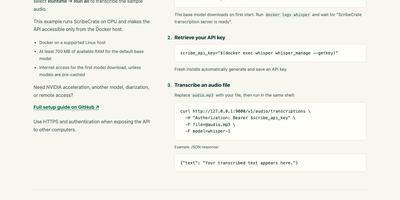
ScribeCrate is a self-hosted speech-to-text API that turns recordings into transcripts, subtitles, and English translations on your own server. It speaks the OpenAI Whisper API fluently: point any compatible client at your server's address, swap in your API key, and uploads come back as text. Ask for plain text, JSON with timestamps, or ready-to-publish SRT and WebVTT subtitle files, and for long recordings the segments can stream back over SSE as they are decoded. Turn on speaker diarization and every segment is labeled with who is speaking, which makes interview and meeting transcripts readable at a glance. Choose the model that fits the job, from tiny for quick drafts to large-v3 for maximum accuracy, and run it on a modest CPU, a Raspberry Pi class ARM board, or an NVIDIA GPU. Almost any recording works: MP3, M4A, WAV, WebM, OGG, and FLAC are all accepted, and with models cached in advance the server keeps transcribing with no internet connection at all. Running on a dedicated VPS on RepoCloud with guaranteed CPU, RAM, and SSD, full root SSH access, and a browser serial console. MIT licensed.
Rewindarr
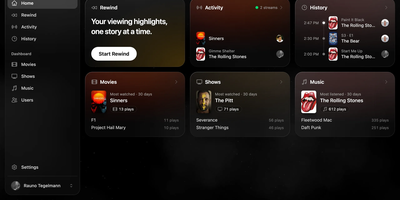
Spotify gets a Wrapped; your media server deserves one too. Rewindarr is an open-source companion for Plex and Jellyfin that turns play history into a story your users step through, card by card: total watch time, how it split across movies, shows, and music, how they rank against the average viewer, and the viewing personality their habits earn them, ending in a summary they can save as an image and share. The same deployment doubles as an everyday dashboard for the whole server, with watch time, requests, library size, and per-library leaderboards for movies, shows, music, and users across a week, a month, a year, or all time. Live activity shows what is streaming right now, and searchable history groups binges together so a weekend disappears into one tidy entry. Ratings from TMDB, IMDb, and Rotten Tomatoes sit beside every title, request buttons reconnect viewers with deleted favourites through Seerr, and anonymisation trims user details when you share the dashboard wider. Statistics flow in from Tautulli or Tracearr for Plex and from Tracearr for Jellyfin, everyone signs in with the Plex or Jellyfin account they already have, and the installable app works on the TV-side phone as happily as on a desktop. Running on a dedicated VPS on RepoCloud with guaranteed CPU, RAM, and SSD, full root SSH access, and a browser serial console. GPL-3.0 licensed.
Larasend
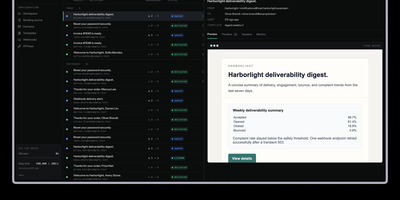
Larasend gives Laravel teams a self-hosted transactional email platform that sends through their own Amazon SES or Cloudflare account while keeping the dashboard, delivery logs, and message data on their own servers. Send mail with a simple POST to the emails API, or point existing mailables and notifications at the Larasend transport with one environment variable and no code rewrite. Every message lands in an activity dashboard where you can filter by status, search recipients and message IDs, open a preview with headers and metrics, and resend failures in one click. Delivery, bounce, complaint, open, and click events stream back from the provider and update each message timeline, so a missing receipt becomes a traceable record instead of a support mystery. Suppression lists build themselves from bounces and complaints, and guardrails watch complaint rates and verified domains before reputation damage can spread. Scoped API keys with expiration and rotation keep each project separate, while workspace roles control who can view, send, and administer. When replies arrive, the shared inbox threads inbound and outbound mail into conversations your team can assign, snooze, annotate, and answer with attachments and drafts. Webhooks notify your other systems about deliveries and inbound mail, and reusable templates keep recurring notices consistent across projects. Running on a dedicated VPS on RepoCloud with guaranteed CPU, RAM, and SSD, full root SSH access, and a browser serial console. MIT licensed.