Categories
DevOps Monitoring Container Management Vulnerability Scanning Docker Tools Kubernetes ToolsStars
Forks
Watchers
Developer links
Cupdate
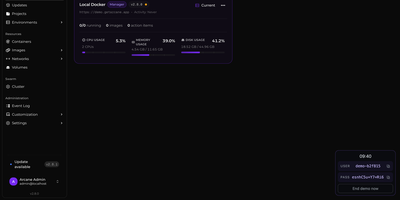
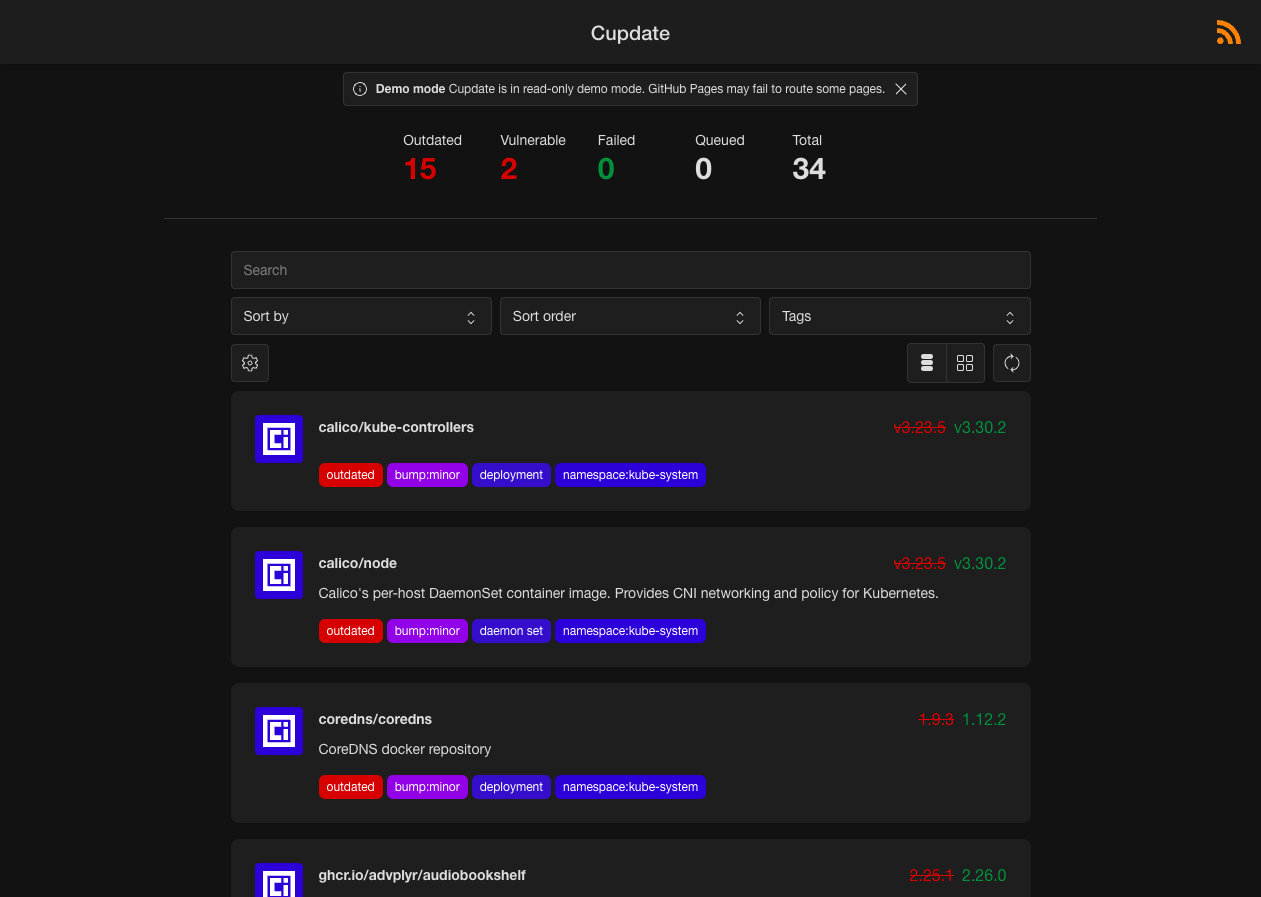
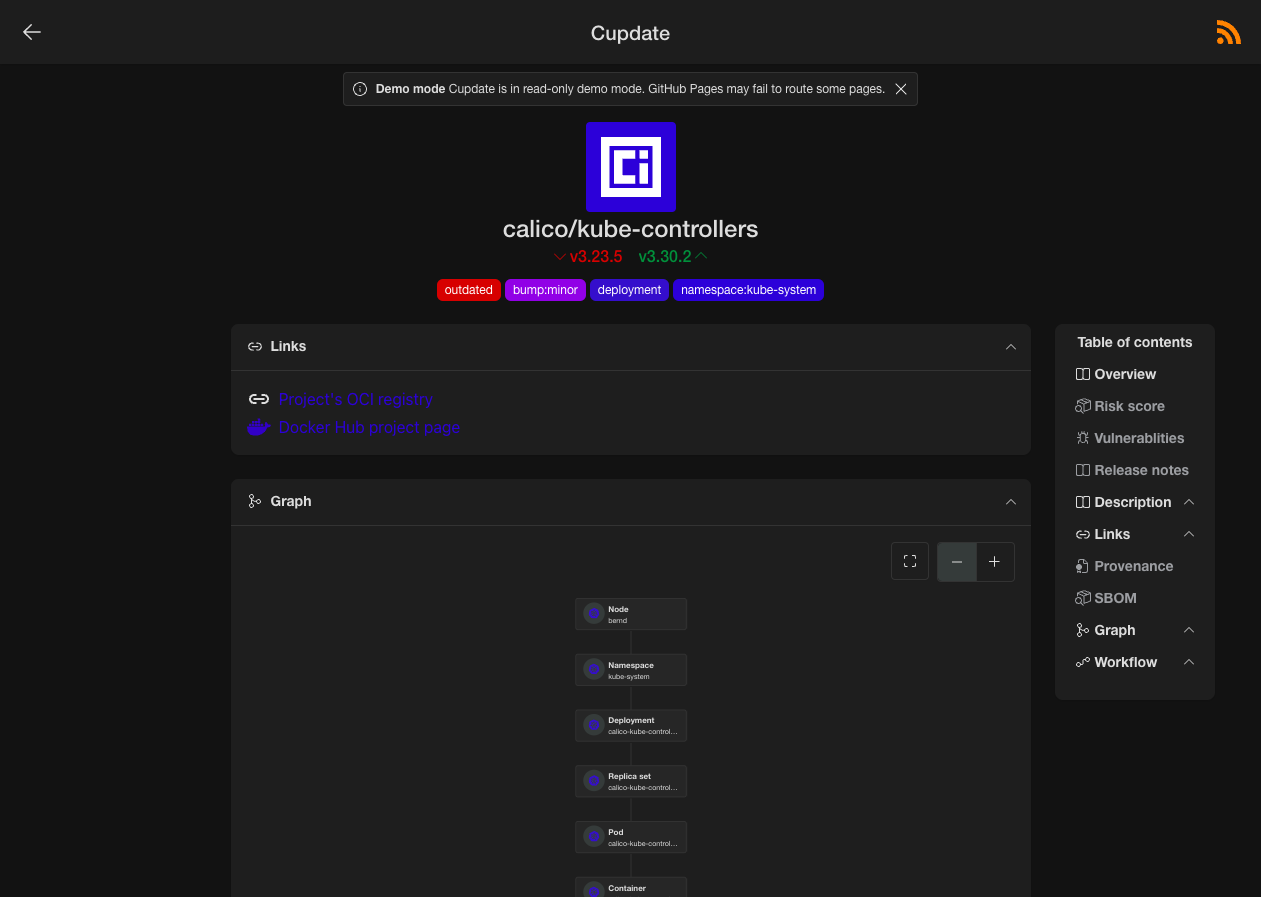
Cupdate keeps a watchful eye on every container image you run, reporting which ones are outdated or vulnerable while deliberately never touching the update button itself. Point it at a Kubernetes cluster, a Docker socket, or Podman hosts (local or remote, one or several) and it inventories every image in use with no configuration to write. Each image is matched against its registry to find the newest available version, and the dashboard shows the gap between what you deployed and what you could be running, with release notes inline so the decision to upgrade takes seconds instead of a changelog hunt. Vulnerability data is layered on top from four sources: Docker Scout for Docker Hub images, Clair for participating Quay images, GitHub Advisories for images tied to repositories, and osv.dev correlation for images shipping SBOMs. A dependency graph explains why each image exists in your stack by showing which workloads pull it, which ends the "can I delete this?" guessing game. Subscribe to the RSS feed to hear about new releases passively, query the REST API to drive scripts that update compose files or kustomizations, or surface outdated and vulnerable counts in a Homepage dashboard widget. Prometheus metrics and traces are available when you want the watcher itself watched. Running on a dedicated VPS on RepoCloud with guaranteed CPU, RAM, and SSD, full root SSH access, and a browser serial console. MIT licensed.
Benefits
- Zero Configuration, Immediate Inventory
- Cupdate auto-detects images across Kubernetes, Docker, and Podman on one or more hosts with virtually no setup, using almost no CPU or RAM while it keeps the inventory current in the background.
- Four Vulnerability Sources, One View
- Findings from Docker Scout, Quay's Clair, the GitHub Advisory Database, and osv.dev SBOM correlation are merged per image, so known-vulnerable deployments stand out without running four separate scanners.
- Awareness Without Automation Risk
- By design Cupdate never pulls, deploys, or edits a manifest; it informs through its UI, RSS feed, and API, leaving upgrades to your review or to tools like Renovate that you already trust.
- Dependency Graphs End The Guessing
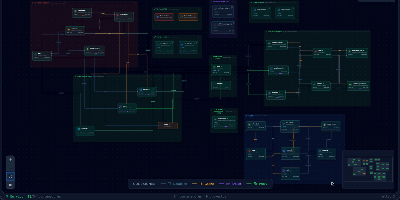
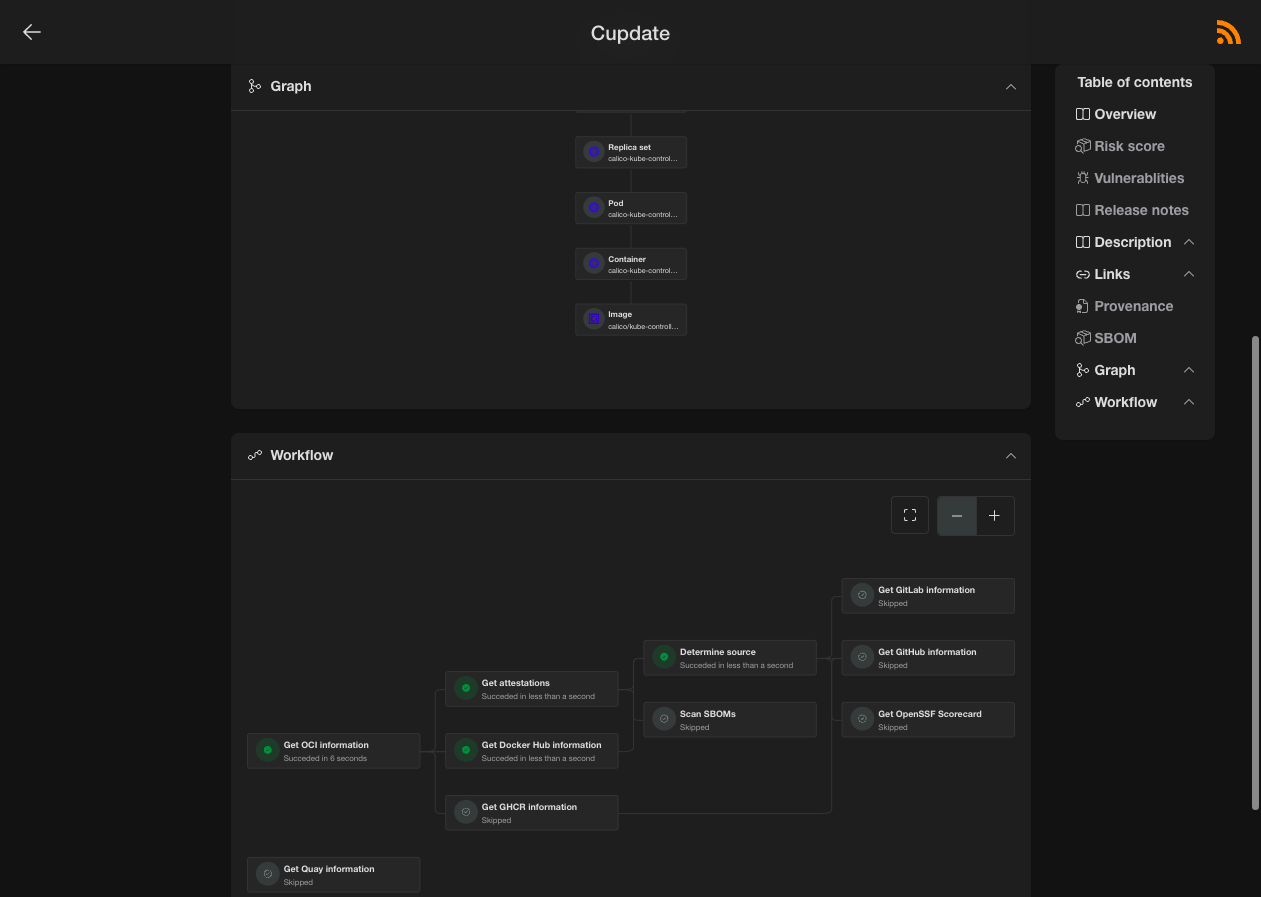
- Every image page graphs the workloads that depend on it, explaining why it is running and what would be affected, which makes pruning ancient images a decision instead of a gamble.
Features
- Multi-Runtime Image Discovery
- Workers enumerate images from the Kubernetes API, the Docker socket, or Podman endpoints across multiple local and remote hosts, then track each image's latest registry version.
- Release Notes In Dashboard
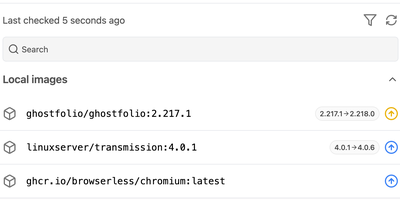
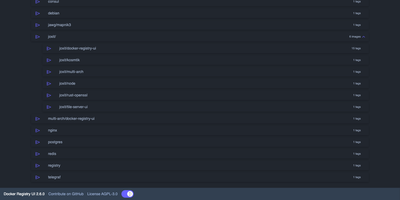
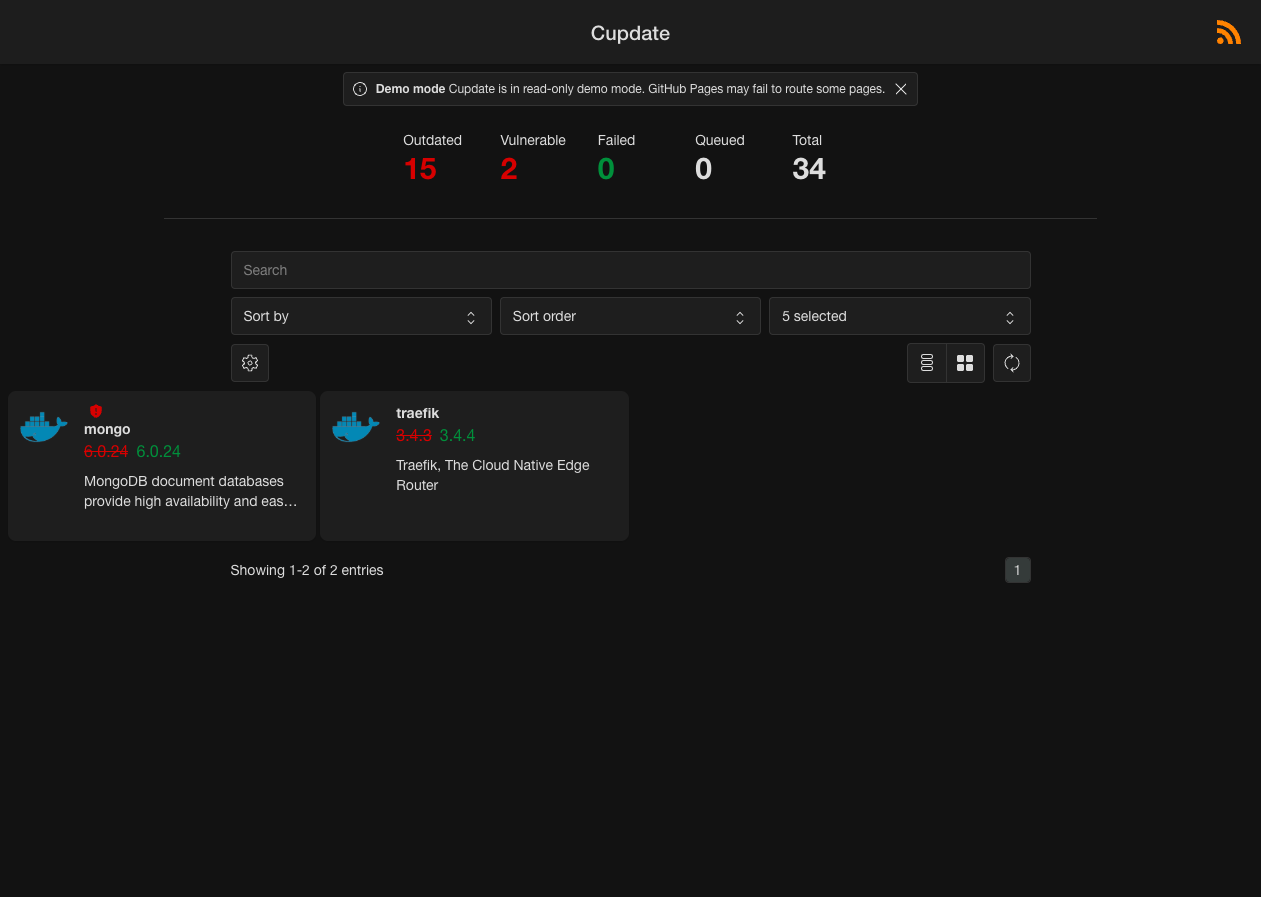
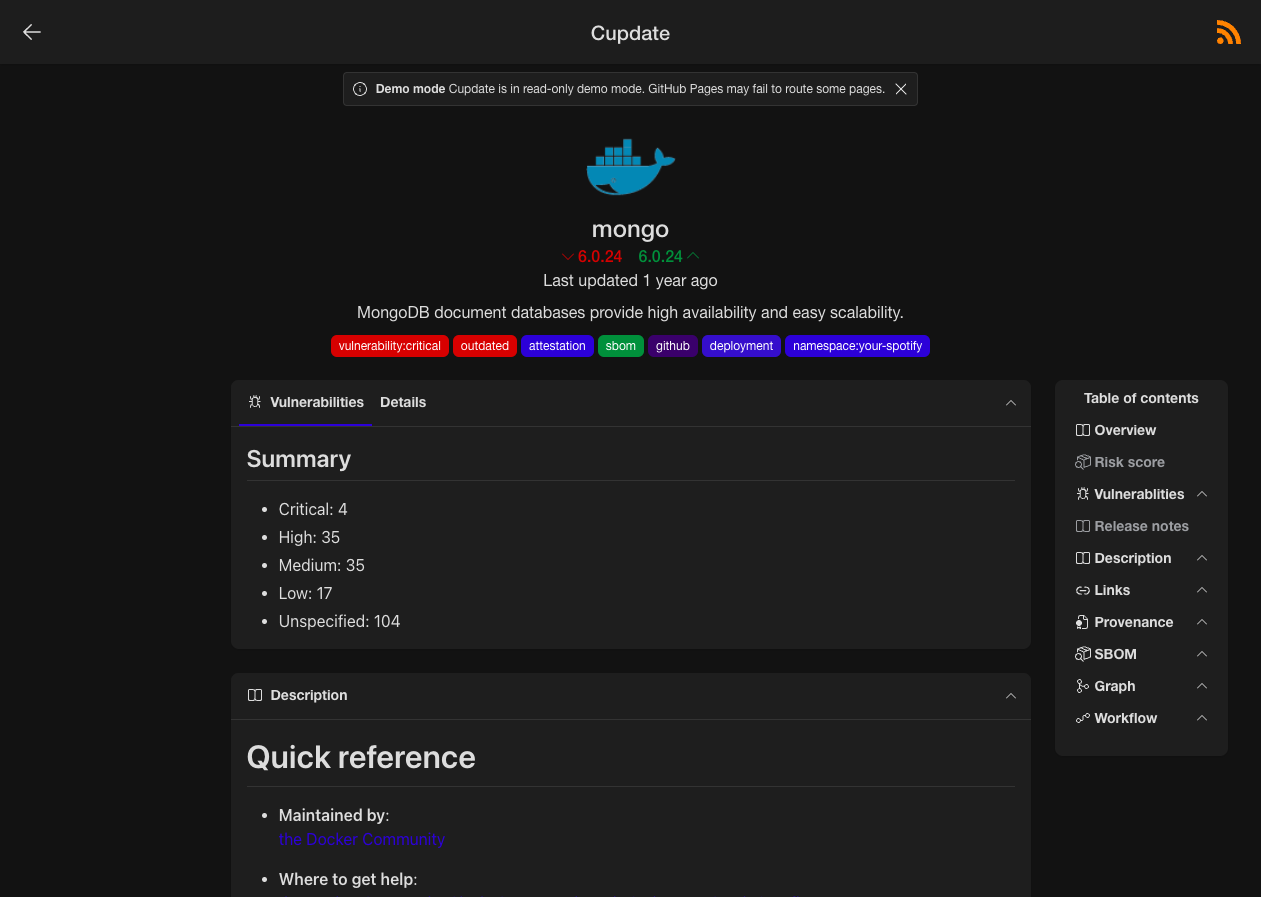
- The web UI lists outdated images with their current and latest versions plus upstream release notes, so reviewing an upgrade does not require leaving the page for the registry.
- Vulnerability Correlation
- Docker Scout, Clair, GitHub Advisories via vulndb, and osv.dev SBOM matching enrich each image with known vulnerability data matched to the exact deployed version.
- RSS Feed And REST API
- A per-feed RSS subscription announces new versions, while the versioned API powers cookbook scripts that rewrite compose files and kustomizations and widgets for Homepage dashboards.
- Built-In Observability
- Prometheus metrics and distributed traces can be enabled for Cupdate itself, fitting it into the same monitoring stack it helps you keep patched and current.